While the core design features of a dive watch have always centred on legibility, clarity and tool watch proficiency there has also always been a tacit understanding that 95% of the time that you wear the watch won’t be underwater. For that reason, many dive watch brands also produce variants of their watches that sacrifice a little of their purebred underwater utility to provide greater value on land. A classic example of which is the dive watch chronograph, which introduces an additional complication. Which is relevant because Doxa are reviving their 1969 SUB 200 T.Graph design with the launch of the new SUB 200 T.Graph II.
To be clear, this is not the first time Doxa are revisiting this design since 1969. Back in 2016-2019 they produced a handful of limited editions based on this model too. However, what makes the new watches special is that they are not limited – joining the permanent SUB 200 collection. Additionally, they are the first SUB 200 T.Graph watches to bear the moniker “II” at the end of their name, which indicates that they feature visual and mechanical updates compared to both the original T.Graph and those previous limited editions.
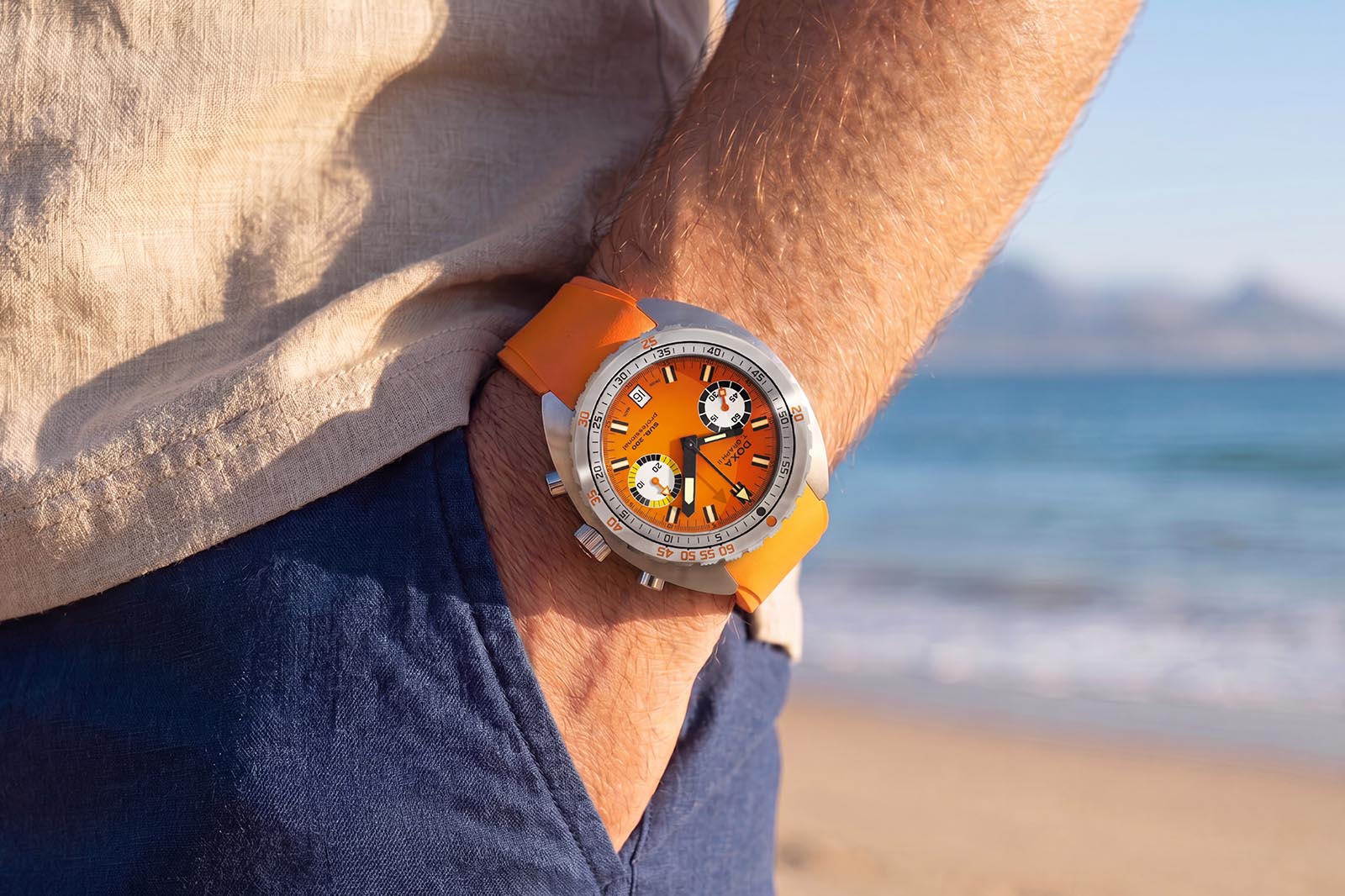
The first of those updates is the case. It has been downsized from 43mm diameter to 42mm and the thickness has been reduced from 15.15mm to 14.6mm. That’s a significant boost to wearability bringing them more in line with the average for modern tool watches. They’re now “big” instead of “huge”. Doxa specifically call out how the slimmer profile and less broad proportions makes the watch feel more stable, meaning it’s better balanced and won’t twist around the wrist uncomfortably.
While the case is smaller, they’ve been sure to retain the core elements that make it a SUB 200. It still has a 200m water resistance rating and is equipped with a unidirectional rotating bezel with dive timer scale. The bezel is actually split into two scales to also provide chronograph functionality.
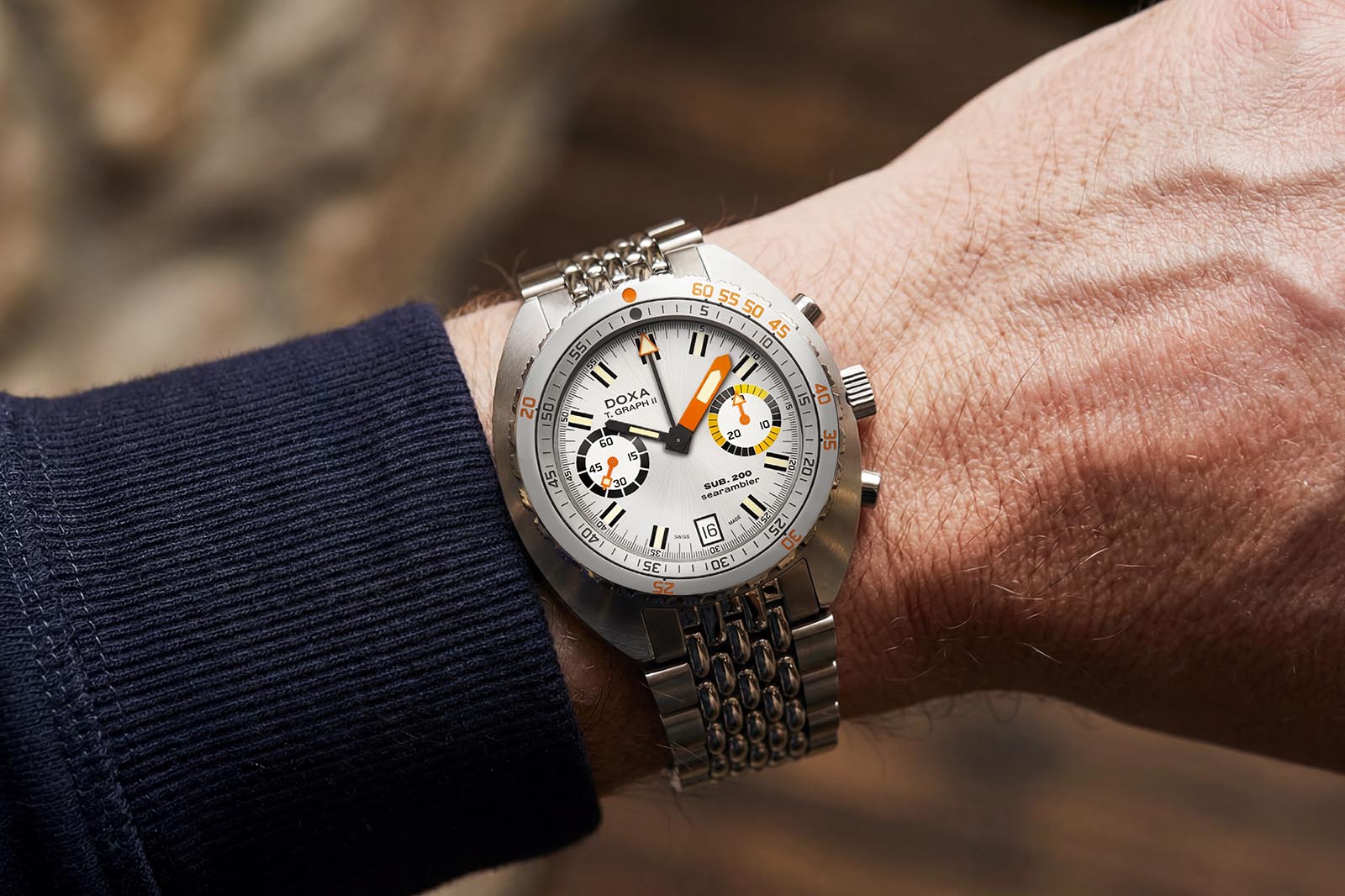
Speaking of chronograph functionality, the SUB 200 T.Graph II has a bicompax chronograph layout with small seconds at 9 o’clock and a 30-minute counter at 3. They’ve tried to keep the dial as legible as possible with the use of big, blocky shapes across the various scales to keep the information organised as cleanly as possible. I like the alternating colours every five minutes on the 30-minute timer which reminds me a little of a regatta chronograph.
There are four colour schemes available for this model. The first three are revivals of the original SUB 200 T.Graph colours in Professional Orange, Sharkhunter Black and Searambler Silver. The fourth introduces the Caribbean Blue colour to the T.Graph series for the first time, which makes thematic sense because the T.Graph and Caribbean Blue colourway are about the same age, both being introduced to the Doxa range in the late 1960s – just not on the same watch.
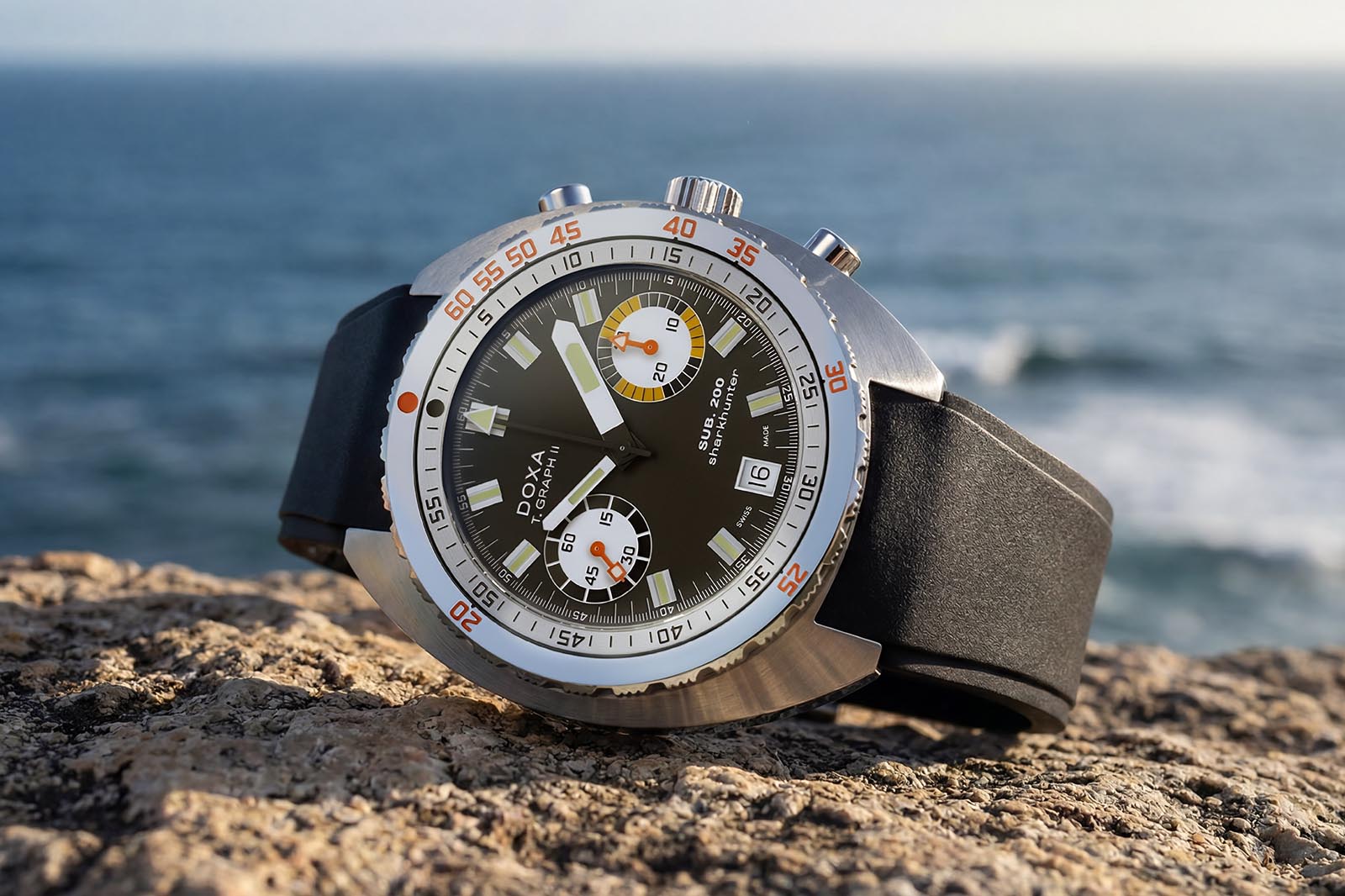
Mechanically the SUB 200 T.Graph II is also an upgrade. The previous limited editions housed the Valjoux 7734 chronograph movement with a 45-hour power reserve and 2.5 Hz frequency. The new collection instead houses the Sellita SW510 with 56-hour power reserve and 4Hz frequency. The benefit of an extended power reserve is readily apparent, but a higher frequency is also an important upgrade too.
As a quick run-down: the frequency, sometimes referred to as beat rate or vibrations per hour, is how often the balance spring oscillates and moves the hands. A higher frequency means the hand moves more often which makes for not only a smoother motion but means there is less deviation from the true time, improving accuracy. That is a generalisation and chronometric performance can be fine tuned in other ways, but as a rule of thumb it is useful.
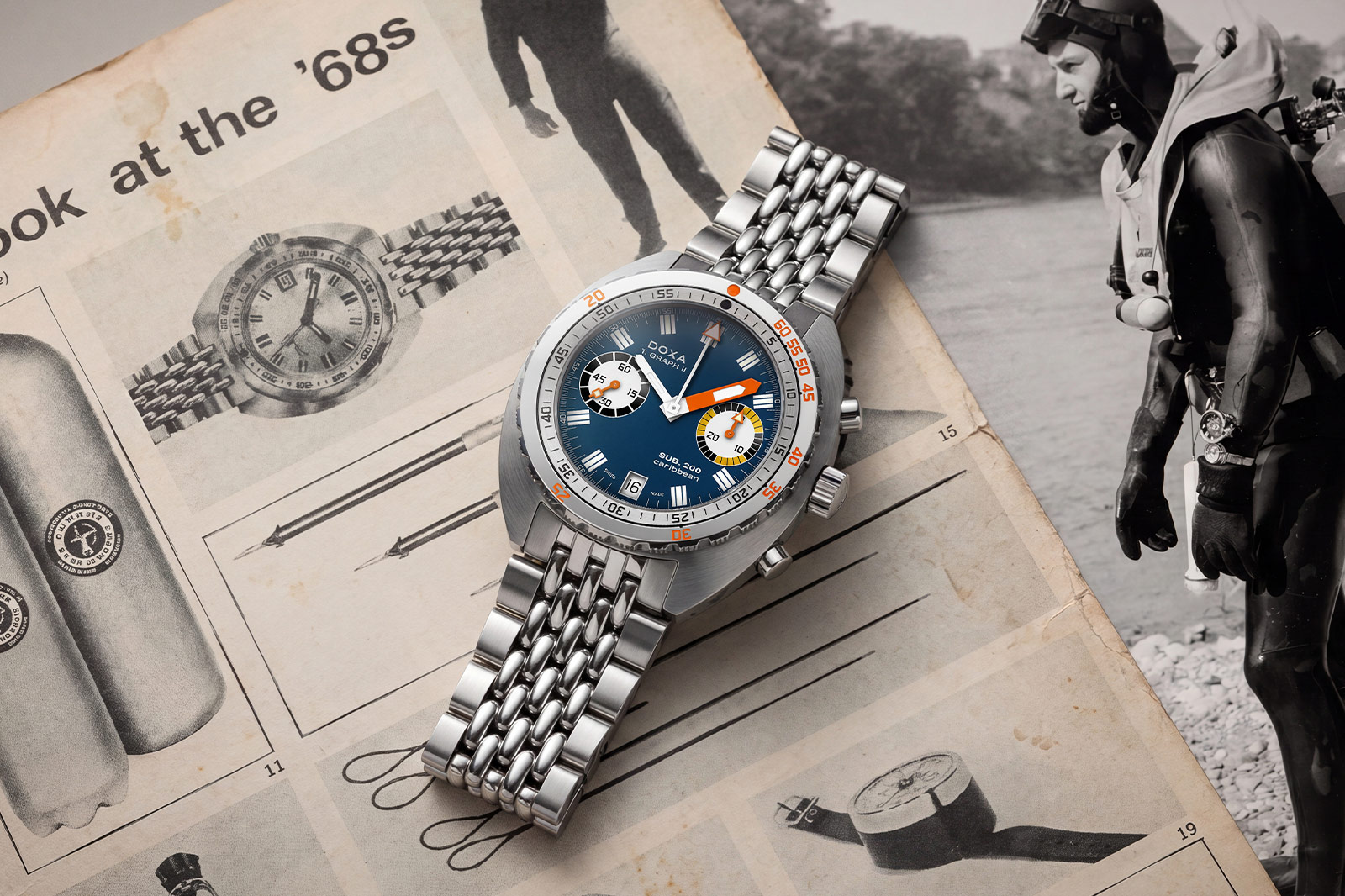
The Doxa SUB 200 T.Graph II is presented on a choice of beads of rice bracelet at £3,690 or a rubber strap at £3,650. That’s actually over £1,000 less than the previous limited editions, which were up at £4,800. So, the value of the new watches is really good, being both more accessible and higher spec with improved sizing.
Price and Specs:
More details at DOXA.