There was a time when Corum was genuinely important. Along with their Admiral’s Cup sports watch and the Golden Bridge with its linear, baguette-style movement, they released the first sapphire case, the first meteorite dial, and even the first watch-car partnership with Rolls-Royce.
That time, however, is in the past. When Hong Kong-based watch and jewellery company China Haidian bought Corum in 2013, it made headlines. The group already had Eterna, but this was their first haute horology house, and we were all wondering what they would do with it. The answer, unfortunately, was not much.

Over the next 10 years, Corum was systematically lowered from a well-respected maison working at around the £10,000 – £15,000 mark into a mass-produced brand with an over-reliance on third-party movements. Prices dropped to the £3,000 mark; designs were scattershot and everything that made Corum important leeched out. Collectors soon stopped paying attention.
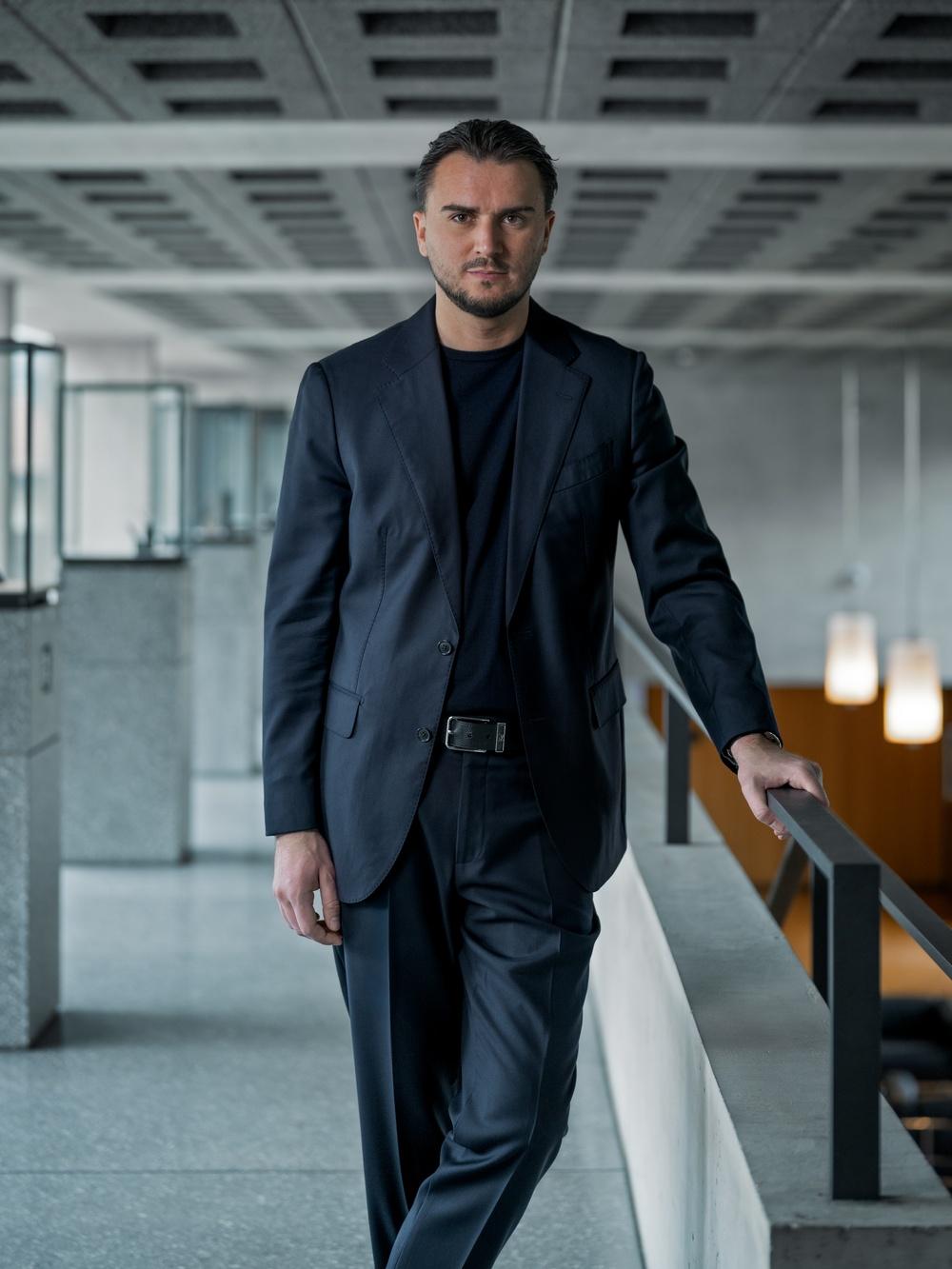
Last year however, we got word that Corum had been bought once again. Passing a license from one conglomerate to another isn’t news worth reporting, but this was different. It was a buyout coming from inside the company led not by a serial marketeer but by a watchmaker: Haso Mehmedovic.
Mehmedovic has been at Corum for 15 years, starting as a watchmaker before taking over as International Sales Director. He saw the brand’s slow downfall firsthand, the wasted potential of a once-iconic name being used to shift cheap facsimiles of their historical watches. China Haidian – which has since changed its name to Citychamp Watch & Jewellery Group Limited – were happy to let him lead the buyout and as of April last year, Corum returned to Swiss ownership.
That was less than a year ago and, glacial as the Swiss watchmaking industry is, that’s not a long time to rebuild a brand. Fortunately, Mehmedovic had the connections to move fast.

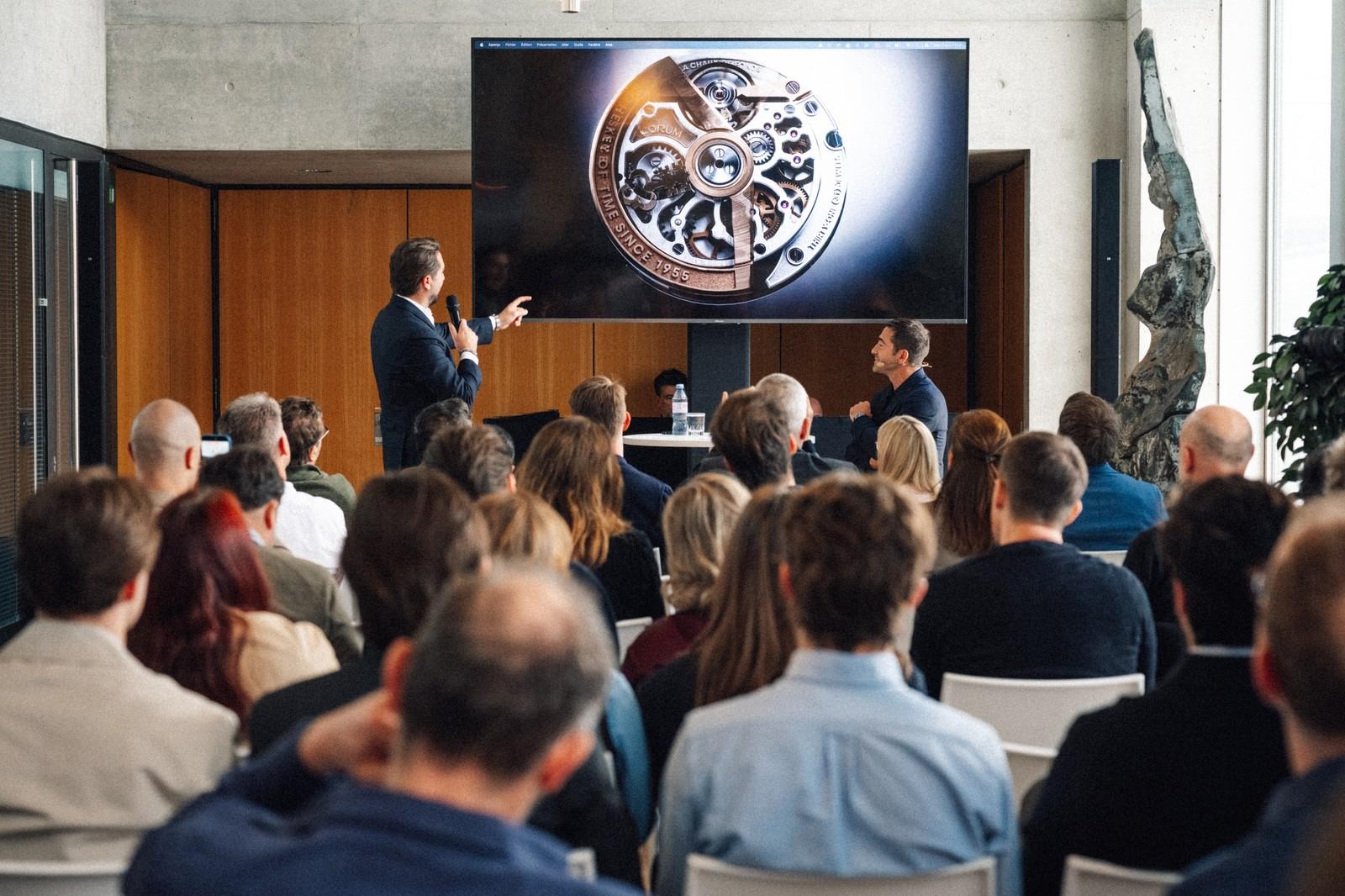
One of the first, non-negotiable elements was to bring back in-house watchmaking. So, Mehmedovic partnered with Concepto – who have worked with Jacob & Co, Breitling, Louis Moinet, and Bulgari – and convinced them to build him a new movement in just eight months. That alone is a steep ask, but that was just step one. Step two will be to bring those skills back into Corum’s La Chaux-de-Fonds manufacture, which is an even bigger ask.
The next element would be to decide what watch to put this new movement in, though that was a little easier. Corum’s two most iconic collections, the Admiral’s Cup and Golden Bridge make up 80% of their sales and only one of those has a traditional movement.
Emmanuel Gueit is best known for creating the Royal Oak Offshore, which spearheaded ’90s watch tastes. More recently, he’s worked on the relaunch of Dennison and now he’s redesigned the Admiral’s Cup through the lens of an integrated bracelet sports watch.
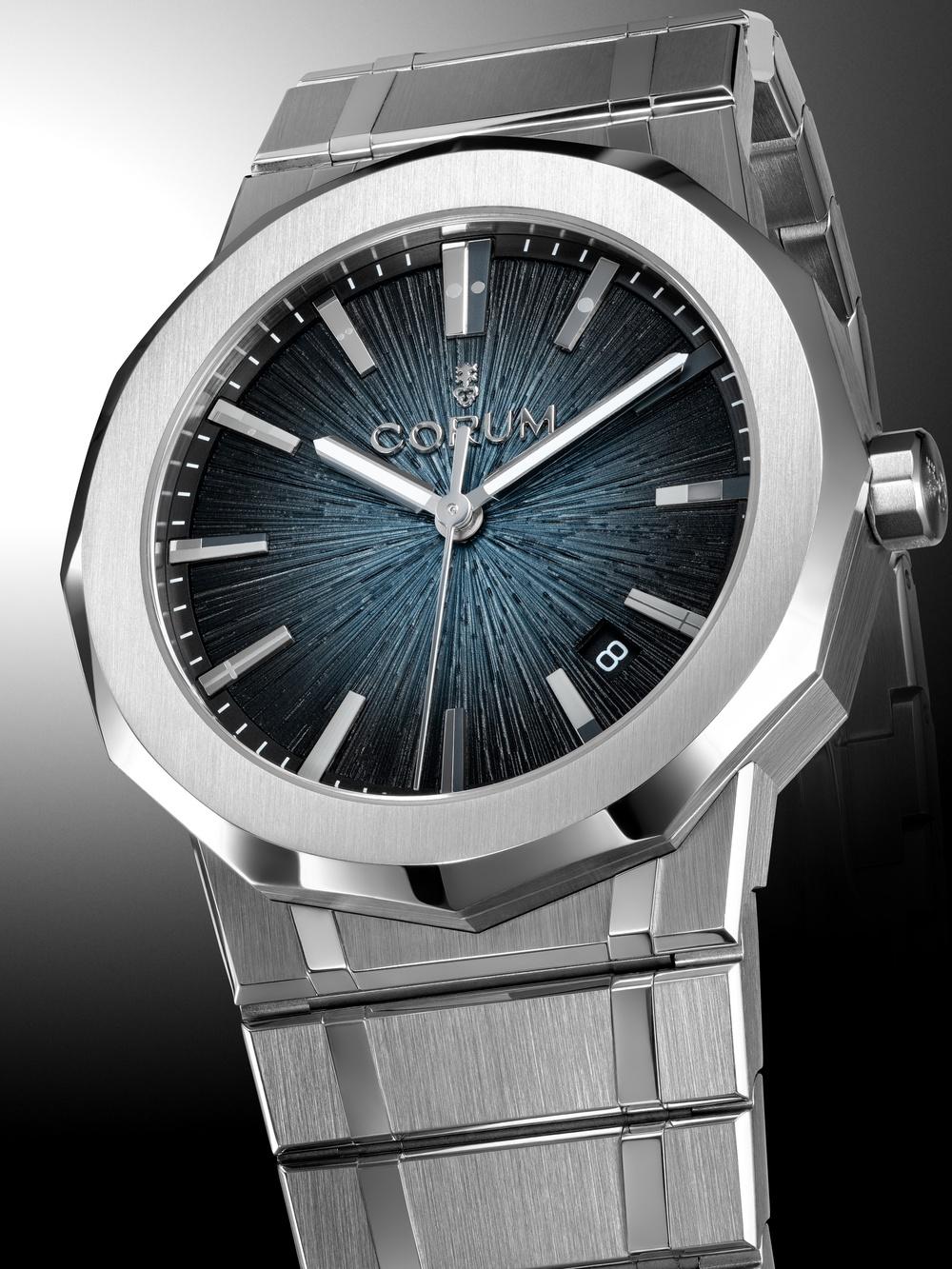
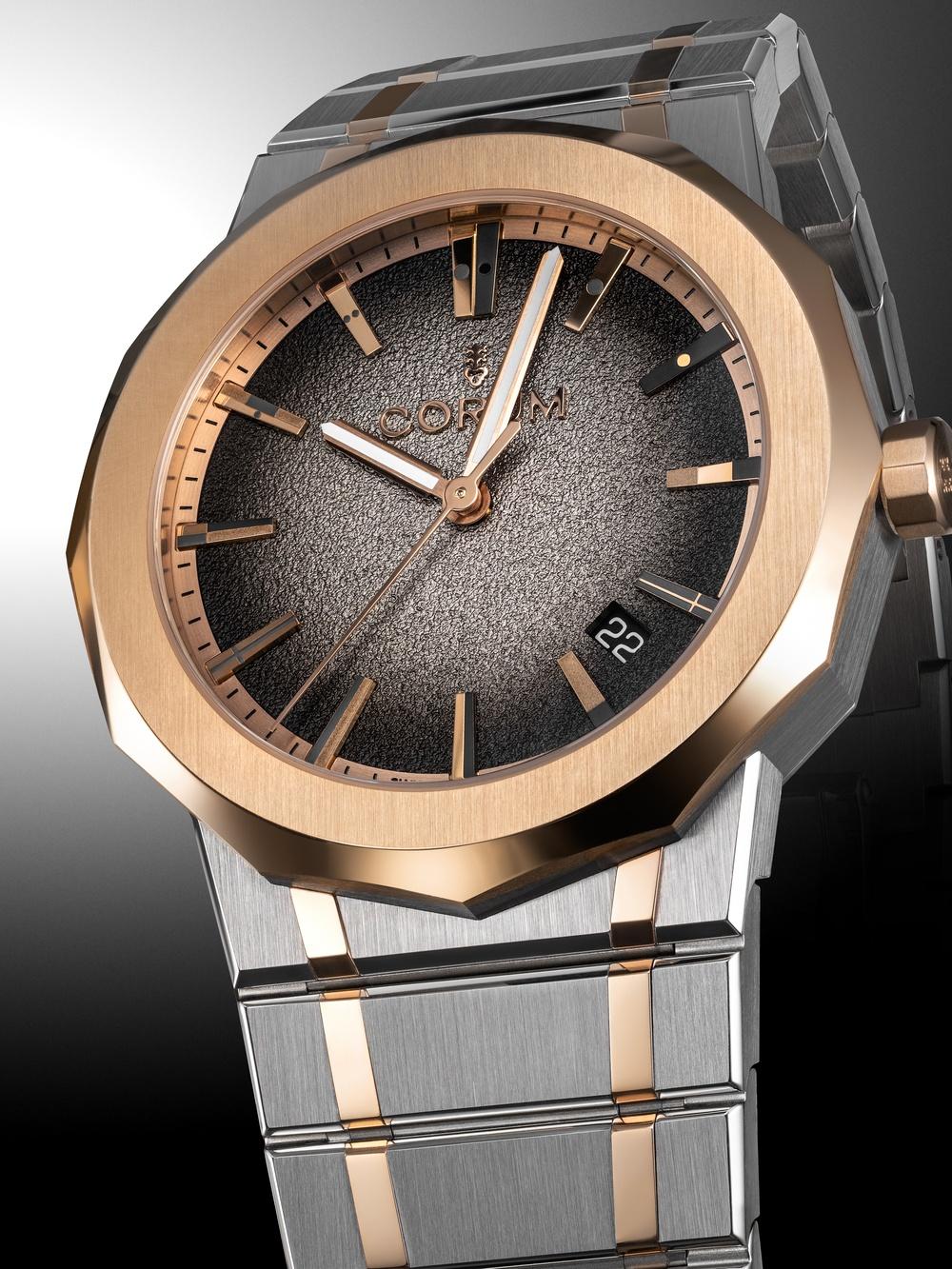
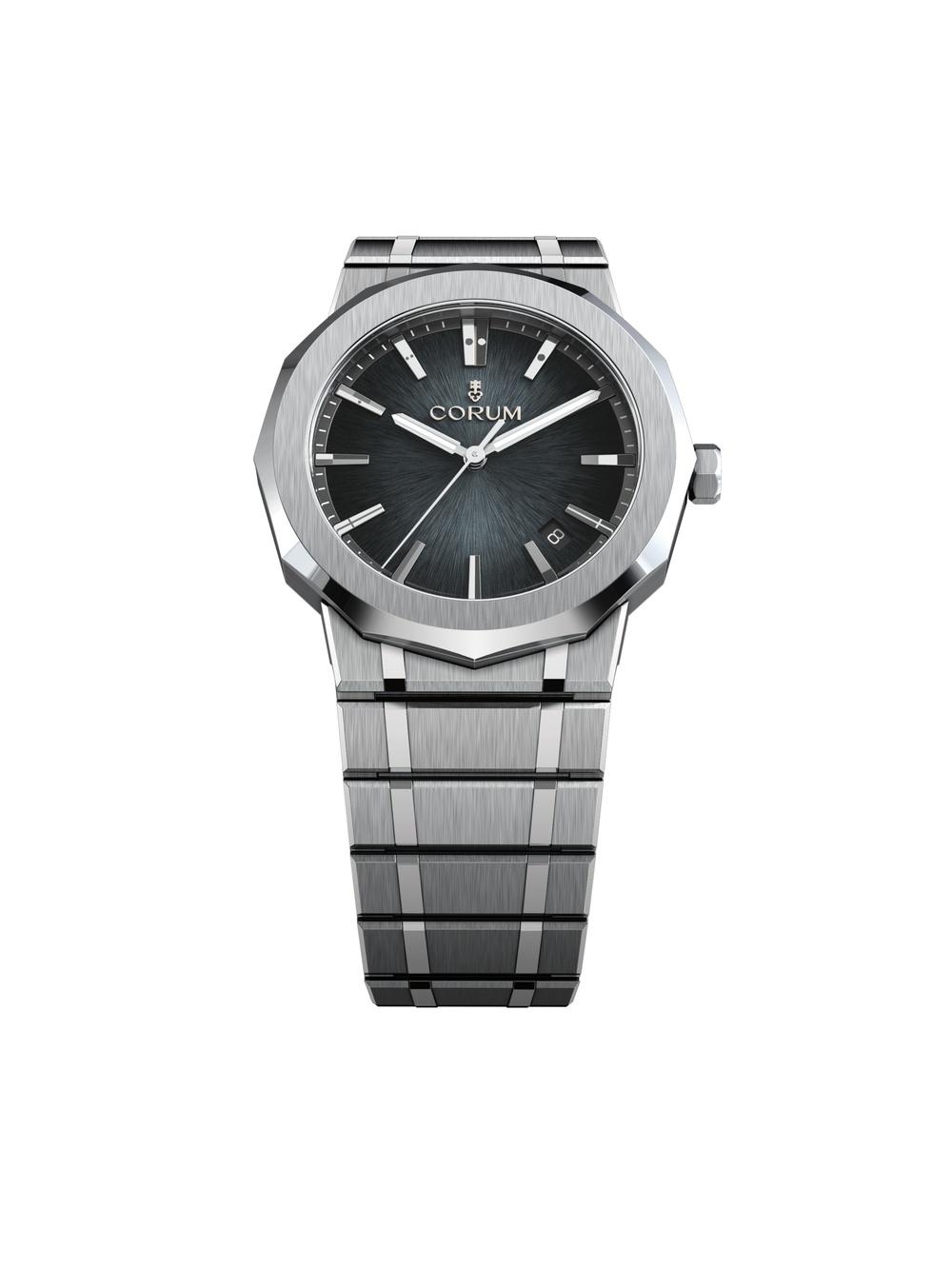
The result is the new Admiral (sans Cup), the flagship of Corum’s relaunch. On the outside, it retains the 12-sided bezel that defined the original, but a touch more modern with brushed and polished finishing, now in a 36mm or 39mm case in steel, rose gold or bi-colour. The key change here is the new integrated bracelet, a natural extension of the case with links that taper towards the slimmer deployant clasp. The twin lines of polished links separate it from the myriad other flat-linked, well-machined bracelets out there with a distinctive V-shape on both sides.
The dials are a mix of old and new. The original Admiral’s Cup was famous for its indexes, which took the form of regatta flags. That meant a busy range of bright colours that clashed in a distinctive, charming way. Gueit’s version is much more streamlined. The applied indexes are a similar shape to those flags, but smaller and monochromatic, with subtle, grey versions of the original designs, blending that heritage touch with a much more wearable look. And if you’re a collector that misses the red, yellow and white of the originals, there is a new Admiral that keeps the colour, paired with a wavy blue dial.
Other dials include brown and grey gradients paired with rose gold, a sunray black version and a meteorite. While meteorite’s popular at the moment, this is actually a heritage touch for Corum, having made the first meteorite dials in 1986. I personally find that the combination of silvers and greys across the applied indexes gets lost in the dial’s signature Widmanstätten pattern.
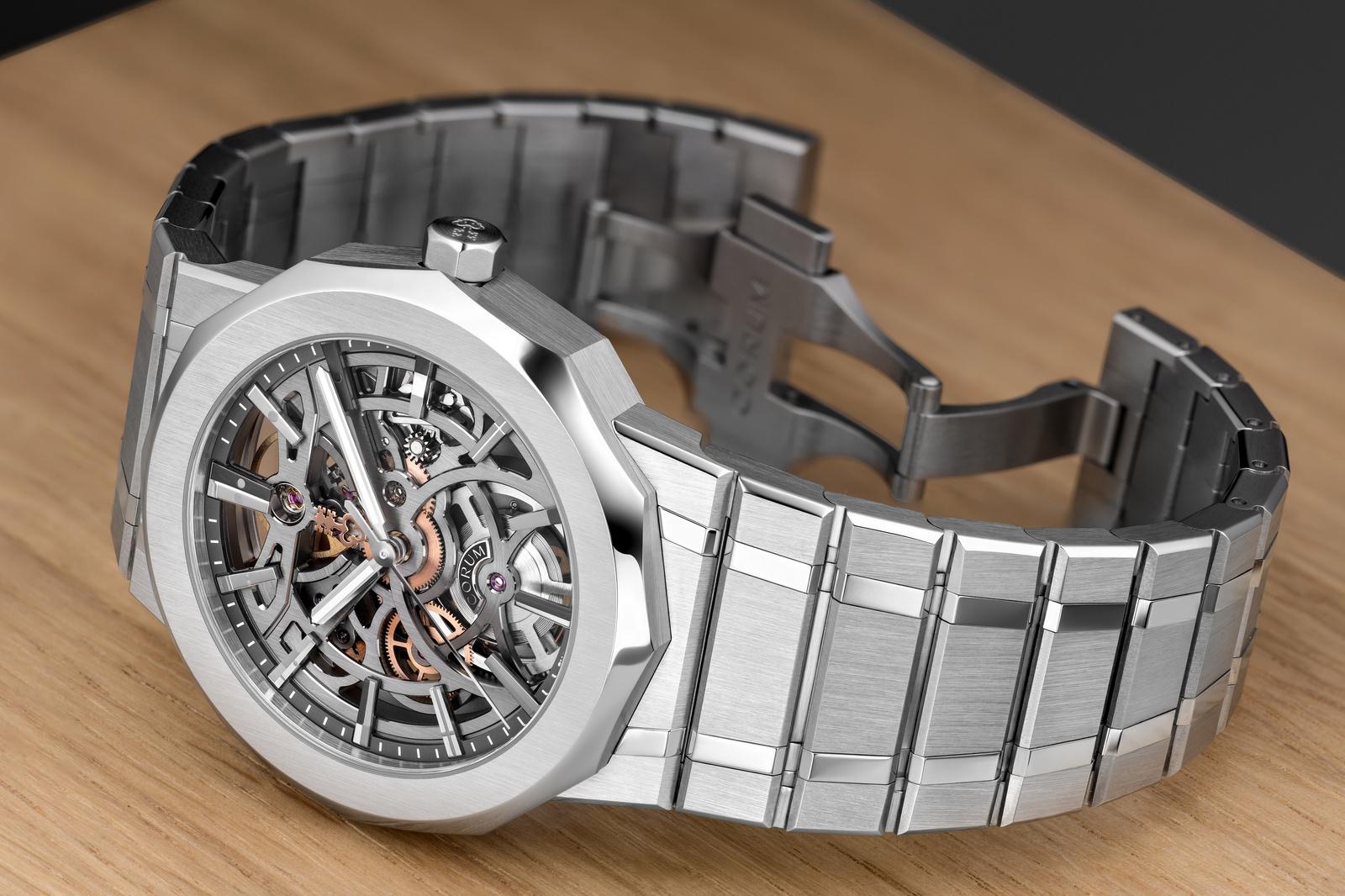
There is also a skeletonised version of the Admiral that stands out for two reasons. It’s both the first Admiral watch ever to have a skeletonised dial and the first in titanium. Lightweight titanium is a natural fit for a sports watch like this, and while they can be divisive, the lack of a traditional dial really shows off the movement underneath.
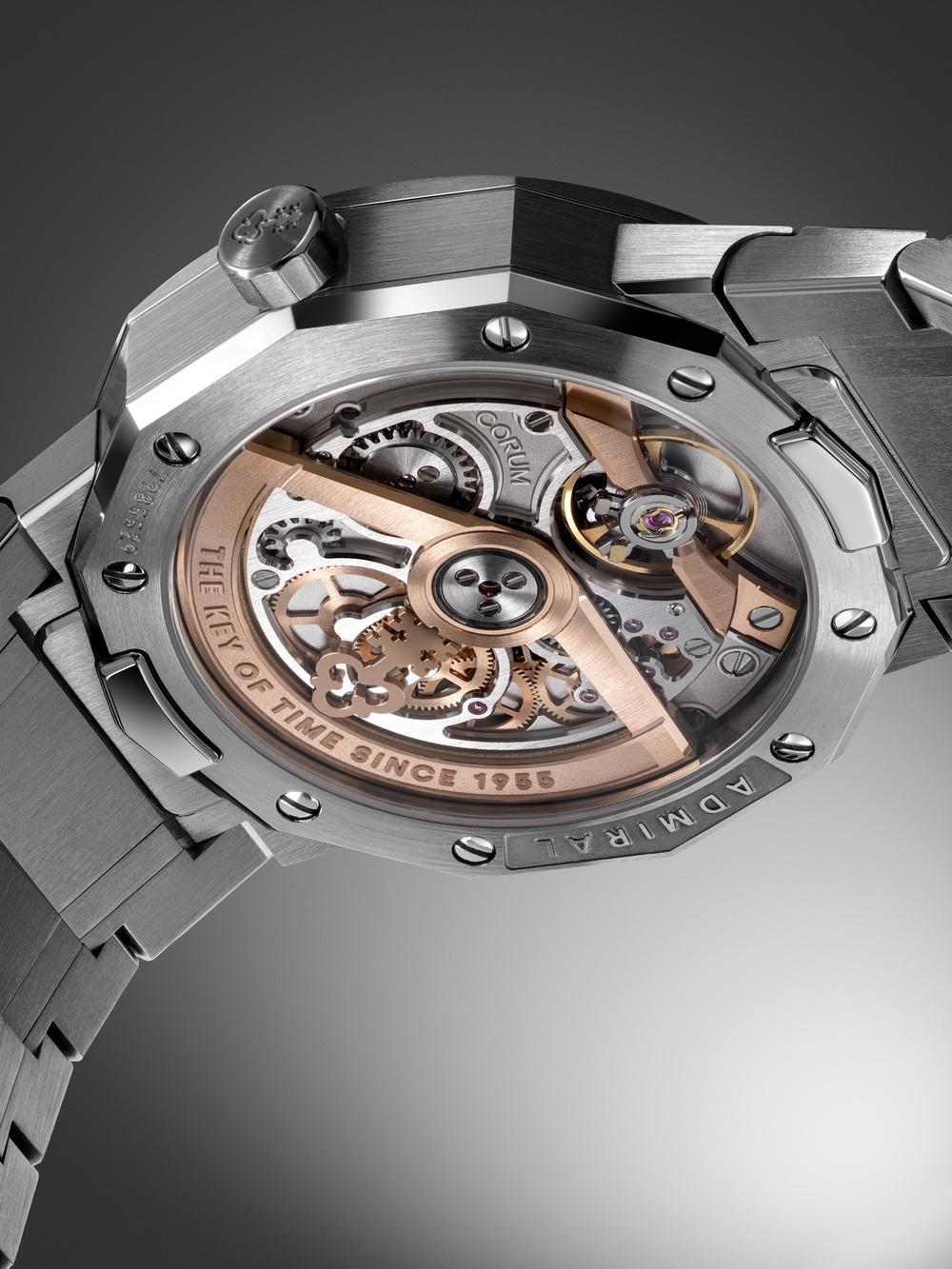
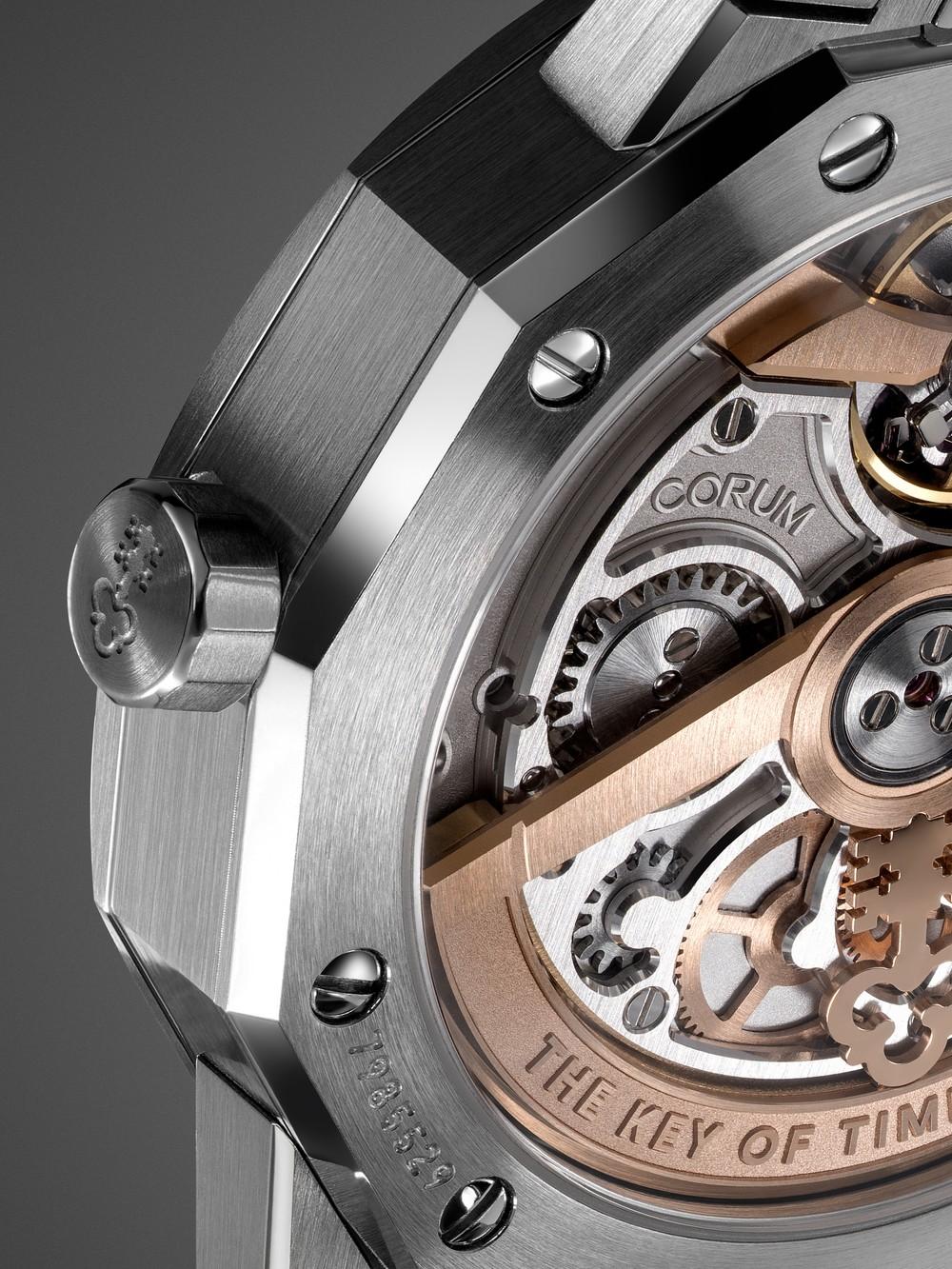
That movement is the result of Concepto’s eight-month development time, the CO231. This has all the specs you’d expect from a brand looking to elevate its watchmaking: a 72-hour power reserve, 4 Hz frequency. Rose gold bridges hold the balance in place and the rose gold rotor spotlighting Corum’s key logo has been skeletonised for a better view of the movement itself. If Corum are aiming to bring a movement like this in-house with its technical elements and finishing under one roof, they’re aiming high.
The same goes for their prices, which range from CHF 10,700 (approx. £10,150) for the 36mm Admiral in steel to CHF 33,000 (approx. £31,250) for 39mm of rose gold. It’s a massive increase from where Corum were three years ago, but it’s also right where Corum should be.
It’s been less than a year since Corum’s relaunch began in earnest and it shows. The Admiral is a solid new flagship for the watchmaker, but it’s still very early days. Along with bringing watchmaking back in-house, Corum have promised a new Golden Bridge, with potential complications in the future and archival limited editions, both of which have yet to materialise beyond renders. What Mehmedovic and his team have achieved is already impressive. But there’s still a long way to go before we can say definitively that Corum is back.
Price and Specs:
More details at Corum.


Looks like a copy of the Chopard Alpine Eagle?
My first thought as well but can anyone make an integrated bracelet at this point without looking like something that has come before?