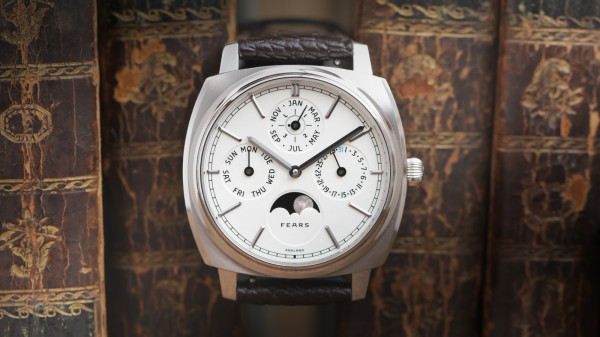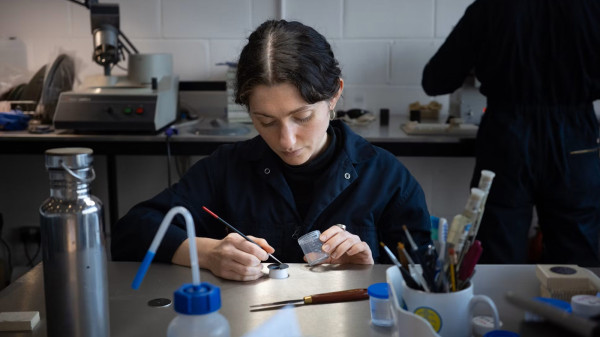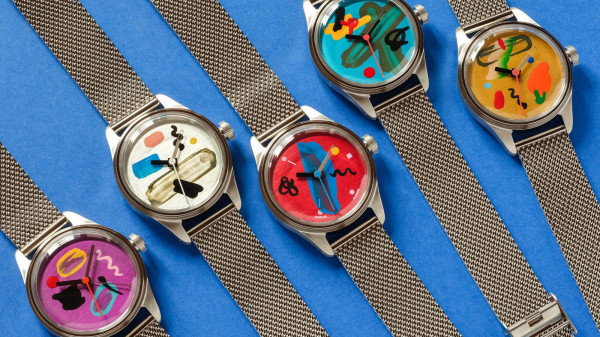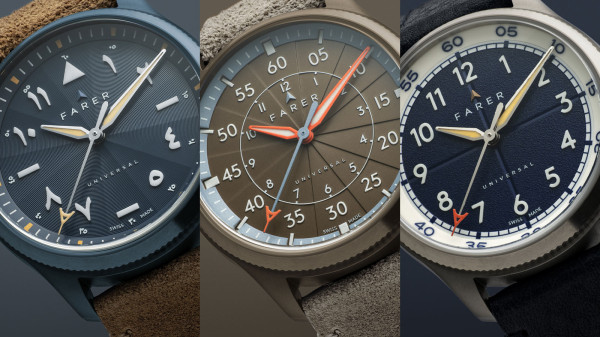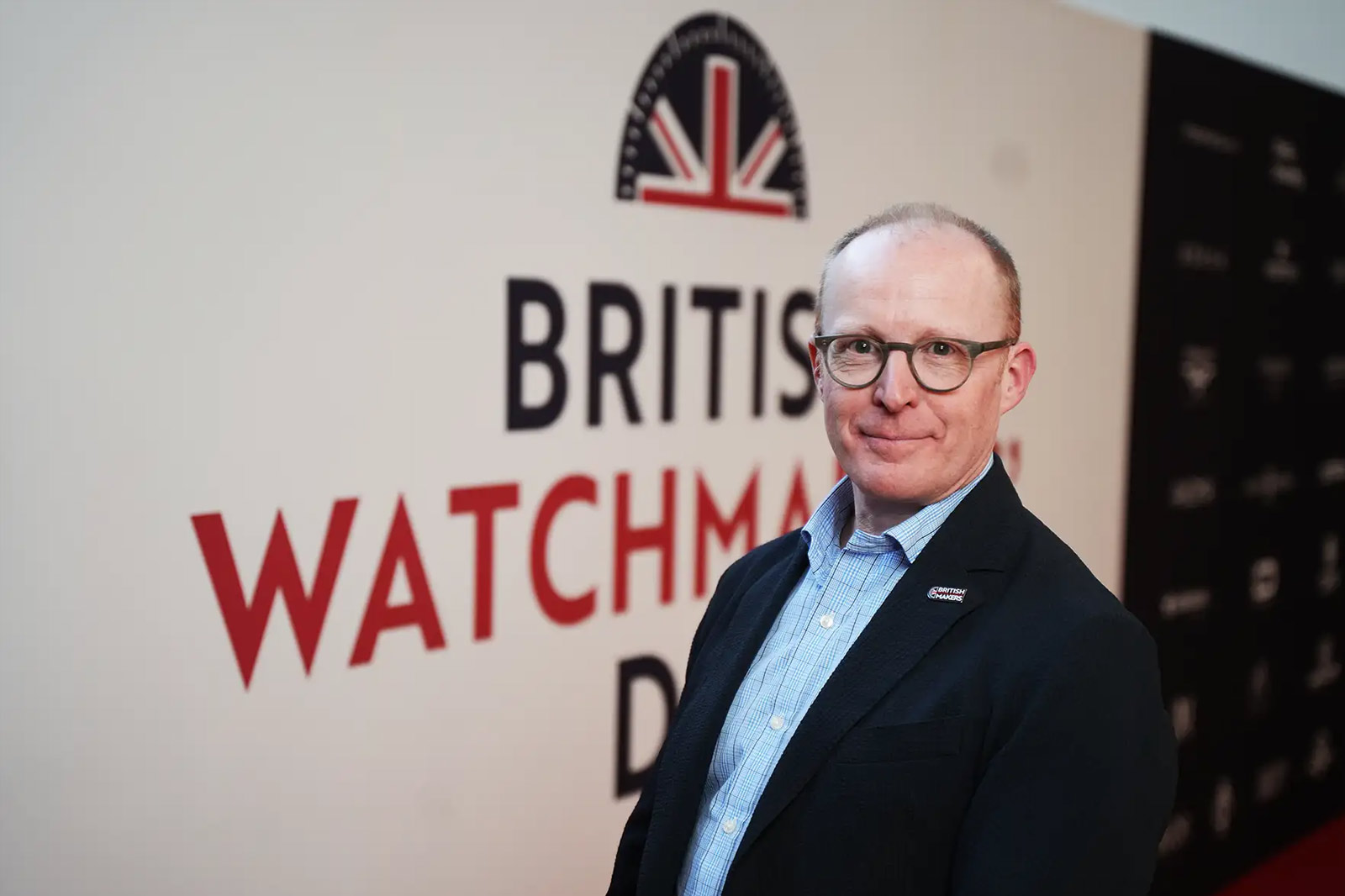
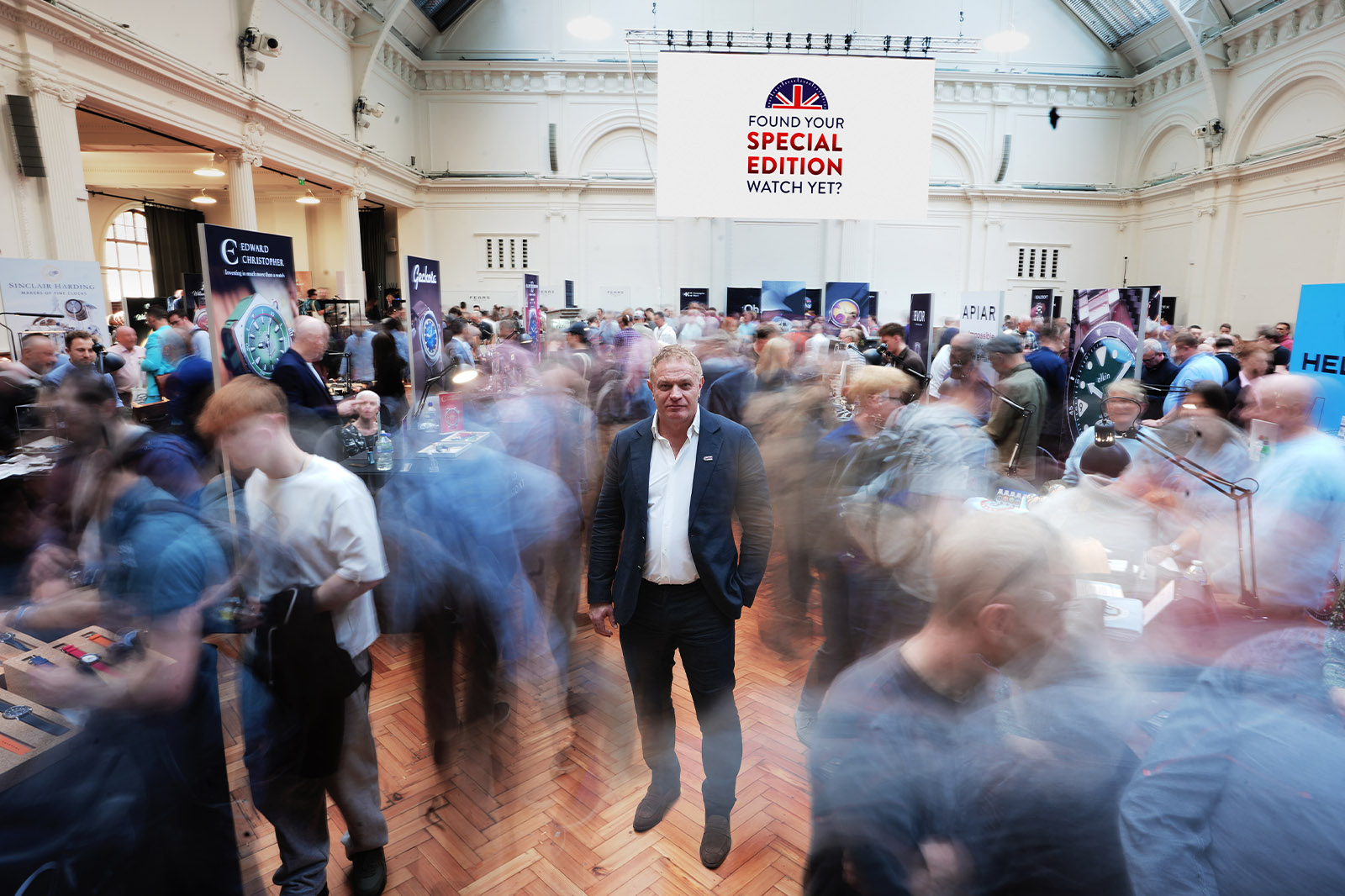
British watchmaking is on the up. You don’t need to take my word for it; our homegrown watch industry has grown 18% year-on-year in a climate that’s… well, let’s just say it’s tough out there. And if you’re still not convinced, take a look at the monolithic British Watchmakers’ Day, now one of the most genuinely exciting horological events on the calendar – not just in London, but in the world.
More convincing than Bellwether reports and limited-edition-littered halls however are the people behind the numbers and crowds: the Alliance of British Watch and Clock Makers. Who better to talk to for this rather patriotic issue then than the inimitable Alistair Audsley and legendary watchmaker Roger Smith?
So, we sat down with two-thirds of the founding fathers of the Alliance (the third of course being Christopher Ward’s Mike France) to discuss the state of the union, the future of genuine watchmaking in the UK and whether the Made in Britain label even matters.
Roger, for those who might not know, how would you describe Alistair?
Roger: In short, without Alastair, the Alliance of British Watch and Clock Makers wouldn’t have started. Mike and I had these crazy ideas as to what possibly could be done in terms of setting up a new body to oversee watchmaking. But Alistair is the person who actually gathers our garbled thoughts together and makes sense of them. He actually goes out there and gets things done.
And Alistair, same question to you about Roger…
Alistair: Well, that’s a lot easier. Roger is the finest watchmaker in the world. It would have been a lot harder to gather as many watch brands as we have without him. He’s a talisman for the British sector but also slightly outside the usual tussles brands go through. He didn’t need to do this; his order book is closed. The fact that he helped found the Alliance shows that what we’re doing is in good faith.
Historically, Britain had an incredibly strong watch industry. In brief, what happened?
Roger: It basically didn’t modernise. The world was industrialising and indeed many British industries went along with it, moving forward into the modern world. British watchmakers were given the opportunity, to buy new equipment, bring in new processes, but for whatever reason they just didn’t want to. And that was the start of the long, slow, painful demise of British watchmaking.
Alistair: Yeah, to echo that, I always call it a classic example of snatching defeat from the jaws of victory. We were making more than 50% of the world’s entire output of watches in around 1850. And in the succeeding 150 years you go from that to Smith’s closing their doors in 1979 and signing off as our last mass maker of watches. It was down to both a protectionist attitude and looking through the rearview mirror. The people in charge couldn’t see or perhaps just refused to see where things were going. It’s sad to think that the UK was one of the original fountainheads of the Industrial Revolution and we let it slip away. Still, slowly but surely we’re starting to see a resurgence.
Speaking of that resurgence, the British watch industry’s once again on the up. But what’s its greatest strength compared to the watchmaking old guard?
Roger: For me, it’s that everything’s so new and fresh. We’ve been able to approach the idea of British watches from a completely new direction. All these new brands, they’re not run by traditional watchmakers, they’re not held back by the past. In fact, I think I’m probably the only classically trained watchmaker in the Alliance; the rest have come to watchmaking as entrepreneurs.
Then there’s transparency. From the outset we wanted to encourage honesty, to understand that it doesn’t matter if your movements come from China, Japan, wherever, you just need to let people know. That’s given us a refreshing edge compared to less… open parts of the world.
Alistair: In the Alliance’s Bellwether Report, pretty much 100% of respondents said they design fully in-house, and if you think about watches more as a creative industry than a manufacturing one, that’s our greatest strength. As Roger always says, ‘you can’t build an industry doing what I do’. We often like to talk about Tompion, Arnold, Burnshaw, Harrison, but the modern British watch industry has more to do with those phenomenal John Cleese ads from the 1970s and ‘80s – you know, ‘accurist, accurankle’. We have a wit and irreverence that helps us stand out. We don’t take our watches too seriously. Other than Roger, of course.
So, the flipside: what’s the biggest thing holding British watchmaking back?
Alistair: I’d actually challenge that premise in that nothing we’re doing or not doing is holding us back. British watchmaking has grown significantly. But what we’re fighting against are economic headwinds. It’s the same for a lot of sectors. I’m fortunate enough to sit on panels for consumer trade bodies from furniture to shoemaking to jewellery and the story’s the same everywhere: please can the government get out of our way and help create an environment that promotes growth? It’s higher business rates, higher costs, it’s more difficult to justify employing young, untrained people, all of these are drag anchors for us and every other British industry.
Roger: I’m slightly cocooned to it, being sequestered on the Isle of Man and working in my particular world. But the issues are there and speaking to other watch brands, exports are a real challenge, particularly in America. But that’s just the economic reality we’re in. Even I’ve had clients who had to think hard about whether to make what is undoubtedly a massive purchase. But these are challenges worldwide, not just here.
Alistair: yeah, it doesn’t matter whether it’s a £120 Accurist or one of Roger’s watches. It’s a luxury purchase and it’s a hard climate to be selling something made redundant by the clock on a washing machine.

Alistair, you briefly mentioned the trade panels you’re on and Roger mentioned the export market. So how important actually is the Made in Britain label?
Alistair: It’s not. Don’t get me wrong, we’d love to see 100% British watches. But you’ve got to look at the practicalities. For some industries it makes a lot of sense and there’s no reason to not go for the Made in Britain label. Shoemaking for example requires a lot of skill, but it doesn’t need microengineering we have no infrastructure for.
It basically comes down to consumer value. If we tried to make a fully Made in Britain watch at scale, it would be more expensive and work worse than if we bought in the parts. And I think while lots of buyers say they value Made in Britain, when it comes down to paying for it, they often go the other way.
Roger: We do still know how to create things. Gunmakers, shoemakers, tailors, we have incredible knowledge and expertise. We just don’t have that in watches – not yet, at least.
The Alliance Bellwether Report mentions massive growth, as we’ve discussed, but it also highlights a worrying talent shortage. What are you doing to close the gap?
Roger: We’re painfully aware of the situation, and forewarned is forearmed. That’s why we’ve been talking to the three main watchmaking establishments in the UK: the British School of Watchmaking, Birmingham City University, and West Dean College. Last year we had representatives from each at British Watchmakers’ Day and that was a wake-up call for them. They were excited that something was actually happening! So, we’re going to be conducting another Bellwether report with them to get a handle on the state of watchmaking education.
Alistair: Before you know where you’re going you have to know where you are. Once we do, we can put a strategy together. It’s still early days, but you can expect plenty more information early 2026. There are massive opportunities here, we just need to make sure we take the next steps carefully.
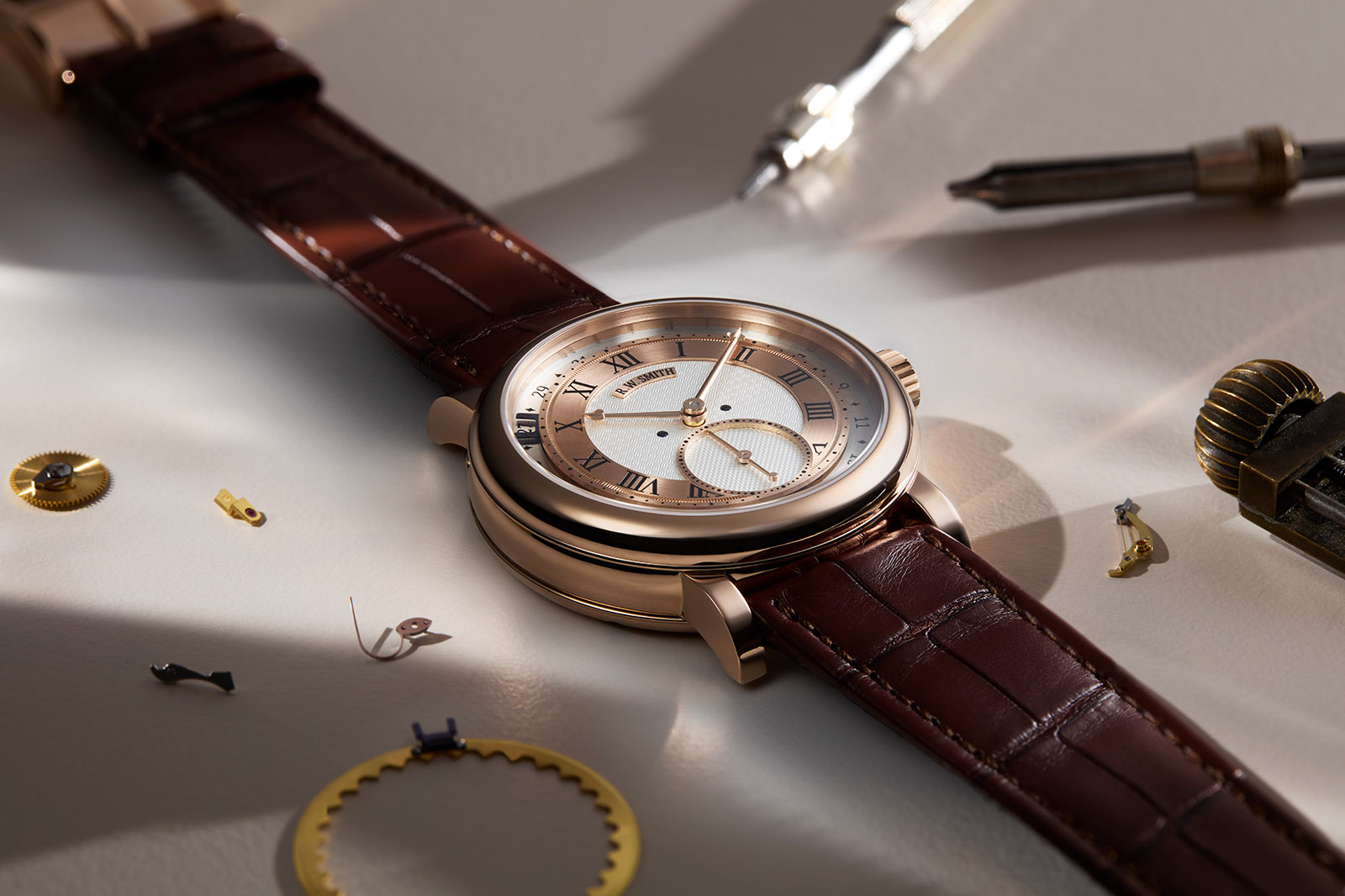
Roger, your order book is closed with the Series 6 and as, in Alistair’s words, the ‘Greatest Watchmaker in the World’, how are you ensuring that your skills and expertise outlast you?
Roger: gosh, that’s something we recognised six/seven years ago and we’ve been working on ever since. We kind of realised that myself and Andy Jones, who I share an office with, had too much in our heads and that if anything happened to us it would be game over for Roger Smith watches. I wanted this to be a generational business, to continue long after I’m gone. We’ve got 15 people here all dependent on the business surviving, so we set about documenting everything, make sure that everyone knows what we know. I can happily say that I could now drop dead at any moment and the workshop would carry on.
It’s not just our watchmakers though. Our work has a real focus on precision timekeeping and preserving skills that have been lost elsewhere. It’s not just Roger Smith watches that can now keep going; it’s the skills that underpin what we do. In that, we’re in a good place.
So, do you see more potential for British watches in your artisan approach or mass production?
Roger: I always hoped there would be more people joining me on this journey. I mean, we have Rebecca Struthers making very handmade watches and a couple of others. But even if you have 10 to 20 Roger Smith watches, that’s not an industry. The only hope for the sector is more people, more volume. The more brands there are, the more likely some of them will group together and think, ‘ok, let’s open a case maker’. Possibly hands. We can all buy the same machinery they use in China and Switzerland. There just needs to be the demand.
Alistair: You’re absolutely right Roger. I see watchmaking as a classic example of let the market forces happen and I think it will find natural, organic growth. Our last case maker was Dennison, which closed in 1969, but that does feel like a viable activity to bring back. In the New Year we’ll hit 120 Alliance brands. When you look at that, it starts feeling like an investible market, doesn’t it? I mean, we’re already bringing assembly back; just look at Studio Underd0g and Horologium.

Innovation is always a buzzword in watchmaking, but do things like Rolex’s Dynapulse escapement and other advancements actually matter?
Roger: I’ll try to be as pleasant as possible here. I come from a background that’s all about the development of mechanical precision and has been since I made by first pocket watch, oh, 35, 36 years ago. Next year my Series 2 will be 20 years old, and that’s when we started developing the Daniels coaxial escapement, something we’ve been improving and refining ever since. So, while you need to applaud the creativity and ingenuity and so on of all these brands, when I look at these things I see overcomplication. And once you start overcomplicating the process, you introduce service interval issues and weaknesses within the watch. When it comes down to it, I think George [Daniels] would have described all these novel escapements as Christmas baubles.
Escapements aside, what’s the biggest misconception watch lovers might have about the Swiss watch industry?
Roger: Perhaps you want to tackle that diplomatically Alistair?
Alistair: I think one of the biggest would be the extent of Swiss Made. We’ve been driven to buying in movements, cases and hands by practicalities. We lost our manufacturing capabilities. The Swiss didn’t, but they’re doing largely the same thing, just for profit margin instead. I think there’s probably a lot more of an international supply chain in Switzerland than collectors may realise. I know with many of our brands who have been working with the Swiss, there’s been this sense of ‘wait, why don’t we just go to where they get their stuff from?’
Then I think there’s a lot of mythologising of brands. The Swiss have built an incredible industry around that mythology. But when you look at intrinsic value… I think British watches stack up incredibly well.
Given how much of each British watch is bought in, is there room for genuine innovation in the British watch industry?
Roger: Look at a brand like Christopher Ward. They might not have the mechanical timekeeping approach I do, where innovation is getting an extra five years out of your service intervals. They are disruptors, creating some extraordinary watches like the Bel Canto and the recent Alliance watch. They’re making people talk and that’s where the real potential for innovation is.
Alistair: It’s only going one way and we’ll see more and more innovation as our watch brands get closer to the process. I mean, Simon Jeffs at Brooklands now has two patents on his racing tachymeter and high-speed tachymeter. He’s invested a huge amount but they’re genuine innovations, largely because he’s coming at it from an aerospace, mechanical engineering background.
I suppose one of the barriers is that our potential innovators are kind of standing outside the manufacturing atelier with their noses pressed up against the window trying to work out what’s going on in there. As long as that’s happening, it’s going to be harder to innovate.
You mentioned that the Alliance is likely to hit 120 members in the New Year. Is there any danger of an oversaturation of British watch brands?
Roger: I think it’s a bit of natural selection. I’ve been thinking about this recently, actually. One of our responsibilities as the Alliance of British Watch and Clock Makers is to have these conversations. I think the door is wide open for other types of watches, dress watches, precious metals and so on. I think that will happen and that it’s got to happen.
Alistair: I agree, it’s a crowded market for undifferentiated watches, and it’s only going to get harder for someone entering the market, maybe as a Kickstarter without enough runway to build the brand. It comes down to one question: why should I care? If you’re a new watch company, why should I care about what you’re making? And if you can’t answer that, you’re quickly going to be in trouble. Look at the British Watchmakers event. I call that Darwinism in a day. You either do incredibly well or watch the queues form everywhere else. You can learn more from that one experience than a year of brand development.

So, what about bad actors? How does the Alliance deal with members whose values don’t line up with your own?
Alistair: There will always be the occasional bad apple and it’s simple, we eject the brand. Sadly, what often happens is there are consumer issues as a brand has quietly gone under without any announcement. It’s not good but it happens across all sectors. And we’re not a consumer protection entity; we don’t have those powers. But what we can do is manage our membership and encourage them to do things the right way. Generally, they don’t need that encouragement.
Blue sky thinking, where do you want British watchmaking to be in 10 years’ time?
Alistair: a fully onshore sector. Who wouldn’t want that?
Roger: Yeah, it would be great to have manufacturing back in Britain at some level. I mean, it’s thriving and growing so we could well be on track, but that’s the dream.
Alistair: I actually think that five years on from founding the Alliance we’ve achieved an awful lot of the dream. We came up with this ambitious Project One Billion, aiming to get the industry’s value to £1 billion by 2030. At the time that seemed like blue sky thinking but we’re well on track. So, who knows? Maybe we can bring back manufacturing. If we look to France as an example, they have their own manufacturing and when I invited Guillaume Adam, my equivalent over there, to British Watchmaker’s Day, he was amazed.
Roger: It’s all there for the taking, isn’t it? I think we’re hoping that some of those brands move out of the small business mindset, set up in a spare bedroom and developed from there. We need to get them to start thinking, ok, what about making 10,000 watches a year? If we can achieve that, Project One Billion’s definitely in reach.
More details at The Alliance of the British Watch & Clock Makers.