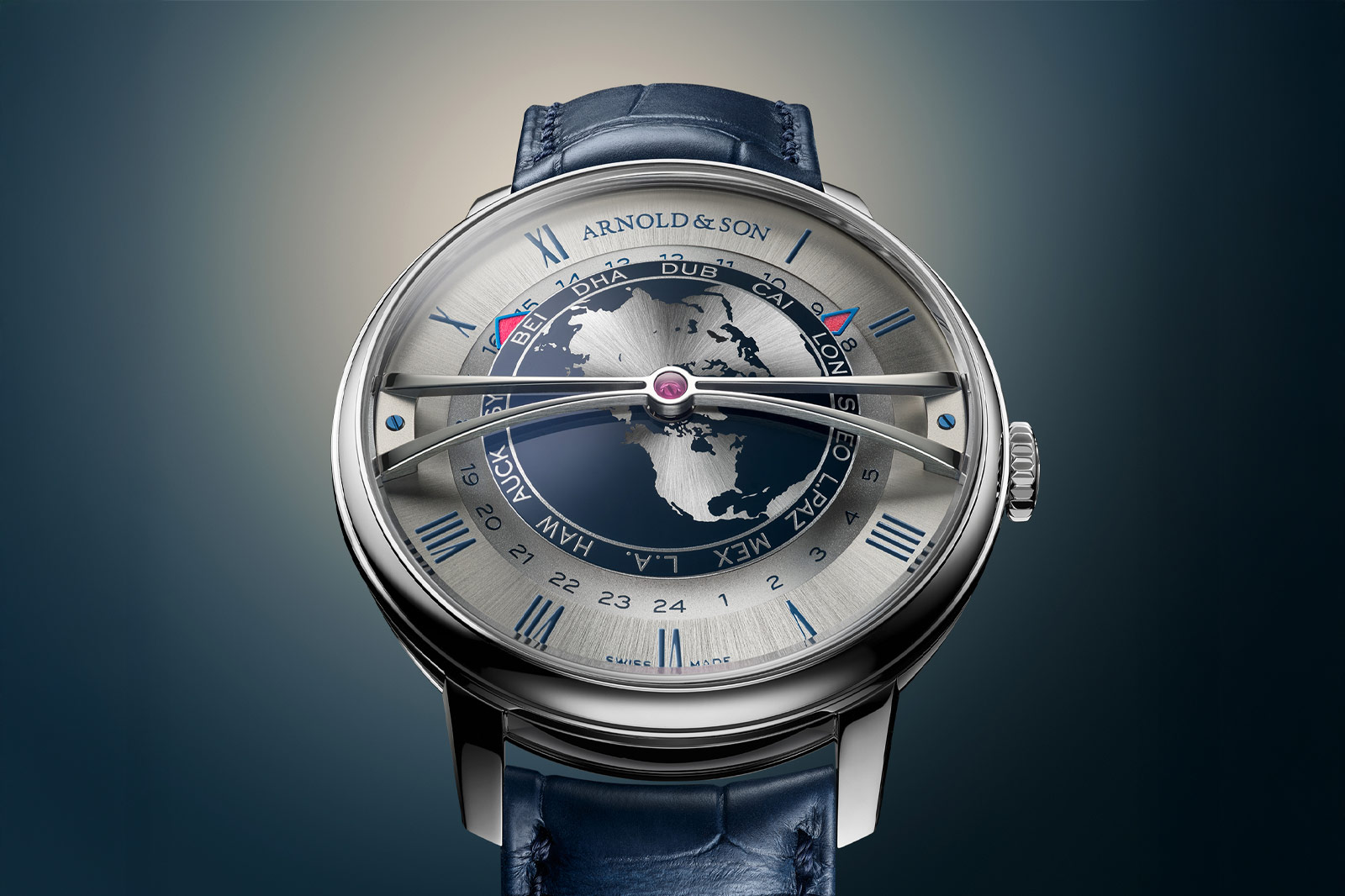
Arnold & Son have long been engaged in the pursuit of globetrotting. All the way back in the 1700s under the supervision of John Arnold himself, they produced marine chronometers that accompanied legendary adventurers like Captain James Cook and Rear-Admiral Antoine Bruny d’Entrecasteaux on their global travels. As such, travel complications like GMTs and Worldtimers have always been important to the brand. In 2025 they are updating their signature Worldtimer model, the Globetrotter, by downsizing it and improving its utility. The new piece is called the Globetrotter 42 Steel.
Starting with the case, it has been reduced from 45mm to 42mm with the thickness down from 17.26mm to 15mm. Not petite by any stretch but significantly more wearable than the previous iterations. It can now be described as ‘large’ as opposed to ‘huge’. Despite the reduction in size, it still maintains the signature style of the original model with a wide, round shape and smooth bezel that leads into a domed sapphire crystal.
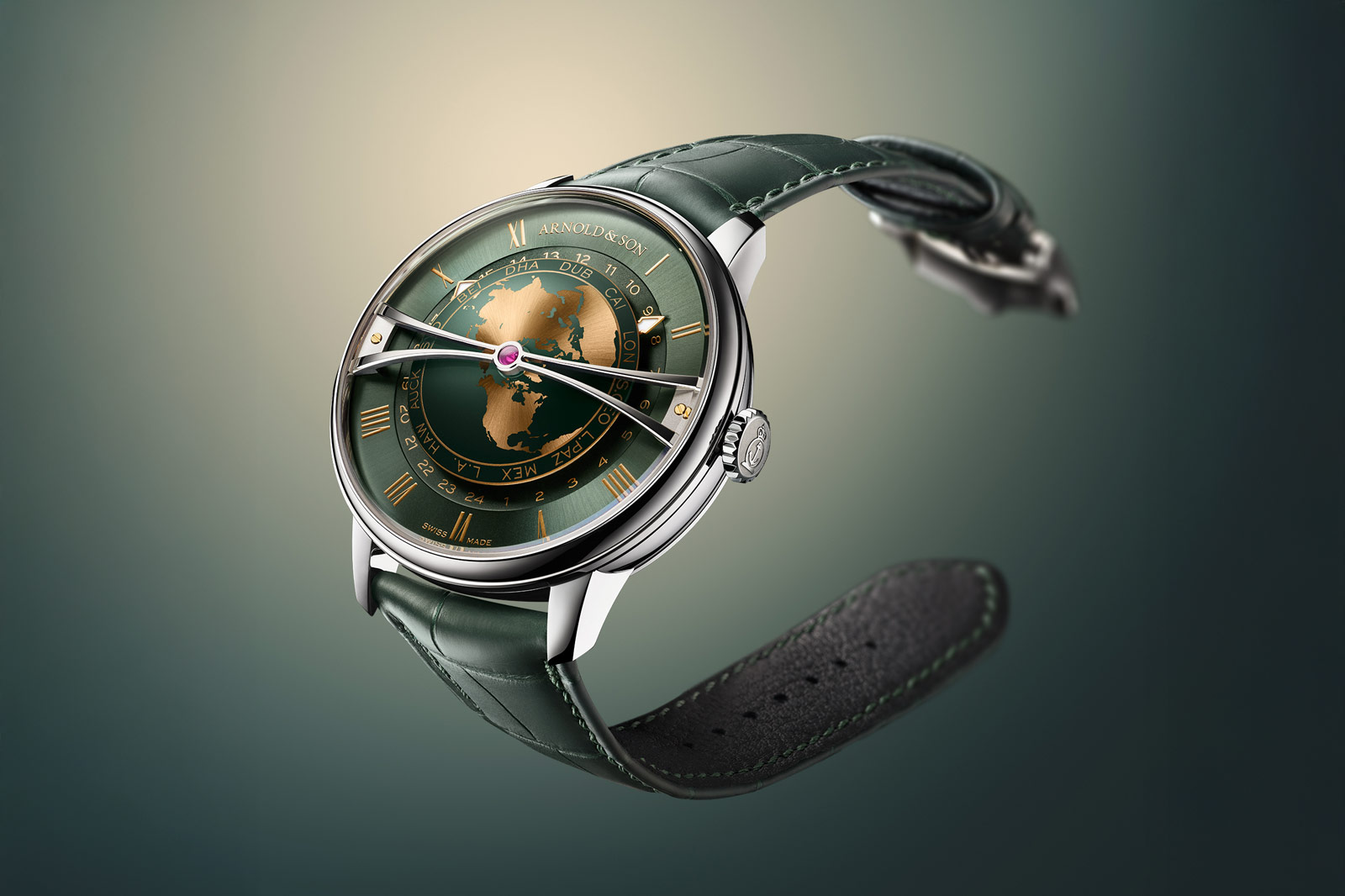
That dome shape is important for accommodating the Globetrotter’s globe-shaped worldtime display. It retains the arching bridge that flies over the top with its central jewel to support the rotating globe. One of the major changes with the update is the addition of a cities ring around the edge of that globe. However, it’s not the full 24 cities like you see on the majority of cities rings, instead highlighting only 12 of the world’s prominent hubs of civilisation. What’s amusing to me is that while the globe image depicts only the northern hemisphere, some of the cities on the ring are located in the southern hemisphere. Meaning you have situations where Sydney and Auckland seem to be pointing to the open ocean of the Pacific, as if they’ve had the Atlantis treatment.
Local time is read via an hour scale with Roman numerals around the outer edge that’s pointed to by hour and minute hands that orbit around the lip of the globe. The hands stand out dramatically in either white or red. That’s because there are two versions of the Globetrotter 42 Steel being produced, each named after London landmarks. There’s Strand Blue, in a combination of silver and blue, named after the street where John Arnold had his original shop. Then there’s Greenwich Green, unsurprisingly named for the Greenwich observatory that serves as the marker for GMT and the foundation of all time zones. An important piece of history for a worldtimer.
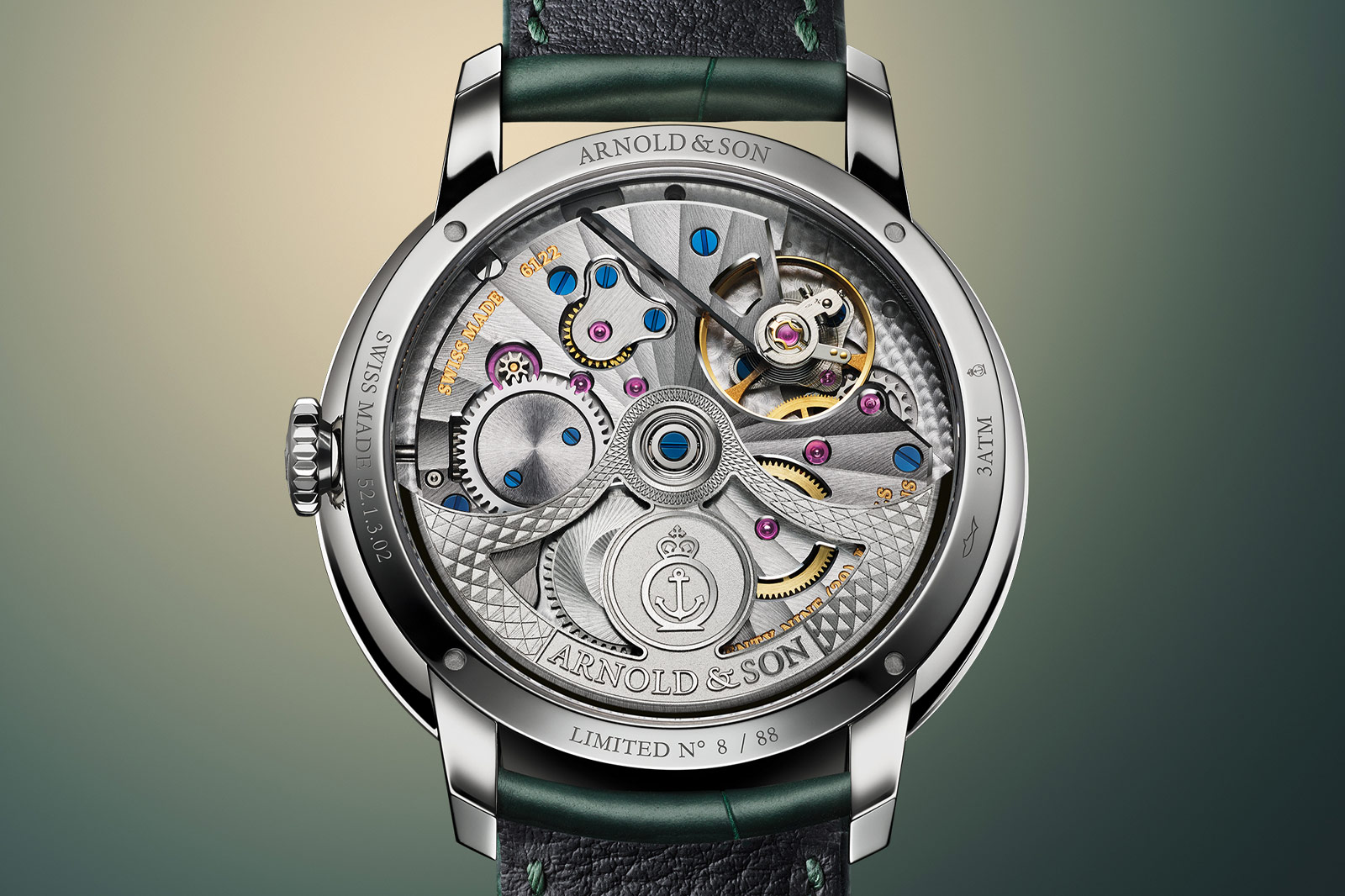
Powering the watch is the A&S6122 automatic calibre, an upgraded version of the 6022 used in previous Globetrotter references. The main difference is that the new edition of the movement features an improved 55-hour power reserve compared to 45-hours. A significant increase that boosts the quality of life for the calibre nicely. Aesthetically it’s as stunning as ever with its radial Côtes de Genève and perlage finishing.
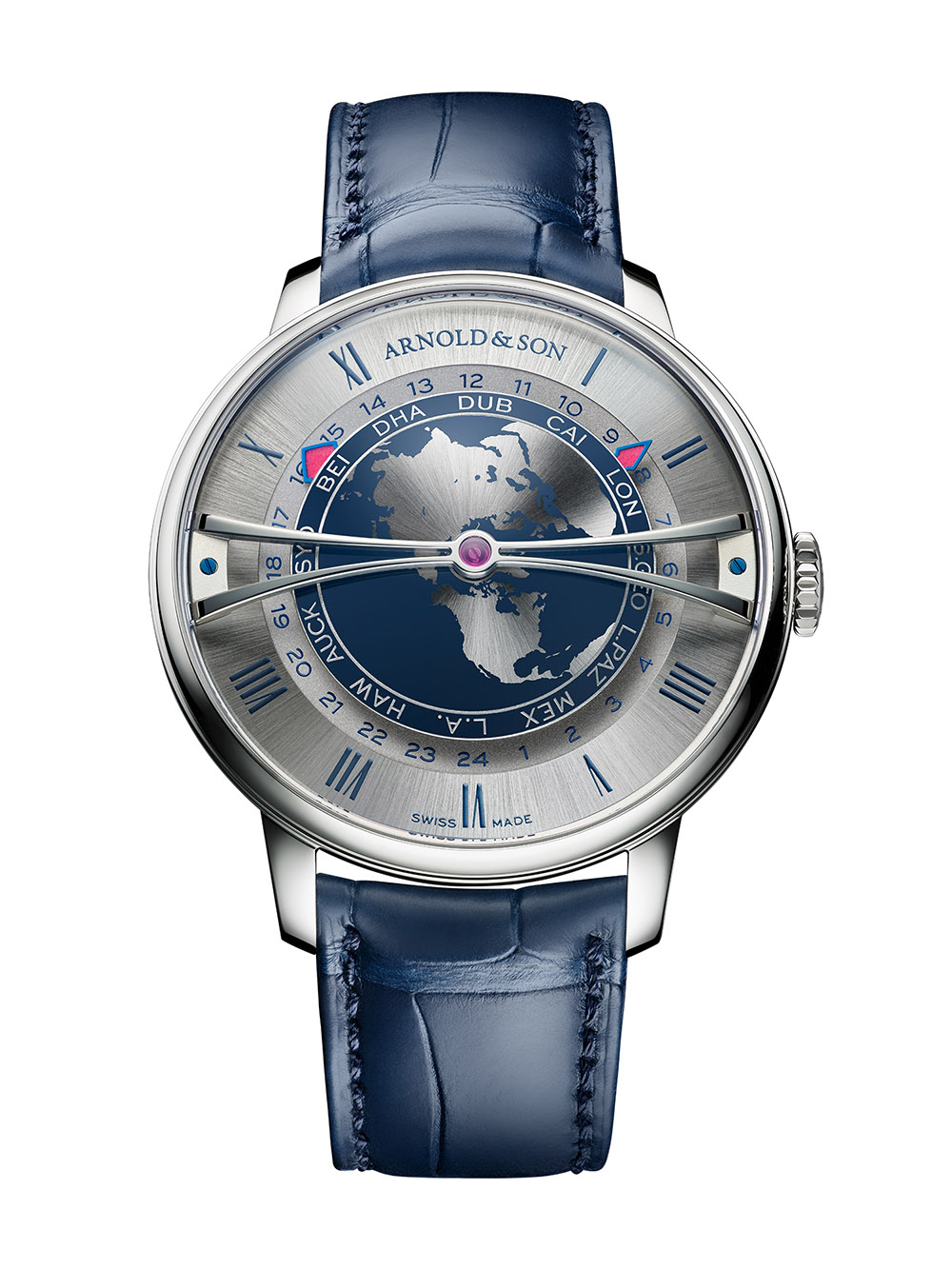
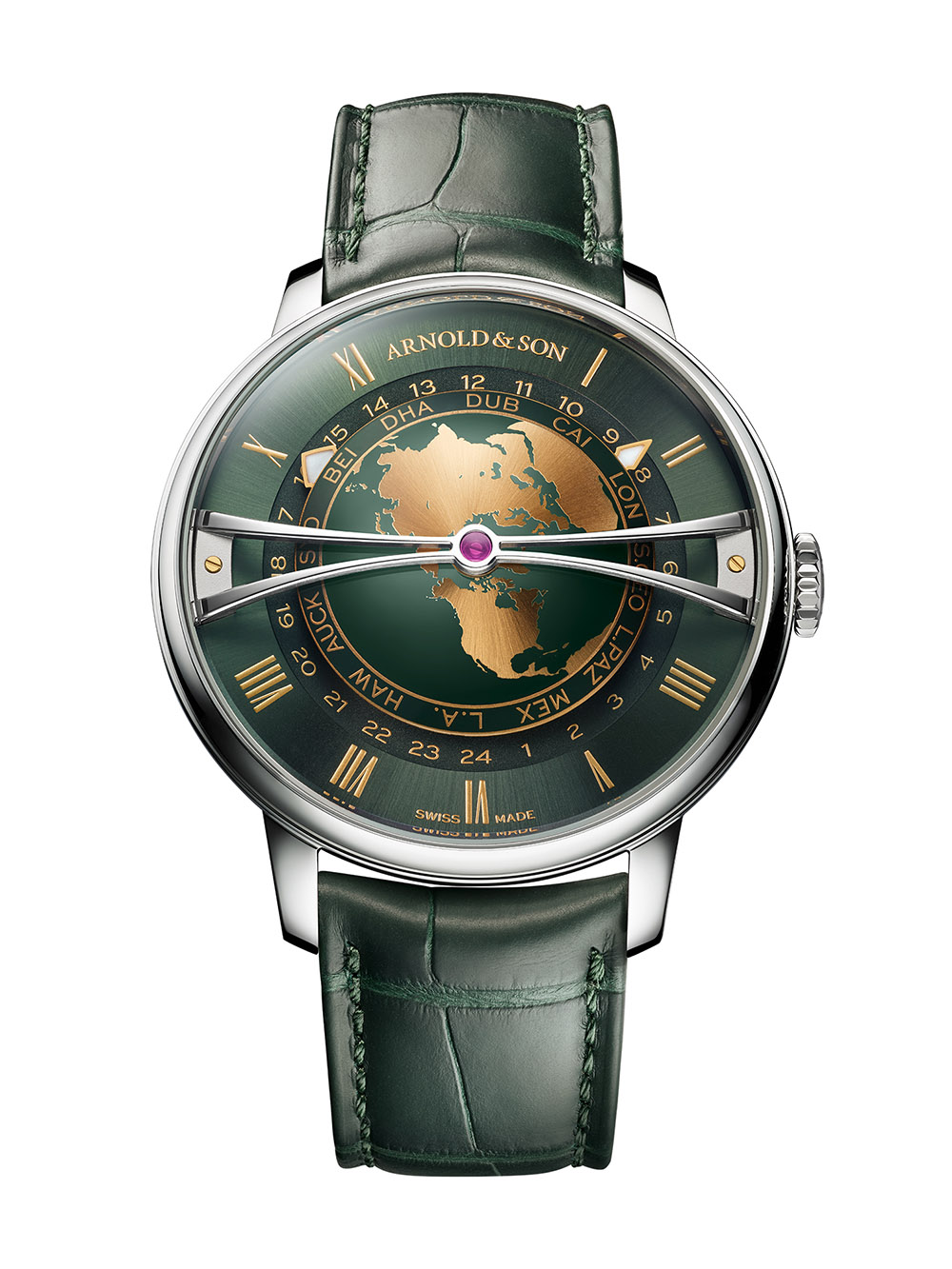
The Arnold & Son Globetrotter 42 Steel is limited to 88 pieces in each of its colours at a price of £18,100. That’s around £1,000 less than the current 45mm models in steel. Considering that the new watch is more wearable, offers more information on its dial with the addition of cities and has a superior power reserve, that seems like a win-win-win-win situation to me.
Price and Specs:
More details at Arnold & Son.


Arnold and Son watches are always beautiful, this World Timer, is no exception to this statement, my only comment is that the bridge feature (whilst being needed to support the moving globe feature), is too prominent. The review makes the point that specific time zones (in the southern hemisphere) are then shown in water masses rather than land masses, is obviously a shortcoming on this otherwise clever design.
I guess with this level of beauty and horological expertise, does get expensive, so, out of reach of us normal folk (but folk with good taste I must add). Having stated the pro’s and con’s, I would love to own one.