Given I recently had an oddly philosophical chat about watch archetypes and paperclips with Unimatic’s Giovanni Moro, I’ve been thinking recently about watch archetypes and how limiting they can be. Take the humble field watch as an example. You add anything to it beyond the time and it’s no longer a field watch. You make it bigger, embellish it in anyway way, it’s no longer a field watch. So how do you make it your own? According to Aera, make it pink.
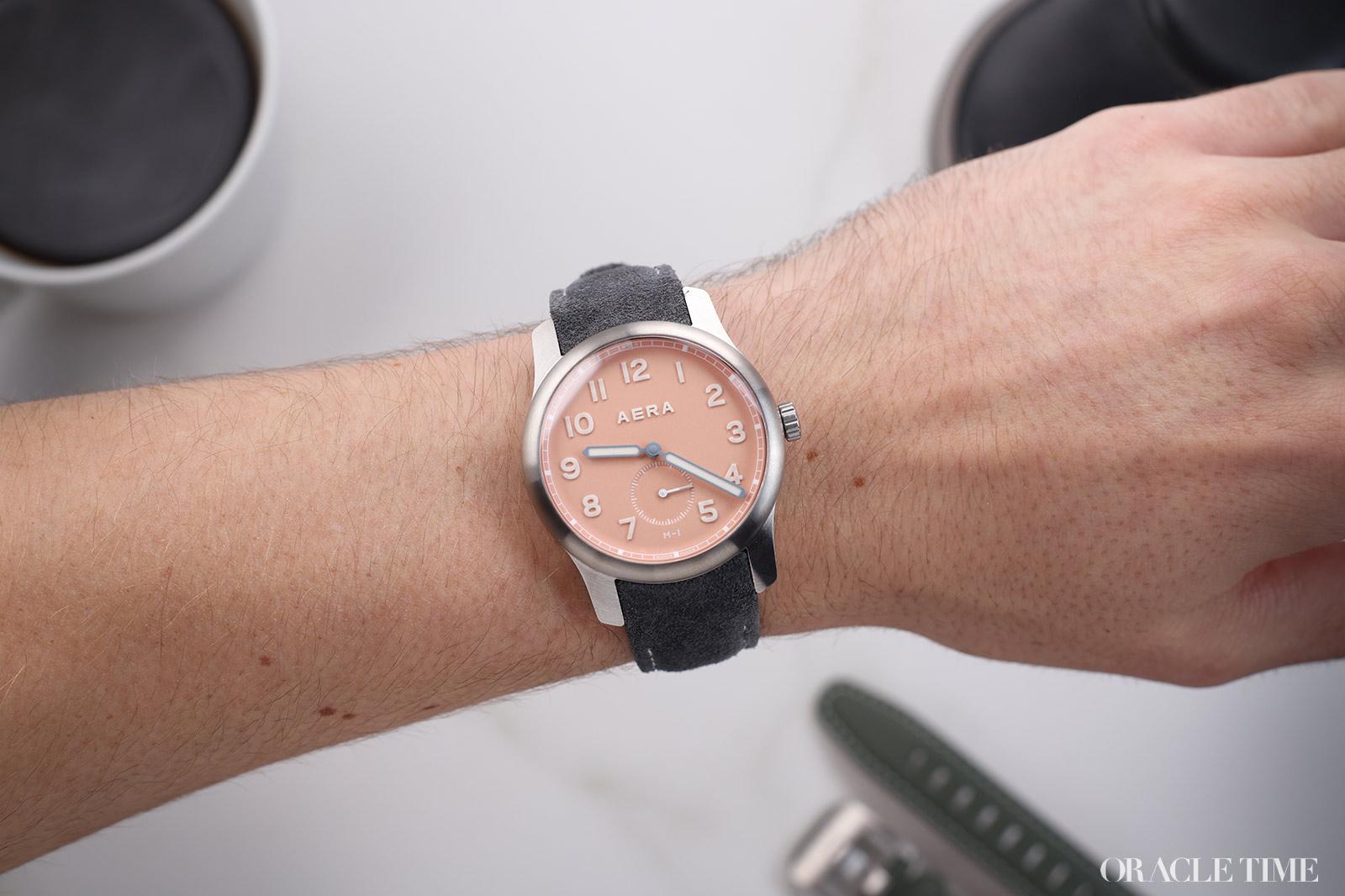
The British brand is a fan of the minimal, meaning the field watch is a fantastic playground for them. The M-1 Field and Blackbird take the classic Dirty Dozen look and a stealthier, blacked-out version respectively and at first glance the new M-1 Dune seems at odds. The M-1 has strong military links. What’s militaristic about pink? Well, that’s actually a really cool story. Back in the 60s, the SAS were operating in the desert territories of Oman. Like any spec ops group, they needed effective camouflage and the usual sand colours just weren’t cutting it. Then they realised why. They were mostly travelling at dawn and dusk, right when the sun was low over the dunes, colouring them a very particular shade of pink. Ever practical, the SAS painted up their 4X4s that exact same shade, a militarised fleet of Land Rovers dubbed the ‘Pink Panthers’.
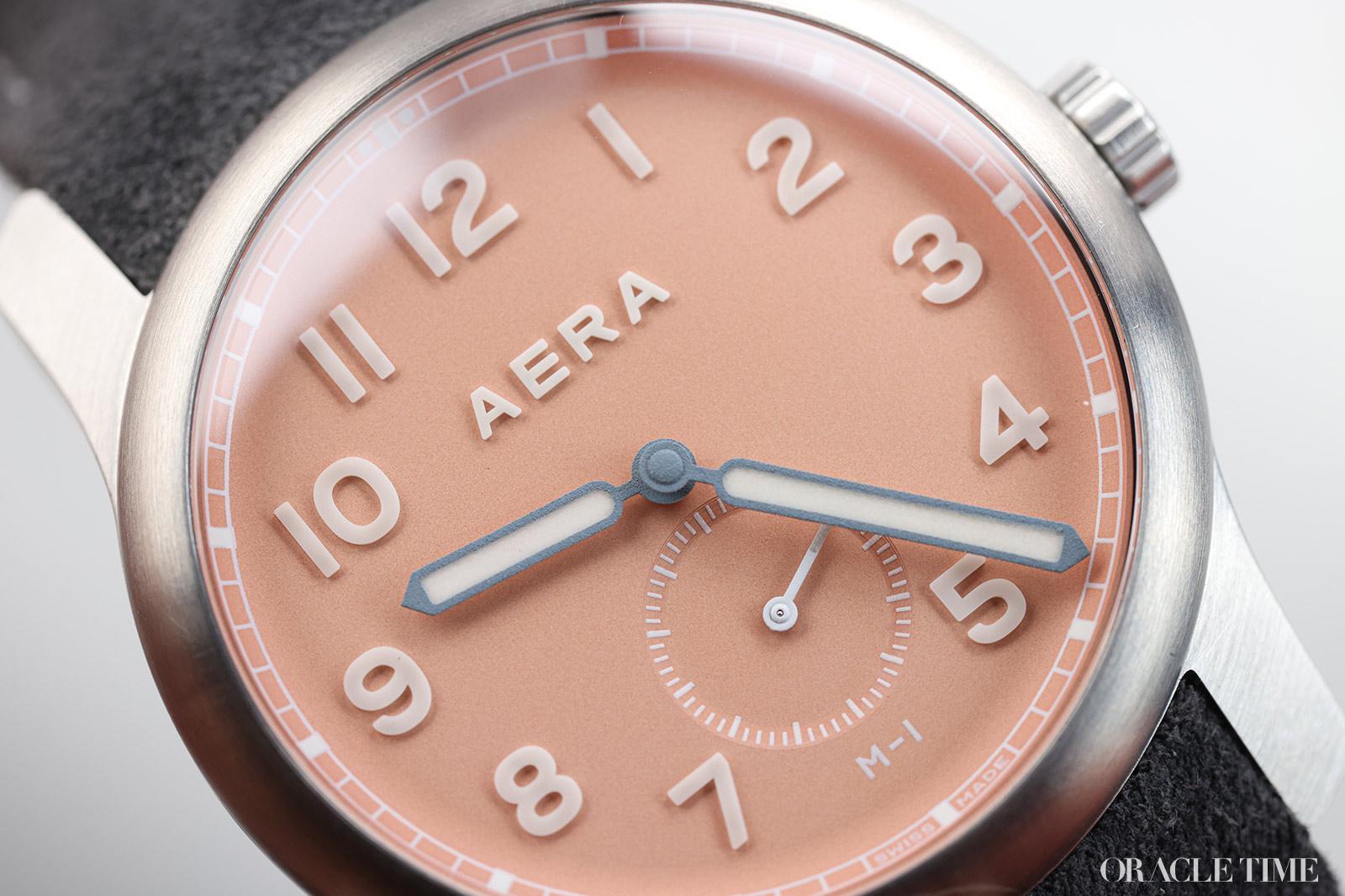
It’s that very shade of pink that Aera have used on the M-1 Dune – and the sands it was designed to camouflage the SAS in that gives the watch its name. It’s a really fun story and the kind of military deep cut that leads to late-night Wikipedia black holes of further reading. It also helps that it’s just a really nice colour. It’s a little more towards the coral end of the pinky spectrum, not as soft and feminine as baby pink but more pastel than, say, Tudor’s Miami shade.
In short, it’s a great summer shade that suits the white applied indexes, even if it’s not as high contrast as the harsher, black-and-white versions. The softer colour also helps pick out the overall shape of the dished dial, something that tends to get lost in black versions. Aera have put a lot of effort into the shape of things and any way of showing that off better is a welcome change.
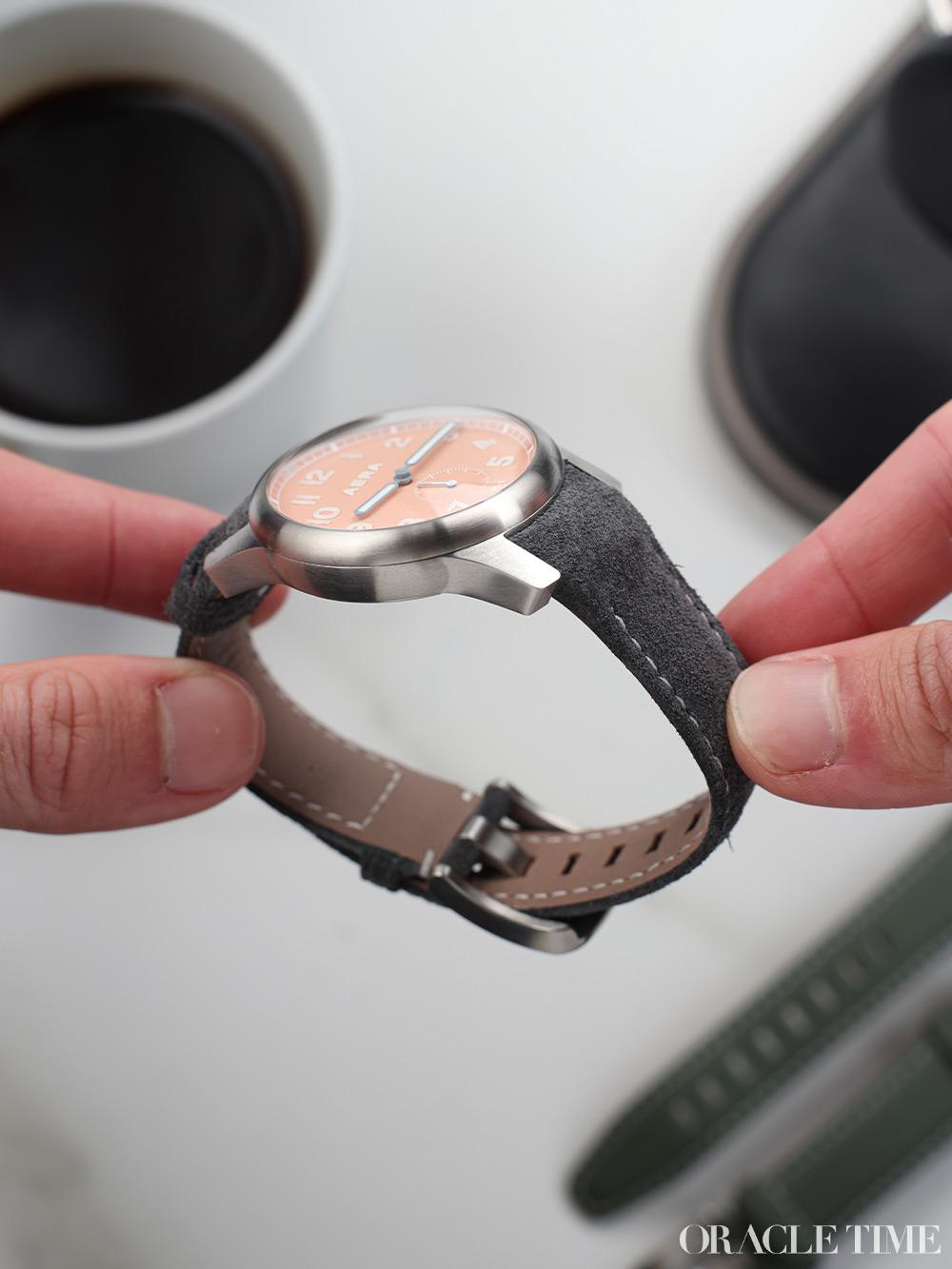
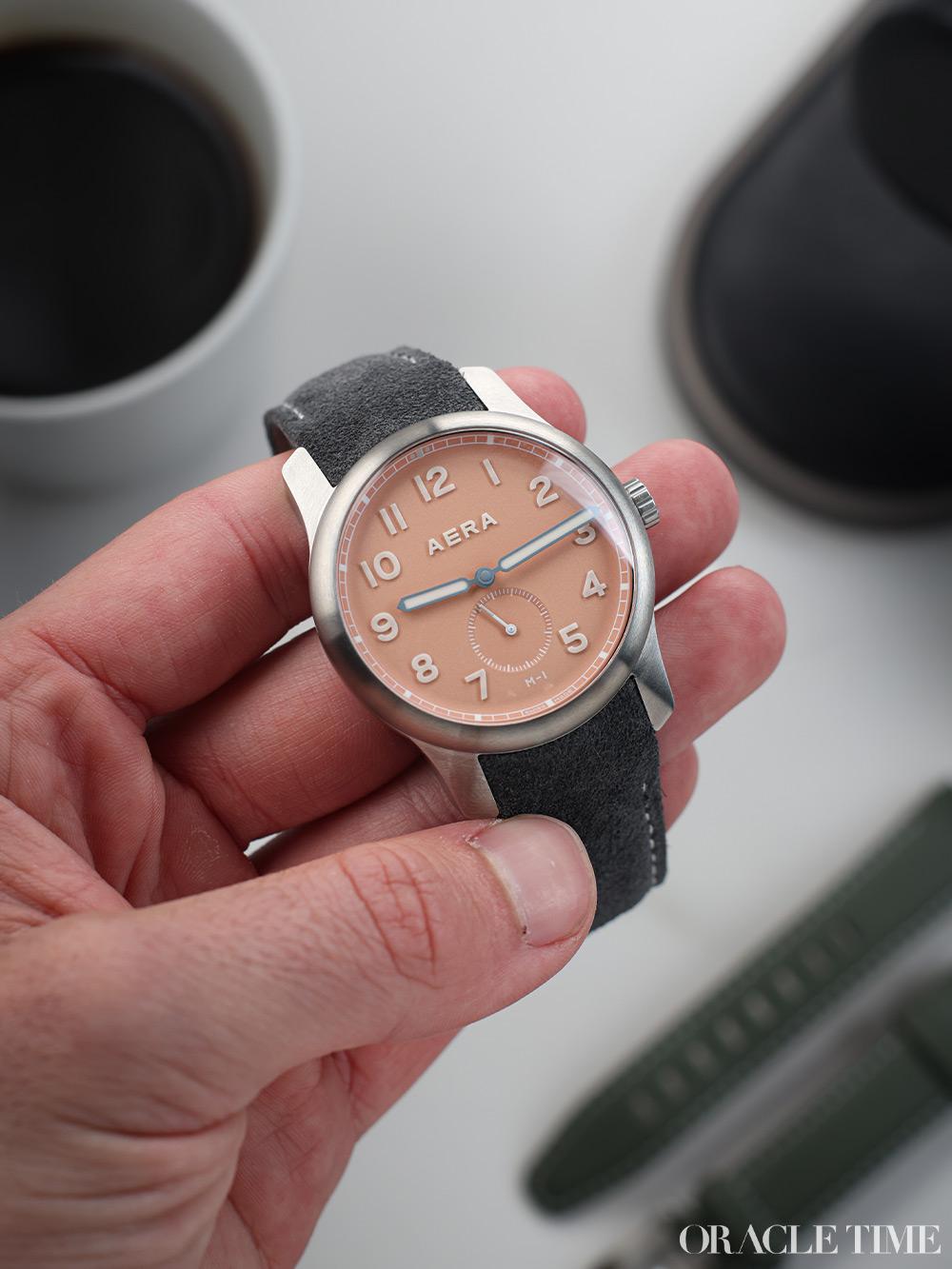
As for the watch itself, Aera business as usual. That means an unusually curvaceous case with flowing sides and very prominent lugs. It’s kind of like what would happen if you turned a disco volante into a field watch and I love it. At 13.14mm high, it’s not as slim as other field watches and relatively tall for anything without a dive bezel, but nothing ridiculous.
Oddly that height – and it’s pretty elongated lug-to-lug of 47.6mm – make its 39mm feel a touch smaller on the wrist than it actually is. Those lugs have a purpose though. They’re perfectly curved and hug the wrist nicely. Their prominence does mean that it may overhang smaller wrists, but given it suited mine, that’s a low bar. I do still think those lugs could be a bit shorter and still have the same effect – and look slightly more homogenous with the main case – but at least it’s a unique look.
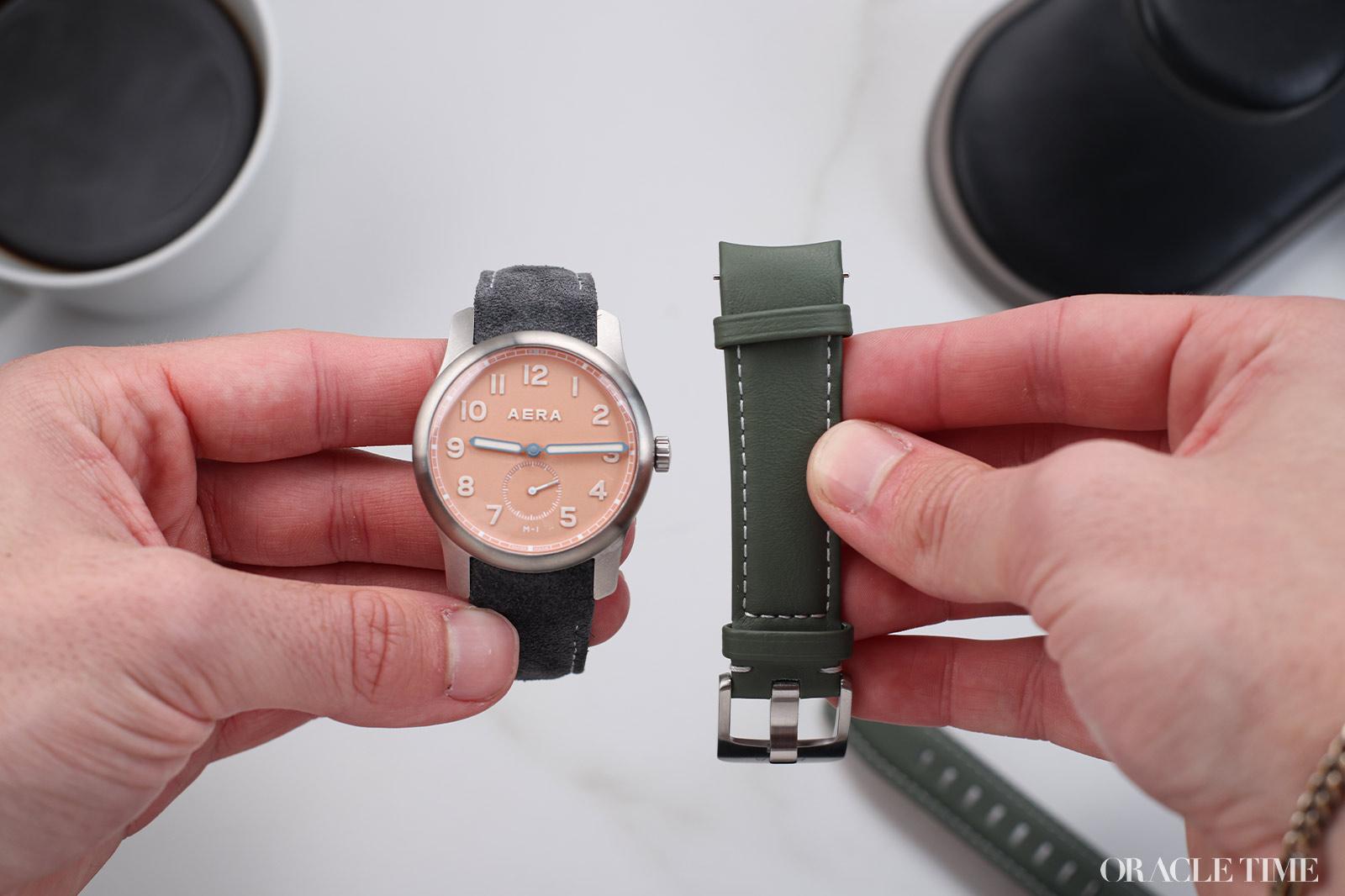
So far, so good, but then there’s the strap. The actual watch we’ve shot here was the one shot in the desert for Aera’s campaign, so it’s been well-loved in the same way as a beaten-up Defender. Except that the strap we have here is a kind of suede and does not seem to have coped as well as the watch head. It’s gone a texture that feels like an old, overused towel and while that can be put down to abuse rather than quality, this is a field watch. This is just the kind of thing a field watch should go through.
It does also come on a smooth leather version as well which I imagine is a bit more hardwearing, but I’d love to see the M-1 on a colourful NATO, leaning into both the colour and the military link. Mid-grey with a dial-matched pink stripe maybe?
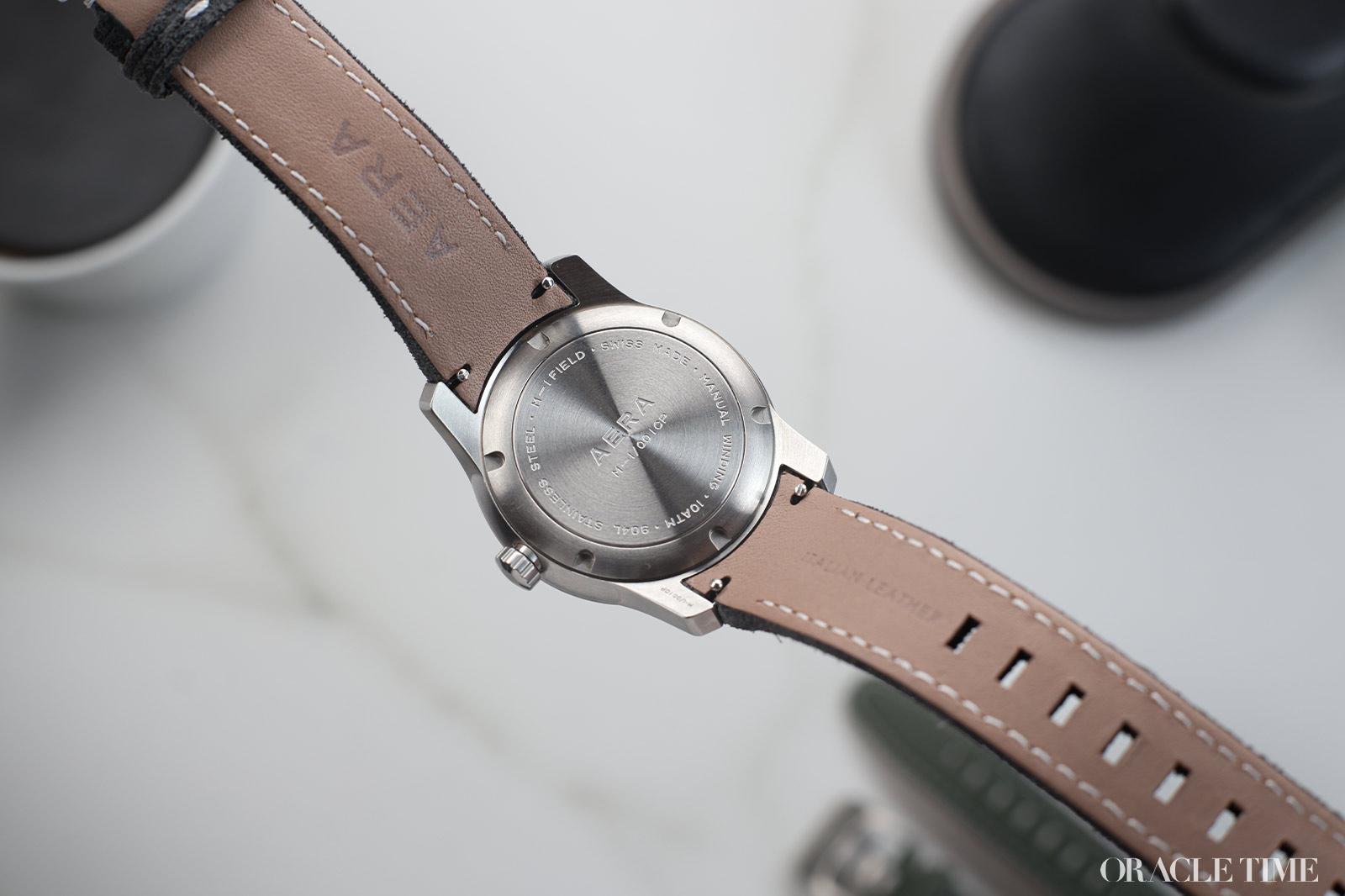
Inside the M-1 Dune is the manual-wind Sellita number, the Elabore-grade SW216-1 with a 42-hour power reserve. You know it, you love it, it’s a classic, and the higher-end version of that classic at that. It’s hidden behind a solid caseback, but it’s nothing you’ve not seen before, solid, reliable and Swiss.
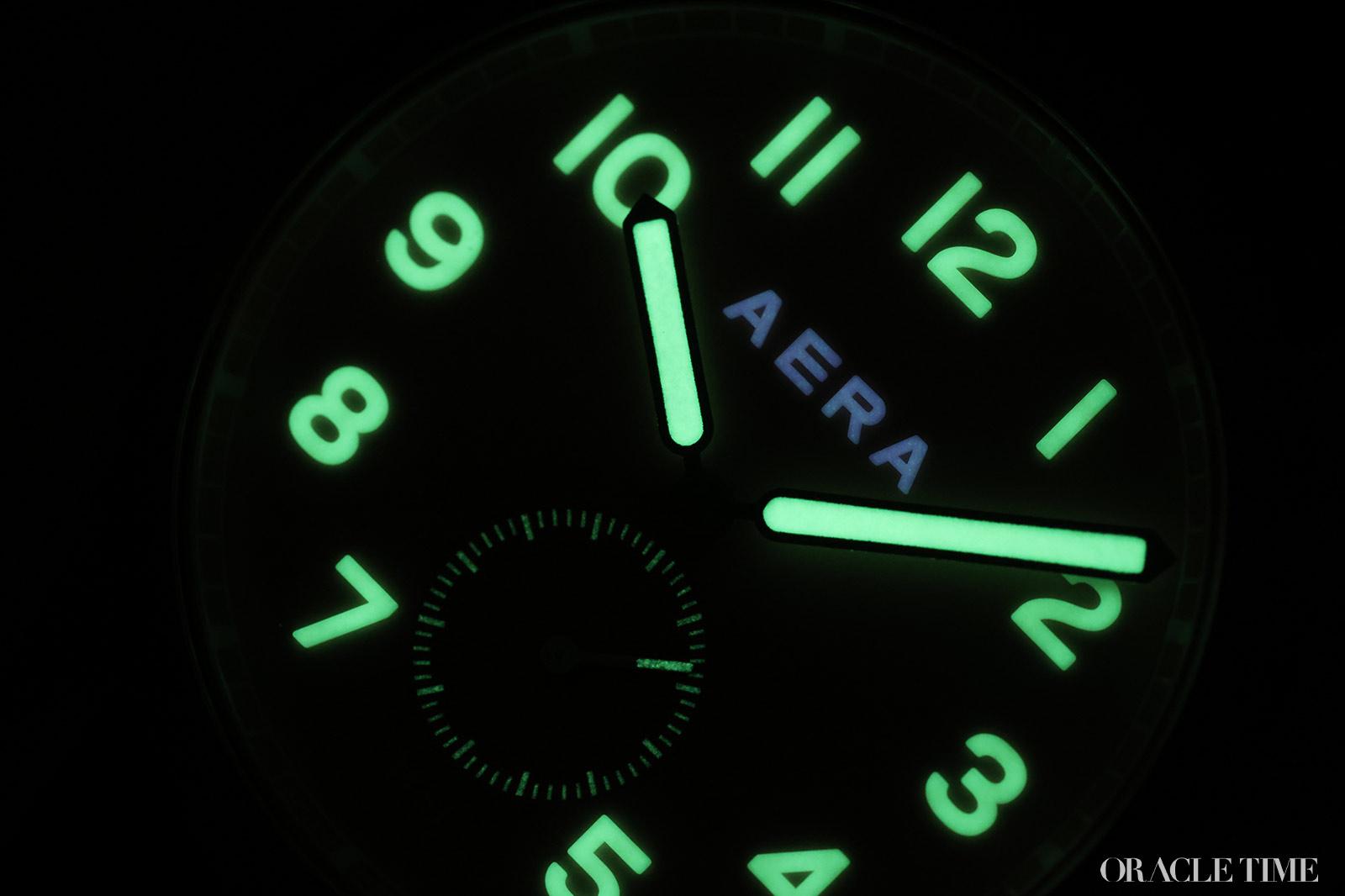
At £1,600, the M-1 Dune is the same price as the M-1 Field and a touch cheaper than the DLC-cased M-1 Blackbird, which is a bit more expensive at first glance than many field watches. But given the build quality of that curved, beautifully rounded and worryingly tactile case, the solid lume indexes and logo (superluminova and Globolight respectively), this deserves to be in a higher bracket.
It also has me thinking of other cool colours for the M-1, although without any military link it might be hard to justify a good, non-khaki, non-olive mid-green. Though I’m sure there are some weird, colourful spec ops escapades out there; if you know of any, let us know.
Price and Specs:
More details at Aera.