The humble chronograph is the most ubiquitous complication around. Whether by module or integration, pretty much any time-only movement can be transformed into a stopwatch and, honestly, most have.
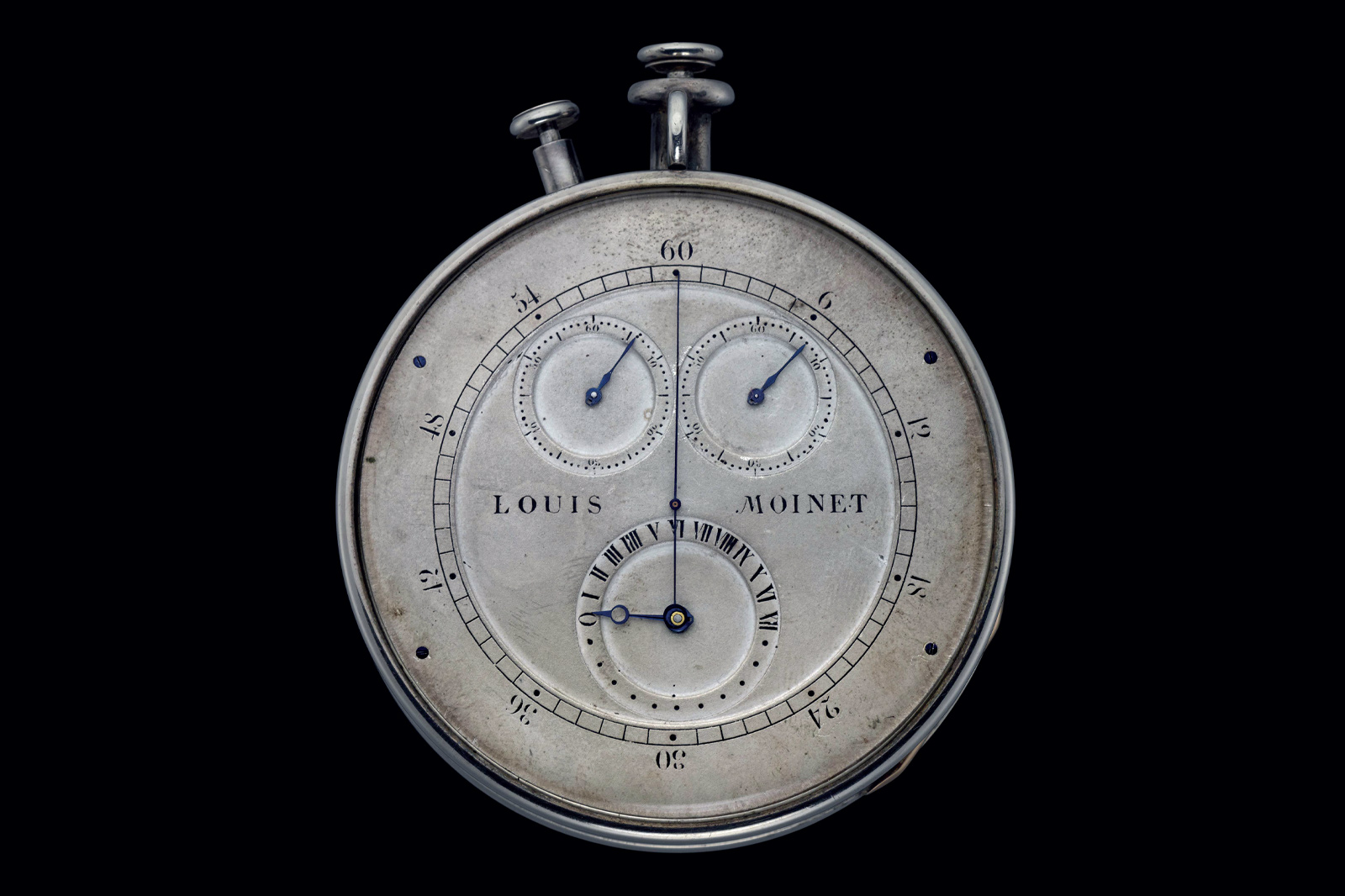
It’s also one of the oldest complications around, dating back to Louis Moinet in 1814 and Nicolas Rieussec who popularised it in 1821. Indeed, it was Rieussec who coined the name, as his ink-filled timekeeper used to track horse races onto a moving length of tape – hence, chrono and graph, the Greek for time and writing. History is fun!
But let’s be honest, we all know a very particular type of chronograph – that is to say, the modern version with its two buttons, one to stop and start the mechanism, one to reset it. While Longines separated the stopwatch from running time in 1913, it was a monopusher housed in the crown. Instead, it was Breitling who in 1915 built the first chronograph with separate pushers, in 1923, split the functions of stop/start and reset into a pusher and the crown and, finally, opted for the two button- one-crown layout that we all know and love today.
The chronograph continued to evolve over the years (the flyback in 1936, for example), but that’s perhaps one history lesson too far. Instead, let’s focus in on Breitling’s seminal 1934 creation, as it’s the layout that’s been copied by every watchmaker since: the Breitling No. 100 Chronographe-Compteur.
It’s a pretty perfect design. Not only can you start, stop and reset the time, but the reset is completely optional, meaning you can time multiple events, one after the other, pausing without resetting. Then there’s the layout, which separates the pushers from the crown, leading to a more ergonomic, balanced design. Indeed, the ergonomics of a chronograph can’t be underestimated. They’re designed to be used, and the pushers are how you directly interact with the movement. Small they may be, but between their aesthetic heft and their intrinsic link to the movement, the pushers may just be the most important part of a chronograph watch.


©timeline.watch

Breitling’s original design used olive pushers, essentially elliptical rectangles, which suited the more classical, elegant tastes of the time. Since then, there have been plenty of different pusher designs – not all of which were used solely on chronographs, of course. How else are you going to interact with all the weird and wonderful things a mechanical watch can do?
These days most pushers come under two categories: pump pushers and screw-down pushers and the difference between the two is relatively self-explanatory. One, you simply press at any point to get the chronograph going; the other you need to unscrew before activating. In the past, screw-down crowns were necessary to keep any modicum of resistance to the elements. They were designed to stop water, dust or anything else from getting inside the case and interfering with the movement. They also stop the chronograph being activated accidentally on a stray rock or boat hull. Just start the stopwatch, screw down the crowns and you could dive in the water where, really, you have no business operating a chronograph.
Aside from the risk of accidentally stopping the chronograph, these days waterproofing in watches is good enough that you don’t necessarily need screw-down crowns. They do offer a bit more security, but for the average diver the 300m most brands offer without them is enough.

Instead, it’s more an aesthetic choice, one championed by the legendary Rolex Daytona among others. And there’s a lot to be said for the pleasing, mechanical feel of unscrewing them. They’re less convenient, but then the entire point of using a mechanical timepiece over a digital stopwatch is the feel of the thing. Or if the electronics on your re-entry shuttle have gone.
There’s only really one breed of screw-down pusher and while the grip may change slightly from watchmaker to watchmaker, the differences are in finish rather than construction. Pump pushers on the other hand offer far, far more variation. In part because they’re simply more common, in part because if all they need to do is move backwards and forwards, designers have a lot more room to manoeuvre. Not, as you’ll see, that many of them do.
Classic Pump Pushers

These are the classic, used as early as the 1930s and still used by most watchmakers today. They are the chronograph pusher. The broader head compared to the stem gives you a good amount of surface area to push down, while stopping you from pushing it too hard into the body of the watch. They look serious, functional and like they can take a solid amount of use, just what you want from a complication as closely associated with sport as the chronograph.
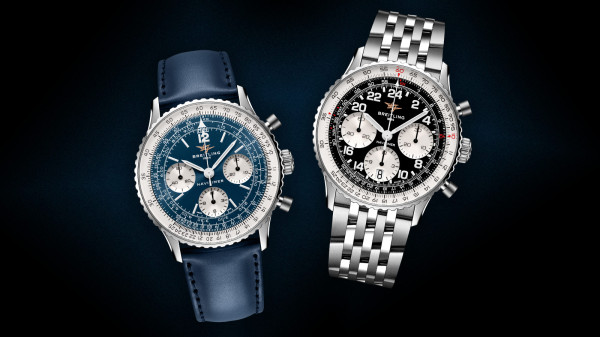
You can find them on the most iconic chronographs in history: the Zenith El Primero, Omega Speedmaster and Breitling Navitimer all use the classic pump pushers. They can have guards, like a crown or they can not. Most tend to have some form of protection in case they get knocked, but that more than the type of pusher varies from watch to watch.
Mushroom Pushers

Think of these as pump pushers that have been squashed. They’re thinner but wider, offering far more surface area and were originally designed (according to a 1938 patent filed by Longines for their incredibly rare Cal 13ZN) to improve water resistance. They’re not particularly common by any stretch of the imagination, so consider them a sub-sub-genre rather than an entity on their own.
Inverted Pushers

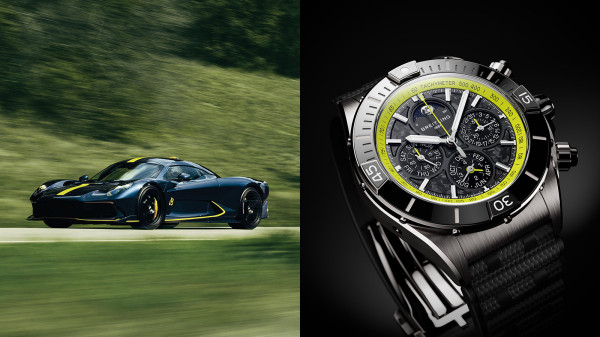
The difference between these and normal pushers is that the pushers themselves, rather than just the stem beneath them, go into the watch. Visually, they look like upside-down pump pushers (hence the name) and have a more modern feel. That’s especially true in the ceramic pushers of the latest TOP GUN models, which smoothly overlap. Supposedly this kind of pusher is less likely to get dust caught beneath them, but honestly, they’re more often picked because they look cool.
Integrated Pushers

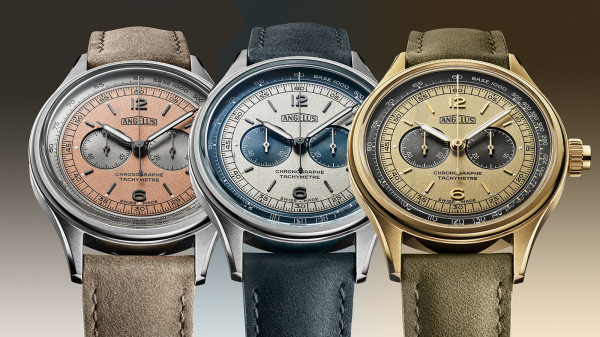
The most basic button you’ll have seen on Breitling’s original two-pusher chronograph function. They come in as many different shapes as there are shapes, all of which do the same thing. Rather than jutting out like your standard pump pusher, they often follow the lines of the case, far more subtle and elegant than what you’d find on a performance-minded watch.
Any classically-minded watch will flirt with integrated pushers – Breitling’s own modern Heritage Chronographs use them – and while they have fewer built-in safety features than other types of pusher, they’re also used on watches that don’t want to be knocked about anyway. You wouldn’t go diving with a Patek Philippe Perpetual Calendar Chronograph. Apparently, that’s for the next generation to do.