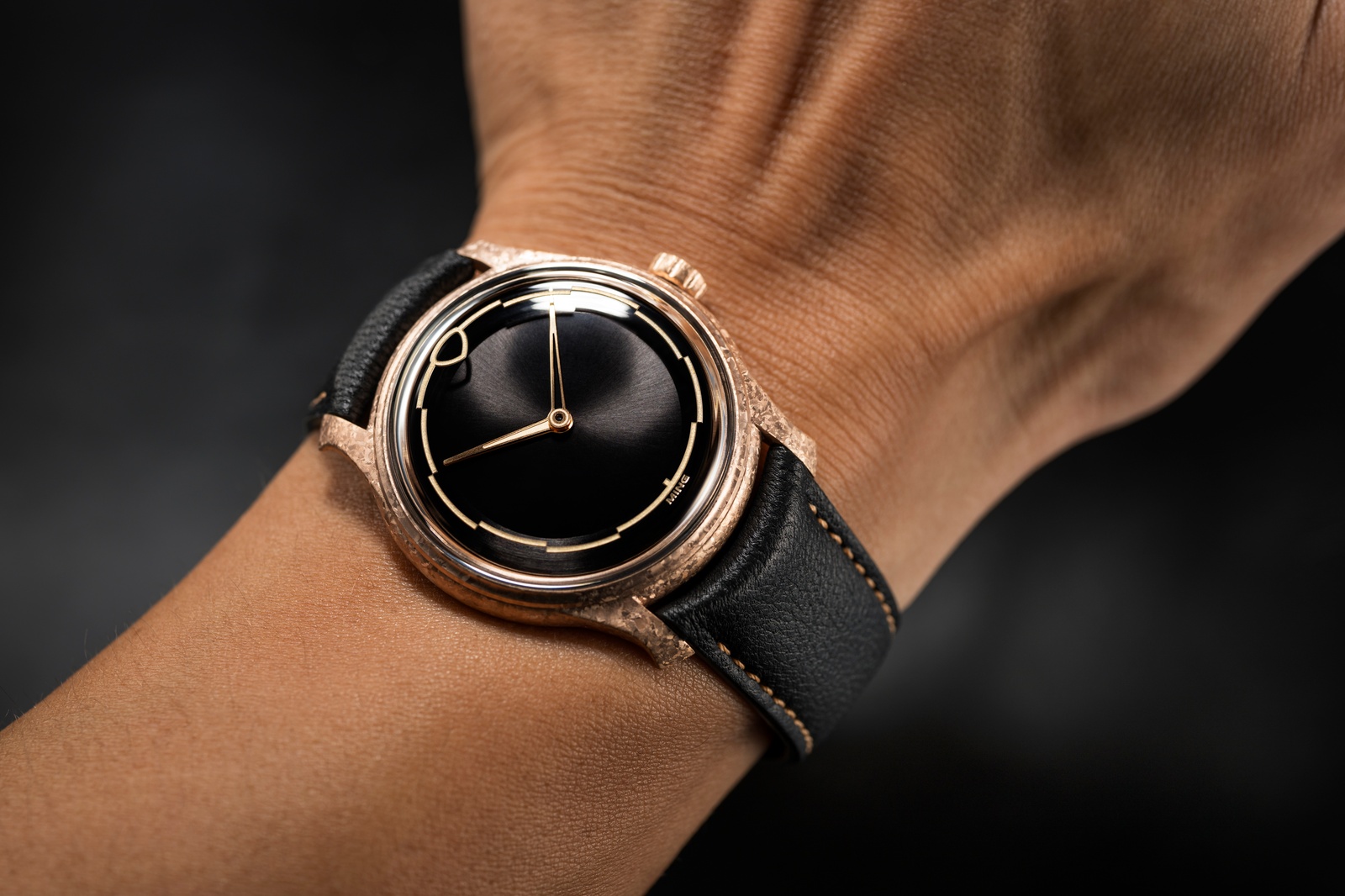
As hard as it is to believe today with the proliferation of titanium wristwatches, it was only a few years ago that the metal was regarded as a novelty in the watch industry for its lightness. However, that all began to shift during 2020 when the global pandemic caused supply chain disruptions and stainless steel became harder to get hold of, leading brands to explore alternative materials like titanium. Now that it’s a mainstream watchmaking material across all levels of the industry, brands are starting to experiment with different finishes and treatments. One such treatment is crystallised titanium, as seen on the new Ming 51.01 Halo.
Despite how it may sound, crystallised titanium is not a materially different metal to standard titanium. Instead, it’s a surface treatment given to a titanium alloy – in this case Grade 5 titanium but more commonly Grade 2. The metal is heated to 1,200°C inside a vacuum chamber and then cooled at a controlled rate to create a crystalline structure in the metal’s surface. After this process, it is acid-etched to reveal the grain more distinctly. It’s a technique that is seeing more and more use in the watch industry with examples of crystallised titanium present in brands like Zelos, Sarpaneva and Citizen.
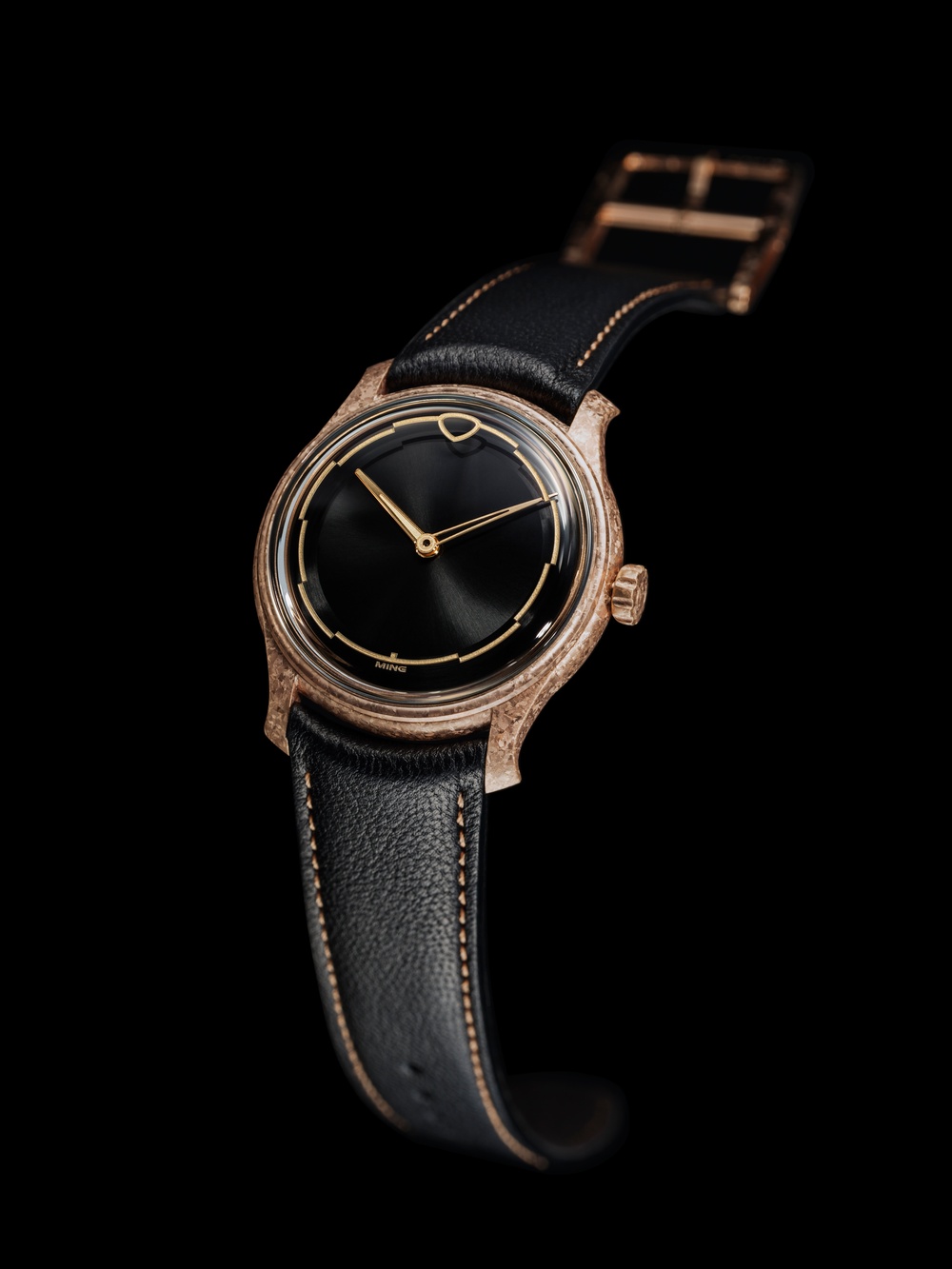
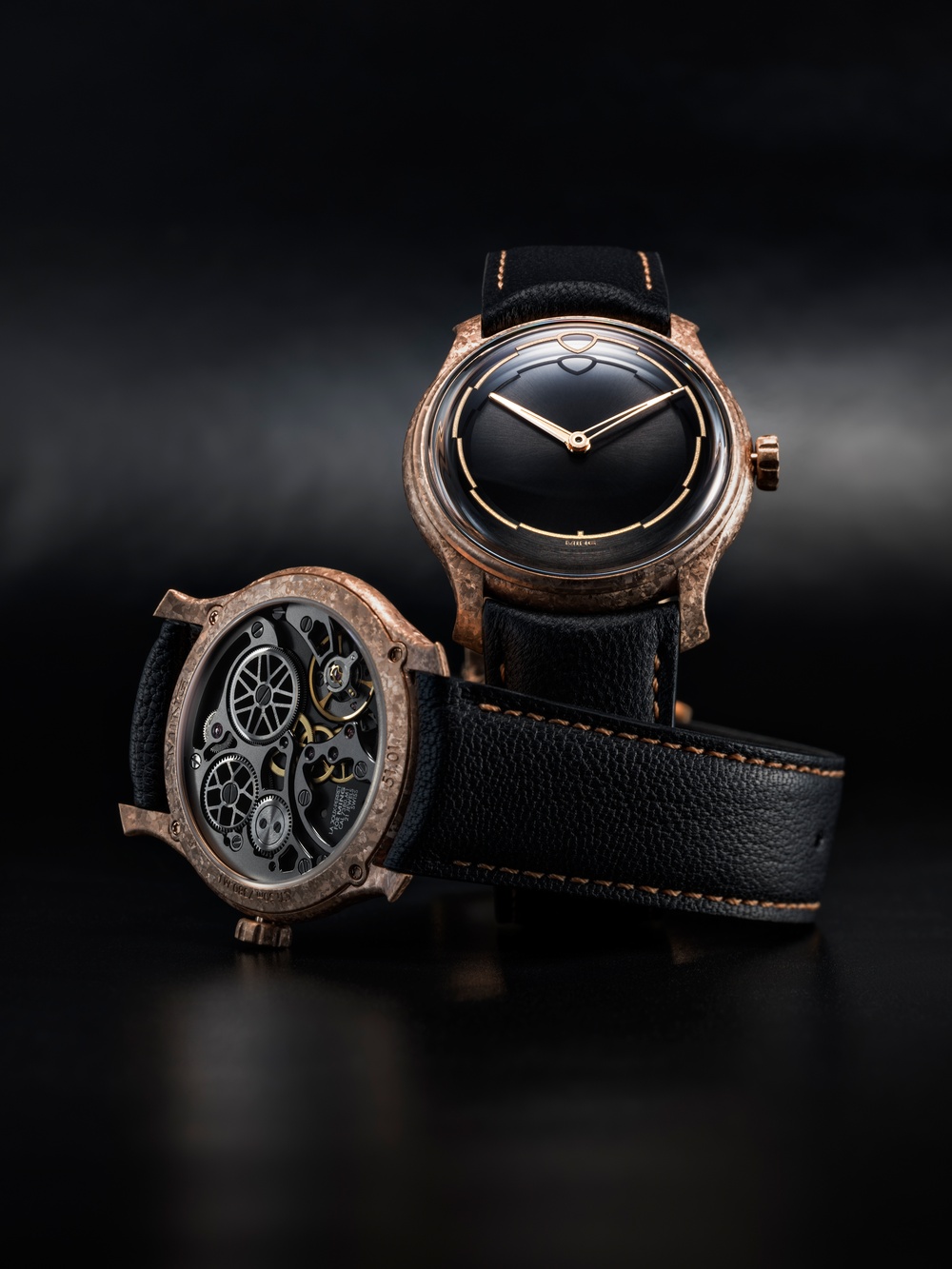

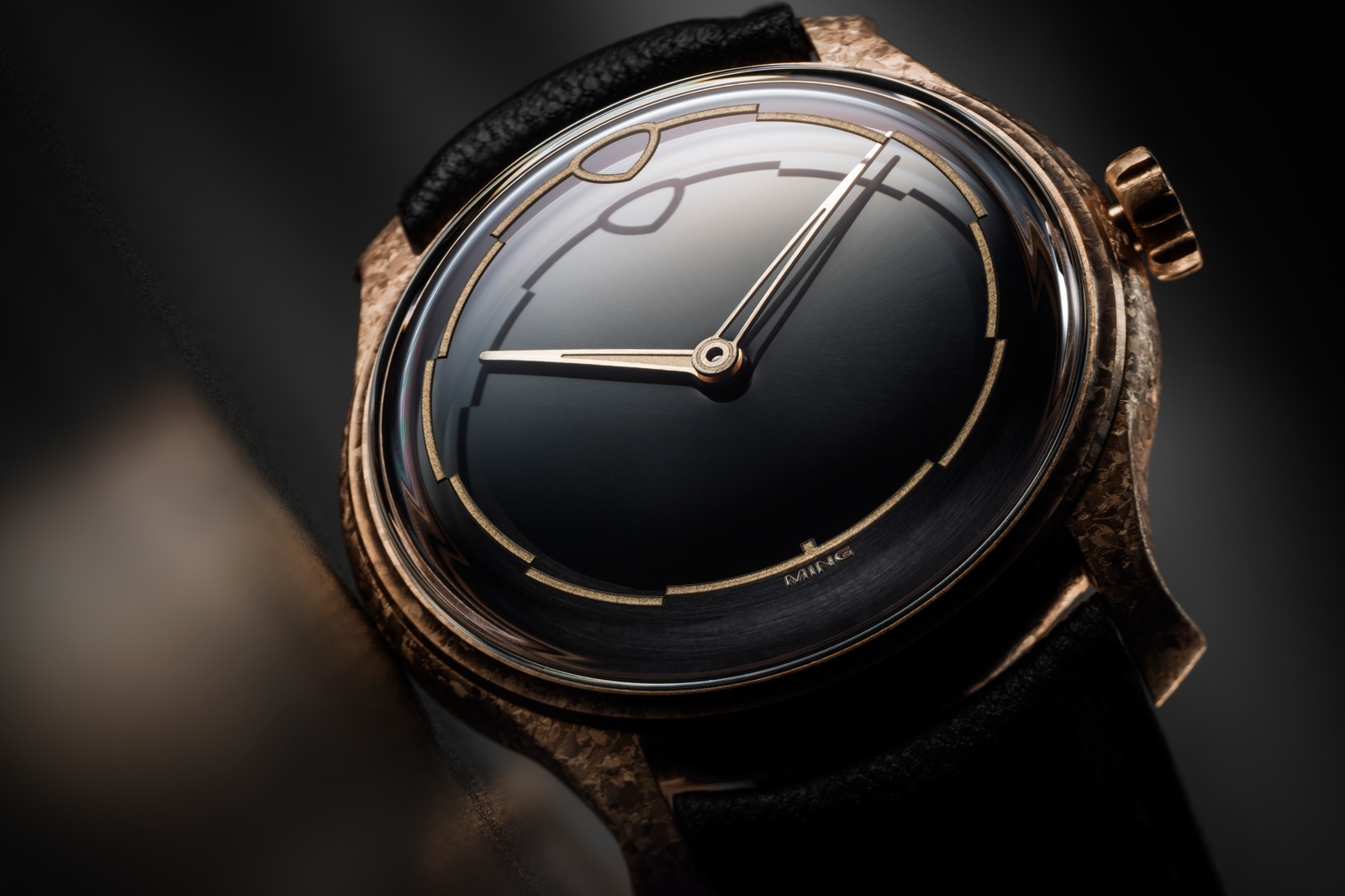
For the Ming 51.01 Halo, the 37mm x 8mm crystallised titanium case is then given a 5N rose gold PVD coating to give the piece some warmth. The same rose gold tone is used in the lacquer hour markers that are engraved into the box sapphire crystal, floating above the dial rather than part of it. It’s this floating, golden ring of hour markers that gives the piece its Halo moniker.
That ring sits above an intense black lacquer dial punctuated only by the central hour and minute hands. What you might only notice on closer inspection is that the black disk features two distinct finishes with the centre being a polished sunray brush and the periphery being a circular brush instead. The impact of which is that the centre catches the light really easily while the ring below the hour markers stays darker, aiding with readability.
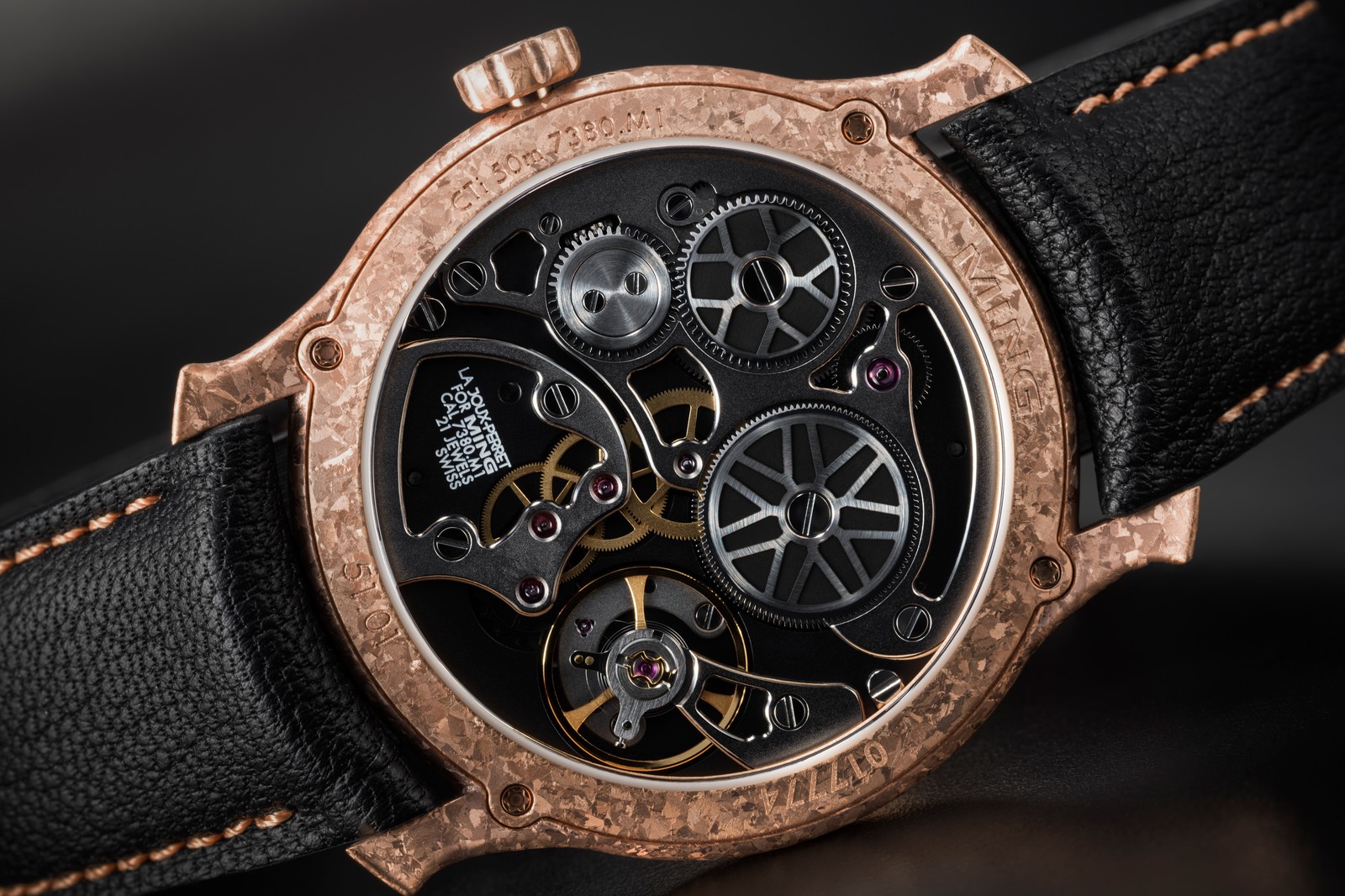
Inside the Ming 51.01 Halo is the La Joux-Perret for MING Calibre 7380.M, another of Ming’s exclusive movements from LJP. It’s manual winding with a 90-hour power reserve and beating at a 3 Hz frequency. You can view the calibre through the exhibition caseback where the black and gold colour scheme from the rest of the watch has been preserved. It has custom, skeletonised bridges that help expose the mechanical components without being a full skeleton movement.
For price, the combination of an exclusive movement, 5N PVD coating on a crystallised titanium case, a lacquer dial and being a limited edition of 150 piece all adds up, meaning the Halo is CHF 10,900 (approx. £9,935). Ming’s average price is around £7,000 so it’s on the higher end of the spectrum, but it’s worth noting there are individual models like the Peepshow that go as high as £20,000 so it’s by no means their most expensive creation to date.
Price and Specs:
More details at MING.