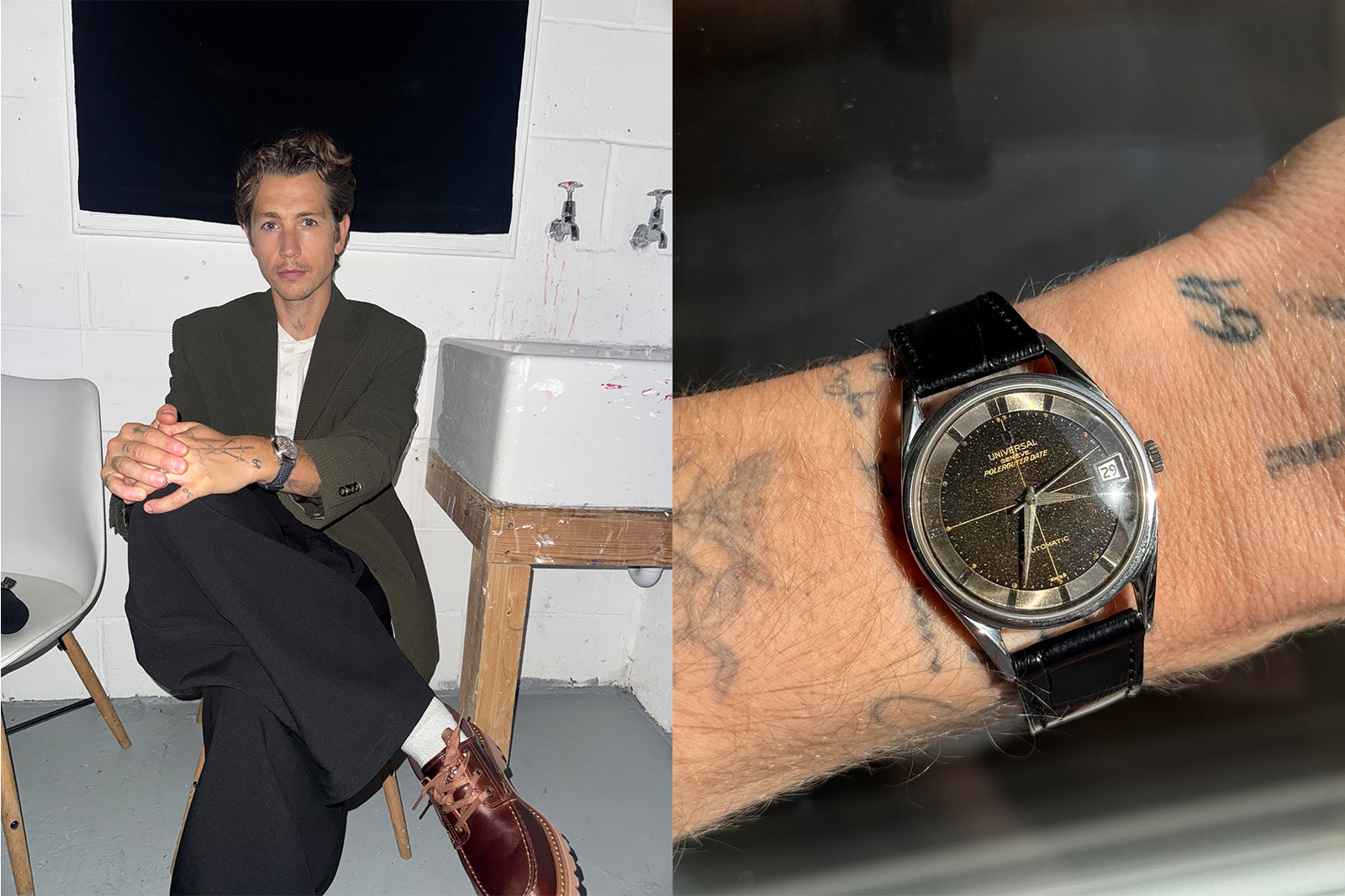
The Vamps guitarist took four years of gentle bullying from his father-in-law before he bought his first watch. Six years on, his collection runs from a £3 quartz handed to him at a mental health retreat to a 1993 Universal Genève World Time his own friends told him was hideous. He talks us through the Tudor he knows he’ll regret selling, and the one question every purchase now has to survive.
Can you remember the exact moment you realised watches were going to be more than a passing interest?
My father-in-law got me into watches, and for a couple of years he really was trying to force it upon me. I never thought I’d become a collector, but I knew watches would be part of my life for as long as I knew my then-girlfriend, now wife. So, forever.
The realisation came from somewhere else, though. The Vamps did a lot of photo and video shoots for a period, and the photographer we always worked with was Ed Cook, who is really successful now, though we were his first shoot and he was ours, back in about 2013. He had a no-date Submariner, mid-1990s I think, so it still had tritium on it. I remember looking at it, not knowing much about watches at all, and thinking, Ed is probably the coolest person I know. You hear people say they listen to vinyl every morning and drink espresso and burn incense; he actually does that stuff, on his own, and never posts about it. So, I thought, if he’s wearing a Submariner, that must be a cool watch to have.
Which watch in your collection has the best story behind how you acquired it?
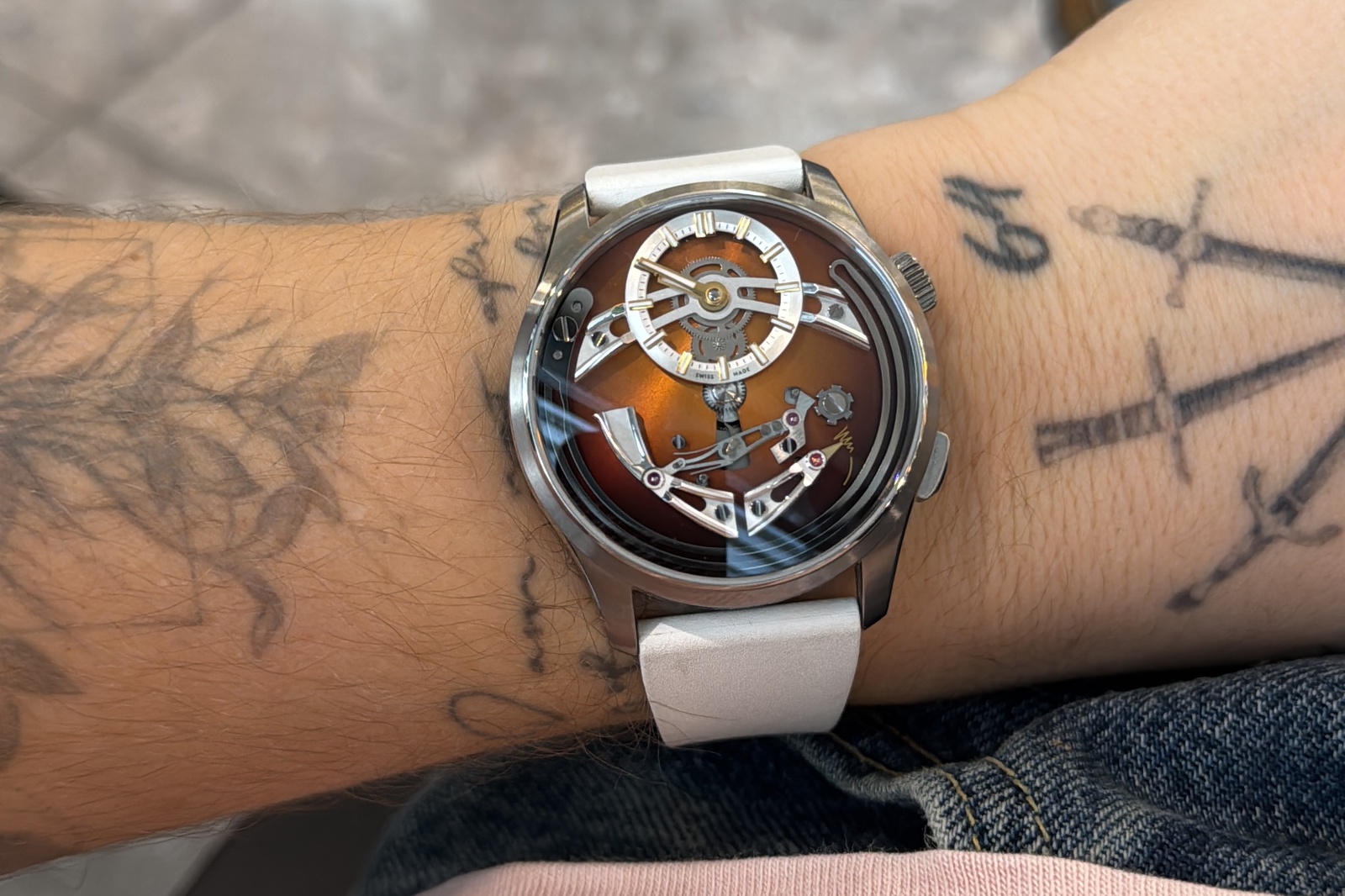
I designed a unique Bel Canto with Christopher Ward, based on a 1950s Fender Stratocaster, with a sunburst gradient on the dial. I didn’t realise how many people would love that fumé dial; loads asked us to make more, and we didn’t entertain it.
The other is my wife’s first watch. We were in Watches of Switzerland in New York in 2022 and I’d decided that if she wanted something, within reason, I’d buy it, but I gave her no parameters. There was one long cabinet with everything in it: vintage at one end, then Rolex, Cartier, Longines. She hovered over Longines and I thought, fine, I know where I am financially. Then she moved to Cartier and I thought, okay. Then she said actually, no, and stopped at Grand Seiko: an SBGM221, cream dial, blue GMT hand. A wonderfully obscure choice for a first watch, I thought, and only later realised she’d landed on what was arguably the most popular Grand Seiko in the world at that point after the Snowflake. She knew nothing about watches then, and the Cartiers she wants now are ridiculous.
Is there a watch you regret selling or passing on?
I’m the wrong way round on this. I’ve sold things I was certain I’d miss and didn’t. My first watch, the Submariner, is one of them. But I’m in the process of selling two watches now, and I know that with one of them I’m going to regret it, but I think I’m still going to do it.
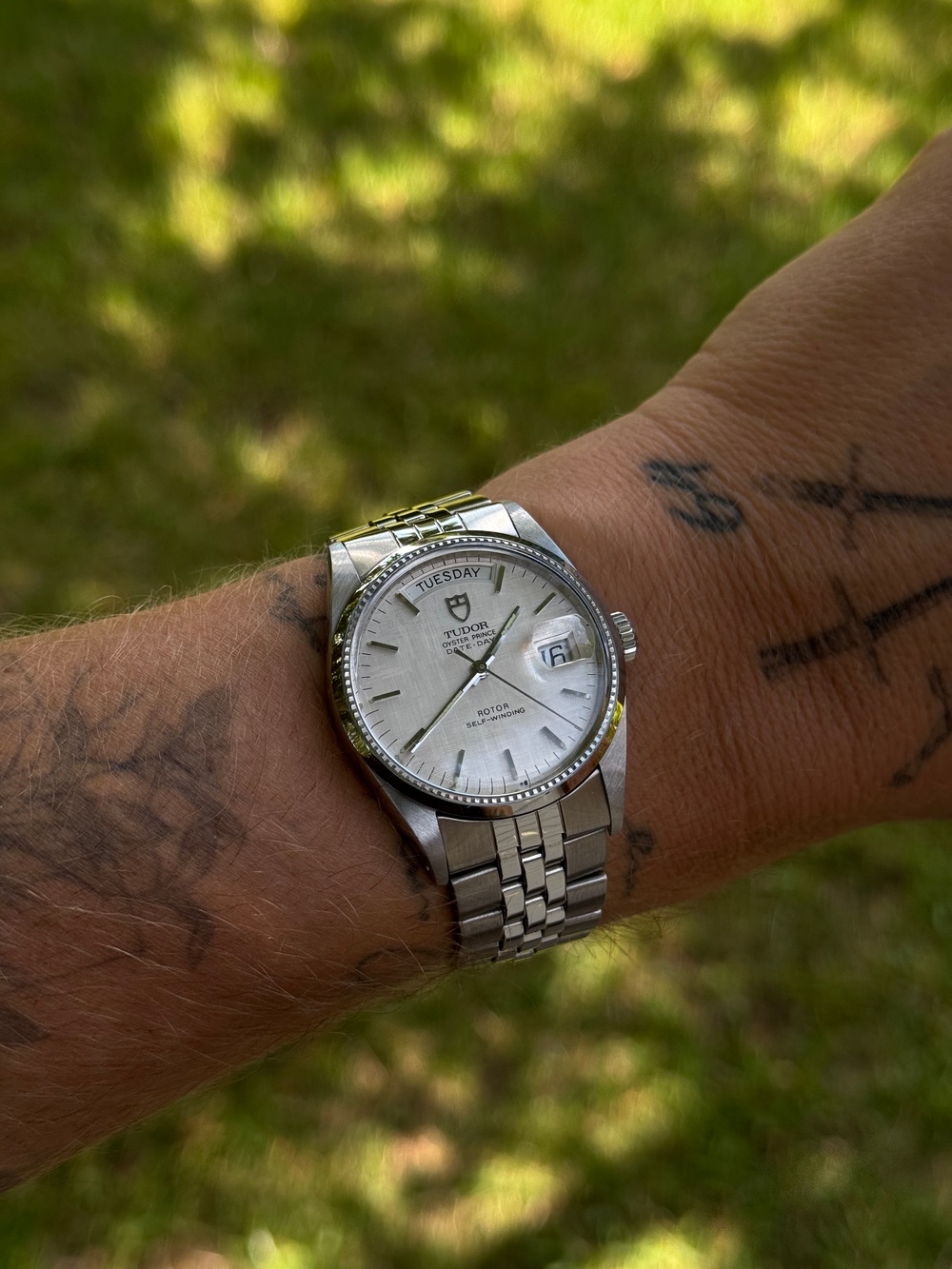
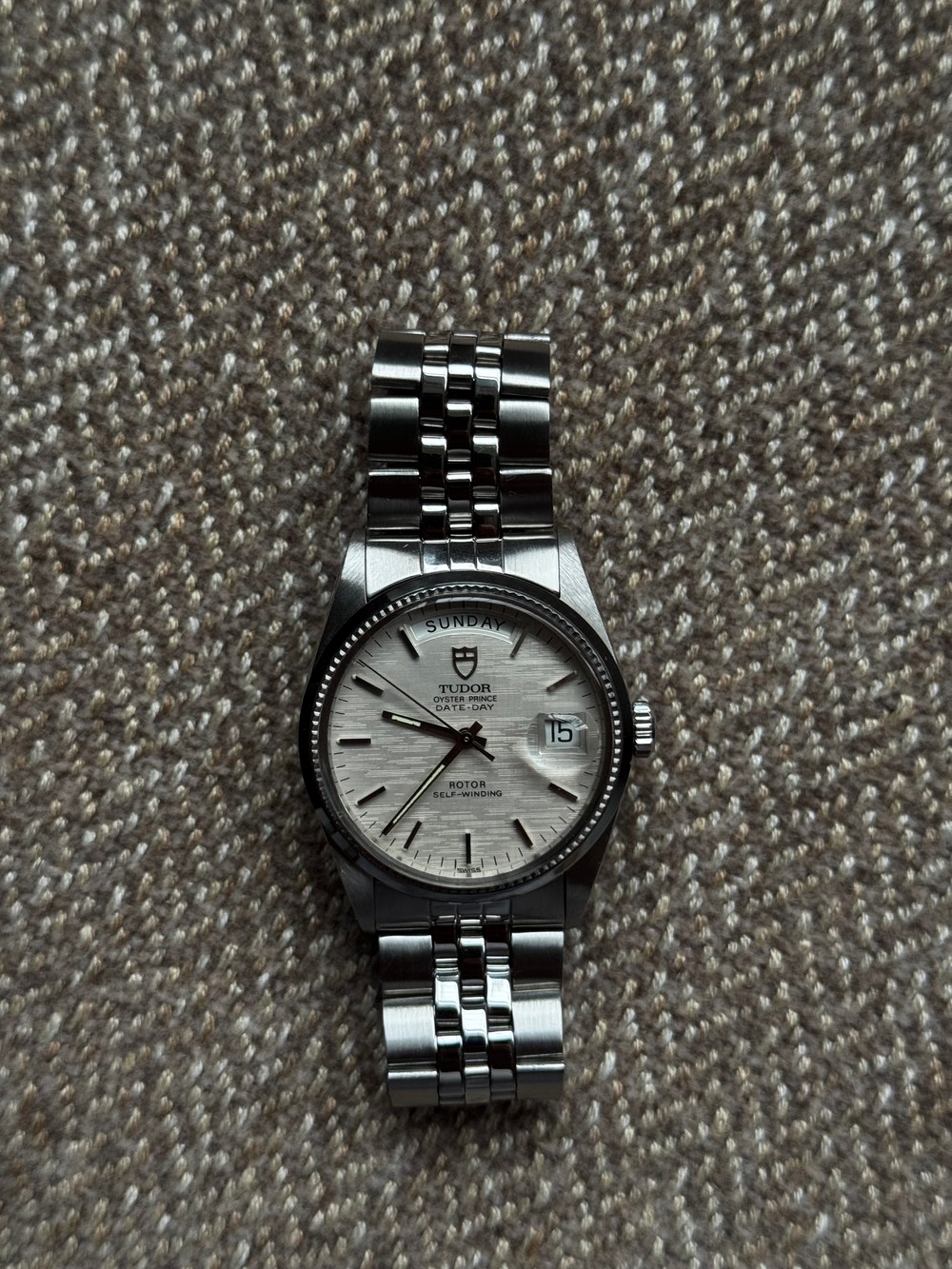
It’s a Tudor Date Day from the mid-1980s with a linen dial, which makes it the rarer of the references. If I list it, it’ll be the only one for sale in the world. I want to move a couple of things on to get something really special, and I know that the moment it goes I’ll never get it back. But I’m trying to rework the psychology of collecting that I’ve built up to this point, because in my eyes there’s no point owning something just because it’s hard to get. Since finding out how rare the Tudor is, I’m wearing it less. It’s in such good condition I’m scared of beating it up. Most people only find out they regret a sale after the watch has gone. I already know, and that still isn’t stopping me.

Do you collect to an ethos?
In the early days, before I’d invested any time in the community, I was loosely inspired by trends, and by that I mean safe. The Submariner epitomises that psyche. Then I tried to dig into what I actually love, irrespective of price or depreciation. I’d liked the Submariner on someone else’s wrist, but was it the watch I’d have naturally picked? I don’t know. I’ve spent five years recalibrating, which is why my love for a brand like Universal Genève is more prominent than ever.
I told myself I’d never follow trends again. I won’t see a watch on Instagram and buy it. Then every so often something arrives and I think, God, I actually really like that, despite the hype. Otsuka Lotec did that to me, and it blows my mind that I can equally enjoy a No.6 and a vintage Polerouter. The easy response is that I only like Otsuka because of what they do on the grey market, but then there’s a brand like Delhi Watch Company, where the watch is £35 and not the best quality, and the design language just speaks to me. If there’s a straight answer to what I hunt now, it’s a creamy tritium lume.
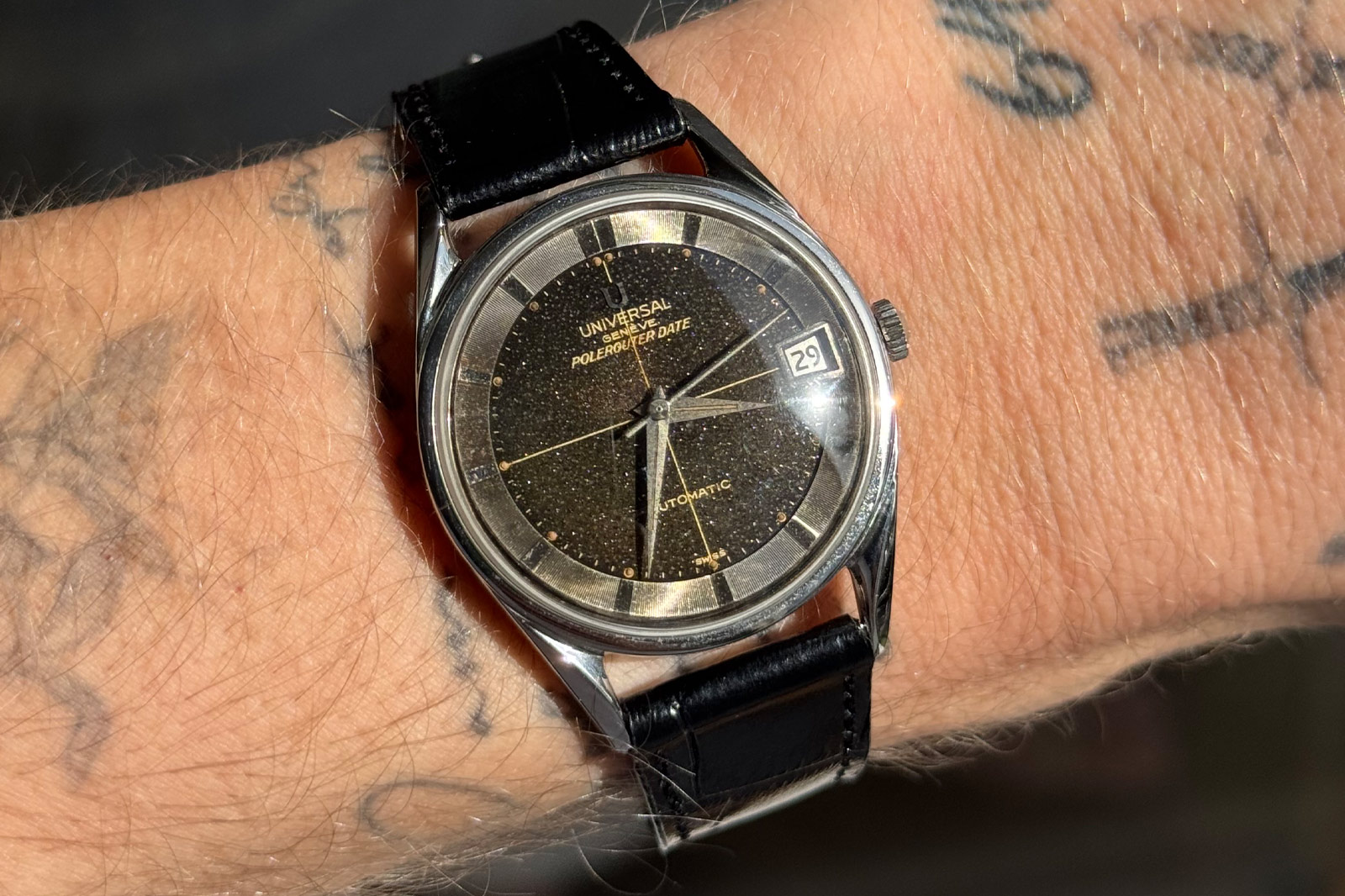
The Polerouter I bought a few months ago has a tropical dial that would originally have been black, speckled almost like aventurine in the light, and plots that have gone custard. The question I ask is whether I’d like a watch regardless of the clicks, or what I can resell it for. The Universal Genèves I’ve bought lately aren’t getting me clicks and are probably worth less than I won the auctions for, because they’re beaten half to death and look like they’ve been dug out of the ground.
Is there one watch you own that other collectors don’t ‘get’, but you absolutely love?
Universal Genève from the 1980s through to the early 2000s, when they eventually died, is the neglected period nobody cares about. I understand that when you compare it to the golden era: the 1960s Tri-Compax, the 1950s Polerouter, the first Tri-Compax in the 1940s. But I think that late era is golden too.
So, I’ve just bought a World Time GMT, the only GMT UG ever made, from my birth year, 1993. Those final years were tiny batches, because they couldn’t afford to churn them out and simply weren’t the brand they used to be. I’d been hunting the watch, and when I posted a picture of one, the man who owned it got in touch and I bought it from him. Most people – in fact everyone, including my UG friends – told me it was disgusting. I bought it anyway. Moments like that are cathartic, because it’s quite bold now to spend real money on something that goes completely against the current, and I like swimming in the opposite direction. I bought a guitar at auction on the same basis a few months ago. It looks ridiculous. I love it.
What’s an instant no?
Size. If I see a 44mm case I won’t even bother, and that’s before I’ve thought about thickness. Beyond that, I’m not a fan of several colours on one dial. There’s a Tri-Compax from UG with a turquoise-and-white dial that I don’t mind, and I do like a bit of colour, just not the wave of it we’ve had recently. I’d rather have a blander watch.
Which watch is worth the least and matters the most?
I’ve not talked about this one before. Last year I did a mental health retreat called the Hoffman Process and took six watches with me for a five-day thing, loads of vintage Rolexes, which is almost the antithesis of the point. I remember thinking, hang on, I’m about to park all of this and focus on myself, and I’ve arrived with a watch collection.
When I got there, they handed us all a watch. Something off AliExpress or Amazon, a little quartz that looks like a Casio but isn’t. They take your phone off you when you arrive, and a lot of people don’t wear watches, and sometimes we forget that people aren’t into this like we are, so it was really just so everyone could stick to the schedule. But I was with 23 other people for 12 hours a day of intense therapy, and all of us were wearing the same watch. I accidentally ended up with two. They’re worth about three quid, and they’re very special.
If you had to explain the collection in three watches, which three?
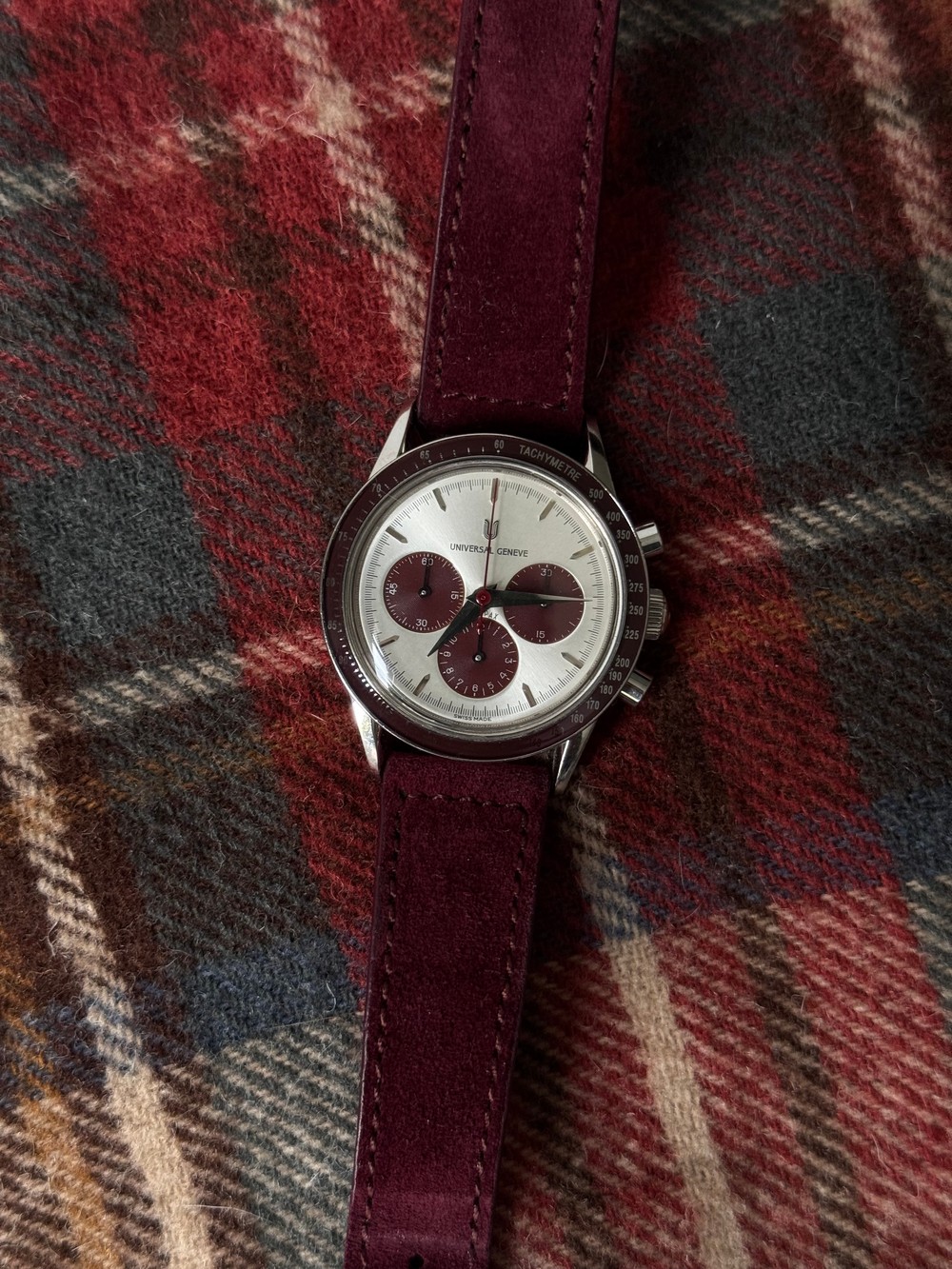
It sounds arrogant, but what I’m probably known for in the community is Universal Genève, so first would be my Baby Nina. I’ve only had it three or four months and for me it’s a perfect watch. It’s from 1990, so again, that dying era, and it sums me up as a collector: I can’t afford the 1960s version at £20,000, so I’ve gone looking on the periphery of what people really want and picked up something adjacent.
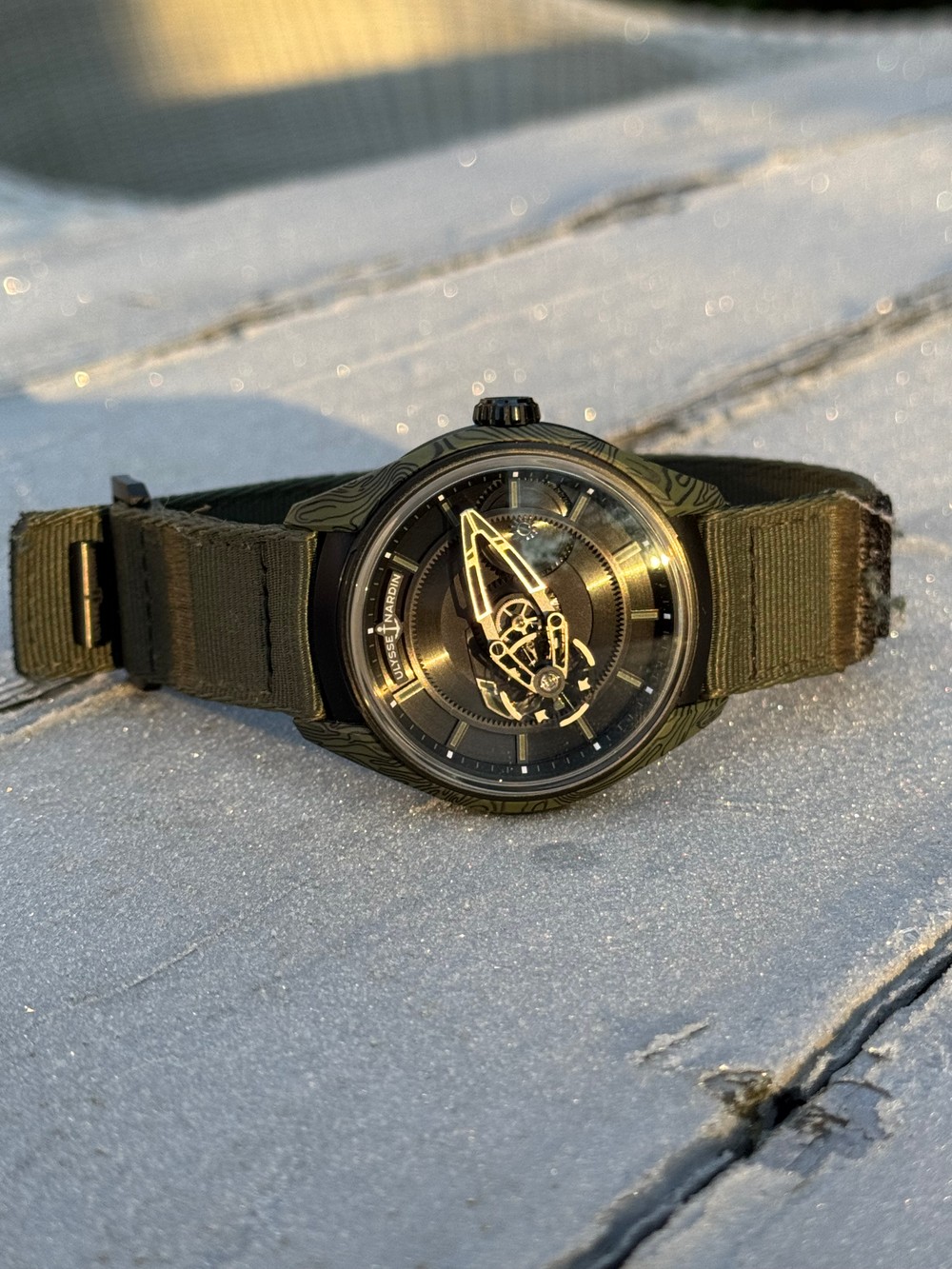
Second, my Ulysse Nardin Freak. I’ve had it a couple of years and I wear it constantly, even though it’s nothing like the vintage stuff I collect. It’s the watch I can show anybody, whether they’re into watches or know nothing at all. You can always have a conversation around a Freak.
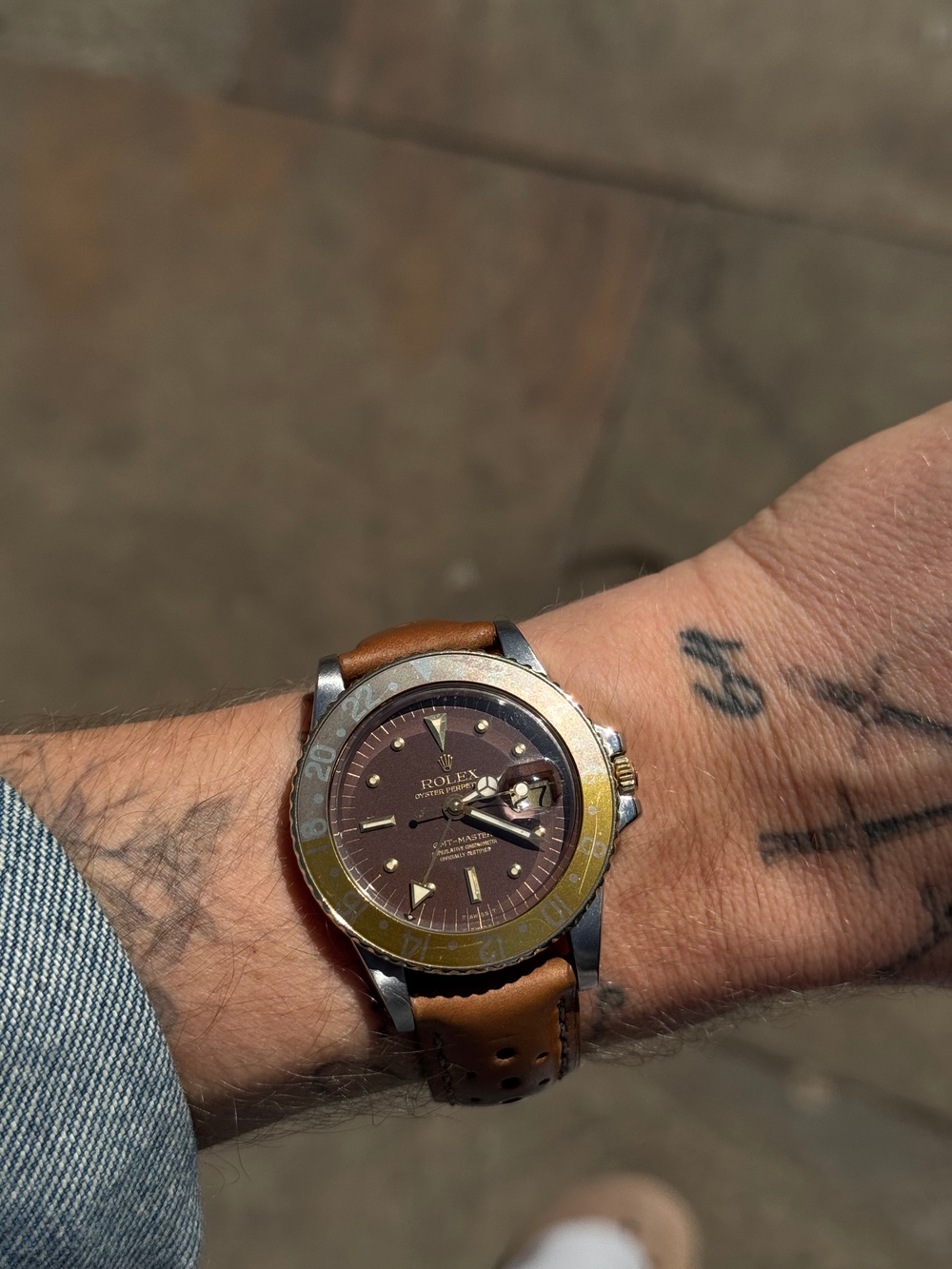
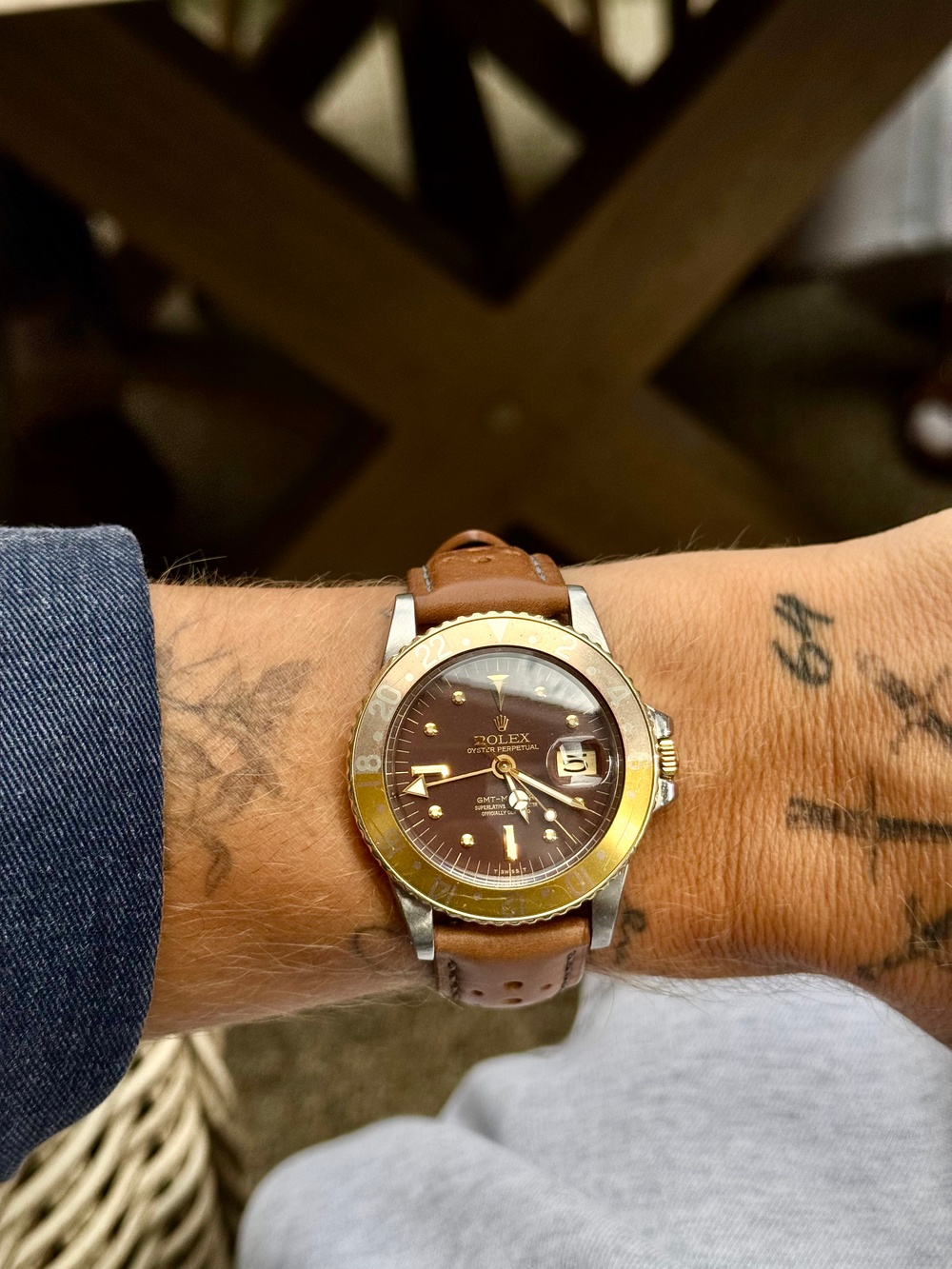
Third, somewhere in the middle. I always try to travel with a vintage Rolex, though not the Rolexes people would expect. I’ve never owned a Daytona; I’d like a Zenith Daytona and probably never will. So, it’s my root beer, another one I may end up selling, which feels awful because I love it. It ticks the same box as the UG: the slightly neglected GMT-Master, overshadowed by the Pepsi.
If you had to start over tomorrow with no watches, how would you rebuild?
It sounds cheesy, but the journey matters to where I am now. The thing I do entertain is what would have happened if I’d got into this in 2014 rather than 2019. I had far more disposable cash then, before mortgages, and could have picked up things I can’t afford now.
I’m actually starting to rebuild organically, which is why I’m considering selling watches I really like. Rather than however many watches I wear once every few months, I’d get it down to ten great ones. That sounds ridiculously privileged, but relatively speaking, trim the edges. First, I’d log how often I wear things, which everybody says and nobody does. Then I’d tick basic boxes: one dress watch, one grab-and-do-anything watch, one chronograph, one GMT. One from each category, instead of what I’ve done. I’ve got the GMT-Master, then the 1655, which isn’t a GMT, it’s a day-night indicator, but a similar world, and then a Unimatic GMT. The fact I can’t remember how many GMTs I own is my case in point.
I’d hit geography from day one, too. I’ve got four Grand Seikos and I’d tell myself you need one, but that one could be really special, an obscure reference. And I would, at all costs, avoid buying watches drunk. I’ve bought ten Universal Genèves this year and we’re only in August; most of them were me on eBay, winning auctions.