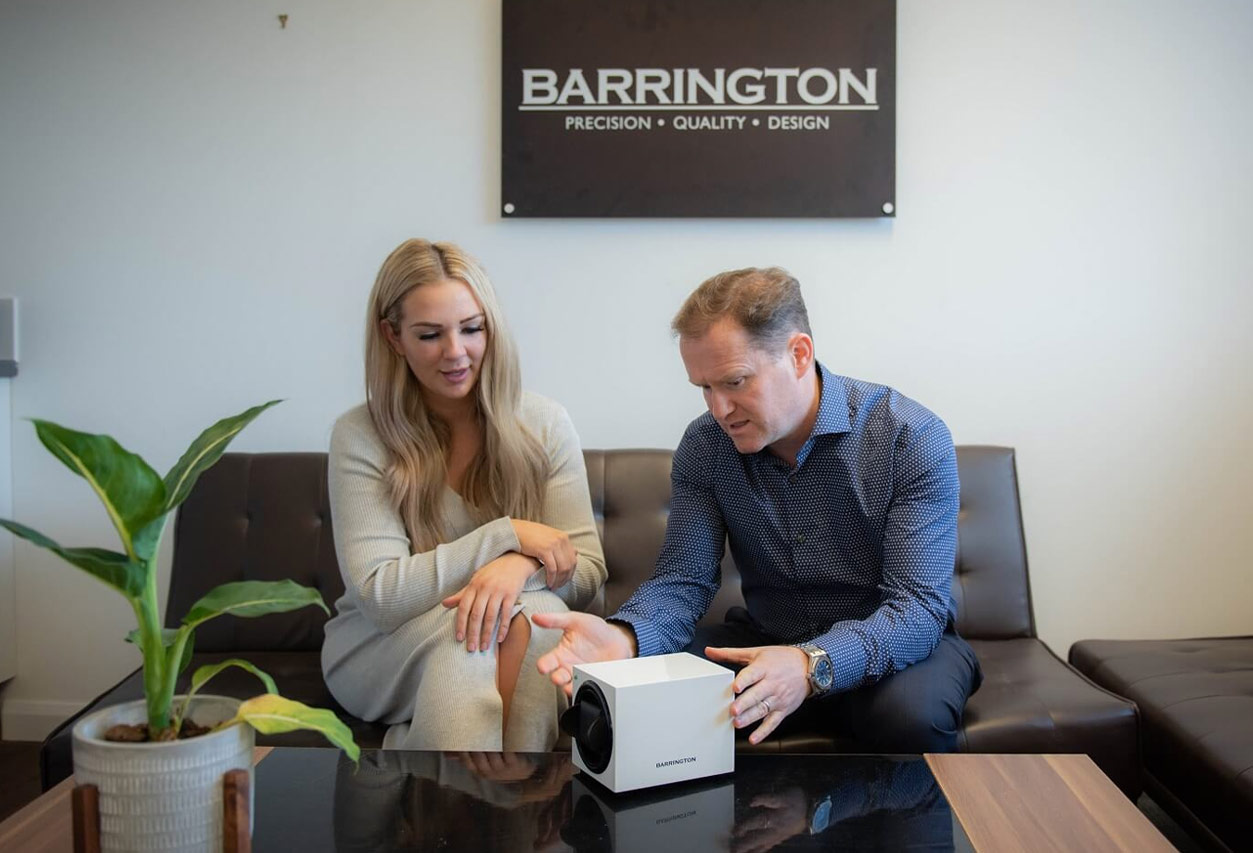
Barrington’s founder Sean O’Farrell built his UK winder brand while he was a director at Jura Watches. There he saw the same problem again and again: customers wanted a winder, but everything on the market was either cheap and forgettable, or priced beyond what most collectors wanted to spend. We sat down with him to talk watch winders, misconceptions, and what he wants Barrington to stand for
With so many watch winders on the market, why did Barrington need to exist?
Because the category was polarised. While the watch sector is known for fabulous customer service, watch winder owners were getting a raw deal. At one end you had cheap winders with limited functionality and crude, barely-legible instructions. At the other, expensive branded pieces that looked good but came at astronomical costs without the corresponding support and service. This left many users unsure of what they needed, with questions about correct TPD and rotation settings etc. Barrington was built to sit between those two worlds – functional, good-looking and sensibly priced, while offering boutique-level expertise and service.
Were you a strong believer in watch winders before Barrington, or did the category have to win you over?
I fell into watch winders through my time at Jura Watches. Working with customers there, I kept seeing the same frustration – people needed a winder, but nothing on the market matched what they actually wanted. That’s when it clicked that a winder isn’t just functional, it’s a statement in its own right. I understand the scepticism around them, but I also understand where a good winder makes real sense.
Collectors can be sceptical about winders. What are the biggest misconceptions?
In some cases, yes. Not every automatic needs to be kept running constantly, and a winder isn’t essential for every collector – that’s one of the biggest misconceptions out there, along with the idea that a stopped watch is somehow a huge problem, or that winding is purely a mechanical-care exercise. The truth is simpler: a good winder is about convenience, presentation and making a collection easier to enjoy. It matters most if you rotate watches, or own pieces that are genuinely annoying to reset – GMTs, annual and perpetual calendars, moonphases. So, the honest answer isn’t ‘everyone needs one’. It’s not always, but for the right collector and the right watch, it can make ownership a lot easier. That’s what we want people to understand, rather than buying into fear.
How do you help people work out whether a winder is right for their watch?
One of the challenges is that people don’t always know what their watch needs – turns per day (TPD), rotation direction, counterclockwise, clockwise, alternating. It sounds more complicated than it is. We’ve already done that work with our TPD guide, so owners can look up their exact watch and see how to set the winder correctly. It takes the intimidation out of the product, especially for anyone newer to automatics.
What separates a well-made winder from a cheap marketplace option?
Reliability, quietness, adjustability, support, design and confidence. A cheap winder can look fine in a product photo, but if you’re putting a watch you actually care about into it, you need to trust that it’s stable, quiet, correctly set and right for that watch. That’s where we focus: build quality, precise settings, warranty and after-sales care, and keeping our range tight rather than sprawling. Plenty of cheaper options are available – but a Barrington winder should give the owner real confidence.

Is a watch winder about function, display or the ownership experience?
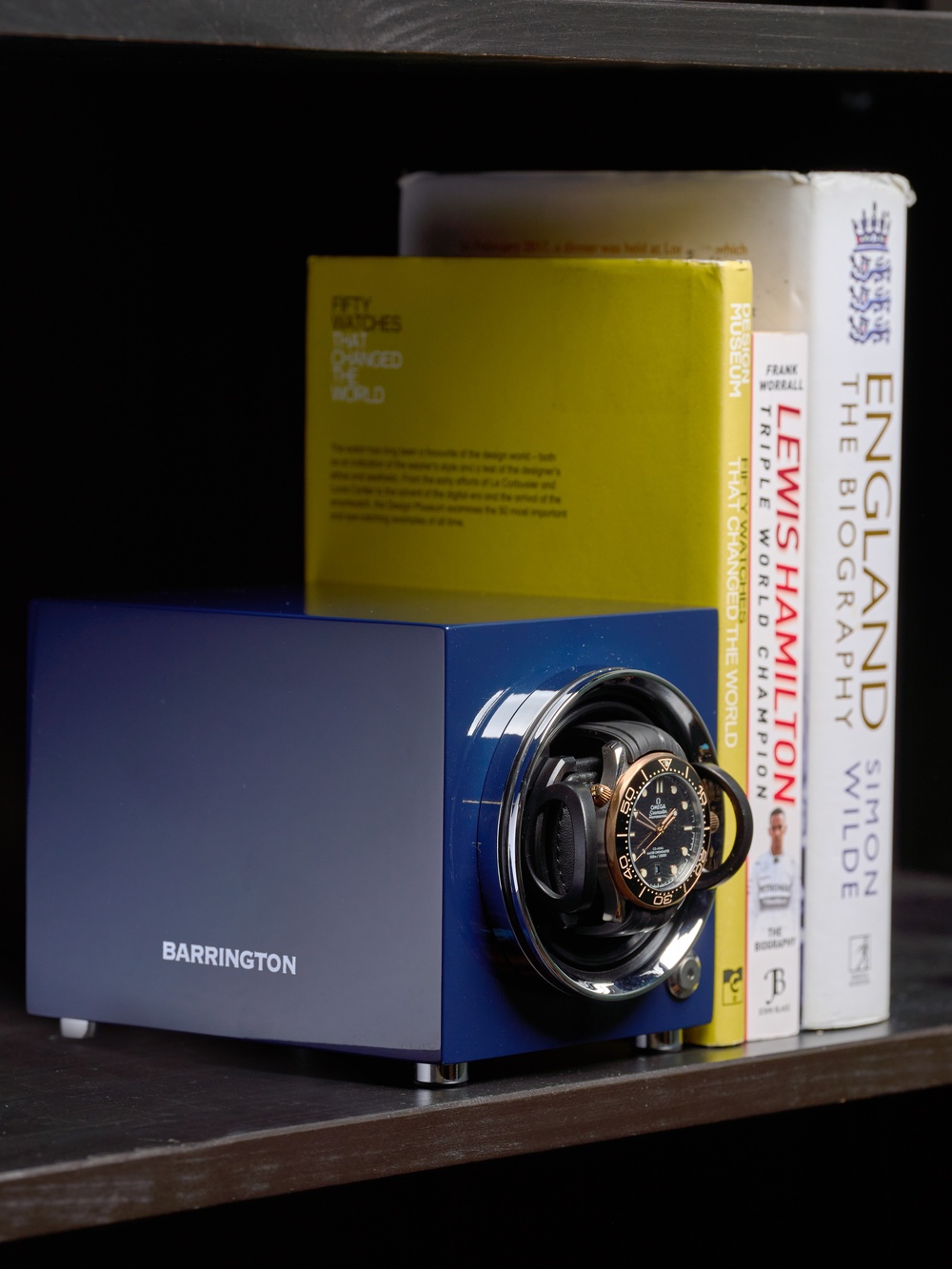
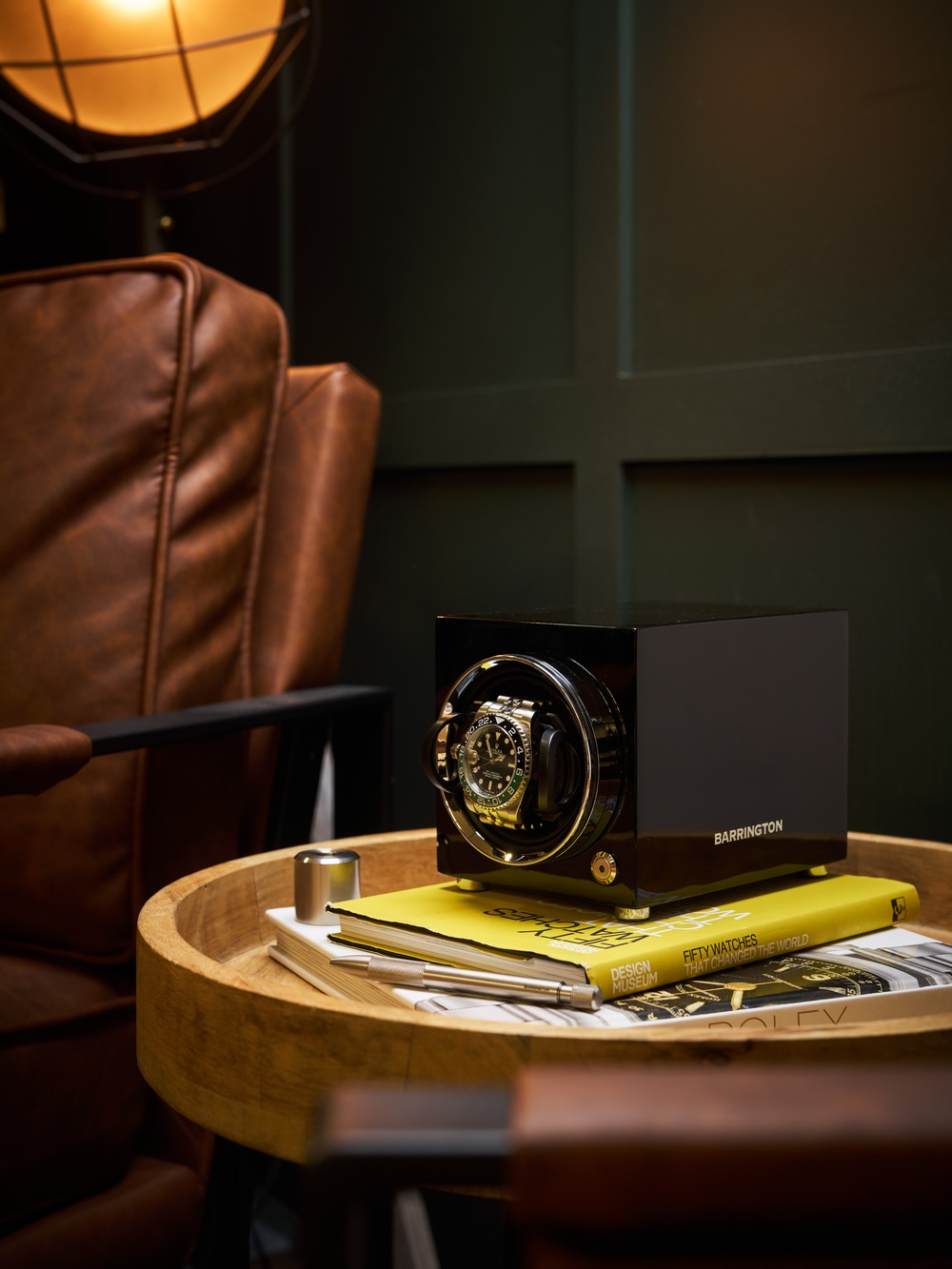
All three, honestly, but the ownership experience is the interesting part. The function is simple – it keeps an automatic moving when it’s off the wrist. But emotionally, it gives the watch somewhere to live. It makes a collection feel considered, and it becomes part of the ritual of choosing, displaying and wearing your watches. It’s not ‘This keeps your watch moving,’ it’s ‘This makes owning and enjoying your watches feel better.’
How has the range evolved since your first single winder, and who’s the Barrington customer today?
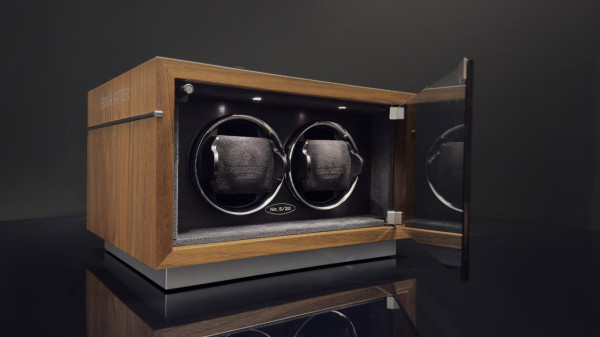
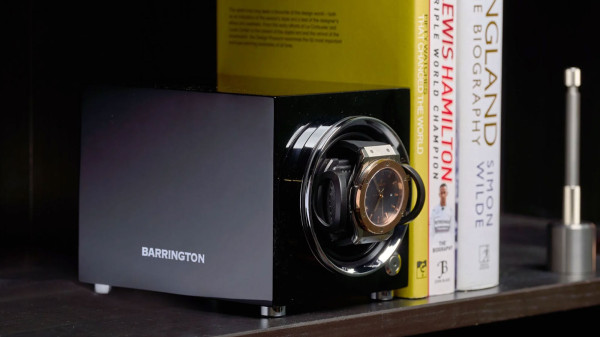
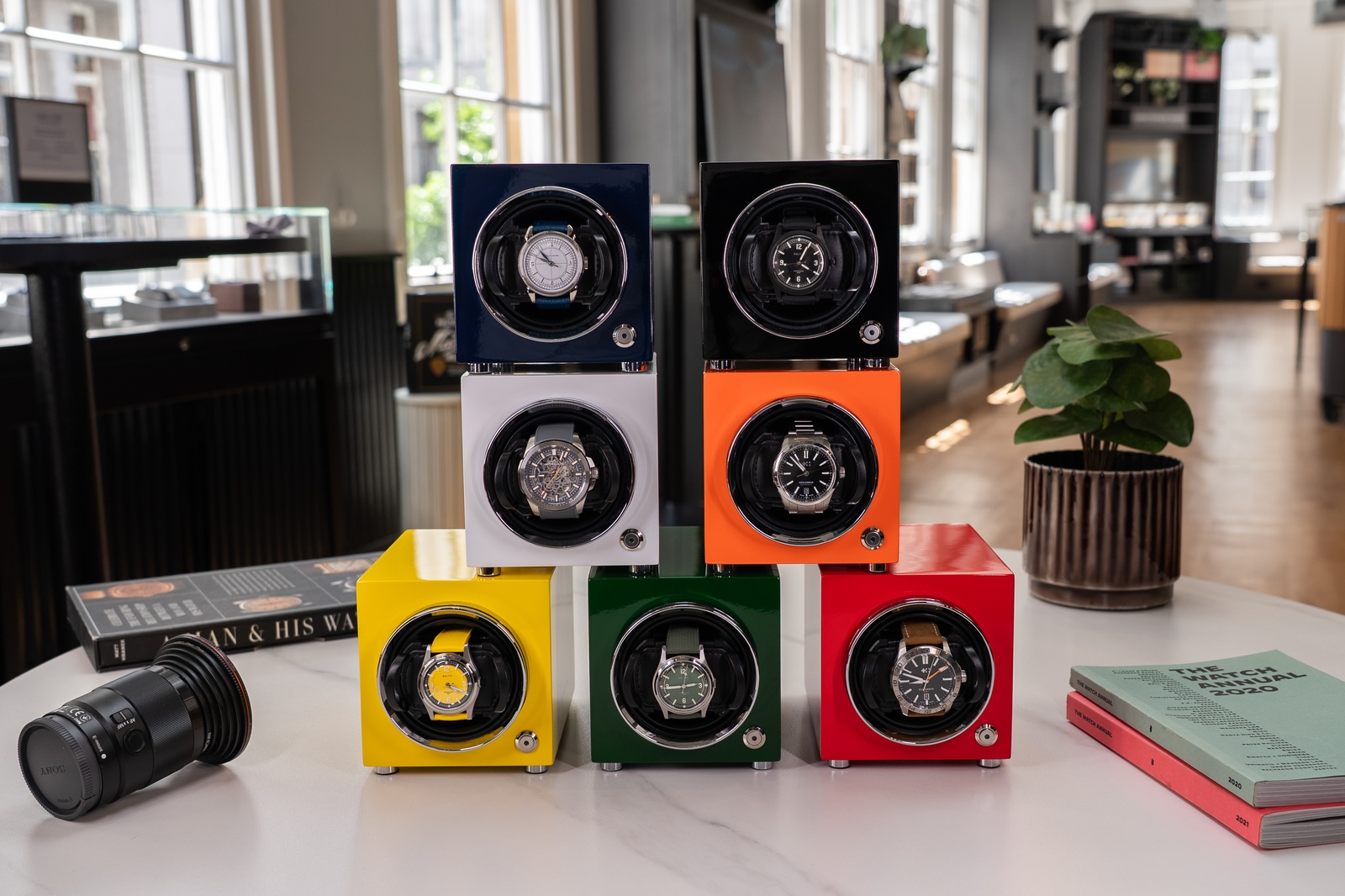
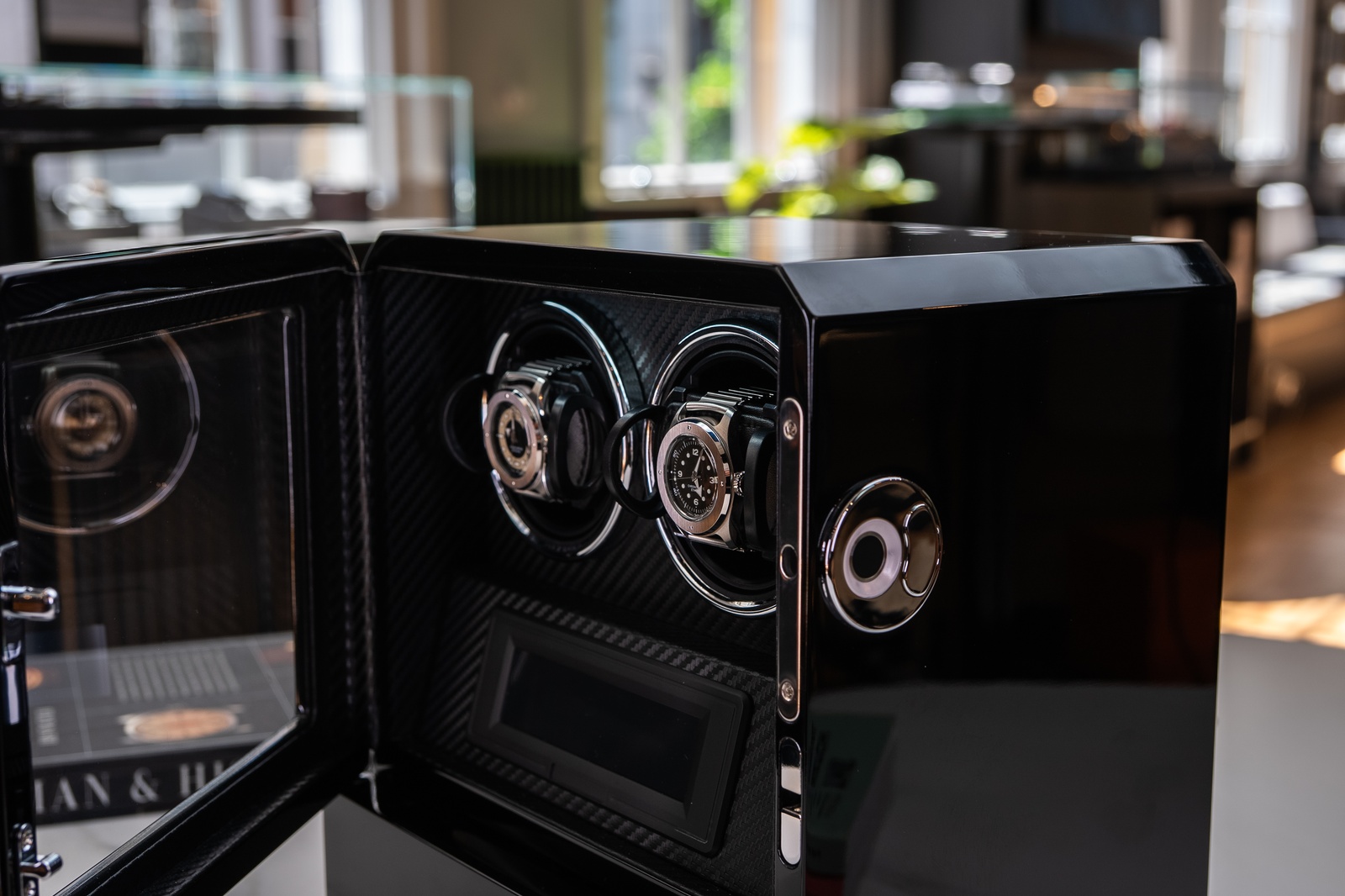
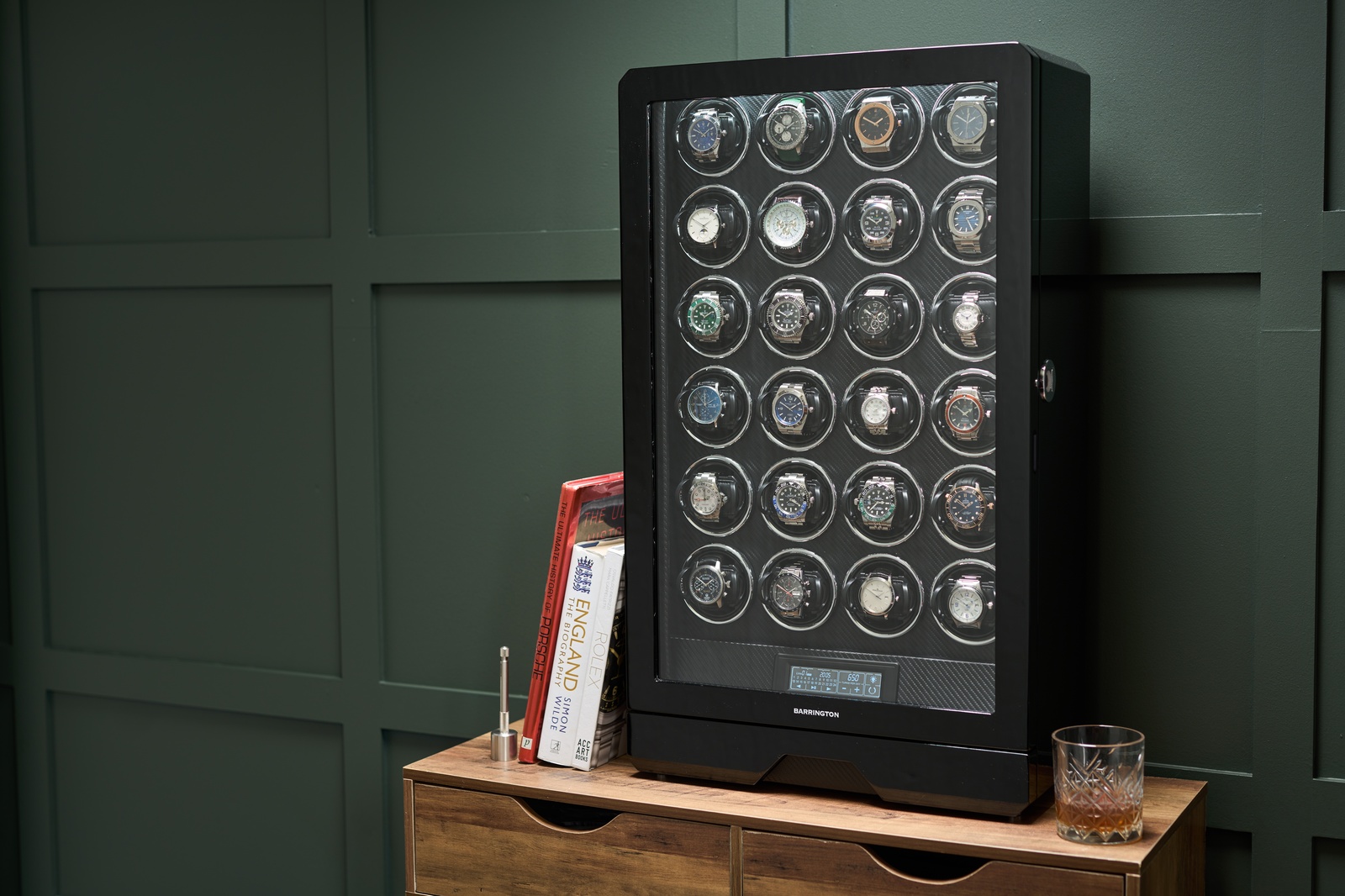
The story was never just ‘We made a winder.’ We spotted the gap, then built a range for different types of collector, which is also why there’s no single ‘Barrington customer’. A colourful single winder might suit someone with their first automatic, or make a great gift for a watch lover. A two-watch winder suits someone building a small rotation. And the larger multi-watch winders and safes suit established collectors with more valuable pieces to look after. That range means we can grow with a customer – someone might start with a single winder, move to a double, then to something bigger as the collection grows.
What do you want Barrington to stand for, and what comes next?
We’re not trying to be the cheapest option, and we’re not trying to compete in the ultra-expensive safe-and-storage world either. We sit deliberately in the middle – a credible, functional, good-looking product for people who care about their watches and want something that feels appropriate without silly money attached. But the product is only part of that proposition. We also want to be known for providing genuinely great service and support when customers need us. That’s a position worth owning. Next, it’s about refining the range through customer feedback, improving the ownership experience, helping more collectors understand the category, and building awareness beyond the UK and US, in markets where the demand is already there. We also want Barrington to be a more active voice in the wider watch community – supporting independents, raising awareness of niche watches, and backing initiatives that help collectors, wherever they are.
More details at Barrington.