Independent watchmaking, and the ever-rising attention it commands, owes more to the Antiqua than to almost any other single watch, and one example has now sold for close to a million Swiss francs. But the charm of the indies was never about investment value; leave that to the legacy brands with coronets on their dials.
When Vianney Halter walked through the doors of the now-defunct Baselworld in 1998, carrying a single yellow gold watch with platinum dials, he caused a stir, but he was unknown outside inner industry circles. Halter was an artisanal supplier, quietly making parts for Audemars Piguet, Mauboussin, Jaquet Droz and Franck Muller, and a slowdown the previous year had left him with no work. So he did what watchmakers dream of doing and rarely have time to do: he built the watch he wanted for himself.
Halter is known for pushing finishing as far as his bench will allow, but with a design sense unlike anyone else’s. This was long before MB&F; Urwerk, similarly avant-garde, had only just made its quiet start in 1997. For Halter, the prototype was partly a way of showing potential clients everything he could do. His first steampunk creation was almost called Time Machine, but the name was taken, so it became the Antiqua, a nod to its Jules Verne-dive-helmet charm.
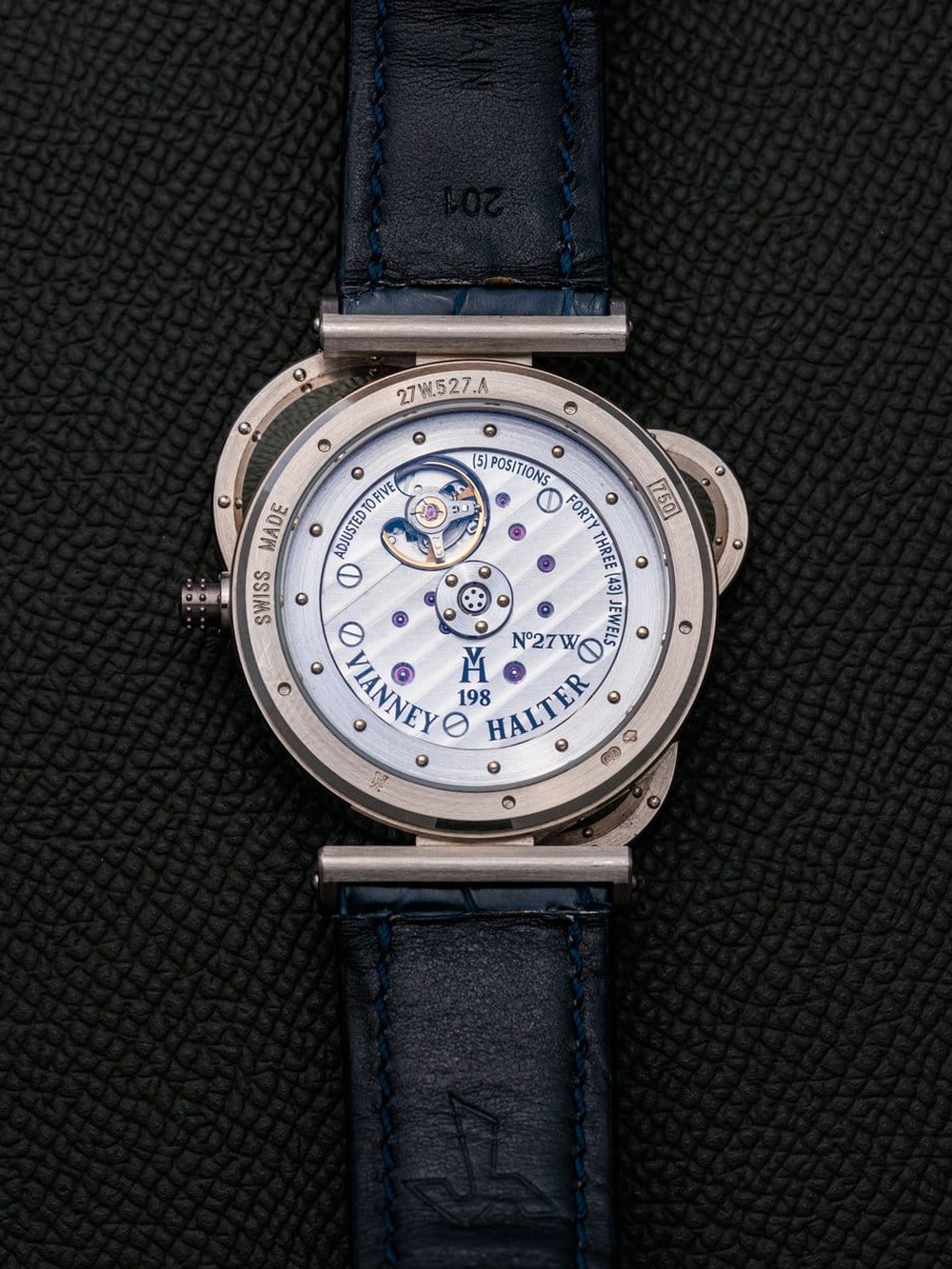
A few fellow watchmakers saw it and immediately understood it was exceptional. Among them was Philippe Dufour, who offered Halter a place on the AHCI booth. Two orders came in before the fair was over, and Halter’s status pivoted from quietly confident supplier, with no production plan or pipeline, to self-made brand with no idea how many hundred hours each piece would take. He suddenly had a watch to make.
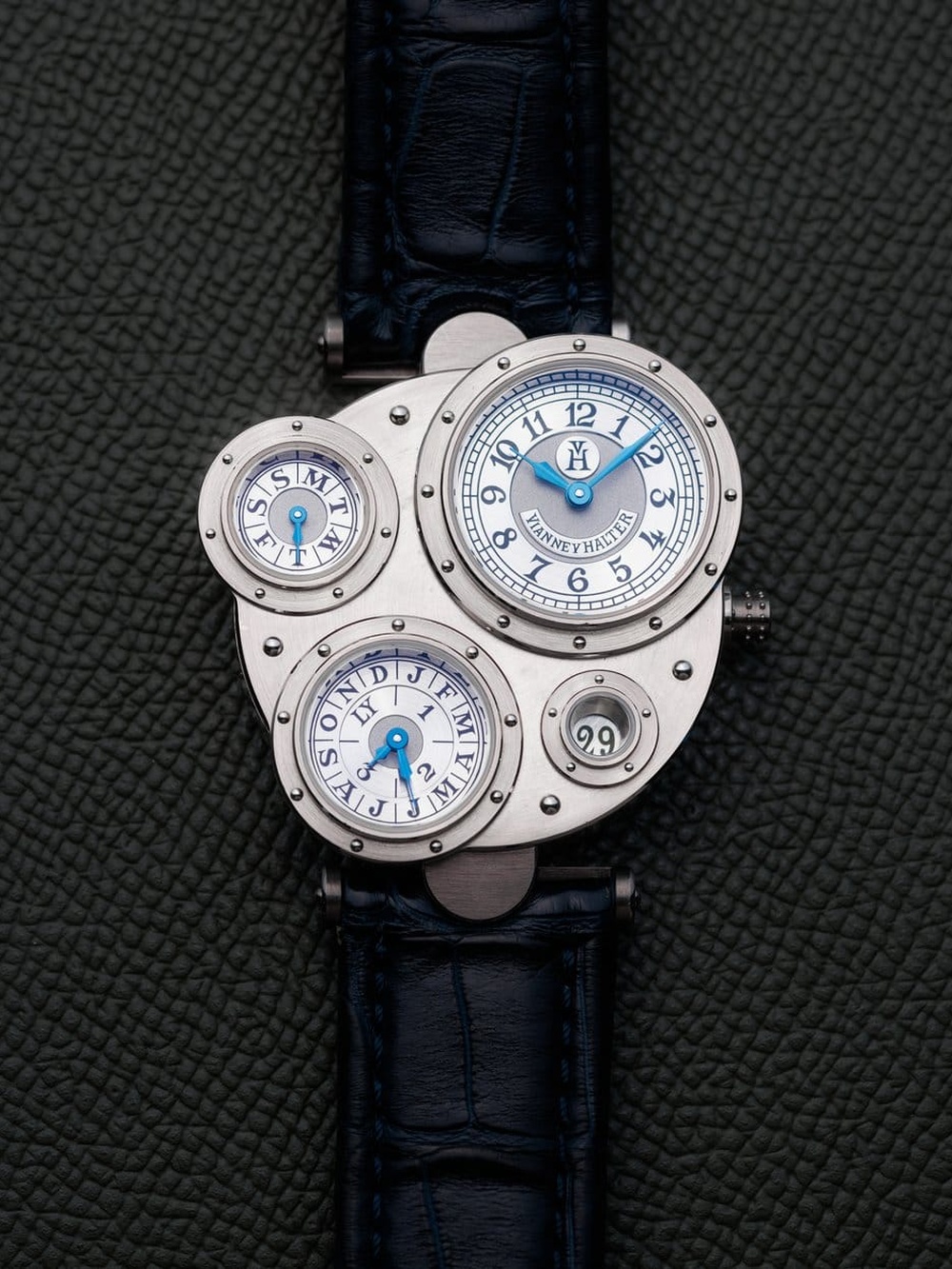
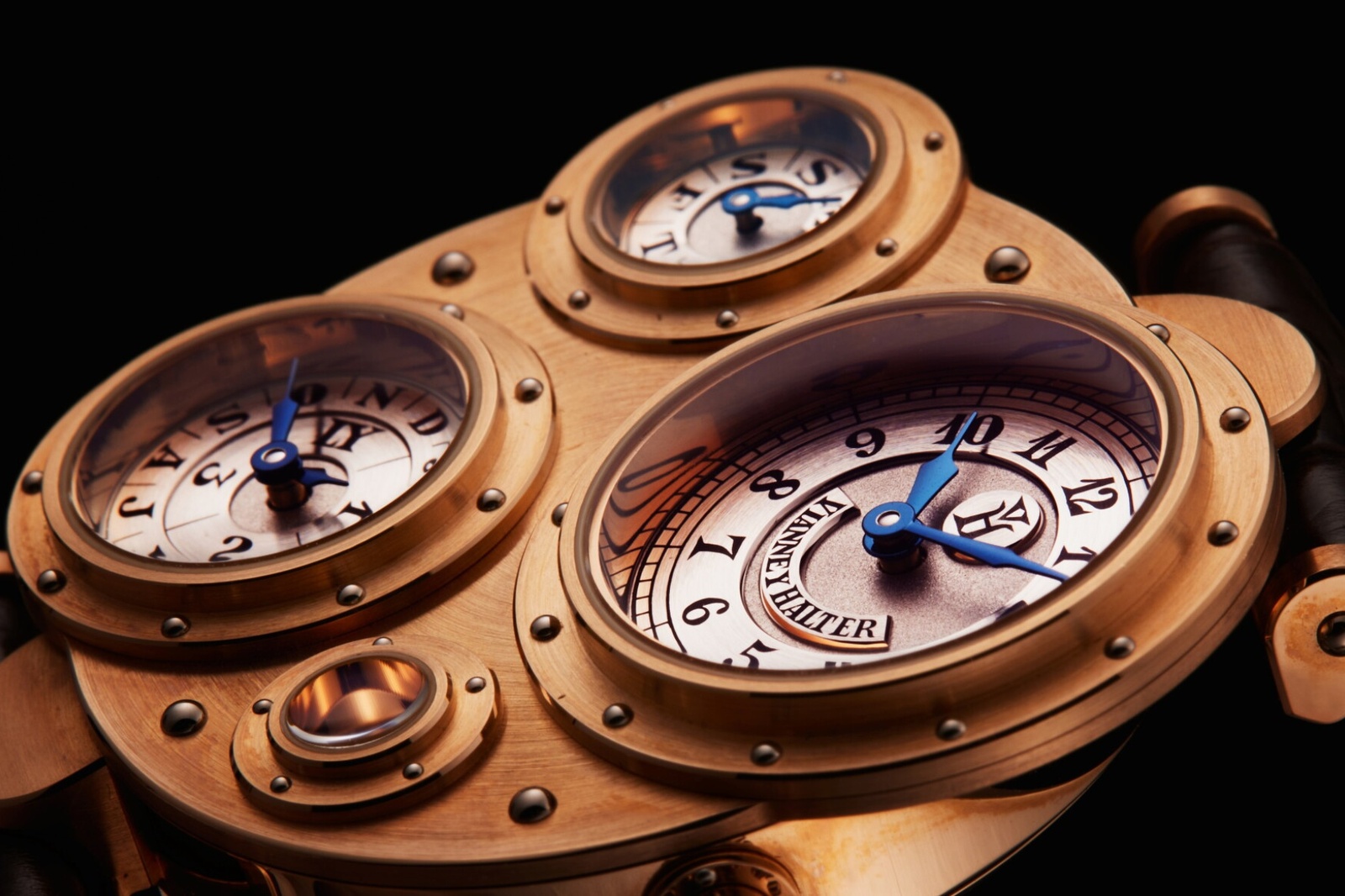
The idea behind the Antiqua is in the oxymoron Halter coined for it. It sits boldly on the wrist as a relic from the future, but not our future. It exists as if teleported from the future worlds of 19th-century literature and illustration: imaginary steam-powered flying machines, Jules Verne and H.G. Wells. The design draws on Ferdinand Berthoud’s marine chronometers, with a dial layout straight from steamboat and locomotive dashboards. “I believe I inherited my love for steam from my father, who used to be a locomotive fireman,” Halter has said
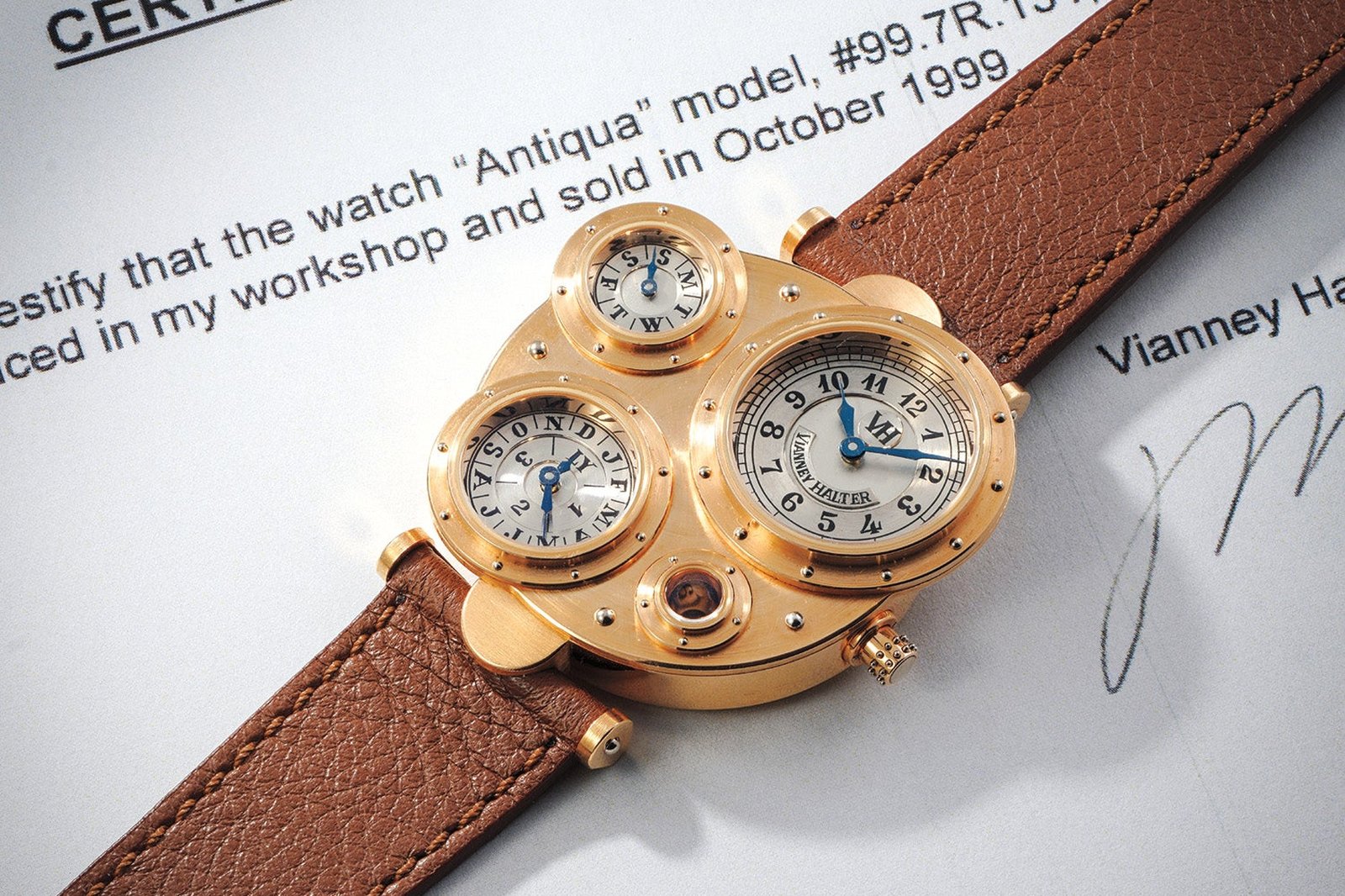
Underneath the Futur Antérieur styling (roughly, the future as seen from the past) sits a perpetual calendar with information split across four riveted portholes of decreasing diameter: hours and minutes, month and leap year, day, then date. Each precious metal dial is hand-engraved, and the case alone runs to nearly 130 parts. Of those, 104 are rivets, every one refinished by hand and press-fitted through the bezels and case top. The VH198 calibre began life as a Lemania 8810, fully reconditioned and rebuilt into a perpetual calendar in a way no one had done before. Halter’s patented ‘mysterious mass’ rotor hides every connection between the winding mass and the movement, so that from the rear it appears to be manually wound.

In earlier interviews, Halter has always contested the idea that any of this was a stand against the traditional watch industry. “I never went against the mainstream,” he said. “I have always been following my own path, and I have no battle to run.” Asked whether the Antiqua was a technical experiment or a personal manifesto, his answer speaks volumes: it is both, his technical vision combined with a more poetic translation of his dreams. By his own account, making it was an ascent akin to climbing Everest.
Halter was alone at the bench in 1998, and for most of the years since has worked alone still, producing the case, dials and calendar work in his own workshop and buying in only the sapphire, strap and escapement, along with the Lemania base he then rebuilds. Jeff Barnes, the American graphic designer who worked with him on the early design, was credited alongside Halter on the earliest dials before the two parted ways. Even the delivery was personal. Each Antiqua left the atelier with a bespoke winding box in precious wood, its winder tuned to run the calendar and stop upright so that the watch could sit like a desk clock off the wrist.
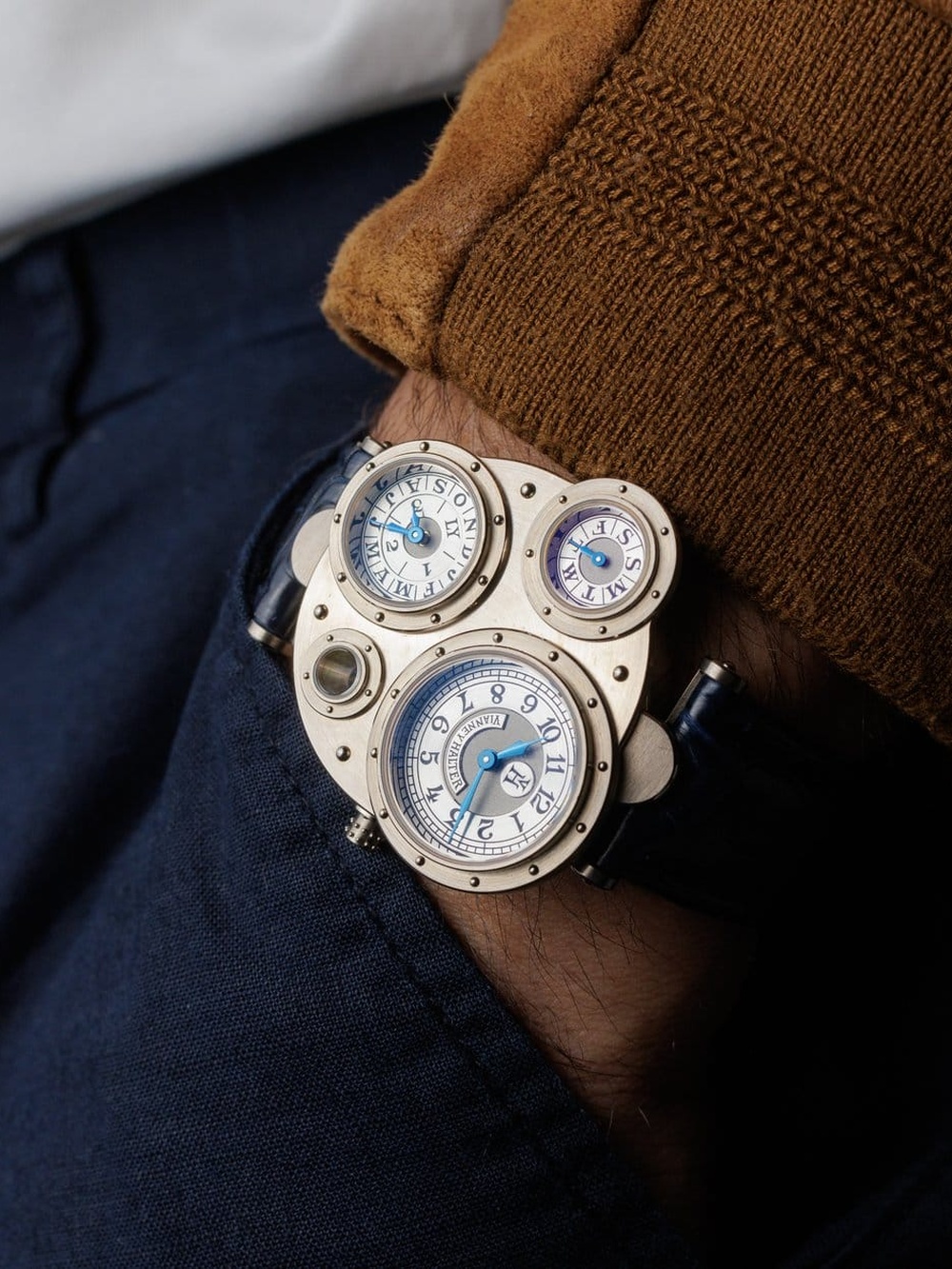
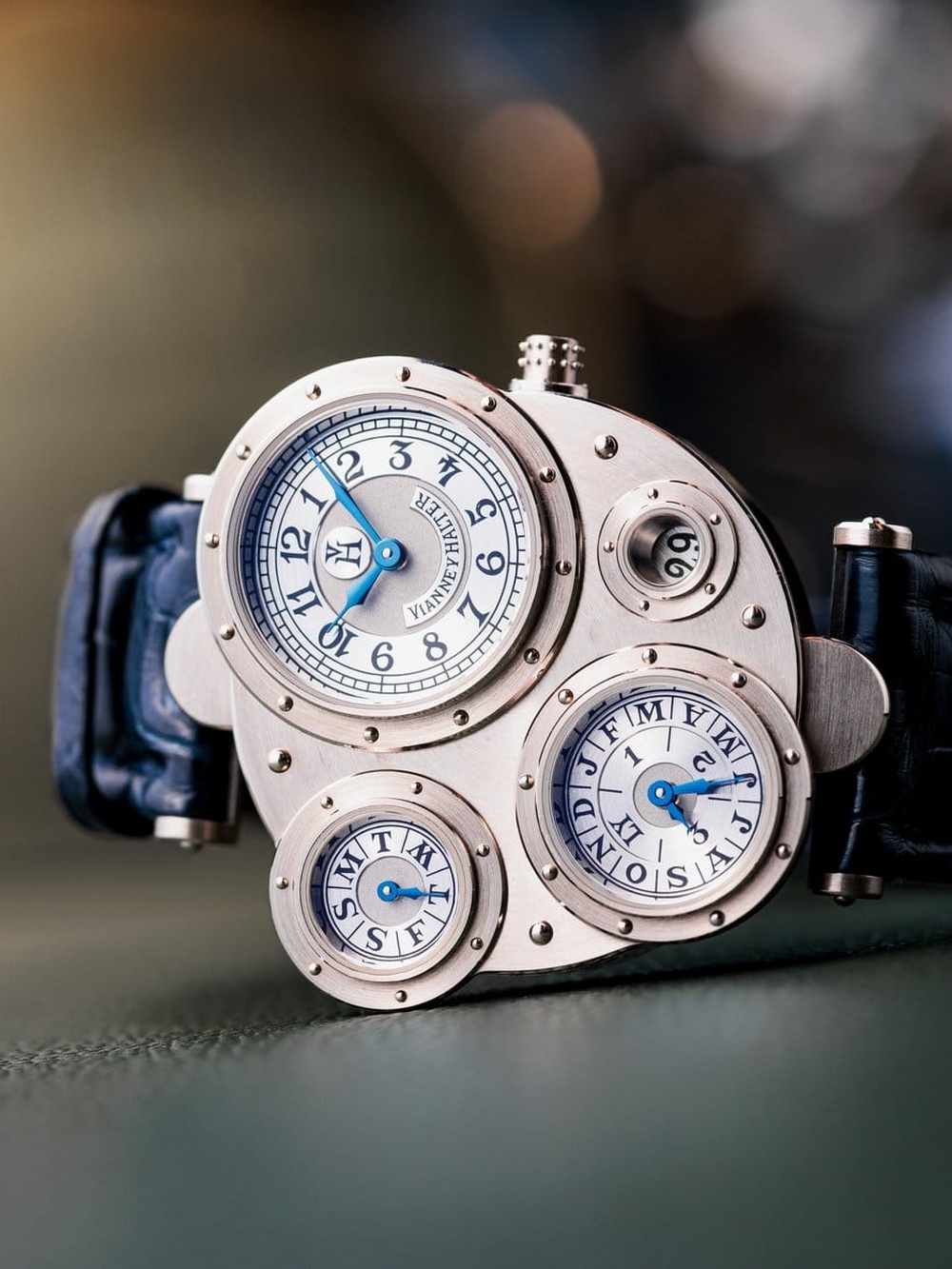
Between 1999 and 2016, Halter made 110 Antiquas in white gold, rose gold, yellow gold and platinum. No two commissions were quite alike, and his choice of precious metal surprised the uninitiated, given the watch looks like a functional tool. Throughout its production run, the Antiqua was admired more than understood. In a world of wrist-boasting Breitlings and a quiet collector scene without social media, it was simply ahead of its time. The proof arrived at auction this June, when a unique pink gold example with matching pink dials sold at Marteau & Co for CHF 960,000, comfortably over a million dollars. Faced with this renaissance of sorts, Halter says he would do it all the same, otherwise the Antiqua would not have become the piece it is today.
It is tempting to draw a straight line from the Antiqua to everything weird and wonderful shown at this year’s Geneva Watch Days and in the smaller indie booths at Watches and Wonders. But the watch did not invent independent watchmaking; it existed in a quieter corner of the collector hive mind and on forums. The AHCI existed, Dufour was already Dufour, and Franck Muller had shown that a name on a dial could mean more than a design committee. What the Antiqua did was demonstrate, in one uncompromising object, that a single maker could take a serious complication and wrap it in a private world so complete that gears and mythology became inseparable. The perpetual calendar was the classical part; the portholes, rivets and steam-dashboard logic dreamed backwards from the Victorian era. That argument has finally landed, and our world of watches is all the better for it.
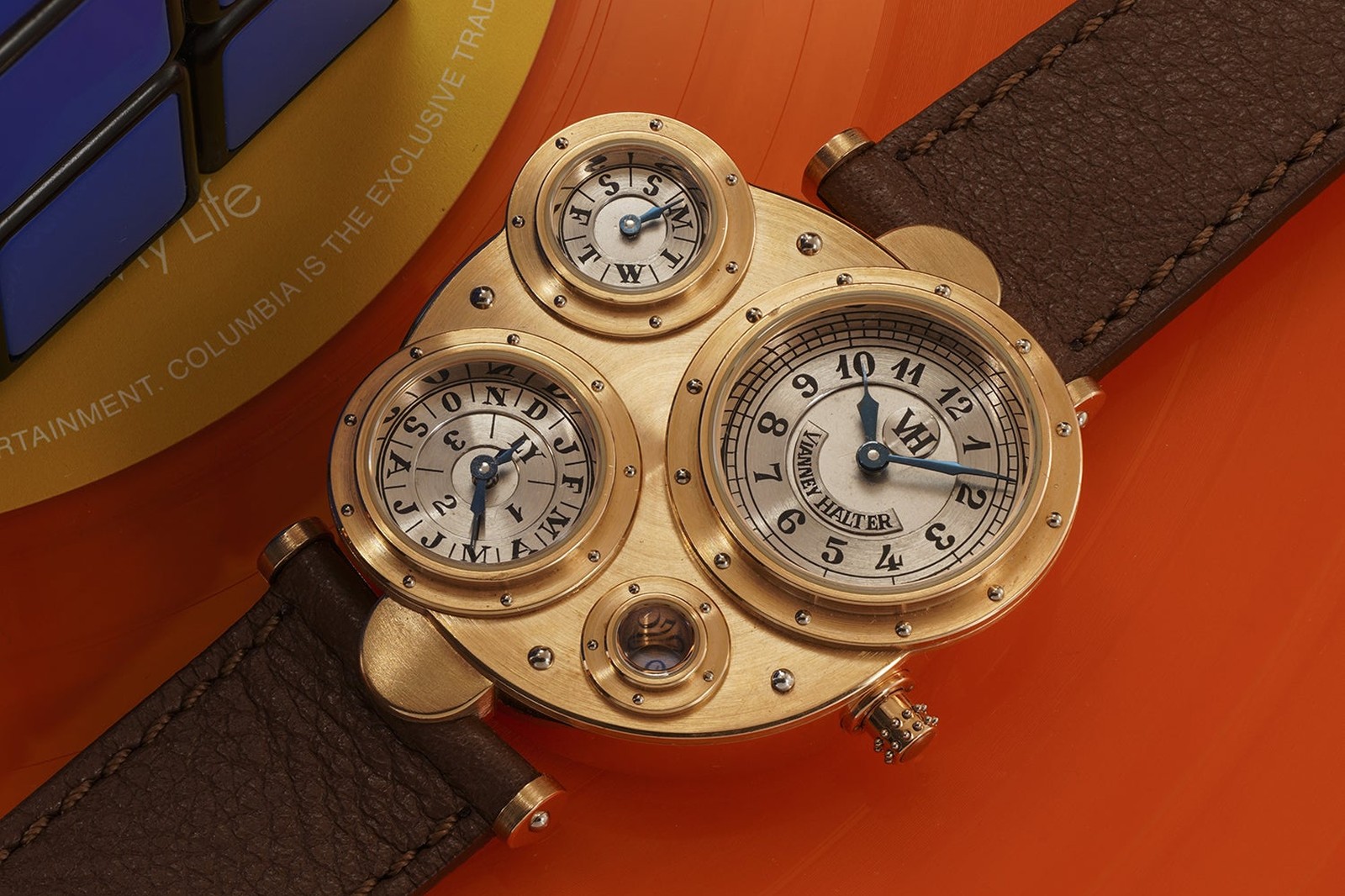
There is a particular kind of vindication in being told for the best part of two decades that your watch is difficult, then watching the world quietly rearrange itself around it while new brands find inspiration in your legacy. The Antiqua spent most of its production life as a connoisseur’s secret, too odd for the mainstream and far too demanding for a market fed on traditional wristwear trends. But Halter never softened it to meet that market halfway, and can now note with a smile that the Antiqua is at last in tune with its time, nearly 30 years after its birth.
What changed was not the watch but the audience. A generation has been raised on independent watchmaking as a serious category rather than a fringe interest, and a younger set of collectors now comes to the Antiqua already fluent in its language. If you know your Urwerks from your MB&Fs, and can see the lineage in small brands like Tokyo’s Otsuka Lotec, you can see what the 1998 crowd missed. The auction result is the headline, but the Antiqua, and Halter’s life, are about so much more. The watch is now discussed as an origin point, a creation that other watches descend from, which is a status no amount of marketing can manufacture and only time can confer.
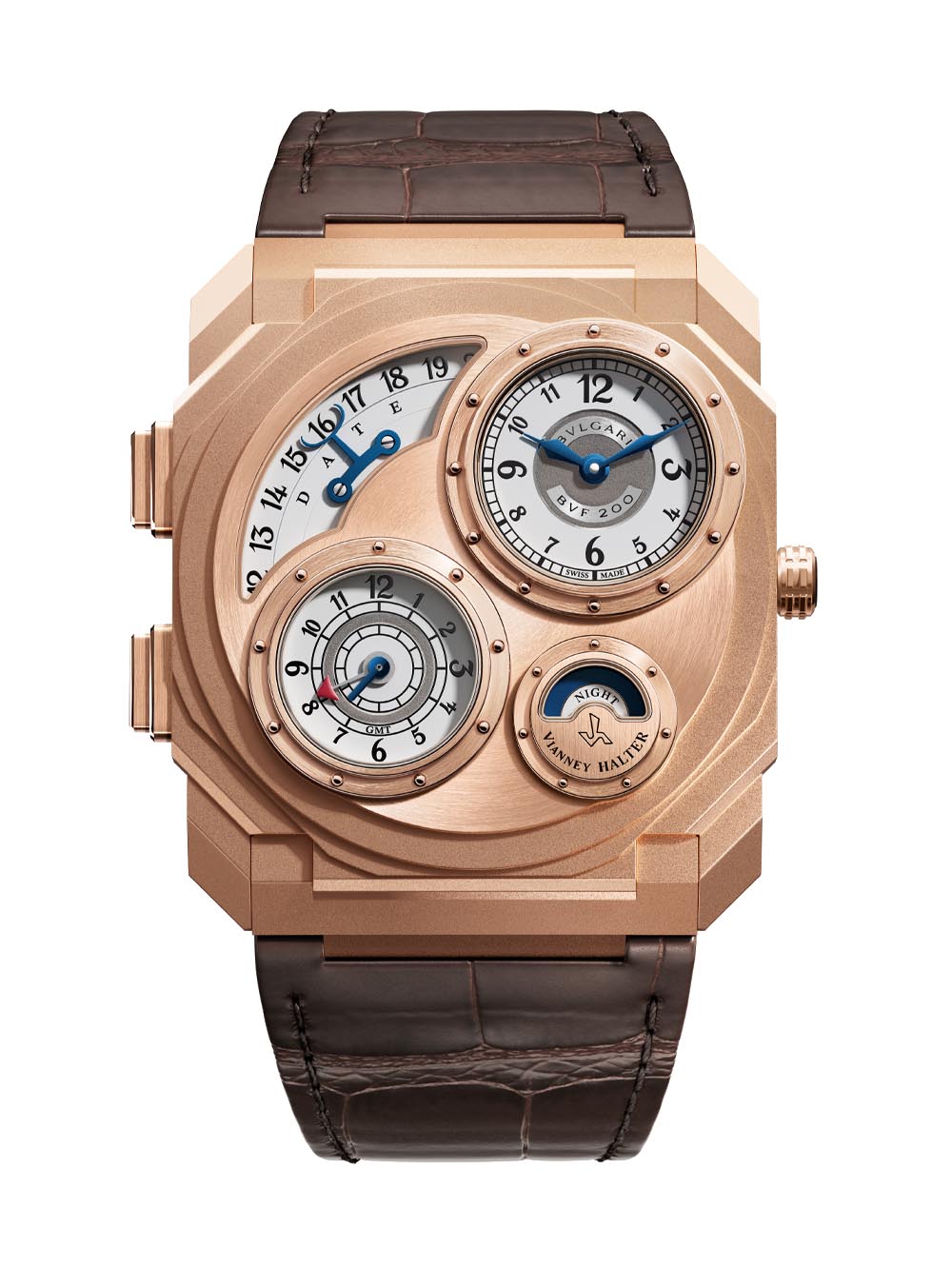
Halter himself has, characteristically, refused to treat any of this as a finished story, and at Geneva Watch Days in August he showed something not even his most ardent fans would have expected. We have seen his cues on watches by Louis Erard, Behrens and Massena LAB, but sharing a dial with the house that began as Rome’s jeweller to the elite is a different order of thing. The Octo Finissimo Dual Time x Vianney Halter, in its tech-cut splendour, transforms the Octo Finissimo. In interviews, including my own, both sides describe a collaboration that came about organically, even effortlessly, and this is the first time Bulgari has put another watchmaker’s name on the Octo. It turns the thin, clean-cut, award-winning Finissimo into a new beast altogether, rendered in titanium or rose gold. Vindication is sweet, and renaissance sweeter still; now the world awaits Halter’s next move. Will there be another Antiqua or even, dare we think it, a return to production?