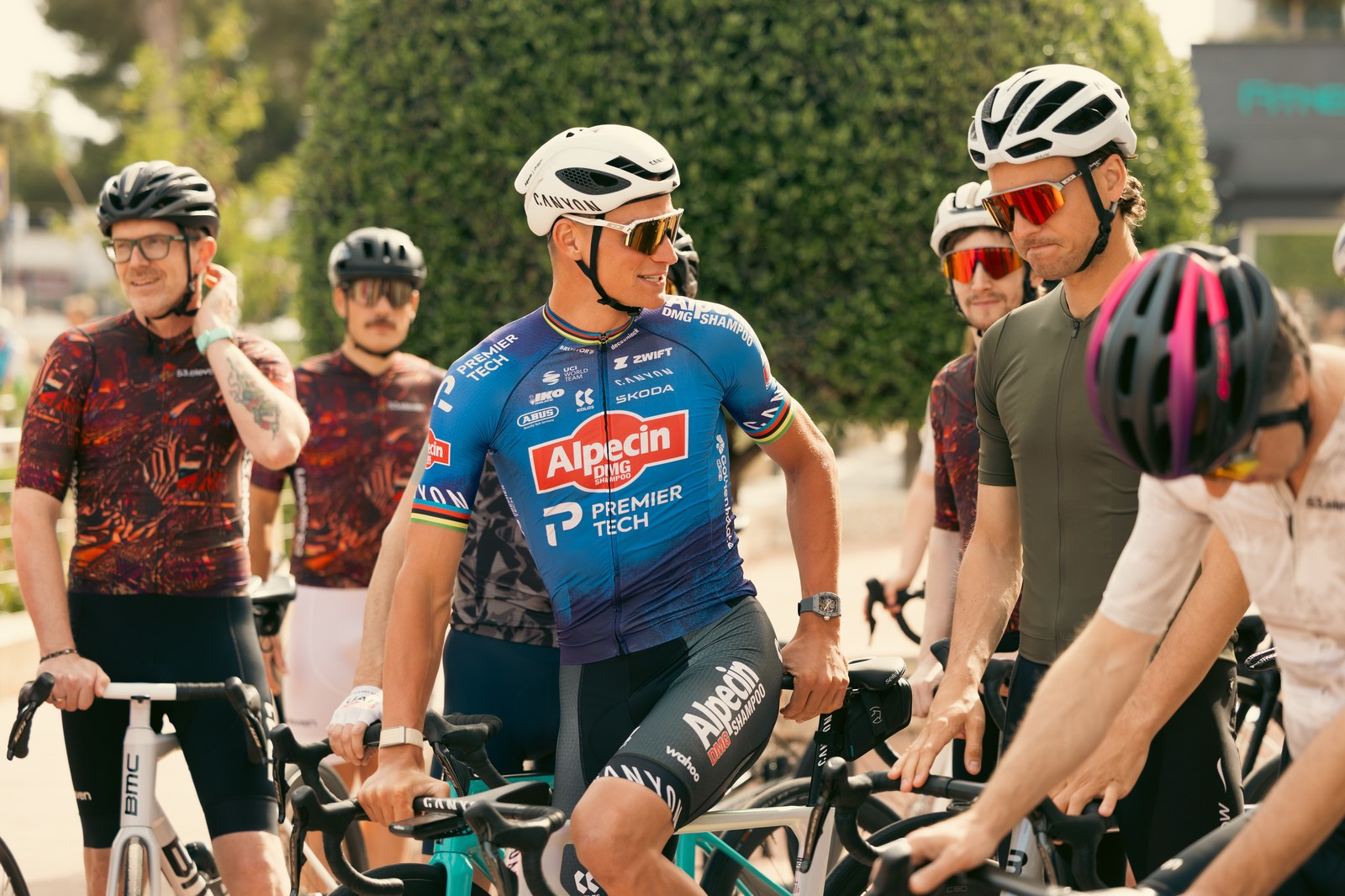
There is a moment, around mile 25 of a 30-mile ride near Alicante in Spain earlier this summer, when I understand that Mathieu van der Poel is not a cyclist in any conventional sense. As I struggle up one of the steepest hills, MVDP, as he is known, pops a wheelie while a small cadre of journalists and I labour along near collapse. Wearing the hell out of the lithe 32 grams of Richard Mille’s latest RM 67-02, van der Poel appears to have been engineered rather than trained. My 150-gram dive watch is the reason I lag behind, or so my theory goes, but the pace has been what the itinerary described, with casual optimism, as ‘spirited’. What it is, in practice, is an instruction to suffer quietly and say nothing about it, and I smile despite my burning legs. MVDP, of course, does not suffer. He talks with the group, barrelling back downhill for another go at the climb we were desperate to finish, attacking small rises for the entertainment of no one in particular. He glances back at us with the patient expression of a man who has left something on the stove.
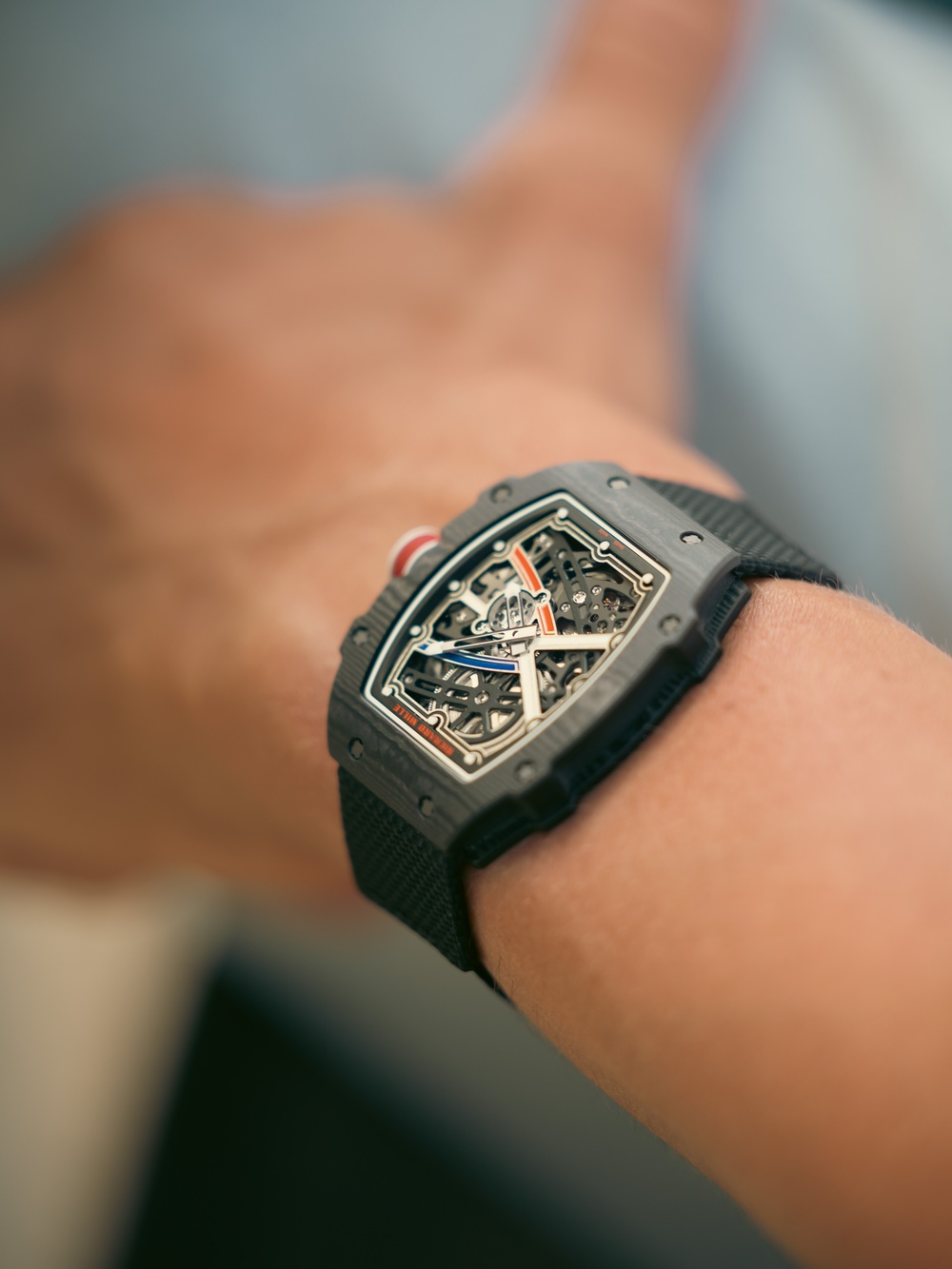
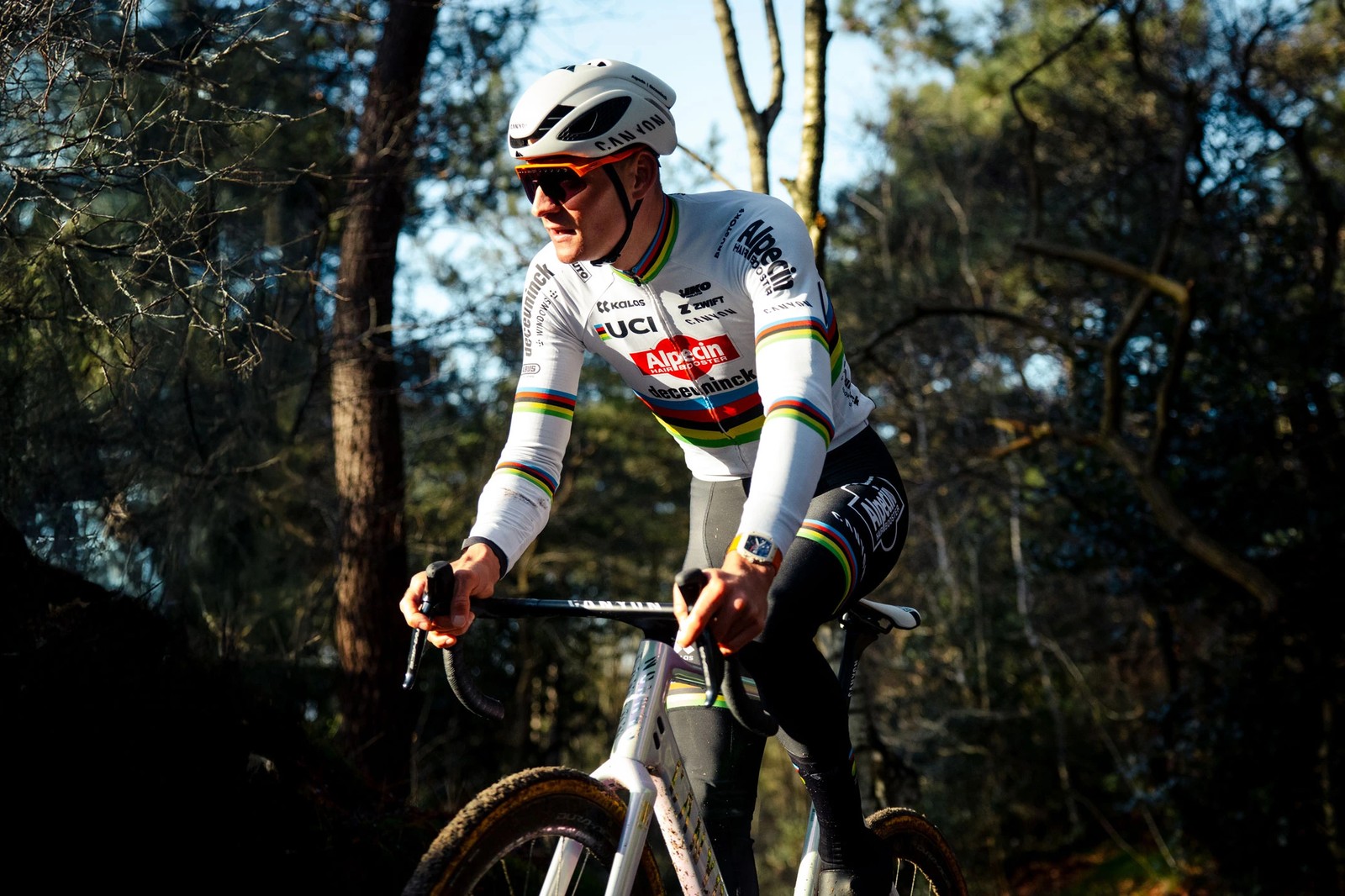
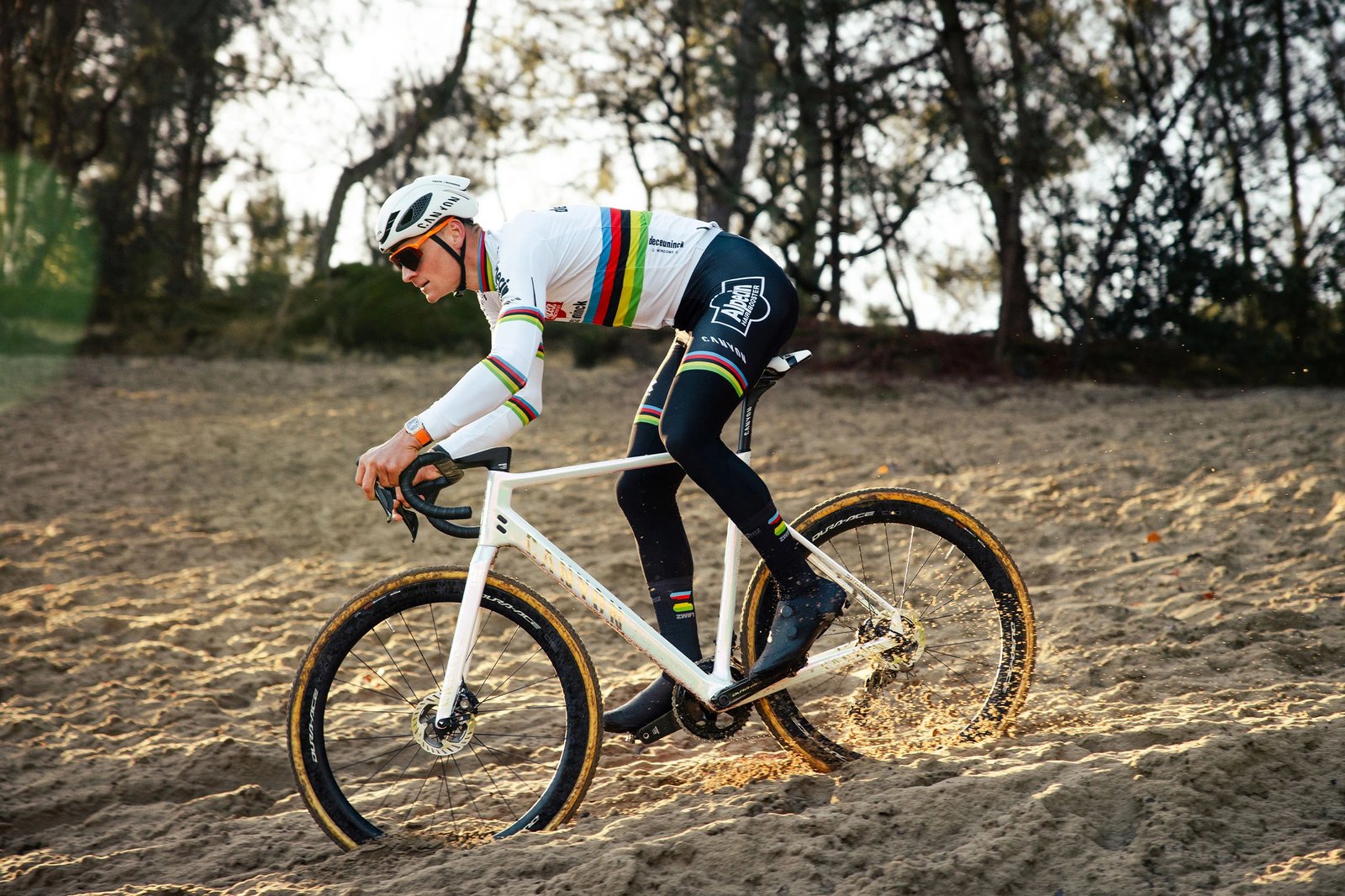
On his left, tanned wrist, a soft, elasticated sports strap holds the Richard Mille RM 67-02 Extra Flat, paired with a Whoop on the right arm. It is a natural fit, weighs close to nothing at 32 grams and costs around £150,000. Most of us would not have worn it for a quick ride to the supermarket, but on van der Poel’s wrist it has already survived a cyclocross world championship in the Lievin mud, several hours across the cobbled sectors of Paris-Roubaix, and whatever is happening to it right now: a casual ride in the sun with us, the hopeless lightweights.
The Richard Mille RM 67-02: What Makes It a Cyclist’s Watch
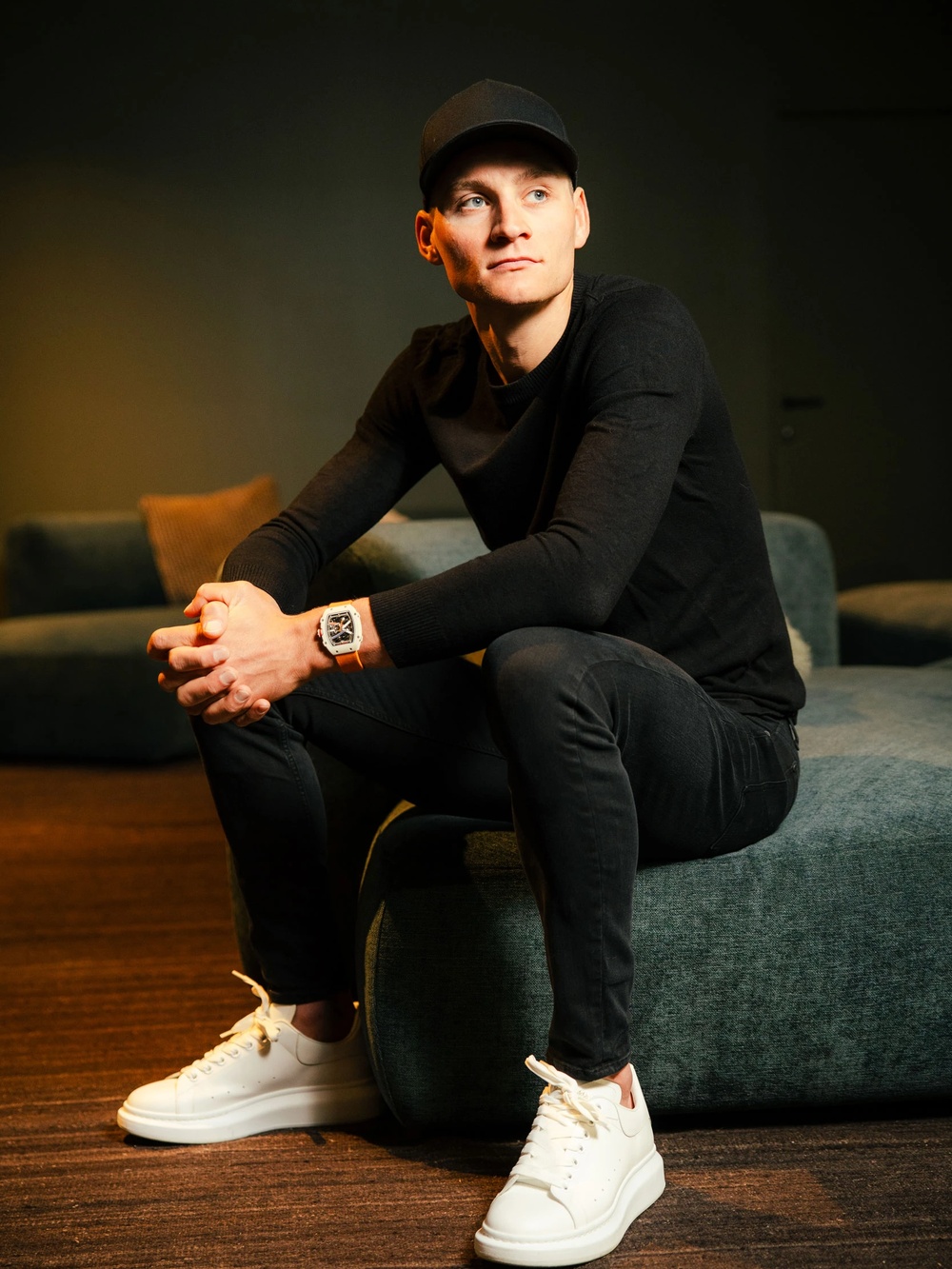
Sitting down with van der Poel, it is clear he was a watch guy before the RM partnership, unusual for a Gen Z sportsman and refreshing for an old hack like me. “I was already really into watches and Richard Mille already,” van der Poel told me. “Before it became super big, I was already following the brand. So as a watch enthusiast, to be an ambassador for a brand like this, I think it’s a dream.” You will struggle to find a more lauded multidisciplinary cyclist than MVDP, who started in cyclocross and aims to add a mountain bike world title to the road and cyclocross crowns he already holds.
“Cyclocross is the thing I’ve done since I could almost walk, so I’d say it’s the easiest to get ready for,” van der Poel told me with a knowing smile. “Mountain biking is something I started at a later age, and the bike is quite different to a road bike. Most of my training is on a road or gravel bike, even a cyclocross bike. It’s almost the same geometry, handling, and skill set. But the mountain bike is completely different: the suspension, the tyres, everything. It takes time to adapt. For me, it’s the most difficult discipline. It’s a real challenge, and that’s why I like it so much.”
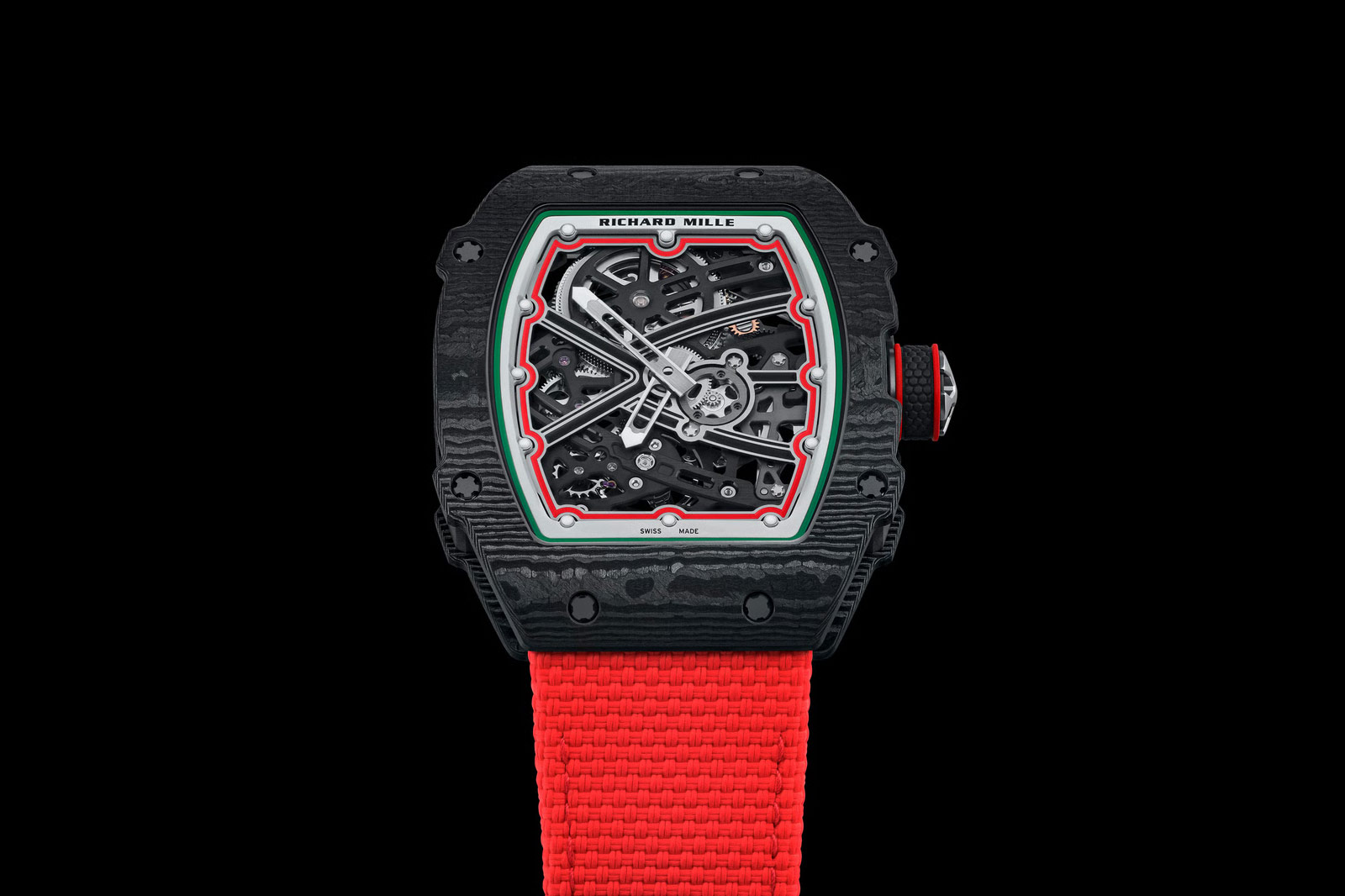

Suffice it to say, I’ll be rooting for MVDP, because it seems achievable, and he knows it. He also appreciates the value of the RM 67-02, with its 150-grand price tag and enviable strength-to-weight ratio. “They told me it can withstand everything, including the mud and snow; in fact, they were fine with it. I’ve worn it in snow, mud, mountain biking, everything, and it’s survived every time.” The Mille partnership, and putting the RM 67-02 through its paces, is plainly a confidence boost for van der Poel, not that he needs much of it.
Richard Mille’s Athlete Partnership Philosophy
Richard Mille launched in 2001 with a provocation rather than a product. The founding idea was that a luxury watch should function as a racing car on the wrist. This was the first sign that RM had elected to stay lateral to the rest of what was, and in many ways still is, a traditional industry. From the first RM 001, the brand has built its name on technically extreme, performance-engineered watches. And unlike most brands even today, the bench testing of Richard Mille’s lightweight tech has been done not under controlled laboratory conditions but in actual competition.
The brand’s first athletic partnership, with Brazilian Formula 1 driver Felipe Massa in 2004, was less a marketing decision than a proof of concept. “Richard, back in the day around 2005, didn’t have the budgets,” Global Marketing Director Tim Malachard told me over a coffee in the Spanish sun. “He said to Felipe, ‘I can’t pay you, as I’m investing everything in the brand.’ ” Richard Mille offered to pay Massa in watches, and that kicked off a trend-setting view of motorsport and athletic partnerships, with a big difference. Richard Mille asked Massa if he could wear the watch while racing, something sadly no longer allowed. “He had multiple crashes, including the famous one in 2009, where he nearly lost an eye,” Malachard said. “And the first thing Felipe did after the operation, from the hospital, was call Richard and say, ‘don’t worry, the watch has got nothing.’ That tells you everything.”

Twenty-five years on, the stable has expanded to include more than 40 athletes and teams across tennis, golf, Formula 1, rally, sprinting, cycling, heptathlon, showjumping, and freediving. The common thread is not glamour, though there is plenty of that. The brand commits to an athlete’s progress, not just signing at the top of their game, Malachard told me. “Last year, we signed Mathieu van der Poel, and he won everything that came to him. People say, ‘Oh, you signed at the right time.’ And I say, ‘Yeah, we did.’ But it wasn’t calculated.” The same was true with Rafael Nadal, the Spanish tennis ace. Richard Mille had him under contract for 10 years, through ups and downs, and continued it after his retirement.
“I remember when Richard signed with him in 2010,” Malachard said. “People were saying that he lost to Soderling at the French Open in 2009, in the semifinals, his knees are finished, and he’s never going to win again.” And if you follow tennis, you’ll know that Nadal came back and won another 16 majors. Talking to Malachard made it clear that Mille’s partnerships are human relationships rather than magazine-cover ambassadorships.
It is also about exposure to real physical extremes. Rafael Nadal’s RM 027 Tourbillon survived the torque of his serve, and Bubba Watson’s RM 038 registered the G-force of one of golf’s hardest swings. Tadej Pogacar wore an RM 67-02 through the cobbled sectors of Paris-Roubaix as blood seeped from his wrist where the case had cut into the skin. Van der Poel won that same race, wearing the same model.
Talking to Malachard, it is clear that every contract is different because each discipline brings something unique. “The bottom line is, they wear our watches when they’re competing, and we do long-term contracts, usually three to five years minimum,” he told me. When renewal comes around, the question posed to the athlete is simply whether they want to continue. “We have never had to go back and check what they owe us or what we owe them, like for this event. We asked Mathieu, ‘Are you free to do this event today?’ And he said, ‘Yeah, I’ve got a day, I’ll be there.’ ” Malachard smiles and admits to not being used to discussion about hours or obligations. “Our watches are complicated; our partners are not.”
Van der Poel: The Ideal Richard Mille Athlete
If you were to design the ideal Richard Mille athlete from first principles, you might land somewhere close to Mathieu van der Poel. He has won Paris-Roubaix three times. He has taken eight cyclocross world titles. He attacked the Tour de France on stage two of his debut edition in 2021 and wore the yellow jersey for six days, while casually driving to lower-category cross races in a Lamborghini. He is not, in other words, a one-dimensional proposition.
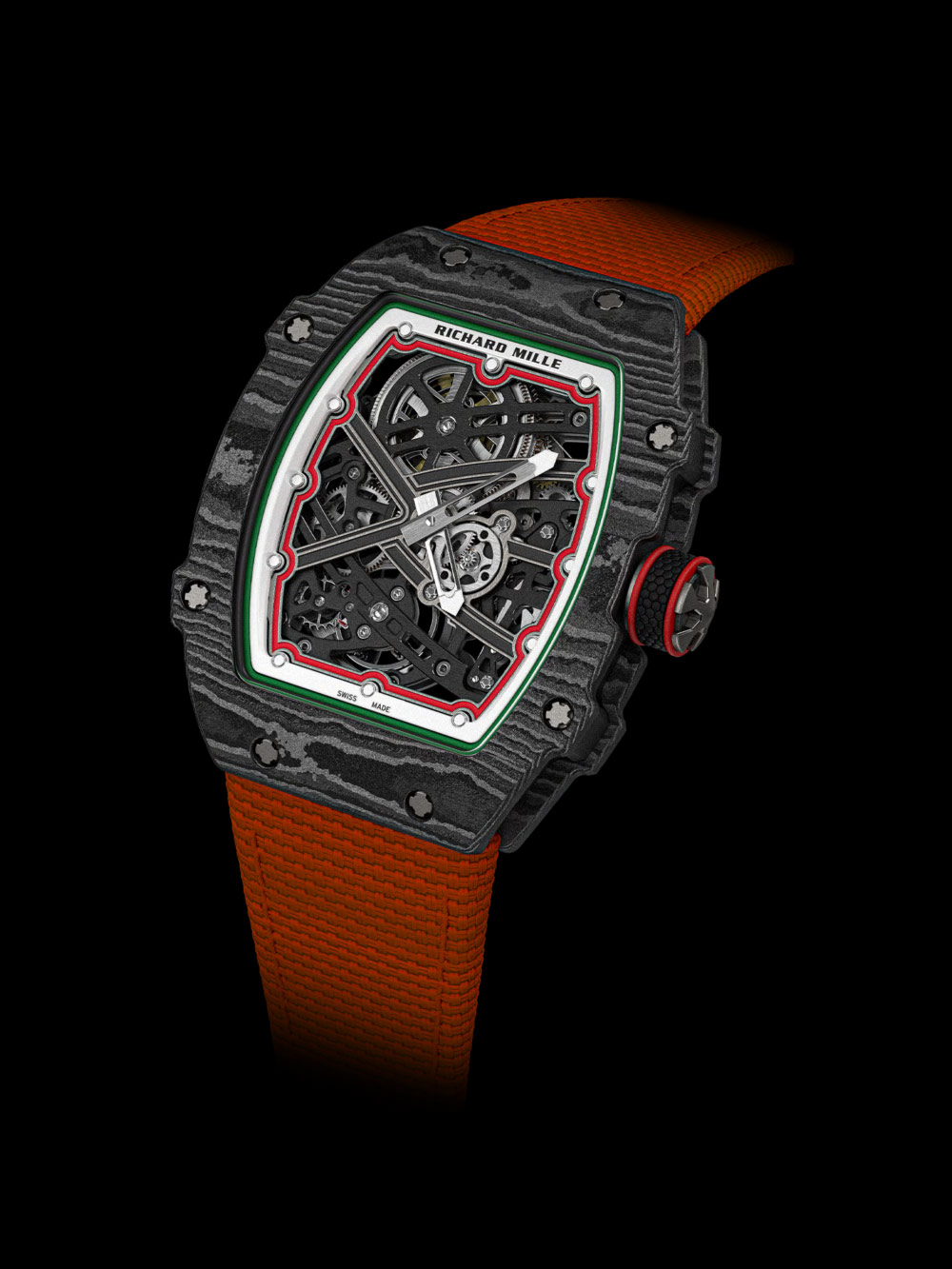
The watch van der Poel wears is the RM 67-02, built from TPT carbon composites and grade 5 titanium. It is the lightest automatic sports watch the brand makes. It is also worn by other cyclists such as Tadej Pogacar and Julian Alaphilippe, a deliberate statement of the RM 67-02’s fitness for the peloton’s specific demands. That cameras now reliably zoom in on the wrists of RM-backed riders mid-race is a feature most brands can only dream of.
Road cycling is very different from cyclocross, a 40-to-60-minute anaerobic explosion through mud and barriers. The Olympic mountain bike format is short-track cross-country: explosive, technical, violent. The training loads required to peak across all three disciplines in a single season, a bold choice by van der Poel, easily constitute one of the most ambitious programmes in cycling’s history. And the RM 67-02 is always along for that ride.
25 Years of Field Testing: Richard Mille’s Athletic Legacy
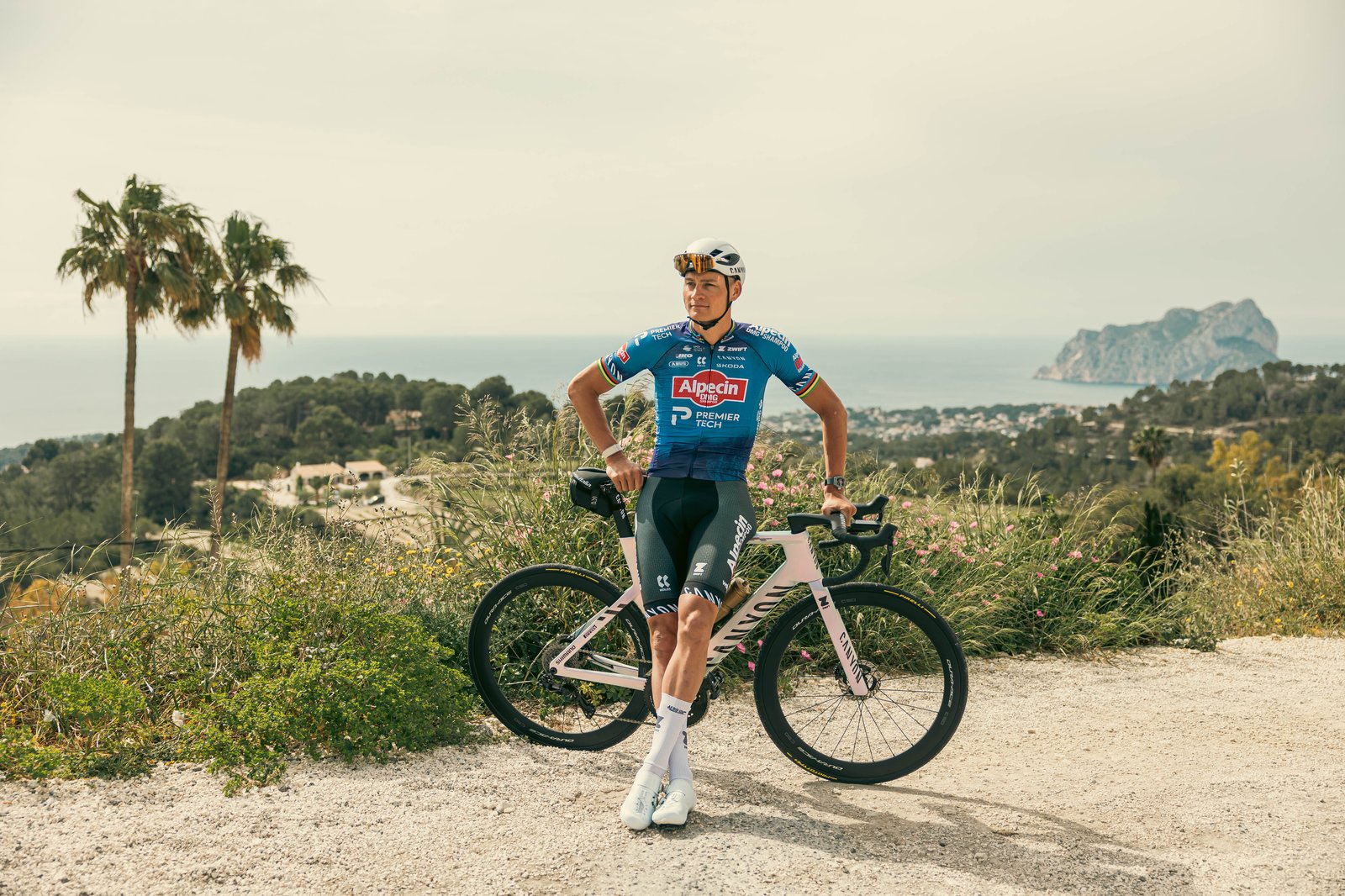
The 25th anniversary has given Richard Mille an occasion to take stock of a strategy that has, by most measures, worked. The brand’s watches have been carried across cobblestones and through monsoons, slammed against clay courts, dragged across gravel at rally-stage speeds, and taken beneath the ocean surface. The partner list has grown from a single Formula 1 driver to a cross-sport operation with global reach, and the ride with van der Poel demonstrates this more viscerally than any press release could.
Looking back at a quarter century of innovative watchmaking, it is also interesting that, despite RM’s lateral position, there is a parallel with the surge in interest in independent watchmaking. But does Richard Mille see the brand as part of that movement? “When you look at independent brands, there’s a lot of conversation about them right now,” Malachard says. “We follow our own path, in part because we don’t have shareholders to answer to, aside from the two founding families. Our long-term customers are very reassured by that. I have dinner sometimes with customers, and they say, ‘Tim, just reassure me, you’re not going to go into volume production, you’re not going to change the distribution model.’ That’s a genuine concern for them, because they feel they’ve been part of a journey. They’ve placed their trust in the brand, and they don’t want its values to change. And honestly? Neither do we.”
More details at Richard Mille.
Frequently Asked Questions
How heavy is the Richard Mille RM 67-02?
32 grams, including the strap – making it the lightest automatic sports watch Richard Mille produces. A standard stainless steel sports watch typically weighs 150 grams or more.
Why do professional cyclists wear Richard Mille watches during races?
Richard Mille builds its watches to survive actual competition, not laboratory tests. The RM 67-02’s Carbon TPT and grade 5 titanium construction is engineered to absorb the sustained vibration of cobbled classics like Paris-Roubaix and the impacts of cyclocross racing. Wearing it in competition is the brand’s proof of concept, not a marketing exercise.
What is the Richard Mille RM 67-02 made of?
The case combines Carbon TPT – a layered carbon composite – and grade 5 titanium, measuring 38.7 × 47.5 mm with a case height of 7.75 mm. It is powered by the CRMA7 automatic movement with a 50-hour power reserve.
How long has Richard Mille been working with athletes?
Since 2004, when Formula 1 driver Felipe Massa became the brand’s first athletic partner. Over 25 years, the roster has grown to more than 40 athletes and teams across cycling, tennis, Formula 1, athletics, golf, rally, freediving and showjumping.