
Of all the watch collecting communities out there, the fans of Seiko are arguably the most creative. Over the decades the Japanese watch brand has been building their particular brand of accessible tool watch, their fans have christened many of their timepieces with fun, completely unofficial nicknames.
So, do you know your Arnies from your Monsters? Your Ripleys from your UFOs? Do you wear a Seiko Ashtray, or do you best know Tuna as a sandwich order? Read on as we explain every Seiko nickname.
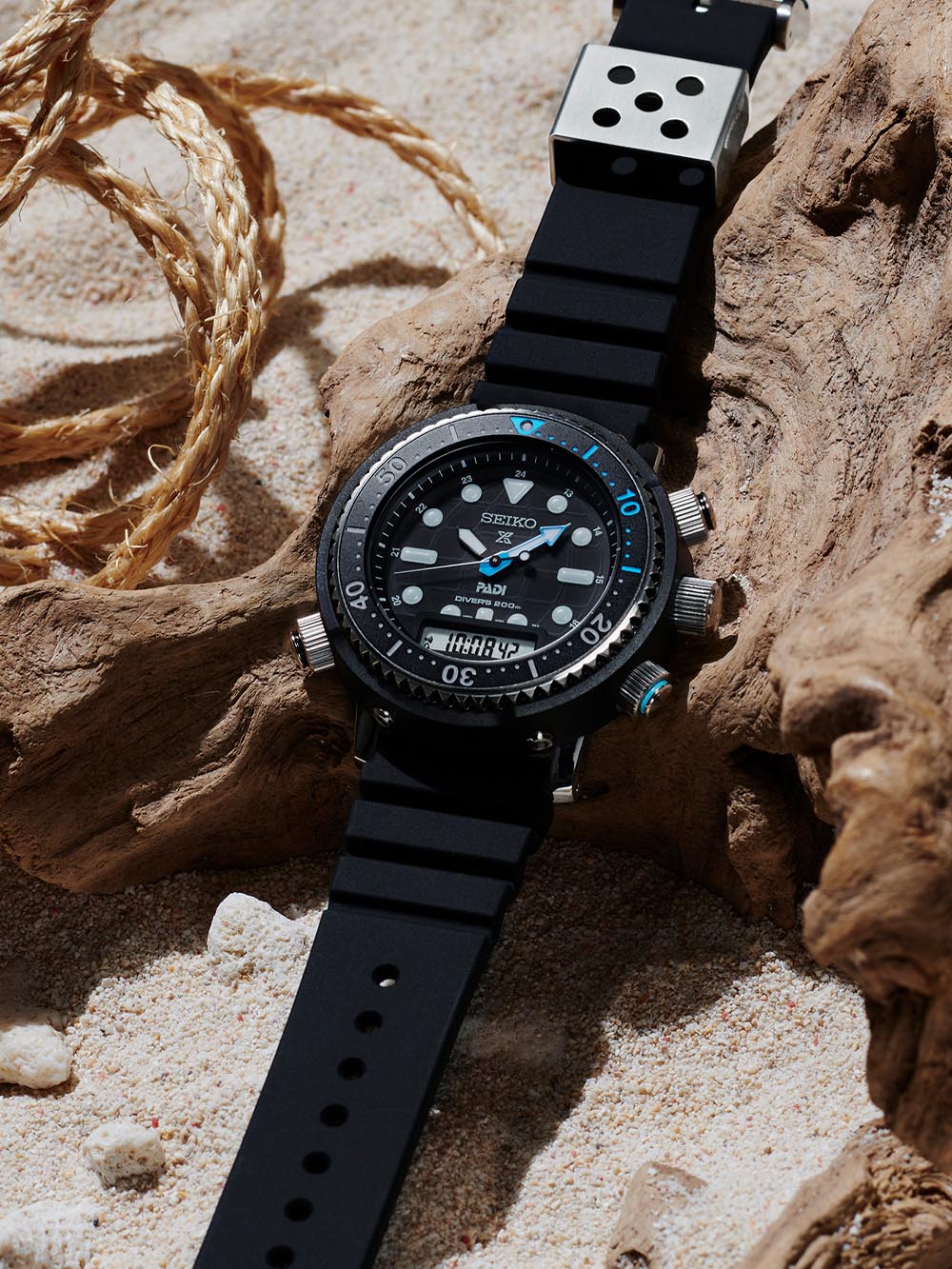
The Seiko Arnie
Less known as the catchy H558-5009, this ana-digi beast of a watch gets its name from film – specifically as it was on the wrist of then governor-to-be Arnold Schwarzenegger on-screen in both Commando and Predator. It’s no surprise then that it’s a rugged, macho watch that pairs well with jungle camo. More importantly, when it was launched in 1982 it was the world’s first hybrid diver, with 150m water resistance and its signature protective outer shroud.
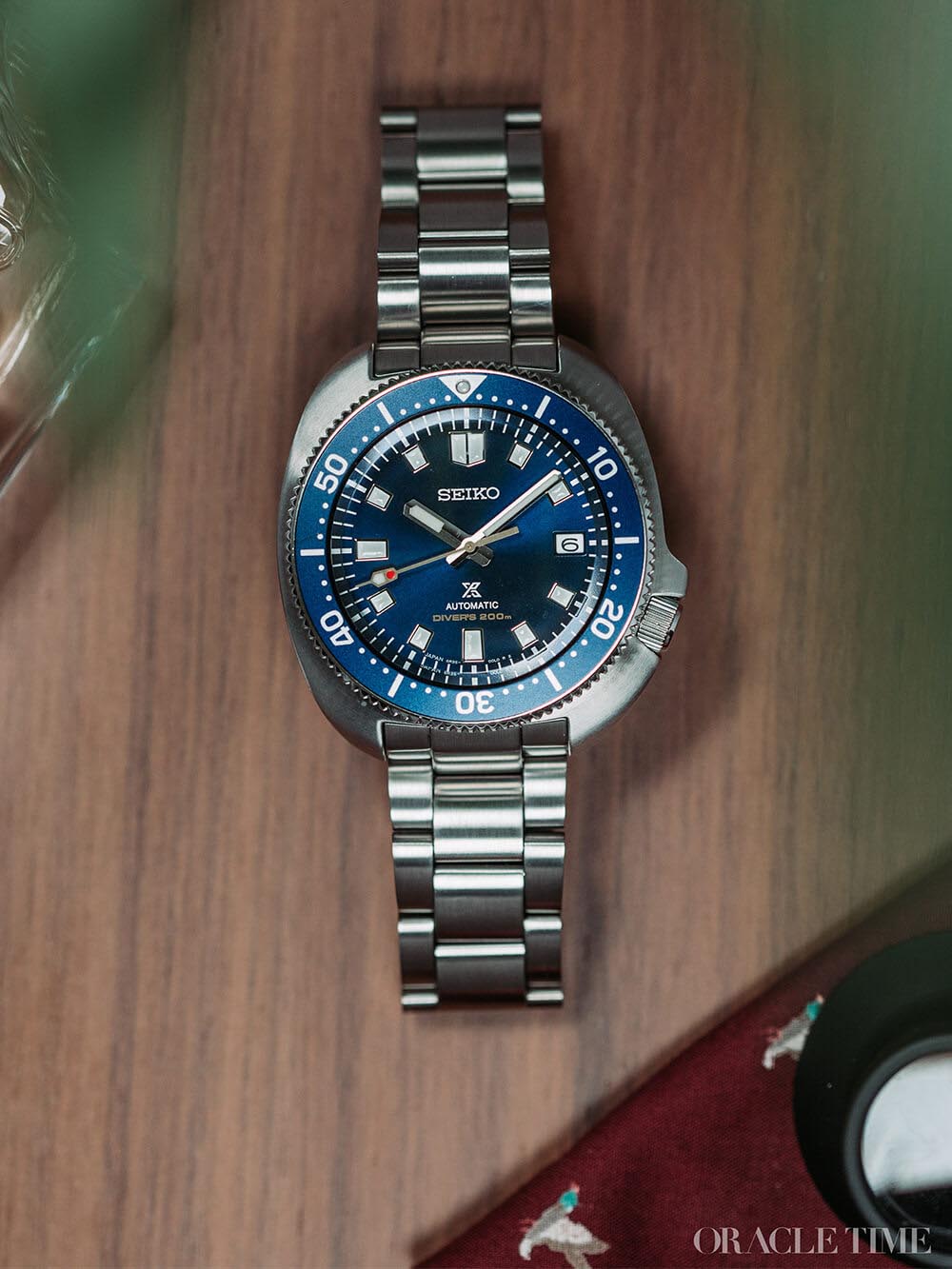
The Seiko Captain Willard
The original Seiko 6105 was embraced by U.S. troops in the Vietnam war. So when legendary director Francis Ford Coppola decided to adapt Heart of Darkness for the modern era as Apocalypse Now, it was guaranteed some screen time. That screen time came in the form of Martin Sheen as Captain Willard – hence the name. The dive watch itself is defined by its broad, cushion case and entrenched, 4 o’clock crown. There have been plenty of modern reinterpretations expanding on the original 1968 model with technical updates and more colours.
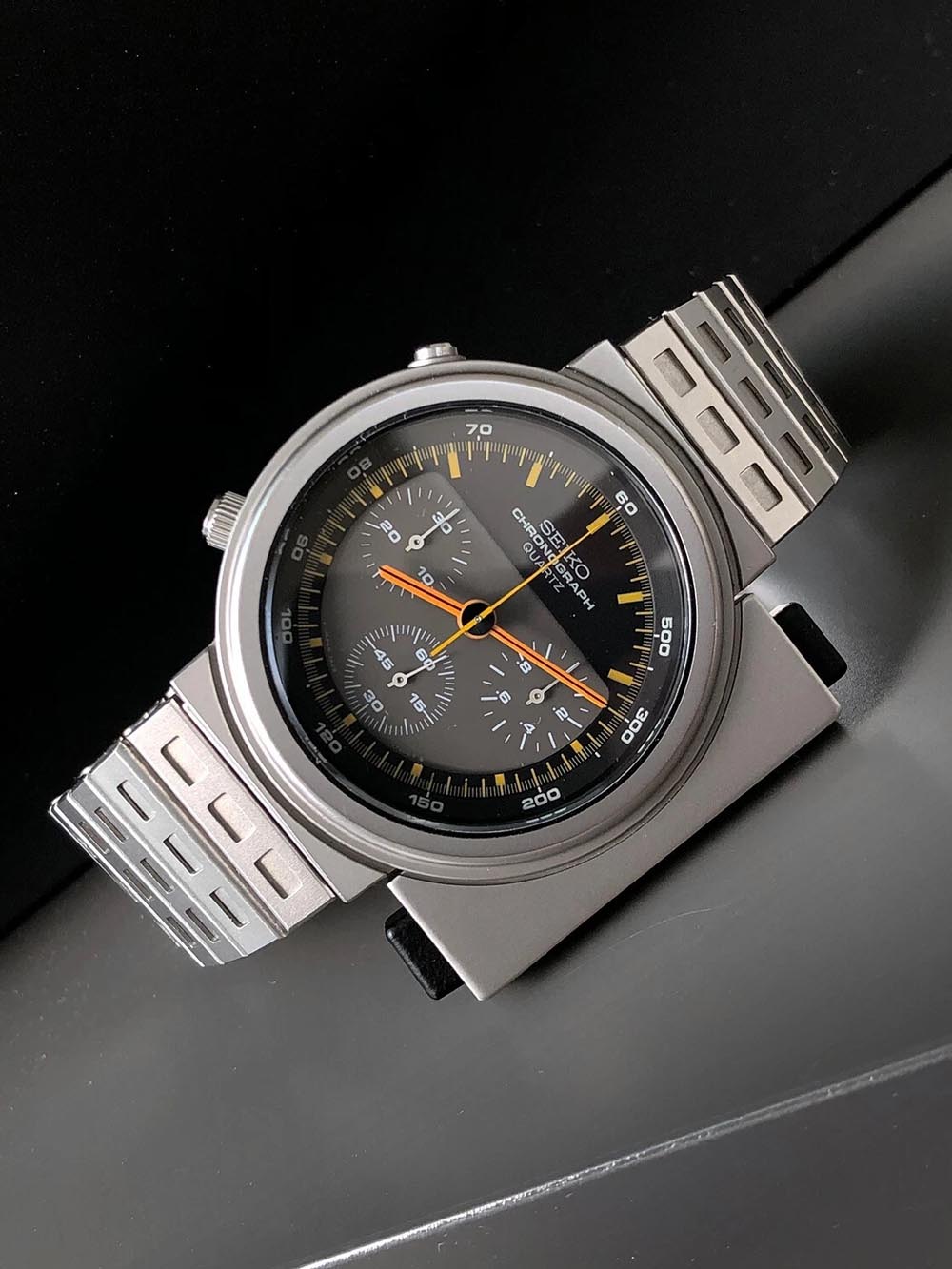
The Seiko Ripley
The Seiko 7A28-7000 looks like it was built for sci-fi. Designed by legendary Italian car designer Giorgetto Giugiaro in 1983, it’s intense asymmetrical, blocky design with completely horizontal pushers was supposed to make the chronograph function easier to use in racing gloves. That’s debatable, but what it did do is help the watch find its way onto Sigourney Weaver’s wrist as Ellen Ripley in Alien. It was a perfect fit for the utilitarian futurism of the USCSS Nostromo. On launch, it also became the world’s first analogue quartz chronograph.
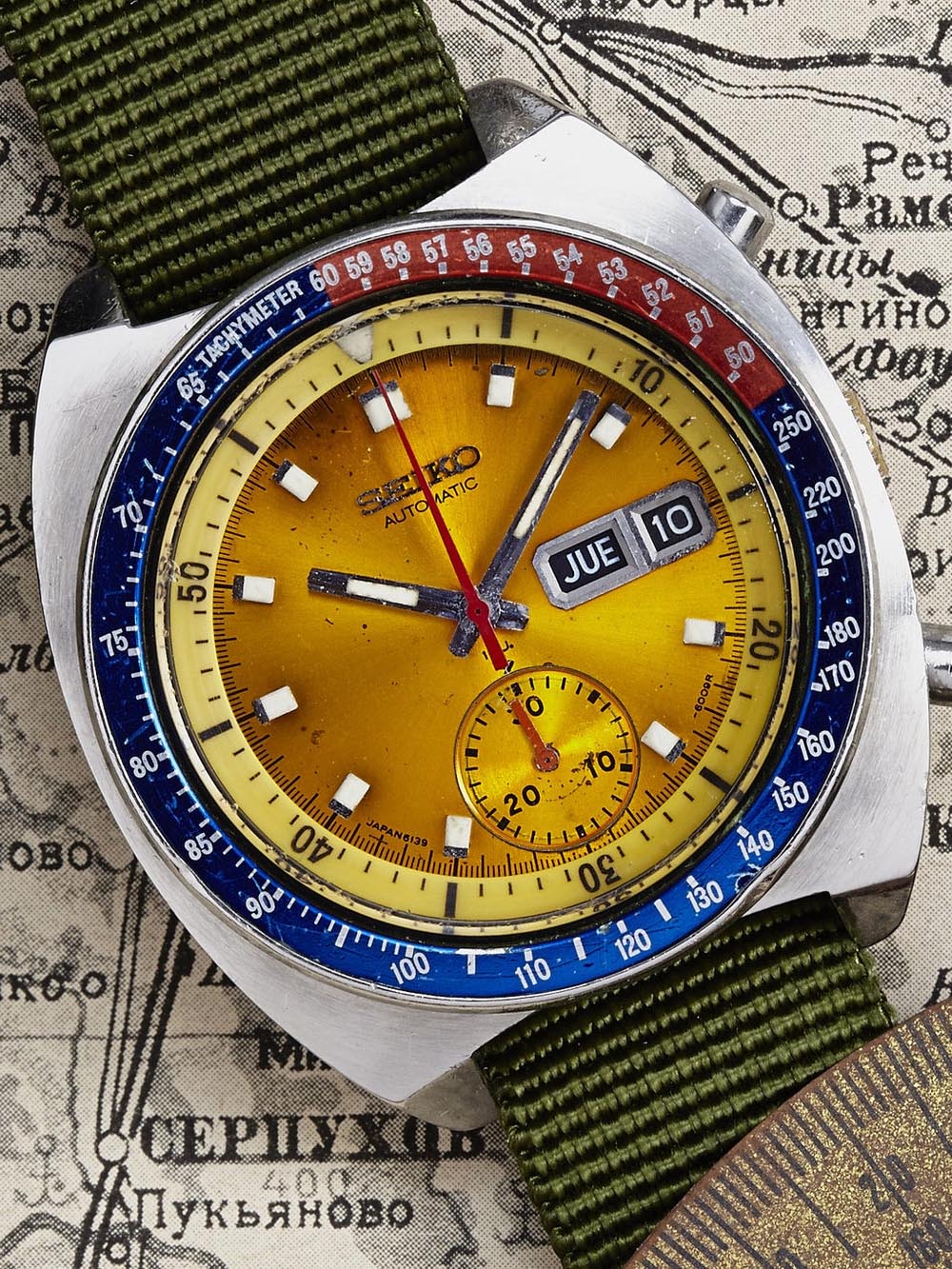
The Seiko Pogue
When Colonel William Pogue launched on his 84-day Skylab 4 mission in 1973, his NASA-issued Omega had yet to pass its flight test. So, he took his own watch up with him, which just so happened to be a Seiko 6139-6005/6002. In doing so, he made Seiko’s the first automatic chronograph in space. His version, with its golden yellow dial and Pepsi red and blue tachymeter bezel became an icon. There are other versions launched at the same time and a ‘re-issue’ that doesn’t quite scratch the same itch, but there’s no watch like the original.
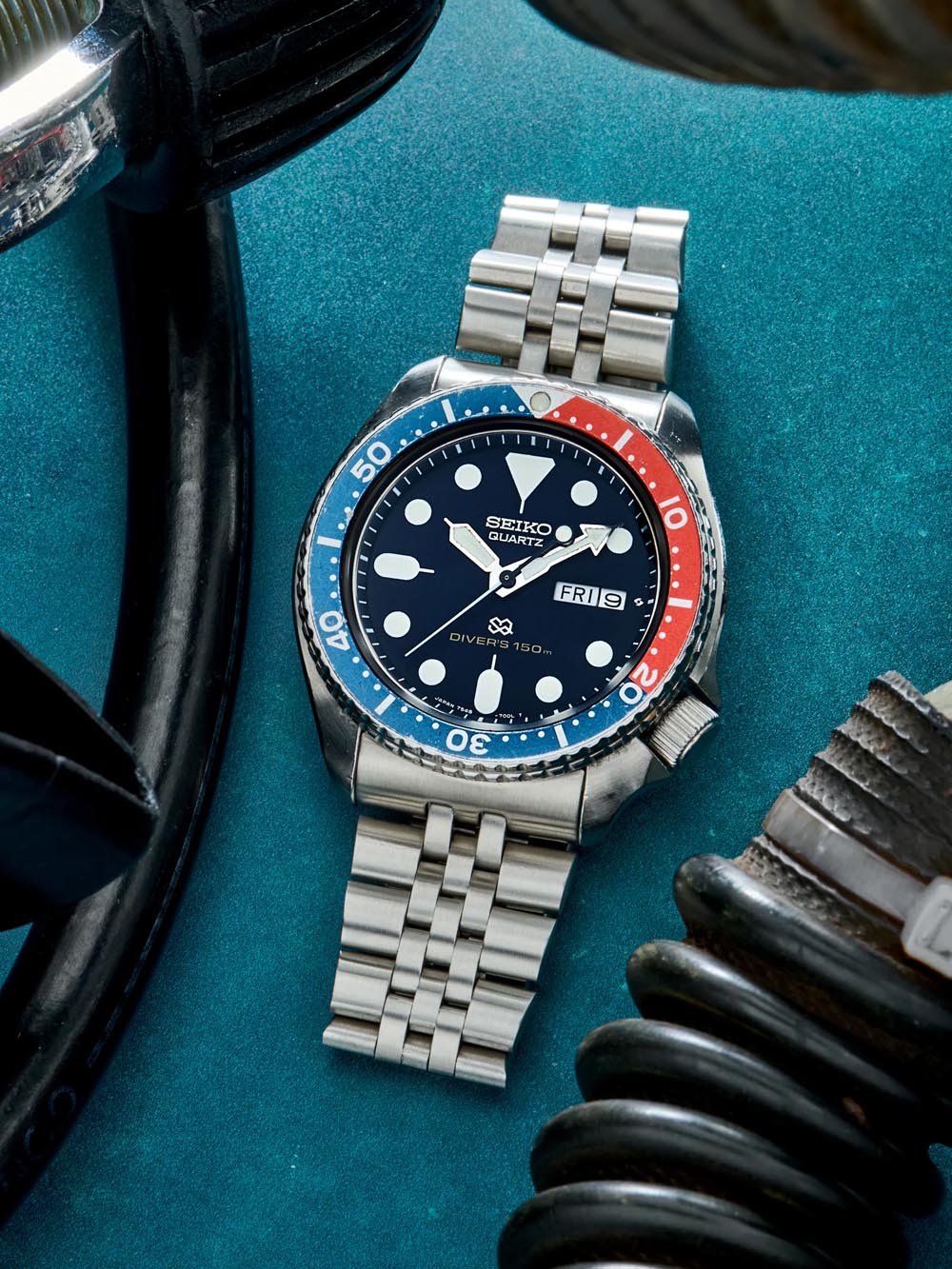
The Seiko Stormin’ Norman
U.S. Army General Herbert ‘Stormin’ Norman’ Schwarzkopf Jr. was a bear of a man, the 6’3’’ leader behind Operation Desert Storm in the 1990-1991 Gulf War. But while military historians appreciate him for his tactical savvy, we love his watch game. He was famous for wearing two at once, a dressier piece on his left wrist for Saudi Arabian time and the Seiko 7548-700F on his right for Eastern Standard Time. The durable dive watch was one of the first proper divers with a quartz movement and is a neovintage classic with its black dial, mix of triangle, pipette and round hour markers and Pepsi dive bezel.
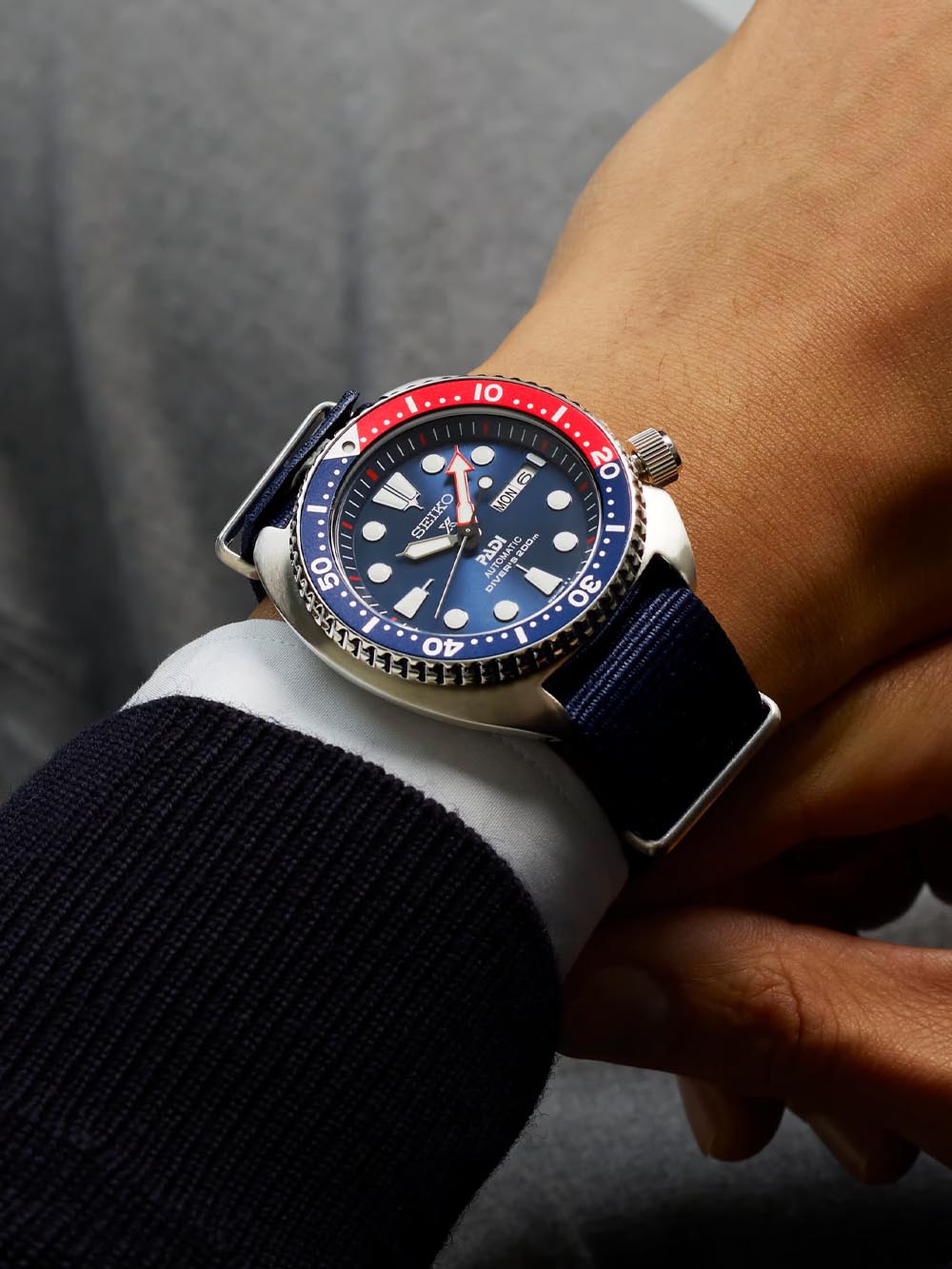
The Seiko Turtle
This one is pretty straightforward: the Turtle gets its name from its cushion case which, as you might expect, looks like a turtle’s shell. The original 6306/6309 was released in 1976 and continued production into the 80s, though it’s been a part of the modern Prospex line since 2016. It’s invariably large in diameter (other than in the 42mm Baby Turtle), but thanks to its small lugs, sits nicely on slimmer wrists, too. Pair that with a classic dive watch dial, 4 o’clock crown and ISO standard specs and you can see why it’s remained immensely popular throughout its now 50-year lifespan.
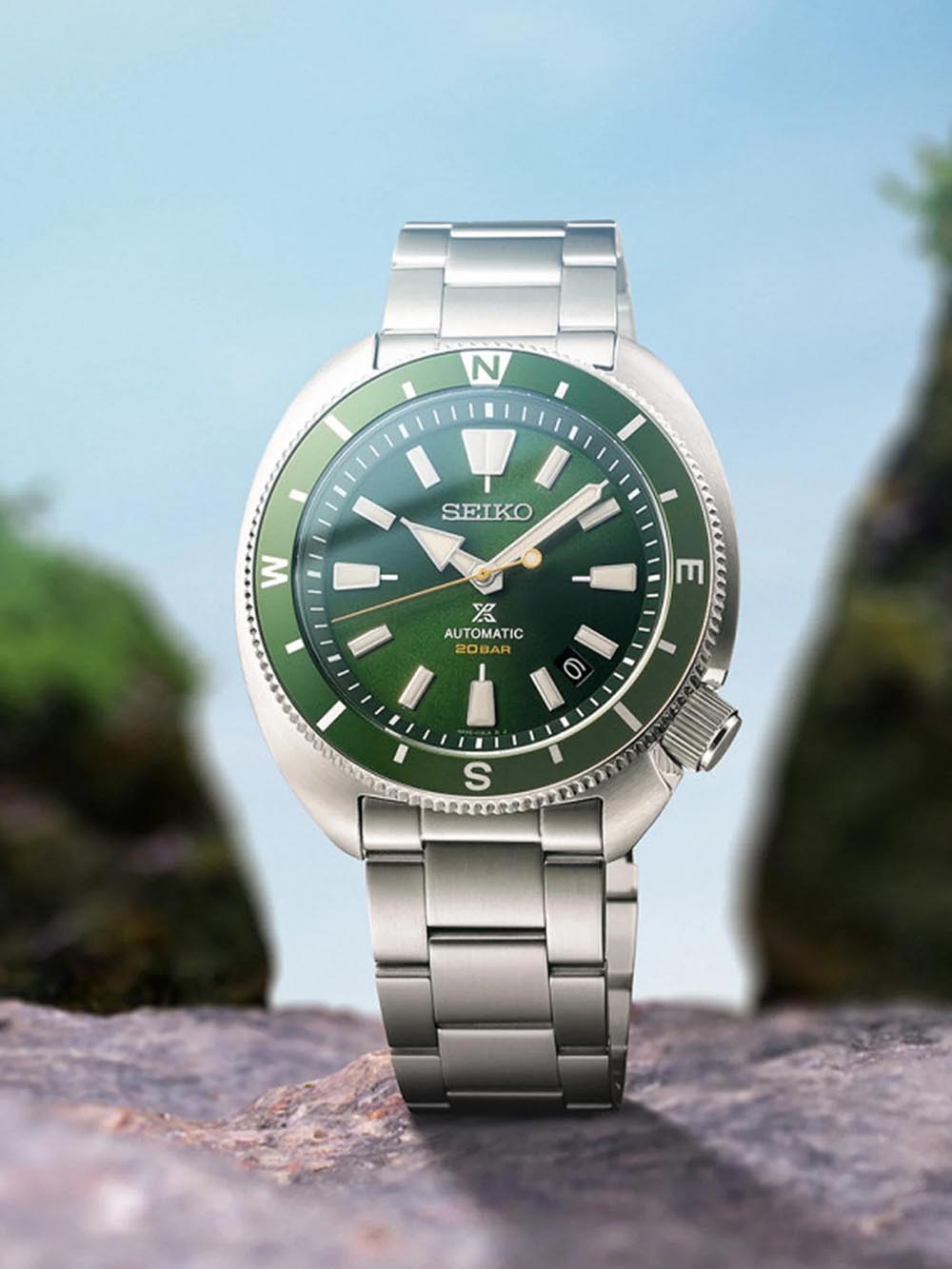
The Seiko Tortoise
Take the Turtle, swap the dive bezel for something more exploration focused and you get the SRPH15K1 – better known as the Tortoise. The bezel in question is a compass bezel which is a little pointless given you can find your heading anyway, but does give the tortoise a distinctive adventurer vibe. Pair that with a smaller size while maintaining the 4 o’clock crown (unlike the Baby Turtle, strangely) and you have a rugged field watch ready for exploring the Galapagos.
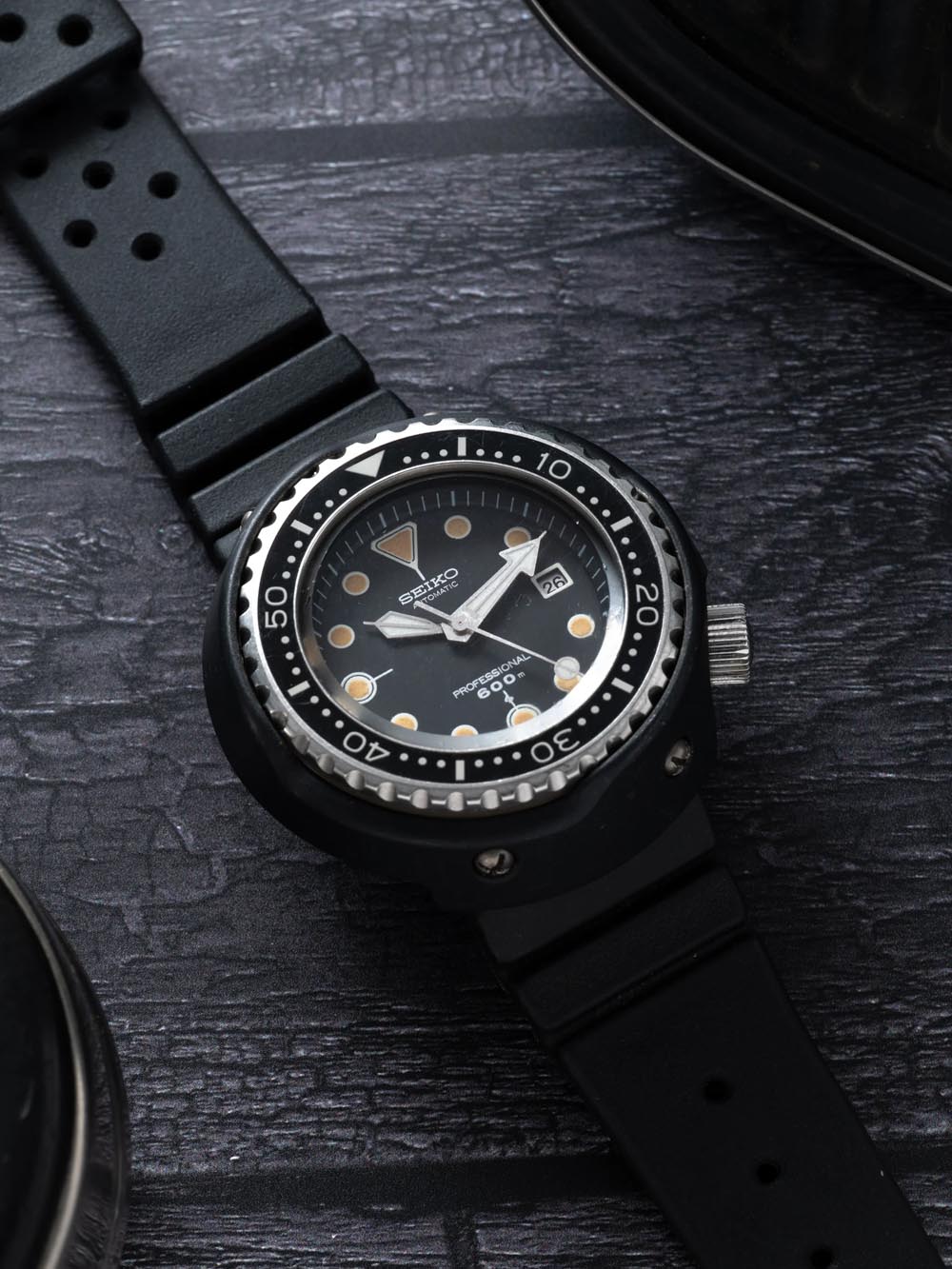
The Seiko Tuna
A lot can go wrong with saturation diving, but one of the key ones for us is the chance that a build-up of helium might pop your watch open. Some brands mitigate this risk with manually operated helium escape valves; Seiko built the Tuna. Originally designated the 6159-7010, the purpose-built dive watch included a monocoque case surrounded by an intense ceramic shroud like a can of tuna. It was big in the same way a whale is big. Since its launch, there have been plenty more iterations, including versions that swap ceramic for metal and downsize its 50.5mm diameter to something approaching wearable.
The Seiko Monster
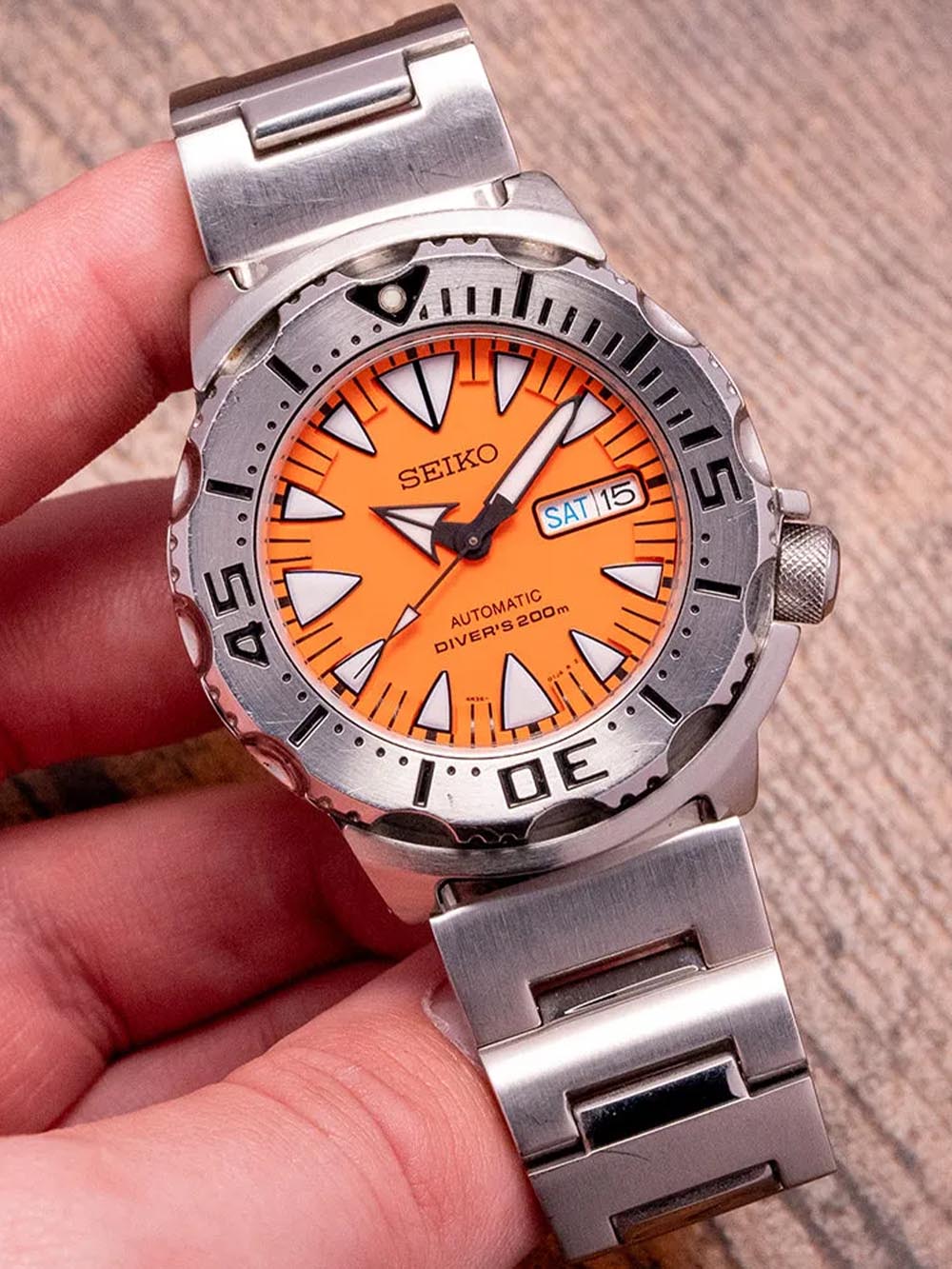
If the Tuna solved the single problem of saturation diving, the Monster was designed to cover everything else. Released in 2000, it’s aggressively styled with a sharp, serrated bezel that, some say, looks like a gaping monster’s maw. The watch is further defined by large, incredibly bright lumed indexes and the fact that it seems recessed into its flank-protecting lugs. With 200m water resistance and all the ISO standard necessities, it’s been launched in a plethora of colourways, though the original black and orange versions have the biggest cult following.
The Seiko Samurai
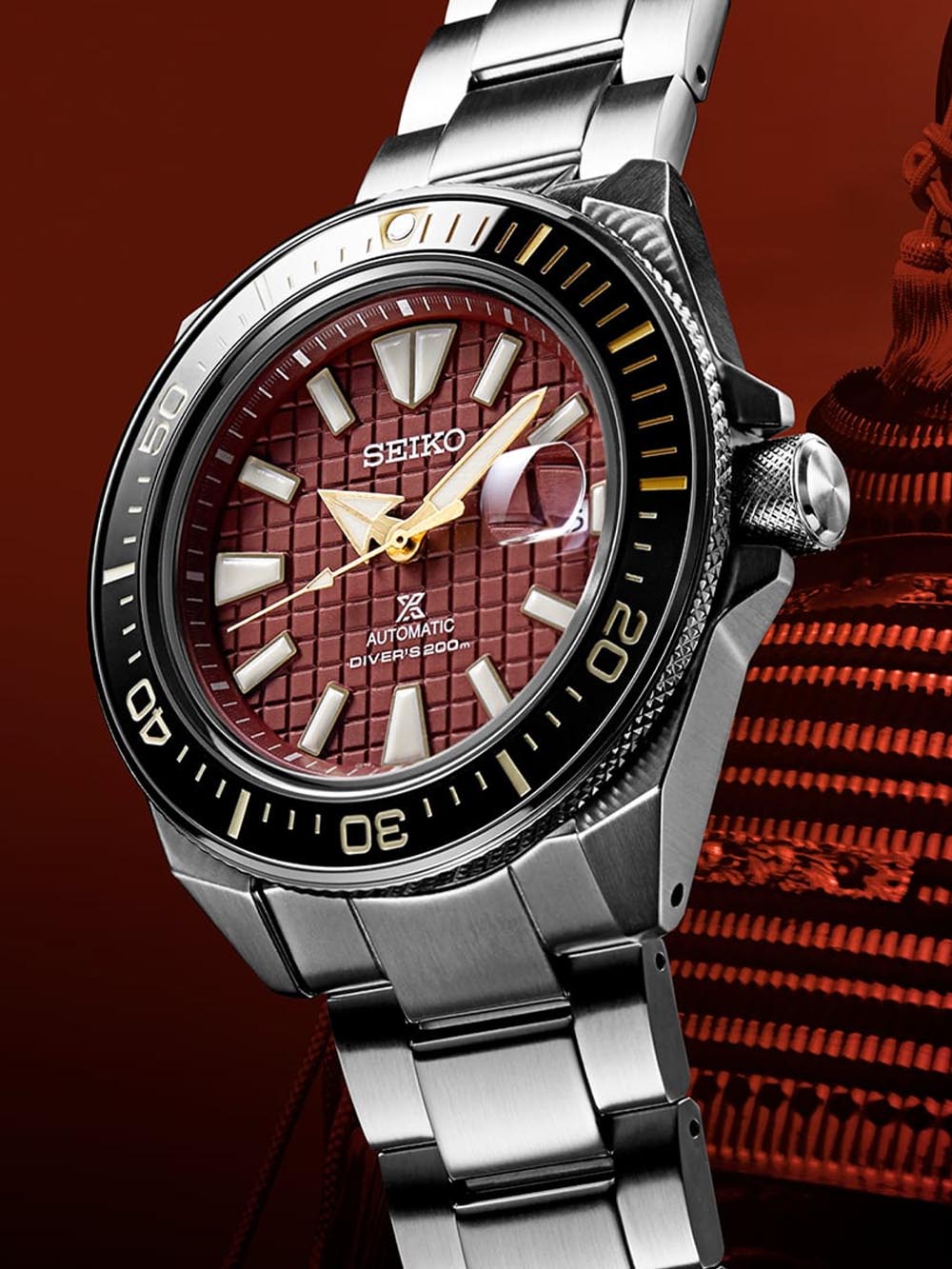
One of the most recent Seiko nicknames, the original Samurai debuted in 2004 – though it only survived four years. It took until 2017 for it to come back permanently and everyone to get a good look at its sword-like hands and sharp, sloping lugs that look like they’ve been sliced with a katana. These models often have textured dials and in the current line-up measure around 42mm wide – though pieces between 2017 and 2023 are significantly bigger.
The Seiko Sumo
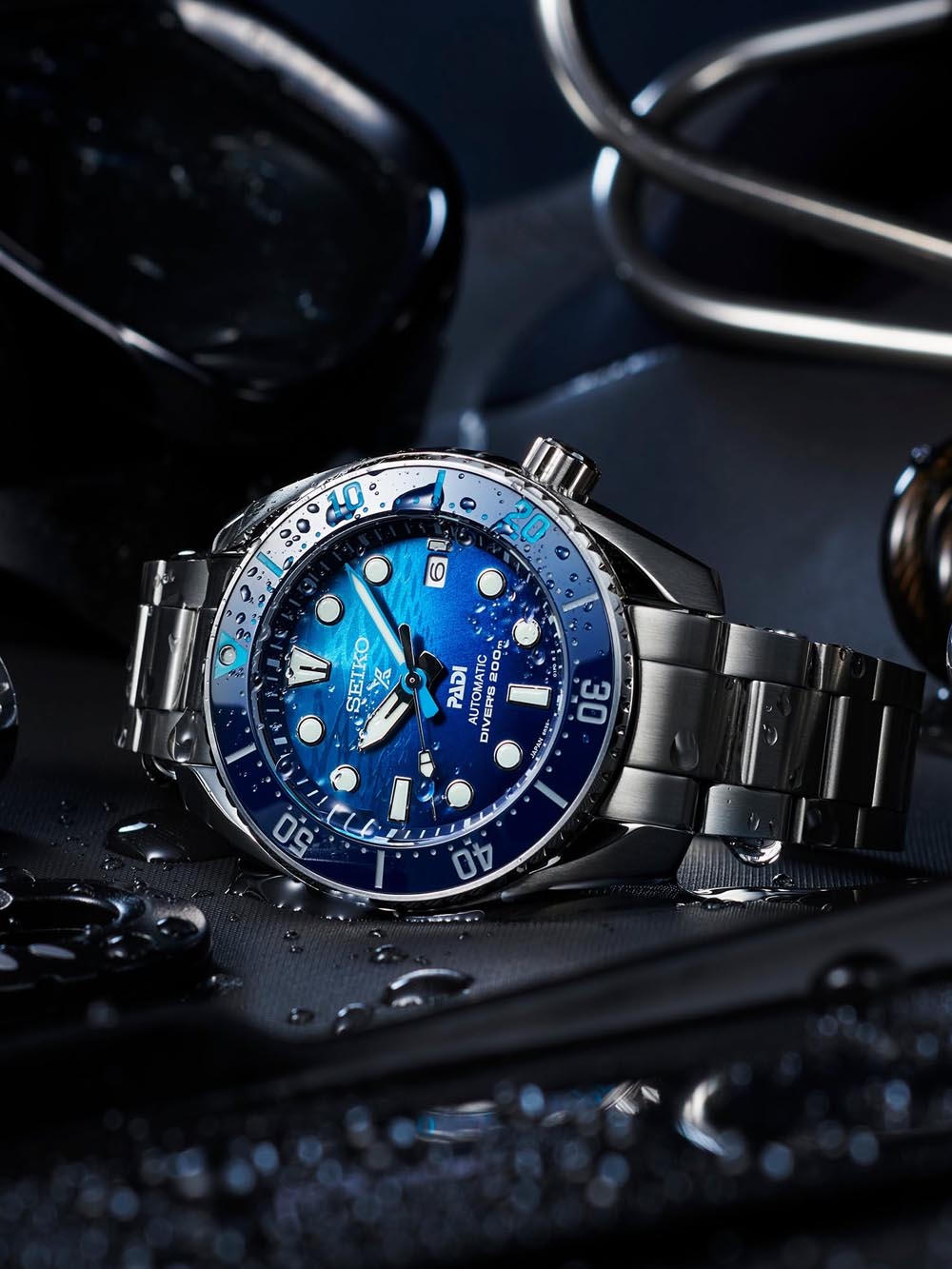
With a name like Sumo you know a big case is coming and on release in 2007 the original SBDC001, 003 and 005 were absolutely massive at 45mm of rounded stainless steel. Their wide-shouldered design, broad proportions and Japanese heritage almost made their nickname an inevitability. The modern version is the SPB101J1, which maintains that size with 200m water resistance and a no-nonsense black dial with the Sumo’s signature chunky 12 o’clock hour marker.
The Seiko Shogun
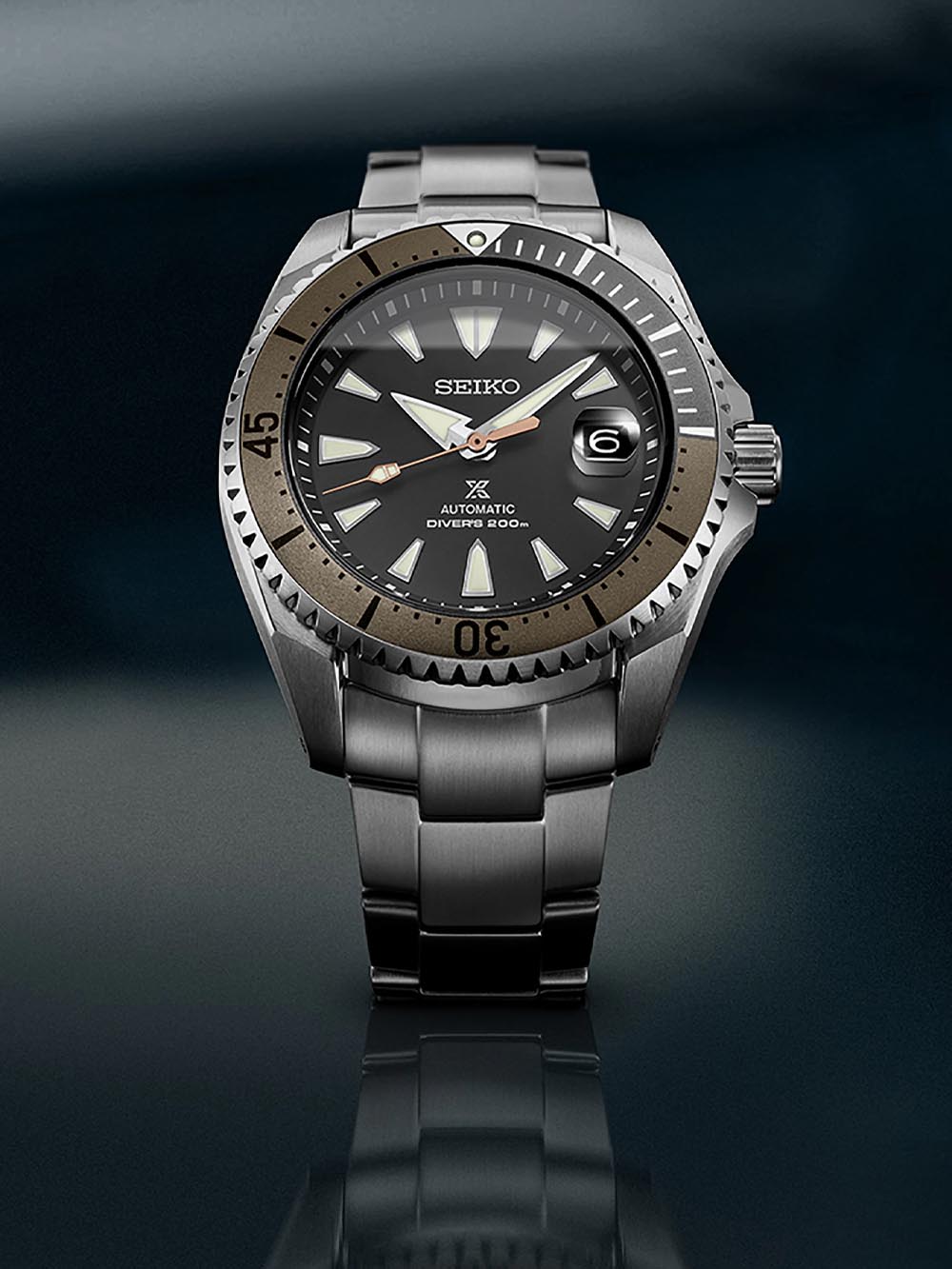
Yes, the Shogun name comes mostly from the 2008 SBDC007’s notched bezel and a case that evokes traditional Samurai armour, but you could also argue that it comes from its place in Seiko’s line-up. The full titanium case, extra DiaShield scratch resistant coating and general build quality make it look and feel like a premium version of the Samurai. These higher-end specs have continued into the modern versions like the SPB189 and SPB191, making the Shogun a bit loftier than other cult models.
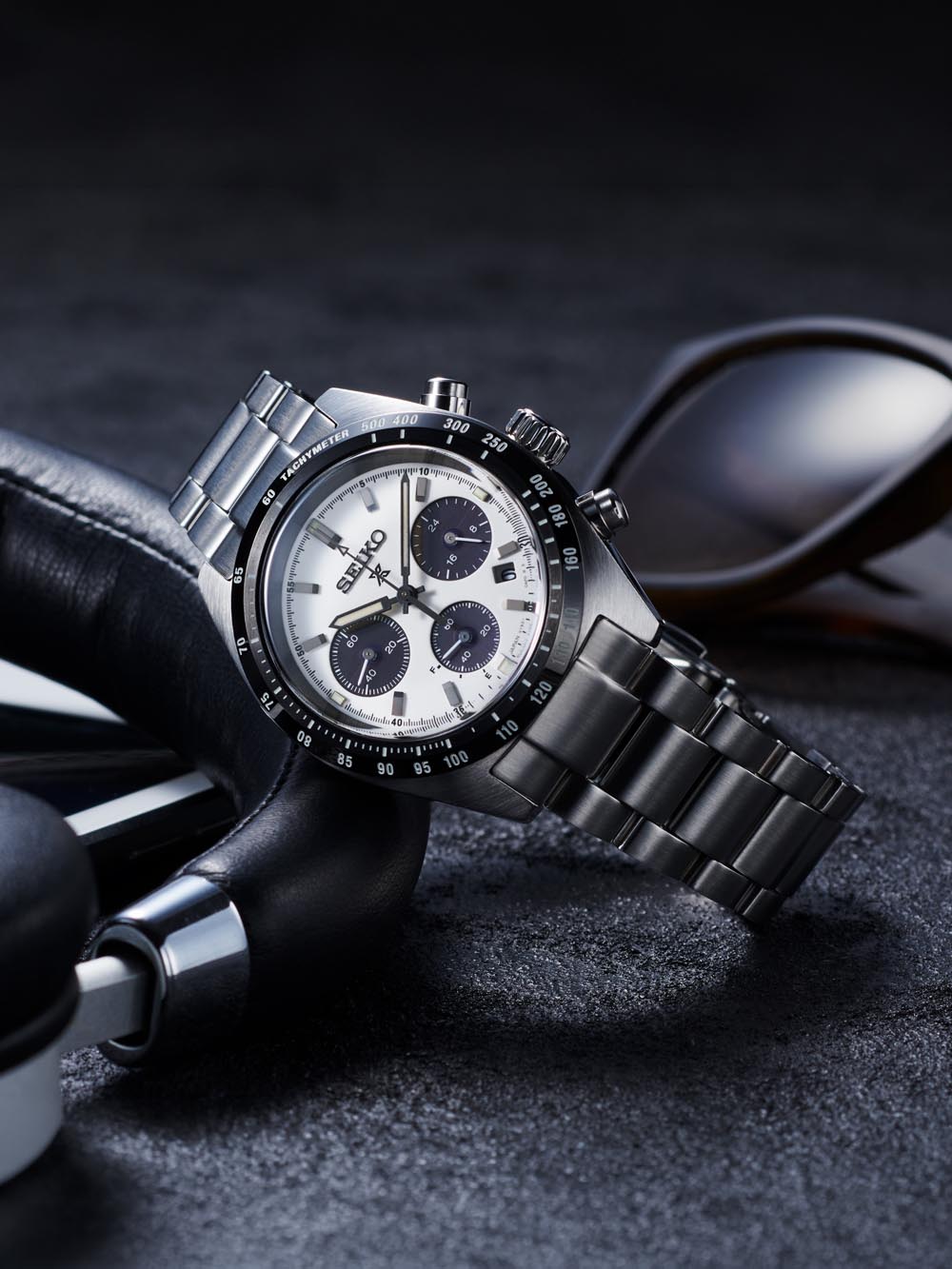
The Seiko Seitona
A portmanteau of Seiko and Daytona, this might look like a classic racing chronograph but inside it’s all modern Seiko. There are a few versions of the Prospex Speedtimer Solar Chronograph, but the Seitona is very specifically the 2021 SSC813 panda version with a white dial and black subdials, complete with a black tachymeter bezel. The similarity to Rolex’s icon are obvious. The Speedtimer however is powered by a solar movement with a mechanical chronograph module on top for a ‘best of both worlds’ approach and a much more accessible price tag of £640 for the current SSC961P1 model.
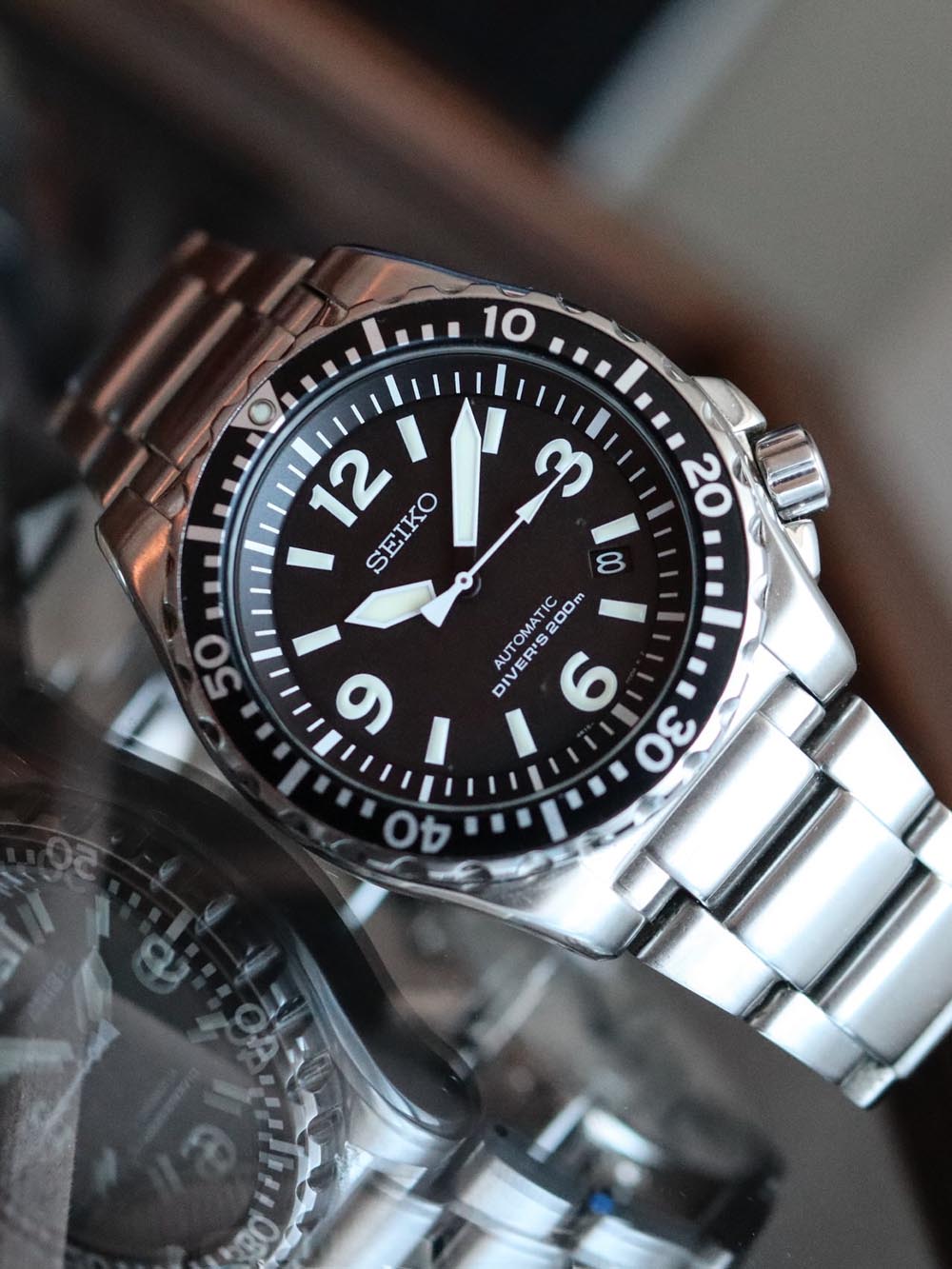
The Seiko Spork
Only released for two years between 2009 and 2011, the SRP043 was an odd duck in the Seiko line-up. It combined an industrial tool watch diving case measuring 44.5mm wide with a dial more akin to a military aviation watch, all clean readability. With oversized numerals at 12, 3, 6 and 9 o’clock and sword hands, it was a mash-up of different tools – hence the name. While this was short-lived, the Spork spurred a lot of Seiko modders to take on the dive-aviation balancing act themselves.
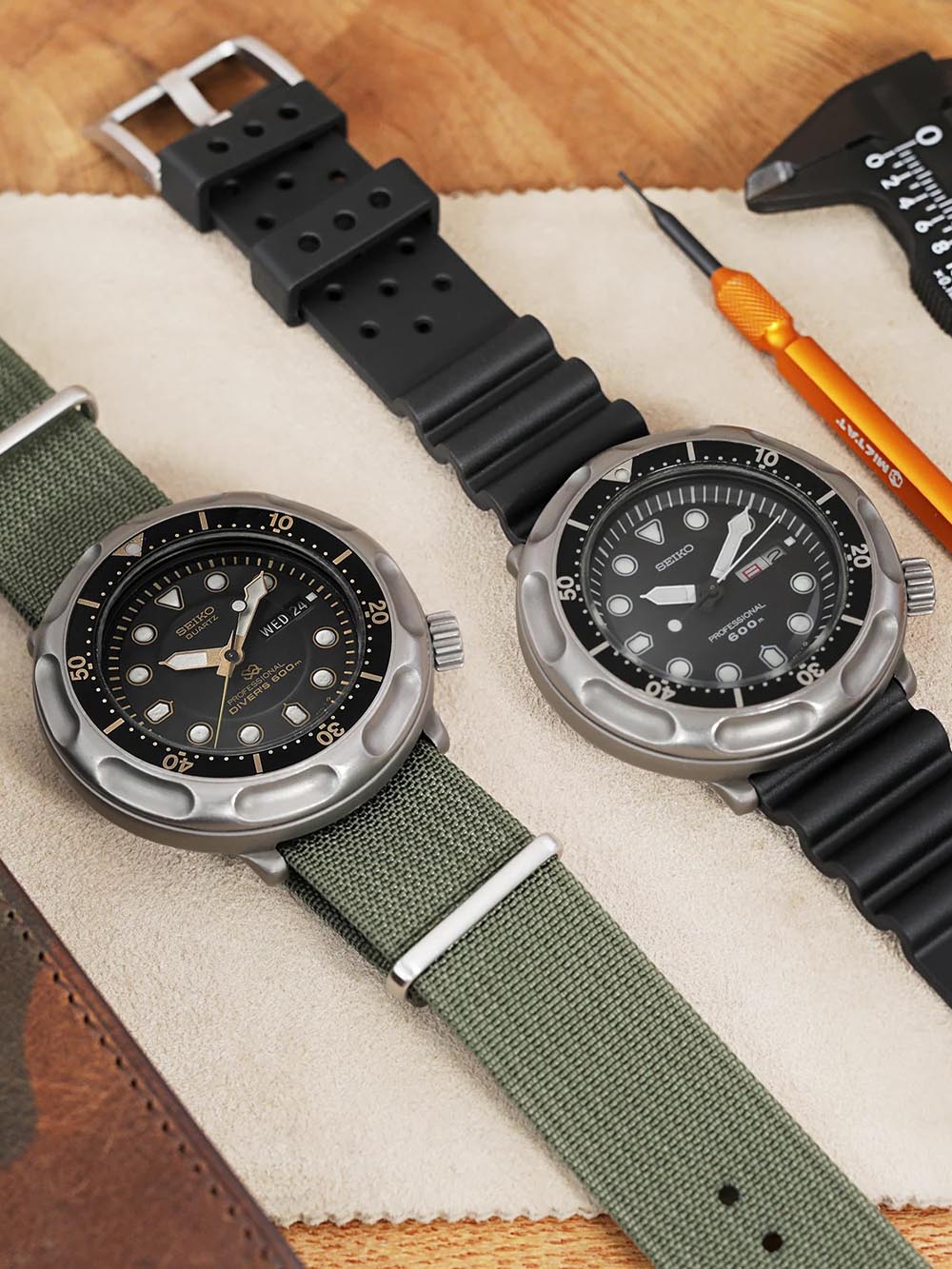
The Seiko Ashtray
This one is less about the overall watch and more about one specific element: the bezel. And when you see the wide, bulbous bezel of the 1986 7C46-6009, the Ashtray moniker becomes obvious. Strip the bezel off, pop it on a steel disc and you have a funky 80s cigarette butt holder. While it did indeed look like a gauge had fallen off a nuclear submarine, the Ashtray is a serious dive watch with 600m water resistance and steel or titanium cases. Unfortunately, this is one Seiko have yet to reissue.
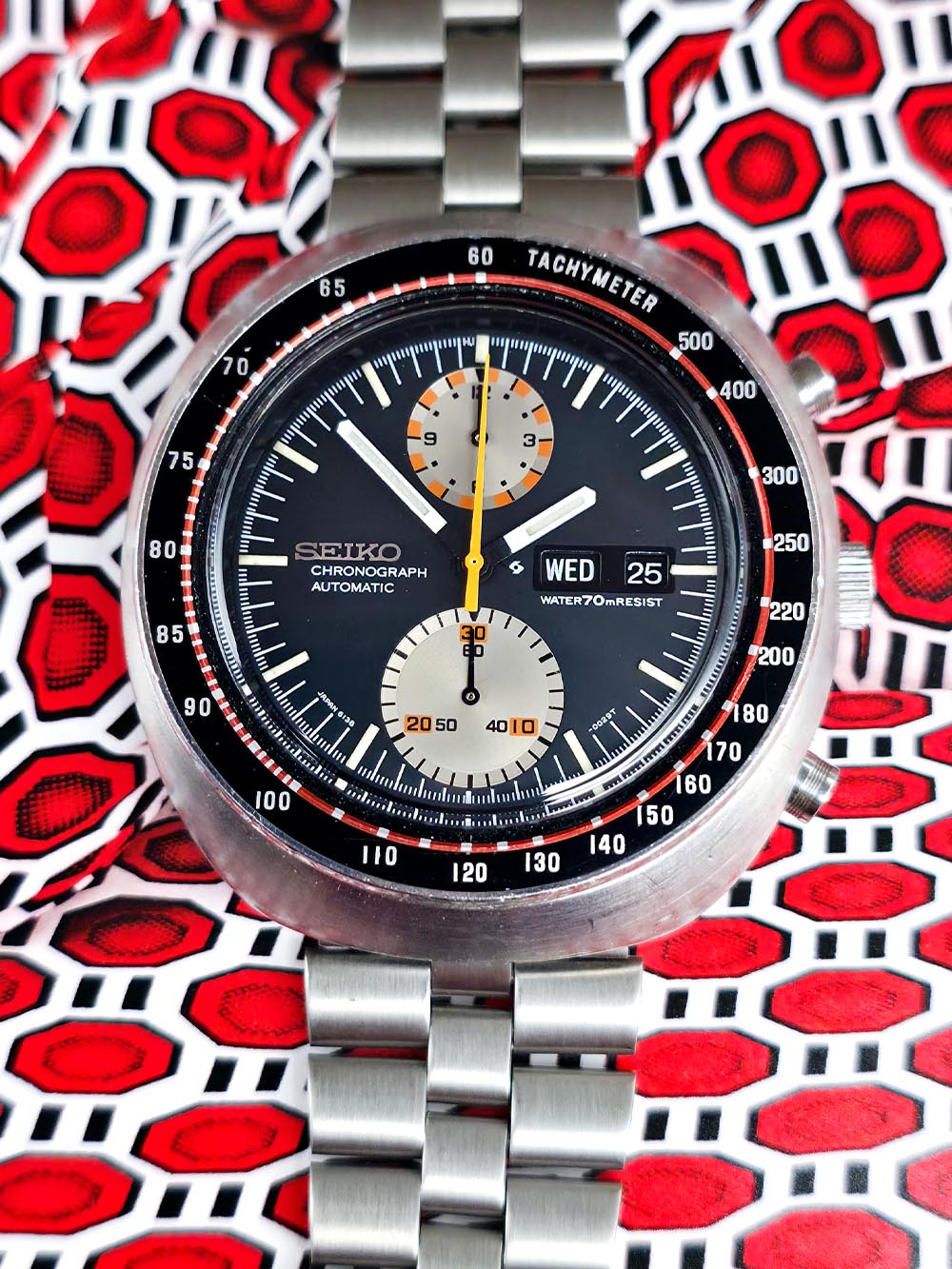
The Seiko UFO
A watch of many names, the 6138-0011/0017 is also known as the Seiko Yachtman, Big-Eye and Small-Eye thanks to its vertically arranged chronograph subdials, with the 6-hour subdial at 6 o’clock substantially larger than the 12 o’clock minute subdial. The Seiko UFO name however comes from the lugless case, which is something like a Disco Volante via classic Seiko divers, with a similar silhouette but with much chunkier, tool watch proportions to match its 44mm diameter.
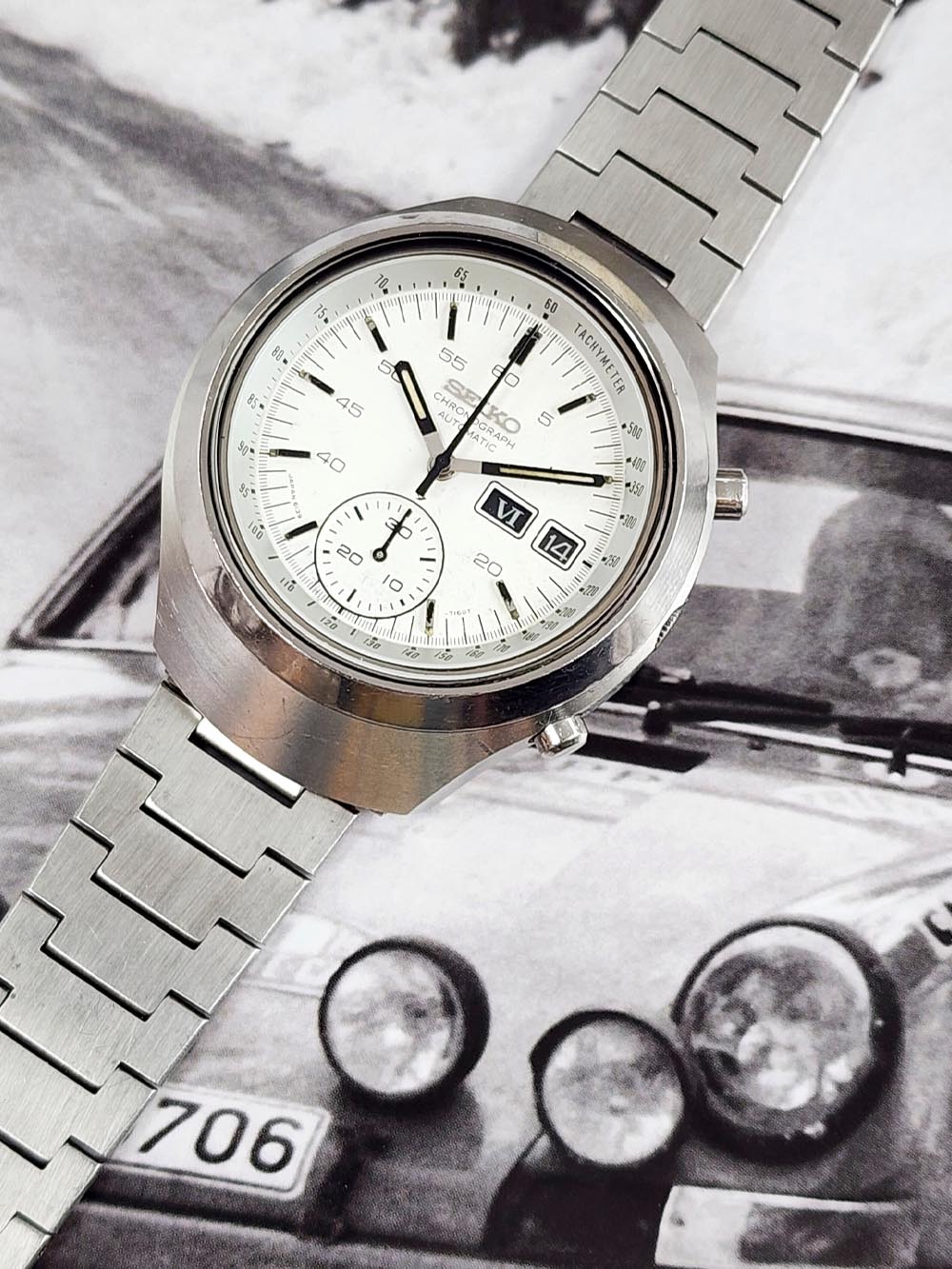
The Seiko Helmet
The 1970s were all about optimistic futurism and the promise of a space age just around the corner – something that Seiko, courtesy of the Pogue, were all about. The Seiko Helmet, otherwise known as the 6139-7100 and 6139-7101, embraced that aesthetic entirely. Its wedge-shaped case evidently went to school with the Omega Flightmaster and inside housed the legendary calibre 6139 automatic chronograph movement. Because all Seiko collectors are apparently sci-fi nerds, the two versions in black and white were respectively dubbed the Darth Vader and the Stormtrooper. While it was built for a solid 9 years, this is one that feels due a comeback.
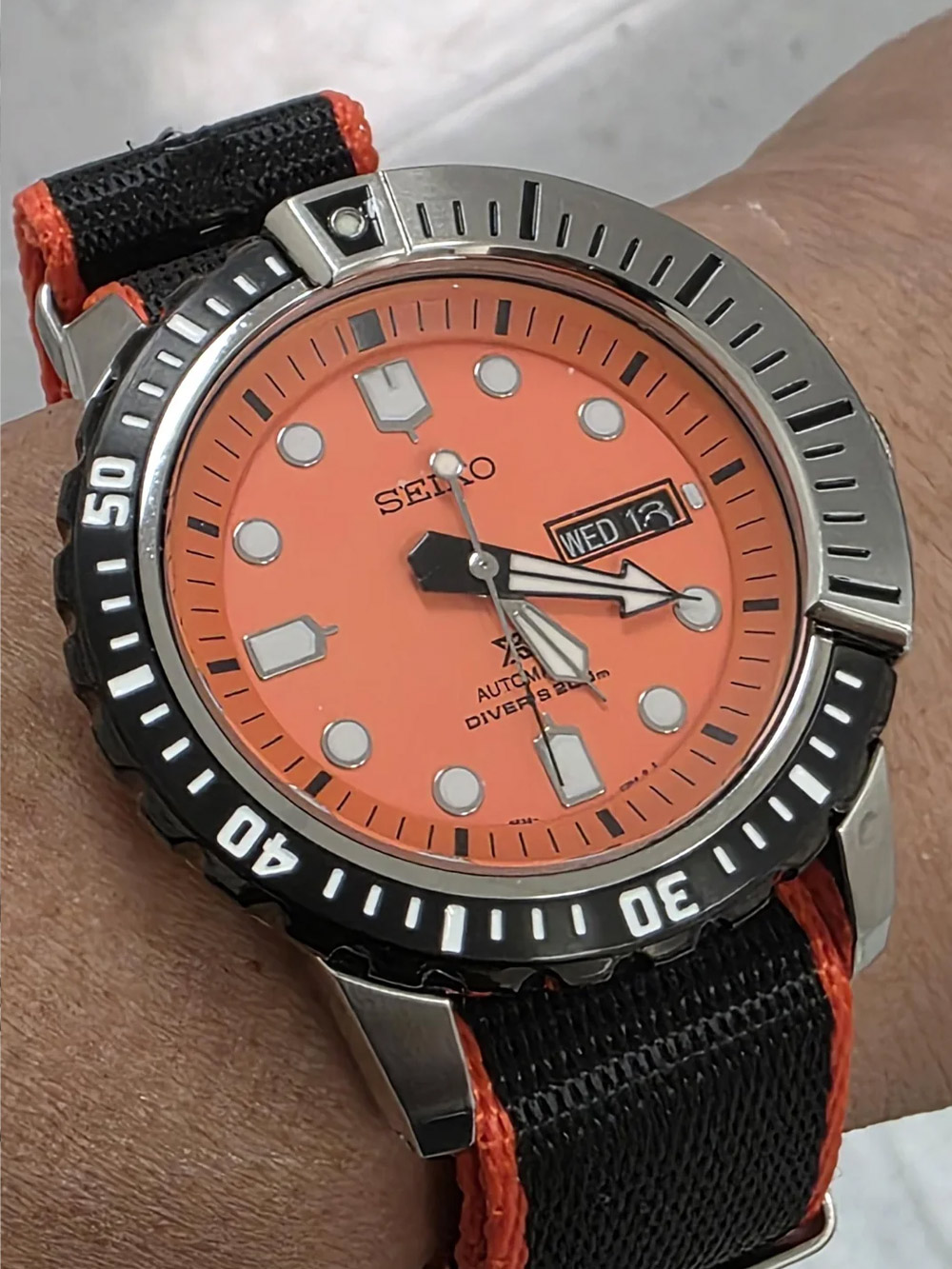
The Seiko Mohawk
Another short-lived but incredibly fun deep cut reference, the Seiko Mohawk was launched in 2014 and discontinued around 2016. Which is a shame, because its namesake diving bezel was uniquely fun, with a raised 20-minute scale DLC coated in black to stand out even more. It had a practical angle of course; the raised section made the bezel far easier to operate in thick gloves as well highlighting the really important, ‘oh god I’m running out of oxygen’ part of the scale. At 45mm in diameter and powered by the Seiko calibre 4R36 automatic movement, it was otherwise par for the course in Japanese tool watches.
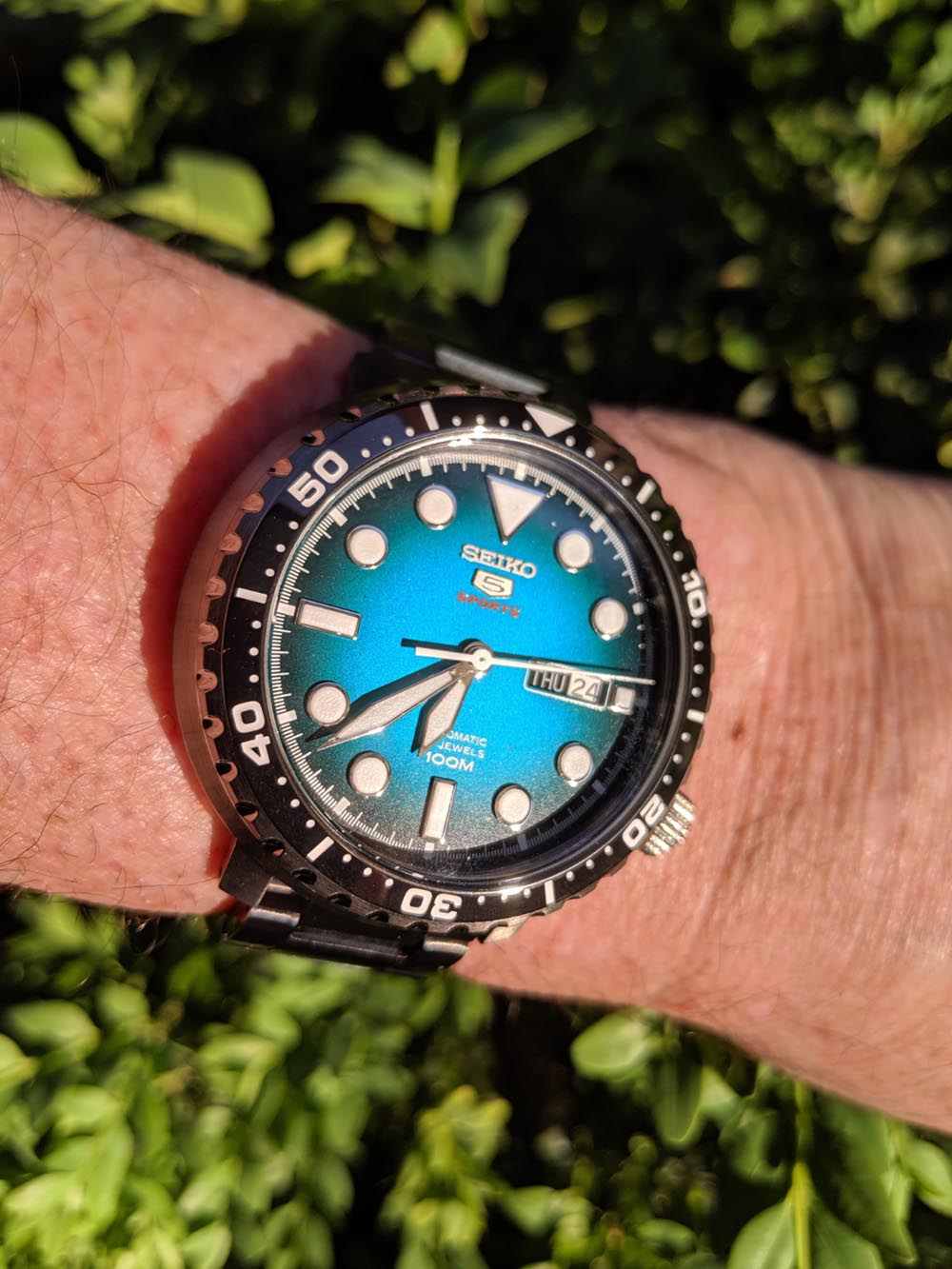
The Seiko Bottle Cap
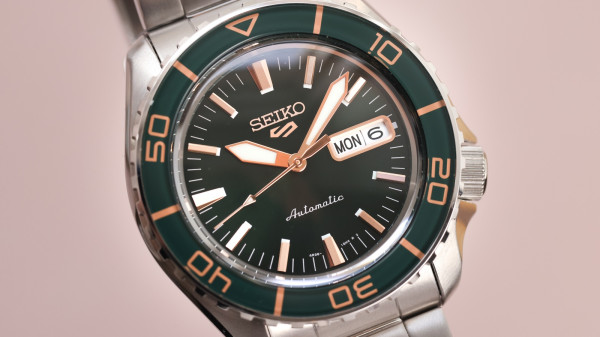
Another funky bezel, another great nickname, the Seiko Bottlecap actually refers to a trio of models released in 2018, the SRPC61, SRPC63, and SRPC65. Like other Seiko divers – and the Seiko 5 Sports line in particular – the trio are highly legible, professional standard divers with heavily notched bezels that look like, you guessed it, a bottlecap. The result is a retro mechanical twist to their 45mm diameters that’s a lot more wearable than, say, the Seiko Ashtray.
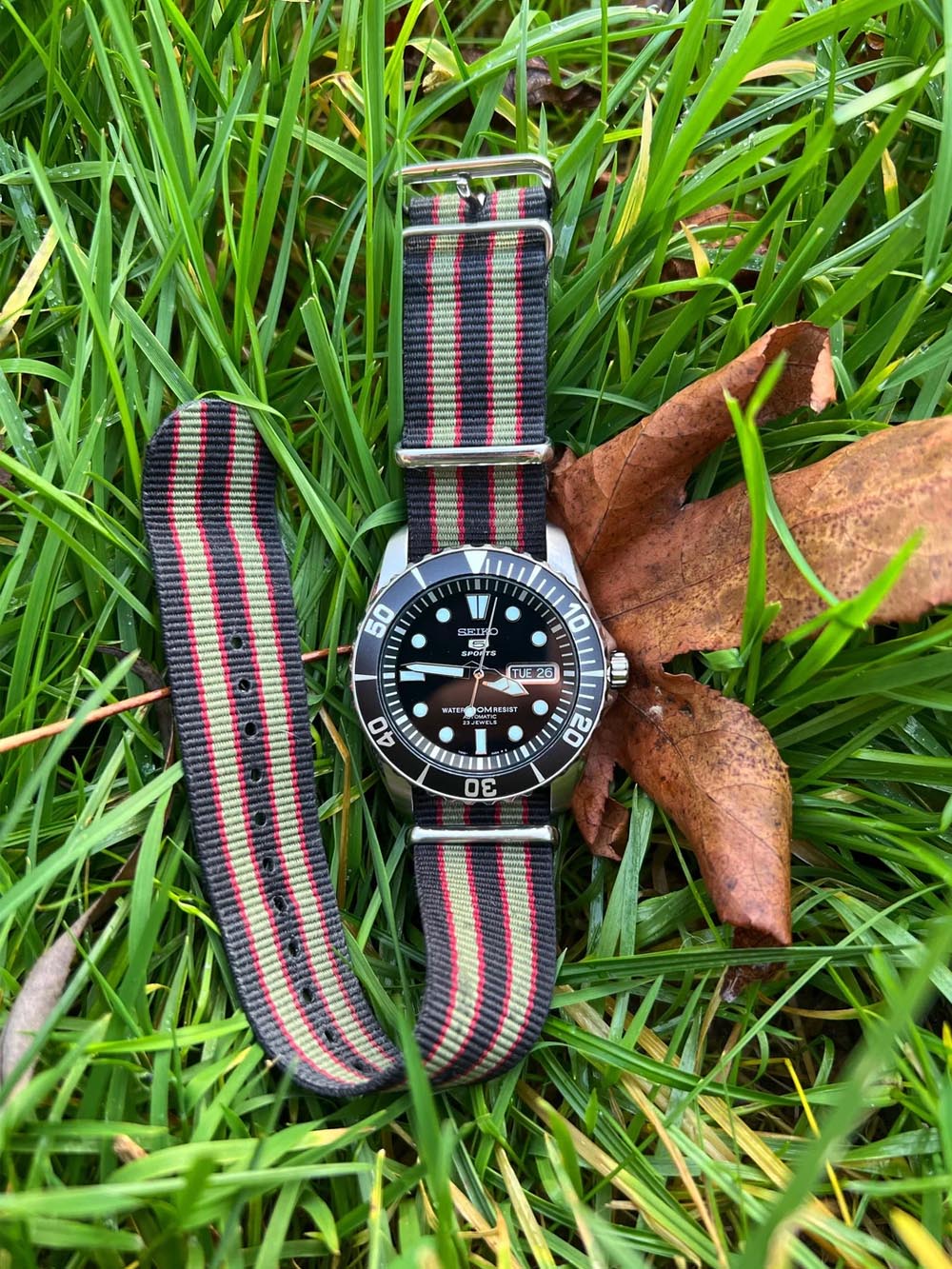
The Seiko Sea Urchin
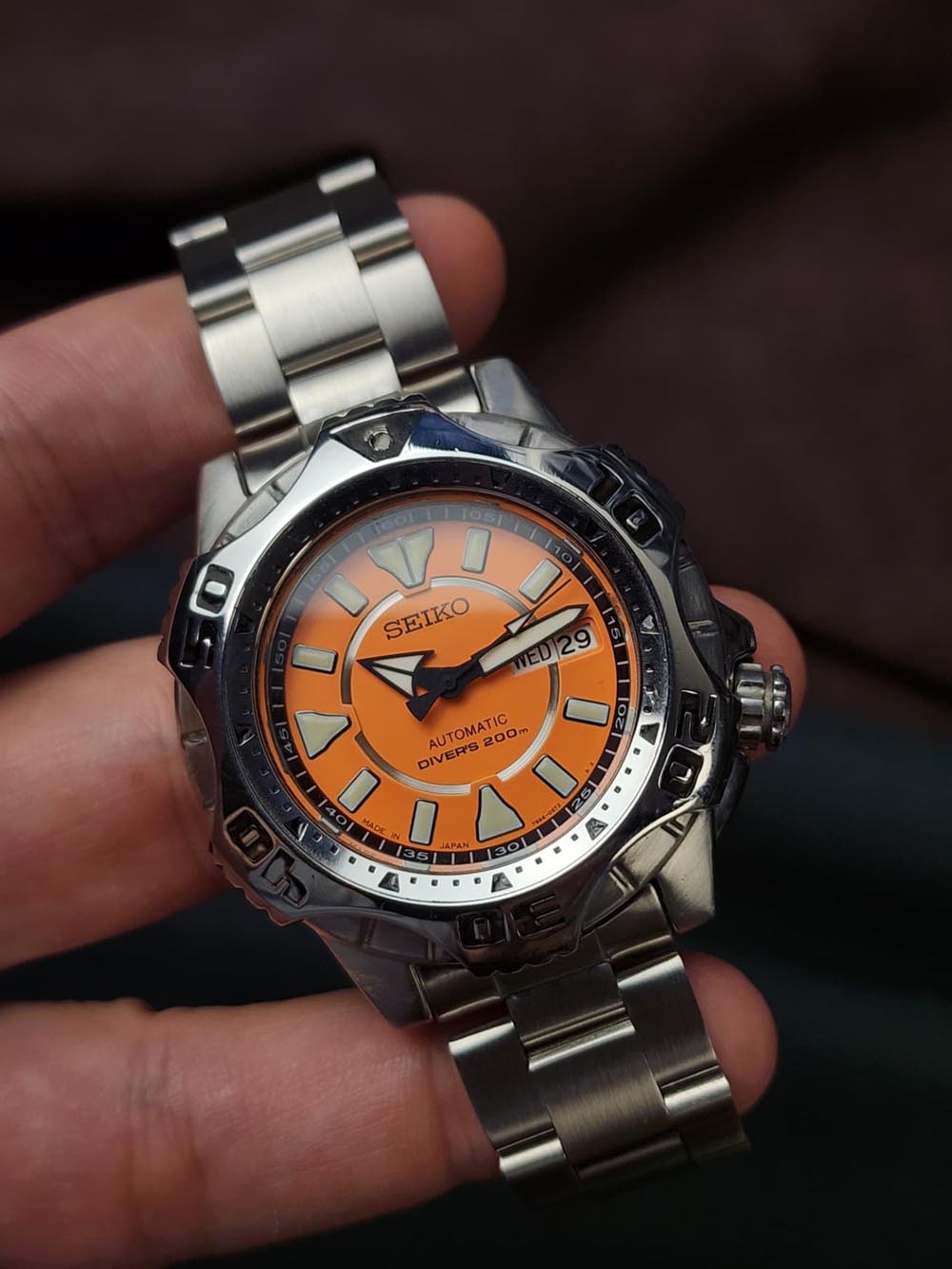
One of the more tenuously deserving of what is objectively a clever nickname, the Seiko Sea Urchin is the Seiko-phile name for the SNZF17K1. No, it doesn’t look like a spiny sea creature. Instead, it has a distinctly Submariner look with a 41mm stainless steel case, 100m water resistance and a classic dive watch dial with a 3 o’clock day-date. It’s also incredibly accessible. While it’s been discontinued, you can still snap them up for £300 or less without a problem – making it the poor man’s Rolex Submariner. Or, circling back to its name, a seafaring watch even an urchin can afford.
The Seiko Starfish
The Seiko Kinetic divers from the 90s – specifically the 5M22 and 5M42 – actually have two names, depending on whether you latch onto their tool watch status or their Japanese maker: the Seiko Shuriken or the Seiko Starfish. Both names come from the distinctive star-shaped raised bezel for one of the most tactile divers operable with full gear on. There are a few other models that have shared the name(s), like the Seiko Superior Automatic and some of the Seiko Solar Divers from the 2010s and honestly, that makes sense. The bezel is so ludicrous that the base watch underneath doesn’t really matter. As long as it’s a Seiko, of course.
The Seiko Gene Kranz
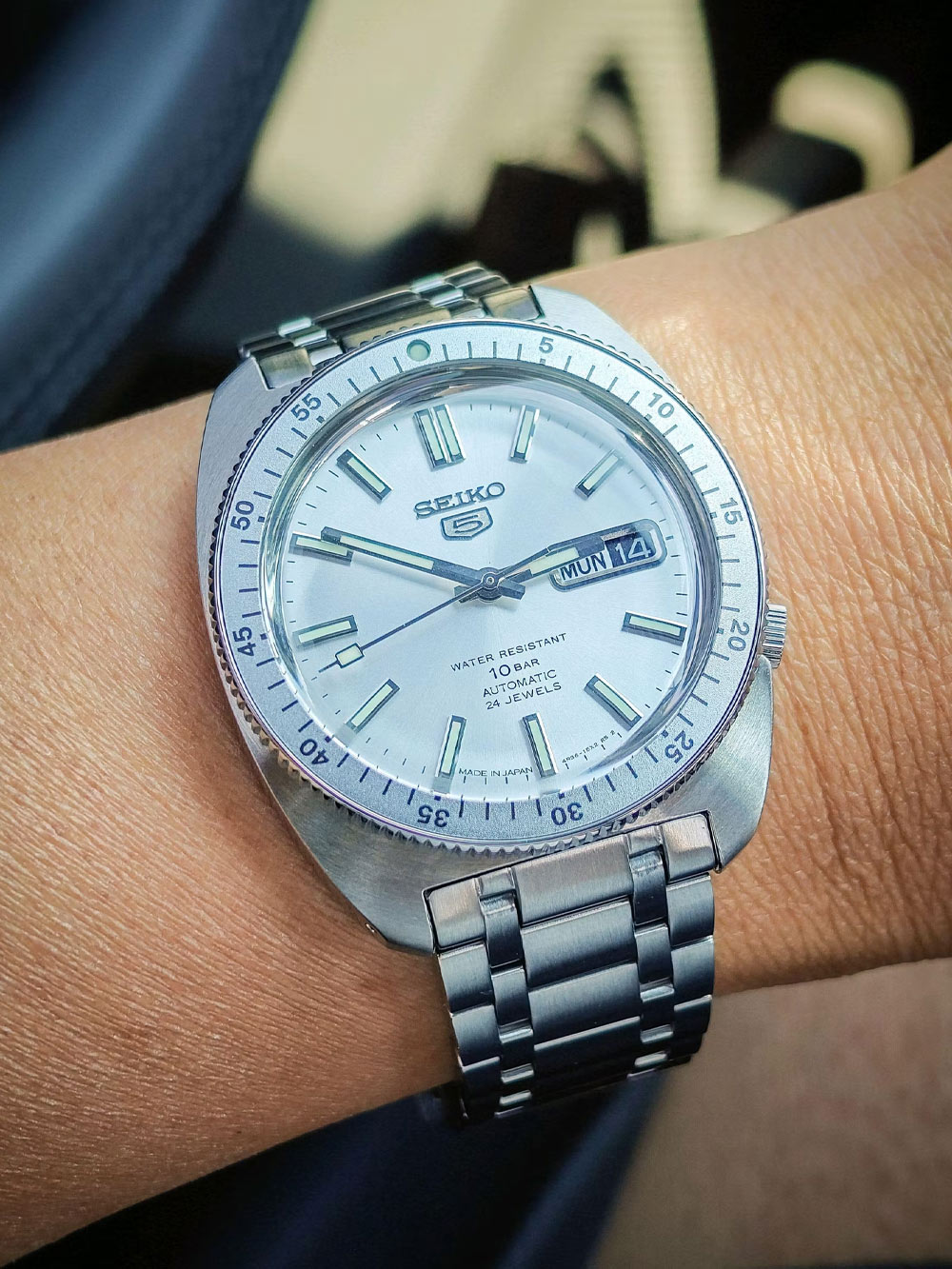
While the Apollo astronauts are famous for wearing their Omega Speedmasters, not everyone in ground control had the same luxury. Gene Kranz was the NASA flight director who oversaw both the Apollo 11 Moon Landings and the Apollo 13 disaster (helping to ensure the safe return of the astronauts). On his wrist during these historic moments was the Seiko 5 Sports Ref. 6119-8460, a white dialled sports watch with 70m water resistance and 60-minute timer bezel. It has been recreated in several limited editions, including in 2025.


Is there retailers out there…..where l can buy these watches ( the listed nicknames)
Those guys ( singapore Seiko retailers)
Cant dependent on them
Thanks anyway
Gilbert
There are a lot missing from this list.
Good to know that to be a published writer you don’t need to know the difference between ‘its’ and ‘it’s’
Thank God there are people like you out there, without a pedant around it quite possibly would’ve gone unnoticed.
great list, thanks!
All watches are nice but I really like Shogun and Spork.
Where is the Gene Kranz? :) (And I have to write a fairy-tale too because less than 40 character is ot allowed…)
Like to learn about slim dress watch Seiko is my favorite brand
Sure wish I could buy a downsized Sumo to fit 38-40mm. If it exists, can you comment?
Great article, thanks!
65 yrs old now had Seiko at school, luv um
Glorious got a 5 now and few more