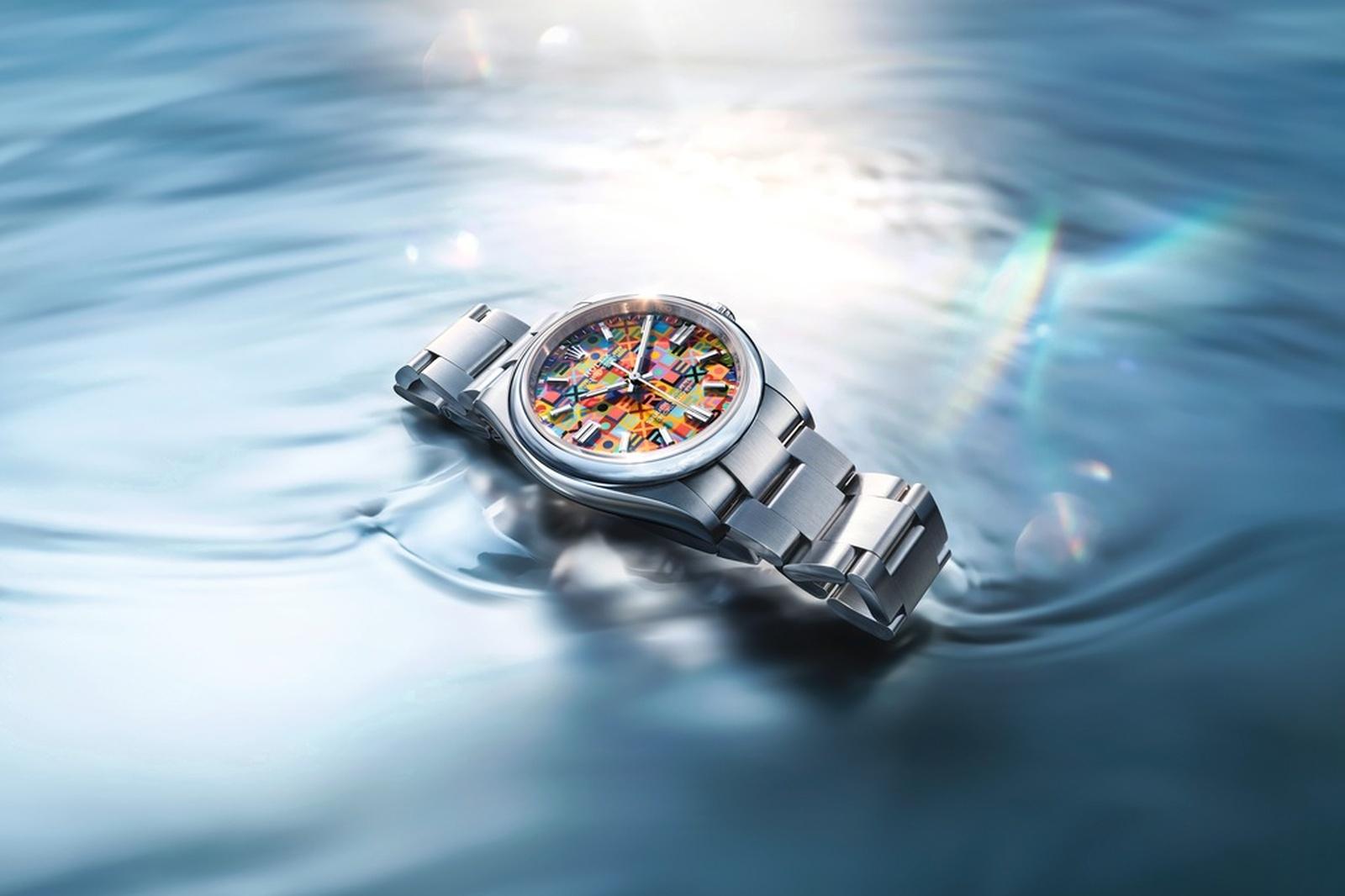
The Hans Wilsdorf Foundation, also known as the Fondation Hans Wilsdorf (FHW), is best known for one thing: being the 100% owner of Rolex. Yet despite the notoriety that comes from owning the world’s most famous watch brand, the Foundation remains a private and somewhat secretive group. However, having been a Rolex collector for some years, it’s always possible to gain an insight here or there. Here are some of the more interesting facts about the FHW that are not widely known.
When was the Hans Wilsdorf Foundation founded?
When Hans Wilsdorf’s wife, Florence, passed away in 1944, he decided to honour her memory by setting up a foundation. He consulted with lawyers and tax specialists, and on the 1st of August 1945, the Hans Wilsdorf Foundation was established. Upon his own death in 1960, all of his shares and other assets were transferred to the foundation, meaning that the charitable foundation suddenly became the sole owner of Rolex. Unsurprisingly that makes the FHW the wealthiest charitable foundation in Geneva – and perhaps all of Europe.
How big is the Hans Wilsdorf Foundation?
To me, the most interesting fact about the FHW is its diminutive size; it has a permanent staff of only around two dozen and a board of eight. It is able to run such a tight ship because it lacks two of the biggest departments in most charities: fundraising and investment. Because it owns 100% of all Rolex shares, it receives anywhere from 300 million to 3 billion Swiss Francs (CHF) annually, so – obviously – it doesn’t need to raise any funds. The ownership also means that the foundation doesn’t have to manage its investments because the management of Rolex SA does that job superbly.
The only work left for the staff to do is deciding “yes” or “no” on the applications submitted to them and writing cheques for the various humanitarian, social, cultural and geographic projects the Foundation supports. As my research for this piece confirmed, they also function perfectly well without a public relations department.
Who is on the Hans Wilsdorf Foundation board?

There has always been a member of the extended Wilsdorf family on the board since his death in 1960; they also control 25% of the votes in the FHW, but they do not receive 25% of the income. The current Wilsdorf family member on the board is Anita Kübel, who is related to Hans through his sister, Anna. Anna had married Alfred Davis, and their daughter Florence (named after Wilsdorf’s wife) married a German woodworker, Karl Kübel, in the early 1930s (the man behind the successful 3K Möbel furniture company). They had two sons, born in 1935 and 1936, who both joined the FHW board immediately after Wilsdorf’s death – Anita is the grandniece of one of them. Which, when mapped out on a family tree, makes Anita Hans’ Great-Great-Grandniece.
How much money does the Hans Wilsdorf Foundation have?
It is likely that the FHW is the most heavily capitalised private foundation in Europe. Unfortunately, despite my research, “likely” is about as definitive as it is possible to be. Normally, foundations hold their assets in publicly traded shares, bonds, or real estate, enabling a pretty accurate assumption of their valuation. But because the FHW’s only asset is complete ownership of Rolex, a private, unlisted company, it is impossible to value the asset base. The figures are simply not publicly available, nor are they ever likely to be made so.
However, if their shareholding in Rolex were to be valued using the conventional multiple of its estimated annual CHF 10 to 11 billion revenue, then the market would see the FHW’s sole asset as being worth CHF 20 to 30 billion. Meaning that the Foundation is indeed the most heavily capitalised private foundation in Europe.
There is almost certainly a book to be written about the FHW, but until the veil of secrecy is lifted a little, I am afraid that we shall have to make do with simple little glimpses, like this one.
More details at Fondation Hans Wilsdorf.