Formex is one of the most tragically overlooked watchmakers in Switzerland. That’s a bold claim but one most watch enthusiasts, once they’ve spent time with the brand, would struggle to refute. They have a similar reputation to other independents for cool, accessible sports watches, which is by no means a bad thing – but it undersells precisely what sets Formex apart.
Now with the Aria, powered by a new, high-spec, in-house movement, Formex is showcasing that the elements that gained them a cult following – unusual designs, indomitable engineering and plenty of value – can work at a higher price point too. Indeed, the new watch is Formex’s most ambitious project yet. But to understand the Aria, you need to understand Formex, and understanding Formex starts with Dexel.
Formex is in many ways a testing ground for Dexel, maker of some of the best clasps and bracelets in the world. We’ve been sworn to secrecy on precisely who they build for, but if you’ve paid over £10,000 for a watch, there’s a good chance it came with one of their clasps. A deployant clasp is not a simple mechanism, requiring tolerances that would make any casemaker nervous and that’s before we start talking about building the entire thing from ceramic.
It’s an intense level of expertise and one that the Granito family – owners of both Formex and Dexel – are obsessed by. New manufacturing methods paired with torture devices to put those new methods through their paces have led to some incredibly well-built timepieces. But while pieces like the Essence with Formex’s signature case suspension are distinctive, it’s only when you get one on your wrist that the fruits of that obsession become obvious.
However, you could argue that Formex has been relying on their machining expertise to the exclusion of chronometry. The vast majority of their catalogue is equipped with Sellita movements and while there’s a lot to be said for the accessible microbrand workhorse, it just doesn’t live up to the rest of the watch. Now though, Formex are inverting their process. Rather than work from the outside in, the Aria puts the movement first.
Formex haven’t suddenly started building their own in-house movements; that would take an untenable level of investment. Instead, they went to their similarly engineering-focused Biel-based neighbours, a watchmaker that essentially does for calibres that Formex does for clasps: Horage.
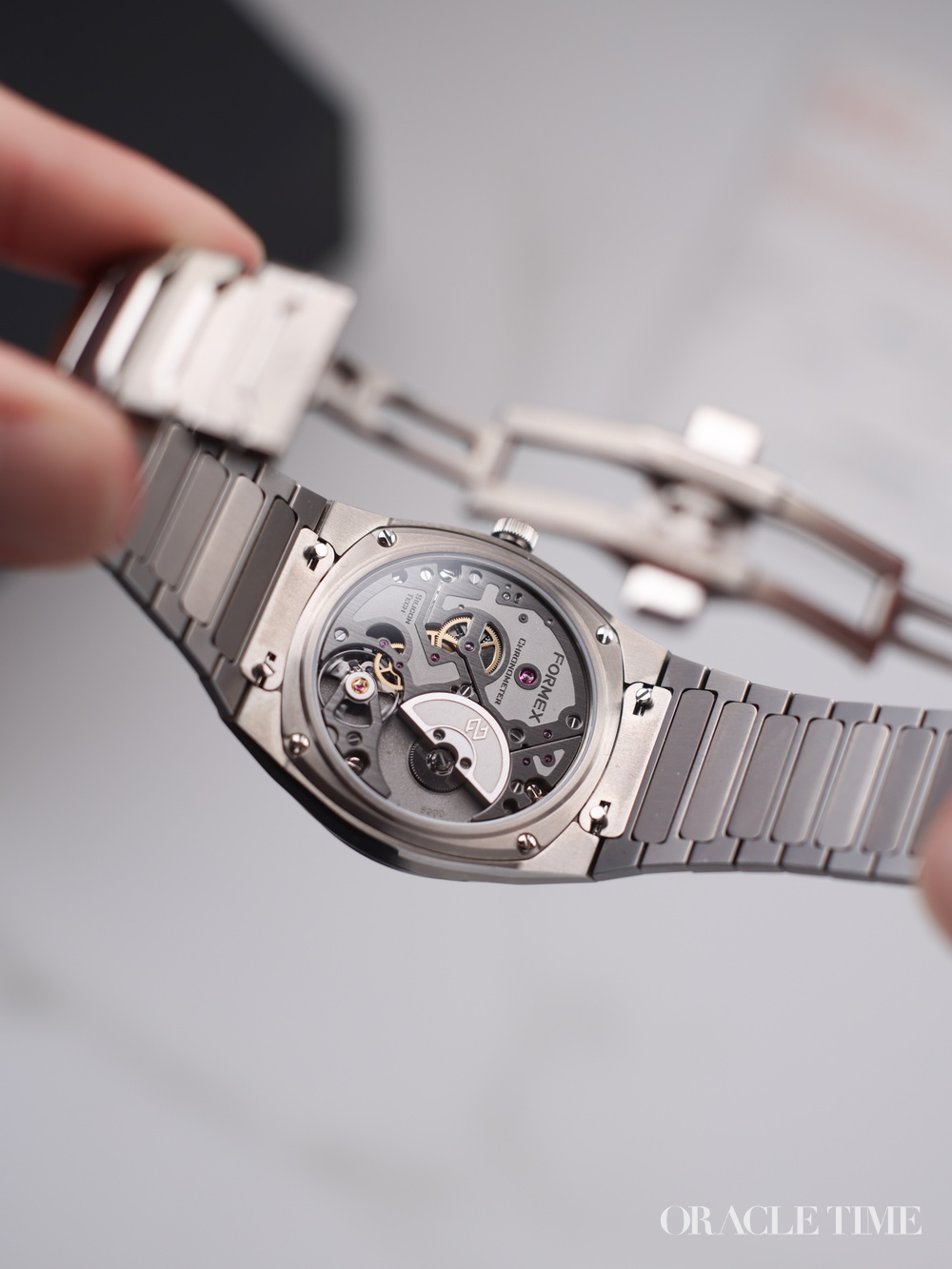
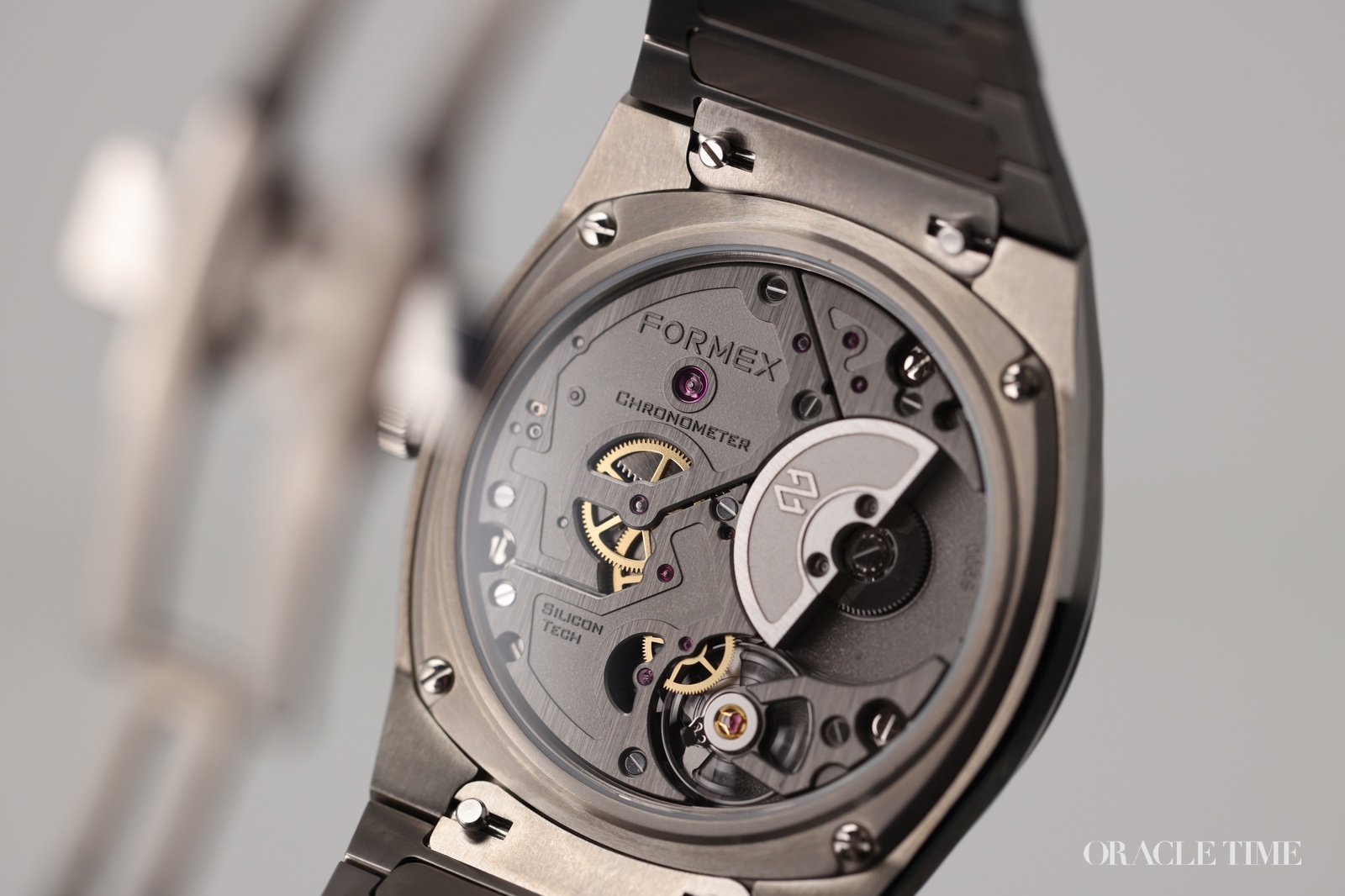
We recently covered Horage’s novel approach to regulation. But while MicroReg has the potential to be a huge shift in watchmaking, their latest-generation K2 micro-rotor movement illustrates what they do best: a full silicon escapement, LIGA components, 72-hour power reserve, and COSC certification all in a package just 2.9mm thick. While they’ve allowed plenty of other brands to use their first-gen K1 movement however, Horage have been much more protective over the K2. With the Aria, Formex will be the first other brand to use it.
“Working with like-minded brands is always the goal,” explains Horage COO David Sharp, “and when combined with them being our neighbours in Biel, with a similar engineering led philosophy it made working with Formex a natural fit. We’re proud that a fellow Biel brand is the first brand outside of Horage to utilise the K2 calibre.”
To make the micro-rotor architecture more distinctly ‘Formex’, Horage has also finished the Aria’s K2 movement – dubbed the FX01 – with bridges in galvanised black gold, brushed surfaces, hand-bevelled edges, and laser-precise cut-outs. The end result isn’t your classic cotes de Geneve Swiss movement; it’s something sleeker.
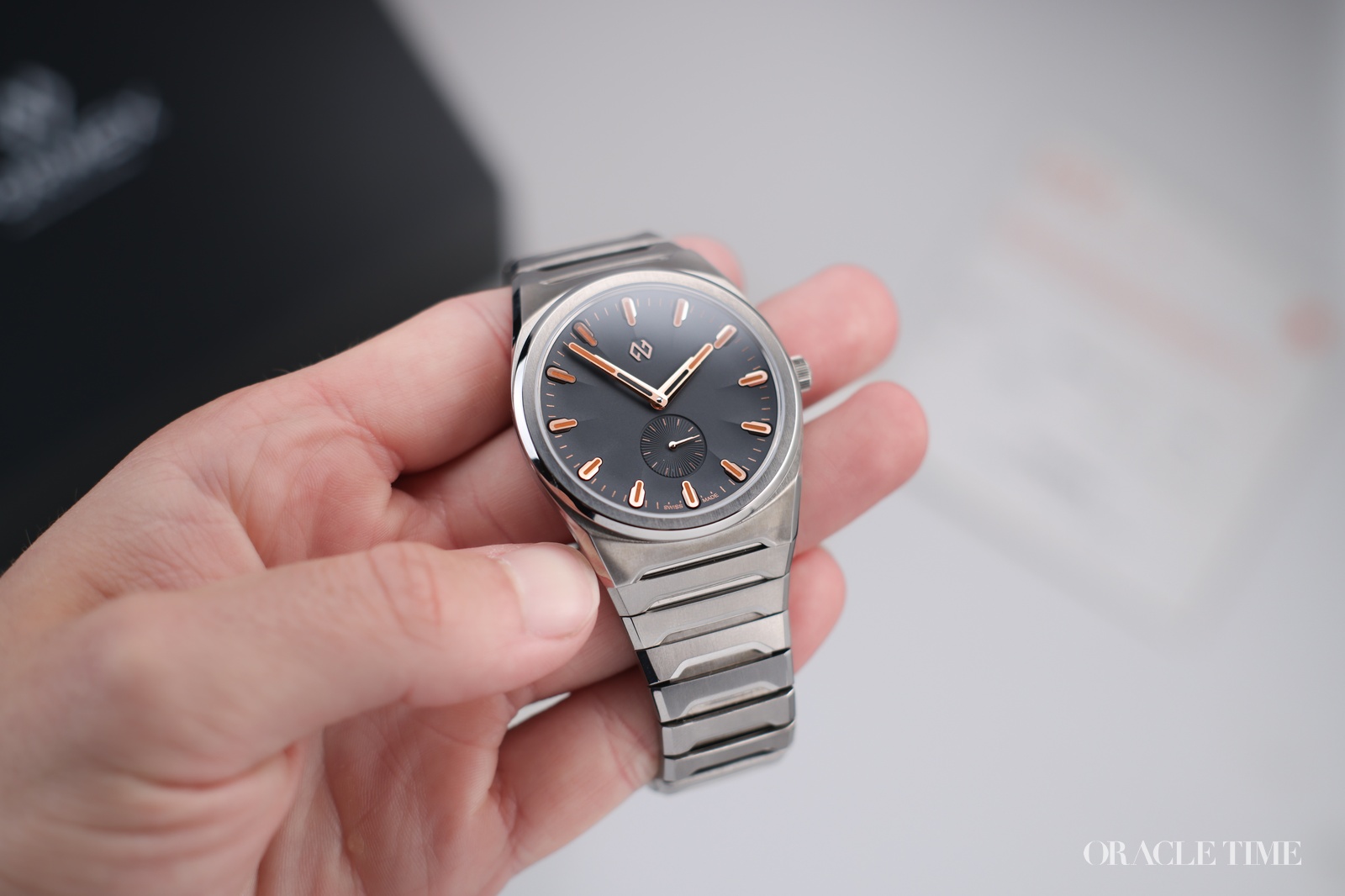
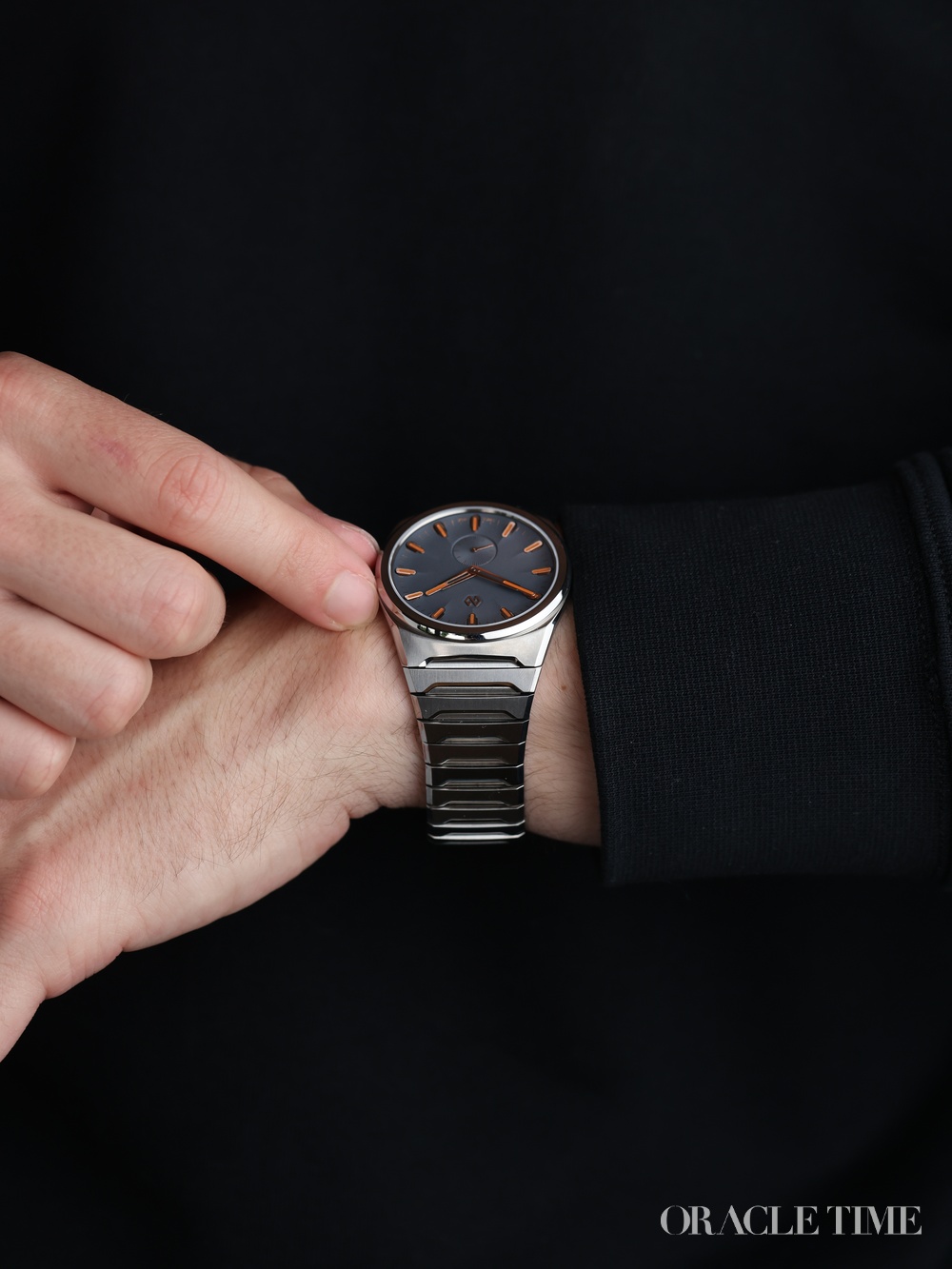
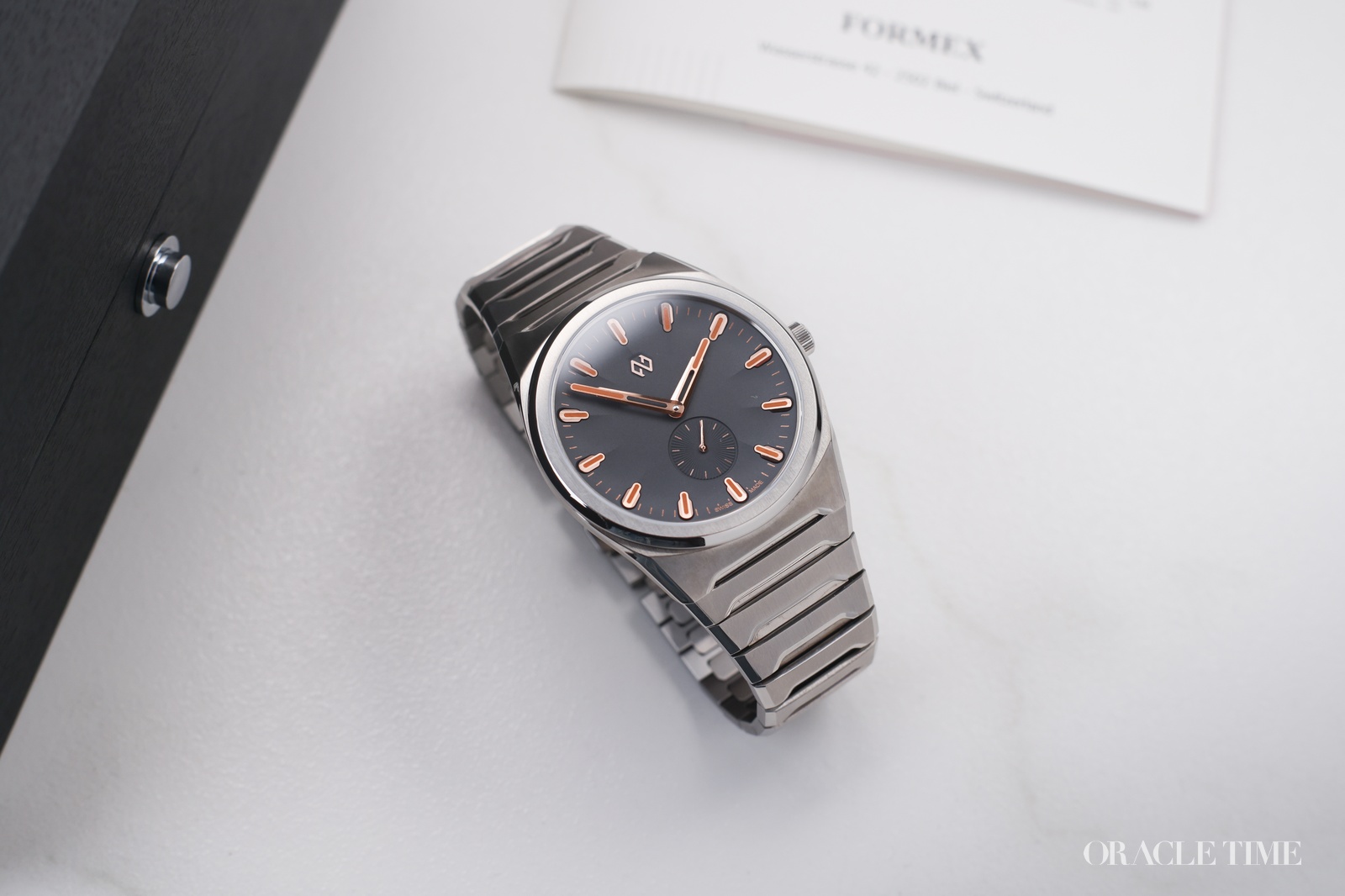
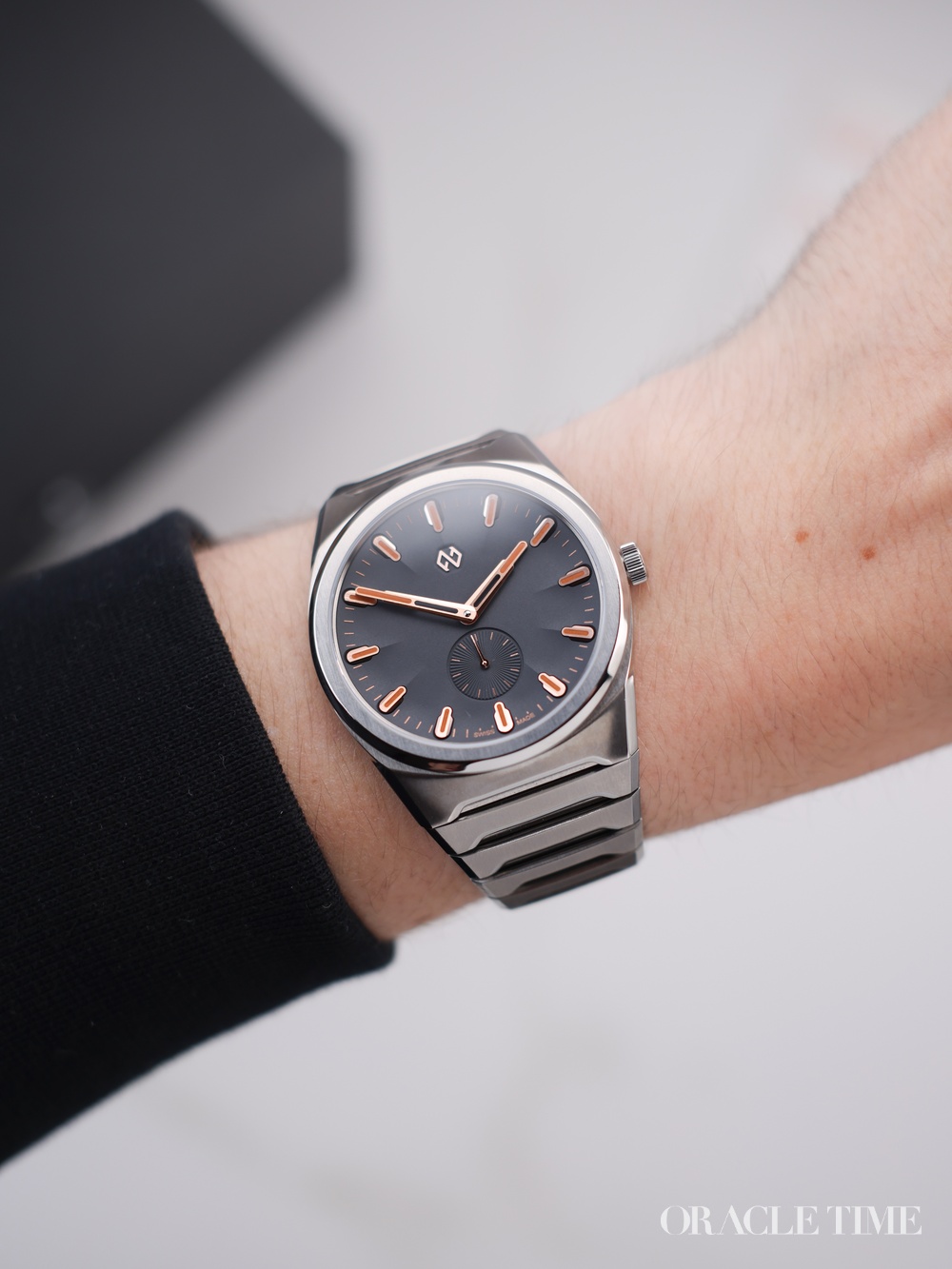
It’s around that movement that the design of the Aria was built. The extreme slimness of the FX01 allowed the case to measure just 6.9mm thin, while still building in a dial full of Formex’s signature architectural depth. It’s still a solid 40mm across – this isn’t a diminutive, vintage-proportioned throwback – but one that’s both comfortably sculpted and, at 78 grams of titanium (including the bracelet), beautifully lightweight.
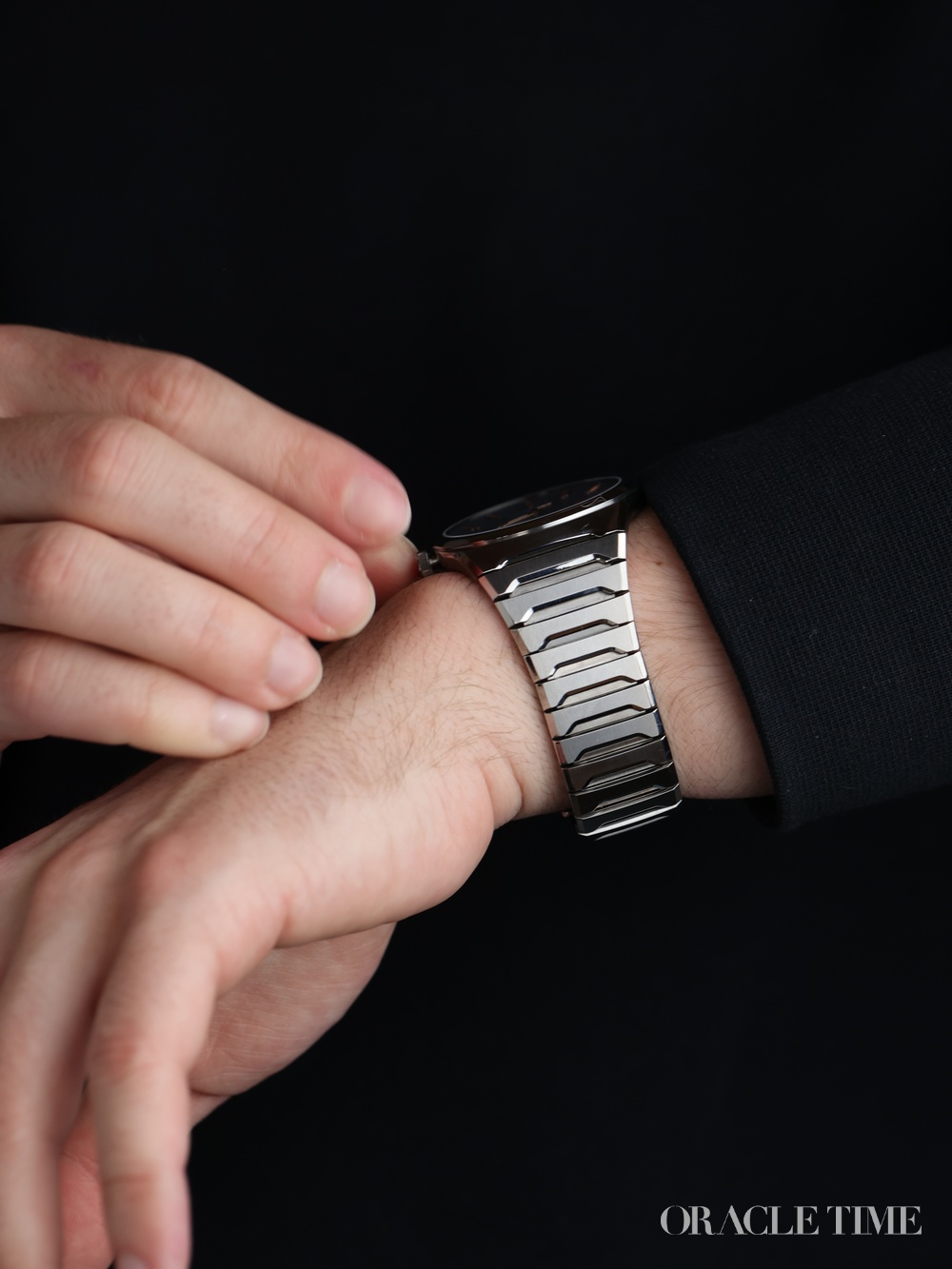
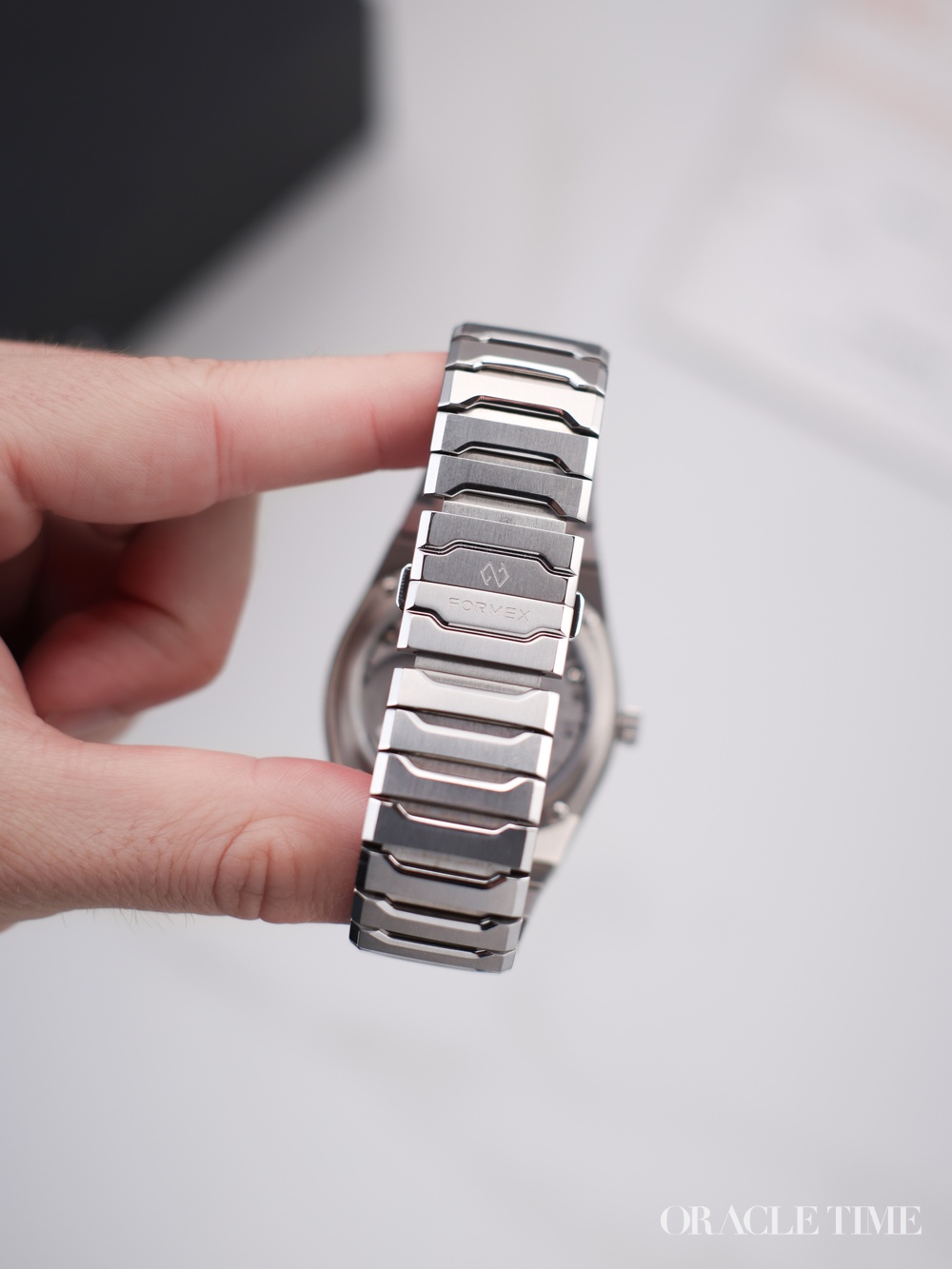
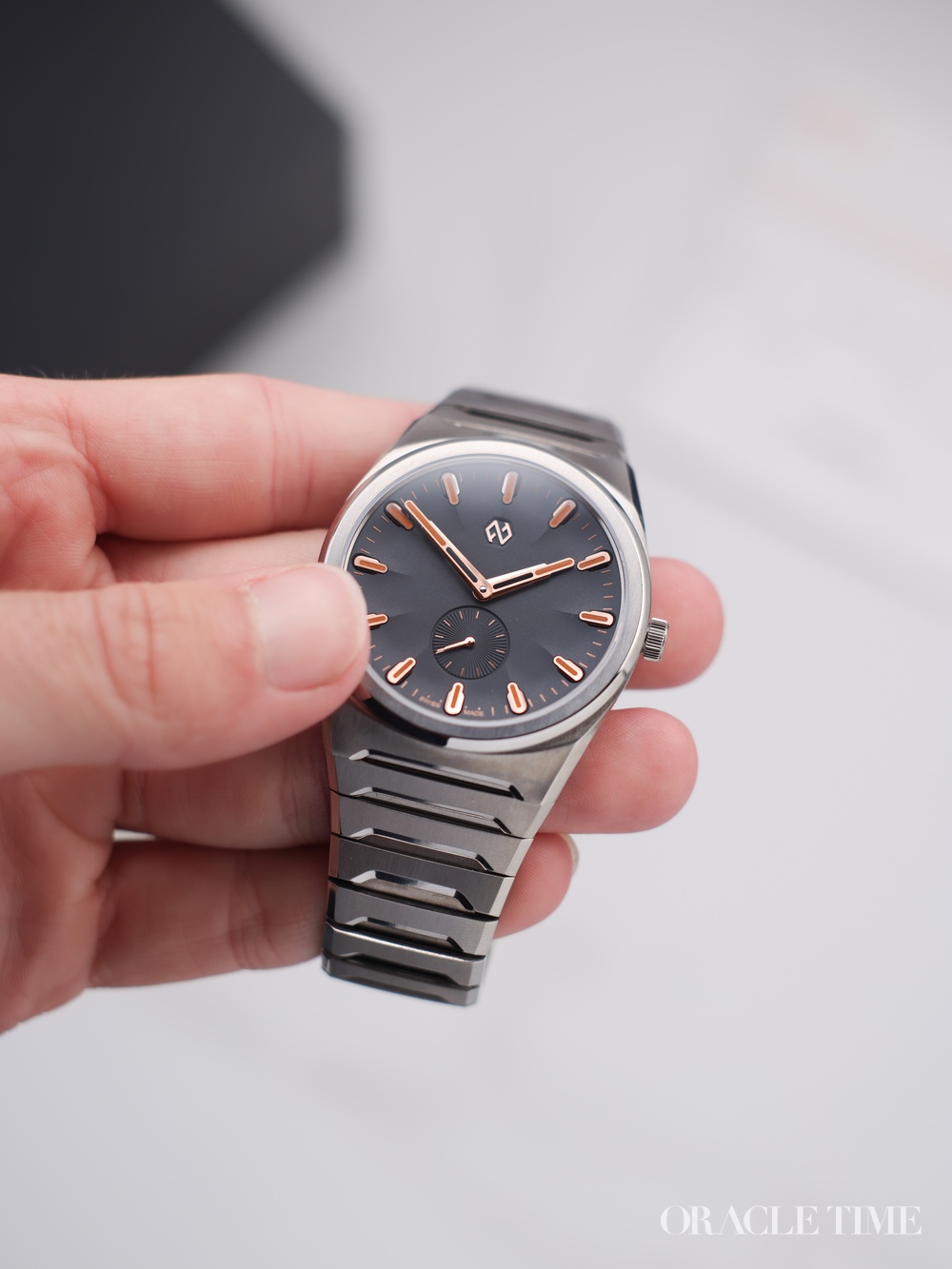
Aesthetically it also sits in contrast to Formex’s more rigidly machined line-up. Pebble-smooth curves imitate river stones, flowing from bezel along the bracelet to the clasp. The bracelet especially is a thing of beauty, with echoes of pieces like the Moser Streamliner in its shifting brushed links with polished intercostal bevels, the influence of Dexel’s expertise on full display.
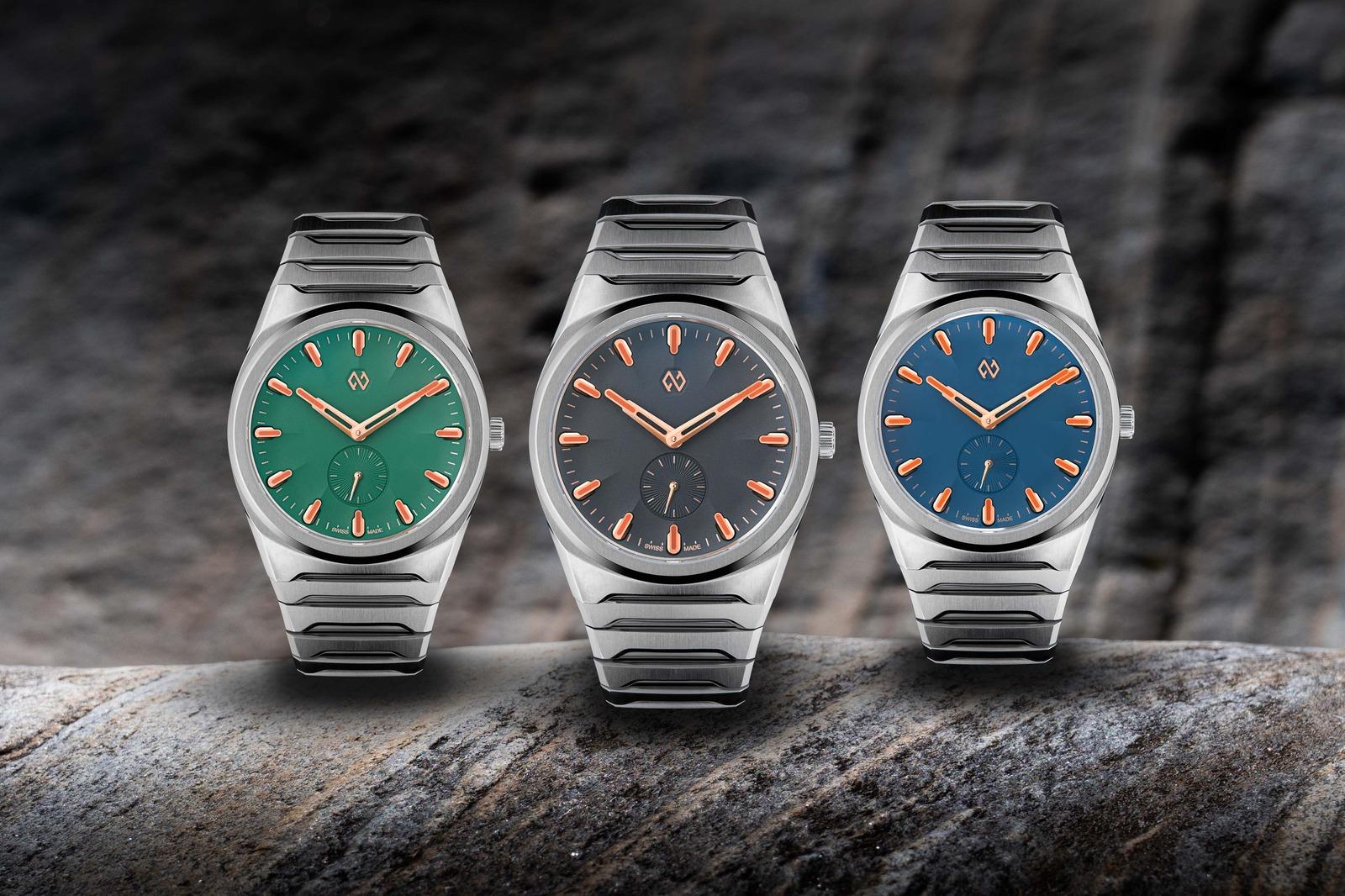
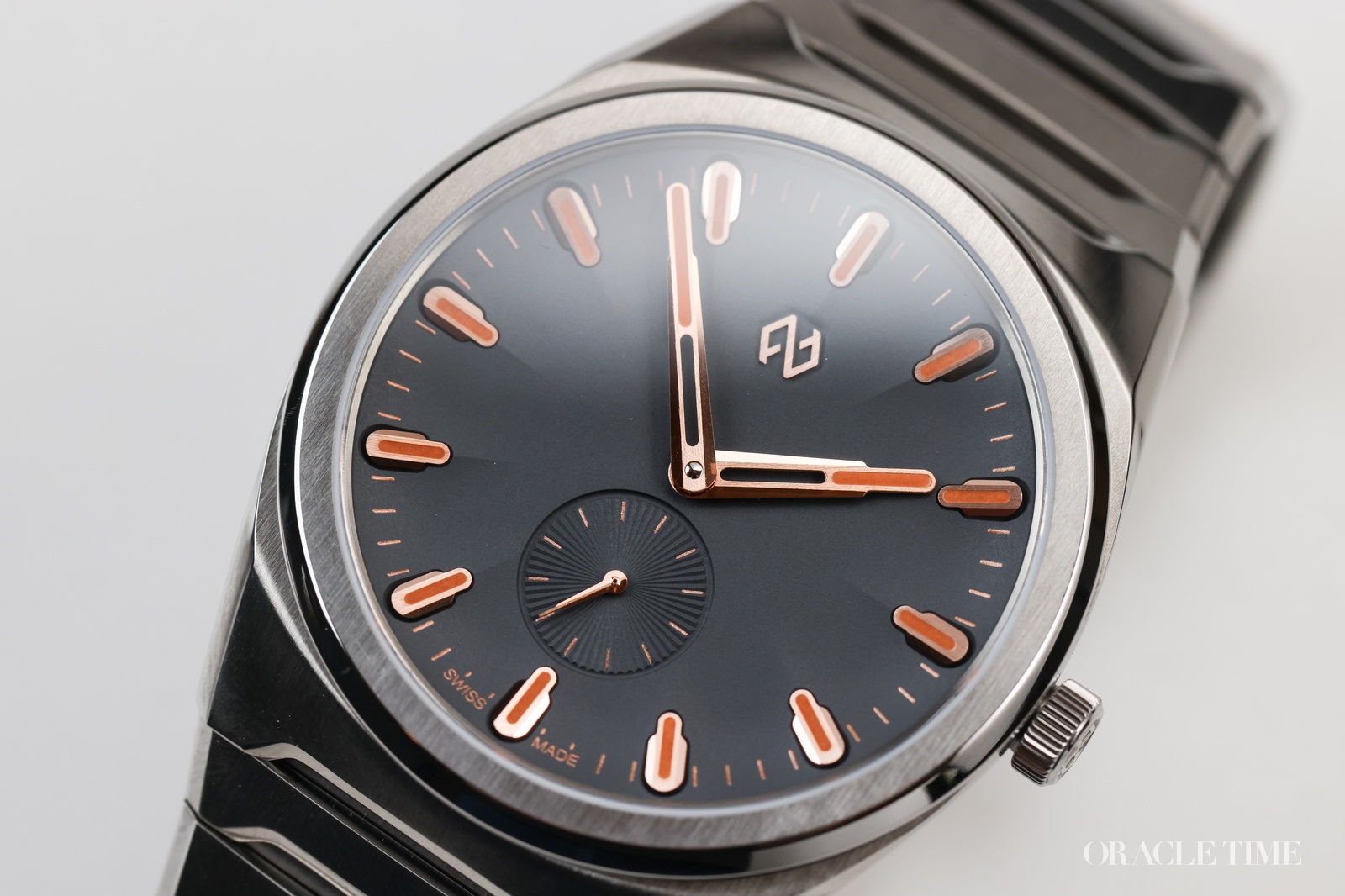
That fluid rippling is mirrored subtly on the dial, with the indexes set on raised platforms and the dial seeming to curve away from them. It’s the most distinctive touch on the Aria and something I’ve not come across before and one that feels typically Formex. The dial is finished with a sunburst engraved (too bold to be called guilloche) small seconds subdial at six o’clock and available in blue, green and grey.
This all brings us to price. One of the most eye-catching aspects of the Aria is just how big an increase it is on previous collection entry-points. Their previous mainstay, the Essence ranges from the mid-£1,000s to mid-£3,000s in ceramic. The Aria sits well above that at £6,500, roughly triple Formex’s average price point. How does the brand justify such a jump?
“The FX01 calibre costs us roughly eight times what we pay for the movements in our Essence collection,” explains Formex owner Raphael Granito. “And when you’re starting from that base, the only right path in our eyes was to make sure every other component in the watch lives up to it.”
This means that not only is the movement more expensive, but the watch built around it is, too. From the outside, that might seem like a maverick move; in an industry as gradually paced as the watch world, incremental shifts are much more common than grand new arenas of watchmaking like the Aria. But from Raphael’s perspective, there was never really a choice:
“It was the FX01’s architecture that opened up the design space entirely. We didn’t sit down with a target price and work backward. We let the creativity run free, worked with the best people we could find, and refused to let budget be the limiting factor. £6,500 is simply where we ended up when we added it all up… Our margin hasn’t changed – we’ve always worked on a 3x multiplier from manufacturing cost to retail, and the Aria is no different.”
From the outside it does look like Formex, a small, independent watchmaker, are squaring up to the likes of their most famous Biel neighbor, Omega. The genuinely iconic Speedmaster is priced in the same ballpark and there’s going to be some overlap between potential customers for the Moon Watch and the Aria.
“The person buying an Aria probably already owns one of those,” says Raphael. “They’re not choosing between us – they’re adding something their collection is missing. They want something technically extraordinary that most people, who aren’t fellow watch enthusiasts, won’t recognize, and that’s exactly the point.
“Brands like Omega and Grand Seiko are excellent and are part of my personal collection as well. But the Aria is for someone who finds pushing the boundaries of independent watchmaking a lot more interesting than buying into an established brand.”
To put that in numbers, the Aria was released in a limited-edition founder’s run of 100 pieces in each colour – and they sold out almost immediately. Committing to 300 pieces of an untested watch at a new, higher price point is a serious bet, but one that’s paid off handsomely. In fact, as Raphael puts it, “We should have made at least 300! But that’s the luxury of knowing how it turned out.”
Now that the Aria has paid off, Formex are looking to the future of what this means for the brand. There’s always going to be a temptation to focus on one particular success to the exclusion of everything else and there’s a world where Formex drops, say, the entry-level Field in favour of the Aria. Fortunately, that’s not this world.
“The Aria isn’t a detour from what Formex is,” says Raphael, “it’s an accelerant… Our core collections aren’t going anywhere, and the customers who built this brand with us from the beginning know that. But everything we learned building the Aria will quietly find its way into everything we do next. That’s how ambitious projects work — they are meant to help the whole brand move forward. The Aria is the equivalent of a car maker’s concept car. With the exception that our customers can actually acquire one.”
When it’s back in stock, that is.
Price and Specs:
More details at Formex.