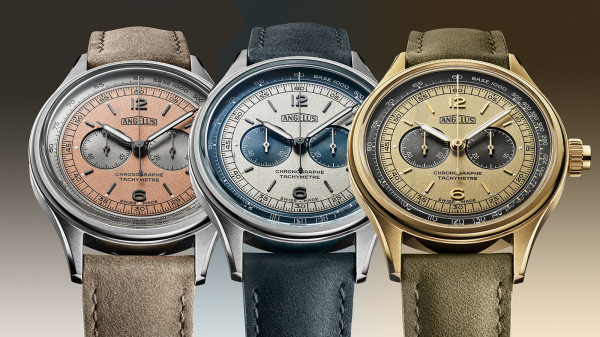
In isolation, a chronograph function on a wristwatch is simply a stopwatch. Press it when an event starts and it will allow you to track how long it has been progressing for. Whether that be how long it takes for a runner to complete a lap or when you should stop boiling your eggs. However, by adding additional scales to the display, the chronograph function can become more specialised. Previously Angelus have explored three such scales on their chronographs and now for 2026 they’re combining all three of them together in a single watch called the Angelus Instrument de Mesures.
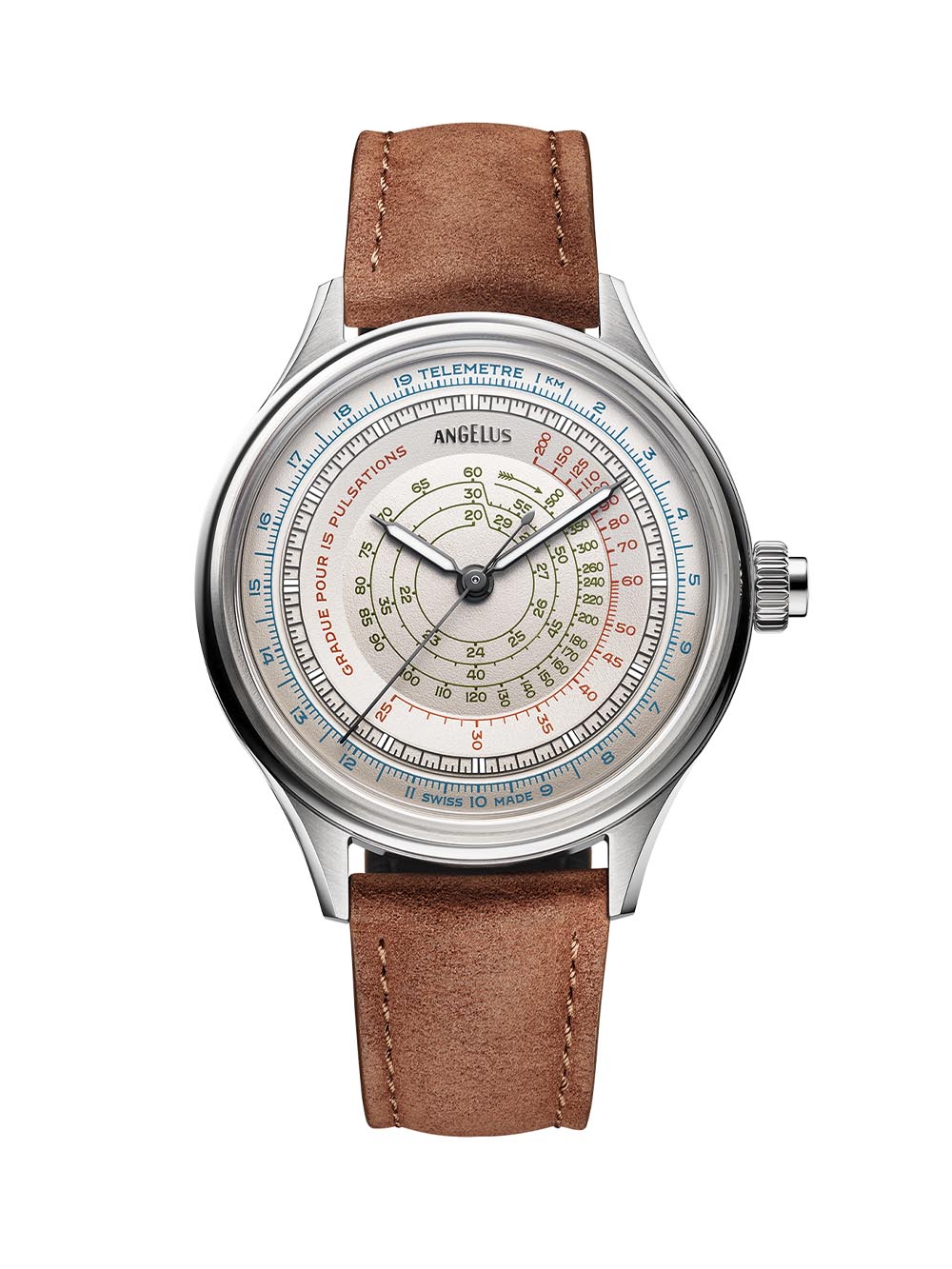
The most famous chronograph scale is the tachymeter, which is presented in a spiral around the centre of the Instrument de Mesures’ display. A tachymeter allows you to calculate an object’s speed over a known distance. In this case, the scale is graduated to 1km, so you time how long it takes for an object like a race car to travel 1km and then the scale will tell you how fast it was travelling.

Outside the tachymeter scale on the dial’s middle incline section is a pulsometer, which is typically used by doctors to calculate a patient’s pulse rate efficiently. Activate the chronograph, count 15 pulses, stop the chronograph and the scale will extrapolate the pulse rate. Quite niche but when it’s needed, it’s vitally important.
Third and presented on the Angelus Instrument de Mesures’s peripheral edge beyond the hour and minute track is the telemeter scale. This is one of the most complicated scales to describe but ultimately its use is quite simple. It’s used to determine the distance between yourself and an event that you can both see and hear. Start the timer when you see it happen and then stop the timer when you hear it and that will tell you how far away it was. The simplest example of which is when you see a lightning strike and then hear the subsequent thunder, so you know how far away the storm is.
Most chronographs typically feature only one of these scales but by including all three it turns the Instrument de Mesures into a veritable Swiss army knife of timing functions. It’s by no means the first chronograph to combine scales in this fashion, Omega’s Chronoscope is another example, but to my eye the Angelus is the cleanest and most legible example I have seen. Though that largely comes down to the fact that Angelus has decided to simplify the overall layout by not including any additional chronograph subdials, meaning there is no chronograph minute or hour indication and also no running seconds.
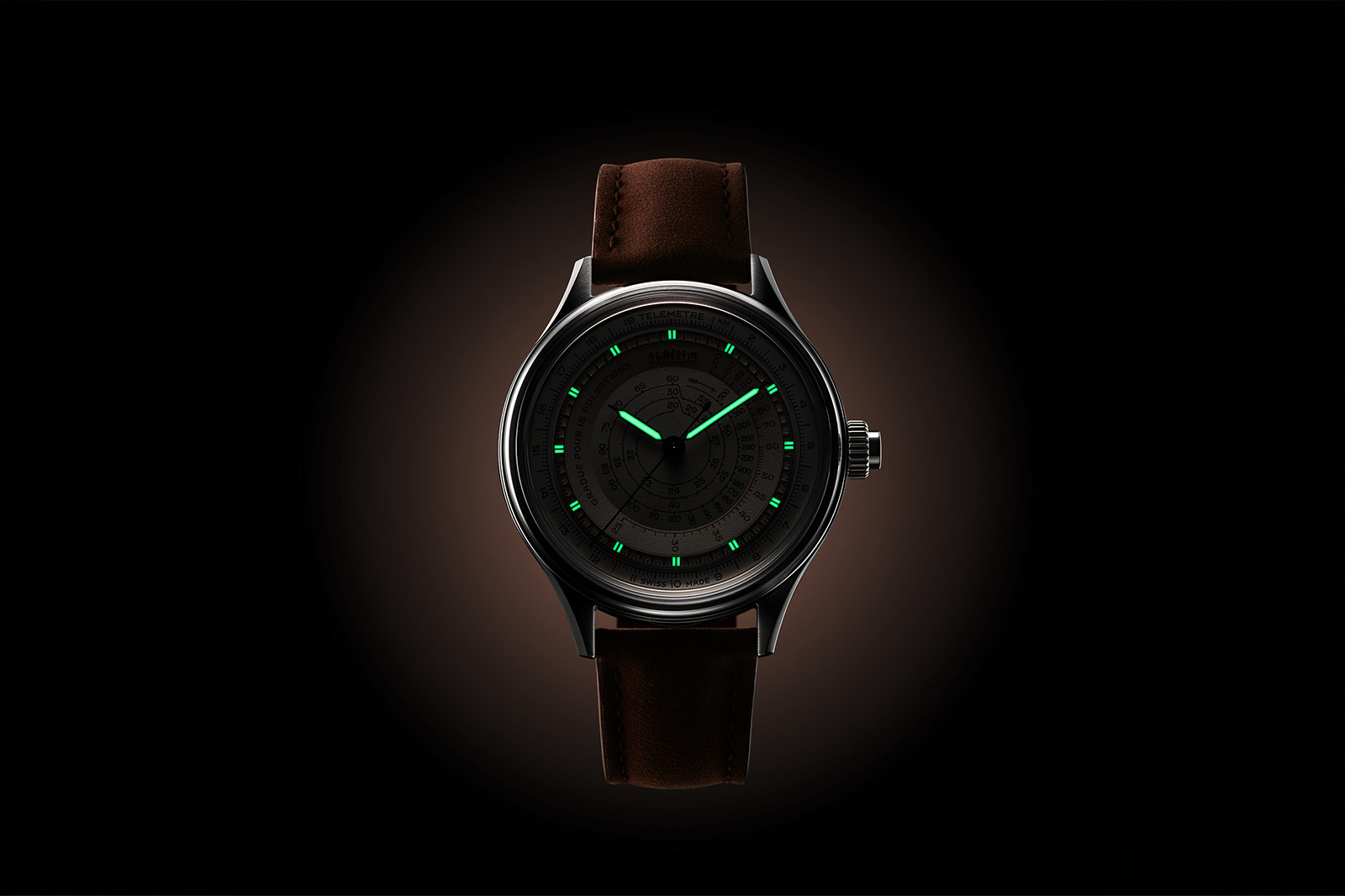
While that might be a peeve for people who feel odd about a watch display that doesn’t have the constant motion of a seconds hand on it, I think it’s totally justified in a watch that is wholly dedicated to the singular concept of its triple scale. For added legibility, each of the three scales are presented in different colours to make it easier to distinguish between them. There are also two colour options of the watch in general. The ebony-black edition has scales in blue, orange and cream while the ivory-white edition is blue, red and green.
Zooming out from the dial, the Angelus Instrument de Mesures is a 39mm steel watch with a circular design and brushed lugs. It’s also a monopusher chronograph in-keeping with Angelus’ penchant for the retro. What that means is that instead of having two separate pushers on either side of the crown with one controlling start/stop and the other for reset, there is a single pusher integrated into the crown that cycles through start/stop/reset.
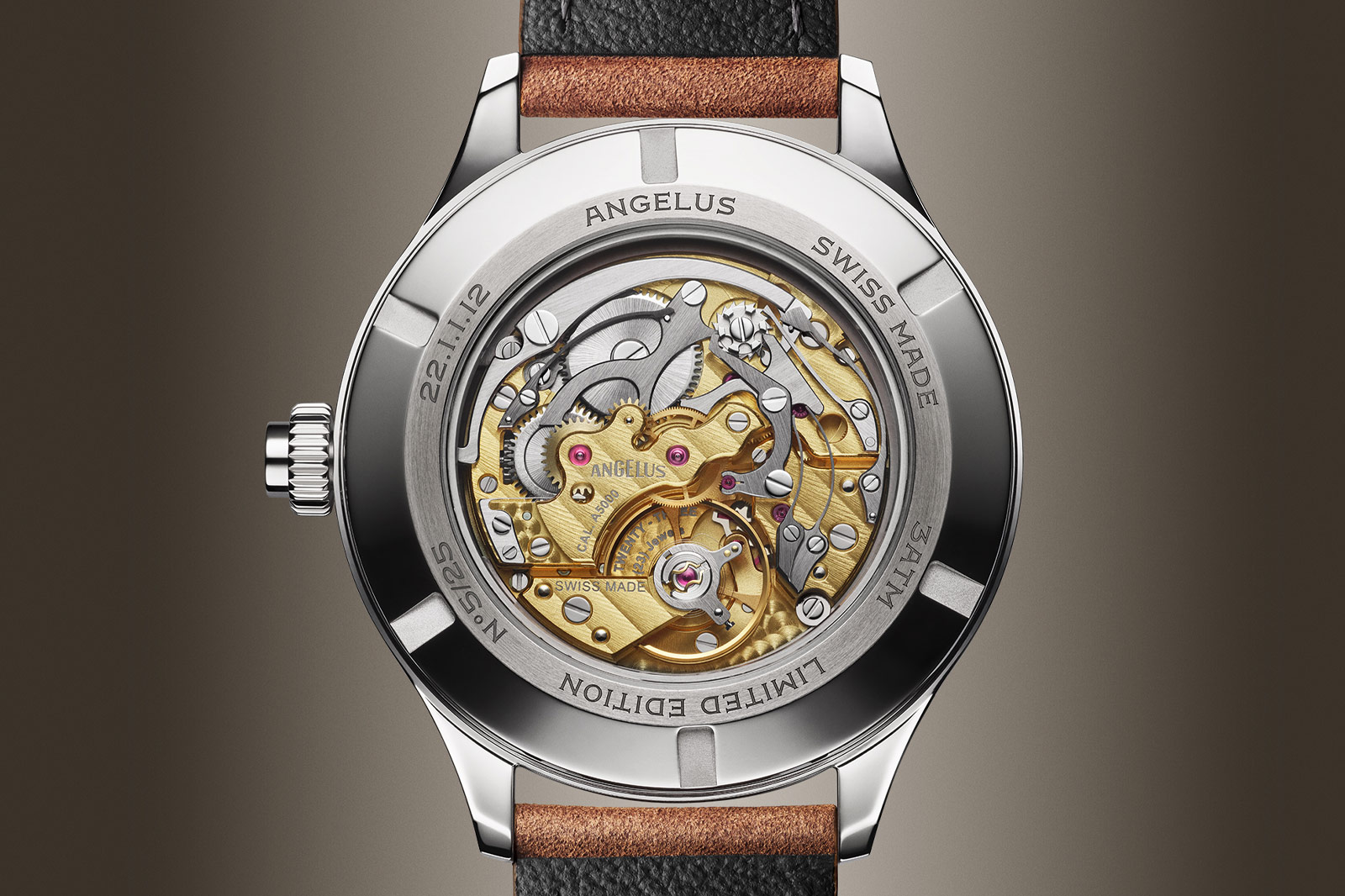
The movement that operates this system is the calibre A5000 from Angelus. It operates at 3Hz with a 42-hour power reserve using a horizontal clutch, column wheel chronograph mechanism. That’s the traditional style of mechanism, again following Angelus’ interest in retro chronos. It’s also a manual winding movement, meaning you can see a lot of the internal operations through the exhibition caseback. It’s also finished beautifully with a combination of steel and gold bridges and Côtes de Genève.

Both versions of the watch, black and white, are limited to 25 pieces at a price of CHF 18,400 including VAT (approx. £17,200). That is the main dampener on what is otherwise a lovely watch. Yes, the movement is gorgeous and the design is well thought out, but you have to reconcile that it’s still approximately £10,000 more expensive than a Master Chronometer Omega Chronoscope at retail. I like the watch, I don’t like the price so much.
Price and Specs:
More details at Angelus.