Collaborations in the watch world are a touchy business. For many brands, the temptation is irresistible to plaster one of their base models with a few logos, change the colours, and call it a day. At their worst, they’re a quick cash grab – a way to appeal to a new audience and play on customers’ loyalty to another name. At its best, however, a collaboration is a true partnership that pushes both parties to grow. The resulting creations are nothing short of extraordinary, pushing the limits of watchmaking thanks to the creative impulse of something utterly new.
The collaboration between Jaeger-LeCoultre and Aston Martin, which ran from 2004 to 2016 before Richard Mille took over, is a prime example of a beautiful partnership. Dubbing the series AMVOX, a combination of Aston Martin’s initials and the latter half of the name of JLC’s famous Memovox line, the series saw the development of pioneering technology in chronographs, creating timepieces both remarkably subtle in their brand associations and remarkably powerful in watchmaking prowess. This is Jaeger-LeCoultre at its finest, powered by Aston Martin’s automotive hunger for power.
AMVOX 1 Alarm
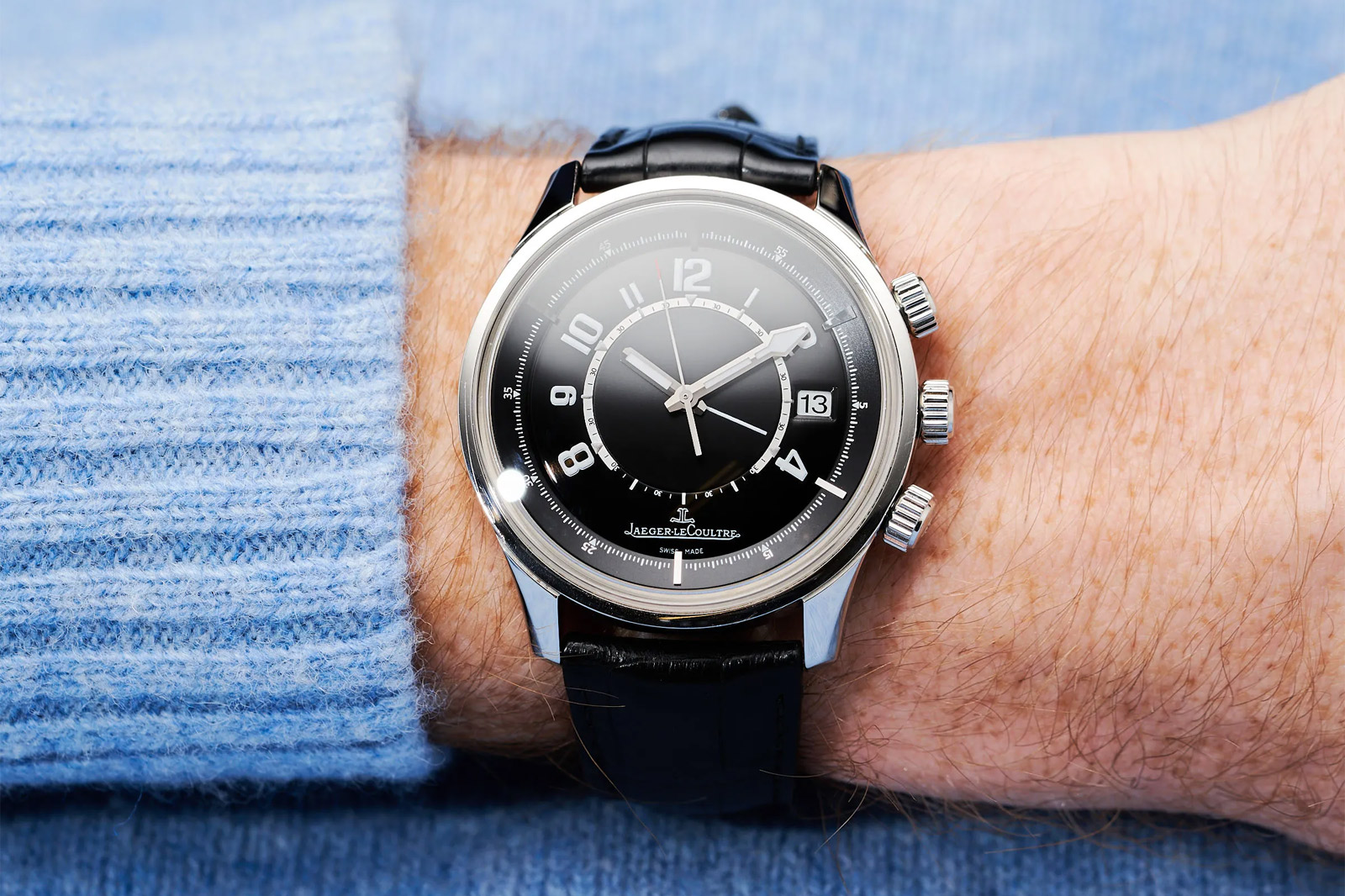
Originally known simply as the Aston Martin Jaeger-LeCoultre Edition, this initial alarm piece is remarkably distinct from the rest of the catalogue. Based on the classic Memovox, it’s certainly a cautious step forward in the partnership, featuring little deviation from JLC’s tried-and-true alarm watch formula. The wearer rotates an internal bezel to set the alarm, and notably included a limited-edition version made in titanium, which, for 2004, was indeed some serious materials innovation.
The first AMVOX was not without its growing pains — for example, disabling the alarm required pulling the crown out, which meant it was almost always kept out when wearing the watch. Nonetheless, it’s a beautiful piece and a perfect Memovox, even though it doesn’t represent as much innovation as its successor.
AMVOX 2 Chronograph
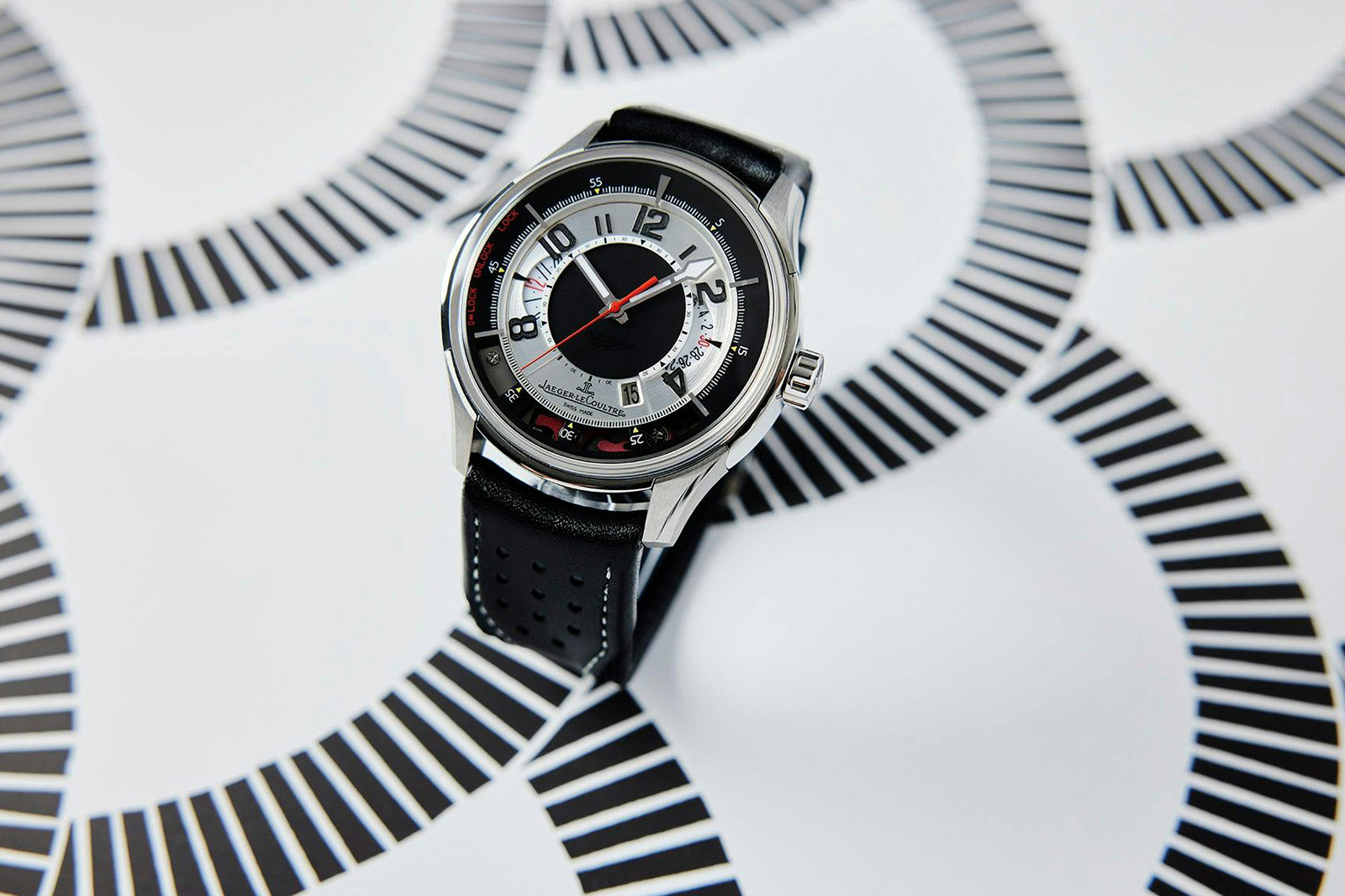
Released in 2006, the AMVOX 2 Chronograph began to truly set the tone for the collection. It represents the first introduction of Jaeger-LeCoultre’s specialised calibre 751B, which enabled the debut of the AMVOX’s definitive Vertical Trigger chronograph system. Developed by engineer Francis Cretin, this was perhaps the most significant development in chronographs since the 1950s and receives not nearly enough attention in mainstream media.
Not only was the AMVOX 2 Chronograph a significant technical step forward, but it also defined the aesthetic for the rest of the series. The new dial, partially open-worked with bold colours, is worthy of a true concept watch. Indeed, the AMVOX 2 was so technically advanced that it was originally known as Chronograph Concept when released. Originally available in titanium (limited to 750 pieces), titanium with black PVD (limited to 500 pieces), and platinum (limited to 200 pieces), this is a timepiece that would come to define an entire partnership.
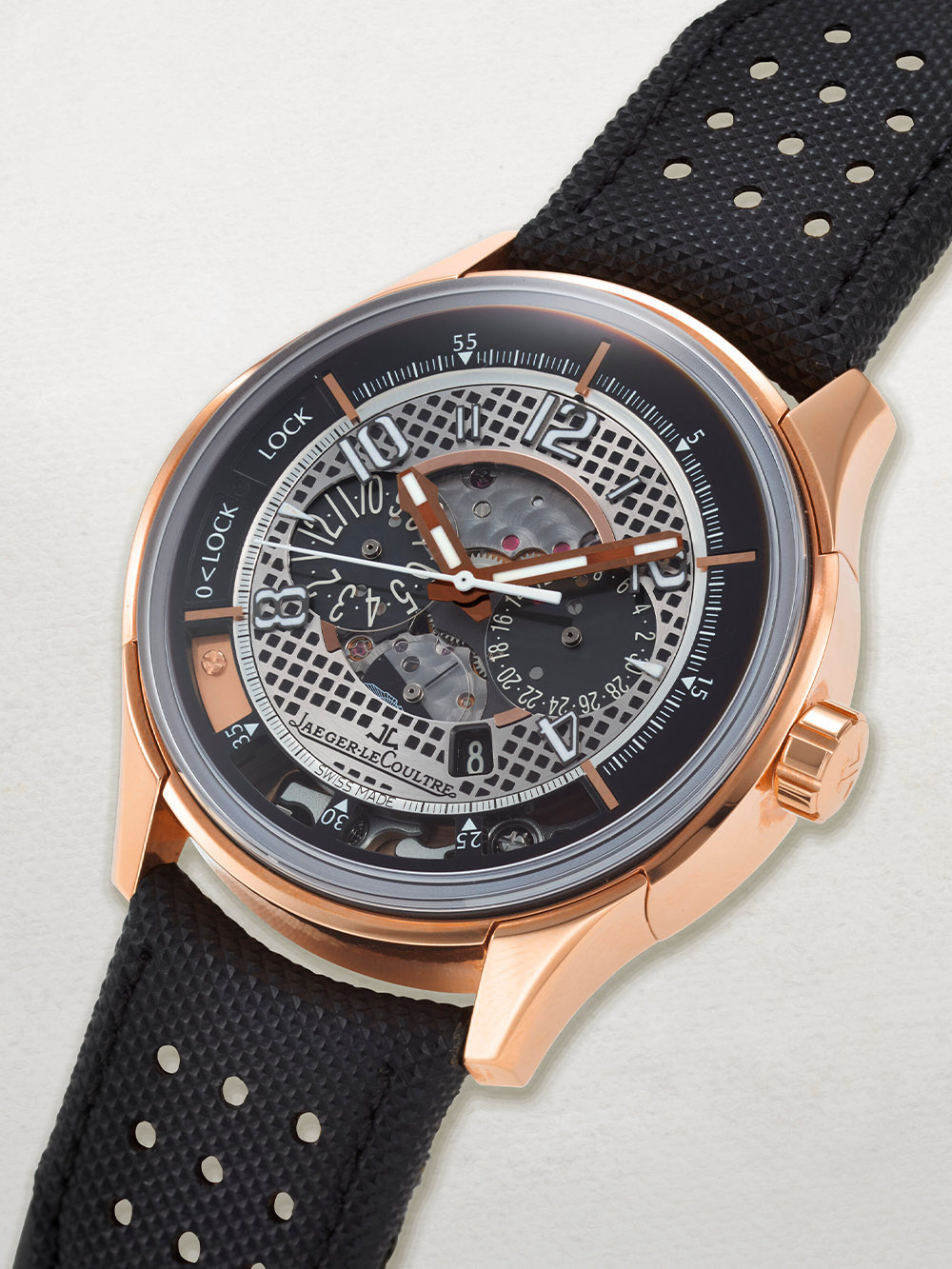
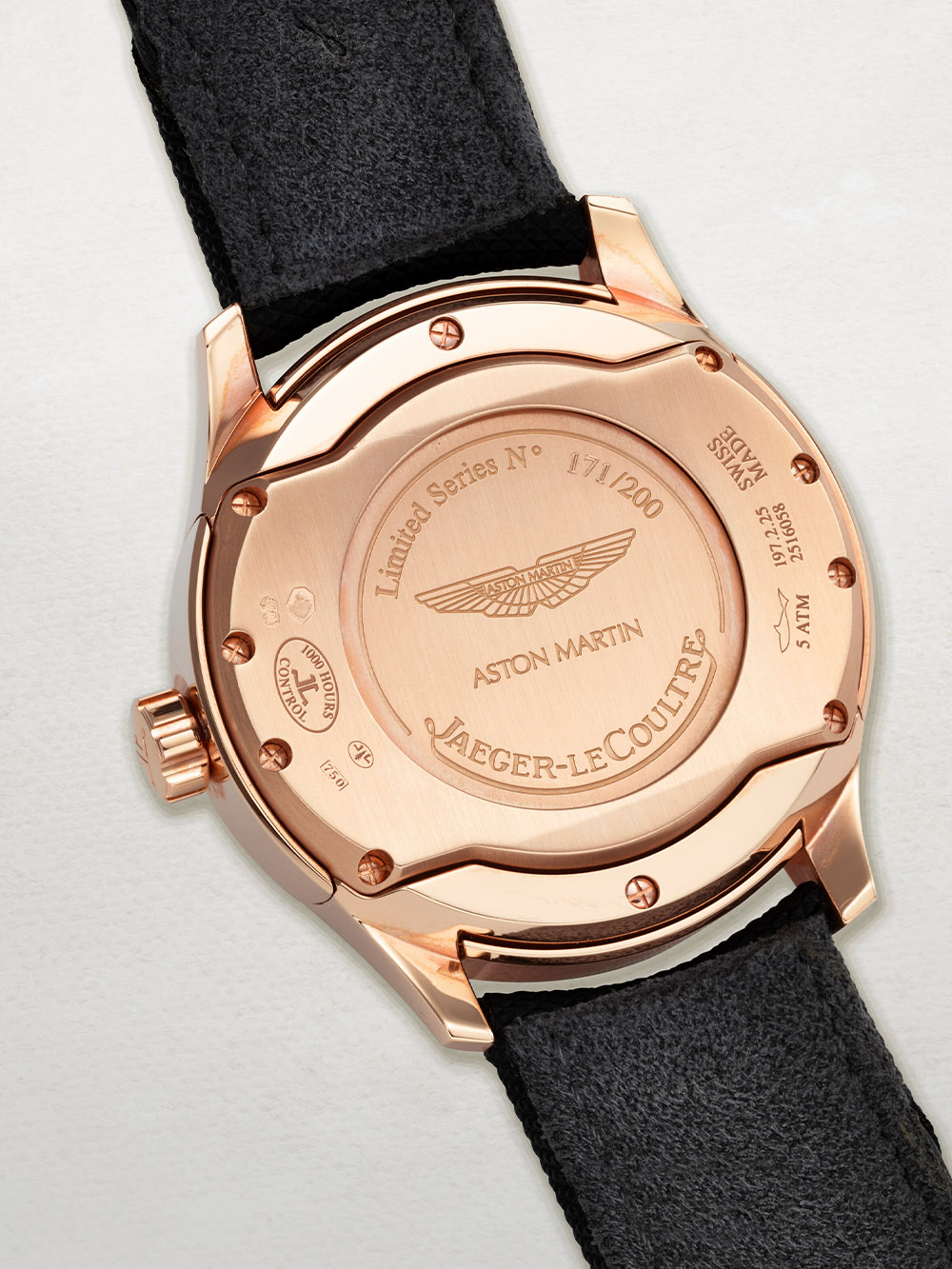
The Vertical Trigger complication is, to be frank, a masterpiece. Imagine sitting behind the wheel of an Aston Martin DB9, whipping at maximum speed around the tight and demanding curves of a racetrack. To time your lap speed, you reach for your chronograph as you pass the start line. Except – alas – you entirely miss the small pushers with your thick gloved hands, causing your start time to be off by a matter of five or more seconds. The idea of a racing chronograph is a bit of an absurd one in the way that most brands approach it. It’s almost unusable in an actual application situation.
The Vertical Trigger changes all that. The chronograph can simply be started and stopped by pressing on the crystal at 12 and reset by pressing at six. No pushers are present whatsoever. Suddenly, timing a lap becomes an unbelievably simple matter, even with hands on the wheel.
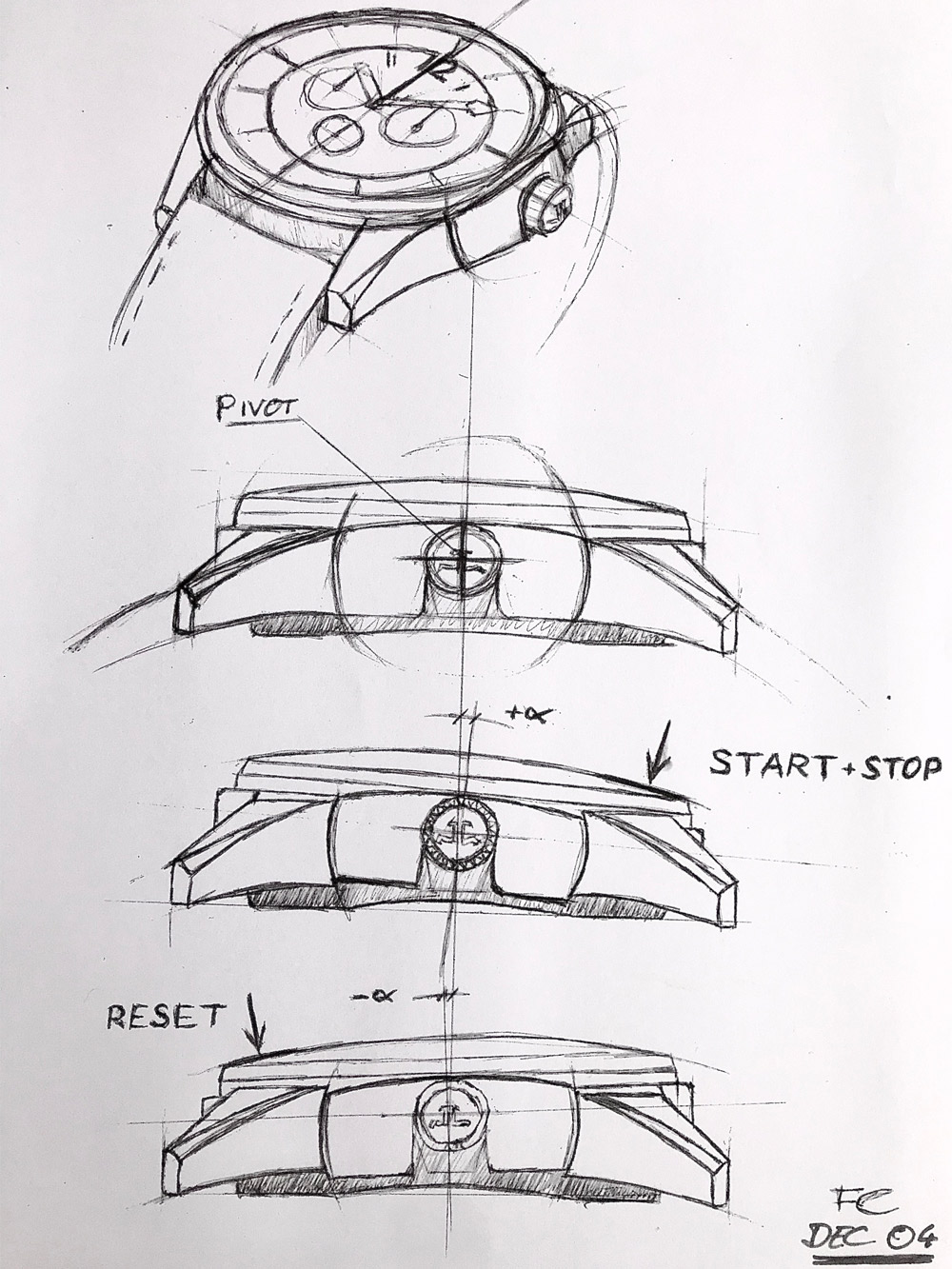
Filed under patents EP1742120A2, WO2007065906A1, HK1099089B, and EP1742120A3, Cretin’s development is nothing short of incredible. It’s the spiritual predecessor of AP’s recently-released perpetual calendar set through the crown — intense mechanical development for the wearer’s ease.
When the owner presses on either side of the watch’s crystal, the inside of the case rotates over a pivot just under the crown, actuating an internal pusher to trigger the chronograph. Powered by a spring, it then returns to a neutral position, keeping the watch stable on the wrist. A group of ball bearings enables the rotation.
AMVOX 3 Tourbillon GMT
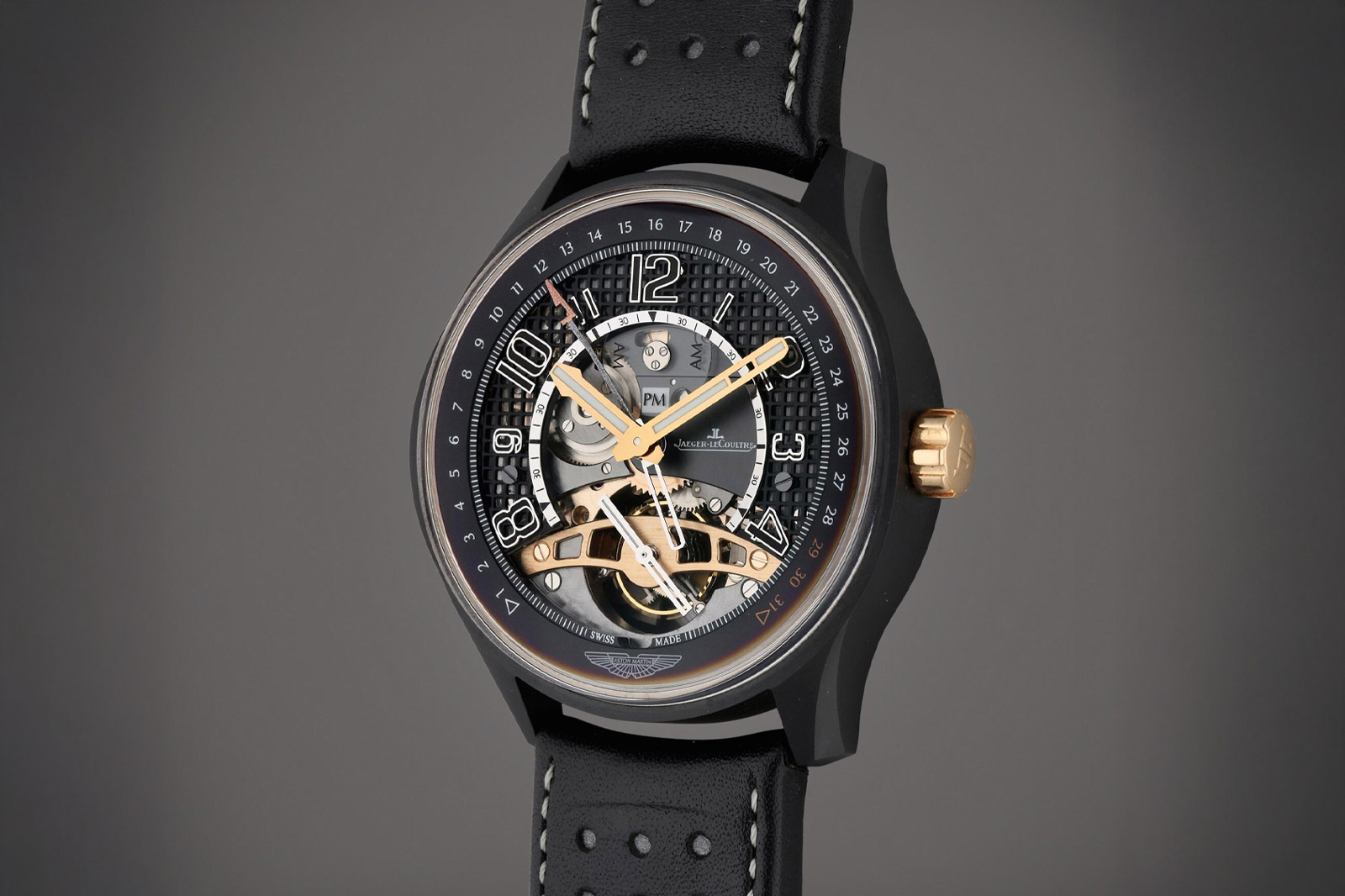
For all the impressive engineering of the Vertical Trigger chronograph, Jaeger-LeCoultre weren’t content to rest on their laurels. The AMVOX 3 was a clear push towards the realm of haute horology by replacing the chronograph with a tourbillon and advanced GMT. The lovely calibre 988 drove two time zones, the tourbillon, an AM/PM indicator, and a date display that makes a larger jump between 31 and one, so as not to obstruct the view of the tourbillon.
Later, a limited 2010 edition was also released to celebrate Aston Martin’s LMP1 car at Le Mans, following its exceptional performance that year. The original piece was notable also for its striking appearance, which was made up of black ceramic and rose gold accents.
AMVOX 2 DBS Transponder
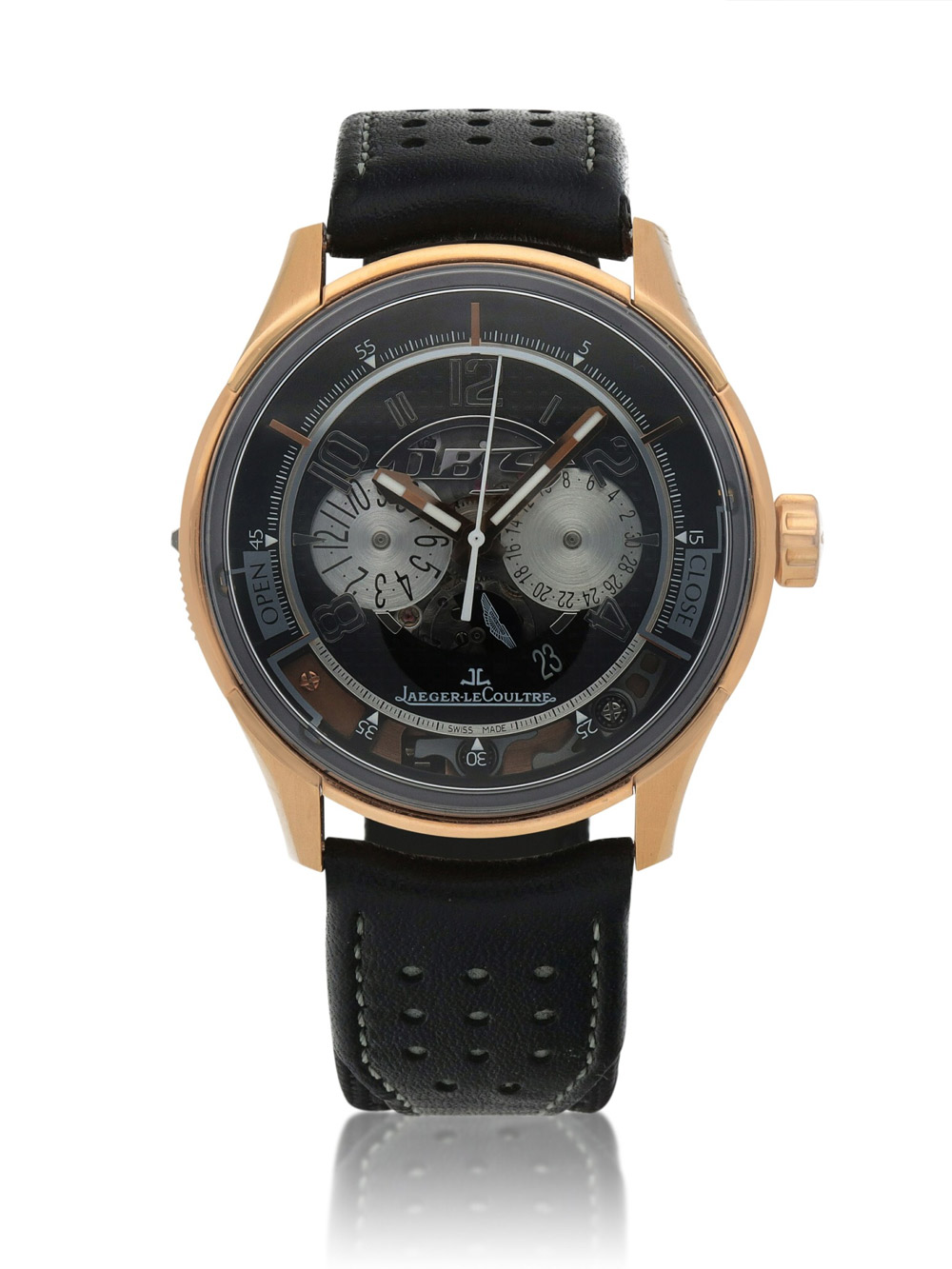
Released in 2008, the DBS Transponder was both a return and a step forward. Although it starred in the reintroduction of the vertical trigger chronograph, it refused to be forced into the same box as the original AMVOX 2. Instead, in an incredible rarity, it married both mechanical and electronic components into one watch to enable owners of both the watch and a compatible Aston Martin car to unlock and lock their car without the key fob.
Each timepiece was specifically paired with its compatible vehicle by an Aston Martin dealership. Customers could purchase an AMVOX 2 DBS Transponder, Rapide Transponder, or DB9 Transponder to match with their car of choice. This incredible feat (for the time) was accomplished by incorporating a small microelectronic system into the back of the watch through a double-caseback system. The movement was capped with a normal solid caseback, then the microelectronics were placed on top of this and sealed with another metal caseback. Meanwhile, the antenna was worked up around the rim of the sapphire crystal with two contact zones deposited by metallisation: OPEN and CLOSE. Touching either of these allowed the owner to instantly unlock or lock their car, effectively incorporating a small, simple touchscreen into a fully mechanical timepiece.
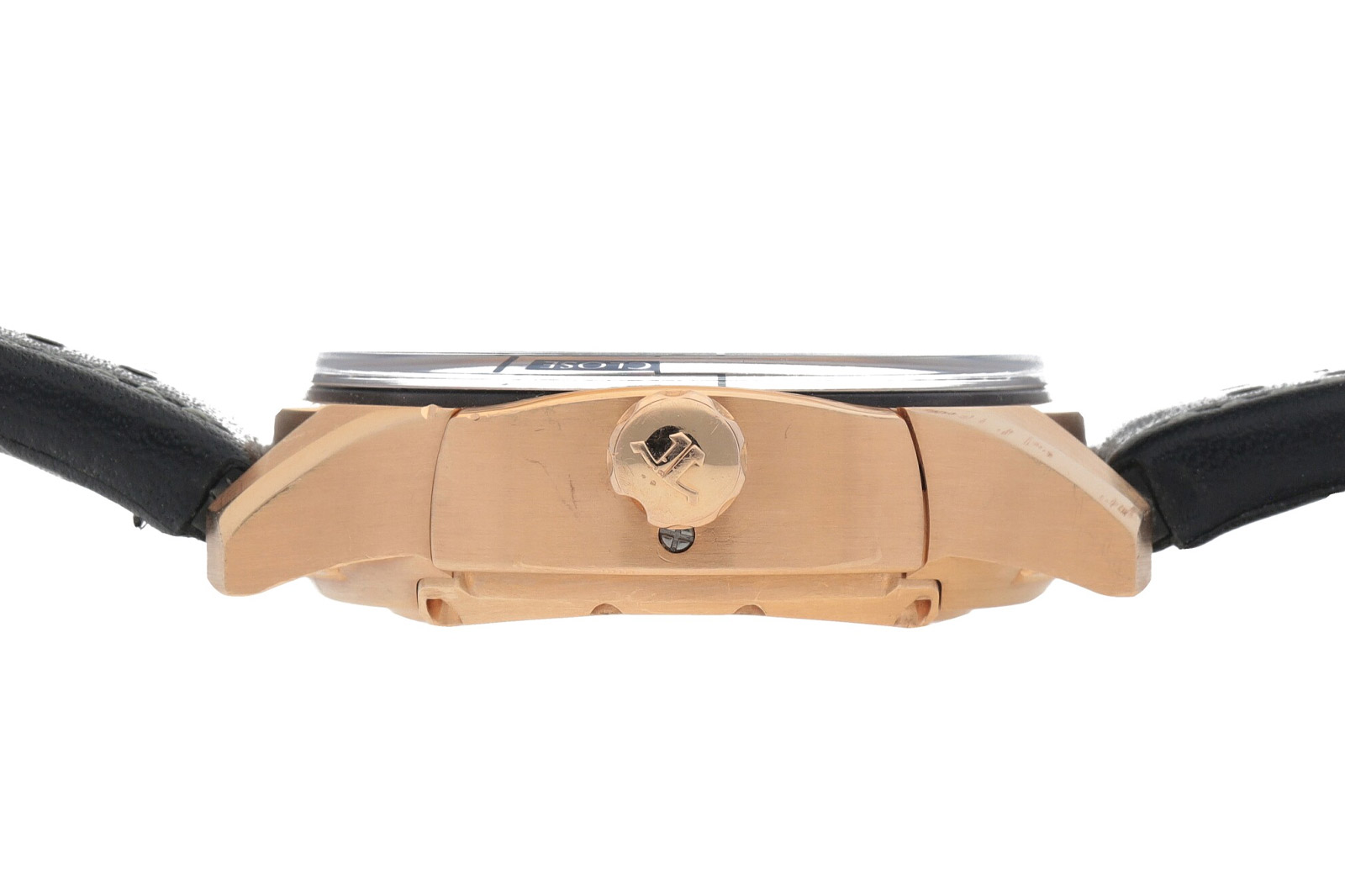
Never fear – this watch still has a mechanical heart. The same vertical trigger system powers the chronograph, and it still has a beating balance wheel heart. The electronic system is totally independent and only used to control the car. In this author’s humble opinion, nothing like it has ever been made. The watch market lives in tension between mechanical and electronic systems. Quartz is the unpardonable sin, unless you happen to be an Élégante. The AMVOX 2 DBS Transponder embraces both, bearing a mechanical soul armed with electronic party tricks.
AMVOX 5 World Chronograph
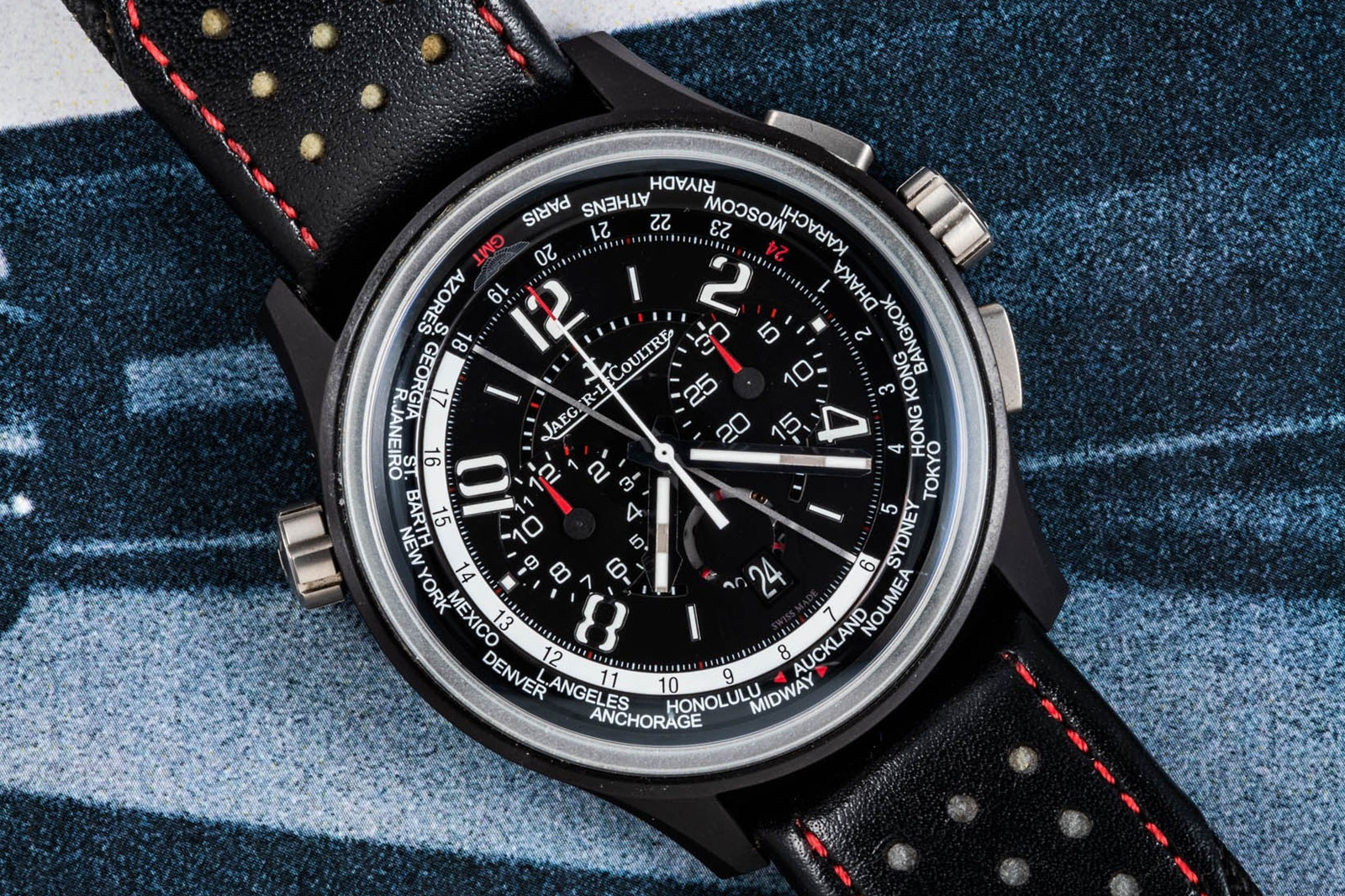
Embracing a return to more mainstream haute horology, the AMVOX 5 World Chronograph features, as the name would suggest, both a world timer and a chronograph complication. However, the chronograph is a step away from the vertical trigger, making use of more standard pushers to power Jaeger-LeCoultre’s calibre 752. Crafted in versions with titanium as well as a ceramic-and-gold hybrid, it’s also known for more overt references to the Aston Martin partnership with an AM logo and ‘V12 Vantage’ on the back. It’s an exceptional timepiece, but an interesting outlier in the collection.
AMVOX 7
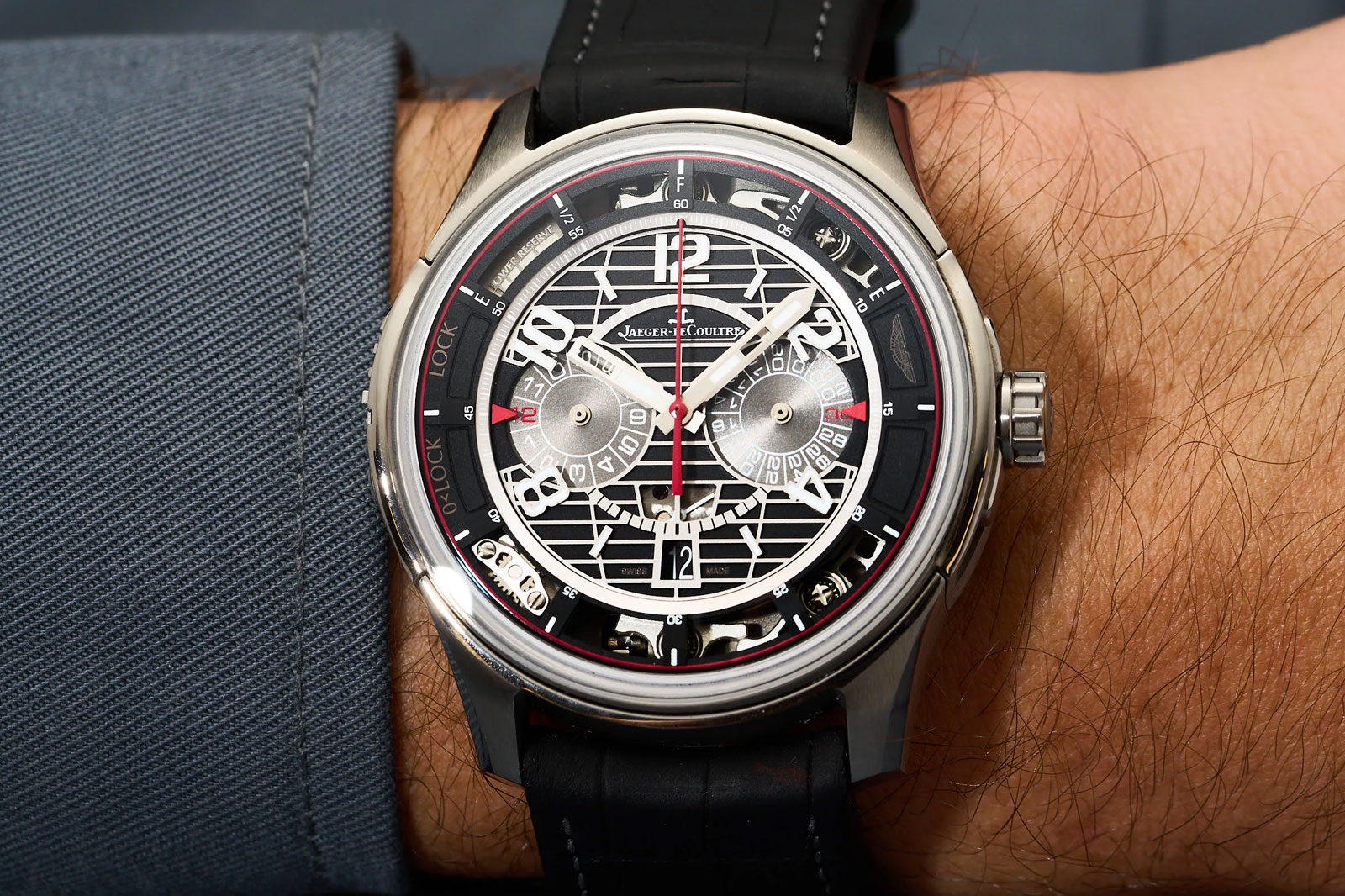
After inexplicably skipping the AMVOX 6, the 7 is Jaeger-LeCoultre’s triumphant return to the vertical trigger system. Here, the system itself remains unchanged, but the whole has been improved by a sliding lock that prevents any accidental activation of the chronograph. Located at nine on the caseband, the sliding lock disengages the rotating case when activated and when deactivated allows full use. It’s easy to imagine how an accidental bump or nudge on the case could activate the chronograph without this, so the solution is both simple and practical.
The AMVOX 7 is best explained as the moment where things really clicked for Jaeger-LeCoultre. They leaned hard into the design of this piece, pushing the aesthetic further to the extreme with more semi-skeletonised and mechanical elements. The vertical trigger made a triumphant return and has been thoroughly optimised. It’s a full embrace of the beauty and advancement of this mechanism, just like when a watchmaker puts the final polish on a component already beautifully formed.
AMVOX 2 Transponder
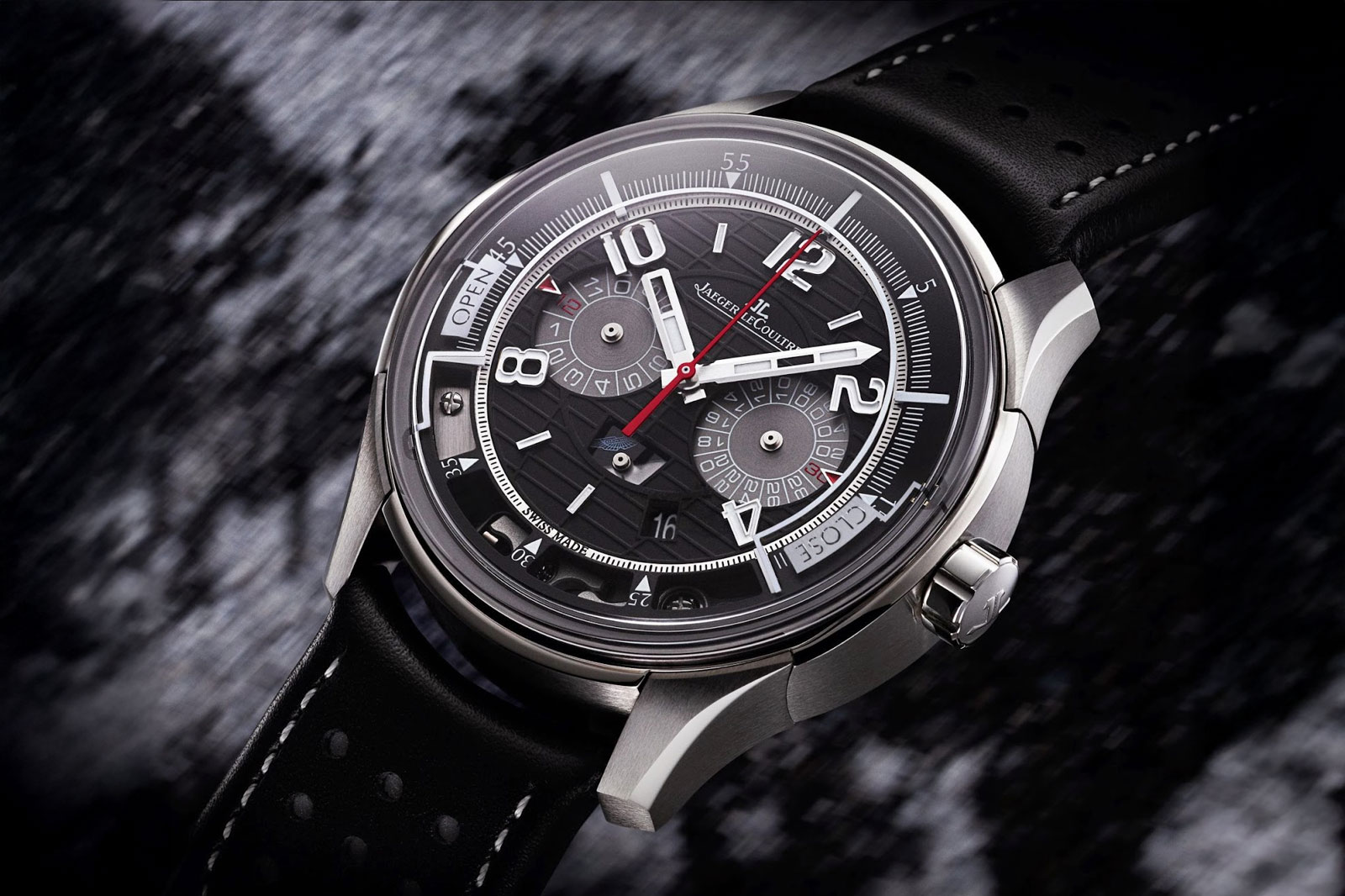
By 2014, Aston Martin’s collection had changed quite a bit. The DBS, DB7, DB9, Rapide, and every other model originally designed to work with an AMVOX Transponder had all been retired or updated. So, when the time came for a new Transponder model, JLC was ready to make a change. Although this latest model bears the same name as the AMVOX 2 that it’s originally based on, the absence of any car model in its name reveals its new nature: the AMVOX 2 Transponder is capable of connecting with any Aston Martin car of the time. The watch was simply taken to an AM dealership and connected to the owner’s car.
Otherwise, the watch is remarkably similar to its predecessor, the AMVOX DBS/Rapide/DB9 Transponder. The car is unlocked or locked by tapping OPEN and CLOSE on the dial, respectively, and tapping both simultaneously flashes the headlights. Powered by calibre 751E, it’s the perfect capstone to a collaboration known above all for technical advancement. The ultimate marriage of electronics and mechanics.
Unified Aesthetic
Jaeger-LeCoultre’s collaboration with Aston Martin was one of the most formidable watch-meets-automotive partnerships ever – even in a category already known for producing some of the greatest timepieces of all time. Watches and cars just work. Though the AMVOX collection is defined by its beautifully simple vertical trigger chronograph, it’s also characterised by a remarkable diversity of models – different in purpose, yet unified in aesthetic. These are genre-defining motorsport watches that leave nothing to be desired. Is it too much to ask to bring the vertical trigger back, even 12 years on? This writer, at least, is certainly hoping.