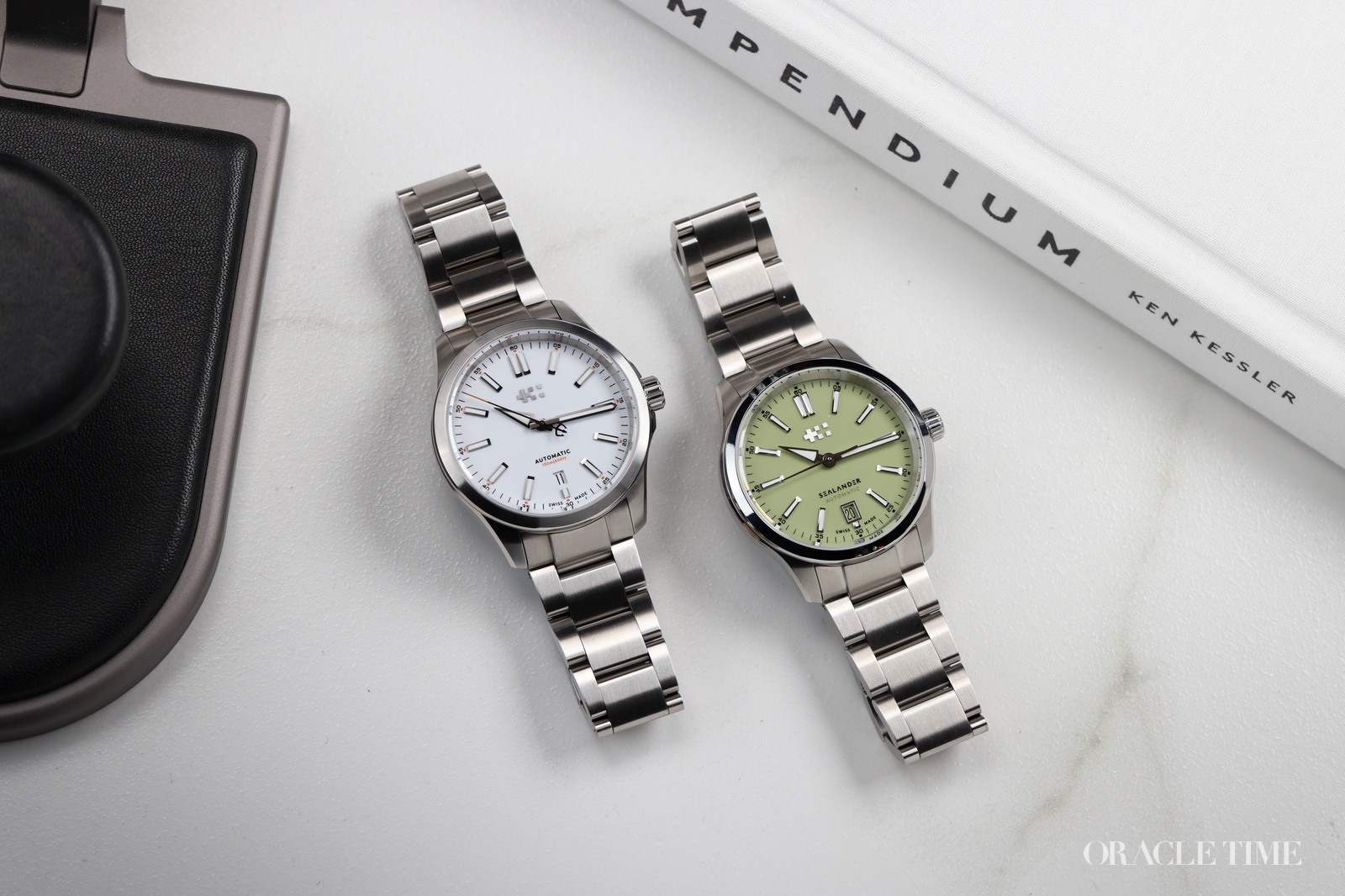
For the past two months, the Christopher Ward Sealander has been a pretty constant companion. However, across that time I wasn’t just wearing one watch. For the first month I wore the old C63 Sealander and for the second month I wore the new Sealander Automatic, the new generation of the watch released for the collection’s fifth anniversary. So, the pressing questions are what’s changed and how do they compare?
Let’s set a benchmark with a quick overview of the older model. At 39mm it’s well sized for the tool watch archetype it’s inspired by – large enough to be legible and small enough to wear day after day. I found myself pairing it with virtually any outfit thanks to its versatile combination of polished and brushed surfaces that make it suitable for everyday wear.
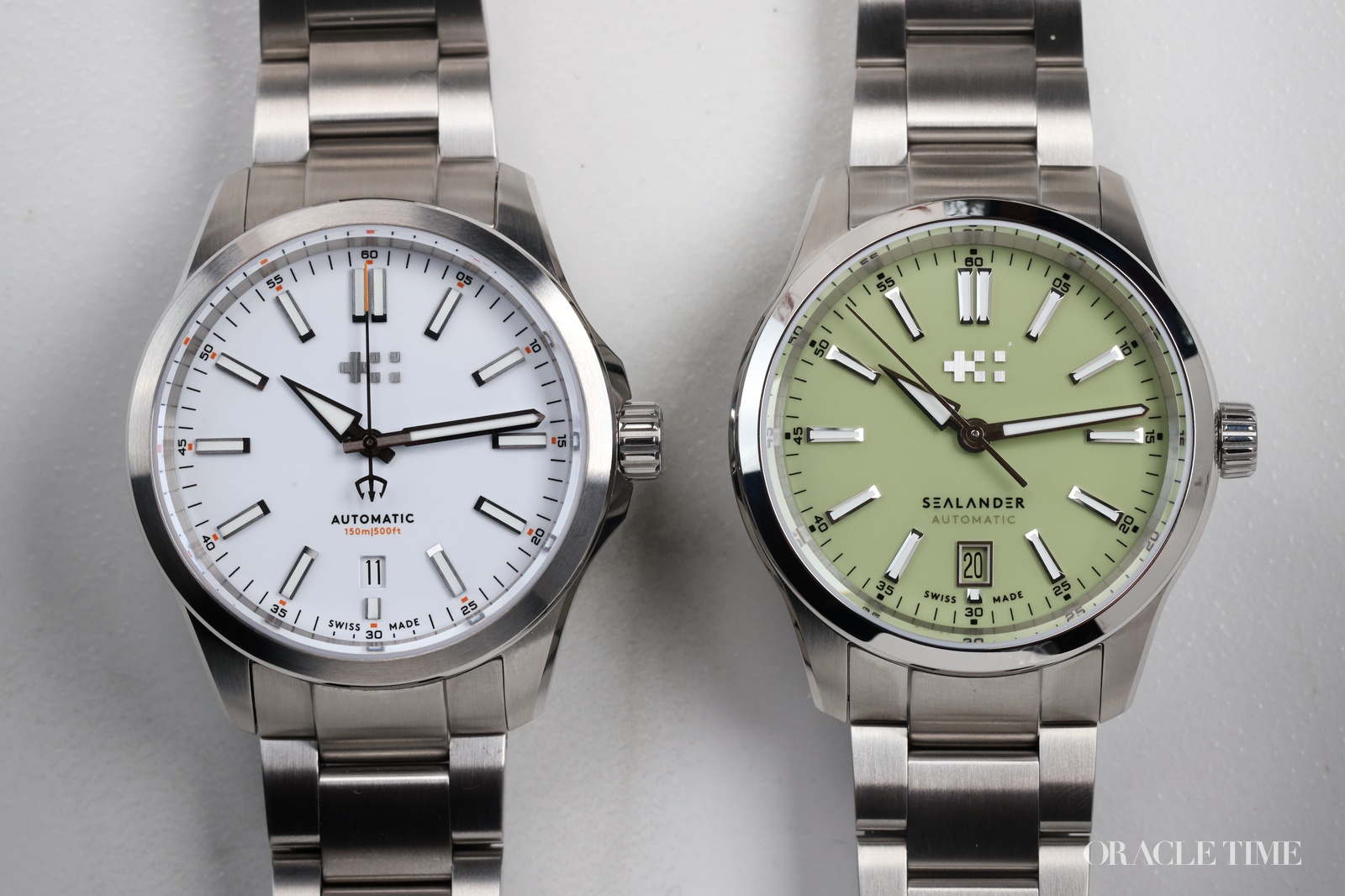
However, you can tell that it’s a spin-off from the Christopher Ward Trident dive watch collection rather than a fully independent model in its own right. Most overt is the use of the same trident counterweight on the seconds hand that looks wholly out of place on a non-trident watch. But also, the case has some extra bulk to it with an 11.4mm thickness that makes it a little bit tall on the wrist – all it’s missing is a dive watch bezel and it would be ready for the water.
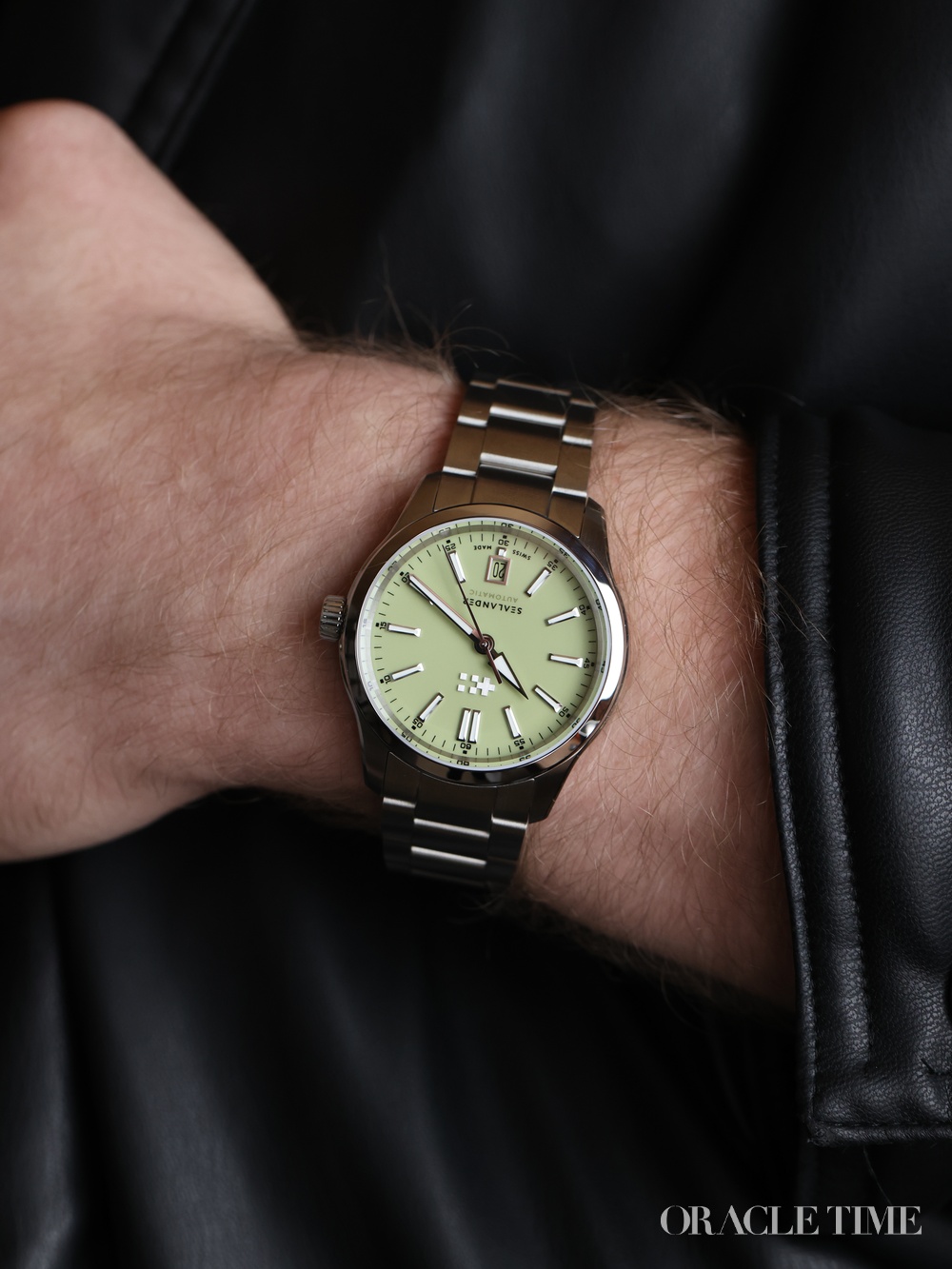
Swapping to the new model and instantly some of those design issues are addressed. The trident seconds hand is gone, replaced with an understated baton that makes the face feel a lot cleaner. The thickness has also been reduced to 10.9mm, which is a 0.5mm reduction that’s modest on paper but very noticeable side by side with the original. The crown guards at 3 o’clock have also been removed, making for a sleeker design.
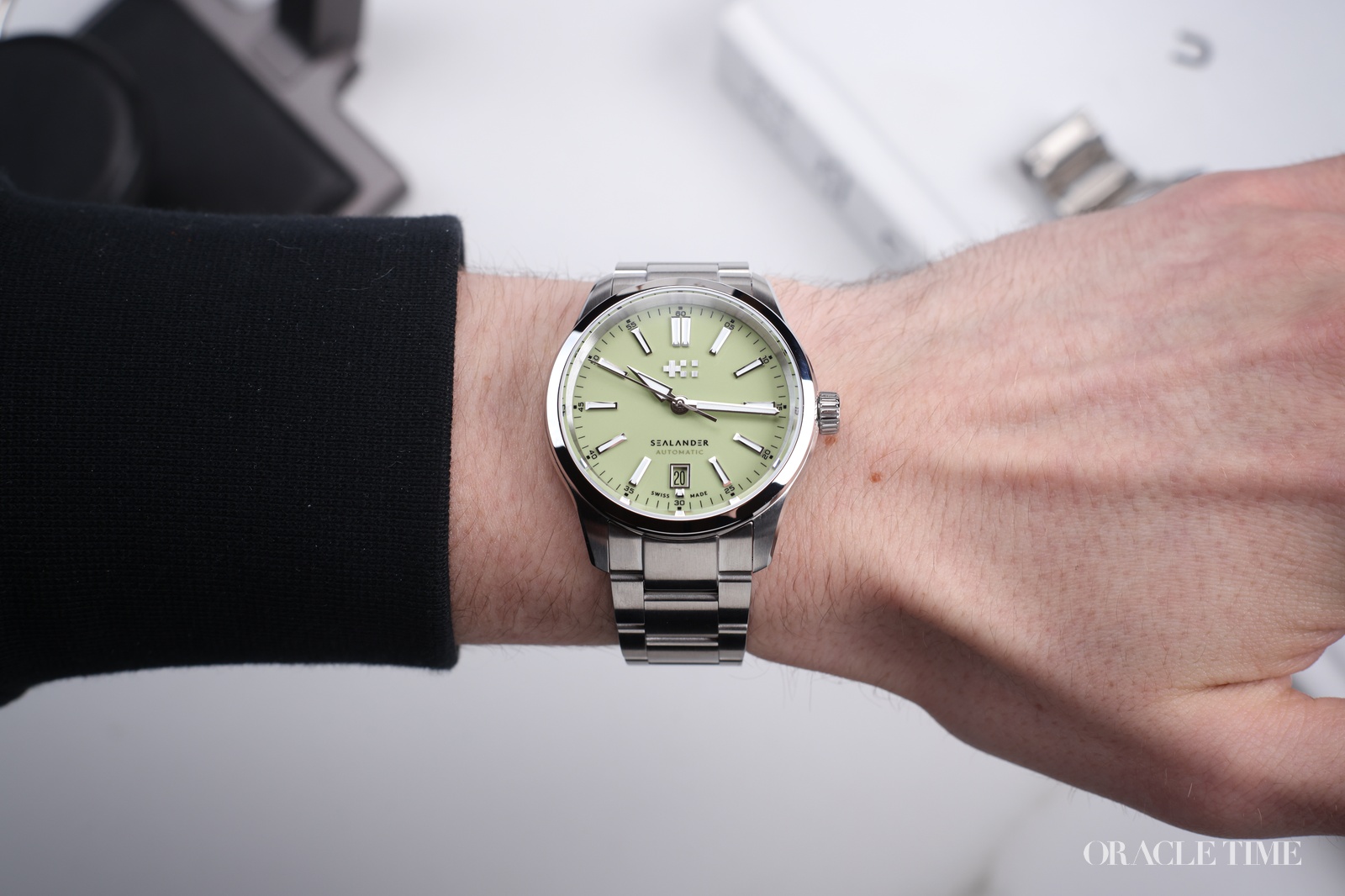
Overall, the new Sealander Automatic is a much more svelte, clean watch that has created enough distance to the Trident that it feels like its own collection at last. Although that does come at the cost of some of its tool watch aesthetic. It feels much daintier even though the core specs such as its 150m water resistance remain the same. That’s emphasised by the changes to the brushed and polished finishing, with the polish much more prominent across the bezel. These changes meant that I was favouring the watch for formal occasions more but wearing it slightly less overall for everyday outings.
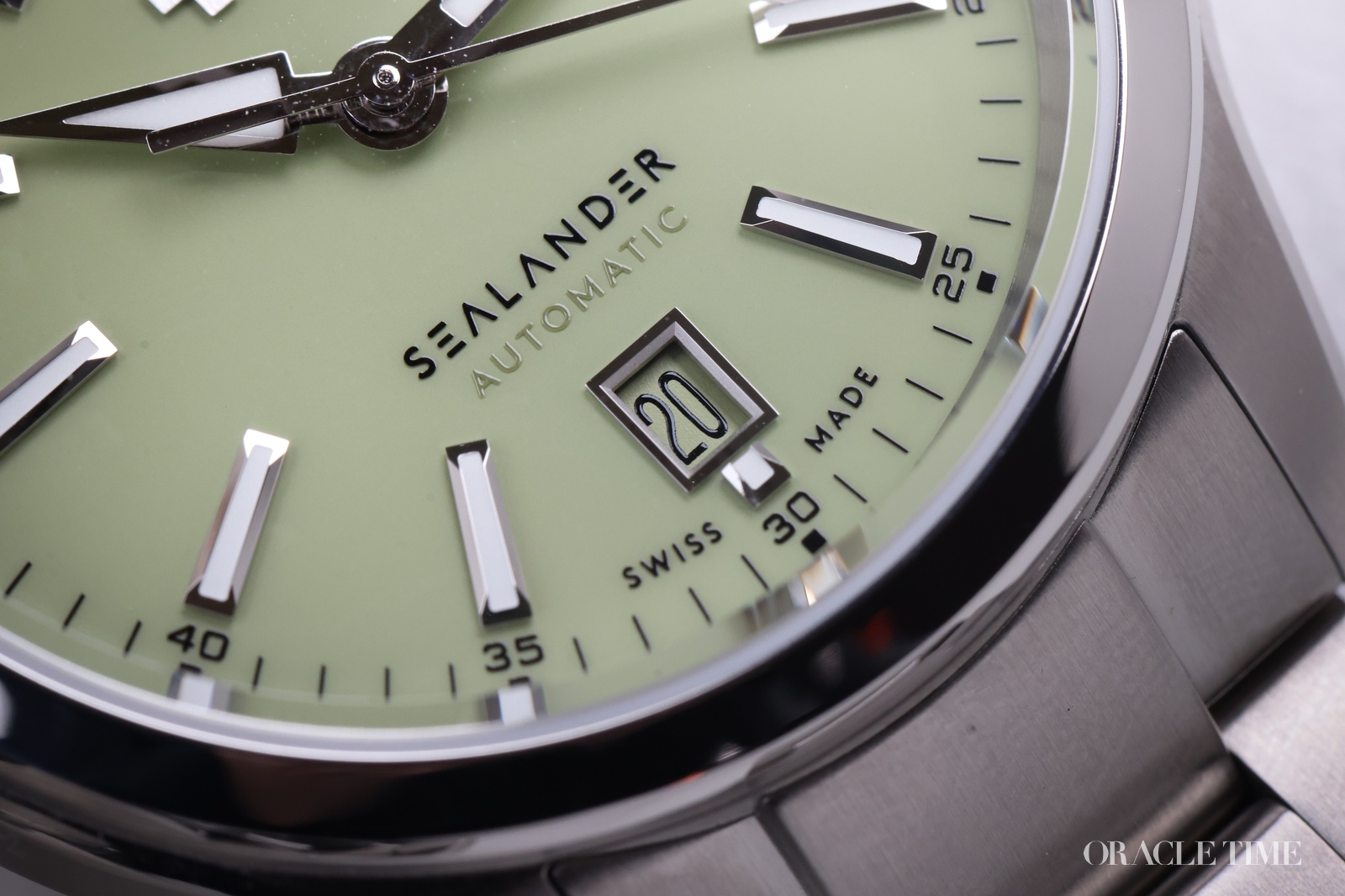
Focussing in on the dials, another change is the addition of a border to the date window at 6 o’clock. I like the change as it adds a point of visual emphasis to the complication that I find makes it easier to read as the eye naturally falls on it. I also like that CW have taken the time to give it a colour matched date disc, which shows good attention to detail. The version I have been wearing is the pistachio, which is exclusive to the 39mm sizing. Other options include white, black and sky blue at both 39mm and 36mm, and then pink exclusive to 36mm.
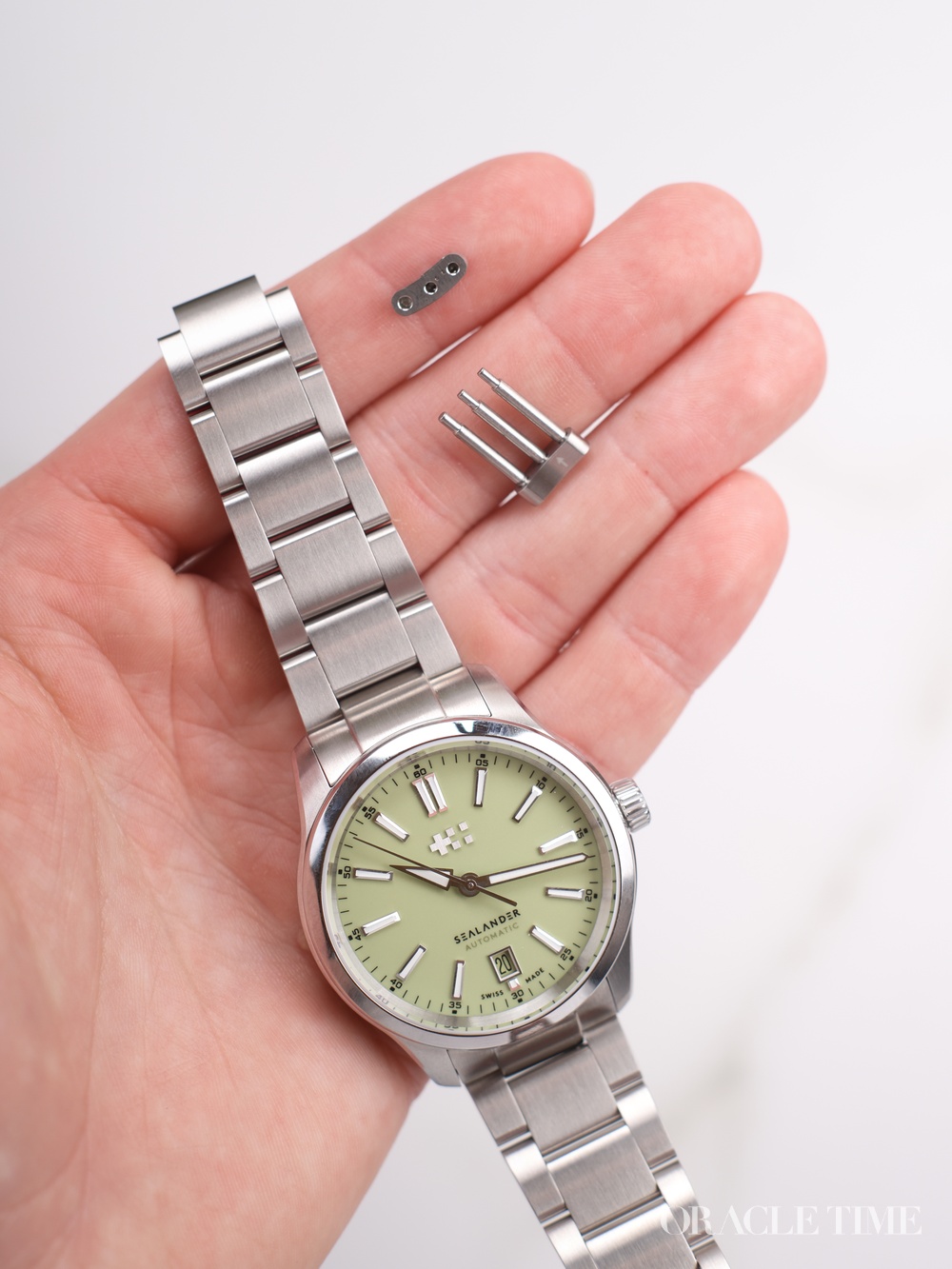
One of the other structural upgrades seen on the new Sealander Automatic compared to the original is the bracelet. CW have introduced the new iLink system, which is a tool-less link removal system that lets you adjust the size of the bracelet without the use of screws or traditional methods. You press a button on the underside of the link, and it releases, coming free from the bracelet.
It’s not perfect because the button needs to be difficult to press unintentionally, which means it’s also fiddly to press intentionally. But once you get the knack, it’s no issue – plus you shouldn’t really need to do it often once it’s at the perfect size, I did it once and then left well alone. Anything that boosts convenience while also protecting the bracelet from scratches is a welcome innovation. As a final note on the bracelet, both the new and old models use a micro-adjustment system built into the folding clasp for that on-the-fly size adjustment.
While the watch is off your wrist, you can see its inner working through the exhibition caseback. The movement inside is perhaps the single biggest upgrade when it comes to comparing the Sealander Automatic 2026 and the original. The older model uses the Sellita SW200-1, which has a 38-hour power reserve and while that was acceptable five years ago, it looks woefully outdated today. It was fine when I wore the watch every day but if I ever swapped to a different timepiece for any reason, it would inevitably mean resetting the time and getting the movement going again when I returned to it.
For the new watch, Christopher Ward is debuting a brand new Sellita movement, the SW200-2 Power+. It’s still part of the SW200 family but has a completely redesigned gear train, power barrel, mainspring and winding system to boost efficiency. That take the power reserve from 38-hours to 65-hours. That’s a serious improvement and the watch never needed resetting even when I took a different watch for a spin for the day.
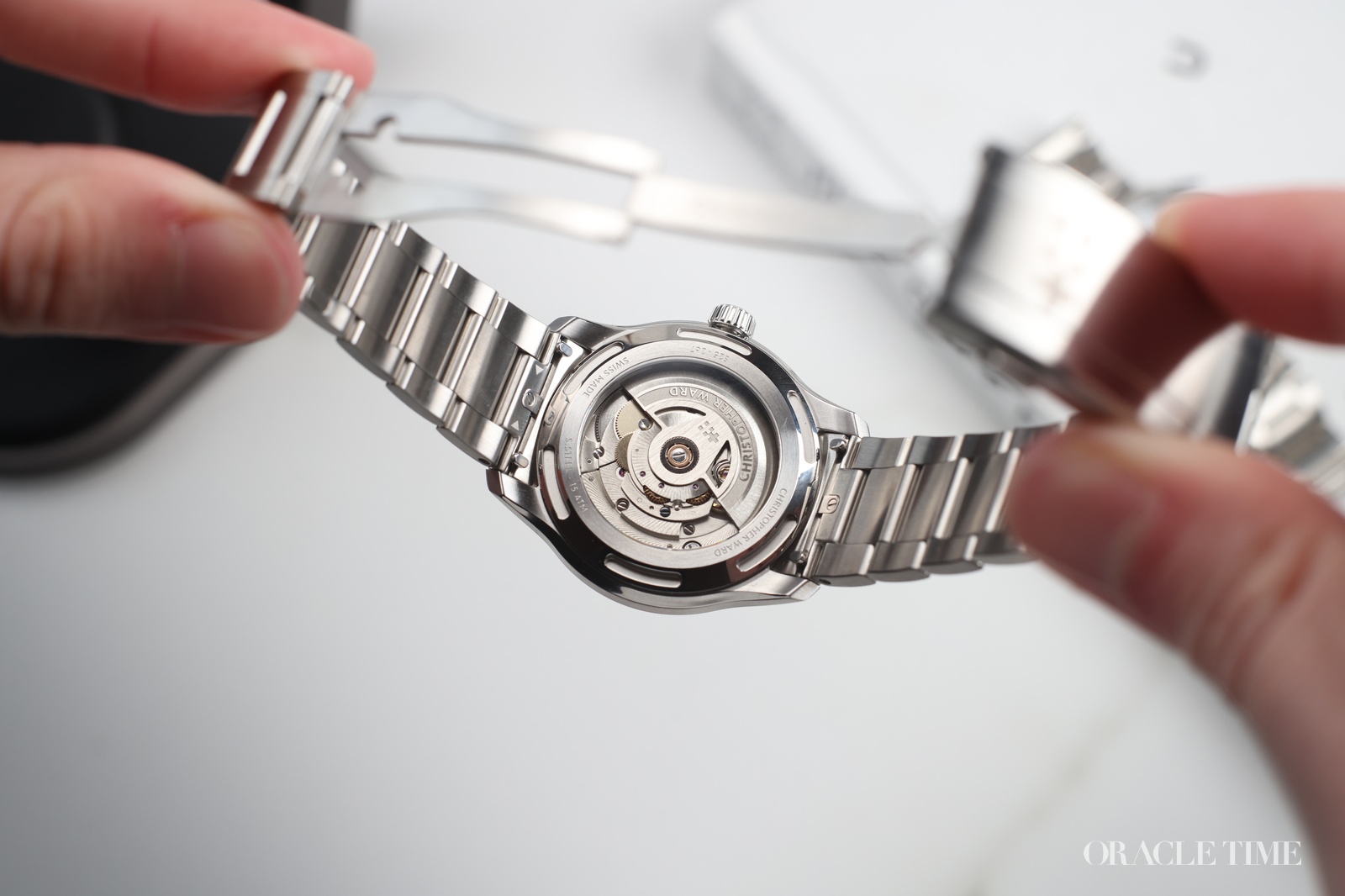
It also makes it a challenger to the 68-hour La Joux-Perret G100 that has dominated the accessible independent and high-end microbrand market for the past 6-12 months. The accuracy is also comparable at +12/-5 seconds per day for the Sellita vs the standard G100’s +/- 12 seconds per day, although higher grade versions go to +/-7 seconds. A price comparison between the movements is a little tricky right now because we don’t have much data on the Sellita SW200-2 Power+ as it isn’t in wide usage yet, but as a baseline the leather strap Sealander Automatic with this movement is £850 while the Farer Three Hand Series II on leather strap with G100 is £925.
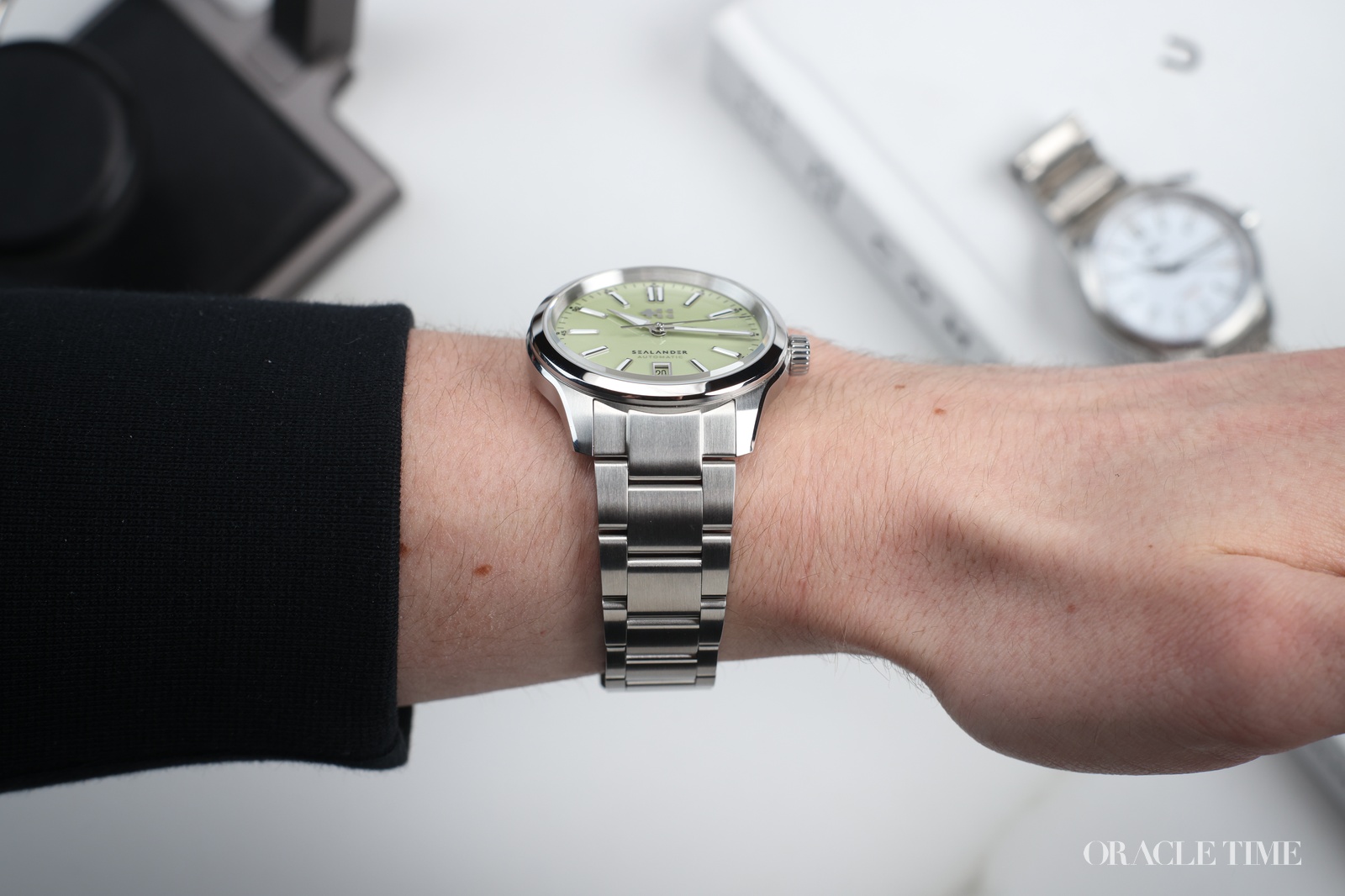
As we’ve started talking about prices, let’s continue. As noted, the leather strap option is £850, the rubber strap is £950, the three-link Bader bracelet is £1,015 and the 5-link consort is £1,055. Right in the pocket for where you’d expect an everyday automatic wristwatch to be. The old model was around £600-£700 depending on the model, so this is a bit of an increase, but given the substantial upgrade in movement specs, that’s to be expected. It also ties in with the idea that the new Sealander is a bit more refined than the previous model. It’s available from April 30th.

So, after two months, which one would I actually buy? To my mind it has to be the new Sealander Automatic. While I do miss the stronger tool watch style of the older model, the improvement to the movement specs and quality of life elements like the new bracelet means the new generation is much better value for money even though it’s a bit more expensive. I’ve also grown very fond of the pistachio dial.
Price and Specs:
39mm diameter, 10.9mm thickness
stainless steel, screw-down crown
More details at Christopher Ward.



Funny that you say that. thought it was just me. totally agree. have liked CW watches but haven’t purchased because of the logo. makes the watch feel/look like a fashion brand. time for a new logo. which will make everyone happy because the old logo watches could instantly become more valuable in pre-change status.
Thanks for the review, I’d buy a cw watch, but I really don’t like their logo. I know it’s strange but I just don’t like it sorry cw it just doesn’t resonate
I’m the same with Seiko and anything in their Prospex range – the “X” is an uncomfortable reminder of a certain someone who I simply cannot abide….