Watchmaking doesn’t come more German than Junghans. Between their sleek Bauhaus designs, everyday elegance and emphasis on value, Junghans encapsulates why German watchmaking is more relevant than ever. Which makes sense; historically, at their peak, Junghans were the biggest watch and clockmaker in the world.
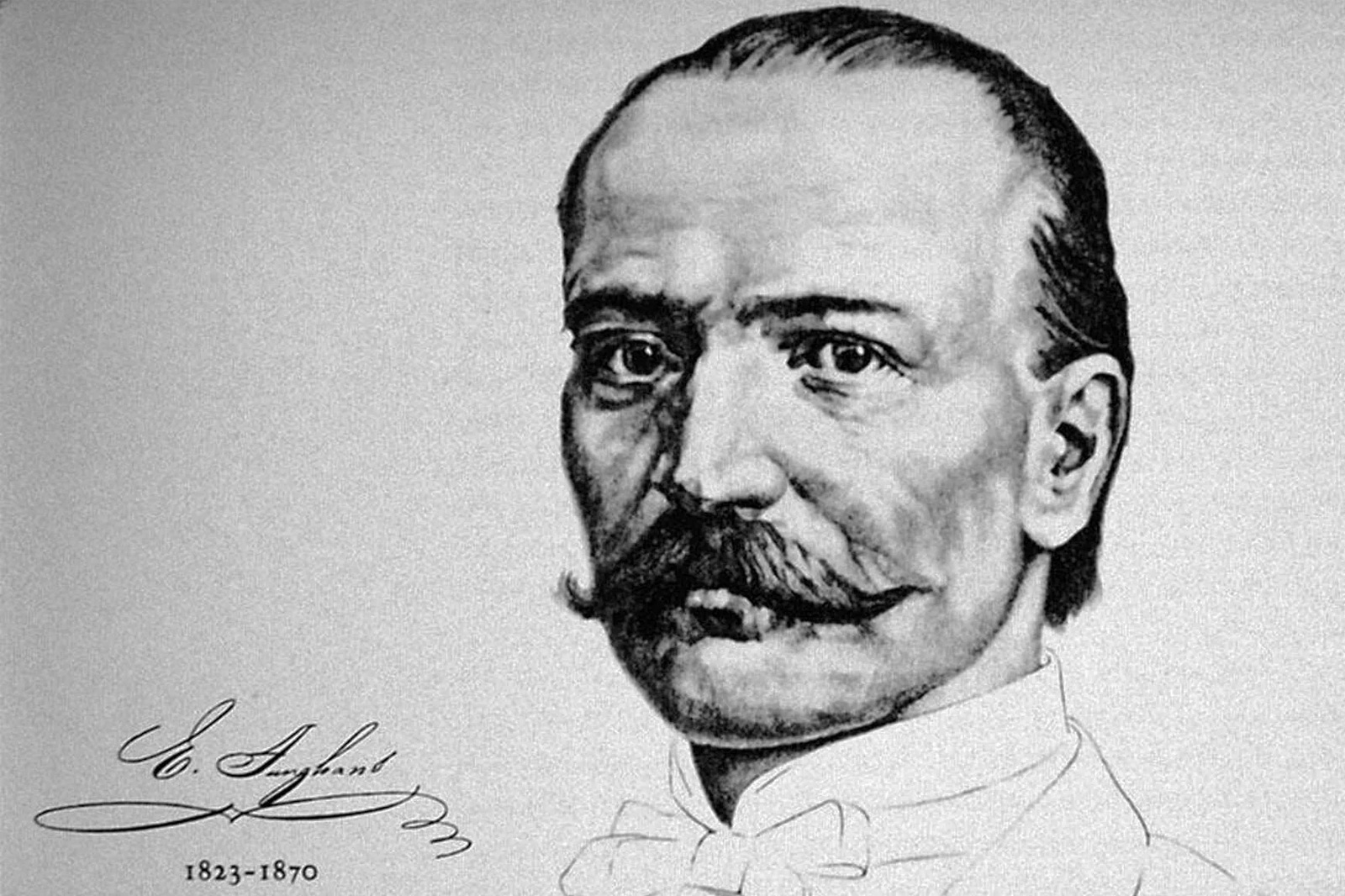
Junghans goes all the way back to 1859, when Erhard Junghans and his brother-in-law, Jacob Zeller-Tobler, thought the Black Forest would be a great place for an oil mill. It was a failure, but its excess power presented a manufacturing opportunity. So, in 1861, the first Junghans clock components were built.
Initially these were large, machined components for the typically huge Black Forest clocks. It was successful enough that by 1866, the first Junghans clocks were being built. Unfortunately, it wasn’t only that initial oil mill idea that was short-lived, and in 1870 Erhard Junghans died at 47.
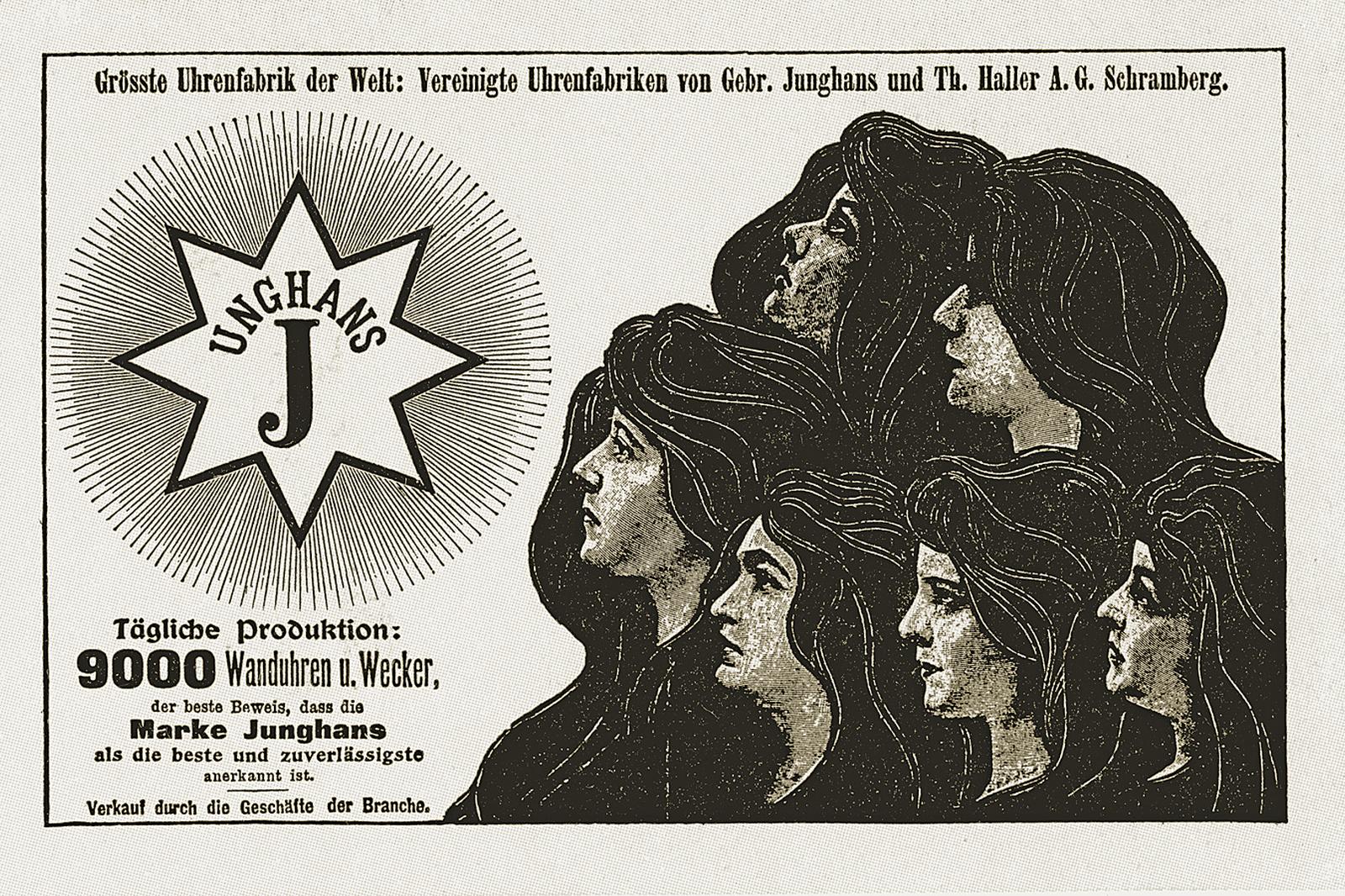
Industrialisation, efficiency and the capitalistic American way weren’t the only ideas Arthur brought back from the New World. Because if there was one thing the Americans were good at, it was branding. In 1888, Junghans channelled that same outlook into their logo: the five-pointed star with a J, that would quickly transition into the eight-pointed, stylised gear wheel of today.
And so, the factory would, eventually, fall to Arthur Junghans, one of Erhard’s three sons. But the heir apparent had some training to do. After completing a watchmaking apprenticeship and fighting as an officer in the Franco-Prussian war of 1870, he travelled to America under a false name. This wasn’t to avoid service, but to learn from a country that his father considered the pre-eminence of industrialised watchmaking. So, when he returned to the Junghans factory in 1873, he began to make some changes.

Arthur was right to be optimistic. After a few misfires in producing their pocket watch movements, Junghans did what every good captain of industry does and bought the means of production, namely Thomas Haller, in 1900. The company had been building watches for 40 years, and with just a bit of that Stateside outlook, Junghans took off.
By 1903, Junghans were an international force and with 3,000 employees, were the largest watch and clock company in the world. As more peripheral watch industry production flocked to be nearby, Schramberg became one of the centres of the watchmaking world and Junghans built a factory to suit: a huge, terraced structure that brought natural light to the benches of their watchmakers.
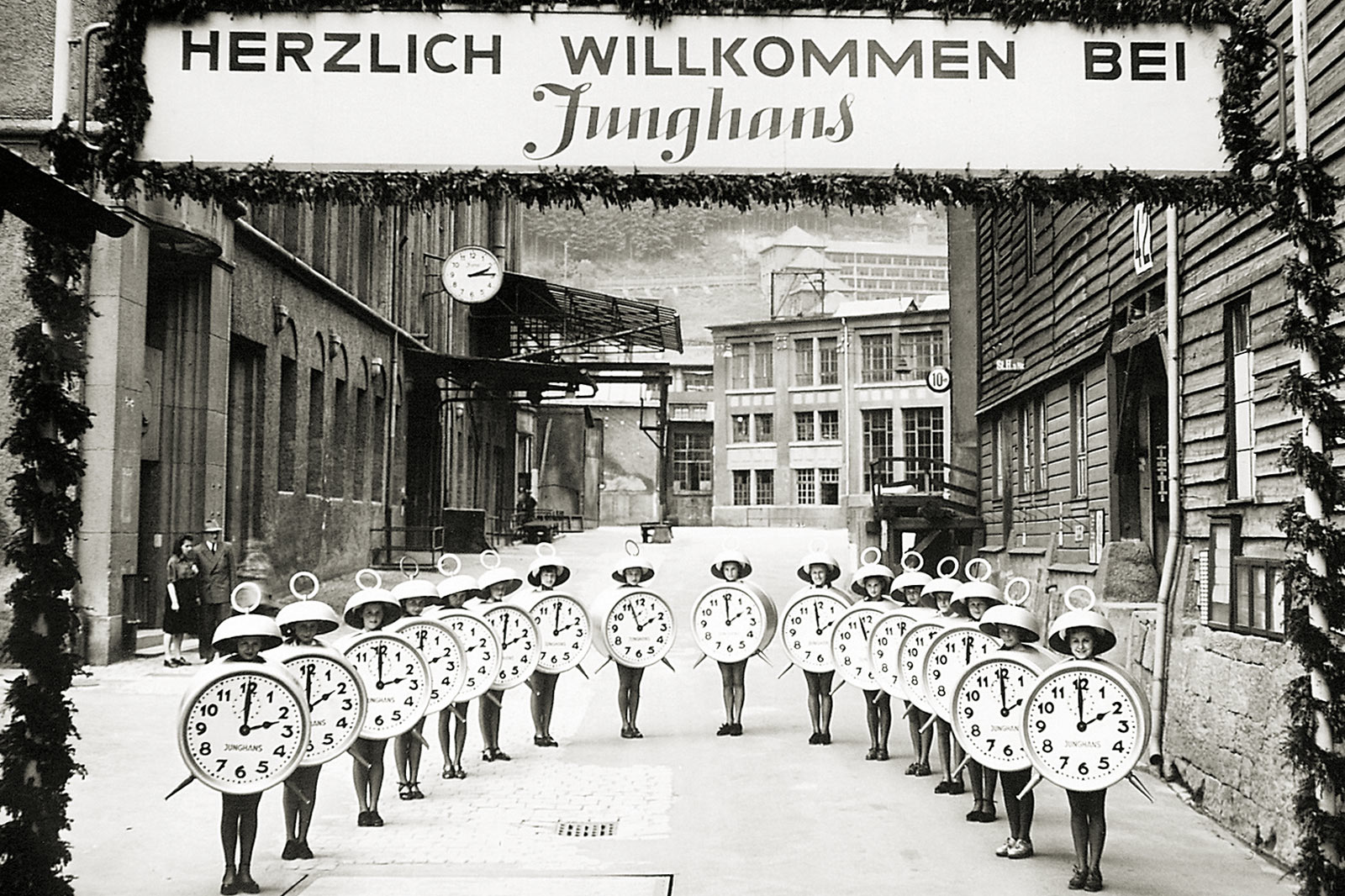
This success continued through World War I, where the watchmaker was an early adopter of lume, and by the 1930s, Junghans had grown large enough to give in-house movement design another go with the J80, a central seconds movement that became the core of the nascent Meister series in 1936. It was reliable, affordable and beautifully finished – at least in its J80/2 variation.
Alongside developing their first watch movement, Junghans was also making less benign pieces. As one of the biggest manufacturers in Germany, it wasn’t long after seizing power in 1933 that the Nazi party requisitioned the then-9,000 strong workforce in Schramberg to military ends. So, Junghans focused production on explosive detonators alongside military timepieces.
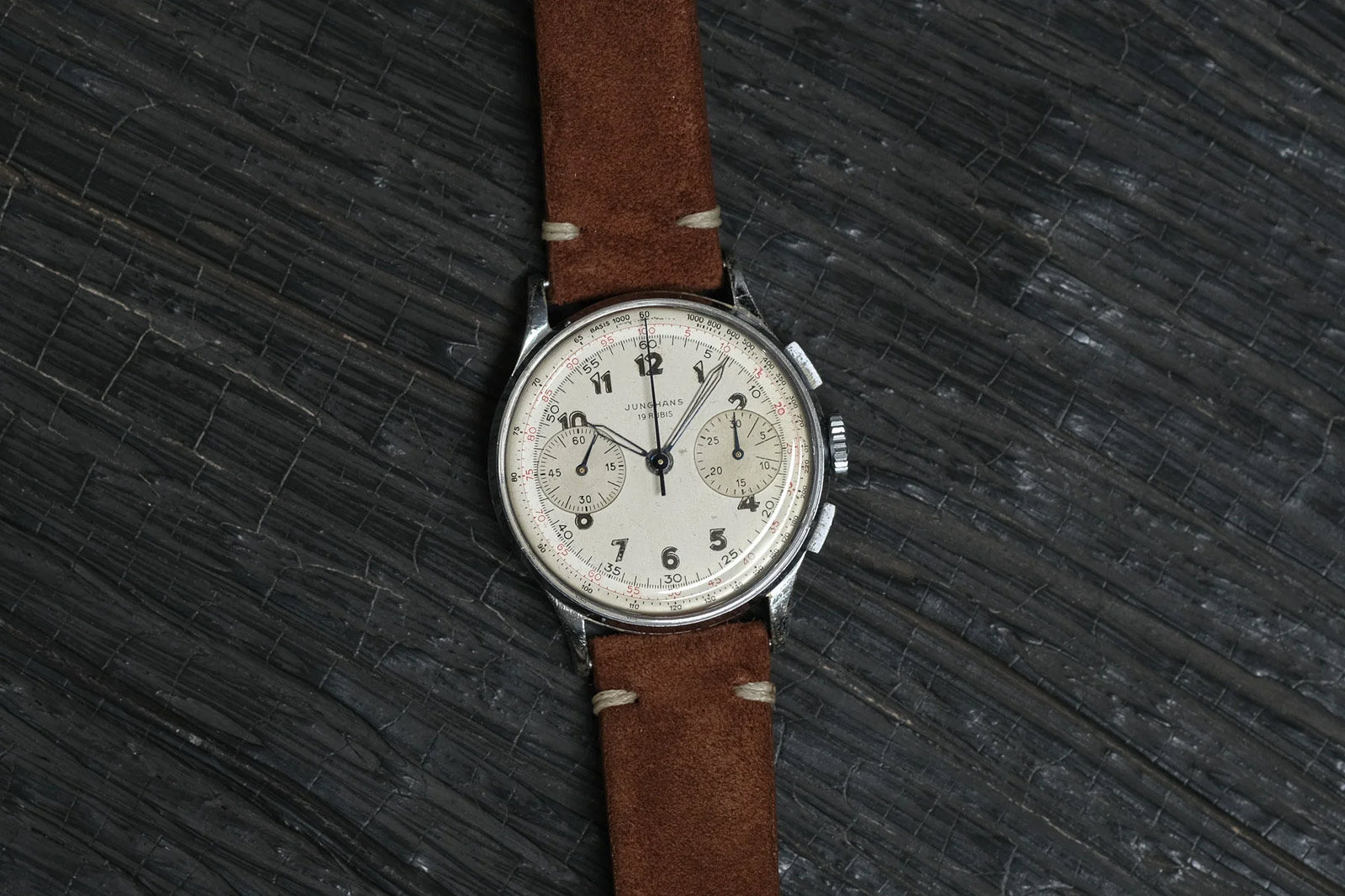
When production of civilian timepieces restarted, Junghans took a different approach, as they looked to Swiss watchmaking’s emphasis on quality over quantity. 1946 saw the first in-house, J88-powered chronographs, a watch that became the archetype of a pilots’ stopwatch. It was taken up by the newly formed Bundeswehr as a service watch and by 1956 Junghans was the third largest maker of chronometers in the world.
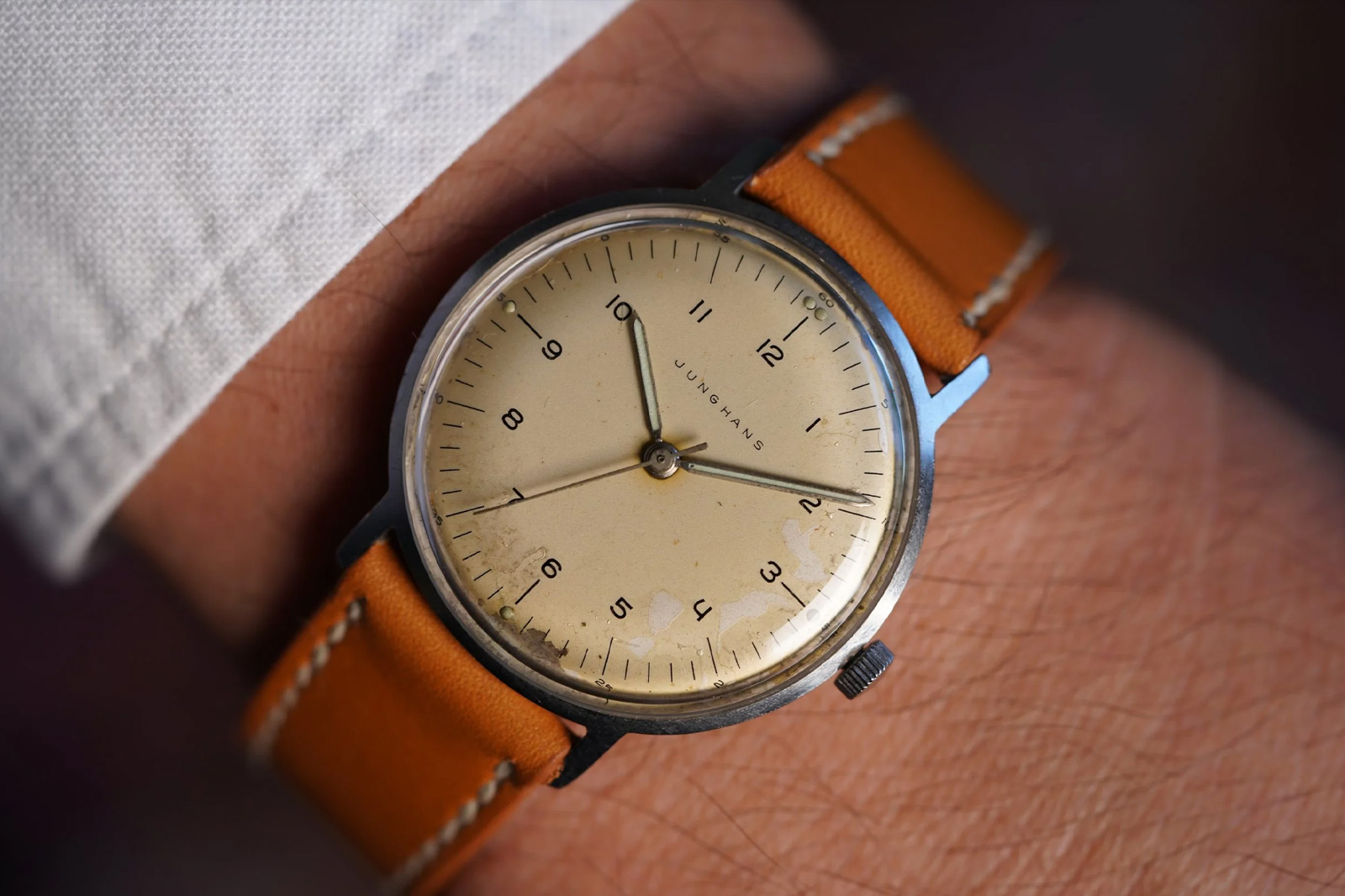
Junghans also began working with one of the Bauhaus School’s greatest alumni, Max Bill. Junghans wanted to build an everyday object with an artistic slant and settled on a kitchen clock. It was pure Bauhaus minimalism and still works today, as Junghans’ 2021 re-issue shows. It wasn’t long before Bill was enlisted to work his minimalist magic on wristwatches, too, and his first pieces arrived in 1961, designs which remain relatively unchanged in the Junghans line-up today.
The 1970s were about as kind to Junghans as they were the rest of the watch industry. They produced the first German quartz in 1971 in the complex Astro-Quartz and were the timekeeper for the 1972 Munich games, leveraging that newly developed electronic timekeeping, but they were being outcompeted on the global stage, suspending mechanical production in 1976.
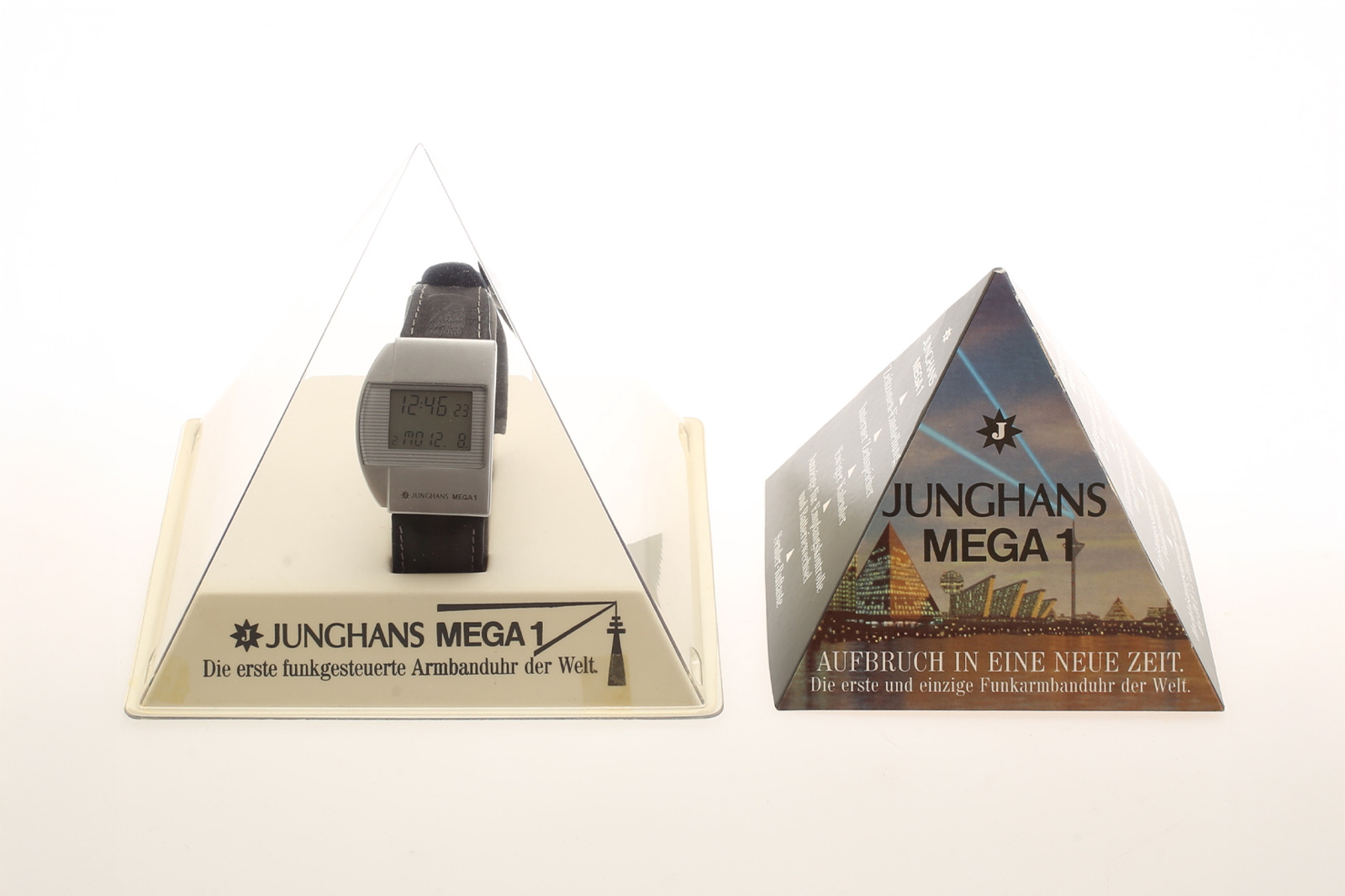
That didn’t stop Junghans developing yet more electronic timekeeping technology. In 1985, they built the first series-produced, radio-controlled table clock, which lost a second every million years. One year later, they added solar power to the clock and in 1990 they miniaturised the tech, releasing the Junghans Mega 1 as the world’s first radio-controlled wristwatch.
Radio-controlled timekeeping continued to drive Junghans until 2008. That year marked the release of the Erhard Junghans 1, a handwound, historically inspired watch with an emphasis on horological tradition across movement and finishing. And a year later, Junghans filed for insolvency.

In the 2000s, Junghans’ parent company was having serious financial problems and in the scramble for a home, the watchmaker ended up once again going independent. This was the birth of the modern era for the German manufacturer. That modern era is defined by history. The Meister recaptures the early era of Junghans Design; the Max Bill collection their Bauhaus era and the Mega retains the tech-forward innovation of the 90s. That hasn’t stopped Junghans moving forwards and this year sees the German watchmaker’s first diver in the rugged Aquaris.
The chances of becoming the largest watchmaker in the world once again are slim, but that legacy and the legacy of German watchmaking still has a home in Schramberg.
Find out more at Junghans.