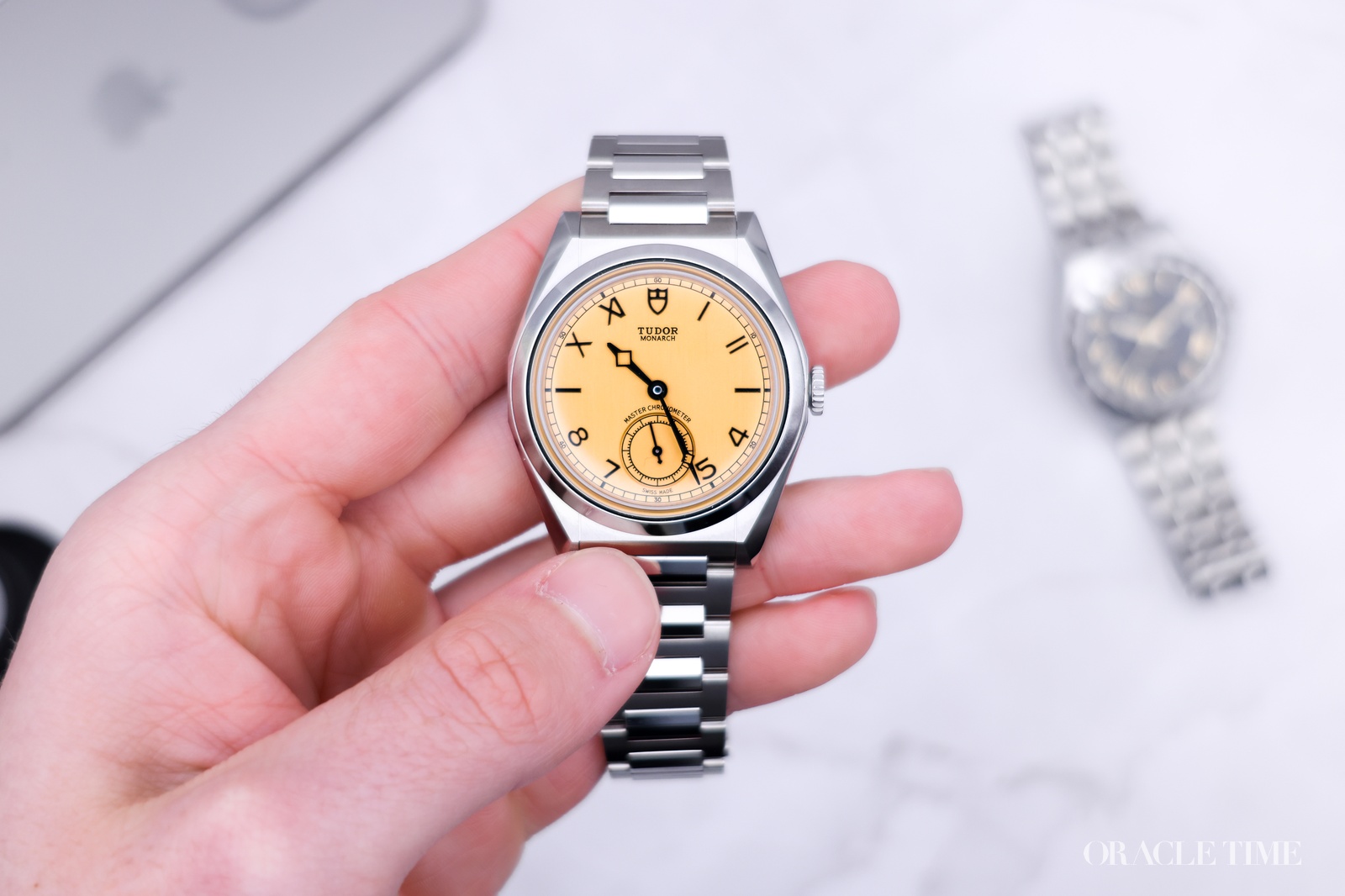
Among Tudor’s 2026 releases, the one that stands out the most is the Tudor Monarch – a name that has been revived from previous models but that is now attached to a brand-new watch. It’s essentially Tudor’s centenary watch, paying tribute to their 100 years of history since being founded in Geneva in 1926 by Hans Wilsdorf. It’s a fusion of vintage inspired design elements with modern master chronometer specs.
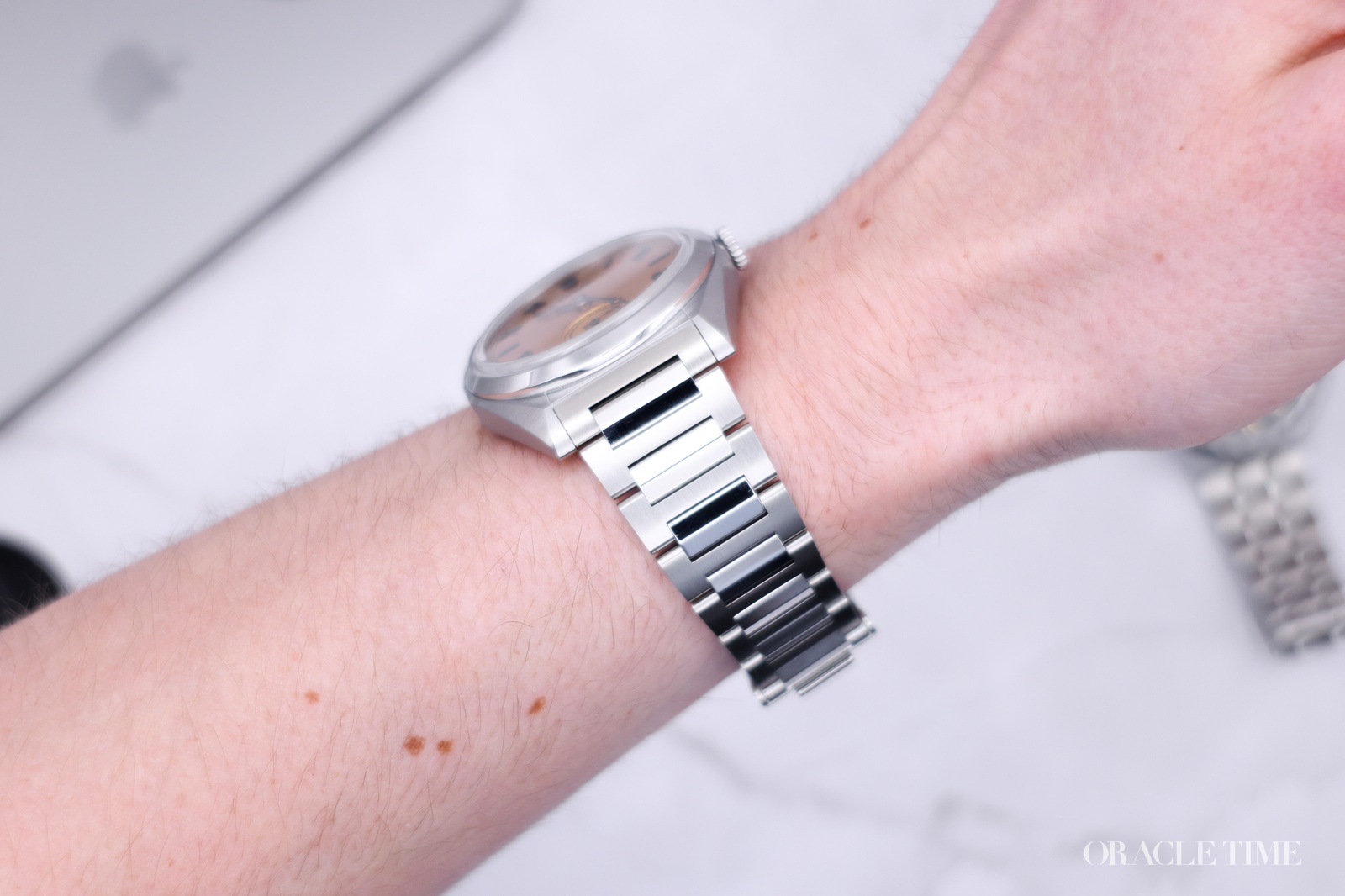
Strapping the watch on the wrist, it’s well sized at 39mm in diameter with a thickness of 11.9mm, sitting right on the cusp of where dress and tool watch proportions meet. It’s sharply facetted along the edges and is technically an irregular octagon in shape, which reminds me of the Zenith Defy Skyline albeit without the integrated bracelet aesthetic as the Monarch is careful to clearly define where its lugs are. Though in practice, it has the look and feel of an integrated piece when worn.

On top of the case sits a round, polished bezel and sapphire crystal glass. Through that glass is the new dial in a papyrus colour – which I would describe as the same colour as a deplorably milky cup of tea. It gives the watch a nice vintage feel. For the display itself, it’s a three-hand time only design with small seconds at 6 o’clock and central hour and minutes. The central hands follow an openworked snowflake design.
One of my favourite details though is the use of a California arrangement for the hour numerals. That means it uses a different style of numerals above and below the horizontal axis from 9 to 3 o’clock. Above it uses Roman numerals and below it uses western Arabic numerals (it’s ripe for a Dubai Watch Week special edition with eastern Arabic numerals in the future). It’s a style of layout that has its origins in dive and tool watches because it adds a definitive orientation to the display, making it easier to read at a glance from random angles when you’re being active.
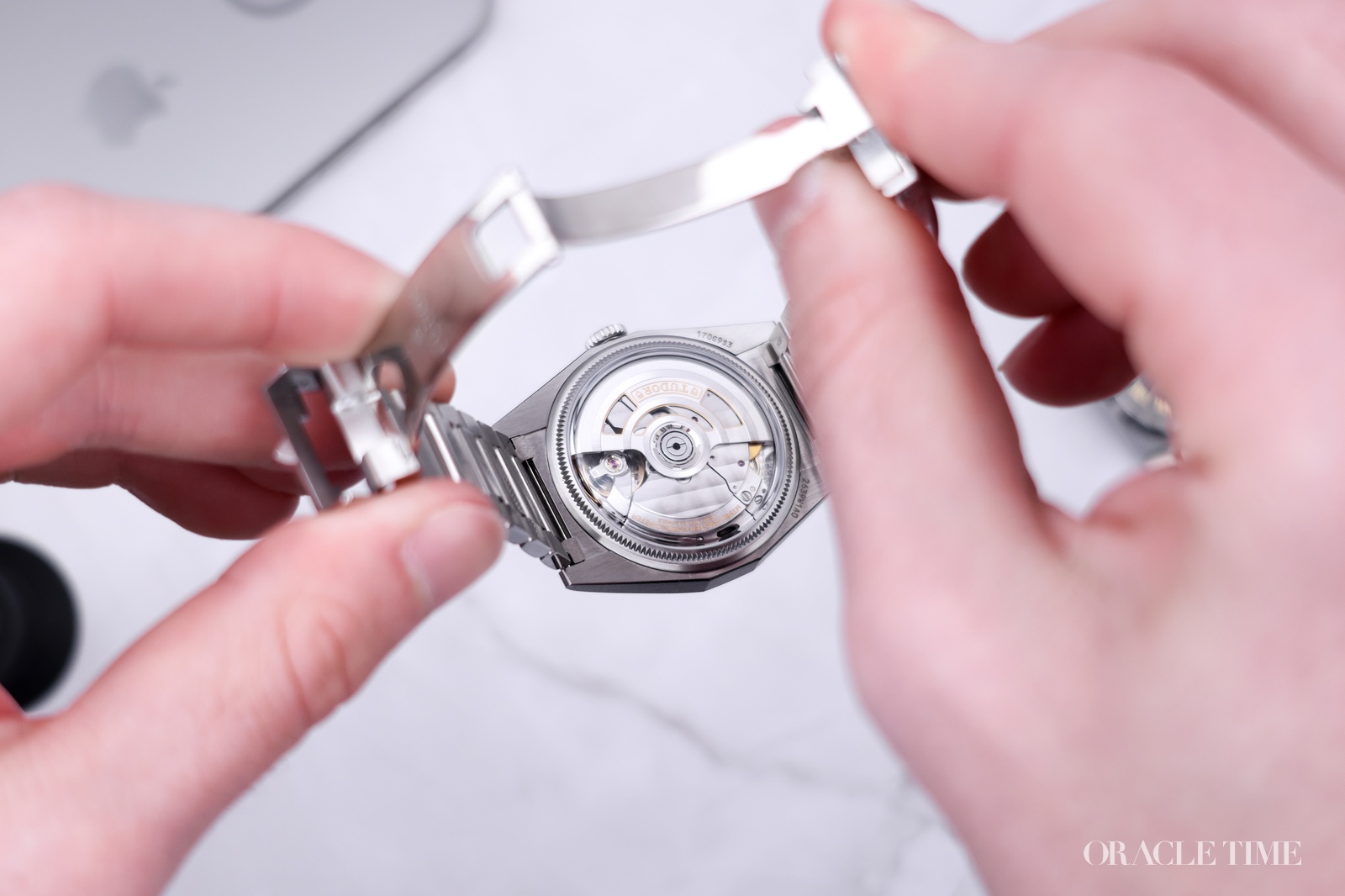
Beneath the dial is the calibre MT5662-2U automatic, which is master chronometer certified by METAS. They first started using master chronometer movements in 2021 with the first Black Bay Ceramic but now the certification is more or less standard for the brand. The movement is visible through the exhibition caseback where you can see its straight-line Côtes de Genève.
For pricing, it’s £4,600. My initial reaction to that is that it feels like a lot of money when Black Bay Metas models have previously been in the £3,500 – £4,000 bracket and this watch has less water resistance at 100m. But value is ultimately decided by the collectors and the majority of responses I’ve seen so far have been broadly positive.
Price and Specs:
More details at Tudor.


I like the case and the bracelet but considering it ditches a sweep seconds hand it should be thinner. Love the dial colour and vertical brushing and the choice and style of the Cali dial furniture. Ditch the decorated movement and use a solid caseback, save a grand and lose a mm in thickness for a winning upgrade.
Playing catch up to some degree and partly waiting to see other people’s comments.
Totally agree with all points listed by Cobwatch. I personally don’t understand the penchant for exhibition case-backs, a standard metal back does the job adequately. As stated, the cost is a little high, but the aesthetics of the watch are lovely.