Louis Vuitton and travel aren’t just linked; travel is the lifeblood of the luxury giant since their early days of steamer trunks for the most well-heeled of touring gents. Indeed, it’s hard to imagine the heyday of the Orient Express without a luggage car full of LV monogrammed trunks. But while that famous monogram has made its way across the practical-stylish divide and starred on many a catwalk, that traveller’s ethos has come with it. It’s just now more private jet than buffet car.
In that context, what’s more jet-set than a traveller’s complication? Dual time and worldtimer watches aren’t exactly subtle in their allusions to the golden age of air travel, even if they don’t have a blue and red 24-hour bezel. And while the stunning Louis Vuitton Escale Worldtimer, is fully on board with a first-class ticket, it’s not the Parisian maison’s first time horologically flying high.

“On the 10th of July, 2017,” recalls watch writer and historian James Dowling, “I interviewed Hamdi Chatti, head of LV watches at his offices on the Rue du Pont Neuf, Paris. We were talking about the new and amazing watches the firm was producing. Almost as an afterthought, he went to a drawer and pulled out a box and asked me if I knew about the first watch that LV had ever made. I told him that I didn’t and he opened the box to show me the LV1.”
If you don’t recognise the name LV1, you might know it better as the Monterey. In fact, Louis Vuitton recently re-issued a streamlined version of the watch. The original however was first launched in 1988, nearly 20 years before the Tambour. It was noteworthy for a clutch of reasons, not least of which because it was the creation of legendary Italian designer Gae Aulenti. You’ll know her work; she was the architect behind Paris’ phenomenal Musée d’Orsay.
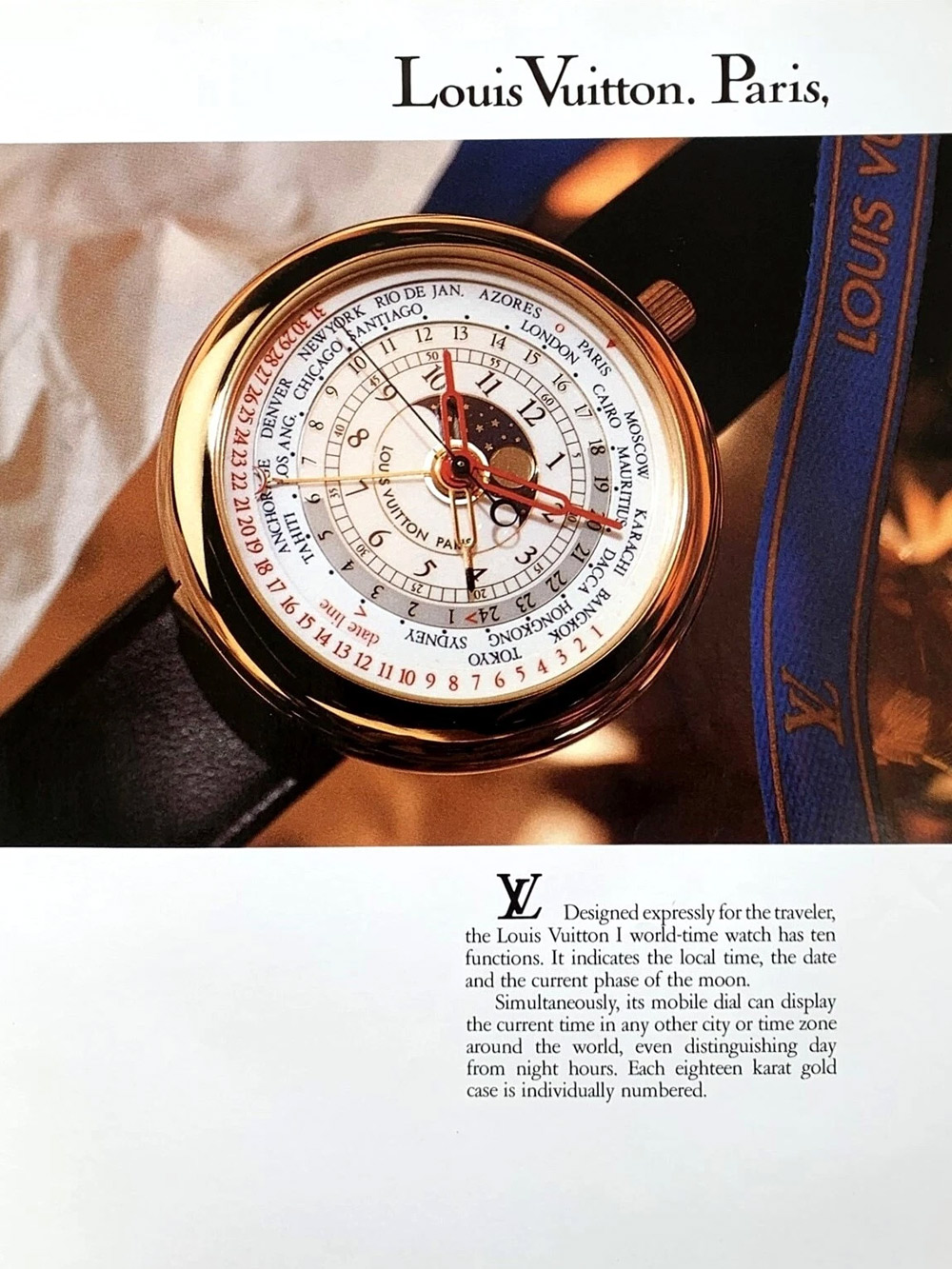
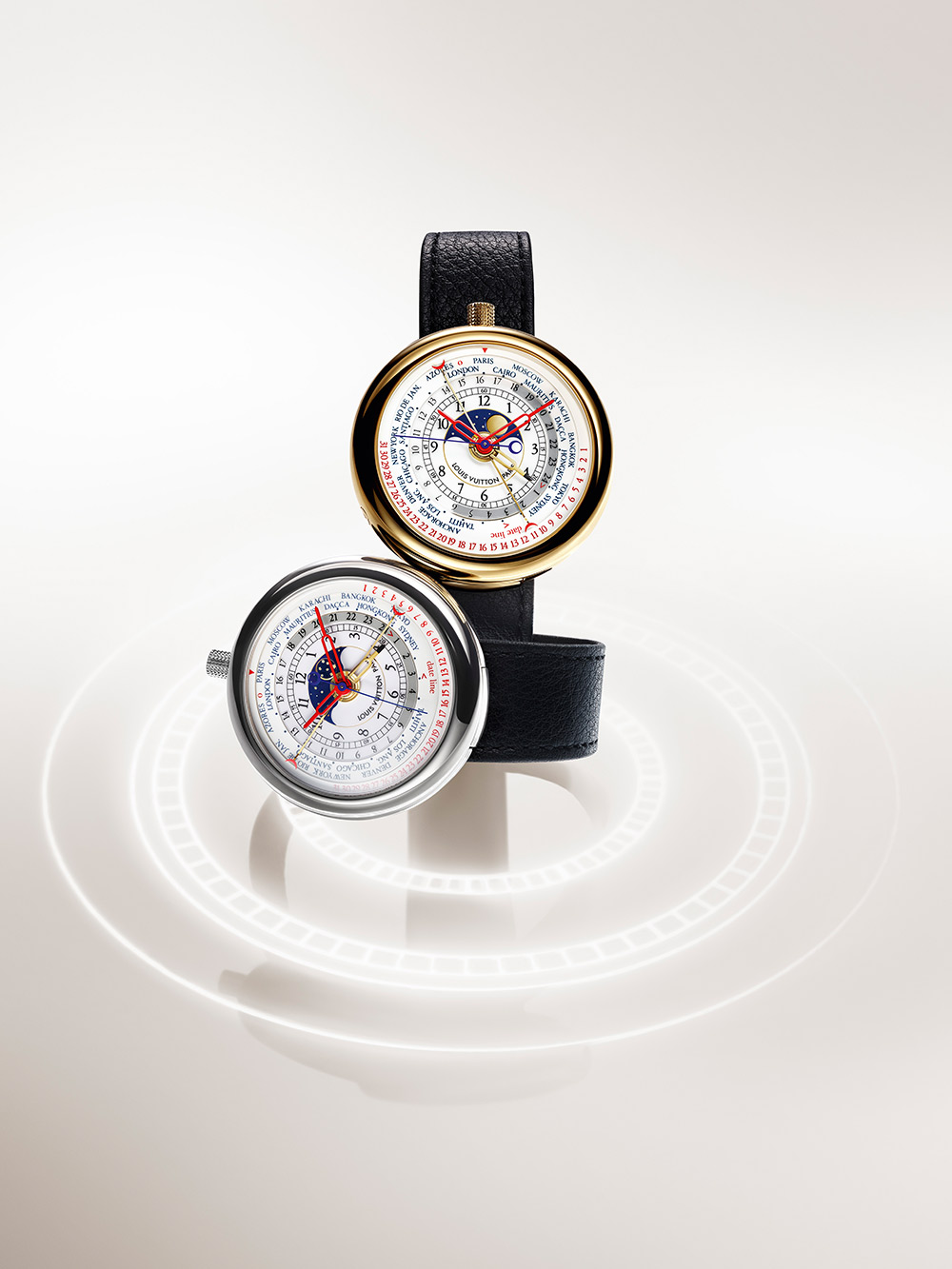

Aesthetically, the LV1 was defined by its pebble smooth, lugless, 40mm white or yellow case, with a peripheral date, moon phase and worldtime function. With its 12 o’clock crown, it looked and felt like an old travel pocket watch, which was largely the point. This was Louis Vuitton’s first foray into timekeeping; it made sense to echo the old-world glamour they were known for.
It wasn’t exactly a less-is-more affair. While the re-issue is elegantly restrained, the original Monterey had a lot going on. Between the various indicators and the five-deep handstack (including a double pointer date to use against the date scale along the bottom half of the dial), it was a bit of a showcase. Given this was just post quartz crisis – and Louis Vuitton was decades off acquiring la Fabrique du Temps – it’s also no surprise that the LV1 contained a battery-powered movement. Either way, the Monterey, despite being produced in very limited numbers, gained a serious collector following.
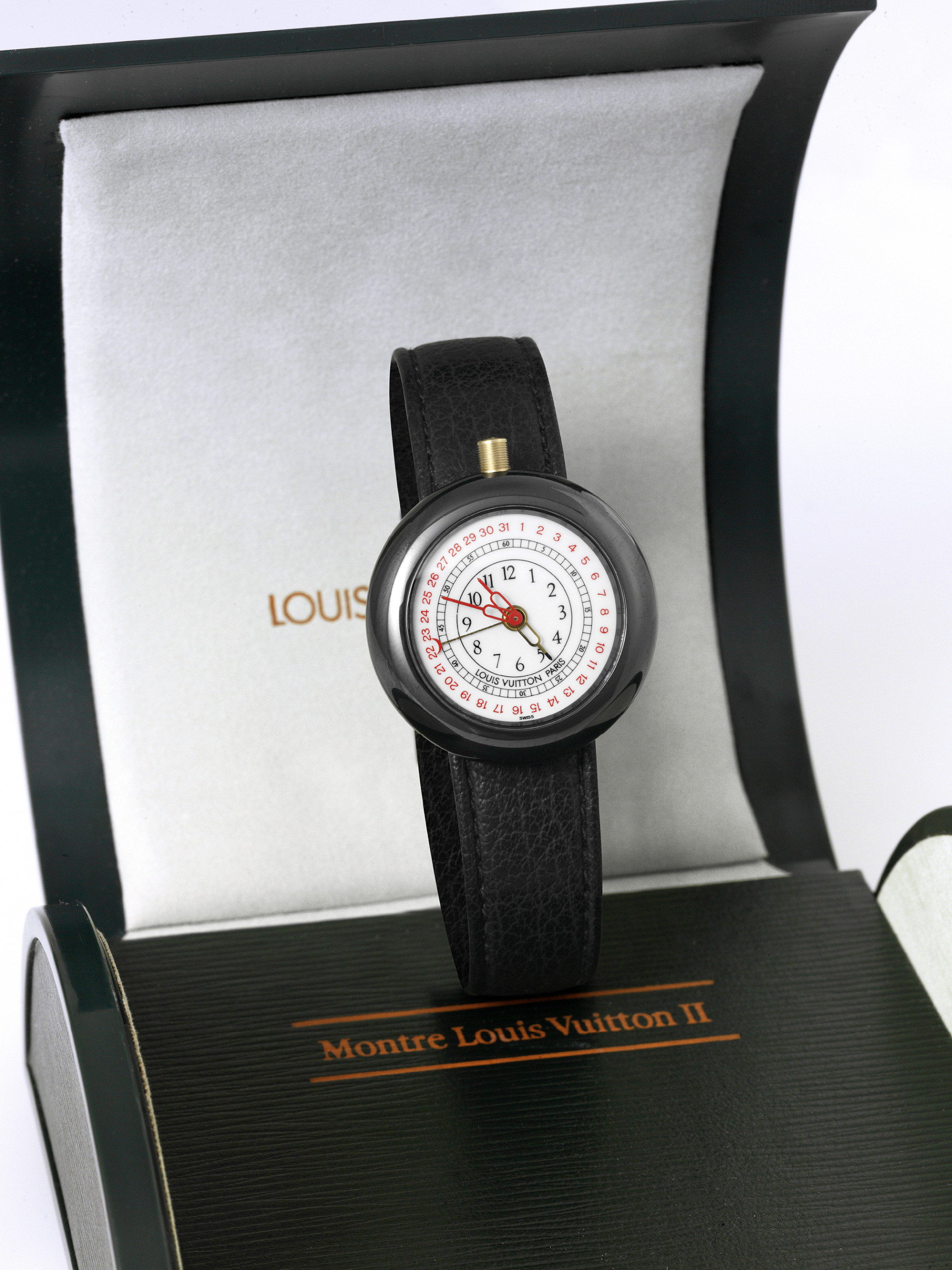
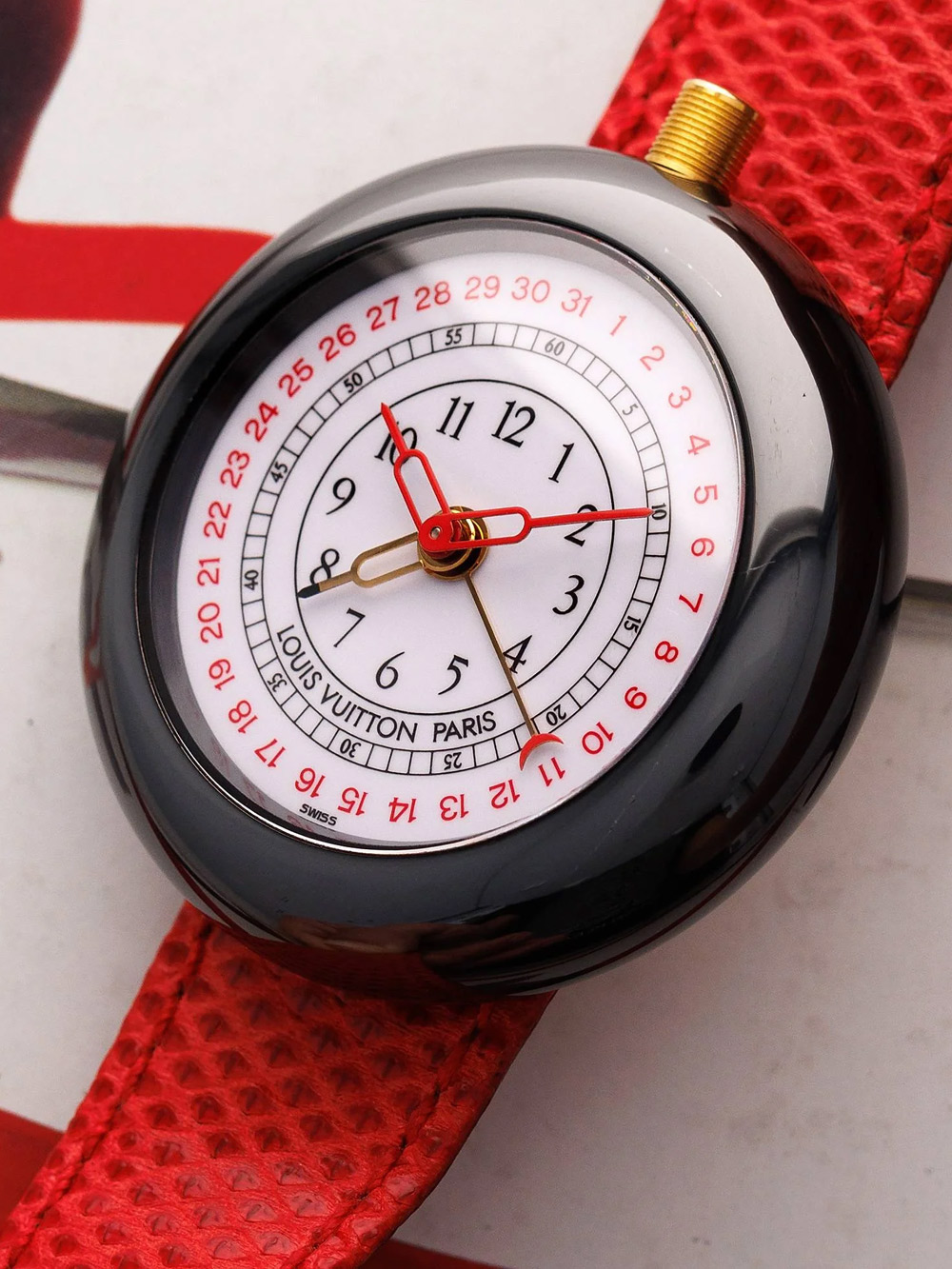
Louis Vuitton quickly followed up the LV1 with the (of course) LV2. It was still designed by Aulenti, but it stripped out the worldtime and moon phase functions, leaving the date and dual time. Perhaps just as notably though, Louis Vuitton also had another partner on the watch: IWC. Just a few years prior, IWC brought ceramic to bear on watchmaking with the Da Vinci Perpetual Calendar in crisp white and Louis Vuitton wanted in. They went to the Schaffhausen watchmaker who built two downsized 37mm cases for the LV2, one in black ceramic, the other in dark green. Good luck telling the difference from photos.
Many more LV2 models were built compared to LV1s and thanks to the ceramic cases, they’re not hard to find in good nick. They’re relatively pricey for a quartz watch, ranging between £8,000 and £15,000, but as an aesthetically unique and unequivocally fascinating watch, they’re a great buy.
“I fell in love,” says Dowling of his initial glimpse of the LV1. “Anyone who knows me knows that I love the crazy, the weird and the wonderful – and even more so if it’s quartz. I posted an Instagram of the LV1 I had taken on my visit to Hamdi and asked if anyone knew of one for sale. The watch was on my wrist later that week.”

If you’d not heard of the LV1 before now, that’s understandable, they were produced in very small numbers. For most people, Louis Vuitton watchmaking really began in 2002 with the Tambour.
Named after its drum-shaped case, the Tambour was more of a proper watch collection in that there was a broad range of piece available, including the now ubiquitous (for Louis Vuitton) dual time. In a similar vibe to Bulgari, whose Aluminium launched a few years prior, the sides of the case were stamped with the brand name letters. More significantly, it was the first watch built in Louis Vuitton’s own Swiss workshops and the first automatic.
A couple of years later they followed up with the first high complication in 2004’s Tambour Tourbillon Monogram, adding some serious horological flex into the mix. Then there was 2009, which introduced the Spin Time and its unique rotating cube hour display. Though arguably more important than the watch itself was that this was when LV started working with the incredibly talented Michel Navas and Enrico Barbasini of Fabrique du Temps. It was a partnership that evidently went very well as two years later, Fabrique du Temps were brought in-house as Louis Vuitton’s own watchmaking studio. This marked the arrival of serious, in-house watchmaking at the maison.
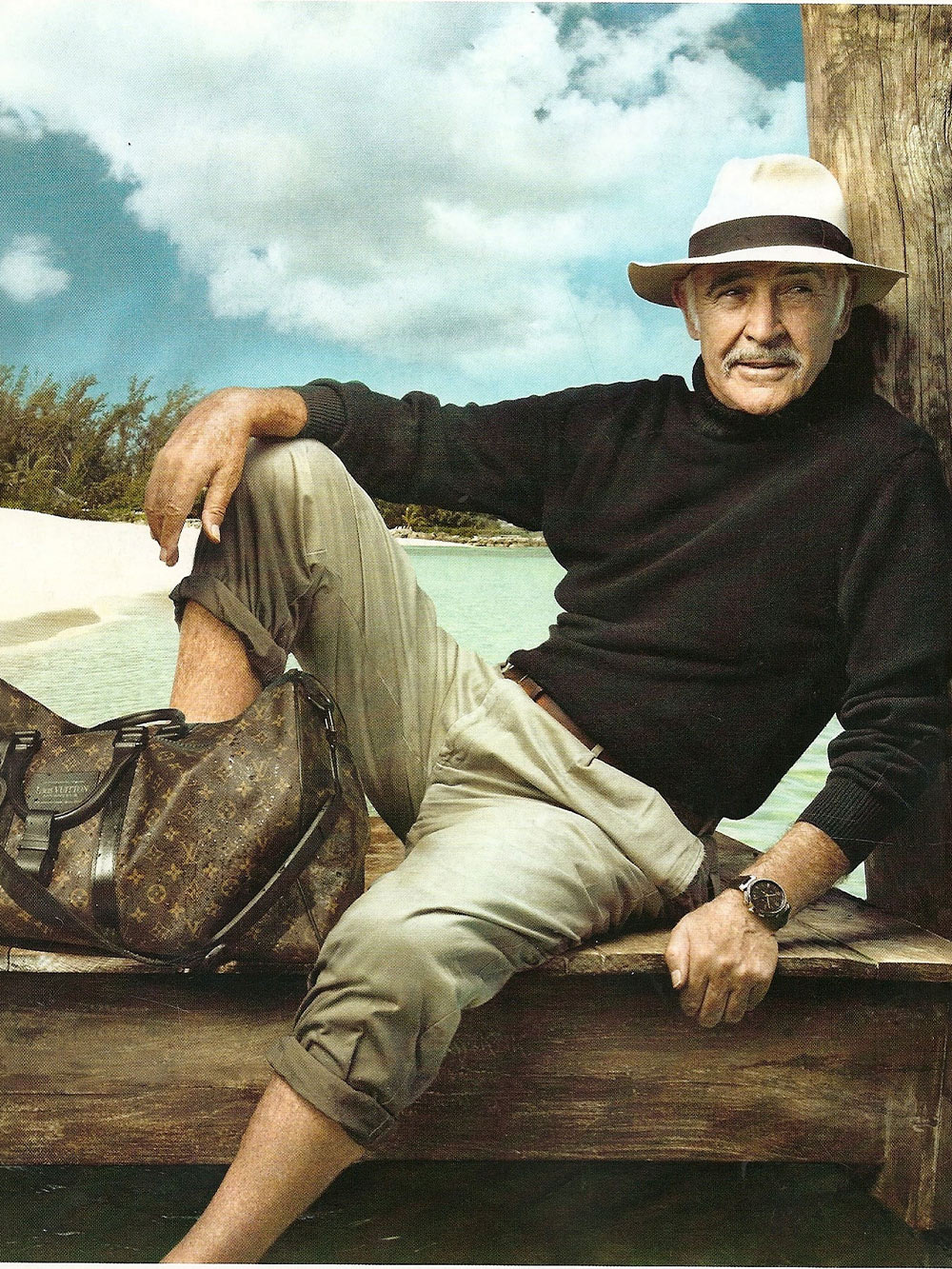
Perhaps the feather in Louis Vuitton’s well-travelled cap came in 2014. The Tambour had become a bit of an icon (Sean Connery even wore it in the brand’s 2008 Core Values campaign), but it was a relatively mainstream watch. Well, as mainstream as a luxury brand like LV can get. The Escale however was a cut above in pretty much every way.
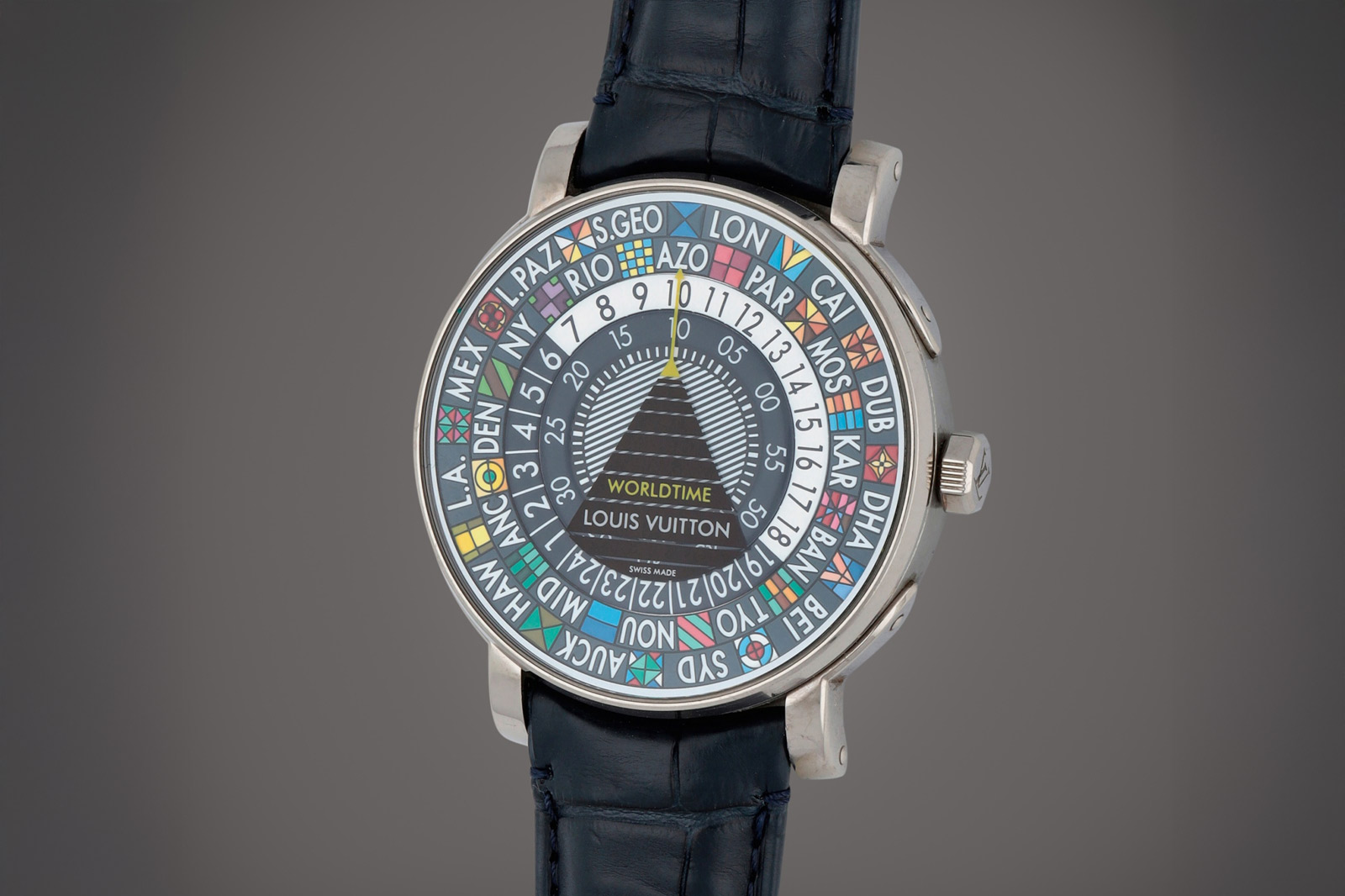
The 2014 Escale was a triumphant return to the worldtime complication and did so in a way that no other brand could do. For one, it used hand-painted ‘flags’ for each city inspired by custom designs for LV clients, colourful and frenetic. For another, it was a worldtimer without hands. Instead, minutes, hours and the worldtime indicator were all set on concentric discs around a central pyramid shape like the main stage at Glastonbury. It’s fittingly hard to find these days – although later Escale models like the Time Zone are a steal at the £5,000 mark.
Since then, Louis Vuitton have firmly updated their entire watch collection. The entire Tambour collection was refreshed and refined in 2023 and was markedly better for it. The following year the same happened with the Escale, though with a big caveat. Previously, the Escale had been the quintessential Louis Vuitton traveller’s watch, essentially carrying the torch from those early Montereys. The new watches though were time-only, with stone dial versions to follow in 2025.

They were lovely, with heritage hints like satin-brushed lugs taken from LV trunk corners and an octagonal, rivet-inspired crown. But they’d lost the funky jet-set vibes of 2014 and a lot of us noticed the gap.
Honestly, I was a little worried after seeing the re-issued Monterey that we’d never see another proper LV worldtime. For a brand whose travelling heritage goes back over a century and a half, that felt like a travesty. As our cover star for this issue shows however, that gap has now been filled. And like loading the last elegant, monogrammed case into the luggage car of the Orient Express, it just fits.
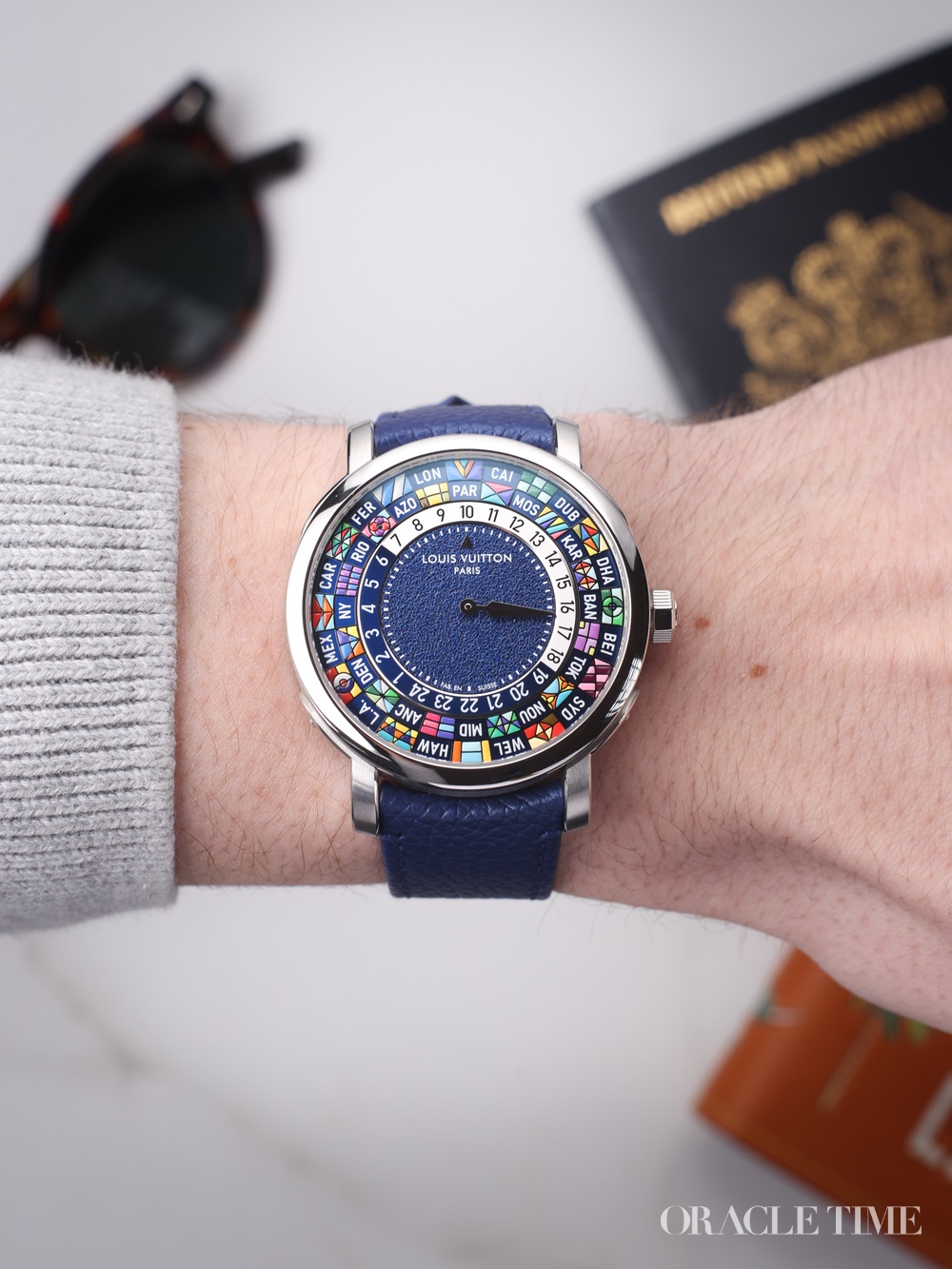
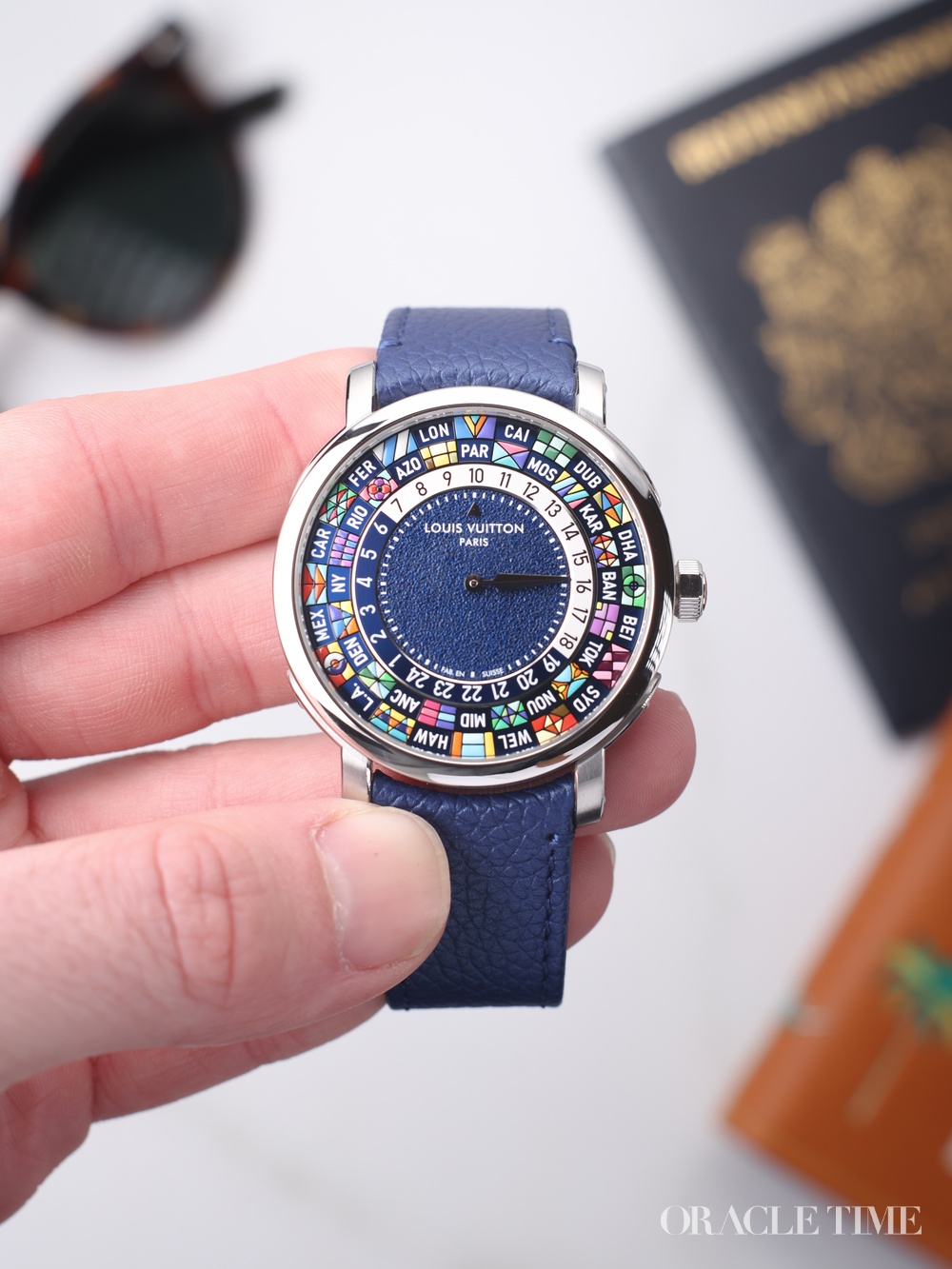
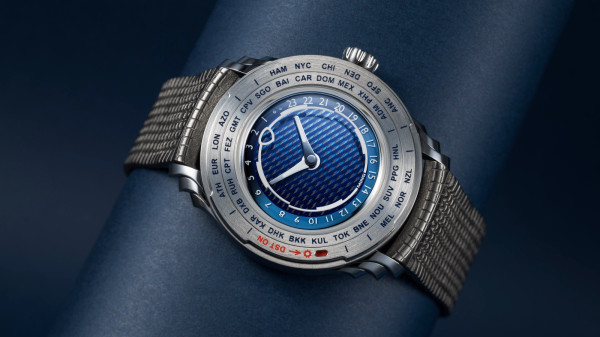
The 2026 Escale Worldtime is in my eyes the 2014 version perfected. It has the same hand-painted designs across the worldtime disc (created by LV’s own La Fabrique des Arts over a week), which once again rotates around the periphery of the dial. The hours do the same one step inward in the blue and white of a classic day/night indicator. Now though, the hour disc jumps rather than rotates and minutes have been moved to a single central hand, which makes the local time much more intuitive to read. The overall design has been toned down a bit too, with a blue grained central dial. The end result is colourful without being ostentatious, funky without being unreadable.
The new ensemble is powered by the Fabrique du Temps LFT VO 12.01 calibre automatic movement, beating at 4 Hz with a substantial 62-hour power reserve. It’s also finished in the way we’ve come to expect from modern Louis Vuitton: subtly impeccable. Less subtle is the 40mm platinum case it’s housed in, but still, this is LV.
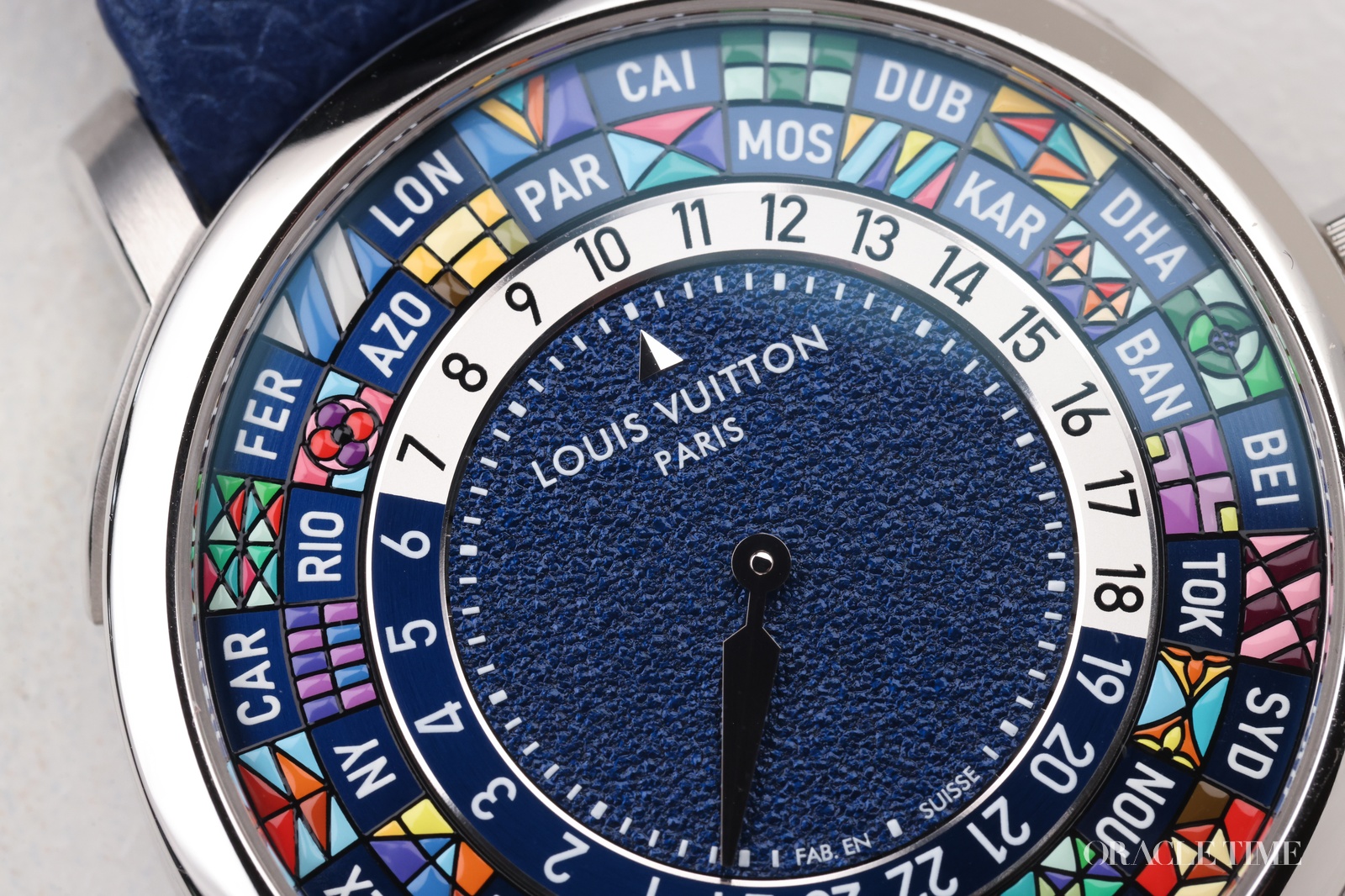
The Escale Worldtime isn’t the only watch in the new Escale collection of course; it’s joined by a worldtime tourbillon with an unusual central tourbillon cage, a pair of handsome dual timezone models and, for some reason, a minute repeater. But between its hand-painted colours, the Escale collection’s innate nods to Louis Vuitton’s trunkmaking heritage and the novel approach to the worldtimer complication, it’s the quintessential expression of not just Louis Vuitton’s modern approach to watchmaking, but their entire approach to global travel.
In an ever-growing pool of traveller’s complications from Rolex-inspired GMTs to worldtimers with enamelled atlases across the dial, there are plenty of wrist-mounted travel partners for every frequent flier. But just like a monogrammed piece of luggage worth more than a private jet charter, the Louis Vuitton Escale Worldtime might be the most jet-set.
More details at Louis Vuitton.