

Rolex ref. 5517 MilSub Submariner, image credit: Phillips
Military watches occupy a curious space in horology. While we think of them as documented, catalogued, and accounted for with military precision, much of their history is missing. Procurement records and service logs get redacted or lost, and equipment was routinely altered or cannibalised. Often all that remains is a trail of incomplete paperwork, conflicting recollections, and watches that quietly surface decades later, long after their original purpose has been forgotten.
This fog of secrecy leaves collectors to piece together the truth like archaeologists, relying on fragments of evidence or the occasional revelation when new evidence surfaces. And nowhere is this more apparent than in the enduring puzzles surrounding British military watches. In that spirit, here are three of the Royal Navy’s most intriguing unsolved mysteries – stories that show how the gaps themselves often become the most compelling part of the hunt.
Where Are All the Rolex MilSubs?
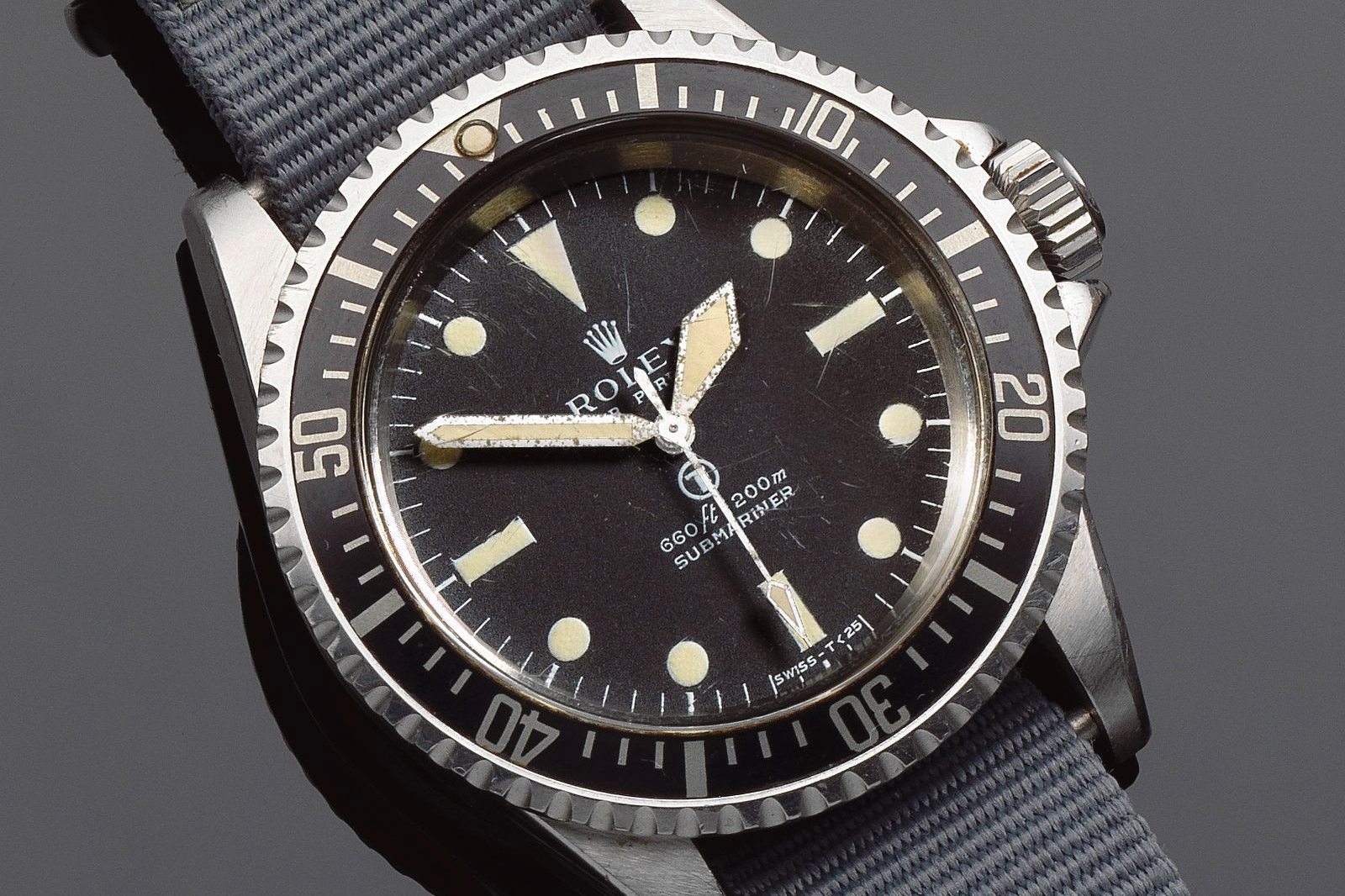
Rolex Milsub ref. 5517, image credit: Bonhams
If a dive watch is the ultimate tool watch, then the military diver is its most uncompromising form, and the military Submariner is the platonic ideal. The Rolex MilSub – the sword-handed, fixed-lug variant of the classic diver issued to Royal Navy clearance divers and special forces in the 1970s – now regularly achieves auction prices between £80,000 and £150,000.
Auction houses such as Sotheby’s, Phillips, and Bonhams estimate that the MoD ordered around 1,200 MilSubs, yet only about 120 are accounted for. That leaves roughly 90% missing, perhaps still tucked away in drawers and attics, waiting to be discovered by future Antiques Roadshow guests. With today’s market values, roughly £80 million in MilSubs remain undiscovered. The mystery, of course: where are they?
The first theory is simply that most of them are lost or destroyed. And despite the eye-watering auction results today, that isn’t hard to believe. Collector Grahame Fowler’s impressive array of MilSubs illustrates the point well: some have been painstakingly salvaged from parts, many that survive show heavy battle damage, and one was even recovered “in the field” – in this case, from the seabed off the coast of Poole, home to the SBS.
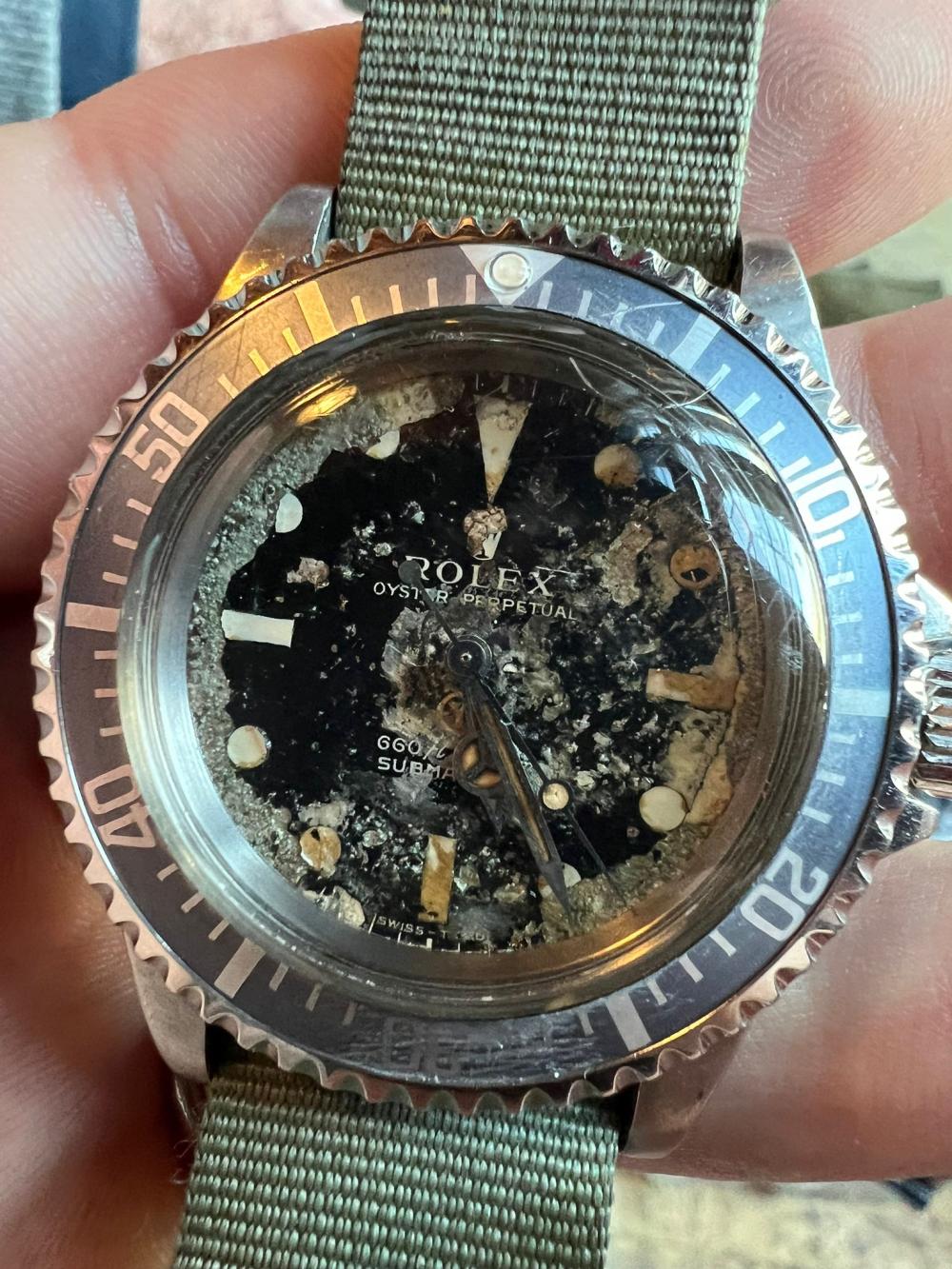
A Rolex MilSub ref. 5513 discovered off the coast of Poole, Dorset (home of the SBS), image credit: Grahame Fowler (@grahamefowler)
These watches were purely tools, and soldiers don’t tend to be sentimental. One story claims troops would thread watch heads onto NATO straps and smash them like conkers, with the unlucky owner forced to justify the damage to the stores’ managers. If true, it’s no wonder so few survived.
There are also rumours that the MoD deliberately destroyed decommissioned watches in large quantities, either to prevent them from being used by other militaries or to avoid driving down the value of civilian models. Similar stories circulate about Marine Nationale divers as well. However, most experts consider these rumours unlikely, given the still significant cost even back then.
Another more likely explanation is the possibility that the MoD ordered around 1,200 pieces, but Rolex only managed to deliver a fraction of this. This is seen time and time again with military-contracted watches; records showing how many the MoD ordered isn’t necessarily how many were actually made.
I personally still hold onto the hope of one day finding one, whether it be down the back of some dusty furniture or while swimming off the south coast.
Were White Dial IWC Mark XIs Issued on Nuclear Subs?
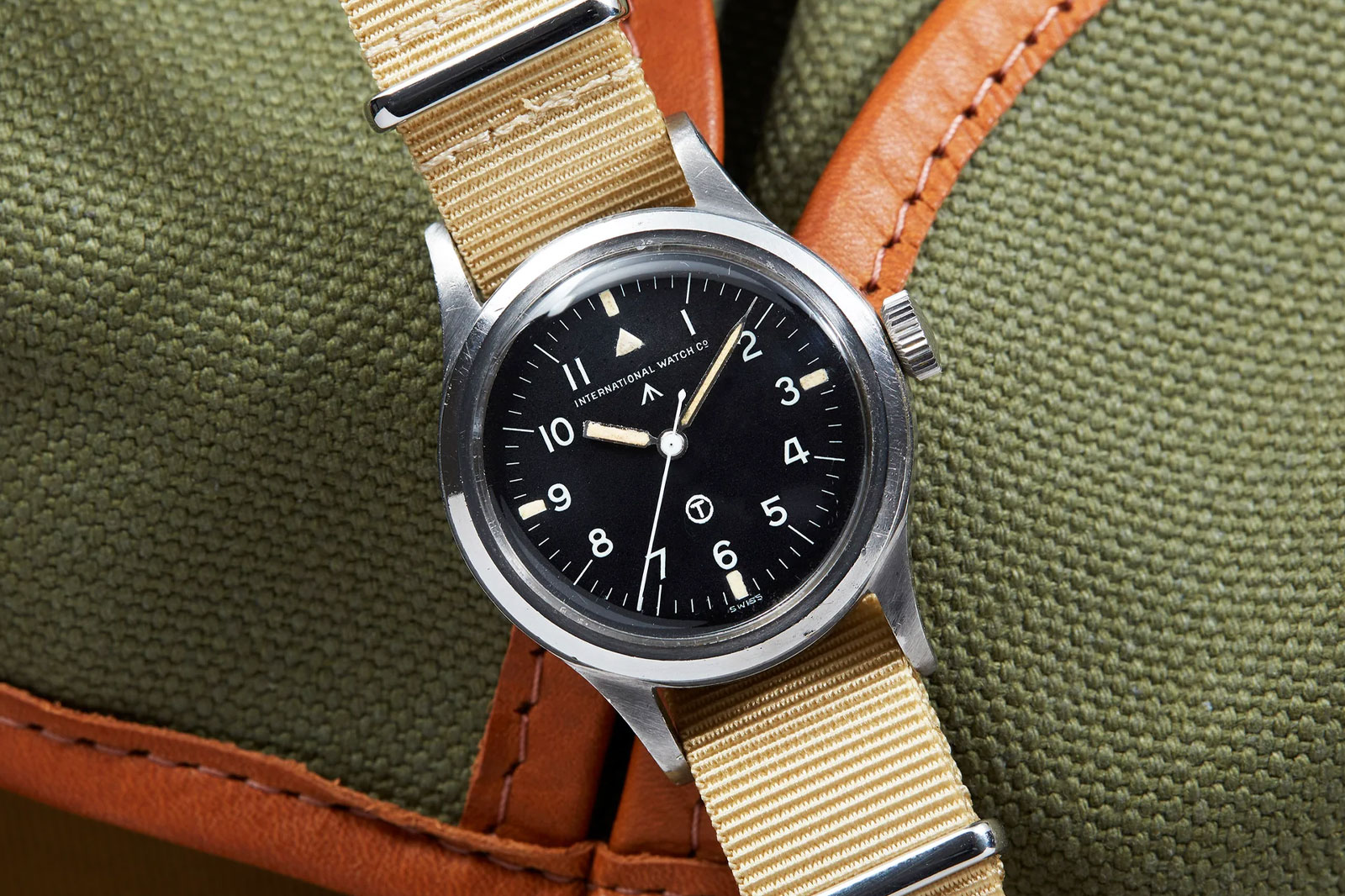
IWC Mark XI, image credit: Analog:Shift

The IWC Mark XI was never intended to become a mystery watch (very few are unless you happen to be Cartier). Designed in 1948 for RAF bomber navigators, it was a wholly functional instrument built around the needs of airborne navigation. Its defining feature was the soft-iron inner housing which protected the movement from magnetic fields. At the time, this was cutting-edge technology: the dial, movement cover, and inner caseback were each made of soft iron, shielding the mechanical movement on all sides from the magnetic interference generated by radar equipment.
The black dial was also a deliberate choice, offering maximum legibility under cockpit lighting. Taken together, the soft-iron cage and the stark black dial formed a functional identity so rigid that any deviation, especially a white dial variant, immediately piques interest.
The idea of an albino Mark XI started in 1984, when a particular dealer by the name of Briggs reportedly purchased Mark XIs by the dozen at an MoD auction. The catch was that these watches came without the dials. Briggs visited David Bill & Sons to have non-OEM brass dials made, in both black and white. Because they were brass rather than soft iron, they were easily identifiable as non-IWC and not MoD-spec.
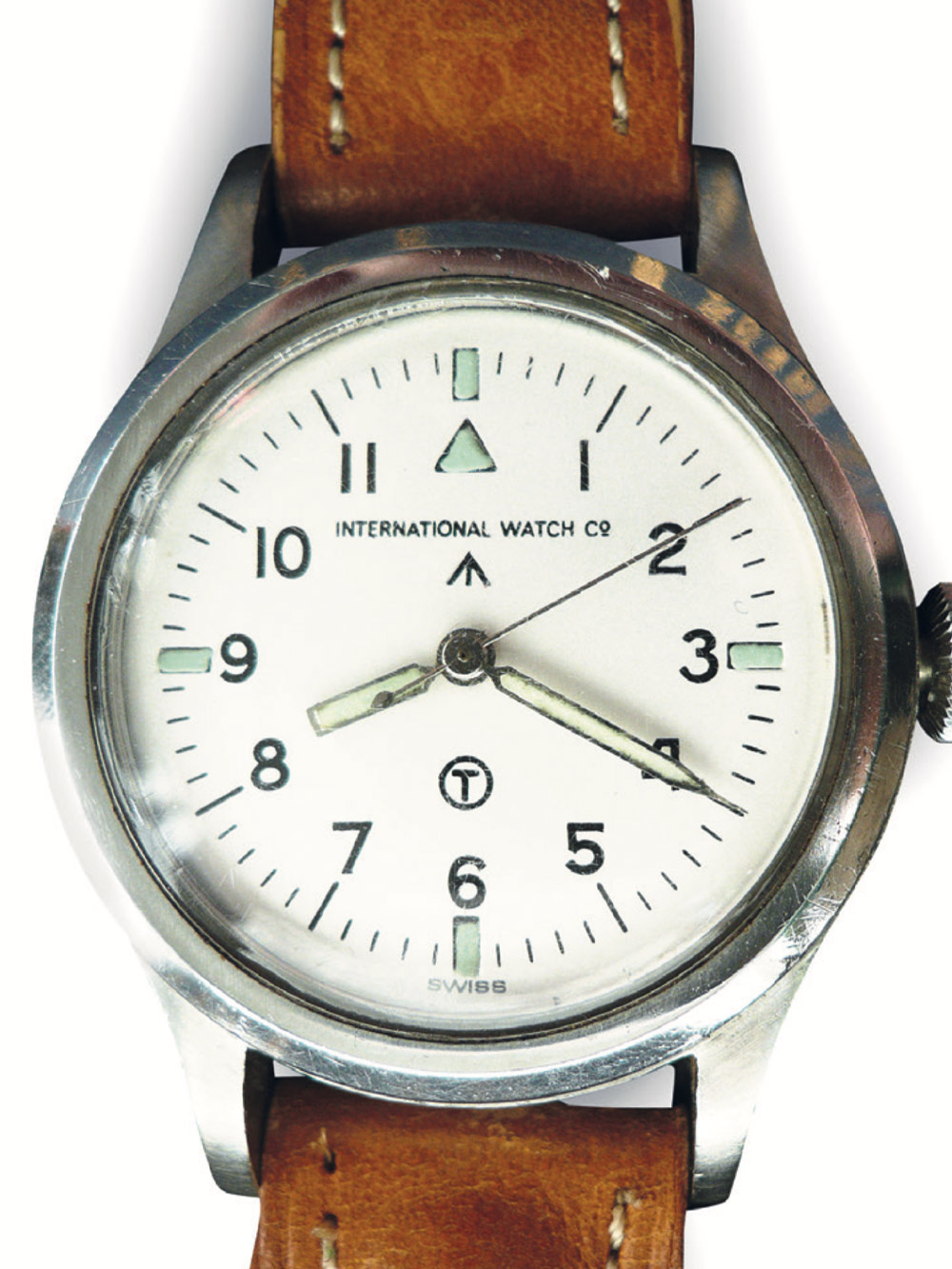
IWC Mark XI with an OEM white dial, image credit: British Horological Institute
However, a more compelling piece of evidence emerged in 2020 when the official journal of the British Horological Institute published a photograph of a Mark XI with a white dial made of soft iron. This dial showed correct construction, a slightly messy ‘encircled T’ and sloppily applied lume, quirks consistent with this period MoD dials. It is this dial that suggests the possibility of an obscure but legitimate military purpose, rather than a dealer’s aftermarket experiment.
This evidence is corroborated by a comment from fellow Oracle Time contributor James Dowling: “Many, many years ago, when I used to buy Mark XIs and MilSubs in boxes of 20 from MoD auctions, I would come across 1 white Mark XI every so often, but because I had also bought a lot of parts, I just swapped them out and threw away the white dials. So there certainly were some white dial Mark XI’s, but they looked really crappy, so my assumption always was that they were MoD jobs, not Schaffhausen’s work.”
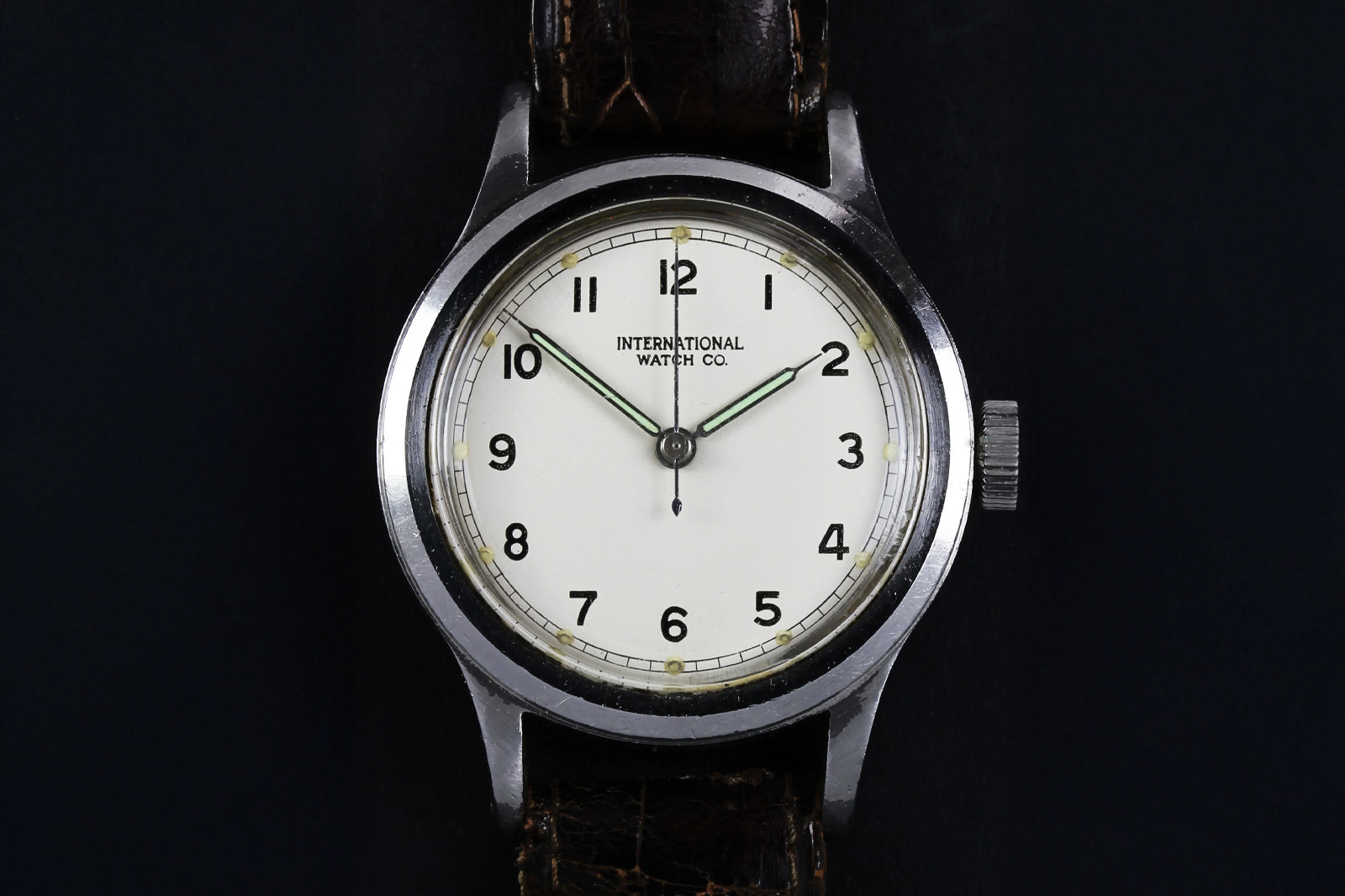
IWC Mark XI White Dial (1948), image credit: Reygers
One strong hypothesis is that these OEM white dials were intended for Royal Navy nuclear submarine crews, who operated under lighting conditions radically different from those of aircraft navigators. White-dial watches were not unprecedented in this context: the RN ordered white-dial non-luminous Lemania chronographs for use aboard submarines, where visibility under periscope-friendly red lights was crucial.
Perhaps the MoD needed the anti-magnetism for some of the watches on board. This isn’t inconceivable since submarines’ electrical systems and movement through the water itself generate significant magnetic fields.

Lemania Nuclear Sub Chronographs, image credit: Seb Dickie, taken at Piccadilly Vaults
Supporting this, the MoD later cross-issued the same white dial Lemanias to RAF units, demonstrating that specialist equipment was sometimes redistributed more flexibly than the procurement paperwork and caseback engravings suggest. If white dial Lemanias could quietly shift between branches, it’s plausible that a small, undocumented batch of white-dial Mark 11s was produced for submarines and later dispersed.
Whether any formal records survive is still uncertain, but the physical evidence, the operational precedent, and the scattered surviving dials together make the submarine-issue theory the most compelling explanation yet. Like all good mysteries, this one hangs stubbornly between rumour and plausibility.
What Did ‘SP’ Stand For On CWC Divers?

CWC Dive Watch, image credit: @Anders_Flint (WatchUSeek)
Our final mystery is probably the least known among enthusiasts, yet carries some of the most intriguing theories.
In the 1990s, the London-based Cabot Watch Company (CWC) was producing watches exclusively for the British armed forces. Since the early 1980s, CWC’s Monnin-cased divers had been procured to Royal Navy specification, including for the SBS. Their casebacks were typically engraved with the service code (confirming Royal Navy issue), the NATO stock number (indicating a quartz diver), and two digits for the year of issue.
But a very small batch of mid-90s mil-spec divers breaks the pattern: instead of a date, they’re stamped with the letters “SP.” Although the date is missing, we know they were produced in 1993/1994, thanks to the slightly right-shifted lume pip shared with non-SP versions from those years.
Jonathan Hughs (better known as ‘CWC Addict’), the leading authority on CWC, has identified four “SP” types: with or without black PVD coating, and with or without the day-date. He estimates that production was extremely limited. “Given the small number that are known,” he says, “there were probably only small batches of a few tens of watches.” So of the roughly 600–1,000 standard divers ordered across ’93-’94, perhaps only 20–30 pieces were SPs.
As for what “SP” means, theories stretch from sensible to absurd: “Special Purchase,” “Secret Police,” “Special Projects”… Even “Steak Pie,” courtesy of a particularly imaginative forum poster. “Secret Police” is easily dismissed; undercover personnel would hardly want kit marked with military identifiers. “Special Purchase” or “Special Projects” feels plausible, especially since CWC uses ‘Special Projects’ today to denote limited editions for specific units.

CWC Dive Watch caseback, image credit: @Anders_Flint (WatchUSeek)
But one final theory stands out: that these watches were ordered for an SAS counter-terrorism unit known as the Special Projects Team (SP-Team), which sometimes operated alongside the SBS. In ship-hijack scenarios, the SBS would approach by RIB and breach using grappling hooks, while the SAS descended from Chinooks on fast-ropes in a pincer movement. A waterproof, robust diver’s watch would have been essential to the SAS for these operations, and matching the already issued SBS CWCs would have surely been the obvious choice.
Several pieces of circumstantial evidence support this theory, but nothing definitive. There is proof that the SAS were issued CWC divers (a noted example being the legendary Phil Campion’s, which was stolen). We also know that the SAS previously carried Omega W10 Seamaster 300 divers.
But crucially, the SP-Team explanation is not only Hughs’s preferred theory, but also the most likely according to CWC’s current director himself, Malcolm Bliss. When asked about the SP engravings, he told me: “They were certainly ordered in the 90s in very small batches and were military-issued watches… It can’t be proved beyond repute, but they were most likely purchased for the SP-Team.”

CWC Dive Watch with SP engraving, image credit: CWC Addict
Bliss added a final caution: “The only person who would have known for sure is Ray,” referring to CWC’s founder Ray Mellor, who sold the company to Silvermans shortly after the SP watches were made, and who has since sadly passed away.
While we may never uncover definitive answers to these three mysteries, my point is to show how the real joy of collecting and enthusiasm is in pursuing these lost stories. Mystery isn’t a flaw in British military watches; it’s their defining feature.



The story about playing conkers with milsubs is absolutely true. I did it my self several times.
Several hundreds of Rolex mil subs were buried back in the late 80s maybe early 90s because of the Trithium scare. Along with compasses etc
I was at the mod auctions when they were 10 for a thousand pound. Then they were not any more. I had several. Also issued them all my time as a CD.
71 to 87