I love Japanese watches and I love microbrand watches, so it naturally follows that the growth of Japanese microbrands is an exciting prospect. One such Japanese microbrand is Kiwame Tokyo, founded in the summer of 2025 by industry veteran Masami Watanabi. After their first sell out debut series, they’re back with the second series, which takes the case and movement of the debut collection and presents it with a brand new dial. The new pair is called the Kiwame Tokyo Iwao series, with the two versions being the Ginkai and Sumi, and I’ve been hands on with them to learn more.

Starting with the case, as I briefly mentioned already, they are identical to the debut collection which means they measure 38mm in diameter in steel with a thickness of 9.5mm and 100m water resistance rating. It has alternating brushed and polished surfaces, meaning it catches the light in interesting ways. I like its sharp lines and clean edges that reinforce the fact that it’s based on the field watch archetype, designed to be easy to wear during rigorous activity without catching on anything or digging into the wrist.
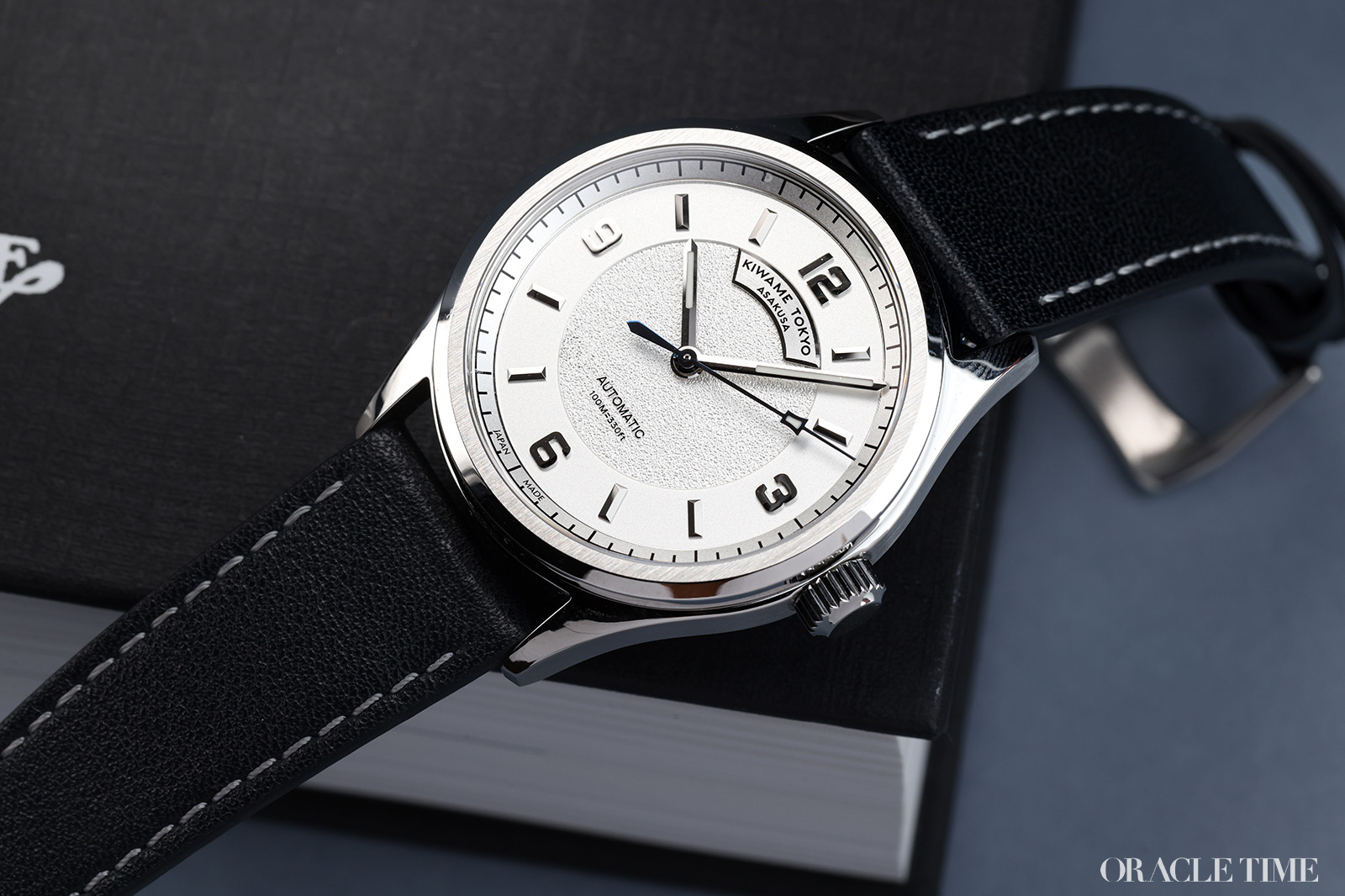
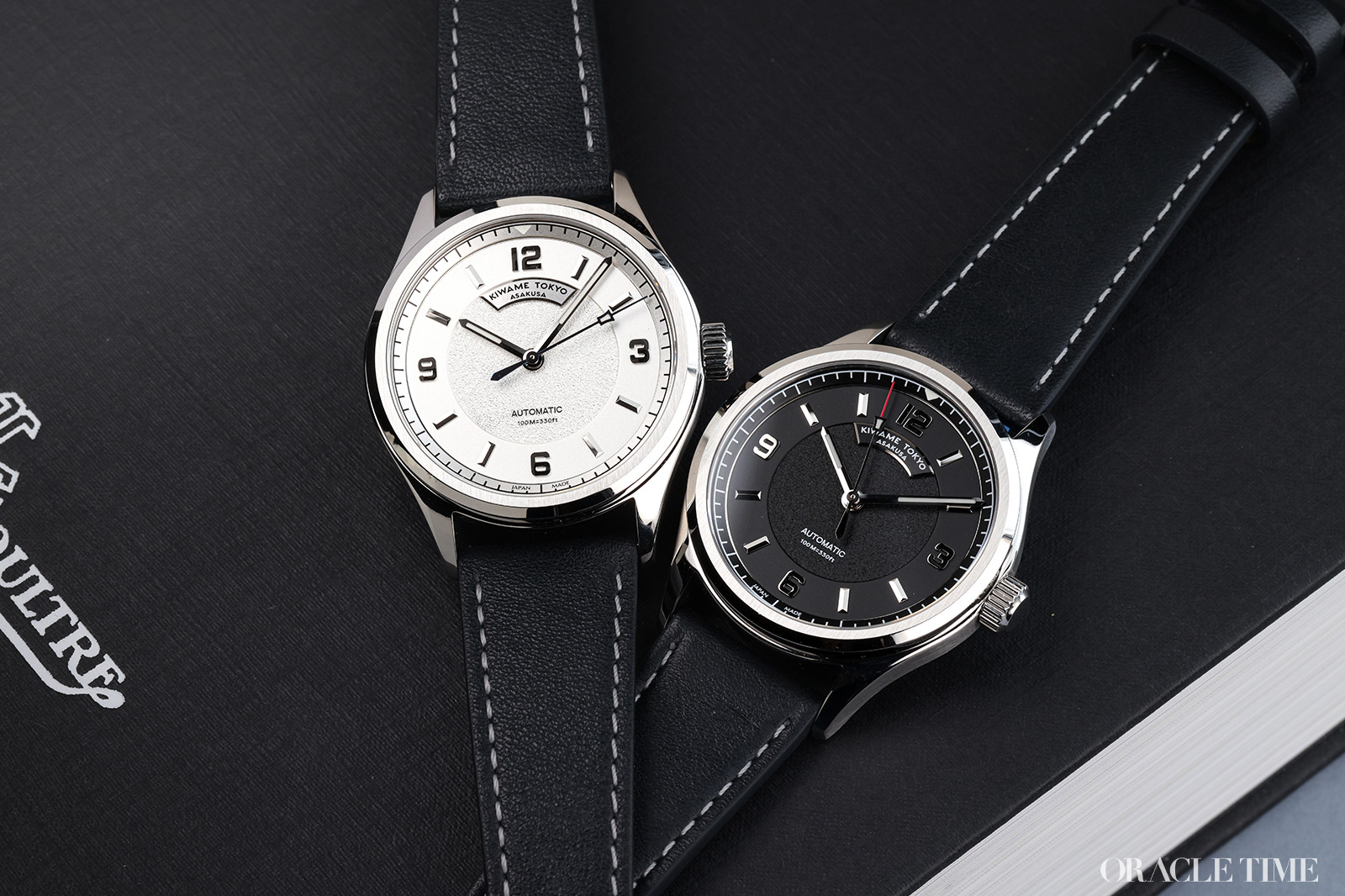
Those field watch elements are a hold over from the debut collection, which was explicitly a field watch. The Iwao feels more like a dress watch though thanks to its redesigned dial – available in Ginkai silver or Sumi black. It now has a sector dial with a central grainy disc and smooth outer ring for the hour scale. The hour markers are arrayed in a 12/3/6/9 layout interspersed with bar indexes, all of which are mirror polished meaning they can appear silver or black depending on the angle at which you view them.
It’s actually the grainy central disc that gives the Kiwame Toyko Iwao series its name, as it’s inspired by the natural textures of rock and “Iwao” translates to “rugged, enduring rock”. That fact also helps to contextualise why it makes sense to present quite a dressy dial in a field watch case.
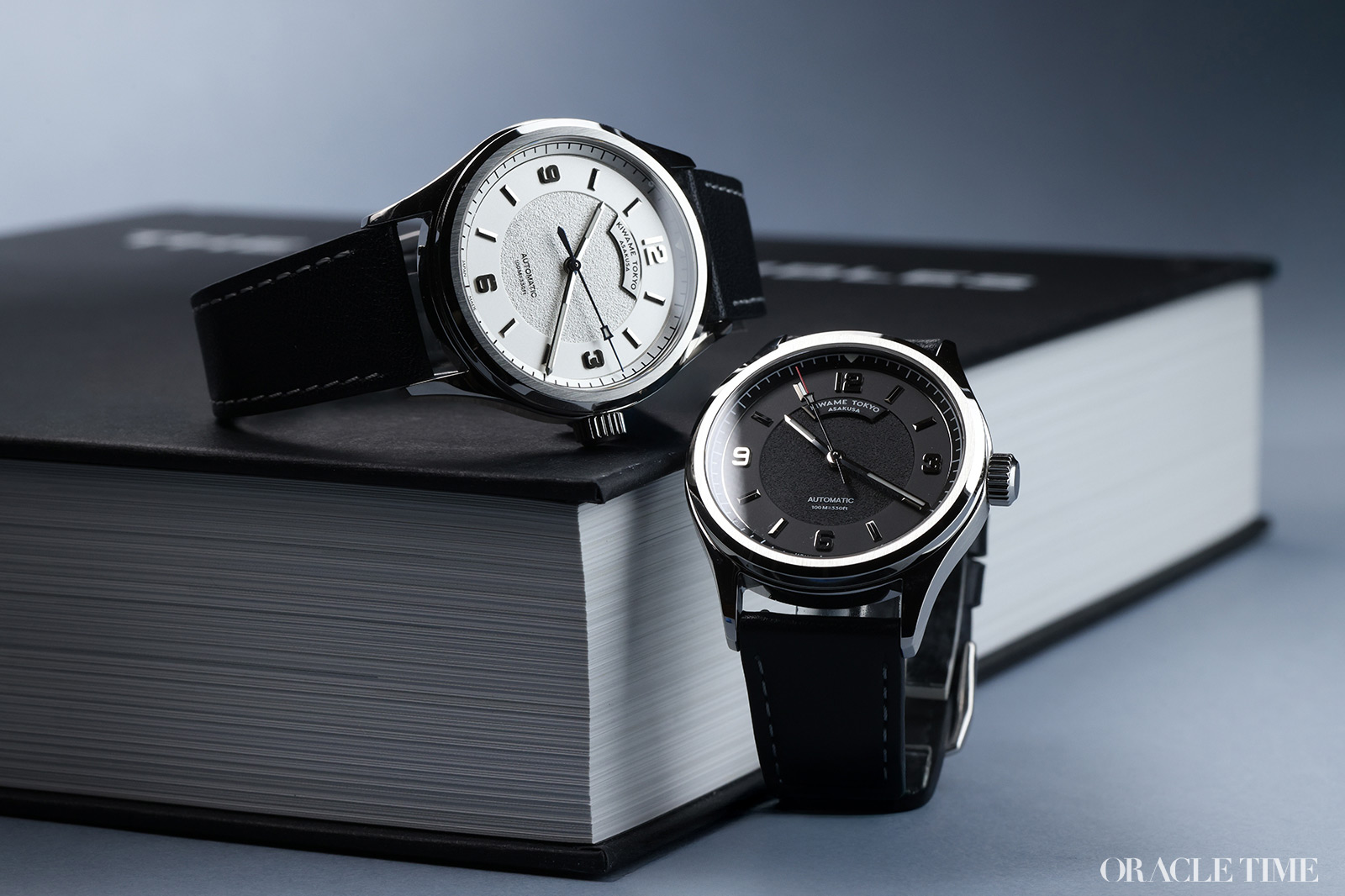
Other features of the updated dial include a new applied name plate at 12 o’clock which is much smarter than the logo on the debut collection and the hands have also been redone. Instead of the syringe style of the debut model, they’re now pencil shapes meaning they’re a bit longer and thicker giving them more presence. The seconds hand though remains the same with a tip shaped like the Kaminarimon gate, a famous landmark in Asakusa where Kiwame is based.
Choosing a favourite between the Ginkai and Sumi is very difficult. They both give similar levels of class and sophistication and feel very smart even in a field watch case. Ultimately, I think what it comes down to is that the Ginkai is easier to read because I find that at certain angles the mirror polish of the indexes on the Sumi model makes it quite hard to read.
Powering both versions of the Kiwame Tokyo Iwao is the Miyota 9039 automatic, a staple third party movement from Japan with 42-hour power reserve. It’s protected by a solid caseback with kanji style logo decoration. A Miyota movement also helps to keep the watch relatively accessible at $690 excl. tax (approx. £520). That makes it a touch higher price than the debut series but not by a huge margin and actually, with the new dial and dressier vibe, the Iwao feels like better value even though the price went up.
Price and Specs:
More details at Kiwame Tokyo.