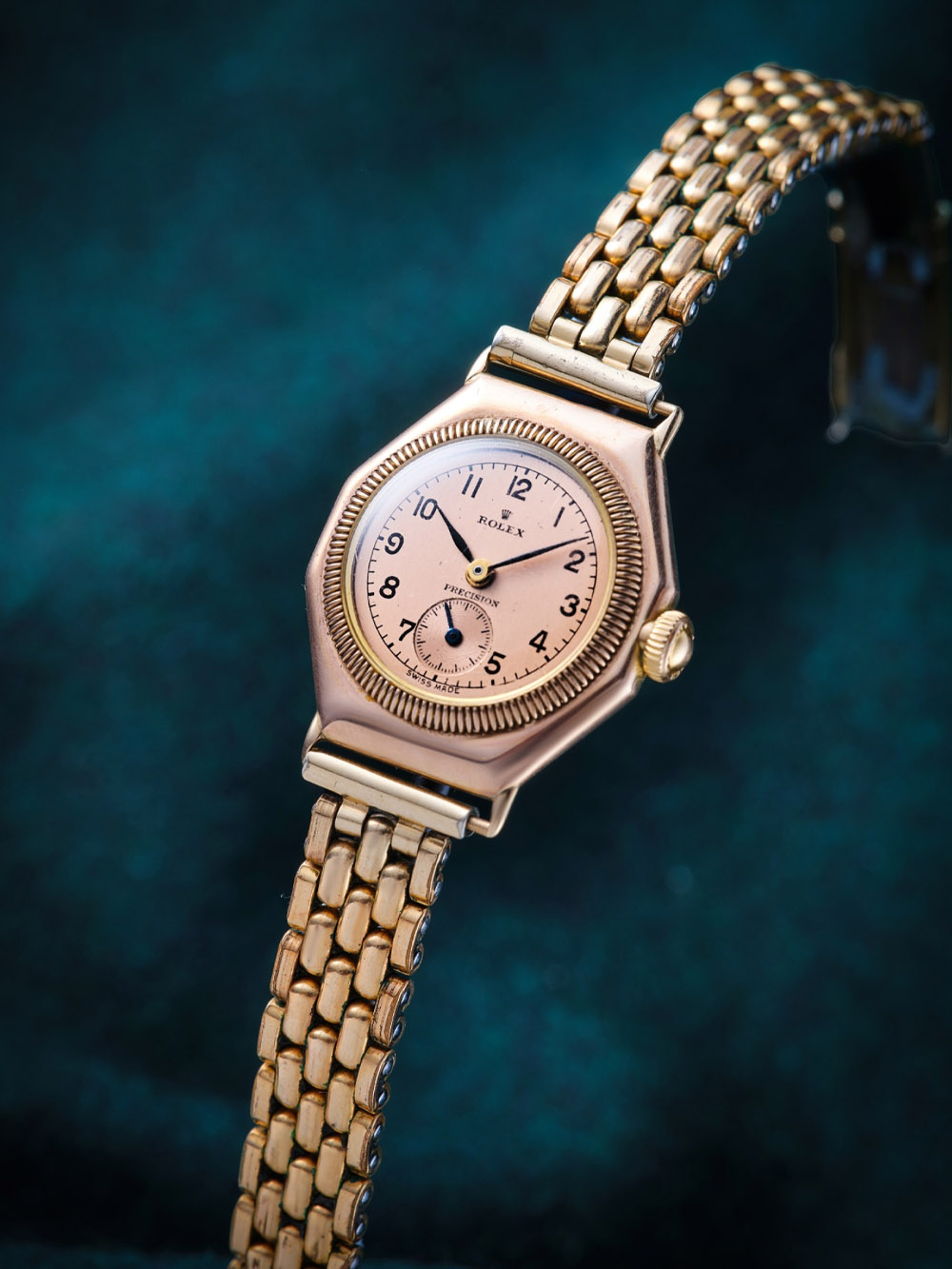

Rolex ‘The Companion’ Oyster owned by Mercedes Gleitze
Most watchnuts know about Mercedes Gleitze and her cross-channel swim, and that this was the definitive proof that the Rolex Oyster was a waterproof watch – something I have been thinking about as her ‘Companion Oyster’ is appearing at auction with Sothebys on the 9th of November. My belief is that Wilsdorf wasn’t really interested in making a waterproof watch at the time. What he and other inventors were most interested in was developing a dustproof watch.
Whilst Wilsdorf was launching the Oyster, his British contemporary John Harwood was developing the self-winding wristwatch. His goal wasn’t to relieve watch owners of the onerous task of winding a watch, rather it was to remove the winding stem and crown, so that dust would have one less entry point to the watch.
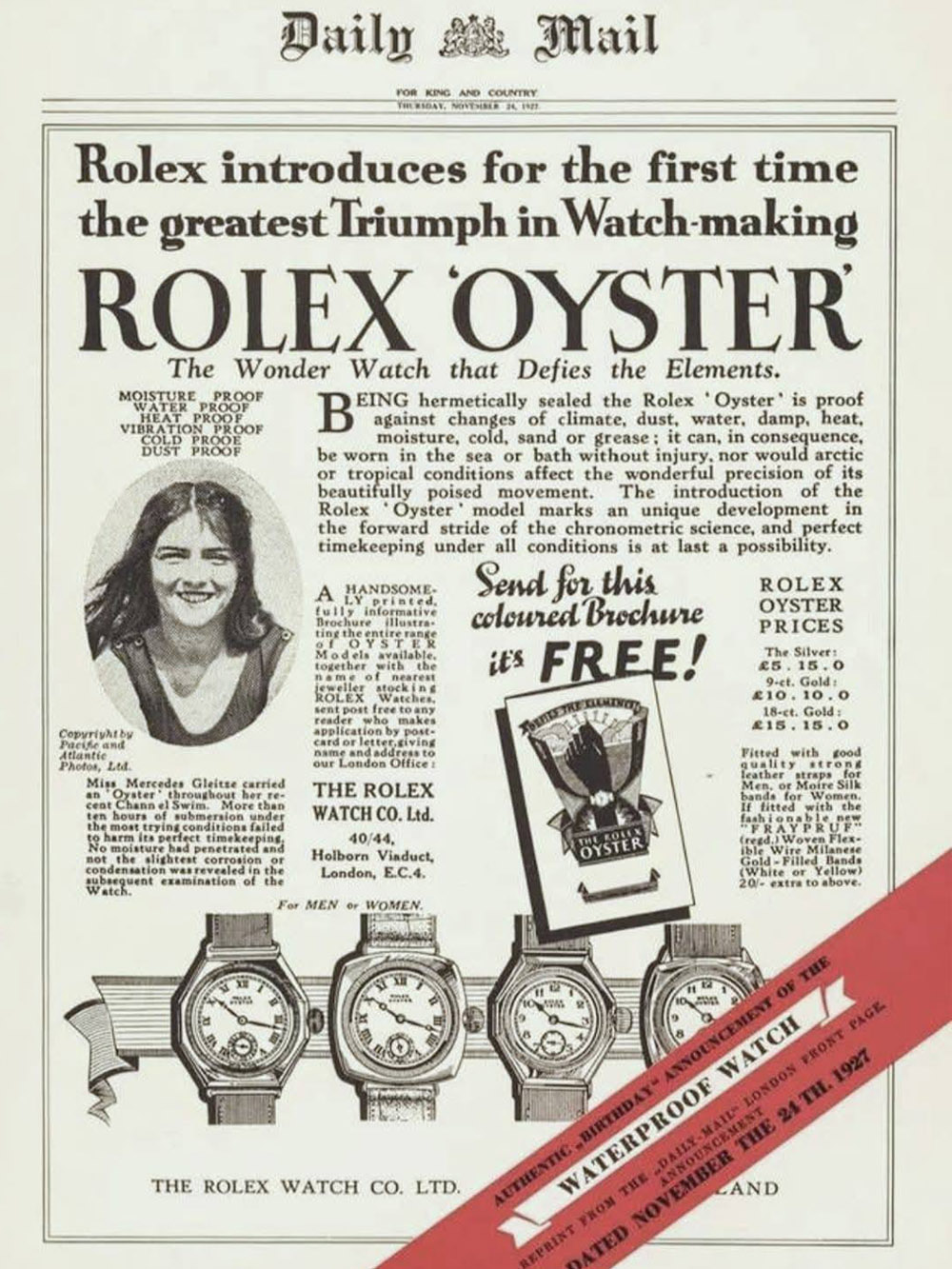
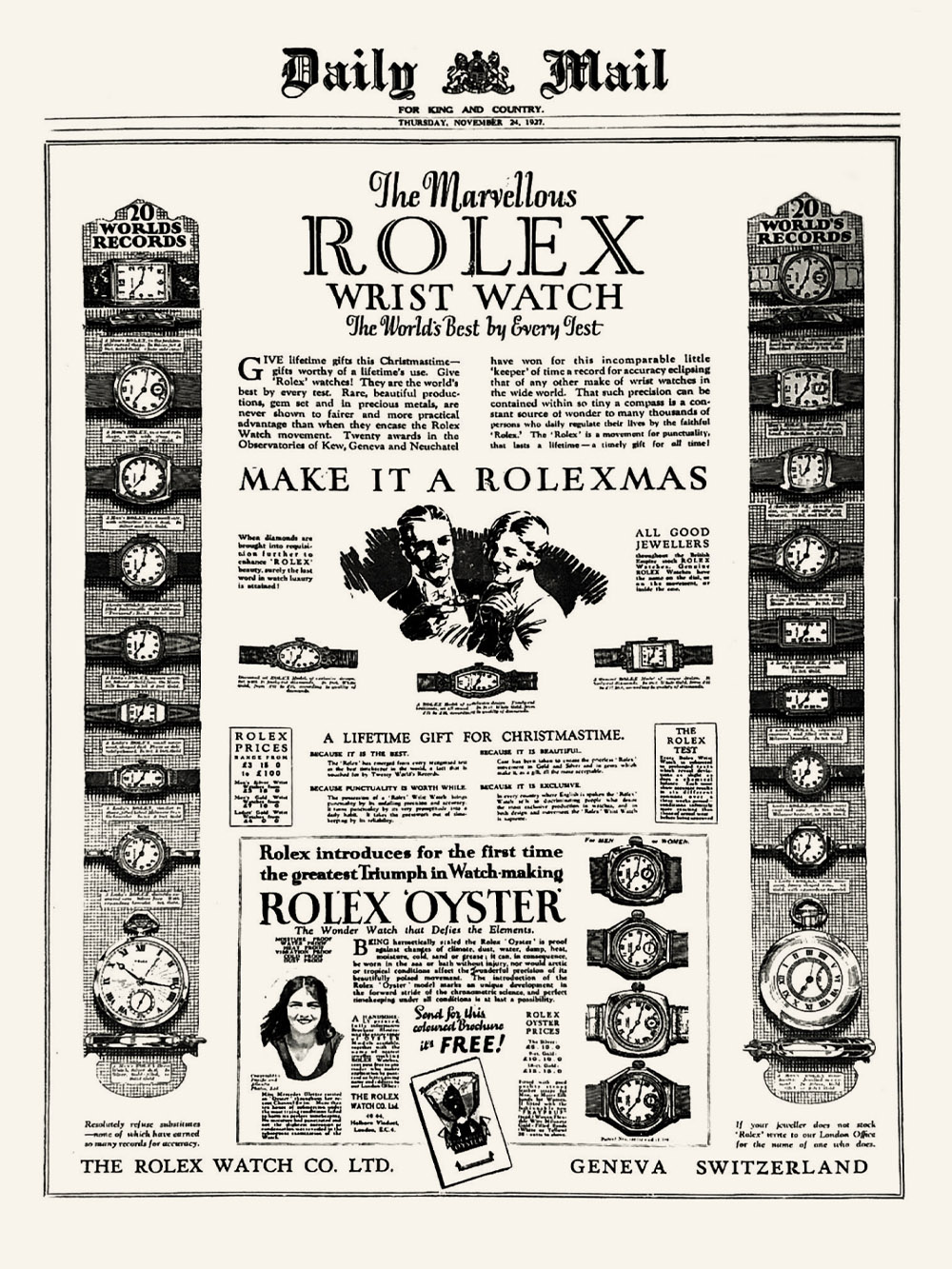
In the famous Daily Mail front page advertisement in November 1927, the Oyster’s protections were listed in this order: “climate, dust, water…”. Water came after dust because, prior to the Oyster, nobody ever conceived of such a thing as a waterproof watch. Nobody had ever made a waterproof watch, because everyone knew that you didn’t take clocks, pocket watches or wristwatches anywhere near water. It’s why nobody makes waterproof TVs nowadays.
But dust, that was a real problem – or half the problem. The complete problem arose when dust entered the watch and combined with the lubricating oils of the day. These oils were mostly produced by boiling down cattle hooves, although the best were still produced by distilling the fat found in the heads of porpoises. The dust itself was principally formed from human skin flakes, textile fibres and soot from coal fires. All of these were dry and would adhere to the lubricating oils, drying them out by absorbing the oils. As more dust coagulated in the mixture, it ceased to have lubricating qualities and instead developed abrasive ones, wearing away the moving parts instead of protecting them.
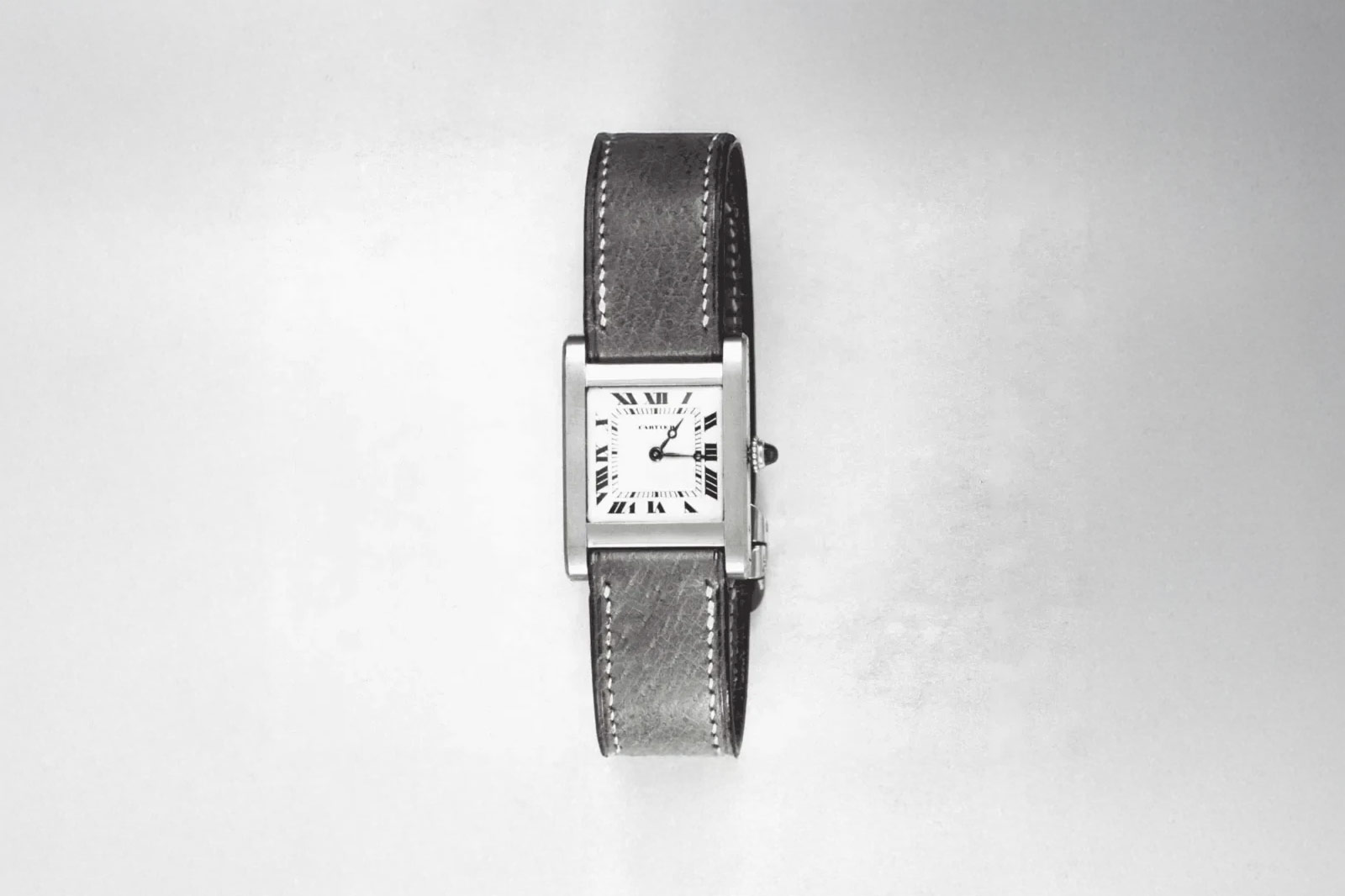
Cartier Tank Nornale
The first (mostly) dustproof watch was, not designed as such, it was merely an unintended benefit. This was the Cartier Tank. Prior to the invention of the Tank, all watches, whether for the pocket or wrist, had either snap backs or screwed ones. Snap backs, by their very design could not be dustproof, so most pocket watches had an inner cuvette, known as a dust cap in English, to try to halt the ingress of the dreaded dust. Wristwatches, on the whole, had no room for a cuvette and even screw back watches weren’t completely dustproof as there were no functional gaskets at this time. Rubber ones hardened and cracked over time and the leather ones used on large machinery couldn’t be used on watches.
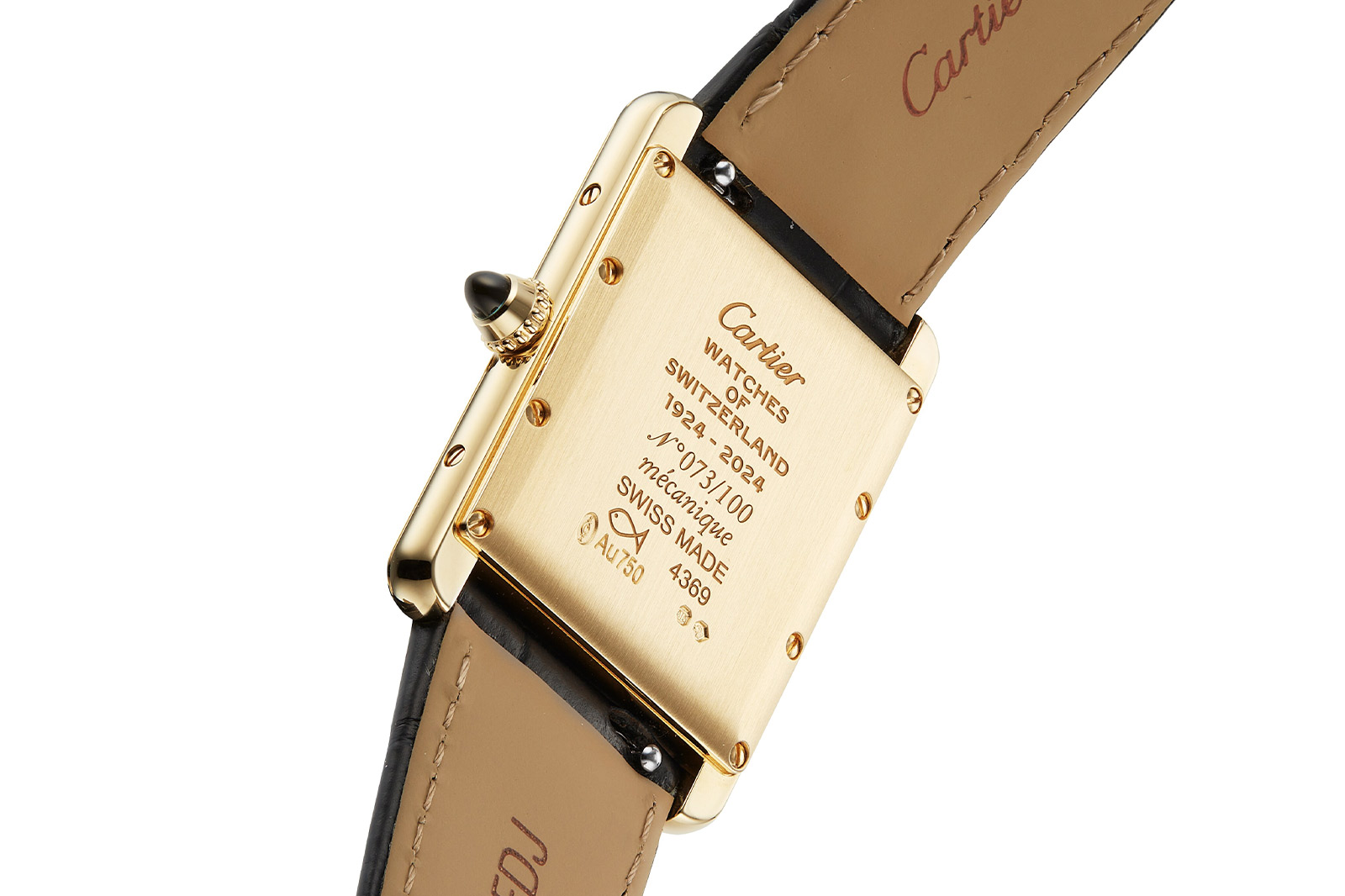
A modern Cartier Tank Louis Cartier shwocasing the screws going through the case sides
But the construction of the Tank changed all this, as its design and construction, with four screws going through the case sides into blocks cast into the case back, made the watch almost impermeable to dust, apart (of course) from that which entered via the winding stem. The screws meant that the sides of the case were pushed hard against the back of the case, sealing them tight without the use of gaskets. Wilsdorf solved his gasket problem by using thin, soft lead ones, these allowed the two imperfect surfaces to be sealed together but had the disadvantage that they could only be used once – solving both dust and waterproofing simultaneously.

Rolex Oyster (1926)
What I find interesting was that, after succeeding in creating a dust and waterproof watch, Wilsdorf chose to emphasise the ability to be impervious to water, not dust, which I think he did because he knew that customers would immediately comprehend that a watch which was waterproof would be equally resistant to dust. Dust, this great villain of early wristwatch design, was suddenly relegated to being a sidekick of a much greater foe – one with whom Rolex still tangle today with their increasing obsession with water resistance ratings.




Rolex (or Cartier) didn’t invent “waterproof” watches in any manner, at best there is an argument that they popularised them.
Damp and dust are two aspects of the same problem for a watch case, keeping the delicate movement protected.
Everything that Rolex claimed made the Oyster case so revolutionary had already been invented and patented by the mid 1880s (including the screwdown crown)
Evidence for waterproof watches goes back as far as 1851 and by the end of the 19th century adverts for damp and dust proof watches were actually commonplace.
Even on wristwatches there were dust, damp and even waterproof watches on the market for a full decade before Rolex introduced the oyster.