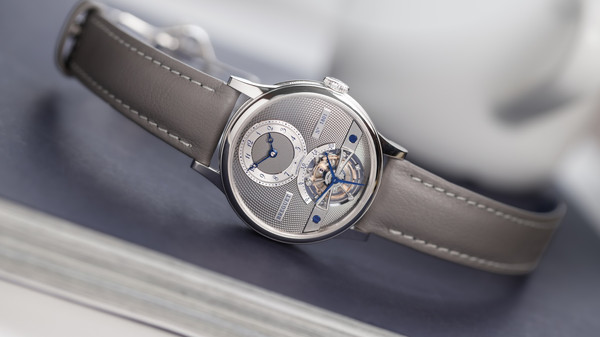
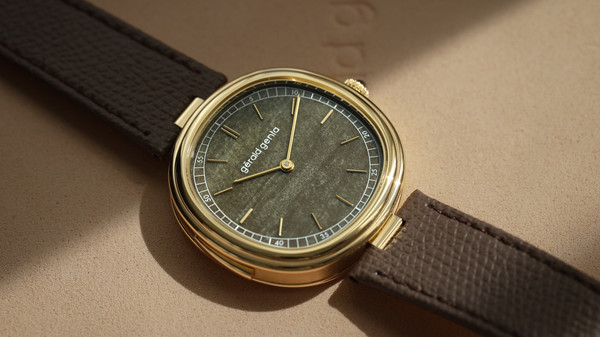
Breguet has been having a year. Their 250th anniversary celebrations kicks off with the stunning Souscription, they gave their legendary pilots’ watch a proprietary gold makeover and their overdue rebrand is showing no signs of slowing. Now that they’ve tapped their most iconic pieces however, it’s time to take a look at the collection that’s defined the modern Breguet style: the Classique, in two new models, the Classique 7235 and Classique 7225.
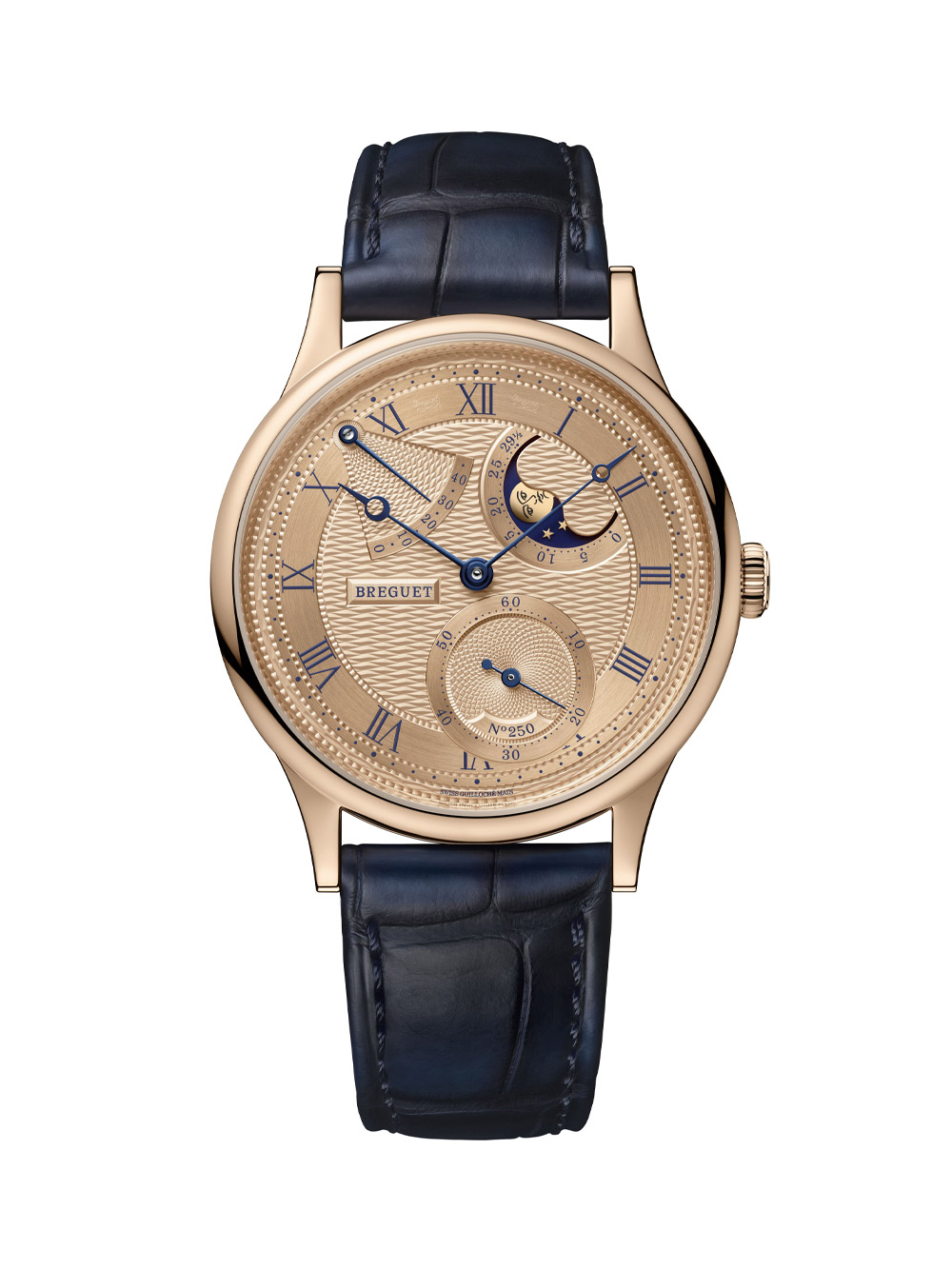
Breguet Classique 7235

The Classique 7235 is a tribute to one of Breguet’s founding watches, the No. 5 of 1794. Obviously, the No. 5 was a pocket watch, this was long, long before wristwatches became the de facto timekeeper of choice. Regardless, it was an absolute stunner that went straight to literary scholar François Jourgnac Saint-Méard. If you’re ever in Paris, you can see the original in Breguet’s museum on Place Vendome, which is well worth a visit. The No. 5 isn’t even the most historically important piece there.
The layout of the pocket watch was very Breguet, an asymmetrical mix of small seconds at 5:30, a fun moon phase like a less creepy Georges Méliès character at 1:30 and a wedge of a power reserve at 10:30. Around the edge of the watch are Roman numerals and at the centre, of course, Breguet hands.
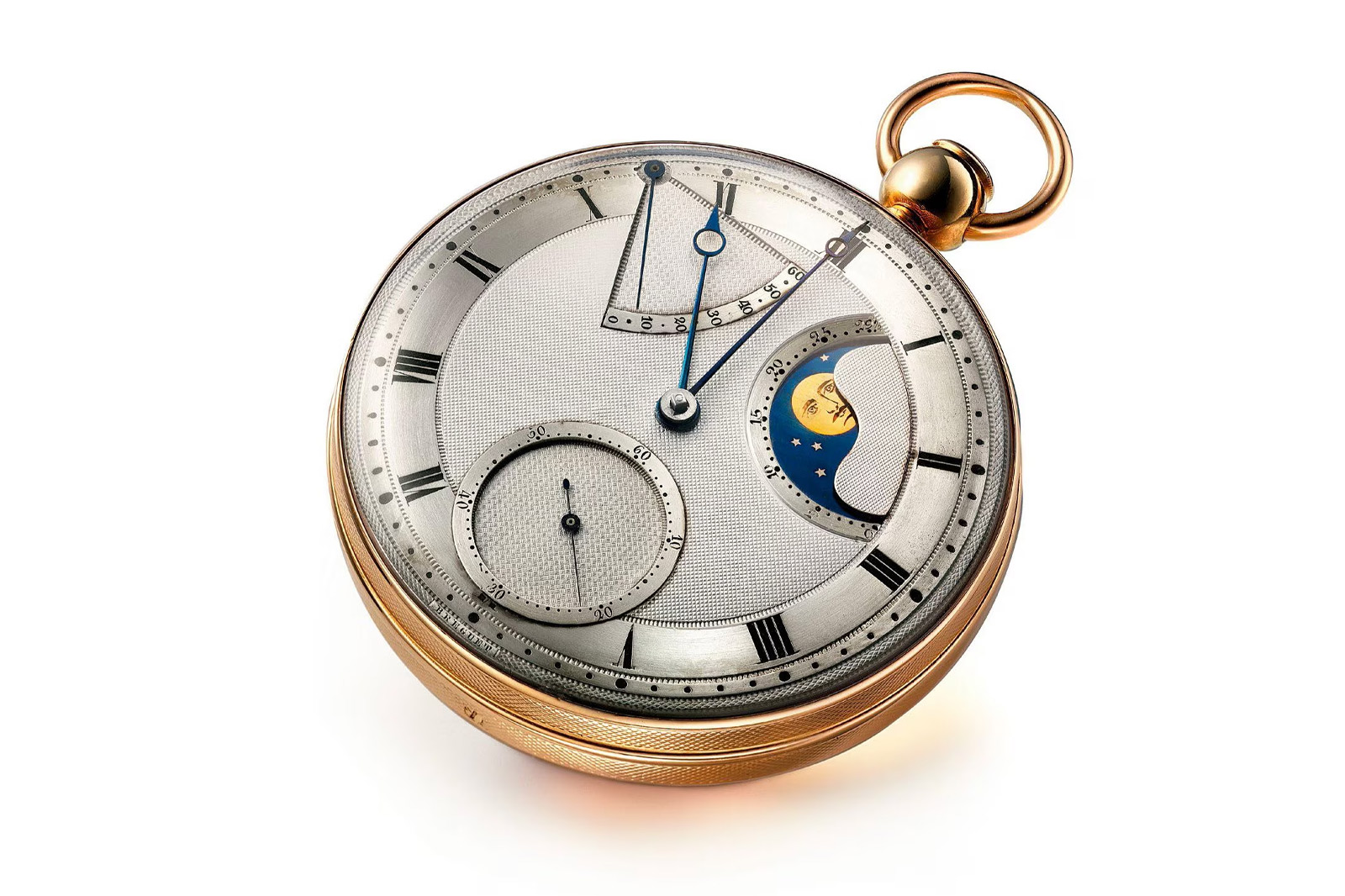
Breguet No. 5
More importantly – especially for the new version – is that each indicator has its own guilloche. This wasn’t just a tour de force of finishing (which it was), it helped differentiate the functions on the dial and has been a string in Breguet’s aesthetic bow ever since.
The new Classique 7235 takes that layout exactly as it was, downsizes it to fit into 39mm watch and amps up the finishing to new heights. The stunning Quai de l’Horloge finishing is kind of like a more curvaceous barleycorn with a much larger, more pronounced pattern. More importantly, it’s gorgeous.
The various directions of guilloche are separated by brushed inserts with dark blue numerals to match the hands and moon phase backdrop. The colour’s relatively subtle but pops nicely against the Breguet Gold, well, everything.
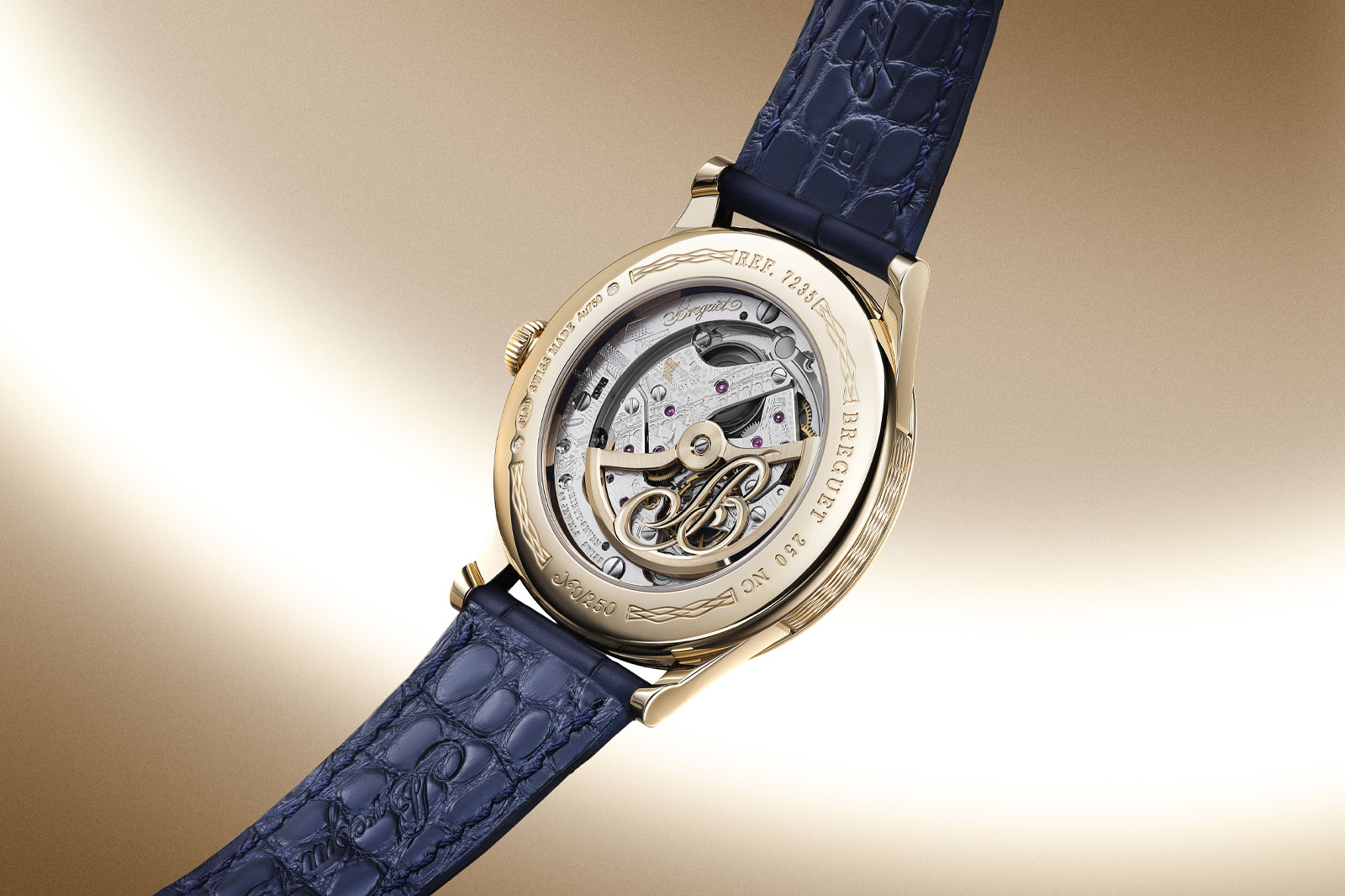
Inside is the Calibre 502.3.DRL, which you can see through the exhibition caseback. And you should. The specs are solid – 45-hour power reserve, silicon balance spring and escapement, 3 Hz frequency – but it’s the finishing that’s the star. The entire thing has been engraved with the historical Turgot map, an insanely detailed map of 1730s Paris, specifically where Breguet’s manufacture was located. It also shows off the offset rotor (not quite a microrotor) that helps keep the movement and thus the watch as a whole relatively slim at 9.9mm.
It also includes the new Breguet Hallmark – Breguet’s new in-house certification process for finishing and mechanics both. You know the Poincon de Geneve? It’s like that, but (apparently) more demanding. Given it’s in-house, who can tell?
Price and Specs:
Breguet Classique 7225
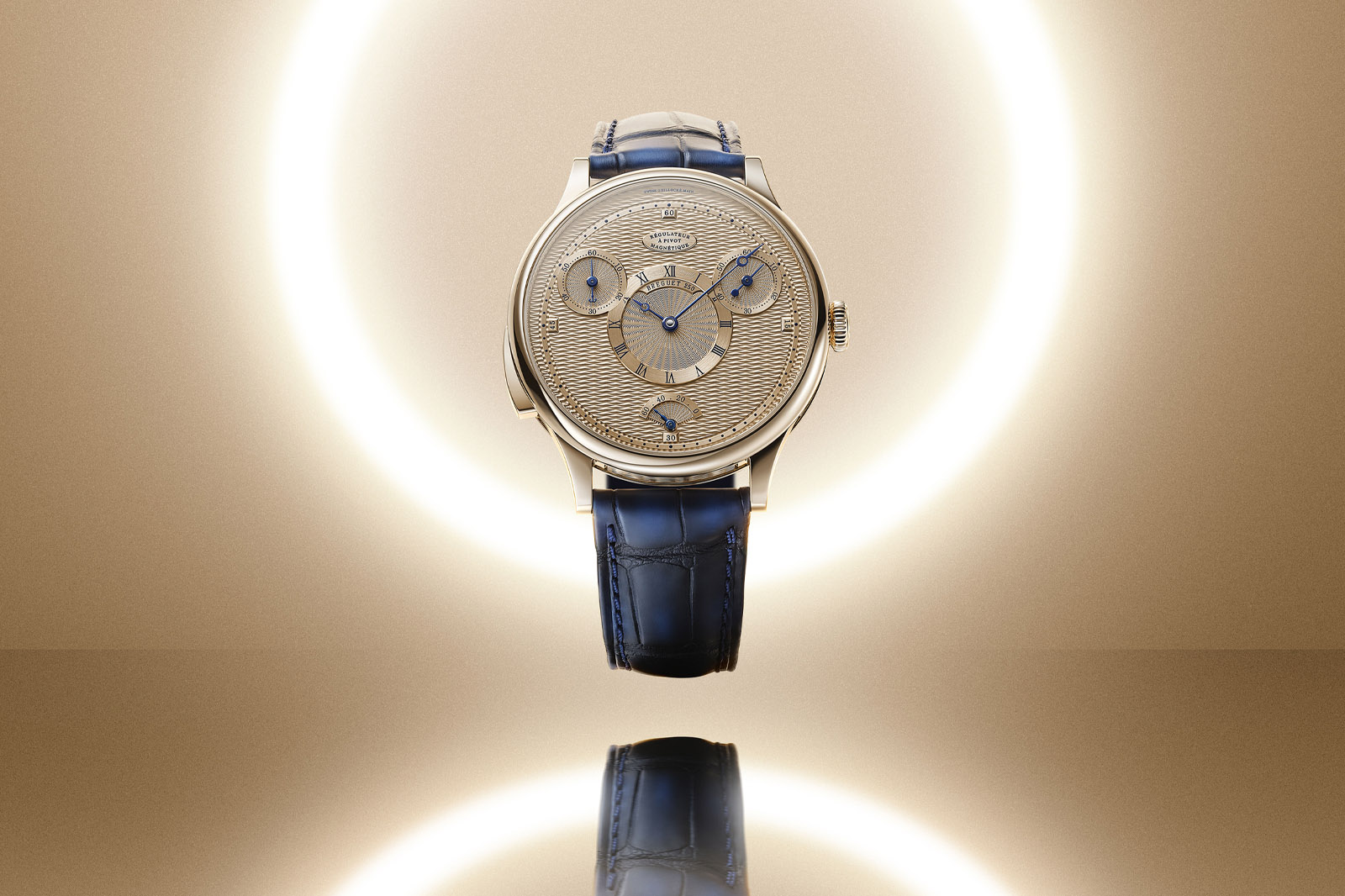
If the previous watch was an ode to Breguet past, the 7225 is the future. On the surface is has the same kind of finishing as the 7235 and like that watch, its layout is inspired by a historical Breguet pocket watch, namely Breguet No. 1176. Once again, it takes its dial layout from that museum piece, which might have you wondering why there are two small seconds indicators – one at 2 o’clock, one at 10 o’clock.
Well, the small seconds at 10 o’clock is actually observation seconds. In essence, this is like a chronograph that never stops. Instead, it has a flyback function meaning that when you want to start timing something, you push the button at 3 o’clock and it snaps back to zero, running from there. It’s more a heritage nod than a useful complication, but for small timing increments it still has its place. Either way, it lets me talk about weird and wonderful complications, never a bad thing. For me, at least.
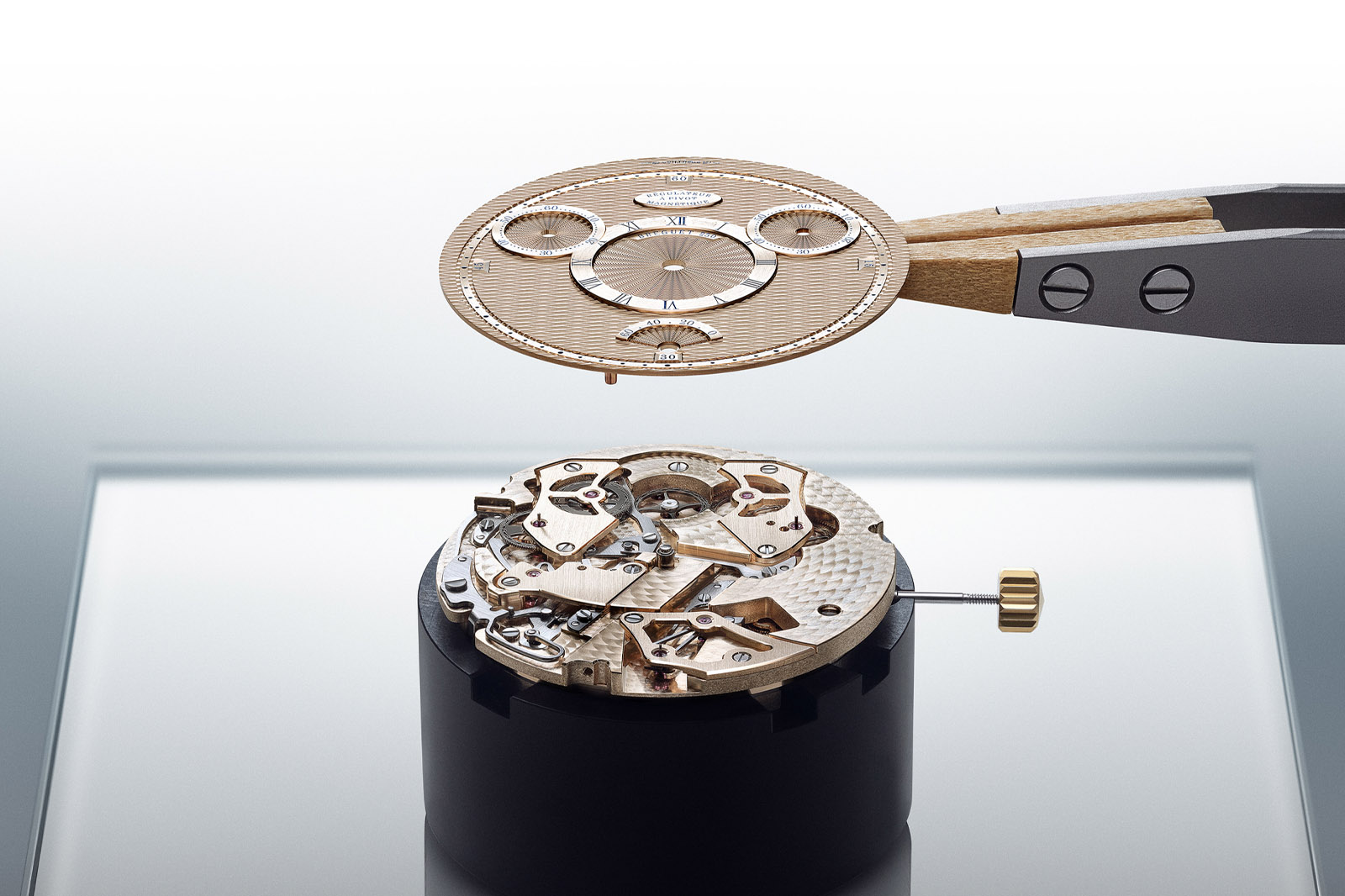
So far so archival. What’s different though is that the original pocket watch was all about constant force and included a fusee and chain system to accomplish just that. Now that we’re in an era of much larger power reserves, that fringe necessity for constant power at low energy is less necessary. So the Classique 7225 goes another direction for chronometric performance: frequency.
The new calibre 74SC has a frequency of 10 Hz. That’s 72,000 vibrations per hour, in a world where 21,600 is considered pretty high. Grand Seiko’s impressive hi-beat is still ‘just’ 36,000. And the strangest thing? Normally the amount of friction generated by that kind of frequency would have a big effect on timekeeping. Breguet however have solved that friction problem and they’ve done it with magnets.

Magnetism is the mortal enemy of most watch movements, making it harder for the balance spring to oscillate and thus gaining far too much time. Here though, a magnet is placed each side of the balance staff. The tip of the staff is placed in a jewel, but the main body of it is suspended between the two magnets. This lowers friction (even though rubies are low friction, it’s still there), amps up stability and means you can talk about how your watch harnesses the power of magnetism.
Of course, key components are made from silicon, which is antimagnetic, so there’s no worry about the magnetic pivot system negatively impacting the rest of the watch. One of those components is of course the escape wheel, which has been reengineered for a 10hz movement. Breguet in the madness of inspiration has also taken the opportunity to engineer in two inscriptions: 1775 and 2025 to commemorate the anniversary, inscriptions you can only read when the wheel is working at full speed.

The end result of all of this is a watch that has +/-1 second a day precision but has one of the most captivating modern movements around. Oh, and it still has an impressive 60-hour power reserve. The fact that it’s gorgeously finished on top of that is just showing off.
Price and Specs:
More details at Breguet.