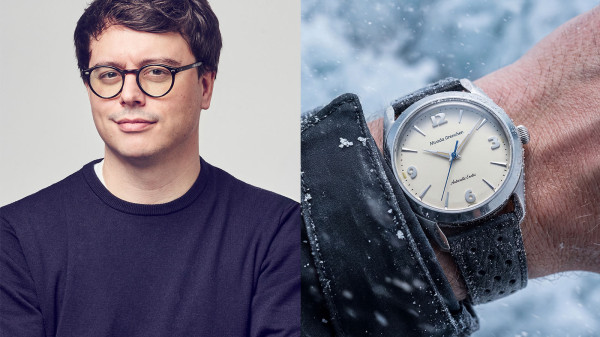
With a quiet demeanour and a penchant for bold-framed specs that make him an eyewear idol, Monsieur Giroud is the secret weapon of Swiss watch brands. Before Baselworld imploded, you could walk in through the sliding doors to find Eric Giroud’s designs shown in eight or ten different brand booths. And that might not even have been a peak Giroud year, as many big brands still keep schtum about the actual designers behind their watches. Eric started as an architect, and even though that profession was not to be his calling, he has always remembered the architectural wisdom of remembering who you are designing for. The project you are working on is for a client, it is not your own house.
In our chat, Eric makes it very clear that even if designers like himself, Emmanuel Gueit, and Jorg Hysek are now being named, many brands still hold their cards close to their chest. Eric’s sage advice to young aspiring designers is to leave their egos at home. In addition to his well-known work with long-time friend Max Büsser, Eric Giroud is also working for big brands. However, due to Swiss NDAs and steel-lined designer contracts, a lot of his work cannot be mentioned. For many collectors, Eric is known for his flamboyant MB&F designs, but how did it start?

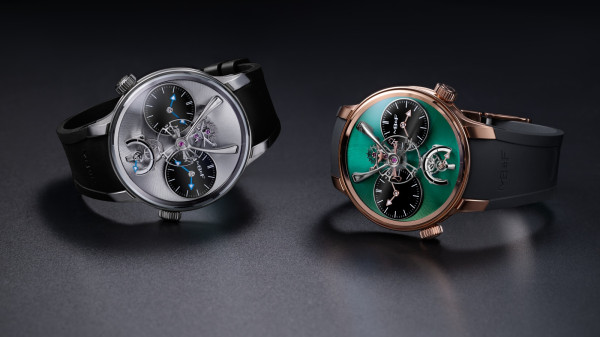
MB&F M.A.D.2 Eric Giroud
“Peter Speake-Marin introduced me to Max when he was at Harry Winston, a brand I’ve also worked for, but not at the same time period,” Eric explained. “We became very good friends, having many lunches and dinner discussions. When Max started MB&F, I was very surprised. I enjoyed my work for Harry Winston, a cool brand with an open mindset. But when Max arrived with his new ideas, I was in, because we were very close and I believed in his vision.”
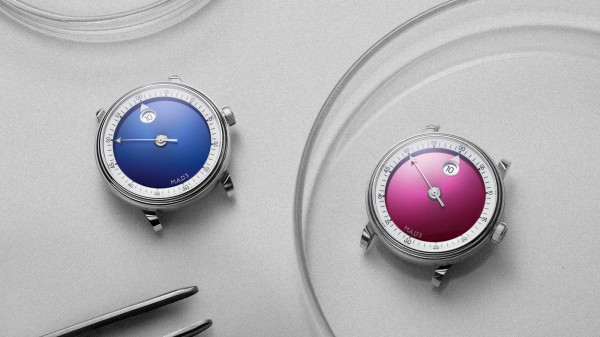
But Giroud’s work is still multi-faceted, and this year, two standout Eric Giroud designs are nominated for a GPHG award. His longstanding relationship with MB&F is manifested in the M.A.D.2, the affordable face of Max Büsser’s indie empire with its vinyl groove-inspired look. The second GPHG nomination cements his importance as the go-to designer for independent watchmakers, with the bold retrograde CH1 for debut Swiss brand Guebly.
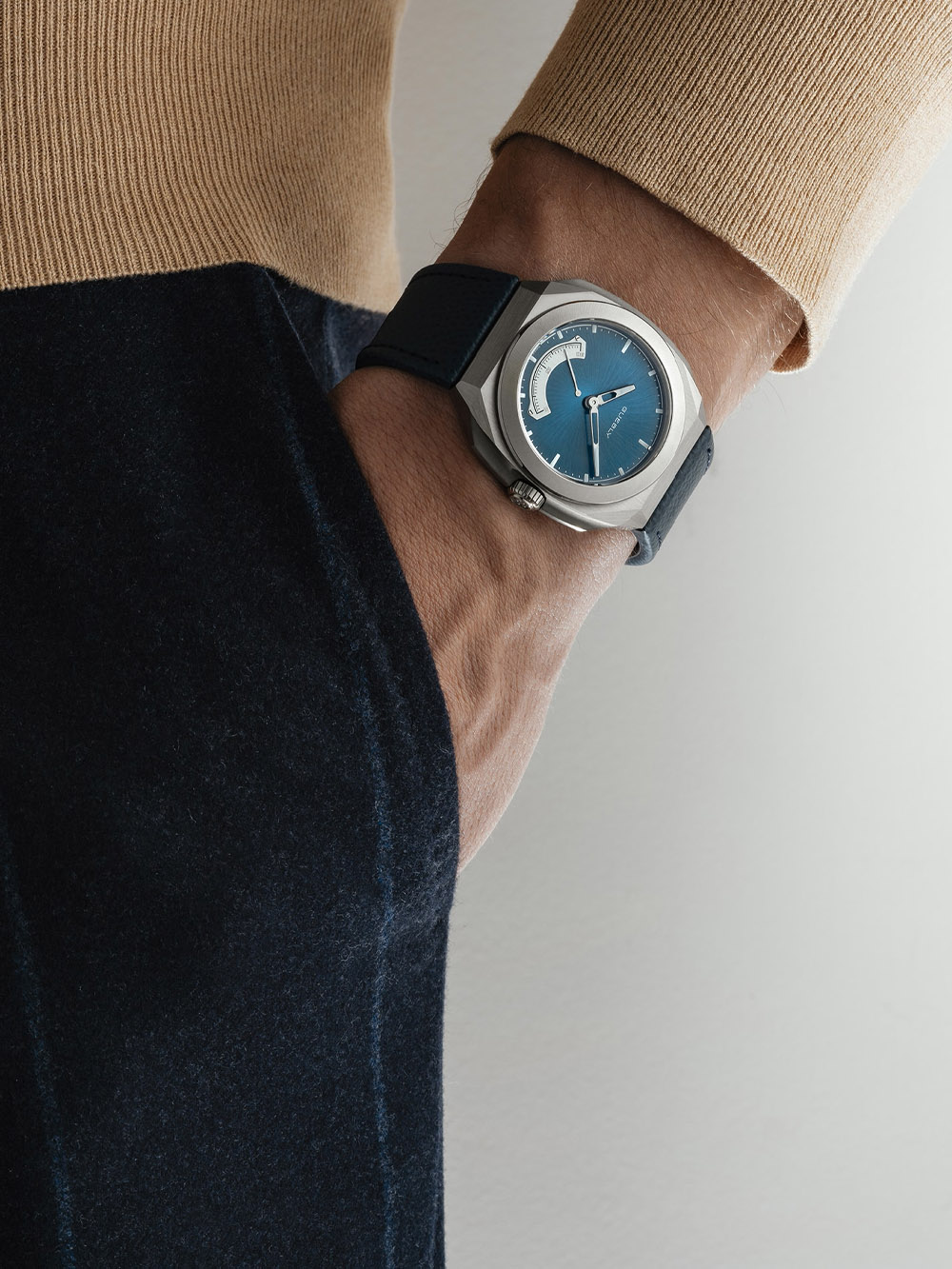
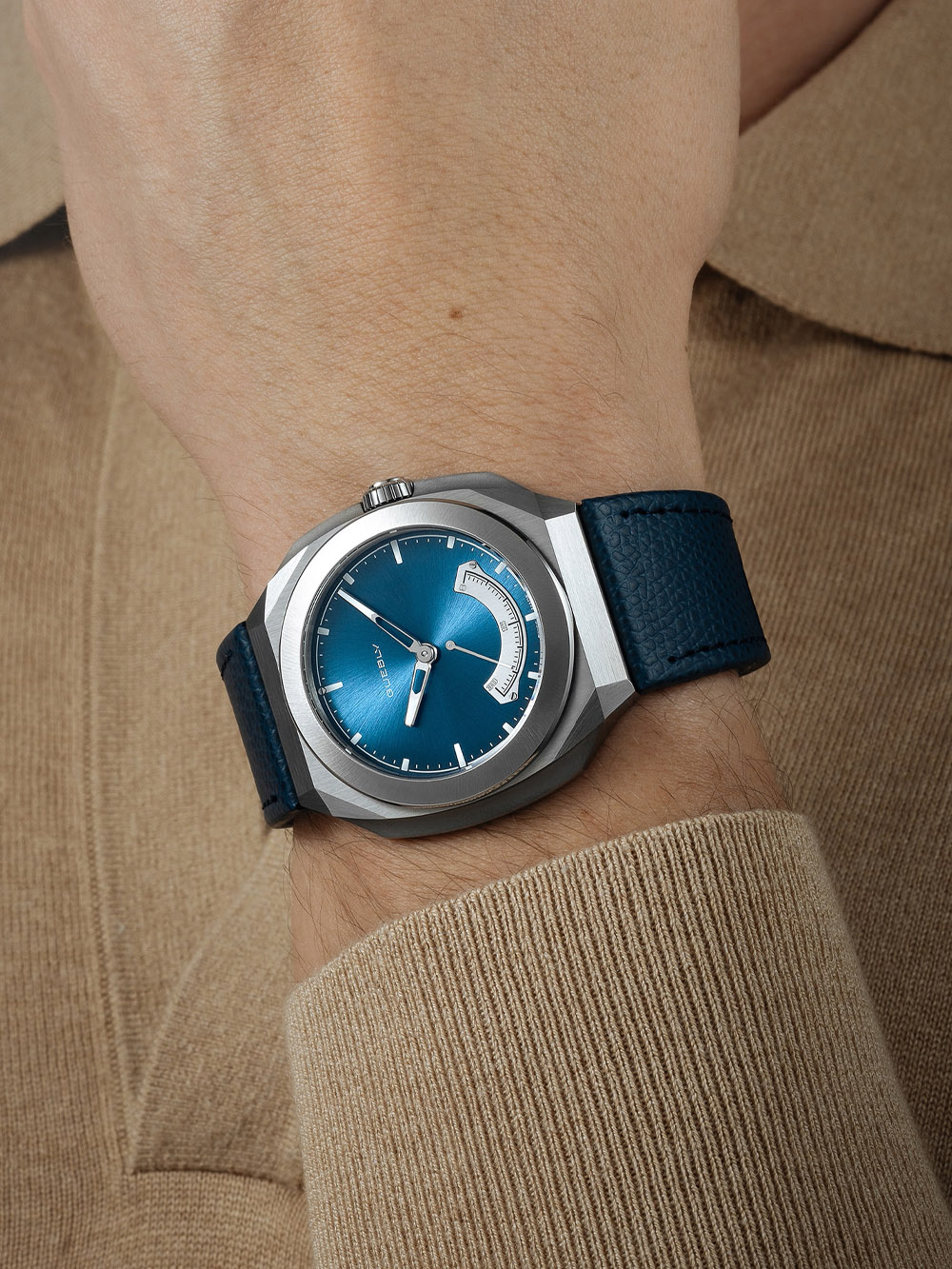
Geubly CH1
On working with Eric Giroud, Guebly founder Adnane Kerd tells me: “Eric initially reworked the dial design of the Prologue in the first phase of our collaboration. Later, in a second project, he designed the entire exterior of the CH1 Rétrograde, using the Prologue’s architecture as a base while creating a completely new dial and set of hands. More projects – still confidential at this stage – will be revealed soon. What I particularly appreciate about Eric, beyond his immense talent, is his approach: very pragmatic, he always begins by identifying weaknesses in order to improve them, with a clear sense of progress and respect for the brand’s DNA.
He doesn’t try to impose his own style, but rather helps bring forward what will make the project more authentic. He listens, understands quickly, and transforms ideas into design. Our exchanges are always sincere, straightforward, and respectful. It’s a rare privilege to collaborate with someone who is both open-minded and structured. His contribution has been instrumental in helping Guebly evolve while staying true to its identity.”

MB&F SP One
Eric Giroud started as an architect with his own practice back in 1989, and I had a multi-faceted conversation with him on what makes him tick (pun intended), and his role in shaping watch designs today. Giroud is the owner and designer at Through The Looking Glass, his personal company based in Geneva, and has had a hand in designs winning over 20 GPHG awards, but none under his name. He remains delightfully grounded, with a catalogue of work running the gamut from everyday Tissots to wild Horological Machines from MB&F.
After first opening his own architect’s practice in 1989, I asked Eric about what made him pivot to the much smaller scale of watches, and when that happened. “It’s very simple,” Eric said. “Two years after opening, the 1991 Gulf War was upon us with effects on the economy as strong as COVID, and we had to close the small practice. After this, I decided to travel through Africa, where I spent 18 months, and I was a bit lost. When I came back, I dabbled in fashion graphics and photography. After this, I worked in a design office in Switzerland, where I began creating graphics and packaging, as the designers were responsible for the actual product. And I was not a designer.”
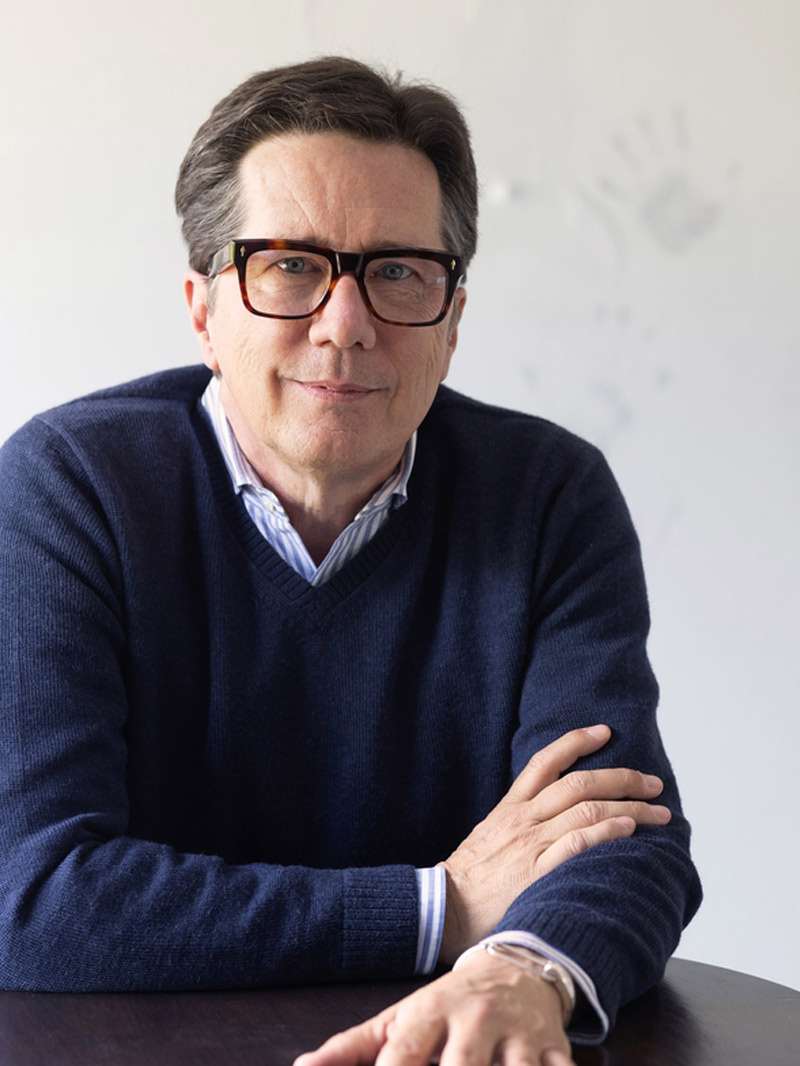
The big change happened when one day a client of the design office arrived, and he was looking for help with designing a watch, and an opening for Eric Giroud. “The office opened an internal competition between the designers, and I offered to make a proposal. To cut the story short, the client ended up choosing my proposal, and at the same moment, I met my wife, Jack Heuer’s niece.” This was life-changing for the young Eric Giroud.
“Jack helped me build my small design office and advised me not to rush into it,” Eric says, “while also introducing me to a contact at Mido. I started with dial designs, and for the first four or five years, business was not amazing. But I learned a lot and met the right people, and that was my start in the industry.”
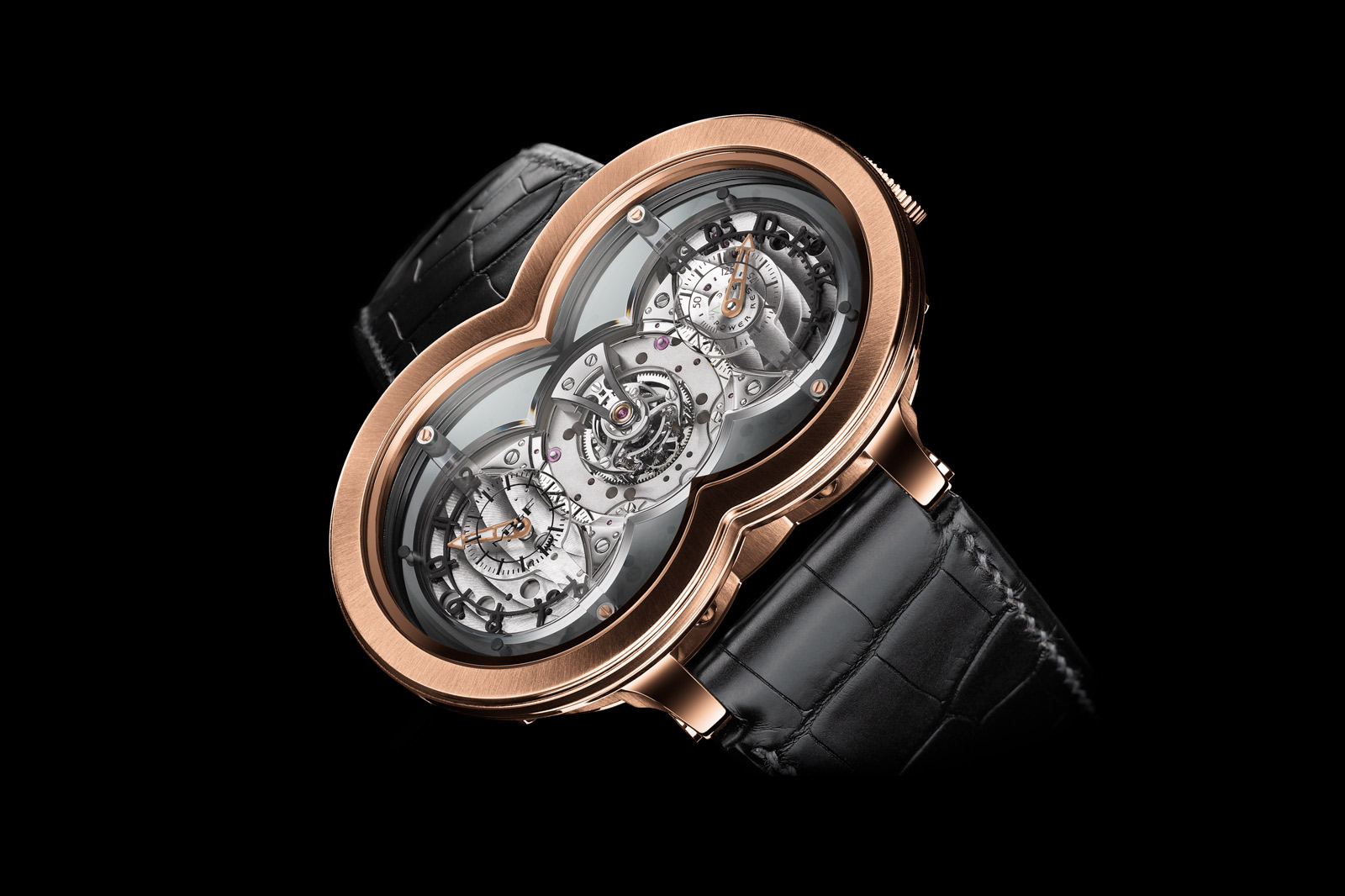
MB&F HM1
Giroud has worked with Max Büsser for over 20 years, being instrumental in the earliest designs, starting with the 2006 HM1. Having been a big part of the brand’s ascent, I asked Eric about what it is like working with such a free-spirited brand and its founder. Giroud tells me that when he started working with MB&F, each Horological Machine was an evolution of the same case design, until one day Max decided to change everything.
“Max decided that each project should be not an evolution but something new, like opening a new window or a new area. And that was the start of everything we know today, and for me as a designer it was a luxury,” Eric said. “I’ve worked with Max for over 20 years. We are totally different people, yet we complement each other. I respect Max, and he respects my background. But I think it’s crazy; I never would have imagined it possible. Having worked with some brands for six or seven years, which is my longest stint, I find it hard to believe that with Max, it’s never-ending.”
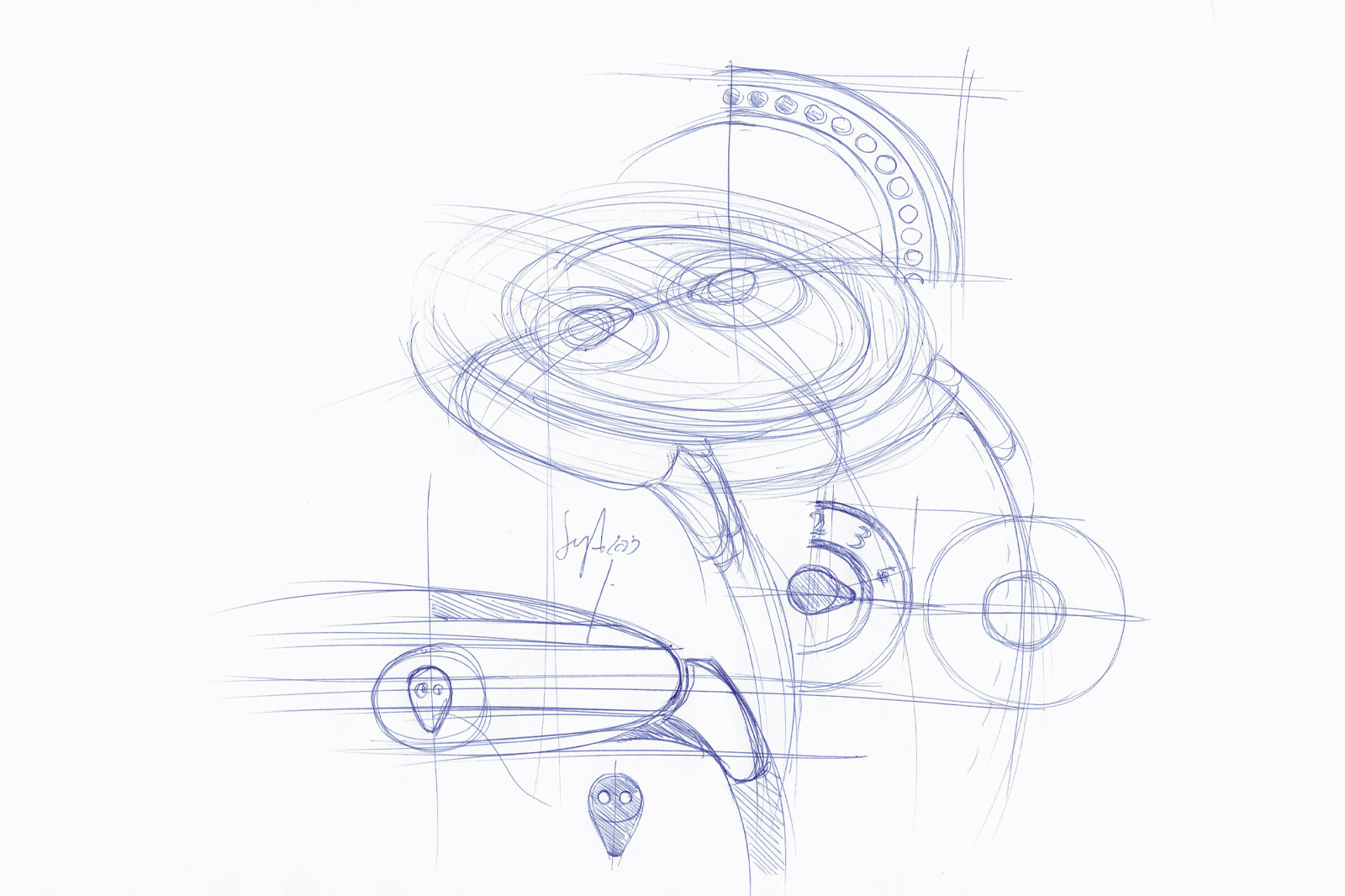
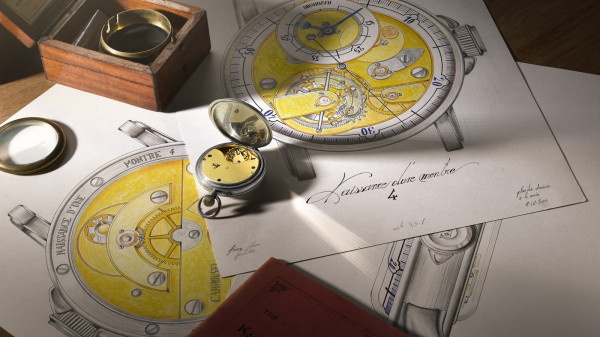
MB&F M.A.D.2 Sketch
There is an ever-growing theory that it is crucial for high-end brands like MB&F to expand their offerings to more accessible pieces, such as the M.A.D.2. Eric agrees, and gives us the backstory. “The idea originated many years before the first M.A.D.1, as Project Green Dog, approximately five years after MB&F’s inception. We worked extensively on it with the goal of making a watch under $5,000. We had a prototype and everything ready, but it was not the right time.”
The project could have stopped there, never to resurface, but after 15 years, Max returned to Giroud with a new idea. “He wanted to create the M.A.D.1 for the MB&F community, aiming for a price under CHF 3,000 and a watch that was both funky and fun. The support was huge, and I was thrilled when Max asked me to take on the M.A.D.2. Not many brands try this, and there is a significant difference when comparing it to, say, F.P. Journe designing the Chronometre Bleu for a younger audience at 17K, when the regular range started at 28. It was still too expensive, comparable to the cost of a car.”
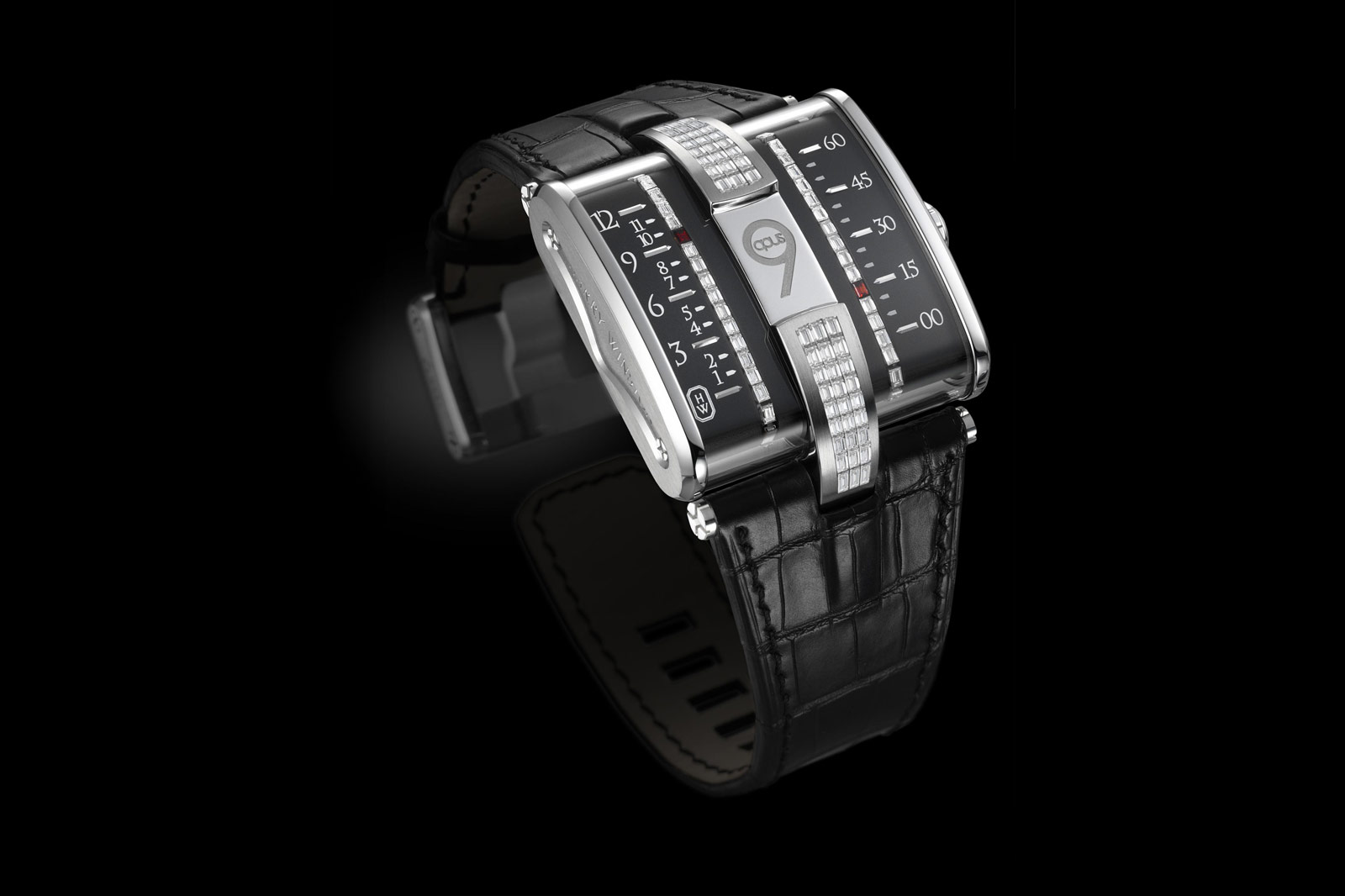
Harry Winston Opus 9
Eric Giroud’s designs span decades and a multitude of brands, we asked him if there are any particular watches he feels more strongly about, perhaps being milestones in his career, and why: “The first step was when Tissot asked me to design the PRS516. I was working for Mido on the same floor and looking at Tissot seemed like Rolex in comparison. One day I opened the door and I went into the Tissot office and secured a commission for some dial designs. Then one day Tissot asked me for a complete project involving the case, different dials, and different bracelets and leather straps.“
This was a wow-moment for Eric, and it dawned on him for the first time that it might be possible to stay on this platform, designing watches as complete projects. “My second step was working with Harry Winston on Opus 9 with Jean-Marc Wiederrecht. Why? Because my name was on at the back of the watch. Wow. At Baselworld that year I stayed for 10 days and saw a total of 600 journalists, and brand bosses telling me that this was the most interesting piece at the show. This was a very important moment because everything changed. I had two choices, the first was to build up an office with staff, but that wasn’t me. The second option was to stay solo, which was my choice. From spring 2009, during the summertime and the autumn, many people called, from many brands, big, small, new and old. Before this, I had to go to brands asking for work, and everything changed after Opus 9 when journalists called me for interviews. I feel very lucky because, from that moment on, I could choose who to work with, and sometimes I make good choices.”