
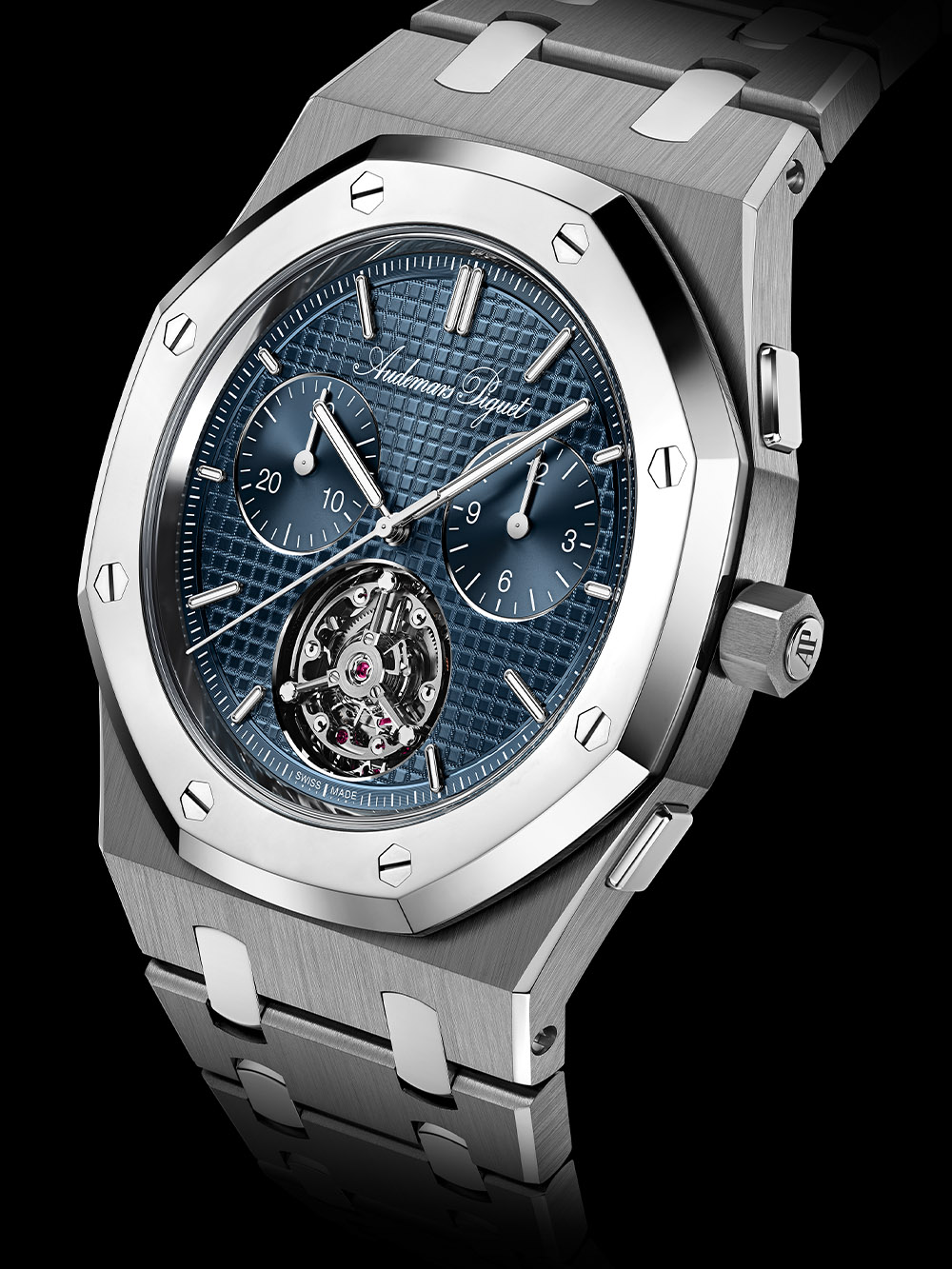
The RD# series of Audemars Piguet watches is their experimental line that explores new innovations and mechanical advancement. Sometimes they are as simple as producing a very small 37mm flying tourbillon watch, like the RD#3, and sometimes they are conceptually much more complex. That’s what we have in the case of the new Audemars Piguet Royal Oak “Jumbo” Extra-Thin Selfwinding Flying Tourbillon Chronograph RD#5, which is being described as the final model in the RD# series.
On the surface, the innovation of the RD#5 is relatively straightforward, as it’s the first Royal Oak “Jumbo” to combine both a tourbillon and chronograph function. However, the complexity and innovation present in the mechanism of the watch is much greater than may first appear -and it’s all in service of the chronograph pushers.

The history of chronographs is well documented, what’s less documented is the ways in which chronograph pushers have changed over time. Originally a chronograph pusher was relatively easy to press but around the 1960s-80s and the advent of water-resistant watches and sports watches, they became much tougher to press as watch brands introduced water resistant seals and the like. Tough pushers became the norm and people stopped thinking about it. However, AP have decided that collectors shouldn’t be satisfied with a tough, jerky motion to their chronographs and set out to create a new pusher mechanism that retains modern specs while being easy to press.
To put it into mathematical terms, according to AP’s research, a modern chronograph pusher typically requires 1.5kg of force to press and has to move at least 1mm to engage the chronograph. By comparison a smartphone’s buttons only take 300g and a 0.3mm travel distance, significantly easier to press. AP have therefore used those smartphone figures as the target for the RD#5’s chronograph pushers. An alternative way to phrase this is they’re trying to find ways to reduce the inertia of the chronograph during the start, stop and reset portions of the mechanism, which is what makes pushers easy or difficult to press.
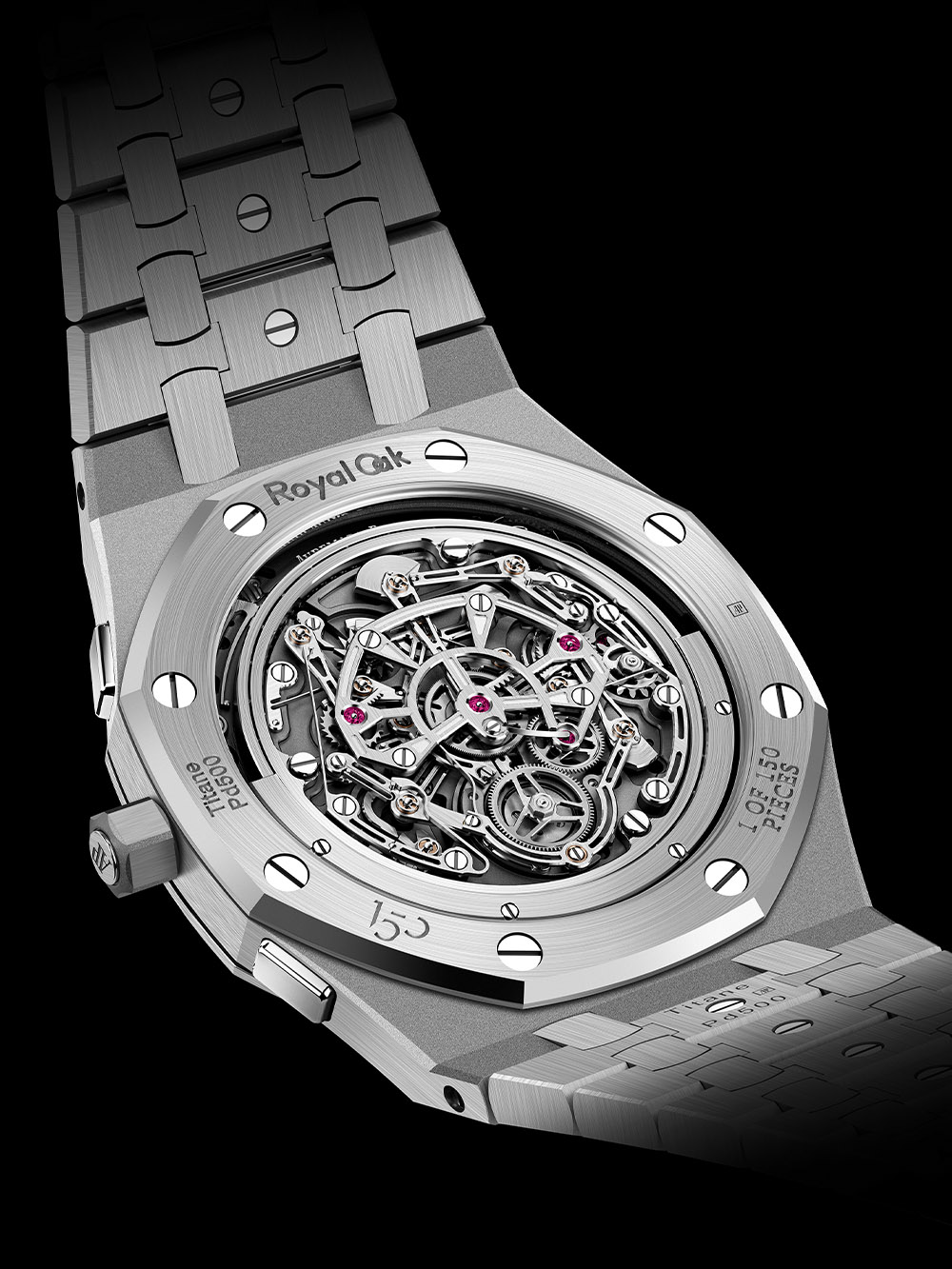
As a starting point they’ve used the well-established vertical clutch, column wheel system to ensure smooth operation of the start and stop systems. This is regarded as the more advanced of the two common chronograph operating mechanisms so its use here makes sense. What’s completely new and patented is the reset mechanism. Instead of the traditional hammer and heart mechanism where a hammer physically moves the hands back to their zero position, it uses a rack-and-pinion system.
Effectively what this means is that when the chronograph is activated, the rack begins to store energy in a manner similar to a spring or elastic band. It then releases that energy in order to return the hands to the zero position. Essentially adding an injection of energy alongside the force of the pusher to reset the hand, reducing the total amount of force required by the pusher. At the same time, it reduces the mechanical lag of the system, allowing the hands to reset in 0.15 seconds, almost imperceptible to the eye.
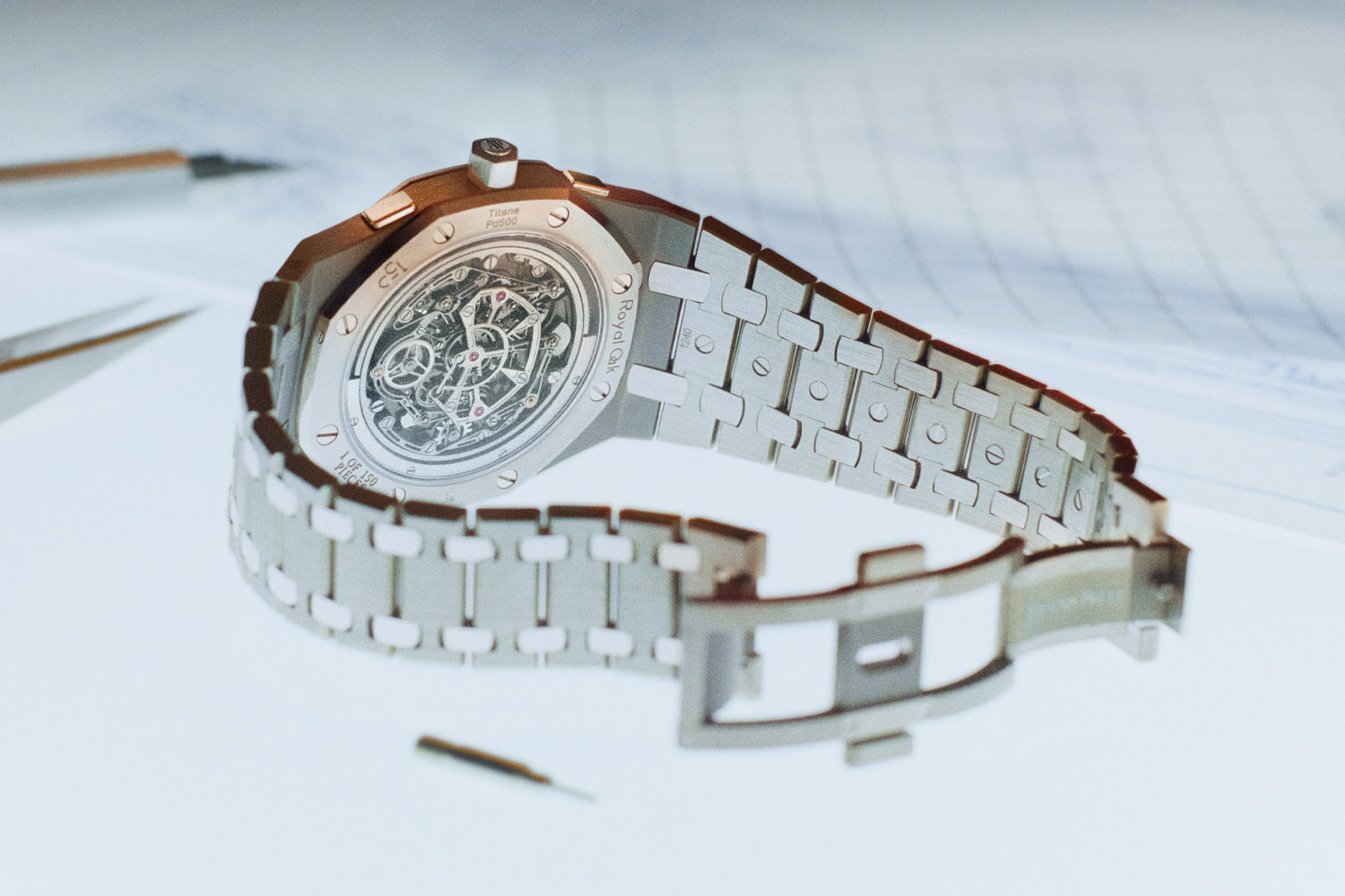
You can admire this updated architecture of the new Calibre 8100 via the RD#5’s glassbox exhibition caseback. While it’s not a skeleton movement, the number of interwoven bridges and plates gives the piece an almost sinister, skeletal appearance that’s very impressive to look at. The clear appearance of it has been made possible by the inclusion of a peripheral rotor made from platinum that rolls around the edge of the calibre instead of obscuring it by being anchored to the centre. It provides a 72-hour power reserve.
Beyond the mechanical updates to the movement and the integration of the flyback chronograph and flying tourbillon, the actual structure of the watch remains faithful to the traditional Royal Oak “Jumbo”. “Jumbo” is something of an anachronistic term these days because at 39mm, it’s actually one of the smaller models in the collection. However, that’s because when it was designed by Gerald Genta originally, it was regarded as particularly big in a time period where watches in general were much smaller. The case (and many elements of the movement) is made from titanium, giving it a darker grey tone.
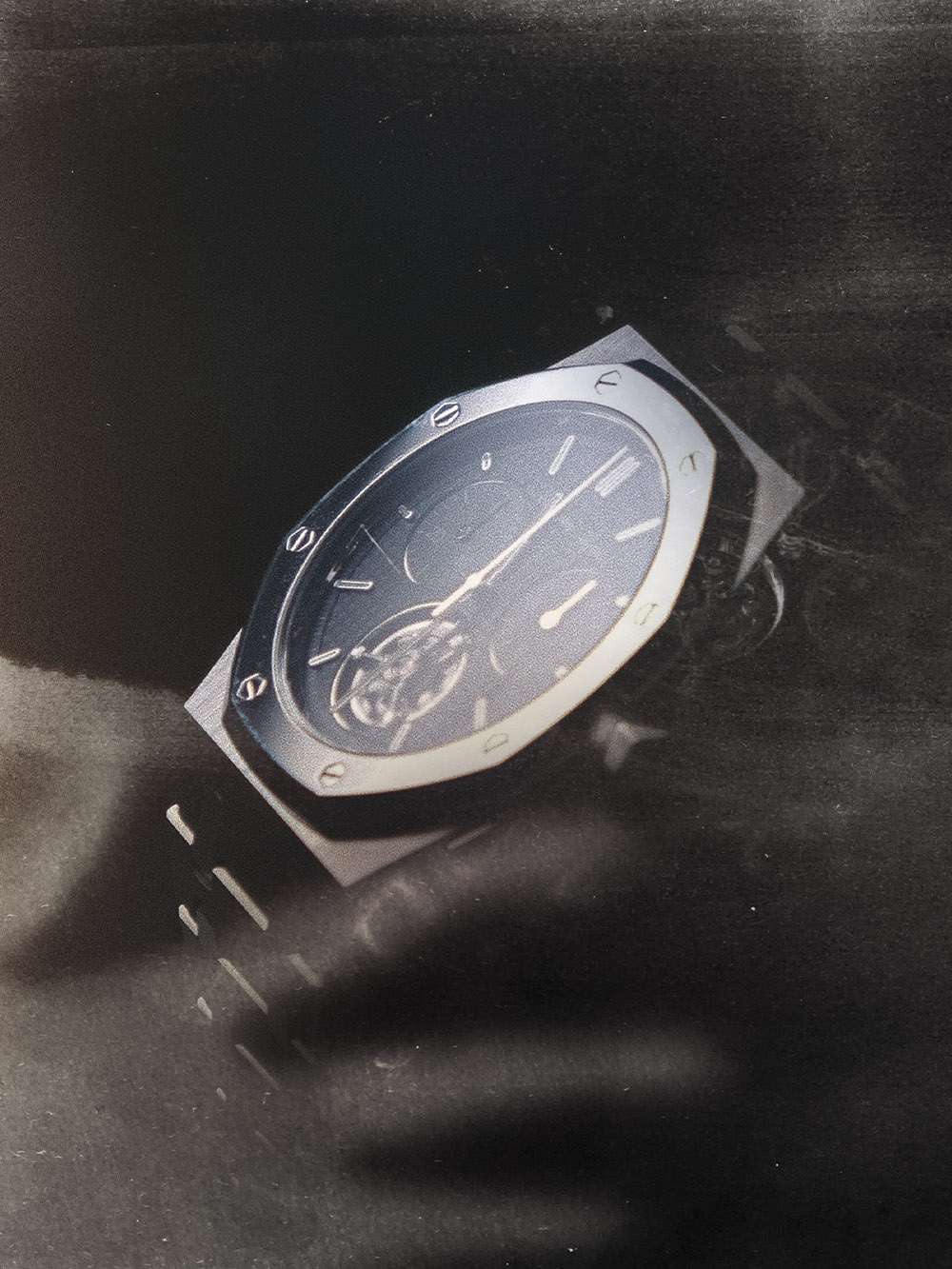

The dial is completed with a petit tapisserie texture and Bleu Nuit, Nuage 50 colour that has been a signature element of Audemars Piguet’s 150th anniversary collections. It looks very classy with its bicompax chronograph subdials and flying tourbillon. Though I find a certain irony in the fact that despite the tourbillon and visual features of this watch, you can’t really experience the innovation of it until you get hands-on and feel those ergonomic improvements at your fingertips – which is unlikely because it’s a limited edition of 150 pieces and price on request. But who knows? Maybe this will make it into a mainline Offshore at some point soon.
Price and Specs:
More details at Audemars Piguet.


HOW MUCH! – crazy!
I need to have at least 40 characters to publish, so again HOW MUCH.