In the contemporary age in which we live there is a lot of emphasis placed on rational thought and efficiency. If an action or creation doesn’t have a purpose then it is seen as frivolous and wasteful. However, such a rigid philosophy ignores a huge portion of the human experience. Humans are governed by emotions, wants and dreams that lead us towards grand artistic expressions for no other purpose than it brings us creative joy. That might all sound too lofty and grandiose for a wristwatch blog to discuss but it’s one of the central themes of the latest haute horological creation by Vacheron Constantin, the La Quête Du Temps Mecanique D’art and Metiers d’Art Tribute To The Quest of Time. A clock that took seven years to make and the limited edition wristwatch based on it.
La Quête Du Temps Mecanique D’art
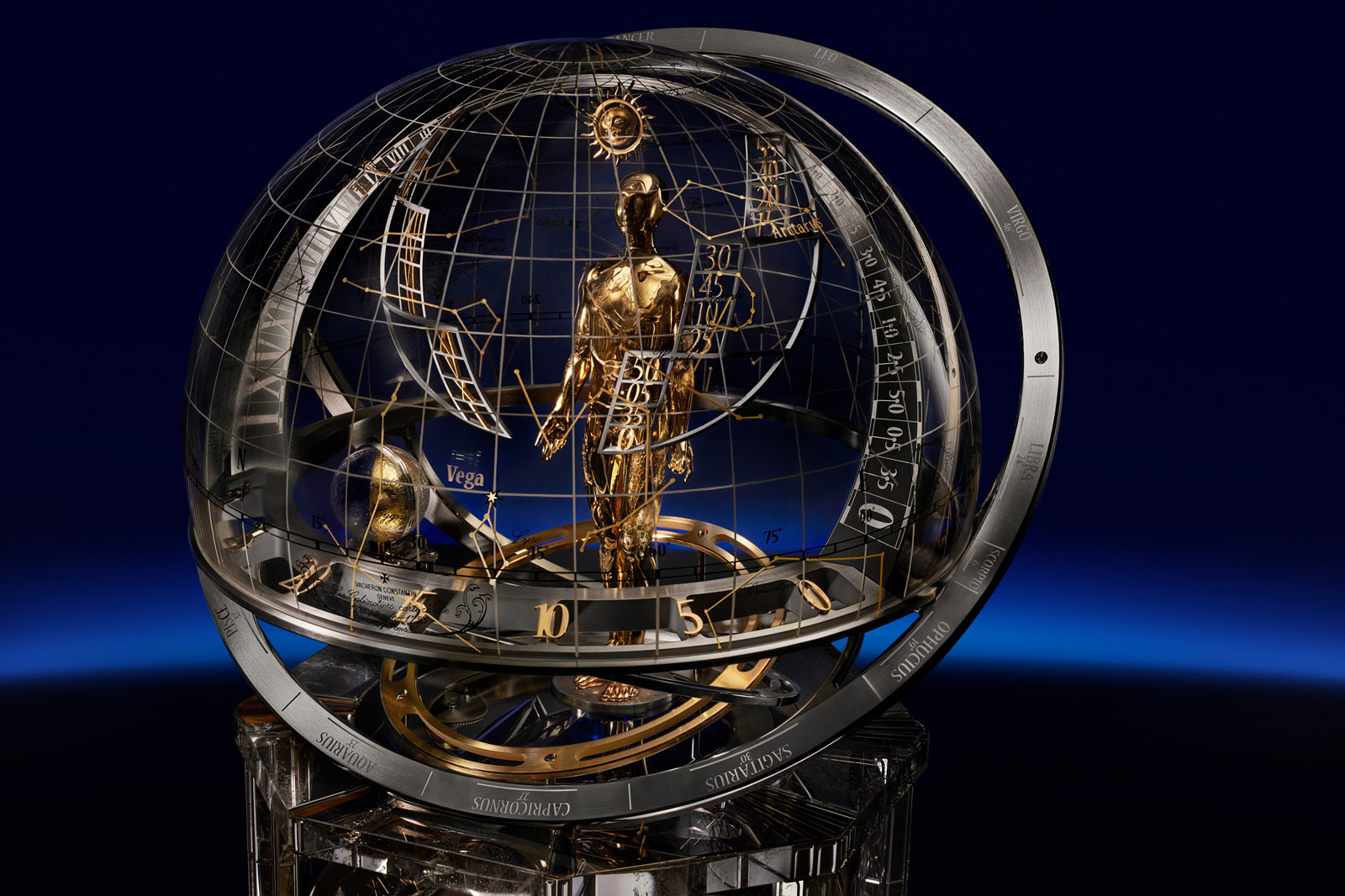
While Oracle Time is primarily concerned with wristwatches, we’re going to start by talking about the clock that informs the details of the watch. As mentioned, La Quête Du Temps Mecanique D’art took seven years to produce, which is no surprise considering that it’s comprised of a whopping 6,293 mechanical components. There are so many details that I will simply be unable to cover everything in the scope of this article.
In broad terms the watch is split into three sections. At the top is the dome, the middle is the clock and then there’s the base. Let’s go through it top to bottom. Starting with the dome, the key feature is the figure of the ‘Astronomer’ standing tall in the centre like a golden cosmic being. They are an automaton, meaning a mechanical figure that moves according to its clockwork choreography. It’s capable of making 144 individual gestures over the course of its movement sequences, of which there are three that you can activate.
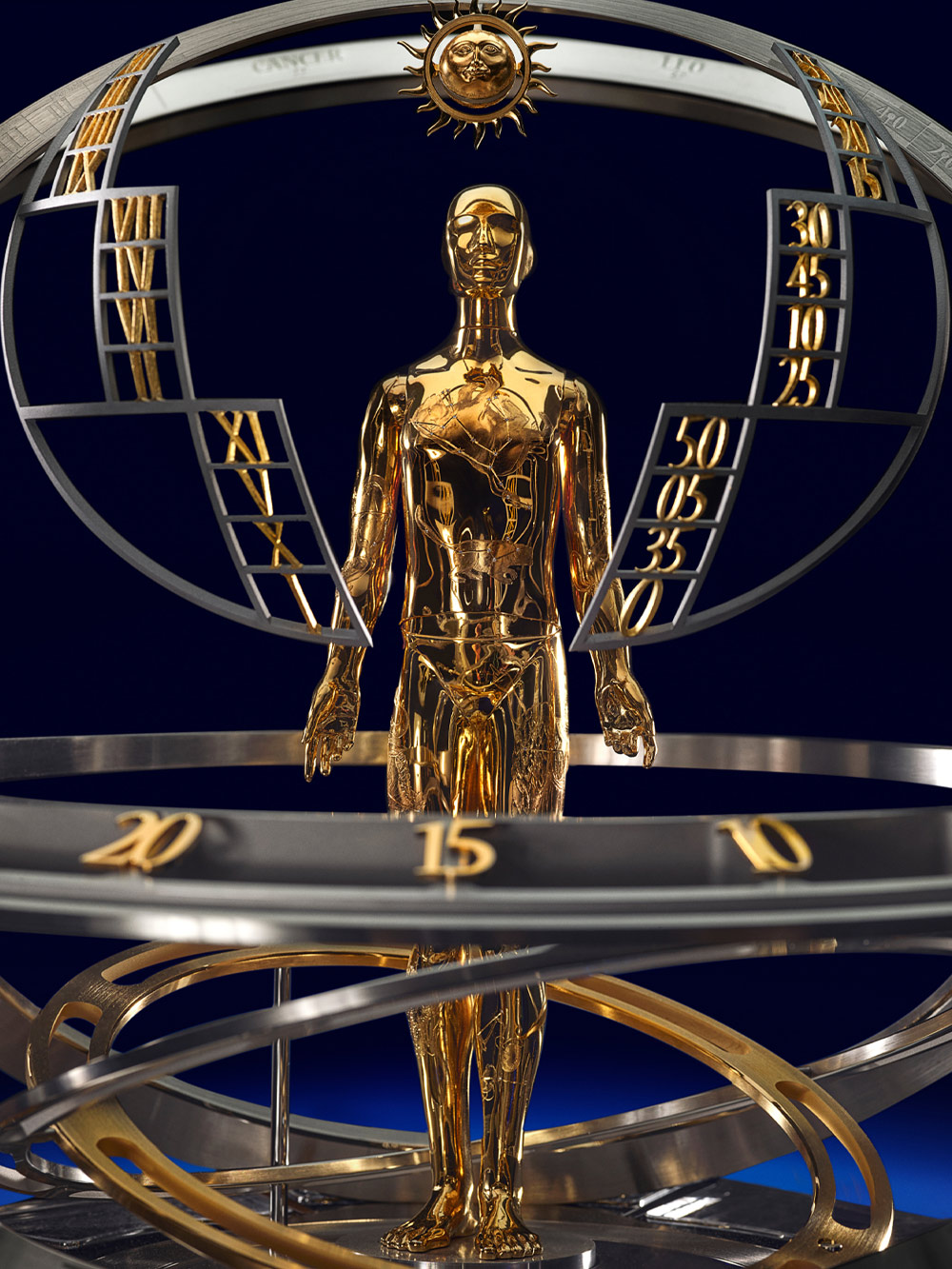
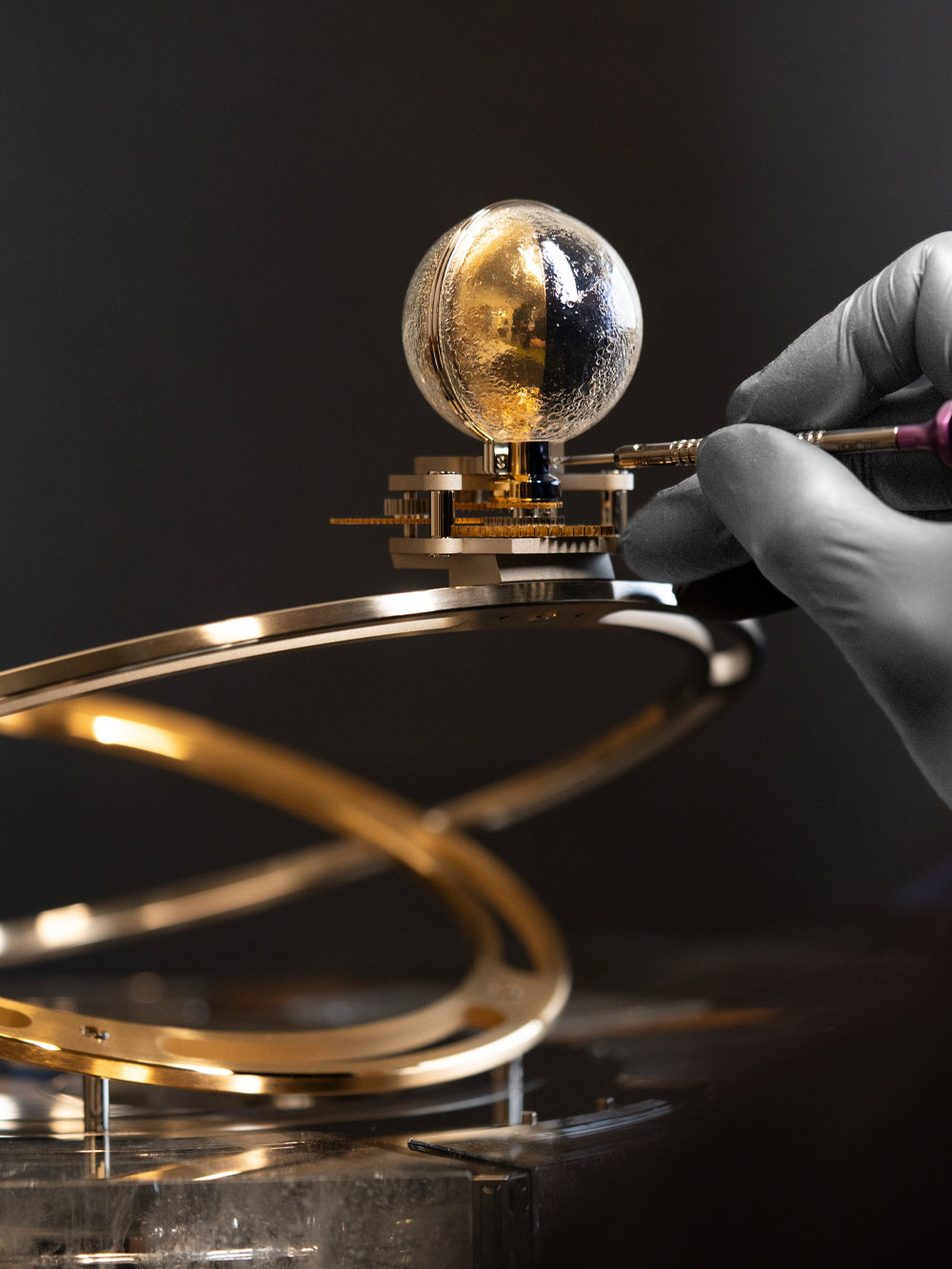
The first sequence sees the figure point to the day/night display that encircles their feet and the moonphase display that sits in an arc in front of them. The second sequence has them indicate the star dome around the, which depicts the night sky seen over Geneva 270 years ago, when the brand was founded. Both these choreographies remain the same regardless of the time. The final sequence sees the automaton display the current time by pointing to a Roman numeral hour scale and Arabic numeral minute scale. As you’d expect, the choreography for that changes depending on the time and in fact, the hour and minute scales are non-linear (like a crazy hours) so that the choreography is as different as possible each time you activate it even if only a few minutes have passed. The actions are accompanied by music from a music box integrated into the clock with a melody composed by Woodkid.
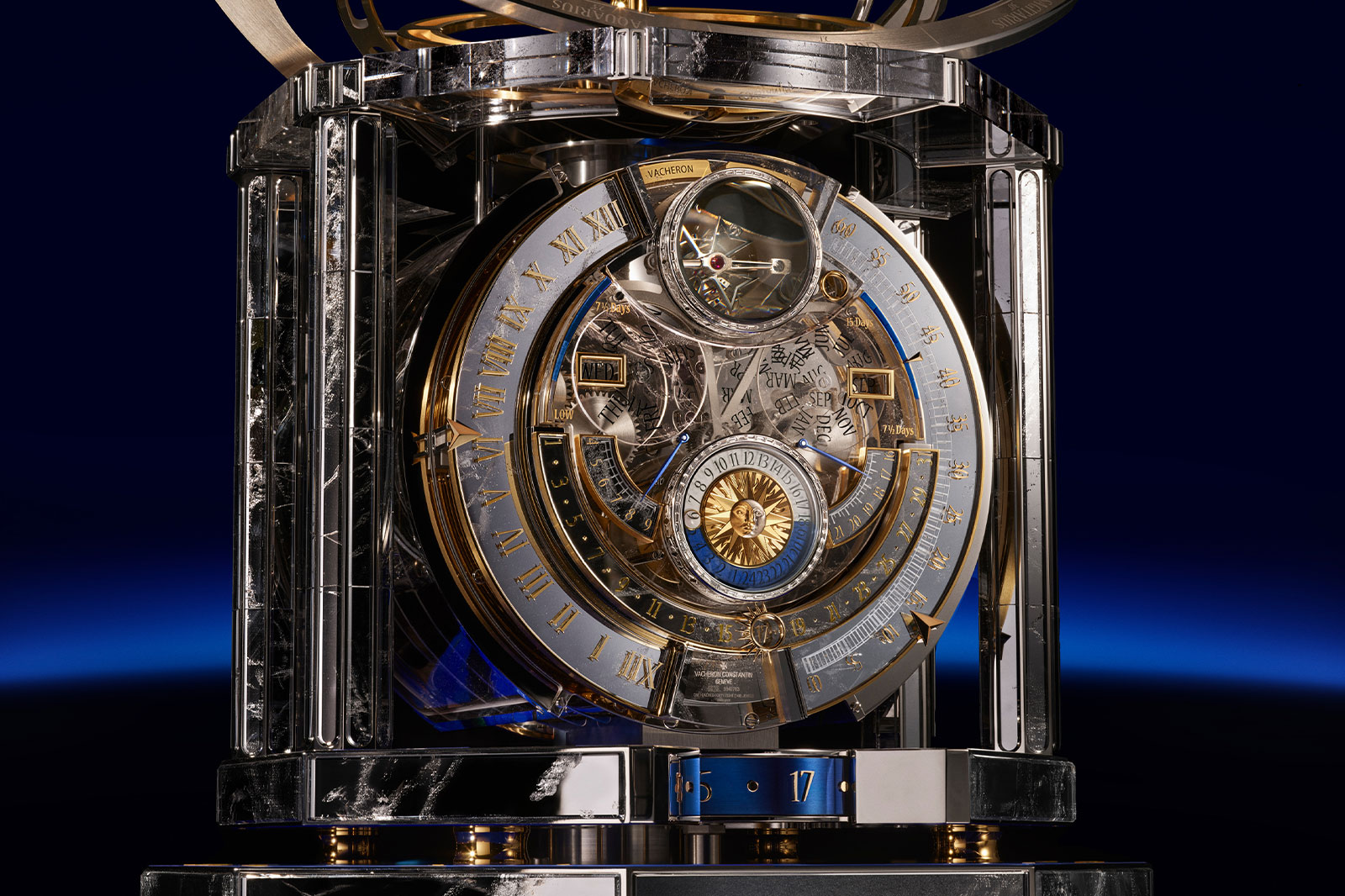
Moving to the clock itself, it’s an impressive piece of horology. Not only are its timekeeping elements used to direct the motions of the automaton but also It’s a full astronomical clock. It has a 15-day power reserve and displays a perpetual calendar, moonphase, sunrise, sunset and sidereal time, power reserve indicator, and astrological signs. Not to mention the various safety mechanisms designed to protect the clock during activation or transport.
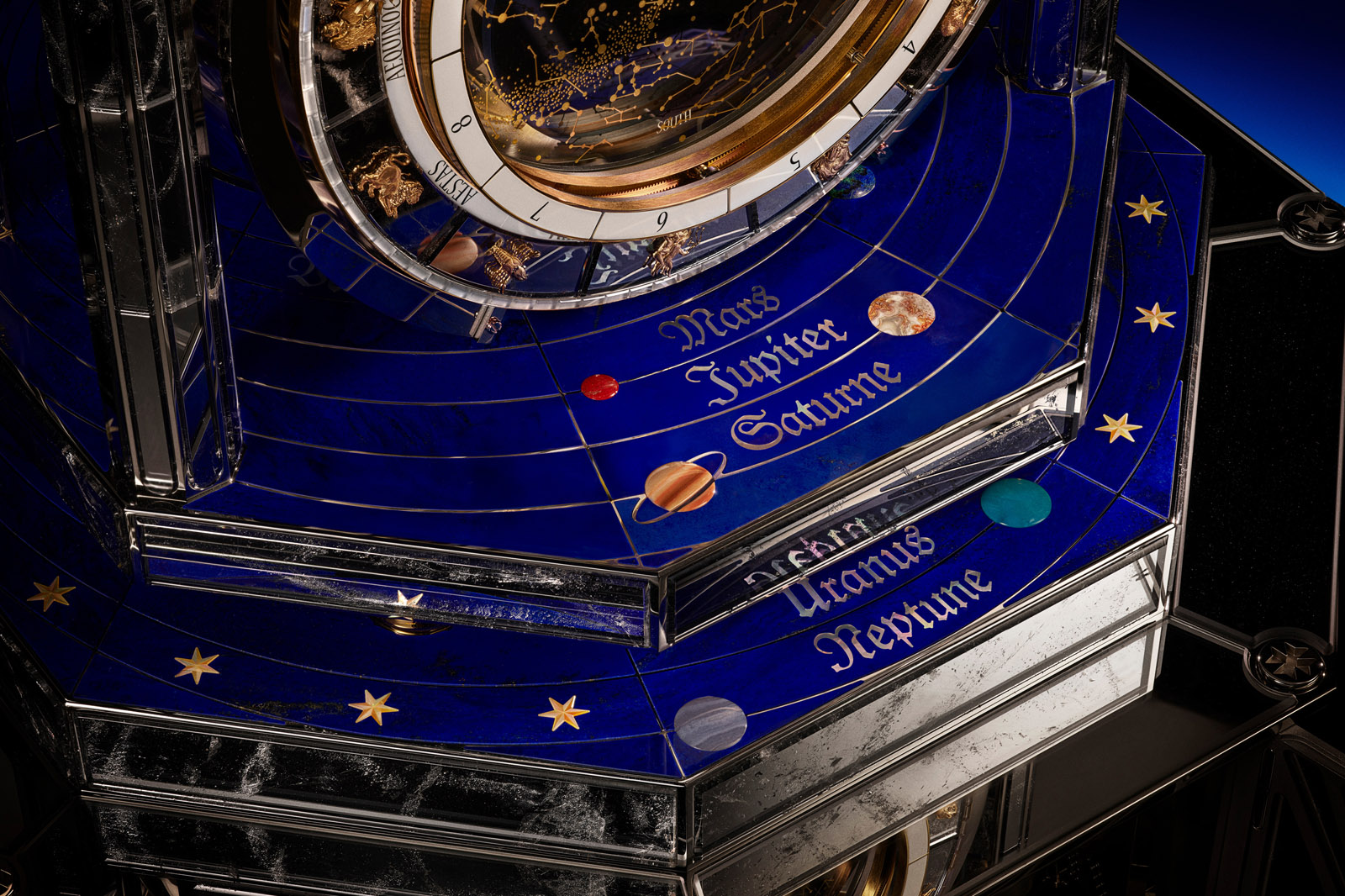
Lastly is the decorative base in lapis lazuli the depicts the solar system with cabochon planets. It houses the mechanisms for the automaton. Overall it’s a mind-boggling piece of mechanical engineering that’s finished immaculately. A fitting tribute to their 270th anniversary. Speaking of tributes…
Price and Specs:
Metiers d’Art Tribute to the Quest of Time

The Metiers d’Art Tribute to the Quest of Time is a 20 piece limited edition watch inspired heavily by the La Quête Du Temps Mecanique D’art. Which is most apparent in the fact that at the centre of its display stands the same figure of the ‘Astronomer’. Here though they are not an automaton but a dual retrograde time display with hours and minutes. However they do have two operating modes, active or static. The former meaning they display the time continuously and the latter meaning you can press the pusher at 10 o’clock to move them from a neutral position to showing the time and then return them to neutral.
Similar to the dome on the clock, the sapphire backdrop behind the figure displays a map of the stars as seen in Geneva on September 17th 270 years ago, in honour of the brand’s anniversary. There’s then also a moonphase at 12 o’clock and dual retrograde power reserve indicators at 5 and 7 o’clock. The two indicators together displaying the full 6-day power reserve supplied by the triple barrel. The use of three barrels also ensures a consistent level of torque in the system (similar to the Singer Caballero) which helps ensure the retrograde arms move correctly. The figure is also made from titanium with a gold PVD coating to make it light weight and easier to move.
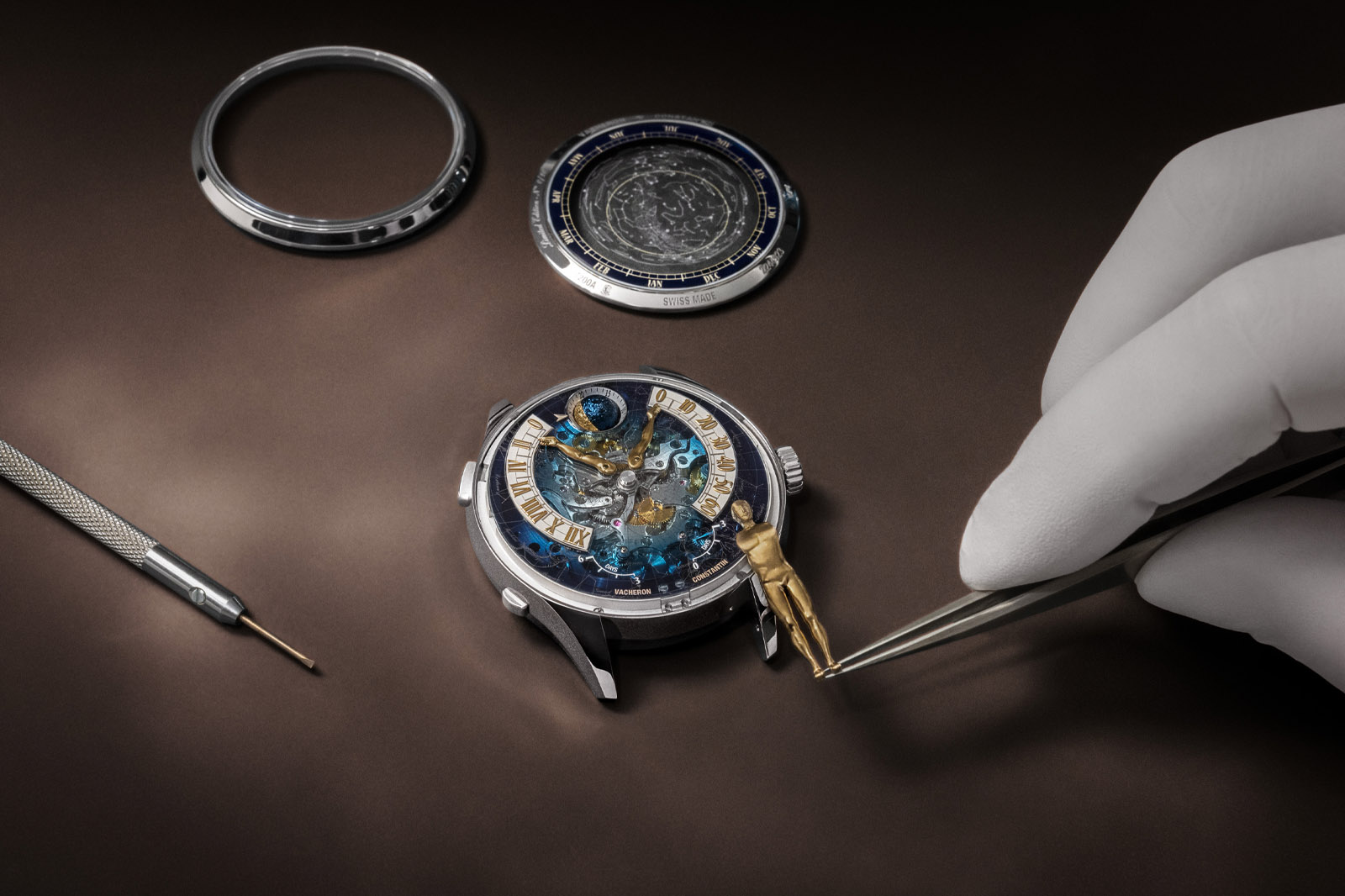
On the watch’s caseback you’ll find a sidereal day display. In as simple terms as possible, a sidereal day differs to a solar day by measuring the Earth’s rotation in relation to a distant star instead of the sun. Essentially if you put a fixed point on the Earth that’s directly pointed at the sun, it actually takes the world slightly more than a full rotation for that point to be directly pointed at the sun again because the Earth has moved on its orbit around the sun.
Whereas by using a distant star as our marker, the Earth’s movement in relation to the sun is a negligible consideration and so the day period is closer to being a single complete rotation, so it’s a more accurate measurement. However, as the difference is only four minutes, it doesn’t affect our day to day lives. The useful feature of sidereal time is that you can use it to reverse engineer the position of celestial objects in relation to the Earth and work out where you would expect to see them in the night sky, making it an important astronomical complication.


The Metiers d’Art Tribute to the Quest of Time is housed in a white gold case that measures 43mm diameter x 13.58mm thickness. So while it is large, it’s actually quite slim in comparison to many grand complications, including the 45mm x 15mm Solaria Ultra Grand Complication. This is possible thanks to the precision engineering of the calibre 3670, which beats at 5 Hz and has been awarded the Poinçon de Genève.
A purely rational, logical version of these creations would be more like astrological calculators. But no, Vacheron Constantin have intentionally put the human at the centre in both a literal sense and figurative. Its about how we understand the world both scientifically and also emotionally through the creation of artistic objects that are enjoyable to look at.
Price and Specs:
More details at Vacheron Constantin.