With Geneva Watch Days enjoying its fifth year, my fourth visit has solidified my love for this sprawling luxury spectacle. Sure, the sheer scope of the watch industry is fascinating at the vastly larger Watches and Wonders, as you try to get your bearings in the vast halls of the Palexpo. However, for me, the close relationship and love I have for the intensely personal, relaxed streets of Geneva make the GWD a firm favourite. Always.
The Geneva Watch Days have grown, with 2025 welcoming as many as 66 brands, still with an indie focus, but now including prominent Swiss brands like TAG Heuer, sharing a hub with high-profile LVMH brands. The close-knit magic was still there, albeit feeling more professional while not losing its edge. If you’ve ever been to the mecca that is the Milan Design Week, you’ll understand the appeal. There is a vibrancy and life that come with walking between showrooms and hotels, enjoying a late summer breeze or an al fresco coffee to keep you going, that easily beats any exhibition hall ambience.
Massena LAB x Vianney Halter ‘Old Soul’
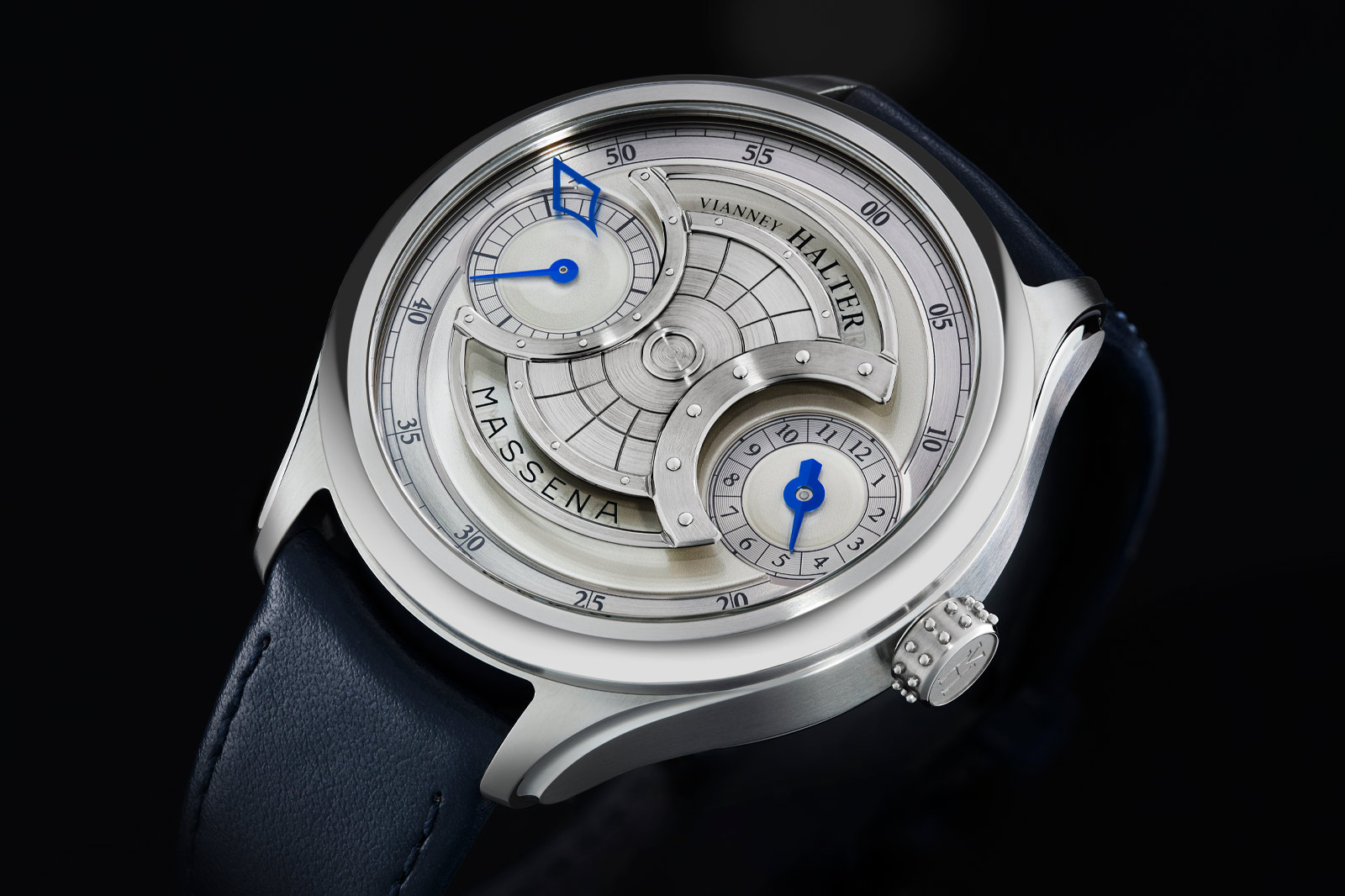
Faced with this artefact, talisman even, I turn it around to find this engraved on the back:” Time is the fire in which we burn”, an evocative line borrowed from poet Delmore Schwartz. Vianney Halter, a man known for his deep passion for science fiction and Star Trek in particular, makes this reference his personal signature. It’s a quote that entered pop culture with the 1994 film Star Trek: Generations, uttered by Malcolm McDowell playing Tolian Soran. To me, it underlines the passion I have for watchmaking and a deep respect for outliers like Vianney Halter, this time partnering up with William Massena. And what they have created stands out with Steampunk prowess in a world of polished luxury.
The dial’s multi-layered, monochromatic charm evokes the instruments on Jules Verne’s fictional Nostromo submarine, or a retro-futuristic airship. But it comes with a balanced, layered language. Halter’s hidden disc system gives the outer minute indicator a floating presence, with hours and seconds horizontally opposed at 3 and 9. Halter and Massena proclaim their ownership at 12 and 6 through a flamboyant centrepiece decorated with Halter’s trademark rivet design, giving strong tool vibes. But the biggest surprise comes upon turning it around, as each of the 47 limited pieces is powered by vintage Minerva 17’22 calibres, pocket watch movements originally designed in the 1920s and produced until 1942.
More details at Massena LAB.
H. Moser & Cie Pioneer Flying Hours

Writing about watches for 5-6 years now I still have H. Moser & Cie’s ironic stabs at the establishment fresh in my memory, from Apple Watch-baiting minimalism to the insanity of a watch made of cheese. But over the last couple of years the brand seems to have lost some of the hot air from its horological balloon. Sure, I loved the fresh colours of the two-tone stone dials, some of which were present at my meeting with the brand, and who can resist the gem-set charm of the Streamliner? But sometimes the brand’s releases have felt derivative, and I have never fully embraced the soft – semi large cases of the Pioneer collection, but that changed in a heartbeat last week. What Moser does best is minimalism, but not stark, instead with an instinctive feel for the right details and dial art, all juxtaposed with a traditional HMC calibre.
The scalloped-side case of the Pioneer is here the frame for an amazing dial, but in its rose gold guise doesn’t hold back, this time revisiting a previous combination with black DLC titanium. It’s a strong vibe for a very comfortable watch, and the dial certainly made me want to keep it on. The dial itself is made of captivating aventurine with its inherently distracting sparkle, and the minutes are shown by a central skeletonized wheel. The flying hour functionality is powered by three fixed discs rotating on their own axis, three windows arranged in orbit around the central minutes disc. Captivating is the word, and an entirely new design language for the brand that for me works on many levels.
More details at H. Moser & Cie.
Renaud Tixier Monday Organica

With words like icon and legend easily rolling off the tongue in his presence, meeting Domique Renaud is a big thing. But this time he was offering something remarkable, with his own brand Renaud Tixier debuting a platinum creation featuring grail-like dial art. Just around the corner from the other brand-packed locales was the calm oasis of Renaud Tixier and the watch that offered me quite possibly the strongest impression of the week. Dominique Renaud has long been regarded less as a watchmaker and more as an alchemist of time – an inventor who bends mechanics to his poetic vision.
Limited to just seven pieces, the watch embodies a rare duality between high mechanics and Métiers d’Art. At its heart beats the RVI2023 Calibre, a pioneering micro-rotor movement conceived by Renaud himself. Yet it is the dial that captivates first: a shimmering blue tableau crafted by Olivier Vaucher, each requiring an astonishing 112 hours of meticulous work. Layers of hand engraving, grand feu enamel and subtle textural effects create the illusion of a living landscape in miniature.
This enigmatic canvas is set in a 40.8mm platinum case, scalloped and hand-engraved, crowned by a domed sapphire crystal and standing a balanced 12.6mm tall. The result is a debut that feels less like a wristwatch and more like a vision, a fusion of invention, artistry and narrative. And for now, distilled into wearable art for only seven lucky collectors.
More details at Renaud Tixier.
Urwerk UR-150 Blue Scorpion
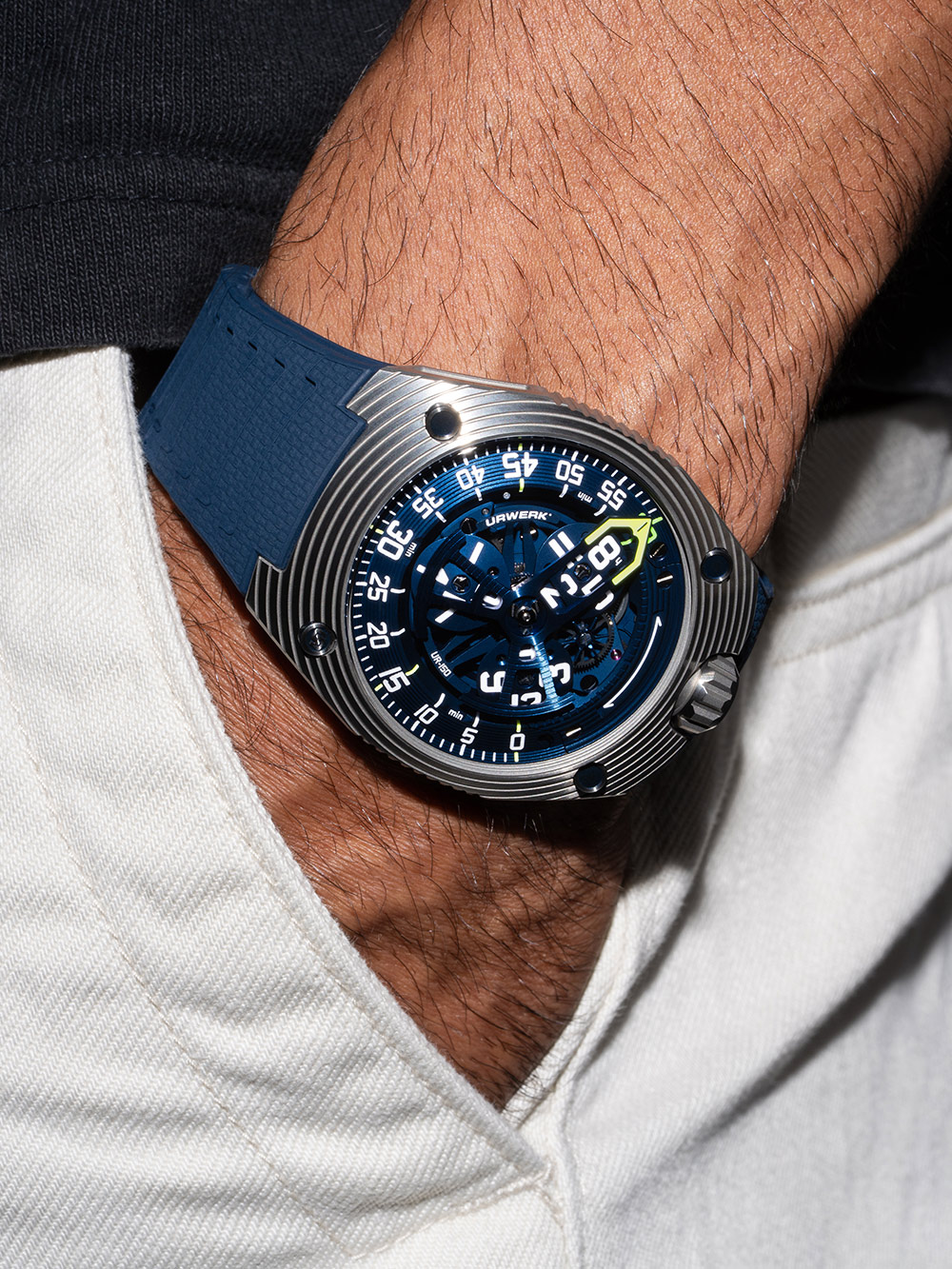
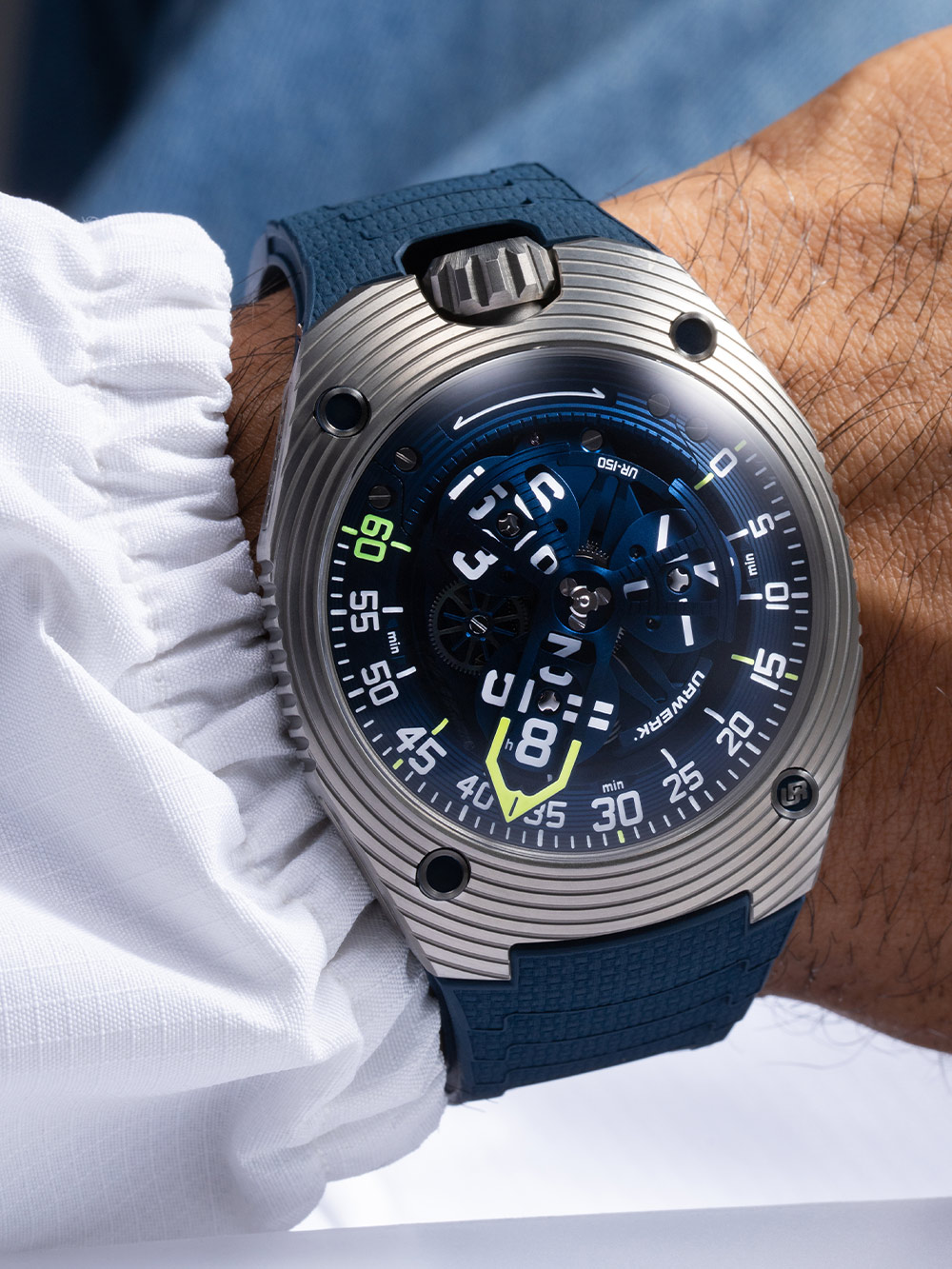
As a brand, and as the vision of the two founders Felix Baumgartner and Martin Frei, Urwerk still comes across as driven by two distinct and complementing mindsets. One rooted in horological tradition, the other in artistic imagination, and pompous as it may sound, on a quest to reinvent time for a different set of avant-garde collectors. Just like MB&F and Richard Mille, the brand seems to inhabit its very own orbit around and sometimes crossing the regular brands within the industry. This year’s UR-150 Blue Scorpion was an industrial case (pun intended) in point.
At the heart of the UR-150, a flying carousel orchestrates three pivoting hour satellites, sending them into orbit with balletic precision, while a retrograde hand with a searingly yellow tip snaps back across a 240° arc at each passing hour. With the UR-150, Urwerk doesn’t just tell time — it scripts a new form of kinetic theatre, where complication becomes spectacle and every glance at the dial feels like the opening act. And while it all might seem overpowering, even contrived to fans of petite dress watches, I’m sold on their gospel. The space age titanium and bead blasted steel case as with most Urwerk creations, felt remarkably comfortable on its blue rubber strap, and was yet another watch I did not want to hand back.
More details at Urwerk.
Furlan Marri Disco Volante Onyx

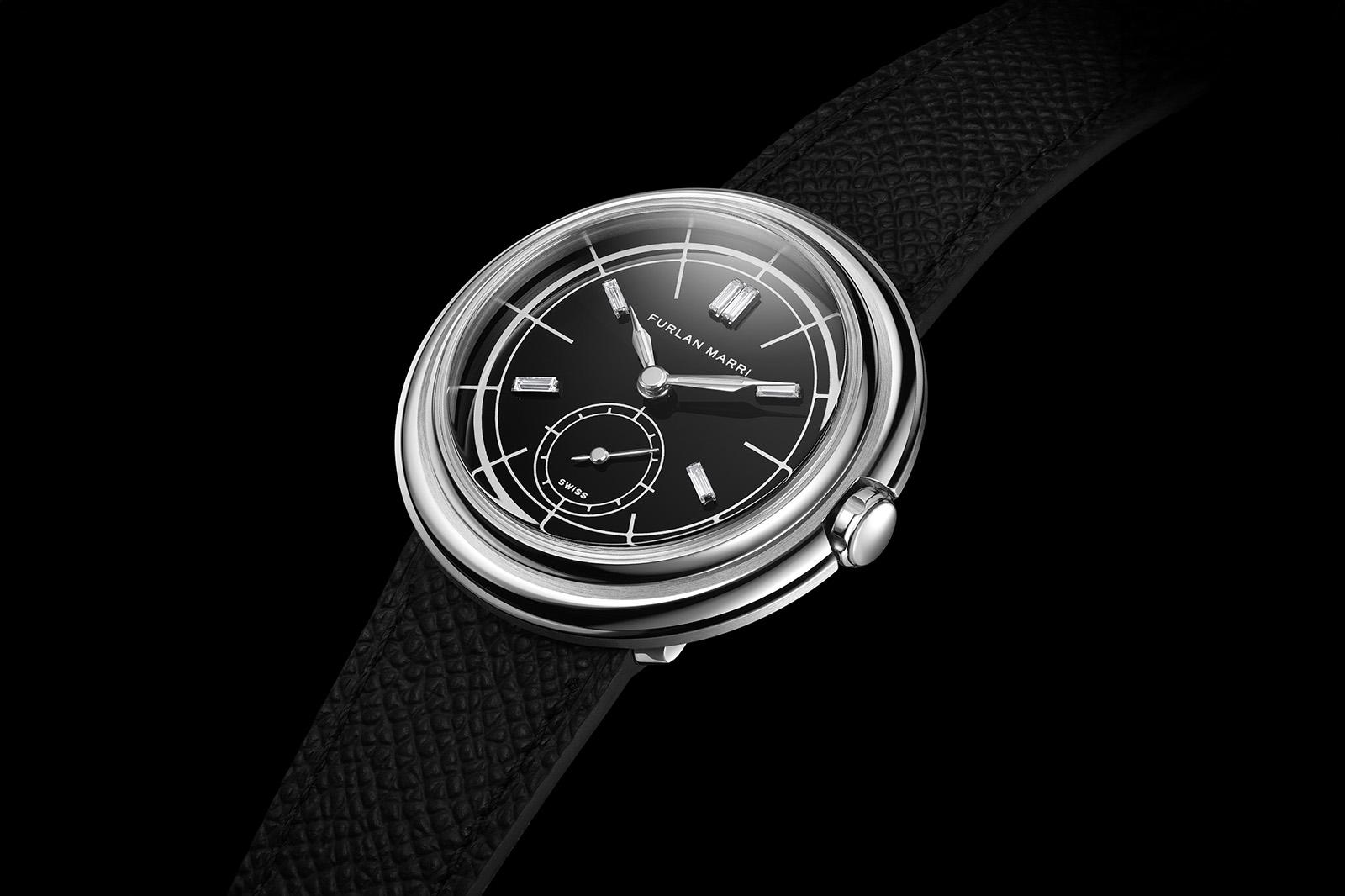
Not all watches at the Geneva Watch Days are mortgage-necessitating, as proven by the Furlan Marri Disco Volante. It also reassures me that the cheeky trend of odd-shaped watches is remarkably resilient, as is the stone dial renaissance. What I hadn’t expected, is wanting to wear a diamond-index piece like this every day. Yes, the sleek milanaise bracelet with its distinctive taper is that comfortable, and those lab grown baguettes rocks.
With a sub-£5K price tag and the legendary hand-wound Peseux 7001 movement known from Piaget to Omega, the latest Disco Volante takes all that’s good about quirky glamour and runs with it. Yes, I did try it on yet again at the Geneva Watch Days, but I actually had it on loan before the event, and absolutely did not want to send it back to Switzerland. Everyday diamonds? Yes please, if you don’t mind.
More details at Furlan Marri.