There are plenty of brands – micros especially – over the last few years that have drawn their inspiration not from the archetypal Submariner but the much more refined Fifty Fathoms, and perhaps none have done it better than Héron. The Marinor Rainbow is a thing of beauty – if you find funky decompression tables beautiful, which I do. Now though they’re trying something a little different in the Mirabel GMT. That’s a shame because otherwise there’s a lot to love about the Héron Mirabel GMT.

The caseback really hams up the fact that this is a GMT, which I like more than your standard exhibition caseback. We’ve all seen Miyota movements before. Engraved on the back you have every one of the 24 time zone cities, displayed around a black-and-white enamelled day-night indicator in the middle, a very visual representation of where the sun is shining on Earth. It’s cool enough that if it were on the front of the watch I wouldn’t complain, and will look even better when the black’s upgraded to a crown-matching blue.
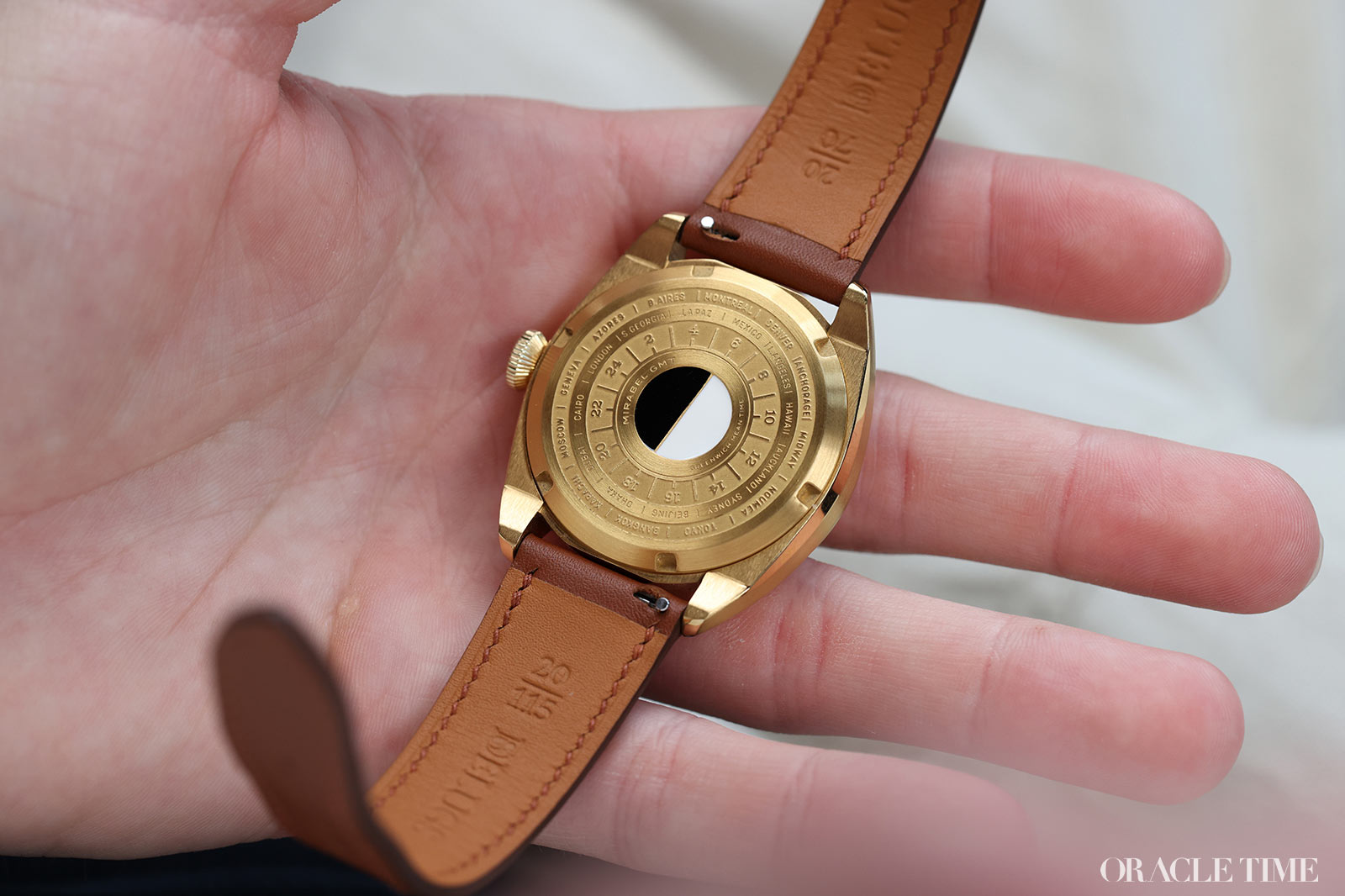
As alluded to, the movement inside is a Japanese calibre, the Miyota 9075. It’s a true GMT rather than the usual Office GMTs you get at this price point, backed by a 4hz frequency and 42-hour power reserve. Good functionality, great reliability, it’s a proper traveller’s workhorse. That brief mention brings us onto the big question: how much does the Mirabel GMT cost? The Mirabel is priced at £520. That’s a good price for a GMT at the best of times, let alone one this well thought-out. The thing is, that’s not all.
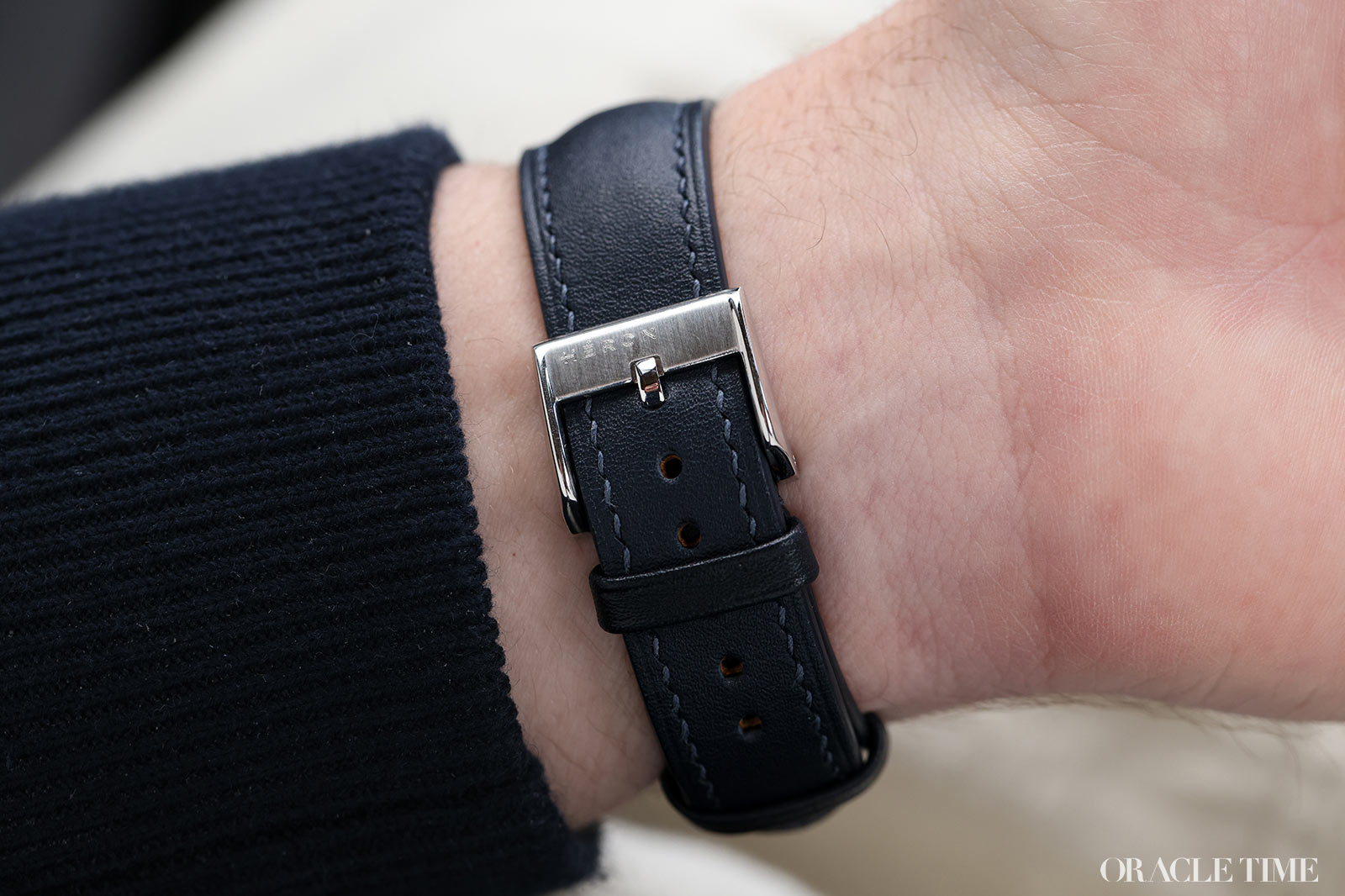
I don’t normally talk about packaging because honestly, who cares? It’s all about the watch. But the red leather box the Mirabel comes in matches the multi-vintage tone of the watch perfectly with gold foiling like it belongs in a royal library, along with a cool, hinged leather travel box. It’s also set on a Delugs strap, which itself is a pretty pricey peripheral. Normally I’d focus on the watch for its own merits, but less than £550 is already pretty meritorious; throw in some thoughtful extras and it’s hard not to see the sheer value here.
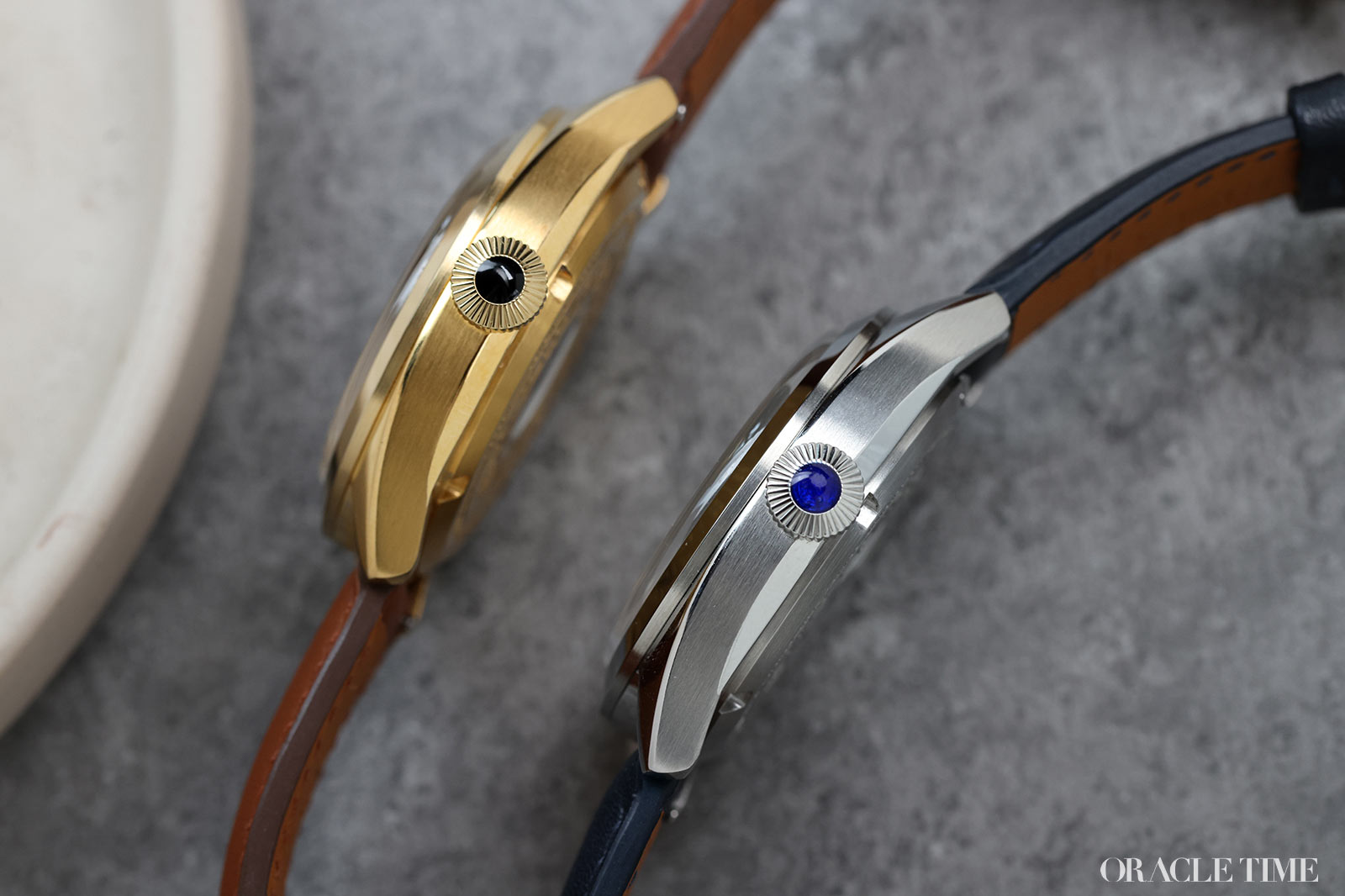
By a little different I mean completely and utterly. For one, it’s not a dive watch. Sure, there’s still some nautical flair to the barrel-shaped case. But if the Marinor is imitating 1960s French diving elegance, the Mirabel does the same for a dressy first class cabin watch. The mix of Roman numerals, railway minute track and central crosshair riff off classic Art Deco design while the alpha hands wouldn’t look out of place on a mid-60s Longines. Then there’s the crown, which is broad and fluted, set with a blue resin cabochon. It’s ostensibly inspired by vintage pilots’ watches but to me has much more of an early British nautical feel to it.
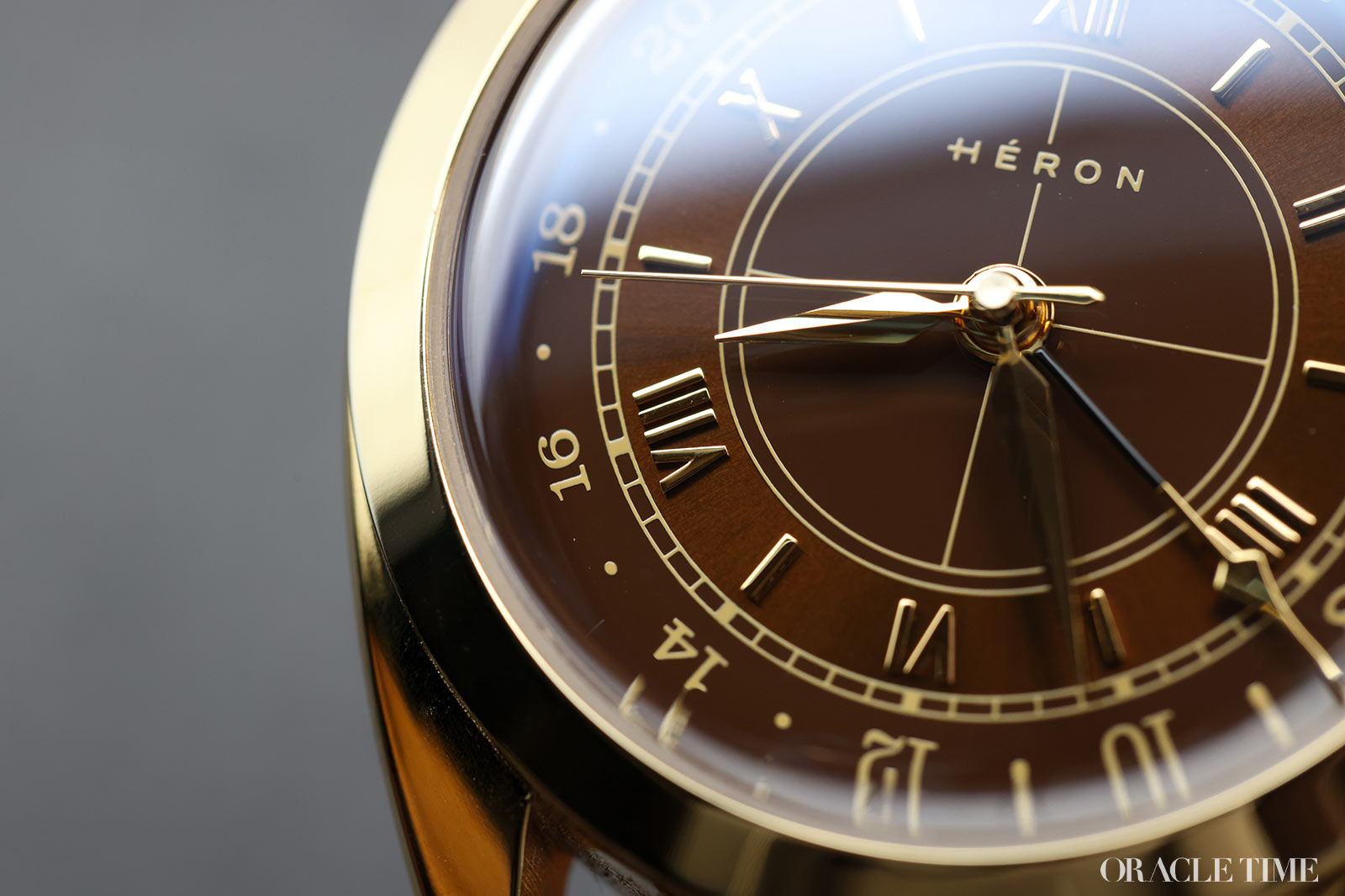
Granted, that’s a feel which is much more pronounced on the white version of the Mirabel GMT. There are four variations available, two of which we have here. On the one hand there’s the aforementioned mix of steel, crisp white dial and black numerals with dark blue steel hands; on the other – and the polar opposite end of the forum of formal watches – is a gold-plated, brown dialled number. They have very different personalities. I can see someone taking the gold-plated version out as an accessible dress watch with its darker, sultrier vibe begging for the low light of a cocktail bar. But personally, I’d prefer something a little more minimal for that.
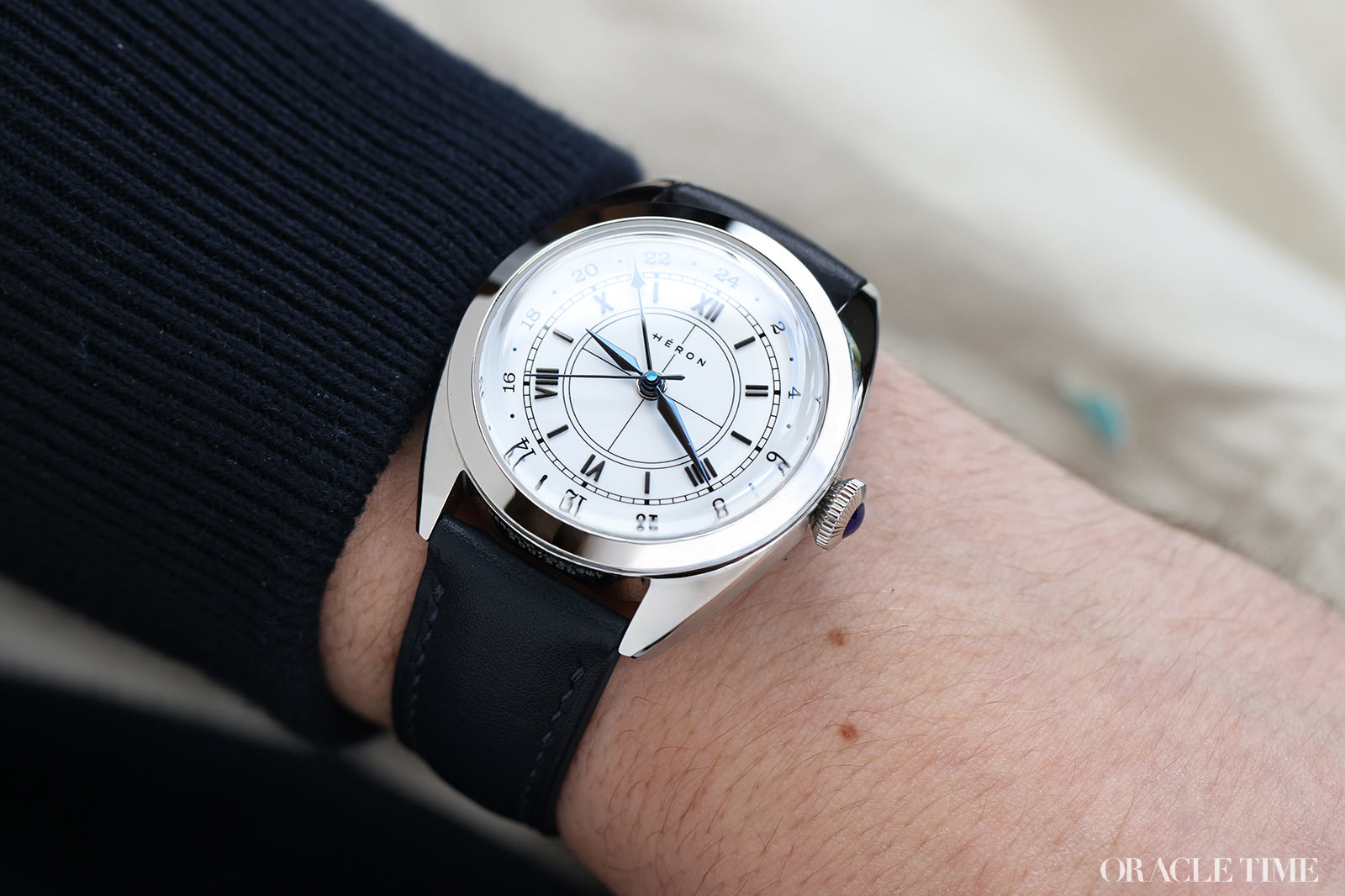
The white on the other hand works perfectly. Against the stark dial, the inner ring of Roman numerals for local time and the outer, 24-hour ring in Arabic numerals is less busy and much easier to read at a glance. And yes, I’m a sucker for the vintage British feel, too. The 37.5mm case shape is understatedly lovely. The case curves into the lugs like old C-Case designs (1970s Omega Constellations come to mind) and the whole thing sits comfortably on the wrist. It does make the lug-to-lug slightly longer than the diameter suggests at 43.5mm, but like the hull of a classic regatta yacht, you don’t get elegant shapes like that without a bit of length.
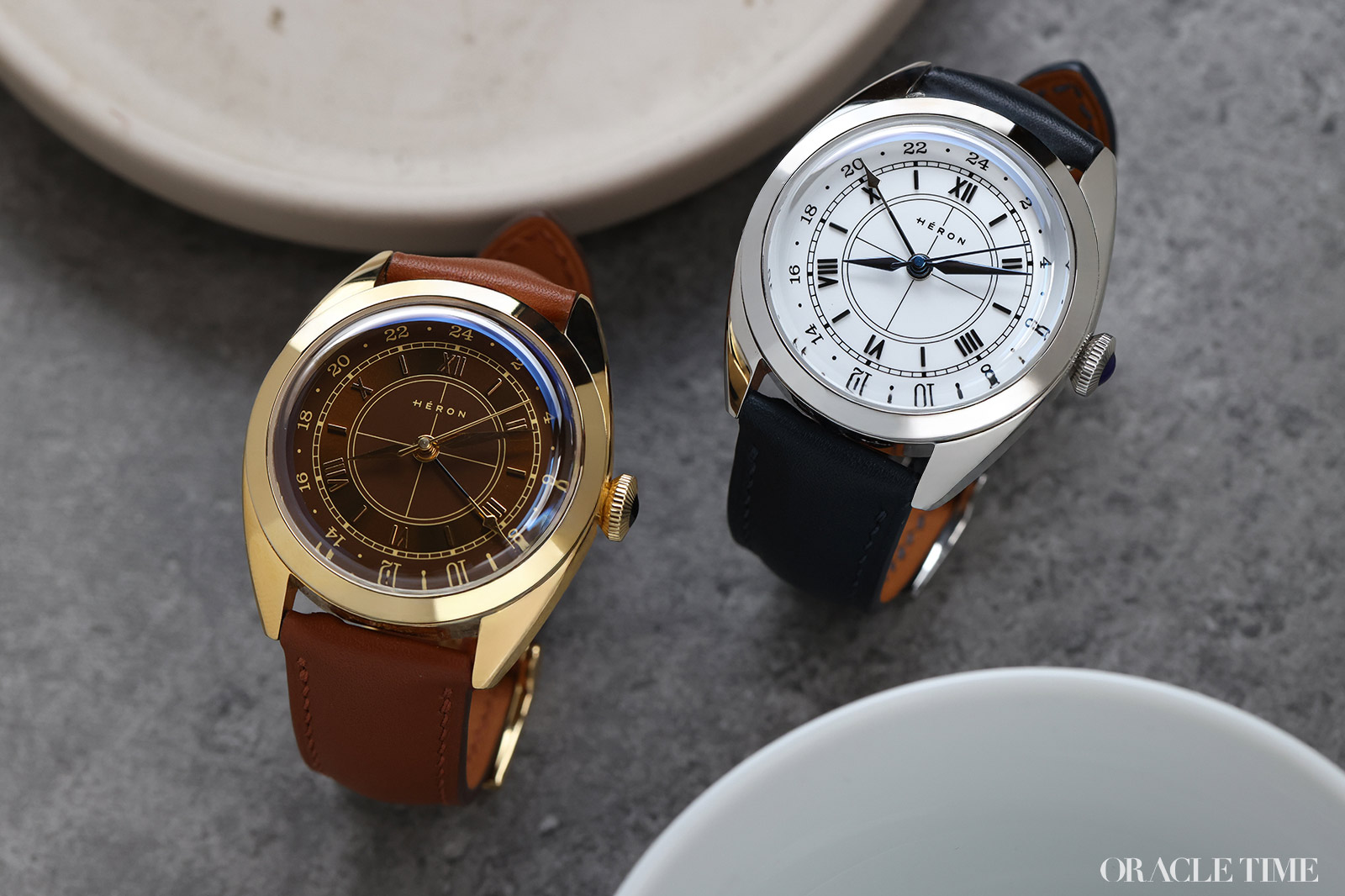
The shape also emphasises the sapphire crystal, which is one of the few elements I’m less enamoured by. As is the nature of box crystals, there’s some pronounced magnification around the edge of where the crystal meets the case. This visual no-man’s land is in an awkward place. Looking straight on, you can see hints of the distortion and from any other angle it’s much more pronounced and confuses the eye. It doesn’t make it any less readable, but I don’t particularly like looking at it. It’s a foible I often have with box sapphires.
Price and Specs:
More details at Mirabel.