What do Salvador Dali, Le Corbusier and Michel Parmigiani all have in common? It sounds like the start of a joke, but it’s actually a serious question with a serious mathematical answer: the golden ratio.
Even if you don’t know what the golden ratio is, you’ll recognise it; our minds are programmed to. It’s used in art and architecture from the Pyramids of Giza to contemporary art; it can be seen in plants, flowers, animals and is to many people the closest thing possible to the scientific definition of beauty.
At its heart the ratio is a mathematical formula that’s difficult to express in words: two quantities are in the golden ratio if their ratio is the same as the ratio of their sum to the larger of the two quantities. Mathematically it’s intimately linked with the Fibonacci sequence; visually it can be expressed as a rectangle or even by the expanding spiral of a nautilus shell.
So what does this have to do with a legendary designer, surreal artist and watchmaking auteur? Everything. Each of them – not to mention thousands more in as many different fields– recognises the golden ratio for what it is: a shortcut to beauty.
We are naturally programmed to not only recognise but become enamoured by anything in the golden ratio. Objects that use it have an innate harmony, a kind of aesthetic balance that 90% of people can recognise whether they realise it or not. It’s why Corbusier’s furniture is so iconic, why Dali’s compositions are so captivating. It’s also the very formula at the heart of Michel Parmigiani’s design ethos.
You can take a rectangle in the golden ratio and divide it into a grid. From here you can draw shapes that fit the grid perfectly, like the aforementioned ‘eternal spiral’ of the nautilus shell. You can then take different sections of that spiral and re-purpose them, turning them to fit your own design.
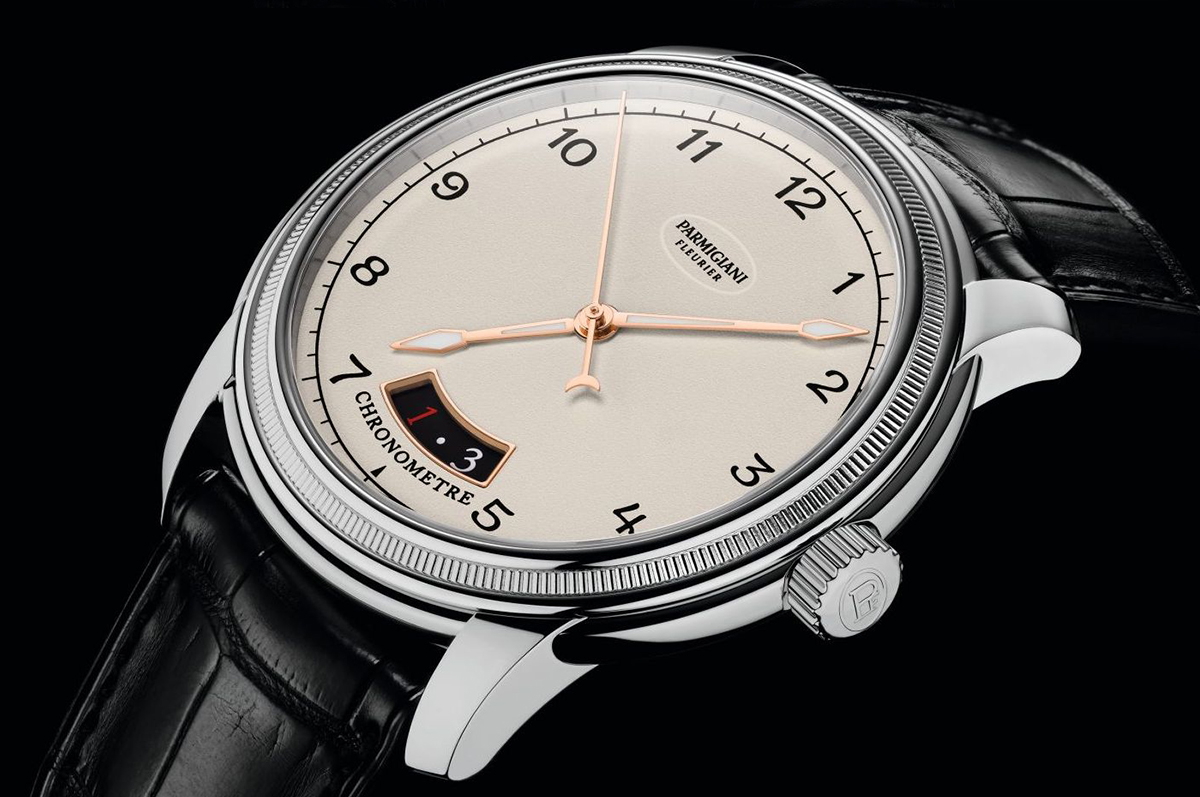
This is why, when he was originally given the go-ahead by the Sandoz family to make his own watchmaking vision a reality, Michel Parmigiani decided to incorporate that timeless formula into his fledgling watchmaker. And so he went about creating his first watch. Dubbed the Toric, the golden ratio was embedded in its DNA. Fast-forward 20 years and if you’re a fan of the Parmigiani brand you might recognise the Toric name.
That’s pretty much all you’re likely to recognise between them and the original. Whereas that first Toric was a beautifully simple expression of beauty, the large, modern version has become Parmigiani’s haute horology platform of choice. Half of them are minute repeaters for God’s sake.
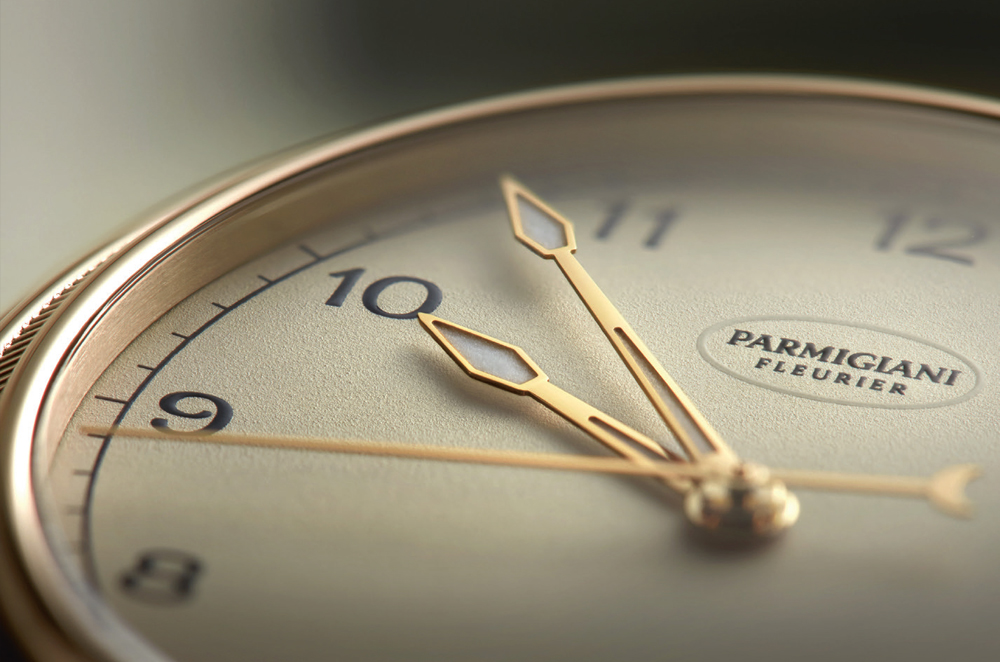
So when I had a chance to meet Mr Parmigiani about the latest addition to the Toric collection, I wasn’t personally all that excited. I’ve seen enough minute repeaters in the past few years and far, far too many tourbillons. I was expecting something large and overly complicated. But what I got was the Toric Fleurier Chronomètre.
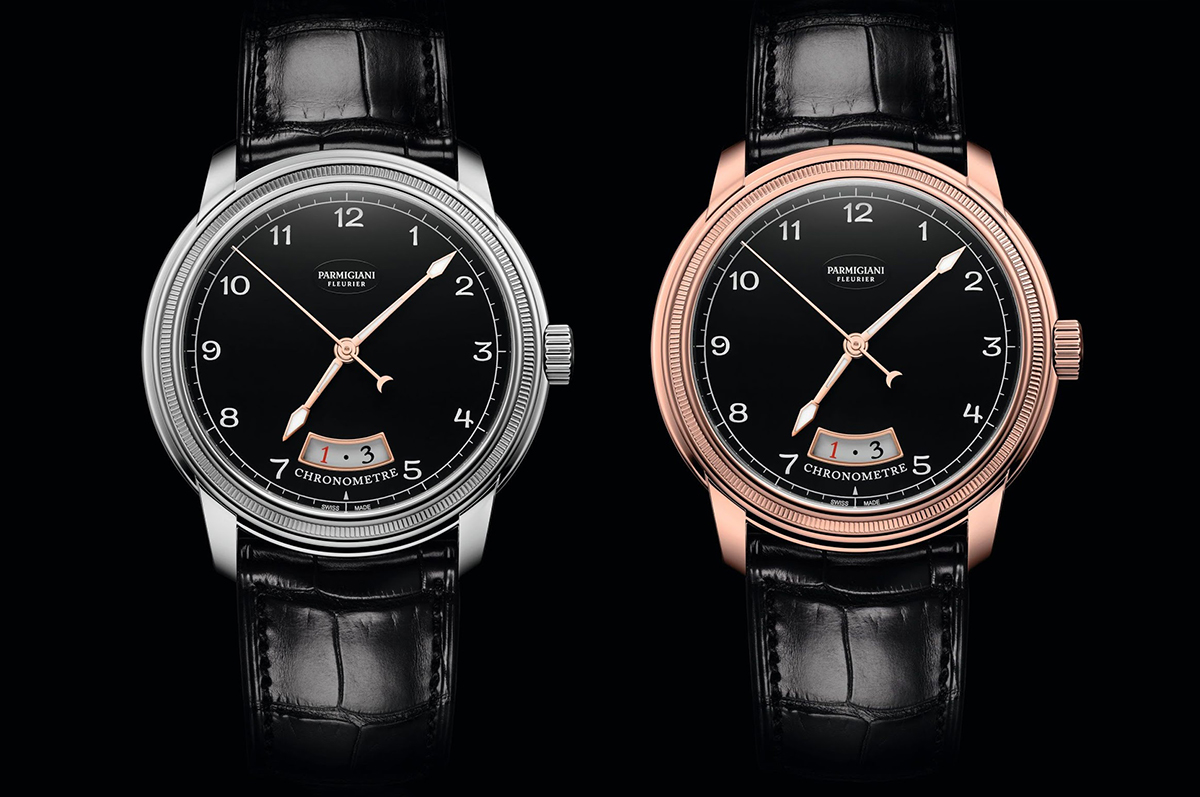
Parmigiani offers the Toric in either 18k white or rose gold, each version is available with either the black or white dial colours.
For Michel, the Toric is a return to the roots of Parmigiani in the truest sense. It was, after all, the watch that laid down his own aesthetic foundations, the precursor to the watchmaker’s now ubiquitous Tonda collection. It also happens to be rather stunning.
As Michel delighted in illustrating through reams of sketches, the golden ratio is once more at the very heart of the Toric – the most obvious example of which is the bezel. The triple gadroons aren’t all equal; they’re the precise ratio of the Doric columns of the Parthenon, down to the knurled detailing of the middle ring. Those very columns make a second appearance on the Toric in the form of the crown. It’s not just the shared 20 flutes around the circumference; each of those flutes actually adheres to the golden ratio in their own way – as do the elegantly curved lugs of the case.
The result is a timepiece of unsurpassed harmony, a perfectly balanced watch from silhouette to finer details. This being a Parmigiani it, of course, also includes a superb in-house movement, one as ornately-decorated as the dial which itself uses silver powder on a brass plate to achieve the maison’s distinctive finish.
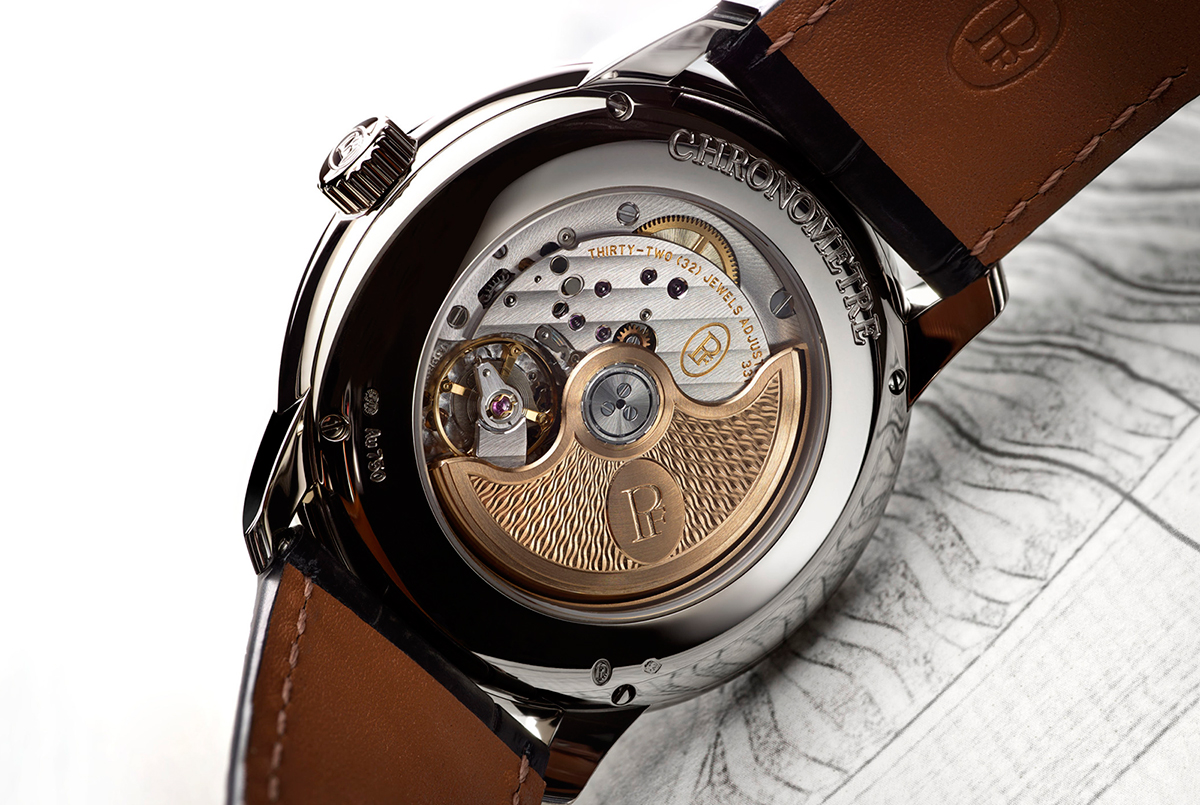
The Toric features a see-through caseback which gives a clear view of the movement in action.
The golden ratio is something which Michel Parmigiani is evidently enamoured by. If the Toric doesn’t illustrate that, a conversation with the restoration virtuoso certainly does; I have a page of sketches as testament to that.
Yet the Toric is the physical manifestation of Michel Parmigiani’s appreciation of the ratio, the golden mean, the divine proportion.
It’s a wonderful dichotomy that, over two decades since the first Toric launched the independent watchmaker, this new version and it’s ancient, ingrained inspiration may well signal a new era for the Parmigiani name. In two millennia will it seem as timelessly beautiful as the Parthenon? We think so…