It’s pretty well known by now that Rolex was the first watchmaker to summit the tallest peak in the world, while on the wrists of Sir Edmund Hillary and Tenzing Norgay. It’s an incredible achievement and one that nobody can detract from. Yet while they were first, they weren’t the only watchmaker to stick their flag on the mountain.
We’ve already delved into the history of Enicar, so I’ll stick to what’s relevant here: namely that they summited in 1956, three years after the watch with the crown. However, it was such an achievement that the brand opted to begin calling the model that would become their most iconic by a name inextricably linked with Everest: Sherpa.

Sherpa OPS, €5,800
Part homage to the climbers that made the expedition possible, part a nod to the watch’s reliability, the Sherpa was soon Enicar’s flagship. Vintage models are still incredibly collectible to this day, though unfortunately the same can’t be said of modern Enicar. The name is still on the occasional dial, but not nearly in the same spirit as their mountain-conquering tool watch.
So, decades after the Sherpa first summited Everest, Swiss-born engineer Martin Klocke decided it was about time the legend made a comeback. Yet it wasn’t the 1950s model that caught Martin’s attention. Instead it was a much later piece, but one that arguably captured more of the soul of the vintage Sherpa watches: the Sherpa super compressor dive watches from 1968, now transformed into the modern Ultradive and OPS.


Both pieces offer the dual crown and internally rotating bezel that have come to define the aesthetics of a Super Compressor, but with an emphasis on the chunky, utilitarian feel that you’d expect from the name. More importantly, they both have the bayonet compressor lock closure made famous by the originals. In short, as original Sherpa dive watches become ever rarer and yet more popular among tool watch aficionados, the Ultradive and OPS are about as close to the iconic design as it’s possible to get.
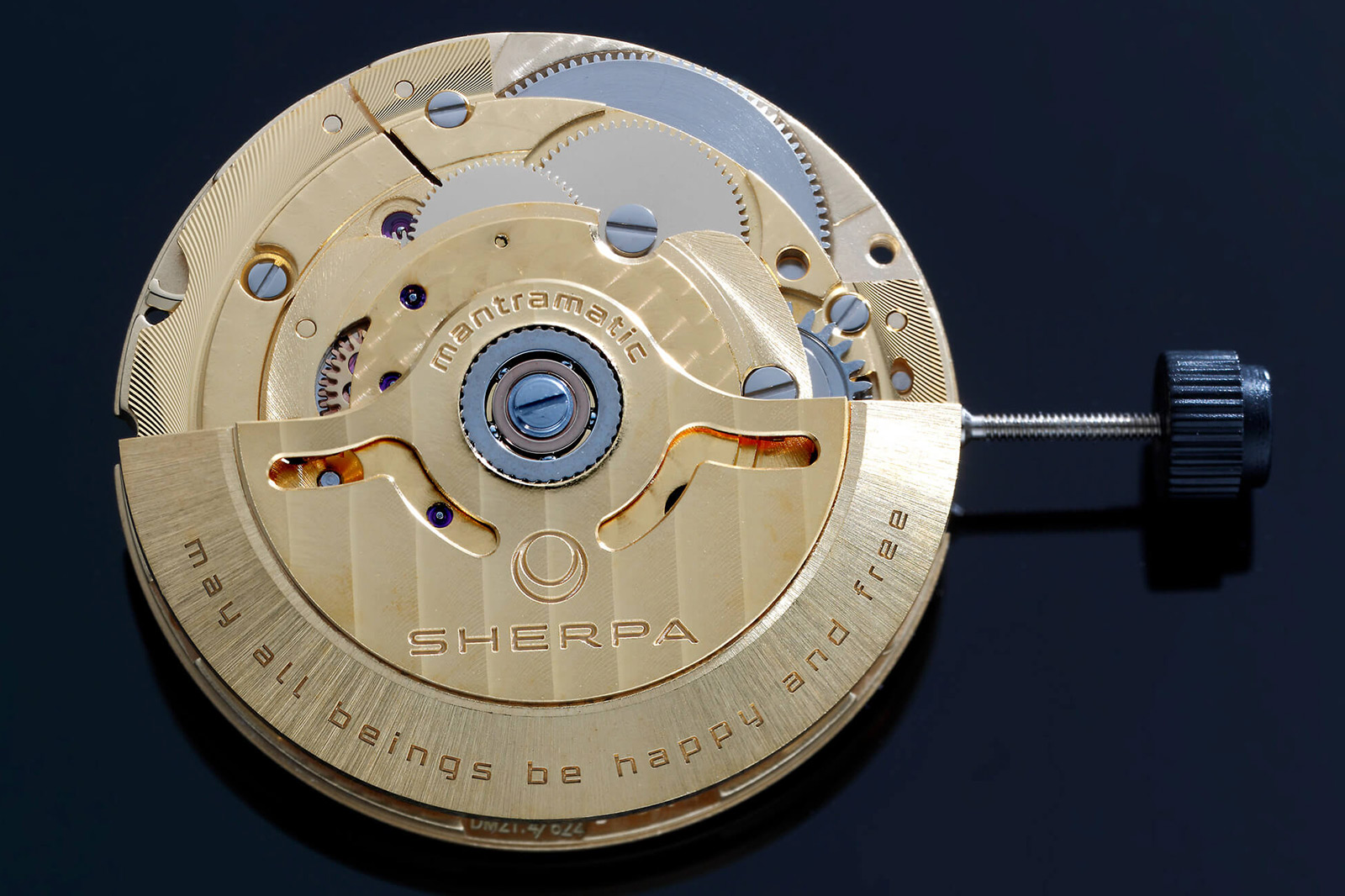
Not that everything here is original of course. It goes without saying that the insides have undergone a much-needed improvement over their true vintage counterparts. While the style’s timeless, watchmaking has moved on mechanically from the 1960s. So, the movements here are based on the workhorse Sellita Calibre SW200-1 automatic. I say based on because Sherpa have added an almost imperceptible change to the movement.
Prayer wheels are a common sight in Tibet, spinning in monasteries, sending out love, wisdom and compassion. Well, one wheel is much like another, so Klocke decided to pay homage to the region’s traditions with his own take on the prayer wheel. The mantra OM MANI PEME HUNG has been microscopically engraved on two of the wheels so that, as they turn throughout the day, month and year, they too send out good vibes in line with Buddhist tradition.

Sherpa Ultradive, €5,900
It’s also worth noting that in this instance Sherpa is more than an adopted name. A percentage from every sale goes directly to supporting various projects in the Sherpa regions of Nepal, actively improving the lives of those from whom the watches draw inspiration.
Enicar may not have been the first brand to summit Everest, but they more than anyone embraced the rugged mountain and the people that called it home. Now, well over 65 years later, that same mountain-conquering spirit and the culture that helped it grow has been encapsulated in Sherpa.
More details at Sherpa Watches.