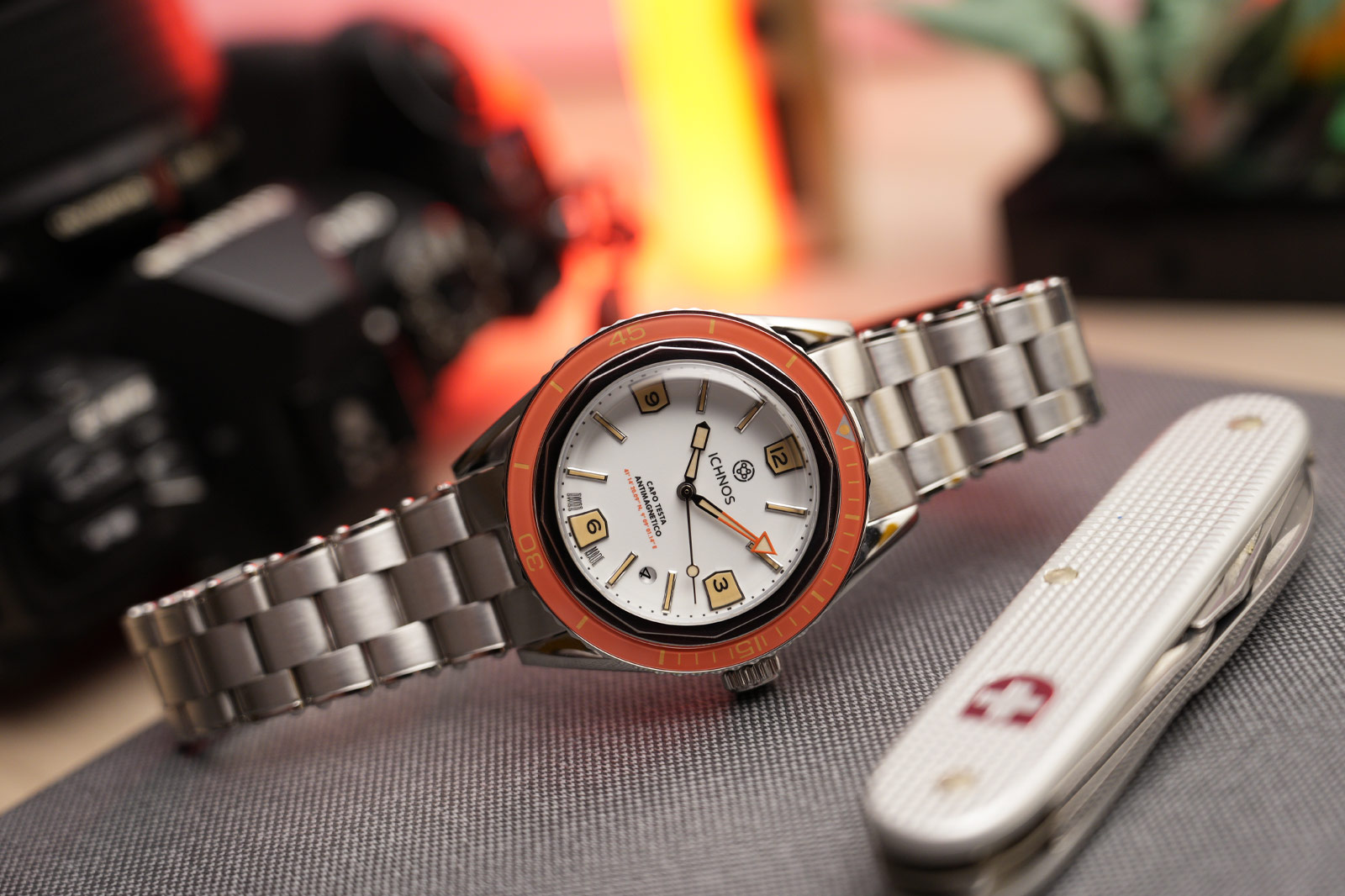
It goes without saying that there are a lot of places where watchmaking has found a home, from the traditional homeland of Geneva to German Glashütte and the Japanese landscape of Shizukuishi. A relatively young brand, Ichnos, is keen to add another stop to this global tour of watch havens with their latest release, the Ichnos Capo Testa, a dive watch inspired by their home on the island of Sardinia.
Sardinia is the second largest island in the Mediterranean surpassed only by Sicily and is owned by neighbouring Italy. Like Italy it has a gorgeous, sun-drenched landscape of rolling hills, wide valleys and broad forests scattered with white-walled, red-roofed villas. The Capo Testa, Ichnos’ second collection, is designed to cater to all aspects of island life, from the needs of coastal fishermen and divers to the more relaxed atmosphere of evening soirees along one of their many beaches. Capo Testa is itself a peninsula on the Northern coast of the island.
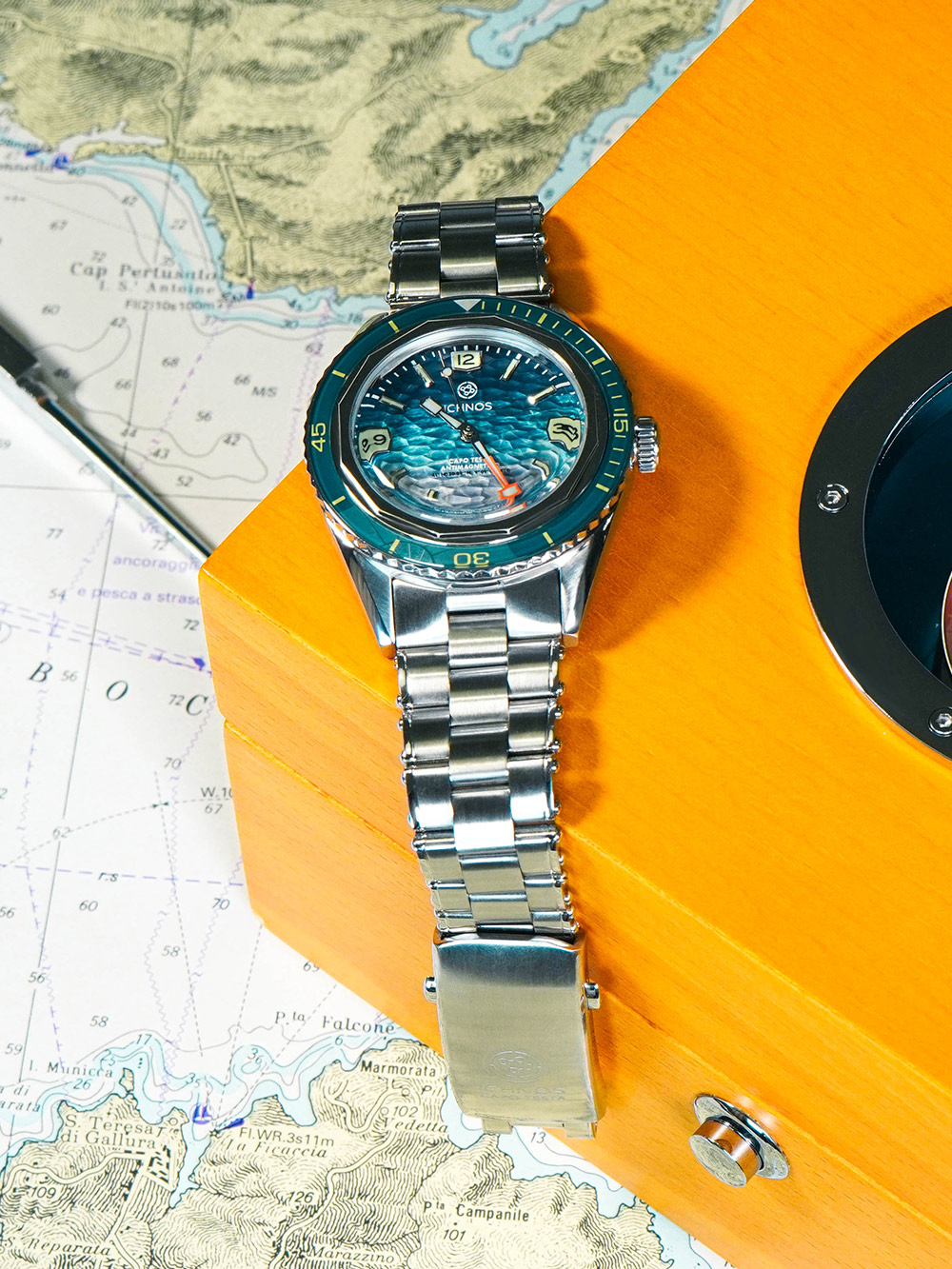

There are six versions of the Capo Testa being produced, all of which are made from stainless steel and measure 40mm in diameter with 400m water resistance ratings. The two standard editions of the watch are the Chromis and Raja in navy blue and black. Then there’s two with dials inspired by the reflections of light passing through water, the Rena di Levante and Rena di Ponente. Fifth is the Cala Grande with a hydraulic stamped dial featuring a sand pattern and lastly is the full lume variant called Corallaro.


While each is unique and interesting in its own way, let’s focus in on the Corallaro edition of the Ichnos Capo Testa for a more in-depth look. The white dial (which is fully coated with BGW9 lume) and coral diving bezel strongly remind me of those white and red buildings you can find across Sardinia, although that technically isn’t the inspiration behind it. Instead, its actual inspiration is the ancient tradition of Sardinian coral fishing. To the ancient Greeks and Romans, Sardinian red coral was believed to be a powerful ward to calm the oceans and today it’s still prized amongst jewellers.

A slightly paler shade of coral orange is used for the hour markers and hands, which are coated with old radium lume. The relatively chunky design of the hands and markers makes it a highly legible design in keeping with the dive watch archetype. At the same time, the shapes are distinct enough that it stands apart from the raft of homage microbrand dive watches that saturate the market.

Another aspect of the watch that makes it distinctive is the lugs, which are particularly wide with polished flanks, giving the piece a quasi-integrated bracelet aesthetic. The bracelet itself is a three-link number with visible screws on the external links giving it a utilitarian, industrial feel. I think the Capo Testa does a good job of riding the line between practicality and style, the structure of the watch being solid and reliable while the colours are predominantly light and playful.

While the design of the watch leans heavily into the influence of the Sardinian landscape and traditional lifestyle, the movement housed inside is resolutely Swiss. Which is a good thing because it’s arguably the best off the shelf movement around, the La Joux-Perret G100. Specifically, it’s the Soignè version with 68-hour power reserve and +/- 7 seconds per day accuracy. It’s protected by a solid caseback that depicts the Capo Testa peninsula.
All six versions of the Ichnos Capo Testa are available for pre-order until deliveries begin on April 30th, 2024. They have a price of €1,695 with the exception of the full lume Corallaro, which is slightly more at €1,745 (approx. £1,450/£1,500). It’s a solid value proposition and it’s certainly the most interesting offering from the world of microbrand dive watches to emerge so far this year.
Price and Specs:
More details at Ichnos.