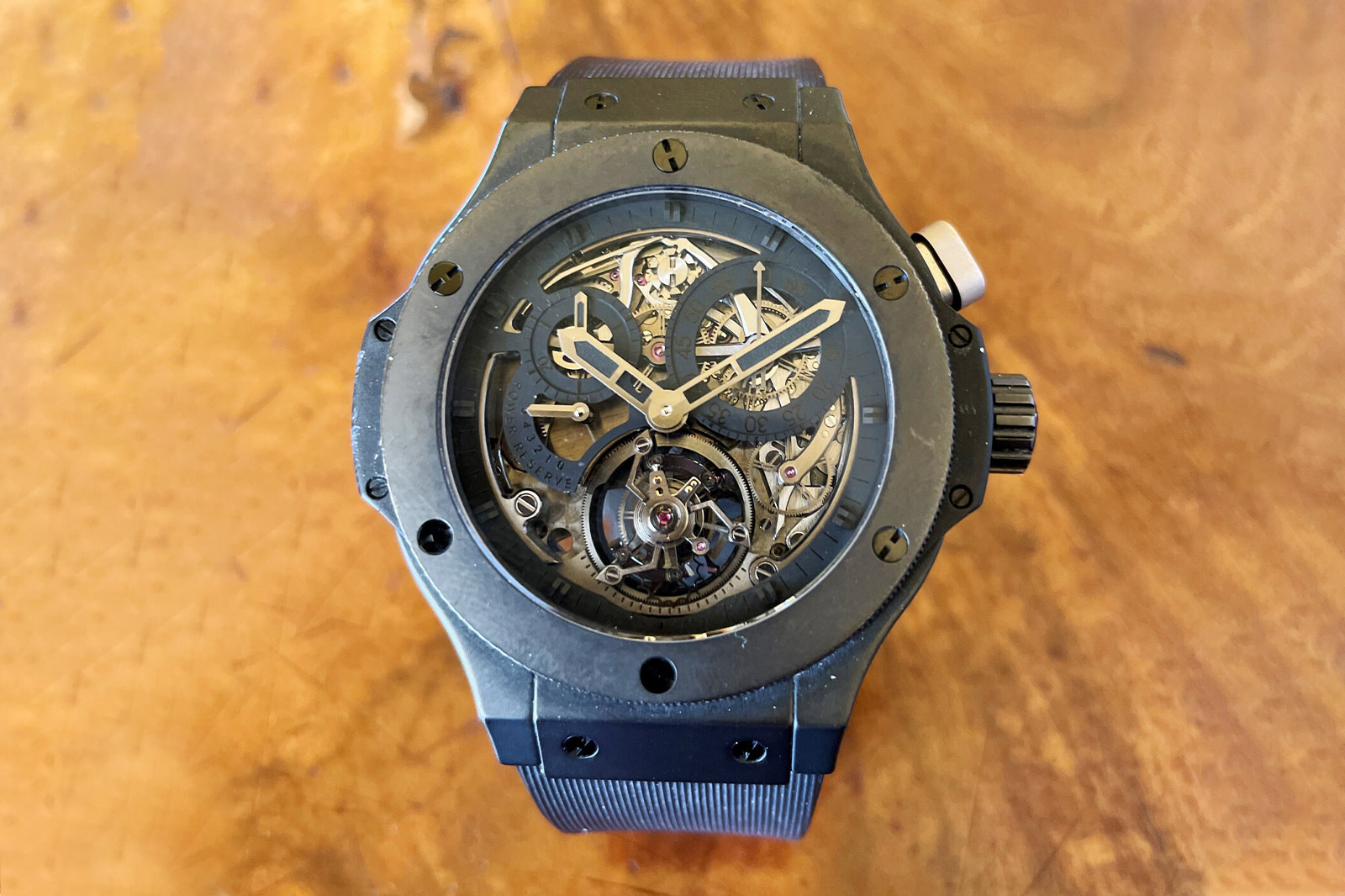
Last month, Jean-Claude Biver decided to sell a digital version of his piece unique Bigger Bang All Black, a watch that’s arguably the genesis of modern Hublot, complete with an NFT. The actual watch wasn’t up for sale and it didn’t meet the reserve, but it made a splash, for sure. Then a little later, Jacob & Co got in on the act, offering a full, 3D render of a unique version of the Astronomia Sky backed by an NFT, one that actually did sell – and for $100,000 at that.
The questions you might therefore be asking is a simple one: what is an NFT? Despite all the tech jargon floating around, NFTs – Nonfungible Tokens – are pretty straightforward. They are simply unique digital identities that cannot be faked, copied or otherwise undermined. They’re created using the same blockchain technology behind cryptocurrencies and with much the same idea, albeit with a laser focus on ownership. They’re minted on a digital ledger that’s completely unalterable.
That said, when Jack Dorsey of Twitter fame starts selling his first tweet or YouTubers are auctioning off video clips, it all gets a big disjointed. So, it’s worth looking a little more closely at what first thrust NFTs into the luxury limelight and, arguably, where they’re most at home: Art.

Back on 11th March, an artist named Beeple (real name Mike Winkelmann) made history by selling a digital artwork via esteemed auctioneer Christie’s for just over $69 million. The piece, titled Everydays: The First 5000 Days, was created over the course of years as the artist, starting 1st May 2007, created a single image every single day. The images range from random sketches of Beeple’s Uncle Jay – Uber Jay – in biro to the final image, a nightmarish hellscape of Disney characters and pop culture icons as satanic muses. Kim Jong Un as a breasted Buzz Lightyear? Sure thing.
It’s a monumental artwork, showcasing the evolution of an artist on his rise to prominence, and one that could only feasibly be sold as a digital piece. To certify its authenticity, it was sold with an NFT so that, digital though it may be, any fakes would be incredibly easy to figure out. The hammer price was paid using Ether, but to be honest cryptocurrency is beside the point here.
Beeple himself didn’t exactly come from nowhere. The digital artist has an Instagram following of 1.8 million. But what this did do is legitimise digital art in a way that, a few years back, we saw with Street Art, making it a serious, mainstream artistic medium.
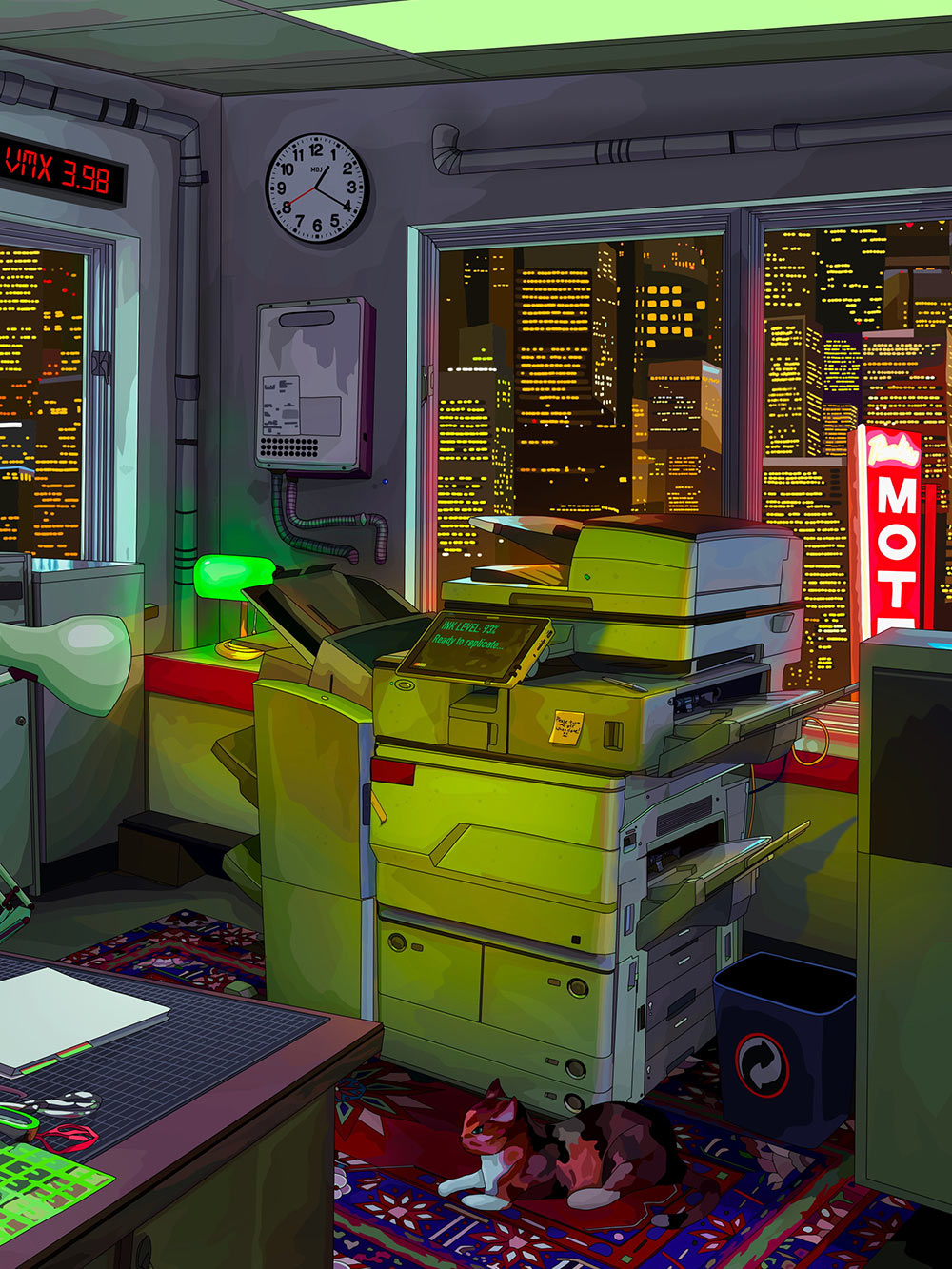
This embracing of digital mediums has led to some serious experimentation in the field, too, far beyond simply using NFTs as, effectively, a certificate of authenticity. The next big auction in the field is set for later this month courtesy of Phillips. Created by Mad Dog Jones (Michah Dowbak), REPLICATOR is a work that does something amazing.
The image of a printer will actually print other NFTs over the course of a year, essentially taking up the Warholian mantle of mass-produced art in a digital format. Occasionally, this being a printer, it will also jam, creating a distinctly unique work in the process and stopping that current crop of copies from continuing. The entire thing is built on an NFT framework that will ultimately give rise to seven generations of artwork, each slightly different from the last.
At the time of writing, REPLICATOR has a winning bid of $2,400,000 with just over four days to go and I’d expect it to get considerably higher in the final rush. As an NFT artwork that produces more NFT artworks, this could be a serious investment piece once its production year is up.
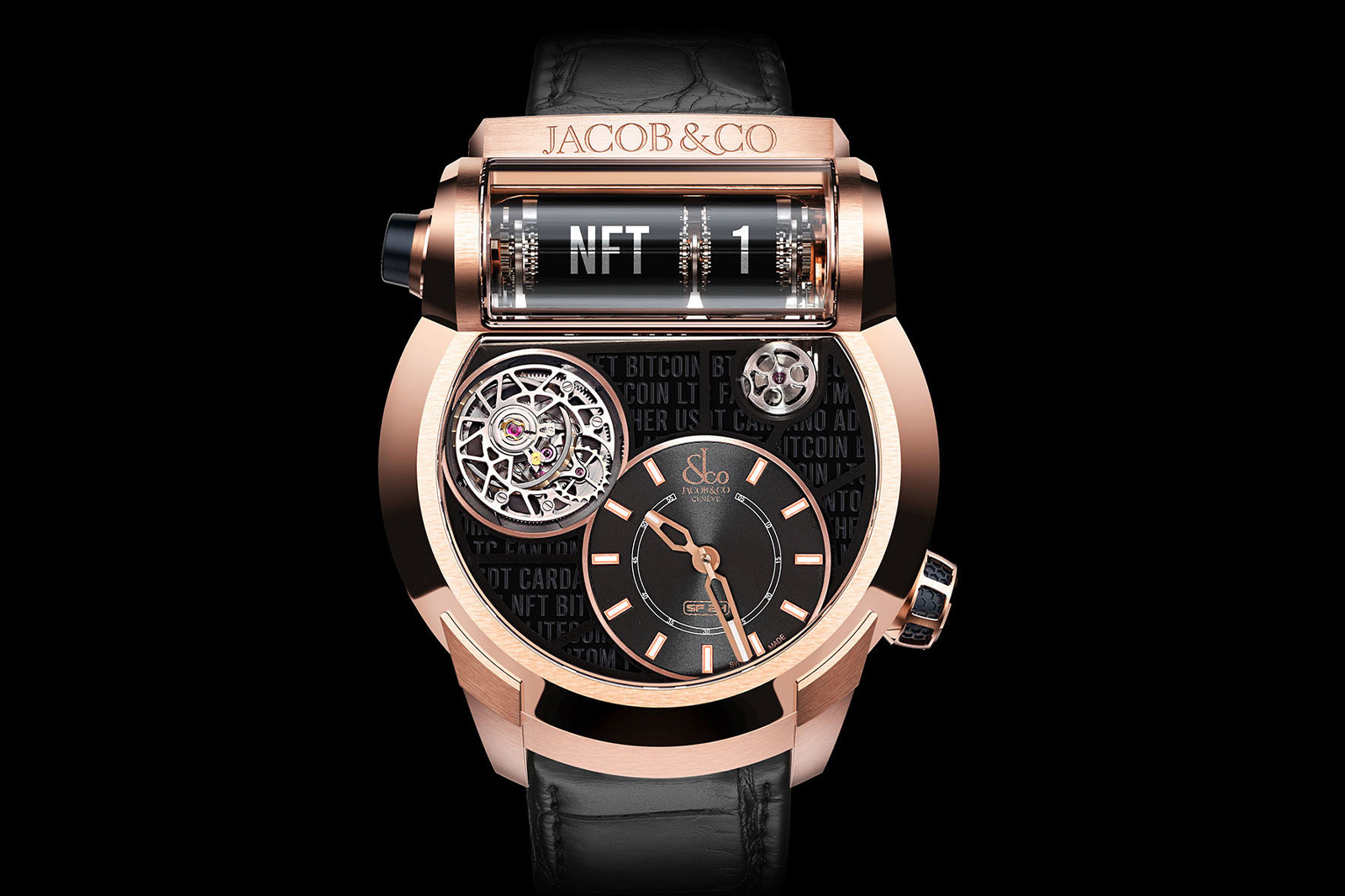
Which brings us back to our opening NFTs, a static watch image and a 3D render of a unique piece. The former didn’t sell and for what I consider good reason. A static image of a watch, one that could be retaken at any point, doesn’t have quite the same inherent value as an artwork, no matter how influential a watchmaking wizard is behind it.
The Jacob & Co attempt on the other hand does have some merits, though it might actually be a little ahead of its time. The idea is that once (and if) augmented reality or VR take off, the owner of this digital watch can wear it in the virtual world. Sure, it’s pretty much a haute horology Fortnite skin, but given the amount of money that’s been raking in over the years, it could prove to be a bit of a money spinner, eventually.
For now, though, NFTs and art are a more perfect pair than you could hope for, and one that may well be expanded beyond digital works. How better to guarantee the authenticity of a Van Gough than to have an expert inspect it and sign it off with an NFT? It could cut down fraud and theft both (there’s no point stealing what you can’t prove is real) and will last longer than any piece of easily damaged paper.
For all the furore surrounding them, that’s all an NFT really is. It proves a work is unique. You just need to make sure it’s attached to something that is worth being unique. An old tweet or two just isn’t going to hack it. Even if it does go for $2.9 million. Yikes.