
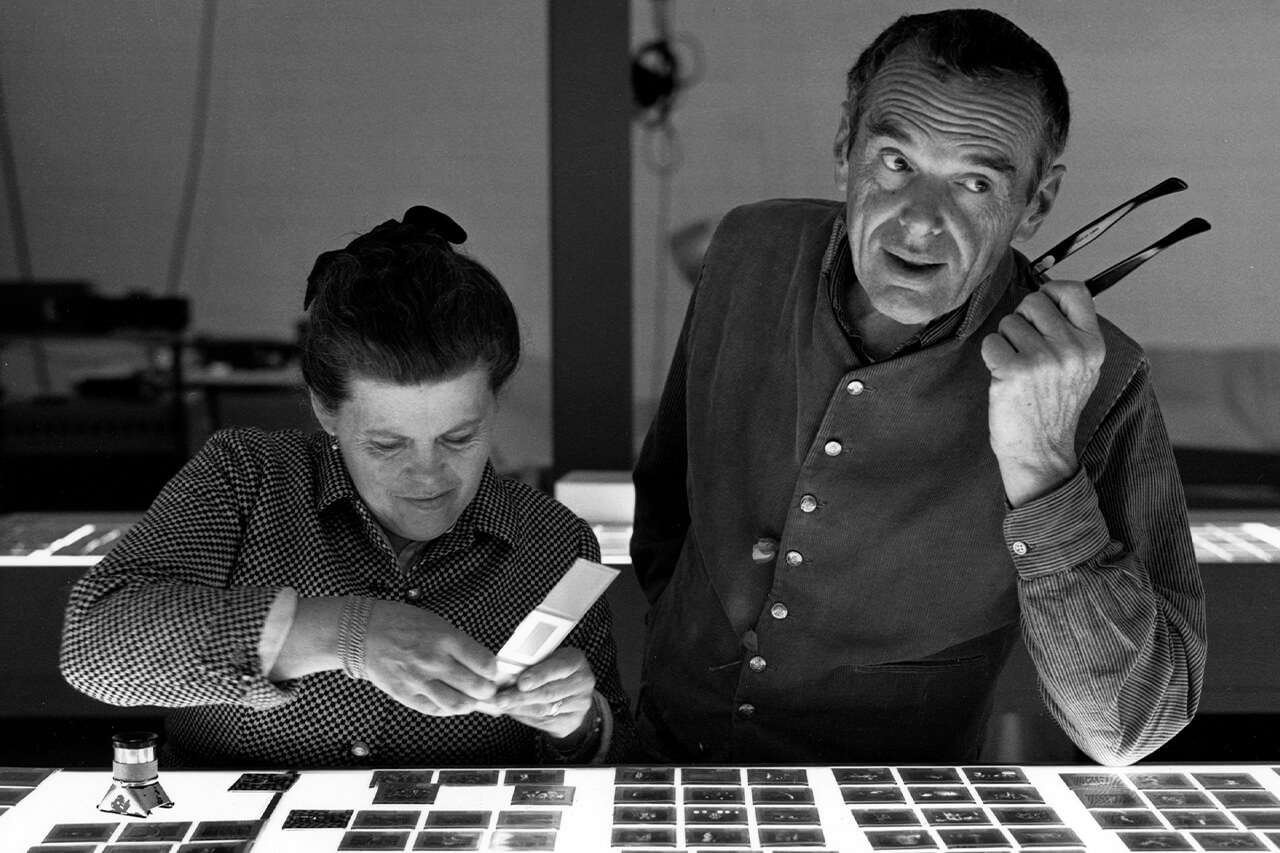
It’s hard to escape the work of Charles and Bernice ‘Ray’ Eames. As ad directors know too well, nothing beats a piece of the designers’ furniture as a visual shorthand for a swish lifestyle and considered good taste. Executives bark orders from its aluminium series chairs, and fill their lobbies with LCWs. Art types kick back on the sculptural chaise longue. Bars and restaurants, bare-bricked in their upscale minimalism, still signal their sophistication with endless reproductions of the DSR side chair.
As such, it might be expected that ubiquity would dull their appeal. And yet a piece of Eames furniture – for which the Eameses are best known – never seems to get boring, no matter how many times one crosses your path: it’s still modern but welcoming, playful but never gimmicky, functional and somehow freeing. It proves that the classic can still transcend cliché.
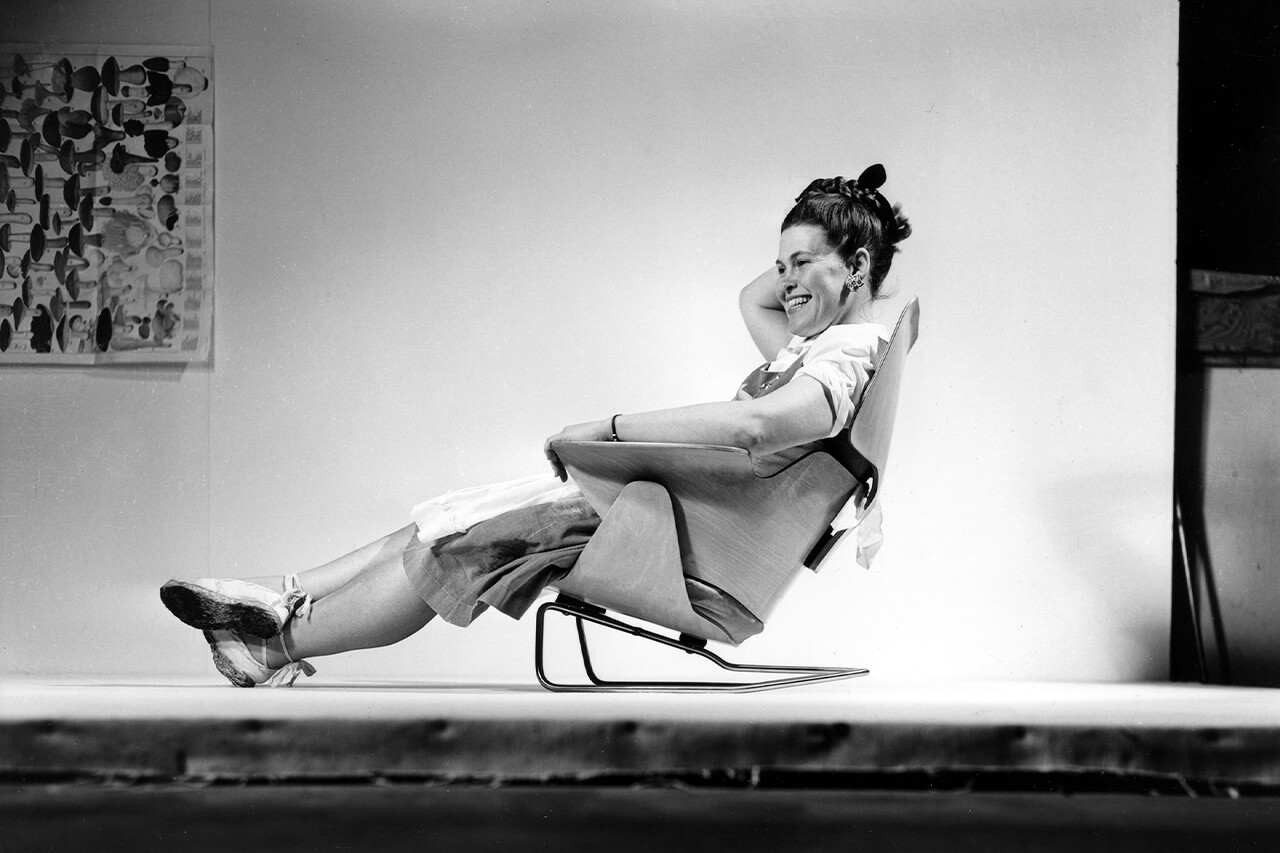
Yet, were they still alive, the Eameses – a creative coupling that started when they met at the Cranbrook Academy of Art, Michigan, 80 years ago this year – would be staggered not just by how their work has become definitive of the mid-century modern movement, which in turn has seemingly become the wellspring for most recent design, but also by its enduring popularity.
That’s after a career in which, unlike many other admired, contemporaneous designers, they sold a lot of stuff – and perhaps small wonder, given their emphasis on designing with affordability and practicability rather than for the sake of spectacle: “The best for the most for the least,” as they neatly put it.

They made the everyday exceptional. And, as is not always considered in furniture design, comfortable: in 1972 the chess grandmaster Bobby Fischer requested one of the Eameses’ Time Life Lobby chairs be flown over for his match in Reykjavik against Boris Spassky, claiming that it was the only seat in which he could really concentrate. Spassky subsequently requested one too. It’s not the most comfortable chair, mind – that’s the Eames lounger of course. How could a chair inspired by a well-worn baseball mitt not be?


Comfort, however, has not diminished the Eameses’ critical relevance over the four decades since the legacy of their work passed into the hands of their daughter, and since into that of their grand-children (who like to tease by still occasionally releasing previously unmade Eames designs).
Rolf Fehlbaum, chair of Vitra, the Swiss manufacturer which holds the European license to produce official versions of Eames’ furniture, is said to ask, ‘What would Charles Eames do?’ when considering any new project.
This is all the more remarkable given the breadth of their work: not just the chairs for which they’re best known, but landmark houses, interiors and multimedia presentations, textiles, World’s Fair exhibitions, some electronics, and films (watch Powers of Ten of YouTube) of such quality they’ve been preserved by the Library of Congress as being of historical importance.

In part this is down to their technical innovation and their appreciation for the possibilities for various materials, both new and old. They worked in steel and aluminium, fibre-glass and moulded plywood, the latter after using it to design a splint for use on injured soldiers during World War Two (plywood reduced the vibration that often made the injury worse).
Their low-cost steel-and-glass house in the Pacific Palisades was built from industrial modular components in the pioneering belief that their directness and sparseness had a beauty to match any noble material. They’d happily marry factory-making with hand-crafting in the same design.

What’s more, the Eameses didn’t just hand a sketch to a manufacturer to produce their designs – they also developed the methods and mechanics that allowed them to be produced, too. For all that, inevitably, it’s the look of an Eames design that makes it so appealing. Superficial stylists the Eameses never were – Charles Eames was keen on the idea that the extent to which a designer has a design style is the extent to which they haven’t solved a design problem.
Indeed, Charles – who never completed his architecture studies – didn’t much like the term ‘designer’. Nonetheless, in 1985 the Industrial Designers Society of America rightly named him and his wife ‘The Most Influential Designers of the 20th Century’.

“In the end it’s quite simple,” Charles Eames explained to The New York Times back in 1973, when even then he was being described as a ‘giant of design’. “Whatever we work on we aim for something that is inoffensive and pleasure-giving. [But] we take our pleasures seriously.”

