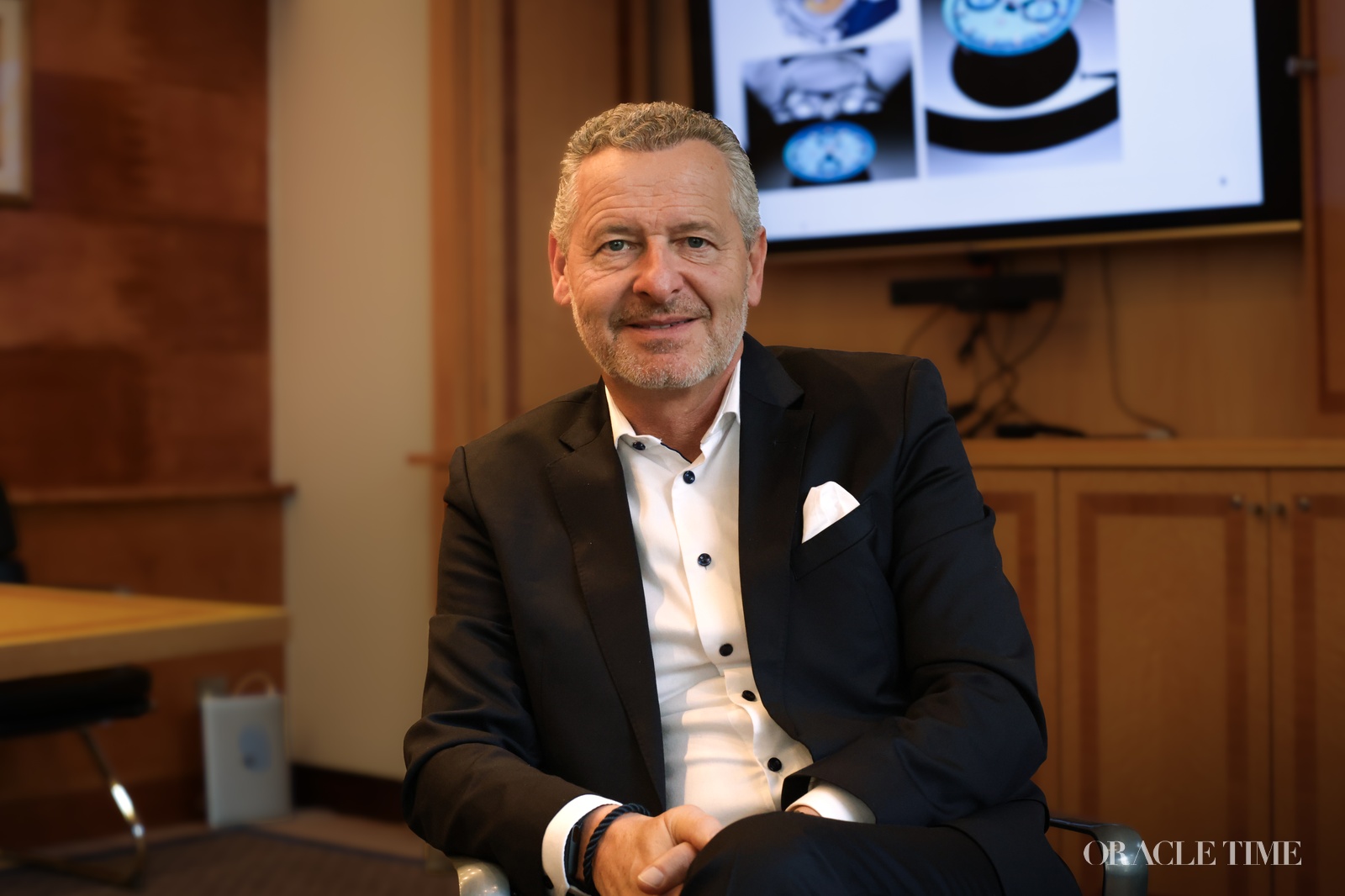
Patrik Hoffmann doesn’t seem like your usual watch brand CEO. Sure, he wears a suit, but when we meet in the Lansdowne Club on a cold and overcast day in London, he’s relaxed, warm and, most importantly, unguarded. Perhaps it’s the fact he’s dealt with most things the watch industry has to throw at him, with nearly two decades at Ulysse Nardin, the last six of them as CEO, and ultimately selling to the Kering group, or maybe it’s the trajectory of the current business he heads up, Favre Leuba.
If you’re not familiar with the brand, they have historical pedigree to rival the big dogs. Founded in 1737, their golden era is considered the mid-20th century when, during the 1940s, 50s and 60s, they created the first watch with altimeter and barometer, called the Bivouac, and the first mechanical watch with a depth gauge in the Bathy, not to mention influential models such as the Harpoon, Water Deep and the Triple Calendar. Recently the brand has had a more tumultuous time, changing hands four times since the original family sold up in 1985. Most recently passing from Titan, India’s biggest watchmaker, to the retailer Ethos. So, with more stable foundations, we discuss the past, present and future for the Grenchen-based manufacturer.
You spent nearly 20 years at Ulysse Nardin. Why did you pick Favre Leuba as your next project?
After selling it to Kering in 2014, I stayed on for three years, which were particularly difficult for me.. Because, see, I was always with independent companies. Then after three years I was out and I said I’m going to retire. So, I officially retired. Then I was with WatchBox for about four years, which was amazing. But at the same time, I was on the board of the biggest retailer in India, and we saw an opportunity to buy Favre Leuba. For me, it didn’t really mean too much. I had to read up on it. So when I saw the opportunity, I said, this is the brand to launch. It was just the right time with the right product, and I knew how I wanted to do it.
The brand has changed hands a lot. What went wrong last time?
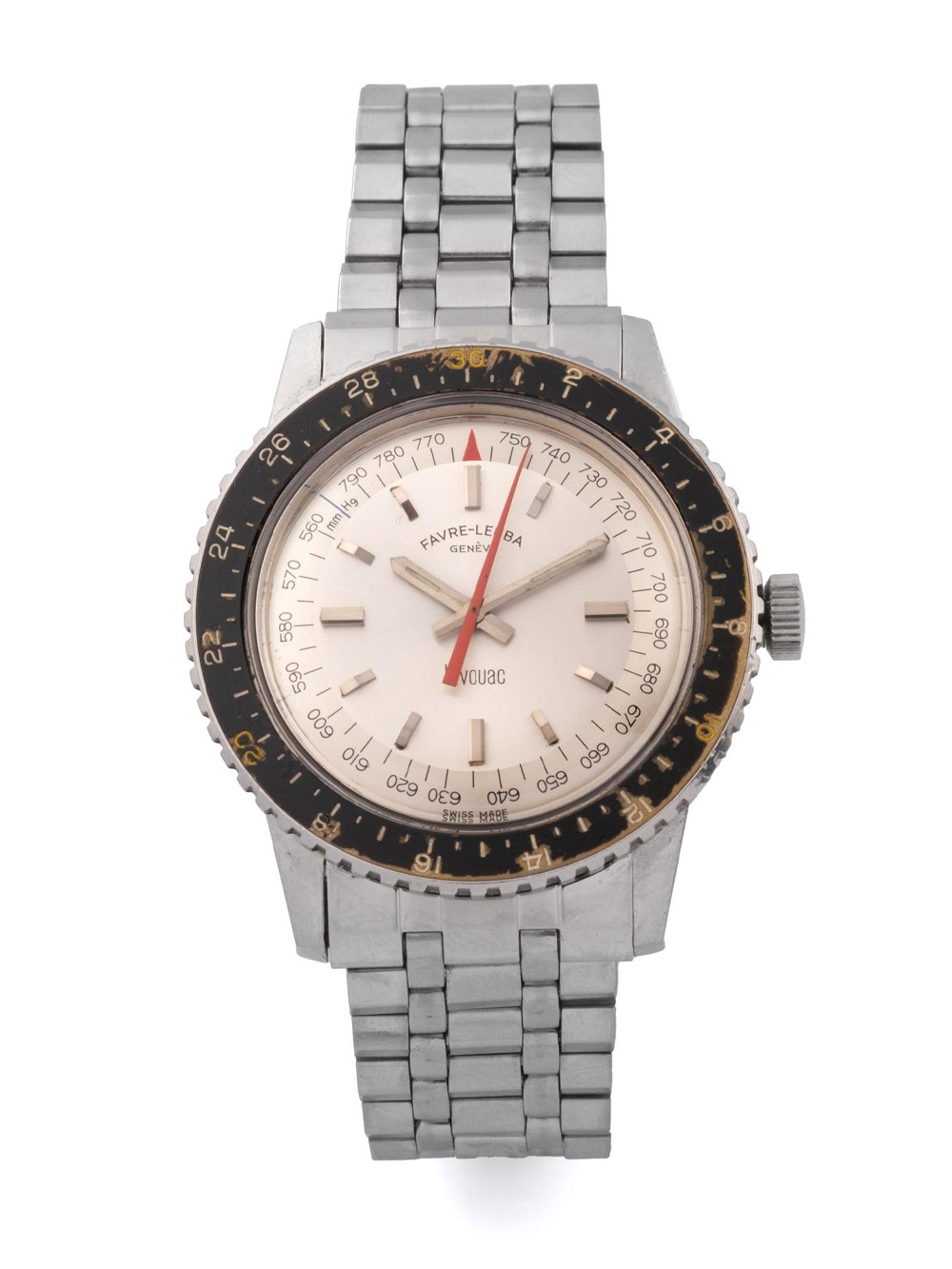
The last owners did great stuff. They bought it in 2012. The history they wanted to show, the heritage, the DNA they put into the product was fantastic. But the pieces were unwearable. The Bivouac was 18mm thick and 48mm wide. At the same time, watches were becoming smaller. I mean, it just had to fail. The market changed, watches got smaller, and we had this retro trend coming. Neo-vintage, I would call it.
What did Favre Leuba make in its earliest years?
A Swiss writer, Gion Cavelty, has just written a book: Apparently one of the things Favre Leuba did was buying watches from Breguet to study them, and then they flipped them. He took a cynical view, calling them the first flippers. But there is, of course, a lot more to the history than that.
Most people know the brand for the 1960s and 70s. Will you lean on that history more?
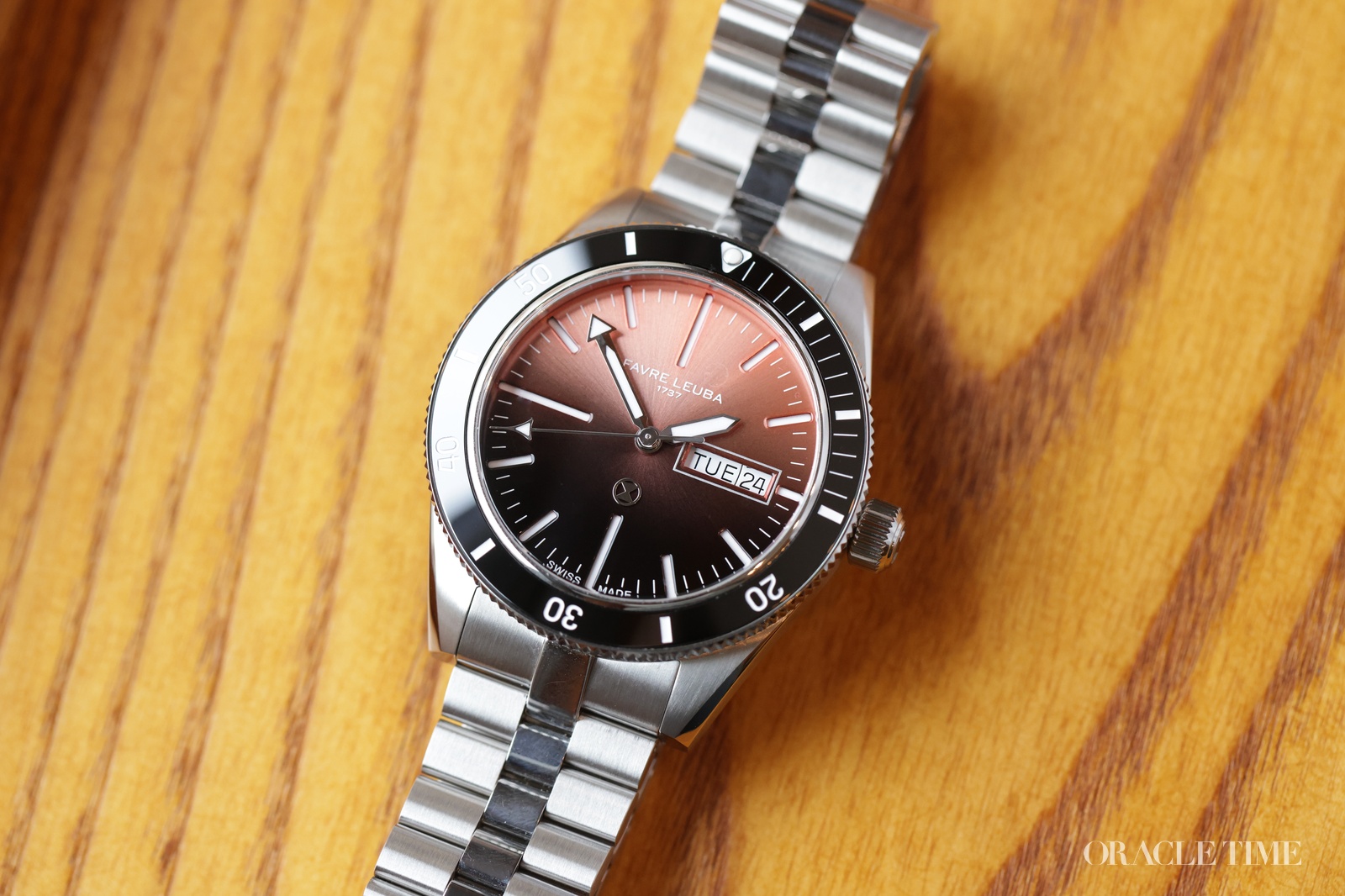
Not even in the future. Right now. There’s so much history in our current collection. The Deep Blue, because that was 1964 and we launched the brand in 2024, 60 years apart. So we said, we need the Chief, which was 1970, and the Sea Sky, which was 1960. The triple date is from 1946. So it is that era. And what we have lined up for the next year is all from that era.
So is the Bivouac coming back?
It is going to be launched soon, and this is not a secret. A new Bivouac. I hope it will be the key product at Watches and Wonders 2027. It might be a few months later, perhaps, but we’re trying. It will hopefully be the key focus of our communication. And it’s going to be very nice, and wearable.
Researching the Harpoon, I found Reversos with Favre Leuba on the dial. What is the story there?
At the end of the 60s, Favre Leuba owned Jaeger-LeCoultre through the SAPIC Group and produced a lot of their Reverso watches. We have them with both brands on the dial. We even have Reverso watches in our museum signed only Favre Leuba. They exist.

The Harpoon was a hit this year. Did you know it would be?
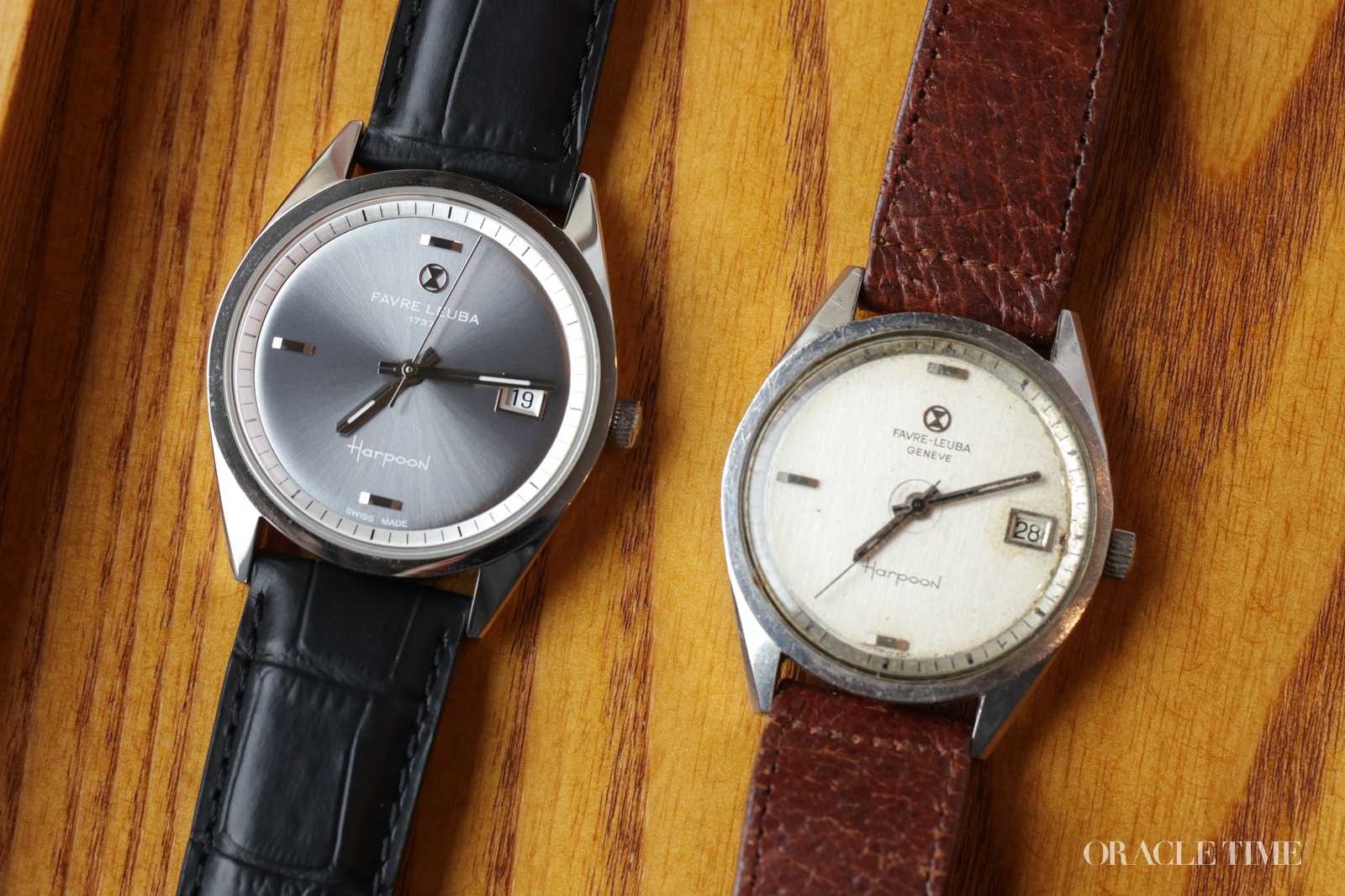
Sometimes you don’t know until just before. With the Harpoon, we didn’t really know. Once we had the product in our hands, two days before Watches and Wonders, we knew. In German we say Zeitgeist. Everything lined up perfectly.
Can a brand live on reissues?
It was clear we cannot do only retro. That would be dangerous. You cannot build a brand on neo-vintage alone. You see the collection, the evolution. We have to show where the journey is going, for the retailers and for the consumers, because you cannot ride that wave of neo-vintage forever.
This mid-tier, between £1,500 and £4,000, is probably the most competitive price point in watches. Why fight here?
I would say so, yes. So it’s not an easy one. In today’s world it is even more complicated, with lots of direct-to-consumer brands. We are definitely not a niche brand. We don’t want to be a niche brand. And we want to work with retailers, so our margin structure is completely different. We were still able to bring product to market at a very competitive price. When you look at the details of our product, it’s remarkable in that price range.
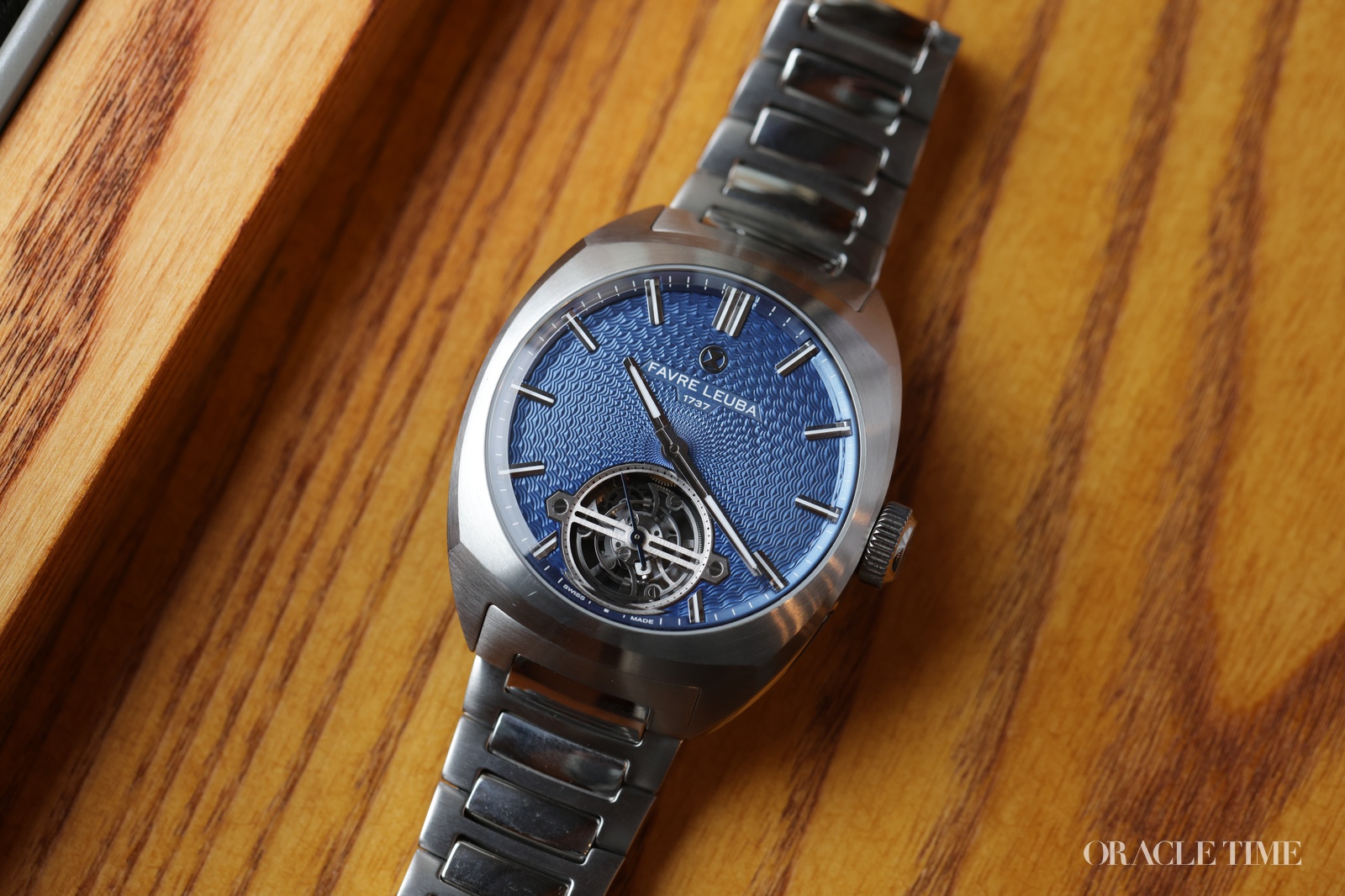
You have sold out two tourbillons. Is there a temptation to go higher?
It’s only unhealthy for the industry if the quantities are going down and the value is going up. The industry needs volume. There’s always a temptation. We launched a tourbillon a year and a half ago, 25 pieces, and it sold instantly. We have done a second edition now, again 25 pieces. I could say, you know what, let’s do more. But I think it would be a mistake. It’s not where we belong.
How much of the plan rests on India?
India is still our biggest market, of course, where everybody knows the brand. We thought [the tourbillon] was going to be sold mainly in India. We sold 80% outside. We have about 140, 150 stores, and 65 of them are in India. I spend one week a month in India. What has happened there in the last 10 years is incredible. You have malls like you don’t see here. They beat all the malls in the United States. They come out of the ground just like this. The mall owners are the kings.
What does success look like in three years?
I always say that we want to make between 80,000 and 100,000 pieces in 10 years. The first year we did close to 4,000 pieces. This year, 8,000. The plan for next year is 11,800, so let’s say 12,000. So we are going fast. 20,000, no question.
More details at Favre Leuba.