
It is easy to turn your nose up at Movado. In America it’s a shopping-mall staple; in the UK it barely registers, and you certainly won’t find it at Watches and Wonders. And yet Movado is the only watch brand whose signature dial sits in the permanent collection of the Museum of Modern Art, and the only one to have commissioned Andy Warhol. That it managed both while treating the man who made it all possible so badly is astonishing.
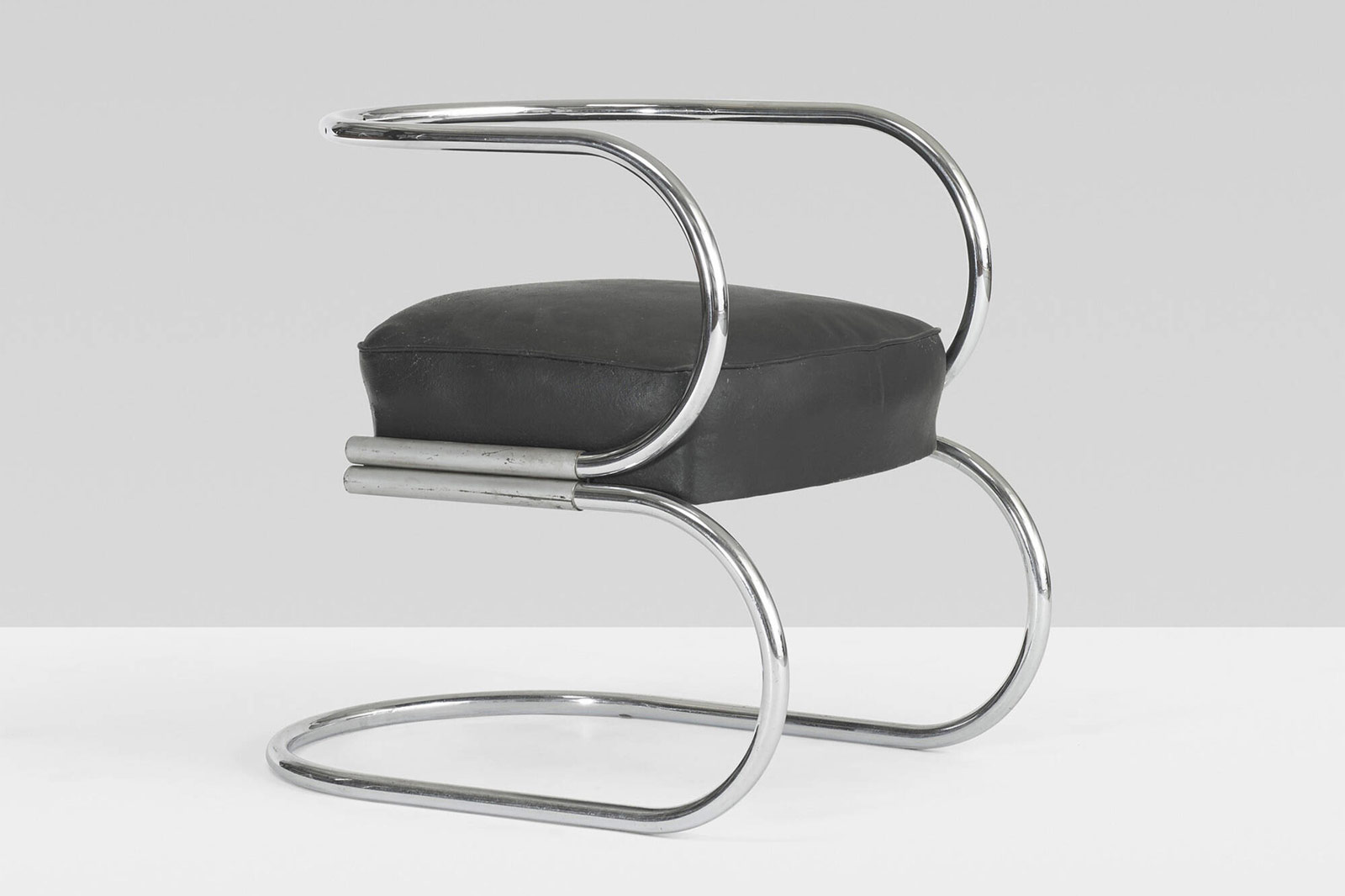
That man was Nathan George Horwitt. Born in Russia in 1898 and raised in New York, he started out as an advertising copywriter for a pharmaceutical firm, rose to advertising director and then, in the late 1920s, set himself up as an industrial designer (there’s hope for me yet). By the end of his life he held 18 US patents, among them the Beta chair, a tubular steel piece now in the Brooklyn Museum and something I would happily have in my home. He was a Bauhaus-influenced modernist, which is to say he believed in stripping out everything that wasn’t needed, then stripping out a bit more.
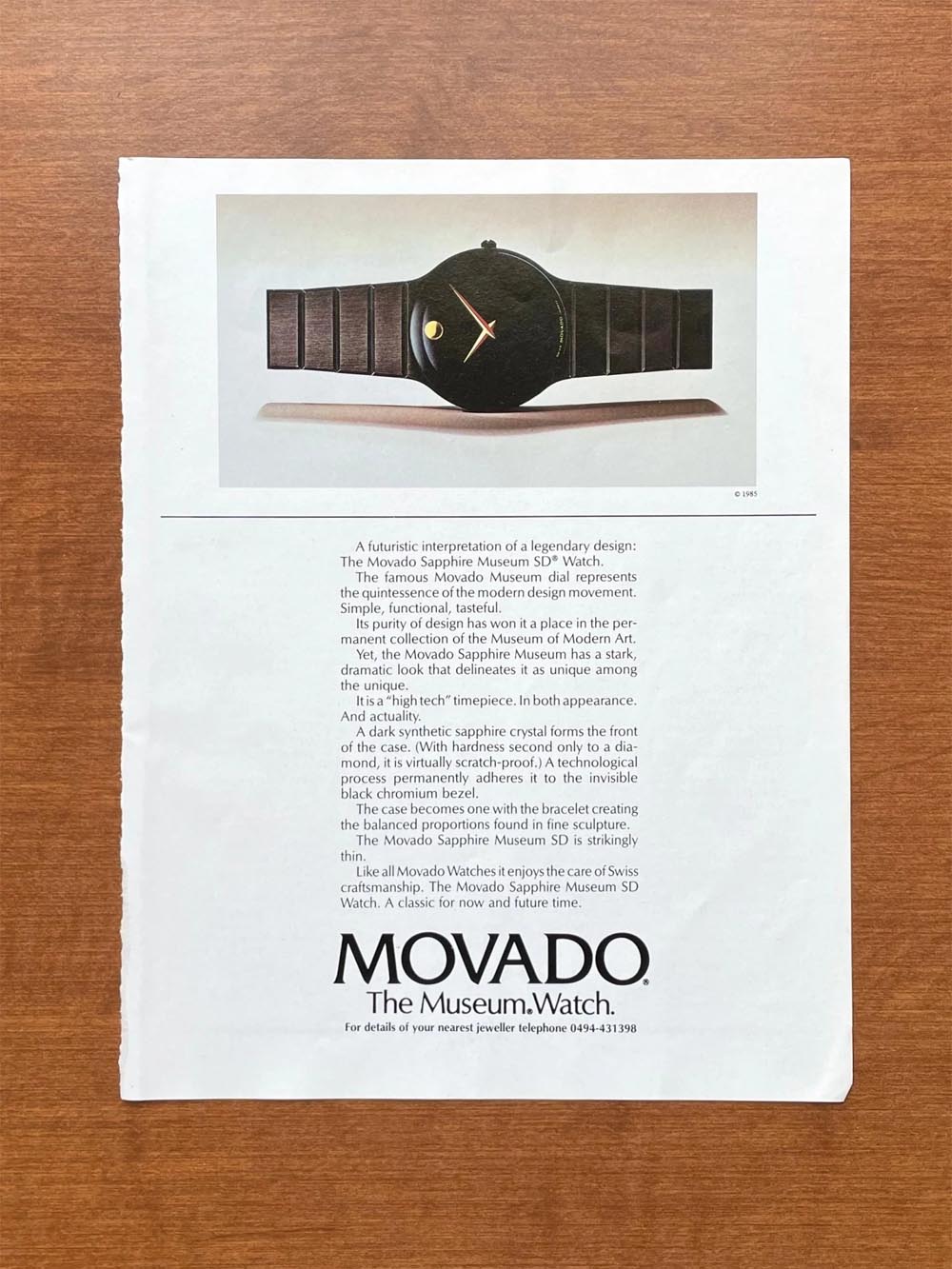
In 1947, he applied that to a watch dial. No numerals, no indices, no minute track. A plain black disc with a single gold dot at 12 to stand for the sun at noon, and two hands. His explanation was that we do not experience time as a sequence of numbers but by the position of the sun, so why clutter the dial with them? It was the most radical dial anyone had put on a wristwatch, and that was the problem. Watches were still everyday tools, and legibility mattered more than philosophy. Nobody wanted it.
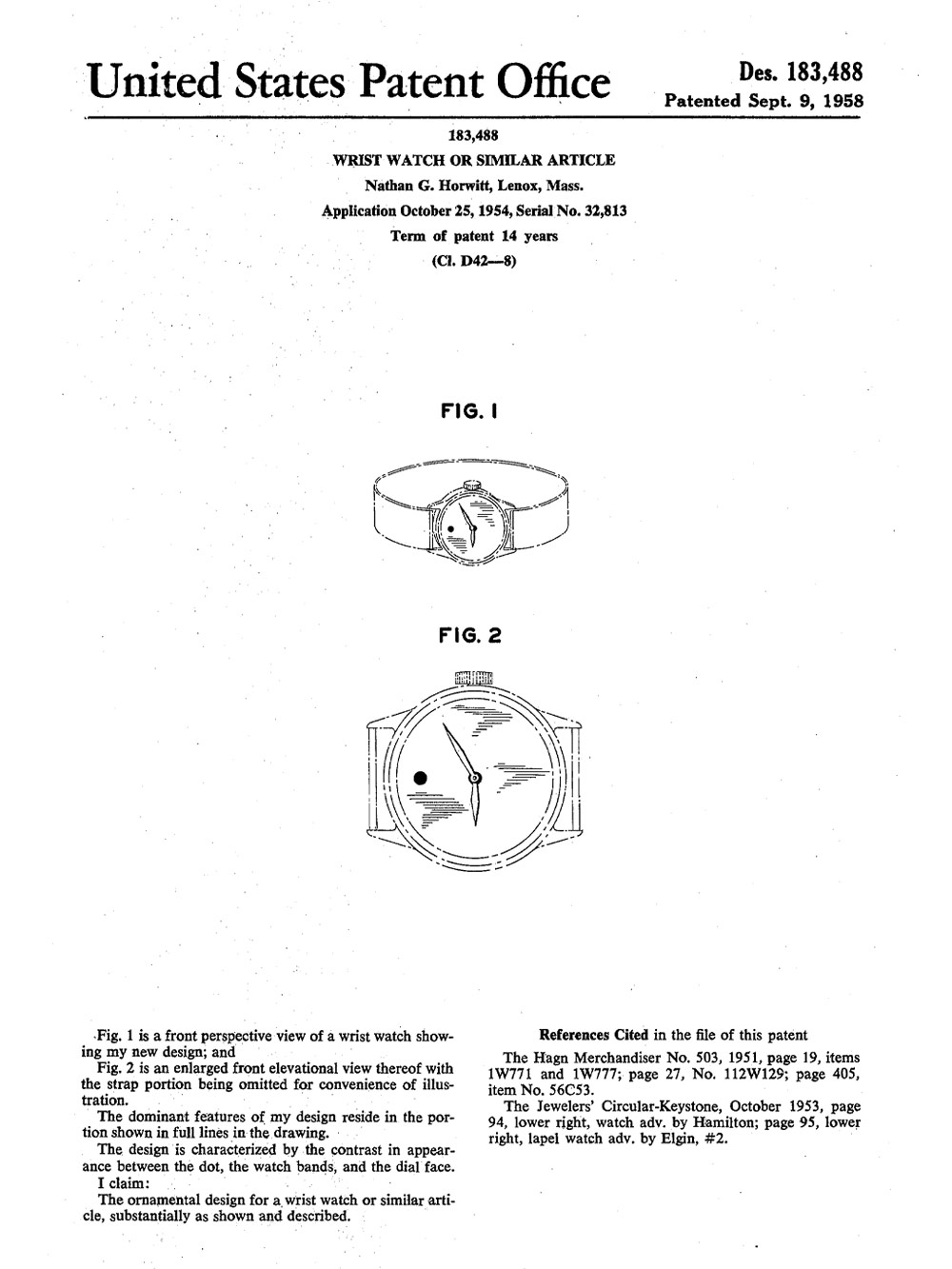
Nobody, that is, except Movado. By Horwitt’s account the company began producing a version the following year without asking him, crediting him or paying him. He eventually secured a patent in the mid-1950s and commissioned three examples through Vacheron & Constantin-LeCoultre’s New York arm: one to wear, one for the Brooklyn Museum, and one that MoMA accepted into its design collection in 1960, the first watch dial to get in. That, incidentally, is where the name comes from.

You would think a MoMA acquisition would have settled the matter. Instead, Horwitt spent the next 15 years arguing with Movado about whose watch it was, first through negotiation and then through the courts, until the two sides settled in 1975. The sum was $29,000. For a design that has since sold in the millions, that sits somewhere between injury and insult, and Horwitt knew it. He died in 1990 aged 92, having spent his later years running an organic farm in Massachusetts. Movado, without apparent irony, then put his name on everything.
By then, the brand had changed hands. In 1983 it was bought by North American Watch Corporation, run by Gedalio Grinberg, a Cuban émigré who had fled Castro in 1960 and built a distribution empire in the States. Grinberg understood something the Swiss had not. The Museum dial was not really a watch. It was a piece of design, and a piece of design needs a collection around it.
The same year he bought the brand, Grinberg went to see Andy Warhol. Warhol liked watches. Piaget’s current Andy Warhol Watch takes its name from the gold cushion-cased 15102 he wore in the 1970s, but Piaget designed that one and Warhol merely bought it. He had never designed one himself.
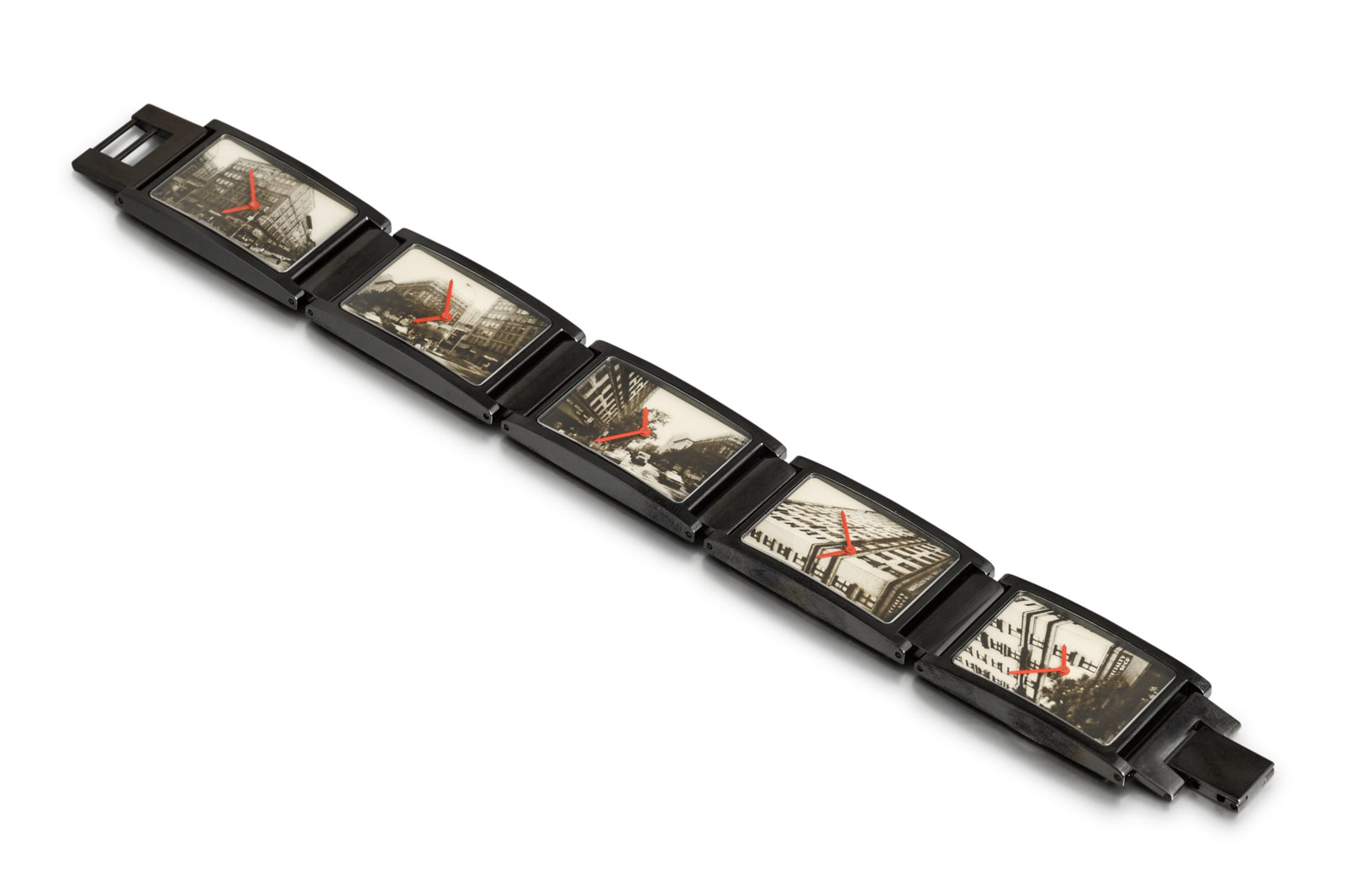
What emerged, slowly, was Times/5: five separate rectangular quartz watches in blackened steel, linked into a single bracelet, each dial printed with a black and white photograph of a Manhattan building that meant something to him. Five times, five pictures, one wrist. It is part world-timer, part Warhol print and entirely impractical, a precursor of sorts to the Jacob & Co Five Time Zone. Warhol talked through the final version with Grinberg six weeks before his death in February 1987, and his studio finished it. 250 were made and released in 1988. It is the only watch Warhol ever designed and one of the last things he worked on, which makes its market oddly modest: Christie’s recently offered one estimated at HK$80,000 to 160,000, or roughly £7,500 to £15,000.
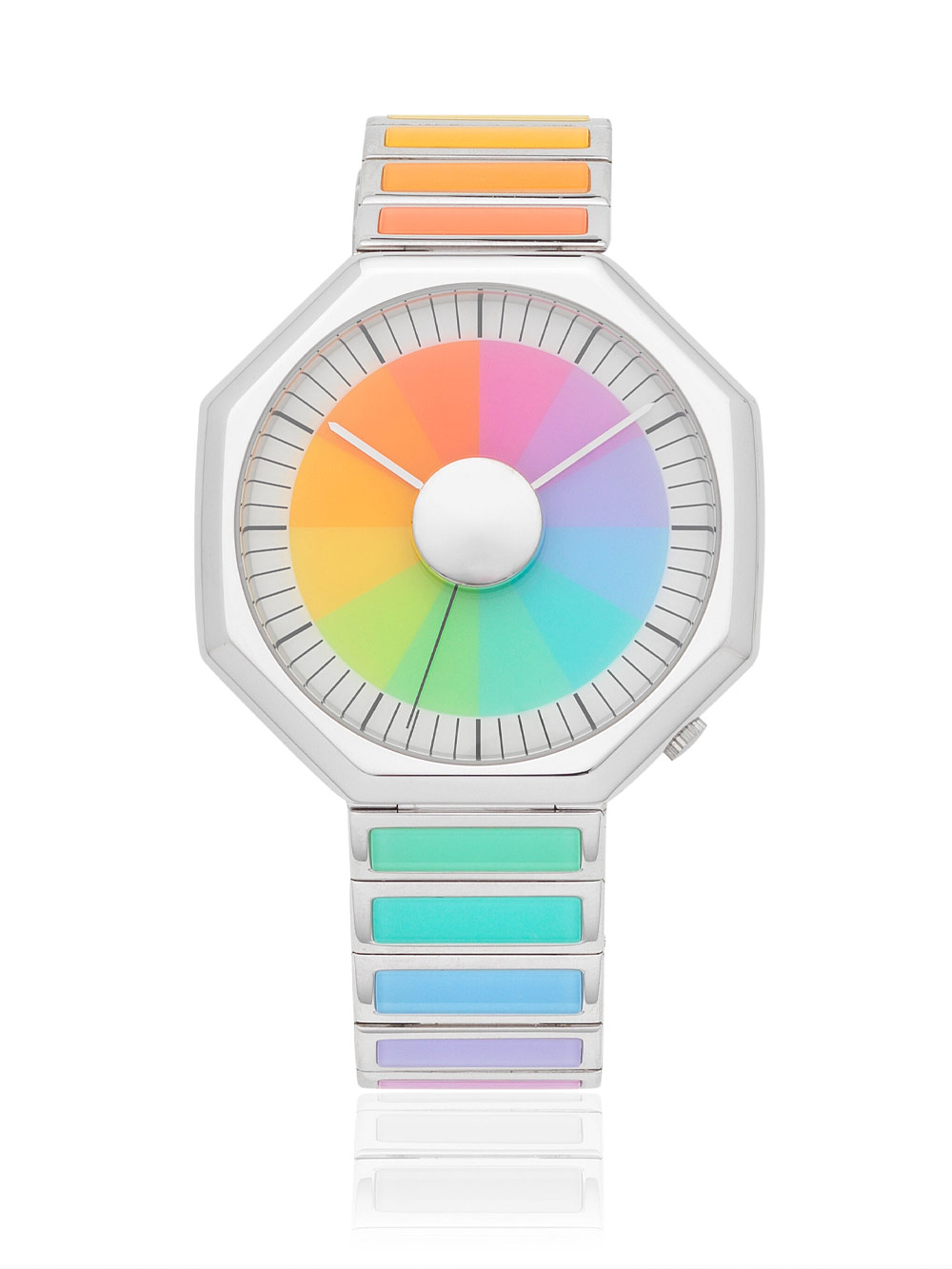
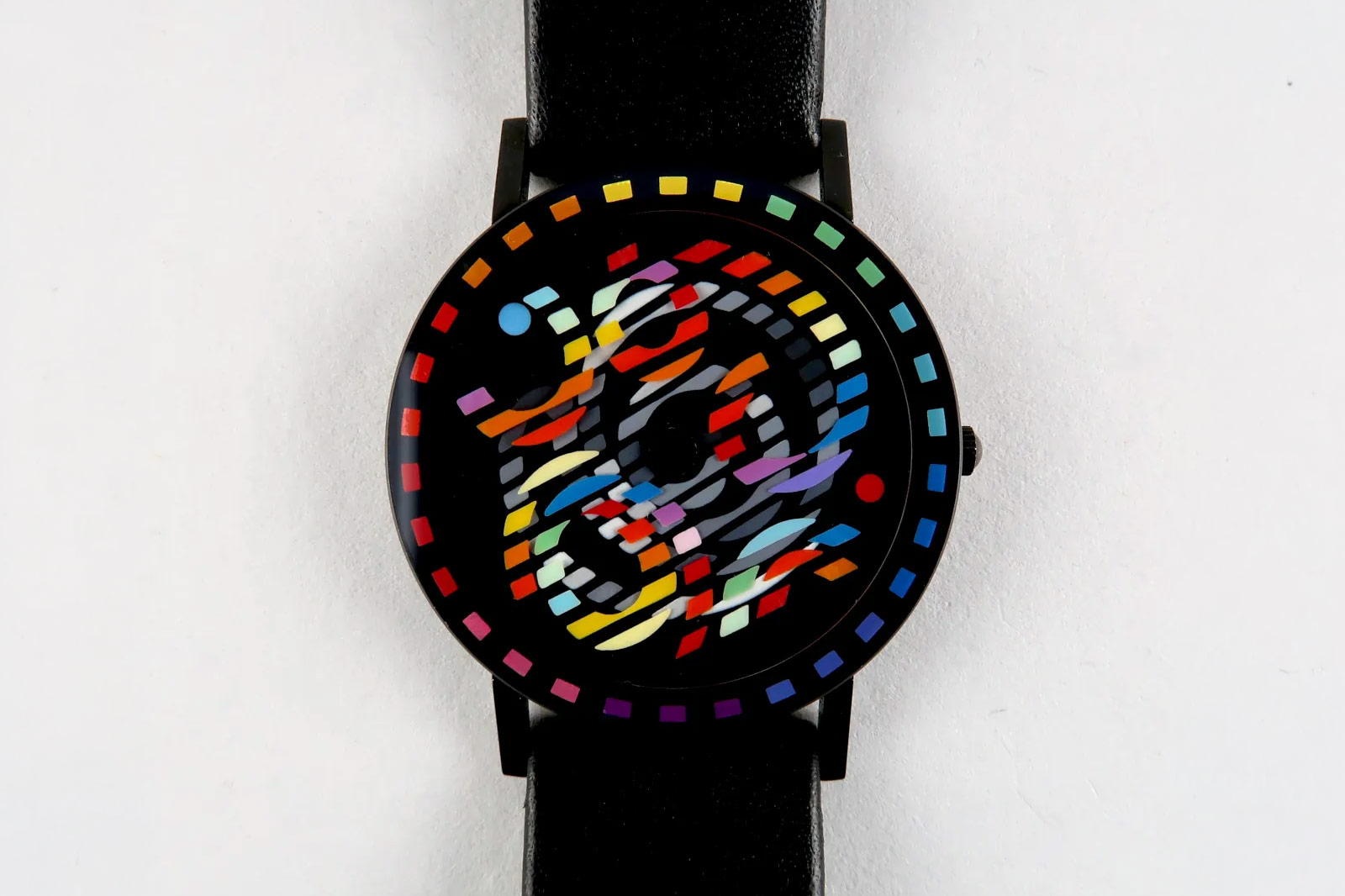
Times/5 launched Movado’s Artists’ Series, and over the next few years the brand commissioned a run of proper artists. Yaacov Agam, the Israeli kinetic artist, wrapped the colour spectrum around the dial of his 1989 Rainbow. Arman, the French-born sculptor famous for slicing violins in half, used painted brushstrokes for hour markers and rotating glass discs to tell the time in 1990. Max Bill, whose Junghans watches are the Bauhaus reference every design-led brand still copies, put an enamel rainbow gradient inside a 45mm octagonal sterling silver case in 1993, one of just 99 made, and it is perhaps my favourite of the lot.
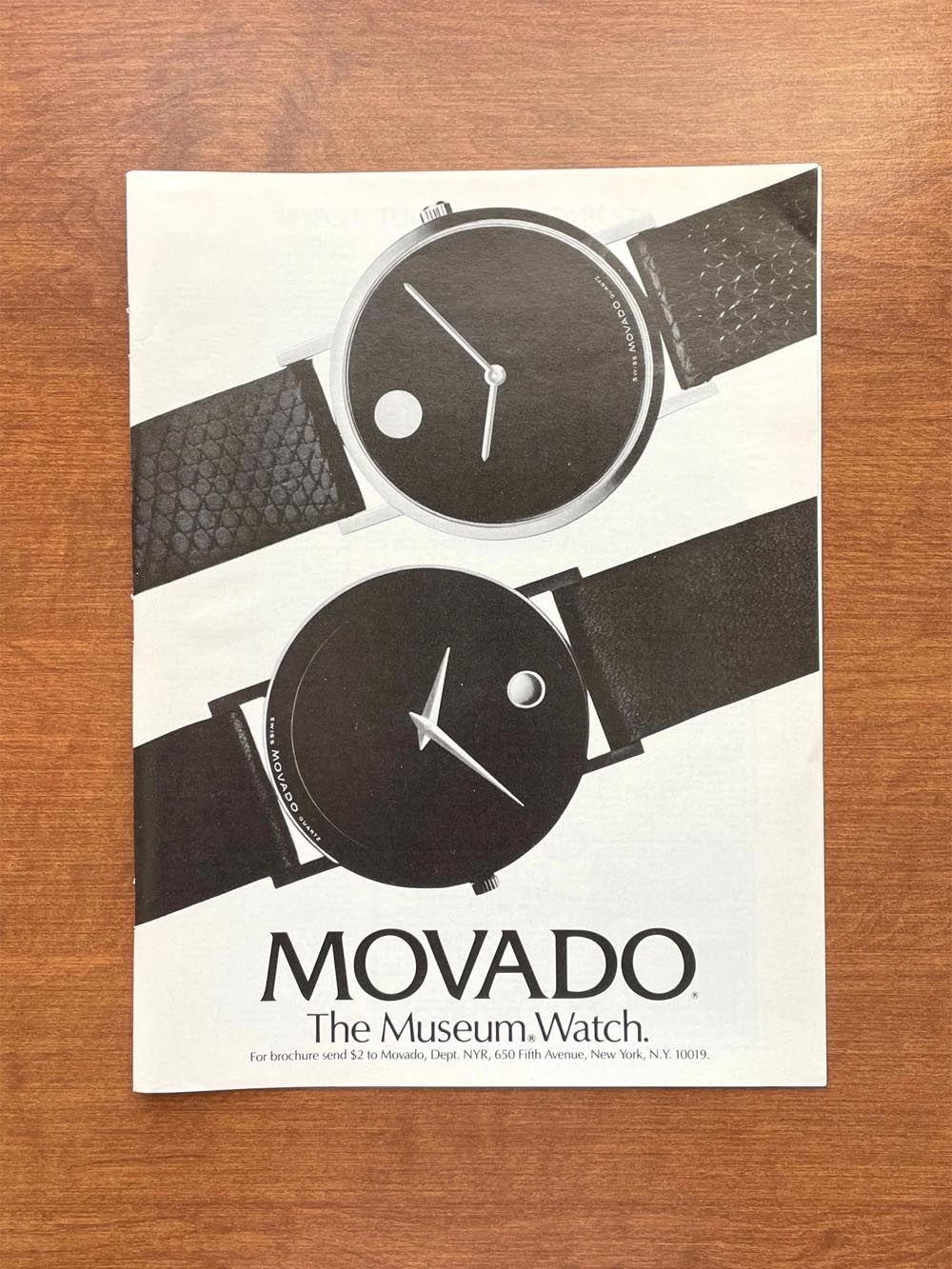
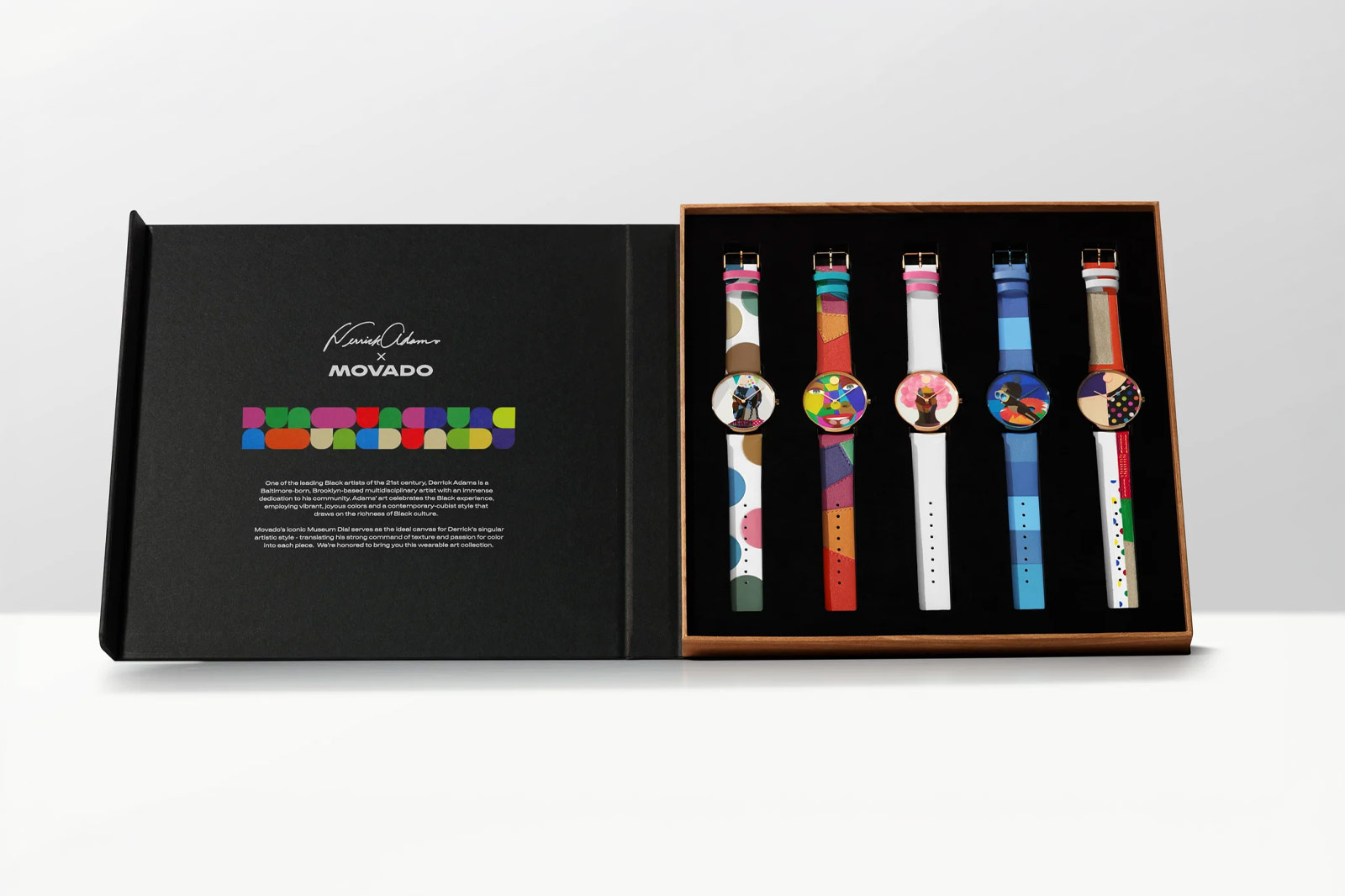
The series never quite stopped, though it drifted through fashion designers and industrial designers before Movado went back to actual painters, with Carmen Herrera in 2021 and Derrick Adams in 2025. The Museum dial itself has meanwhile been thickened, chronographed, diamond-set and put on a mesh bracelet, at every price from a few hundred pounds up. None of them are as good as the original, though the plainest versions still carry most of its charm.
What Movado has that almost no other watch brand can claim is a design people recognise without knowing the brand. Ask a design student about it and they will talk about Horwitt, not Switzerland. Movado has never quite known what to do with that, lurching between reverence and cheap copies for the best part of 80 years. But the dot is still there, unchanged since 1947, and MoMA’s record of it says something Movado’s marketing never will. The credit line reads “gift of the designer”. The man Movado took 27 years to pay gave the watch away for nothing, and it is the only reason anyone takes the brand seriously today.
More details at Movdo.
