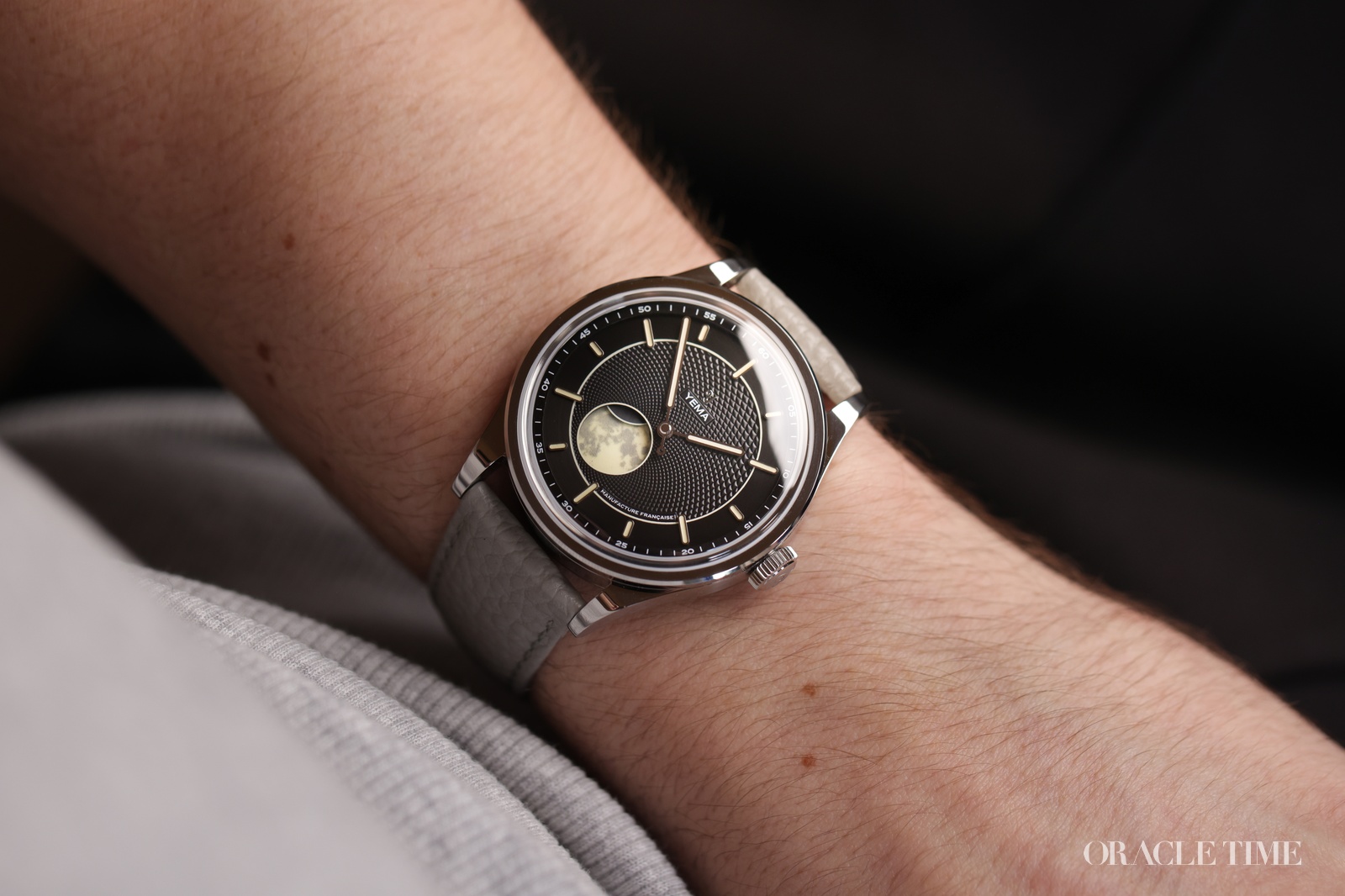
Yema’s Senans Grande Lune Limited Edition is the French brand’s first take on a moonphase watch and demonstrates a different approach to the genre. The dial takes inspiration from the symmetry of the Royal Saltworks in Arc-et-Senans, not far from the Yema factory in Morteau, hence the name Senans. We’ve been hands-on with the black edition.
The result of Yema’s work is a dial with concentric circles divided into sectors by a thin ring of Super-LumiNova. The outer ring is brushed metallic with applied indexes and a minute track while the centre of the dial is barleycorn guilloché, spiralling towards the moonphase at 7 o’clock. Despite the off-centre placement, it manages to look balanced in the dial. It uses a static moonphase mechanism where the moon itself doesn’t move, instead, a ‘bilobe’ revolves over the moon to show the phases. This allows for more detailed textures to be carved into the moon, which is made from a solid block of Super-LumiNova.
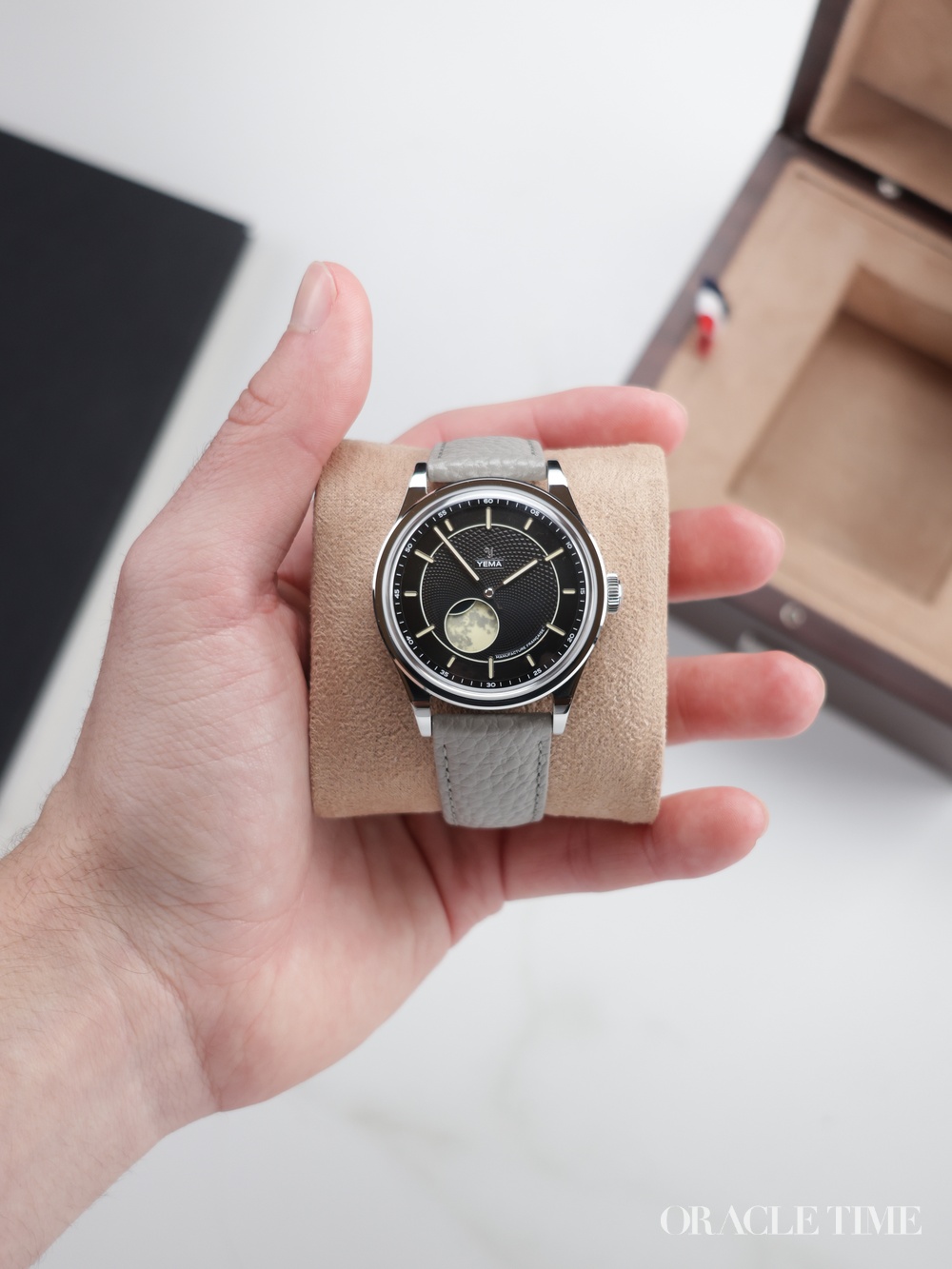
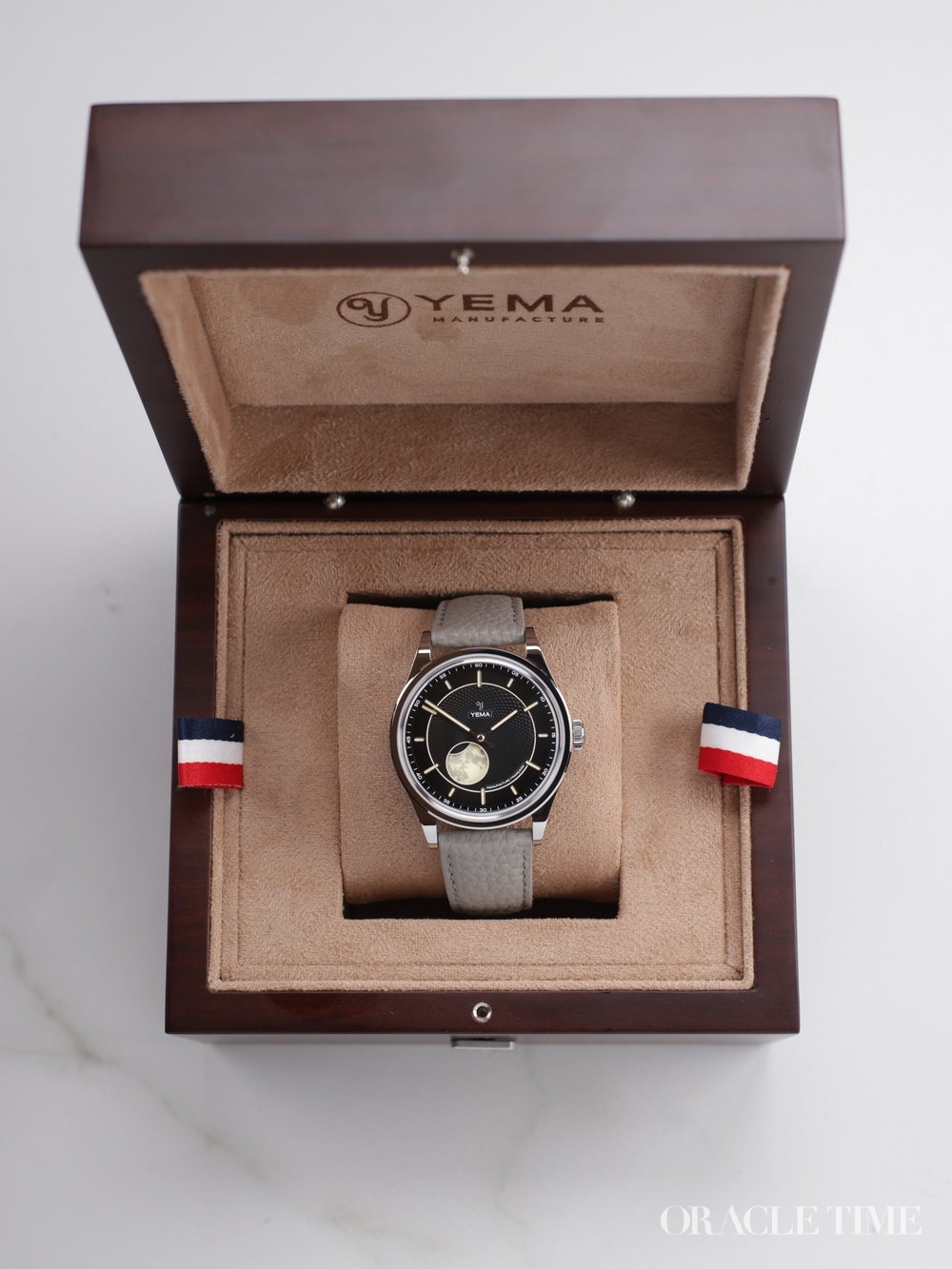
Yema have added the moonphase complication to the CMM.20 in-house movement, naming it the CMM.22. It’s an automatic winding, micro-rotor movement with a 60-hour power reserve. Most of the components, save for the balance wheel and finer working parts, are electroplated to an anthracite finish. Yema have worked hard to ensure the Senans Grande Lune stays thin and the CMM.22 adds less than 1mm to the overall thickness of the movement compared to the CMM.20, an impressive achievement.
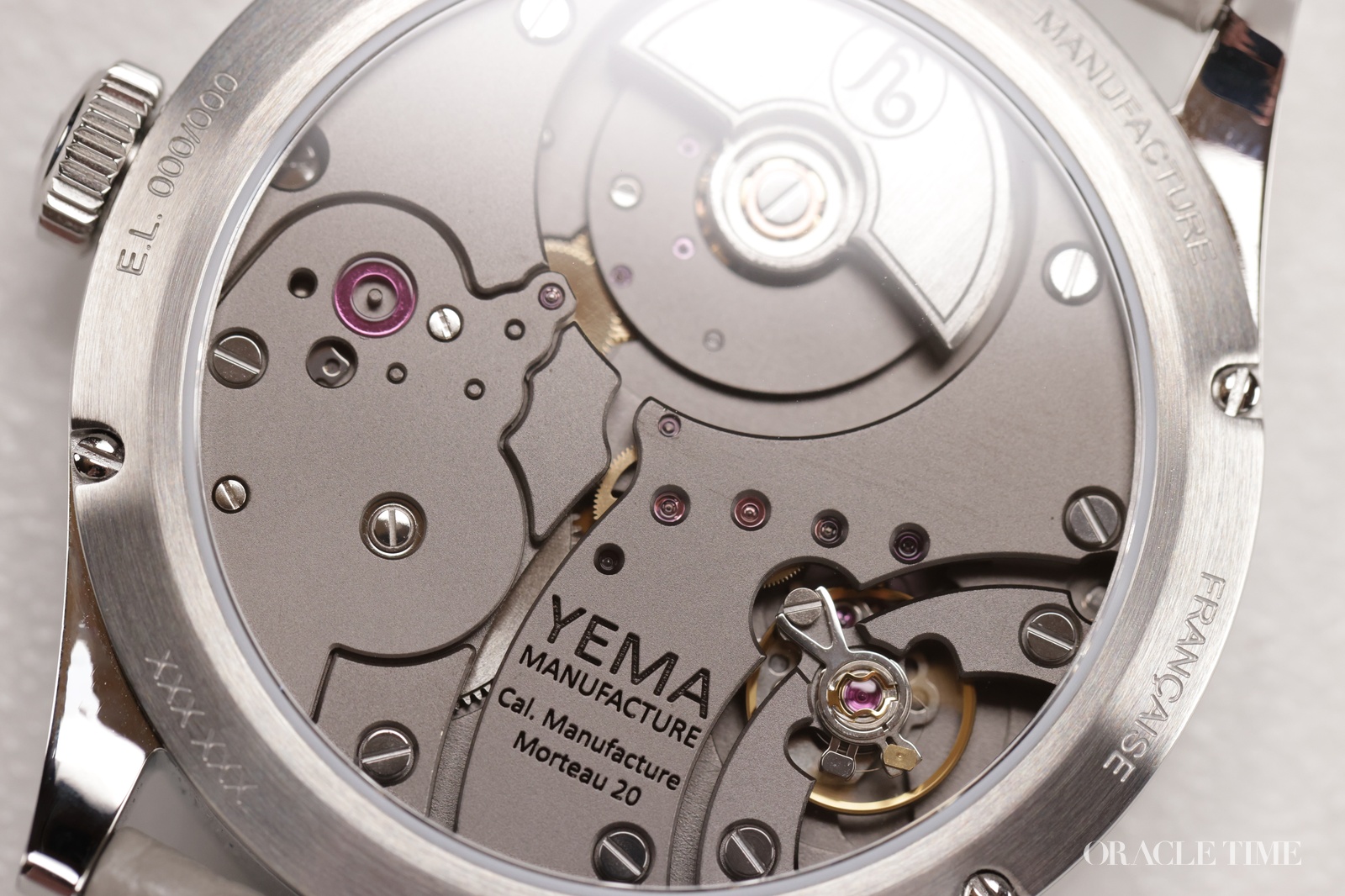

Because the movement is slim, the 316L stainless steel case can measure 38.5mm x 8.7mm, with a stepped design and double-domed sapphire crystal (not included in that thickness). That makes the Yema Senans Grande Lune a comfortable watch. After trying it on, I forgot I was wearing it, even while trying to help find it for the photoshoot. The dial is legible and I couldn’t take my eyes off the moon. The crown operates easily and the movement looks the dark side of the moon with its anthracite finish. I was equally impressed with the £2,330 price tag with the mesh bracelet.
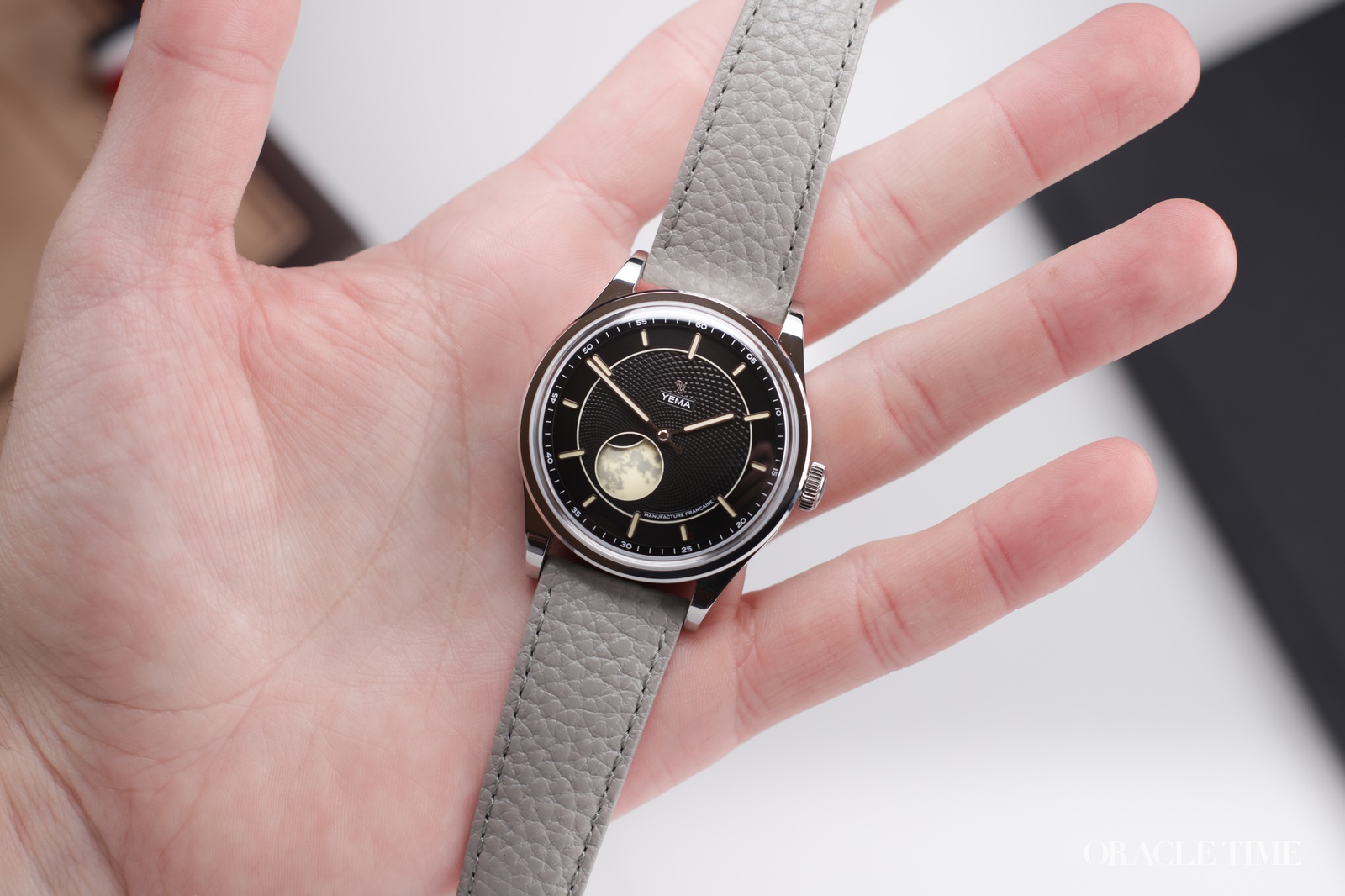
To me, Yema’s closest rival in price is Tudor’s 1926 Luna, £20 more than the Senans Grande Lune. But when you look past the name, the Luna hasn’t been designed to the same level of originality and on top of that the Yema has a superior power reserve 60-hours vs Tudor’s 38-hour, and a thinner case. Yes, the Tudor has a date function and 100m water resistance, but what it trumps in function, it lacks in style. I would like to see a 40mm edition in future to suit my larger wrists, but that’s my only complaint.
Price and Specs:
More details at Yema.