When you’re an incredibly high end watch brand, like Biver whose watches don’t dip below £60,000, it behoves you to listen to what your collectors want. They are the people buying your watches, invested in your craft and excited about new projects. So, when Biver’s collectors expressed interest in seeing them produce a steel watch (something they have never done before because they’ve previously only worked in precious metals) the brand decided to listen. The resulting watch is the brand new Biver AB.
Off the bat, the most exciting creative decision that Biver made in the creation of the AB was to create a brand new watch. The easy route would have been to create a steel version of their Automatique and call it a day. Instead, they studied and thought about the material and how to achieve a timepiece with the same level of care and attention as the rest of their creations but in a steel body. The second decision that I love is Biver’s thought process that if you’re going to be introducing one new element for the first time, you might as well lean in and tackle a whole suite of firsts. Which is why the AB also includes the brand’s first manual-winding movement and their first 2N gold display on the dial.
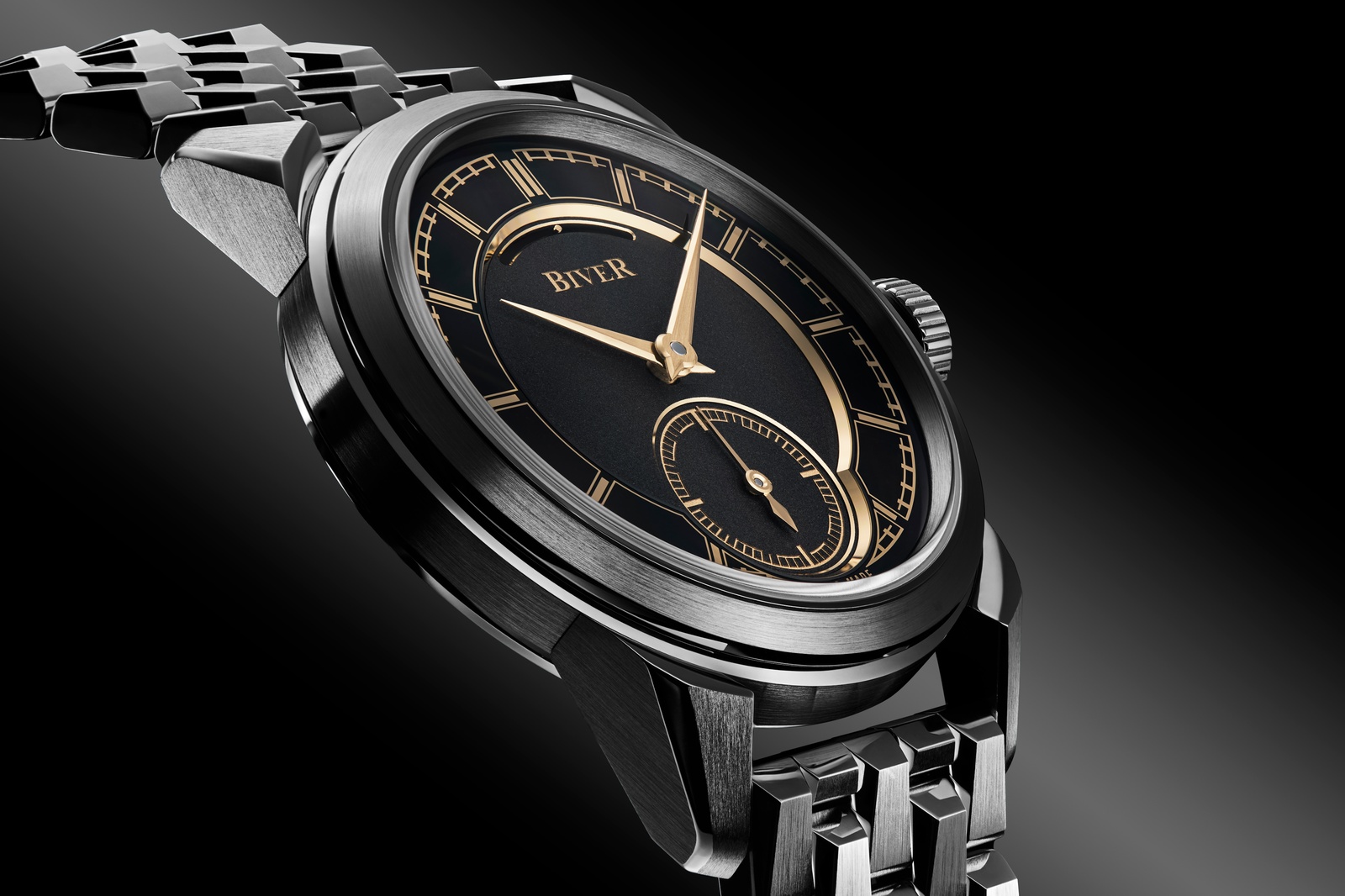
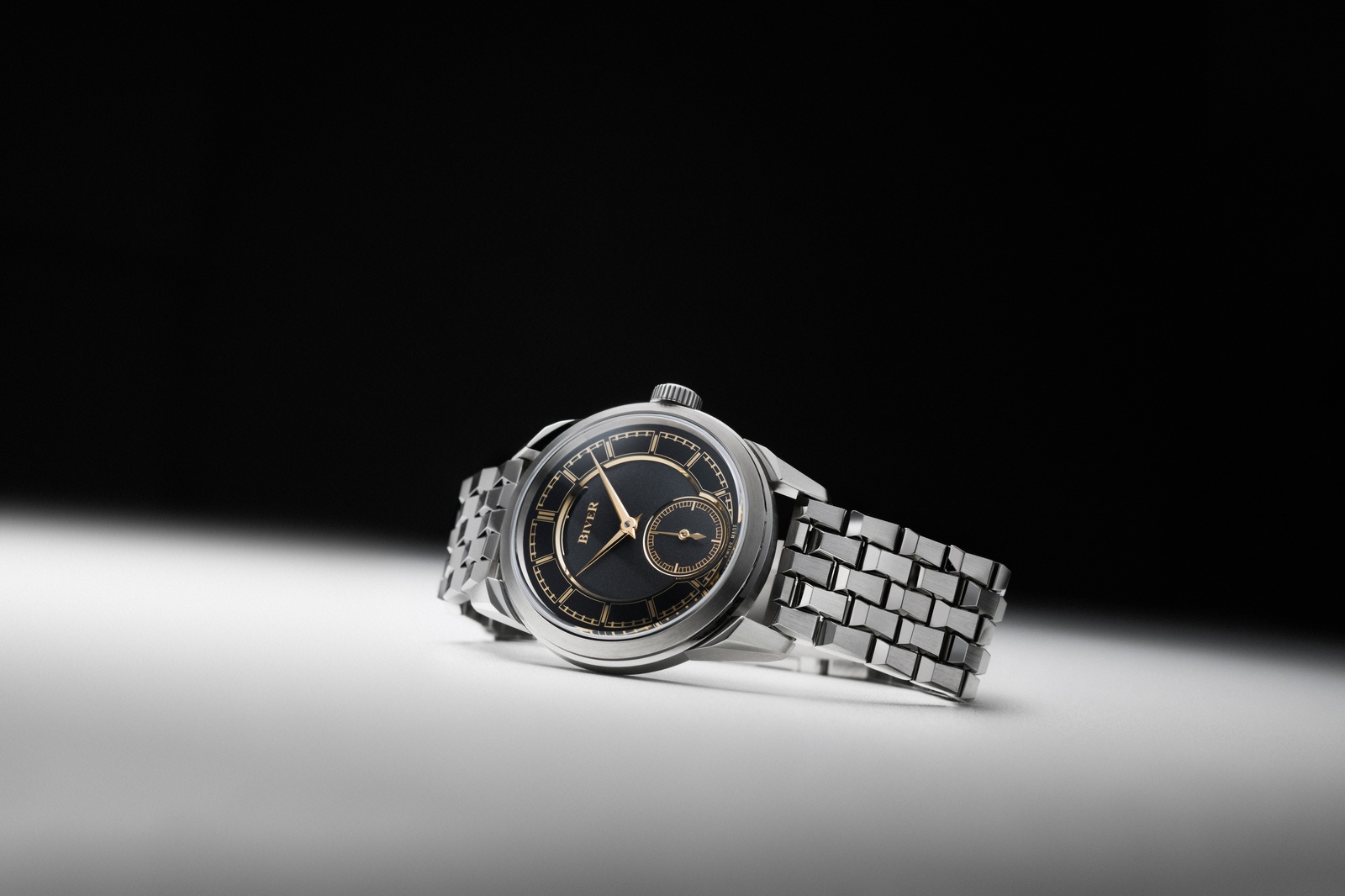
Starting with the case, it is of course made from steel and measures 38mm diameter x 9.8mm thickness. At that size it’s designed to be convenient to wear daily (their smallest watch to date), which is supported by the material’s tough exterior capable of withstanding the bumps and bangs of regular life. I like the fact that while the finishing is flawless and done by hand, they haven’t gone overboard with the types of finishing on display – it’s a combination of brushing and polishing like you find on the vast majority of steel watches. There are no crazy engravings or outlandish artisanal techniques, it’s a pure expression of steel as a watchmaking material.
While the case is new and a large deviation from Biver’s past creations, the dial is more familiar territory. It’s made from onyx and Biver have plenty of stone dial creations under their belts already. What’s new is the layout featuring central hour and minute hands, a small seconds subdial at 6 o’clock and a power reserve indicator at 12 o’clock. All of which is produced in 2N gold for the first time. 2N gold is a type of gold alloy that uses a higher quantity of silver and less copper in its composition compared to more traditional watchmaking alloys like 5N rose gold, giving it a pale champagne colour. The refinement of the dial creates an interesting juxtaposition with the steel case and contemporary steel bracelet.
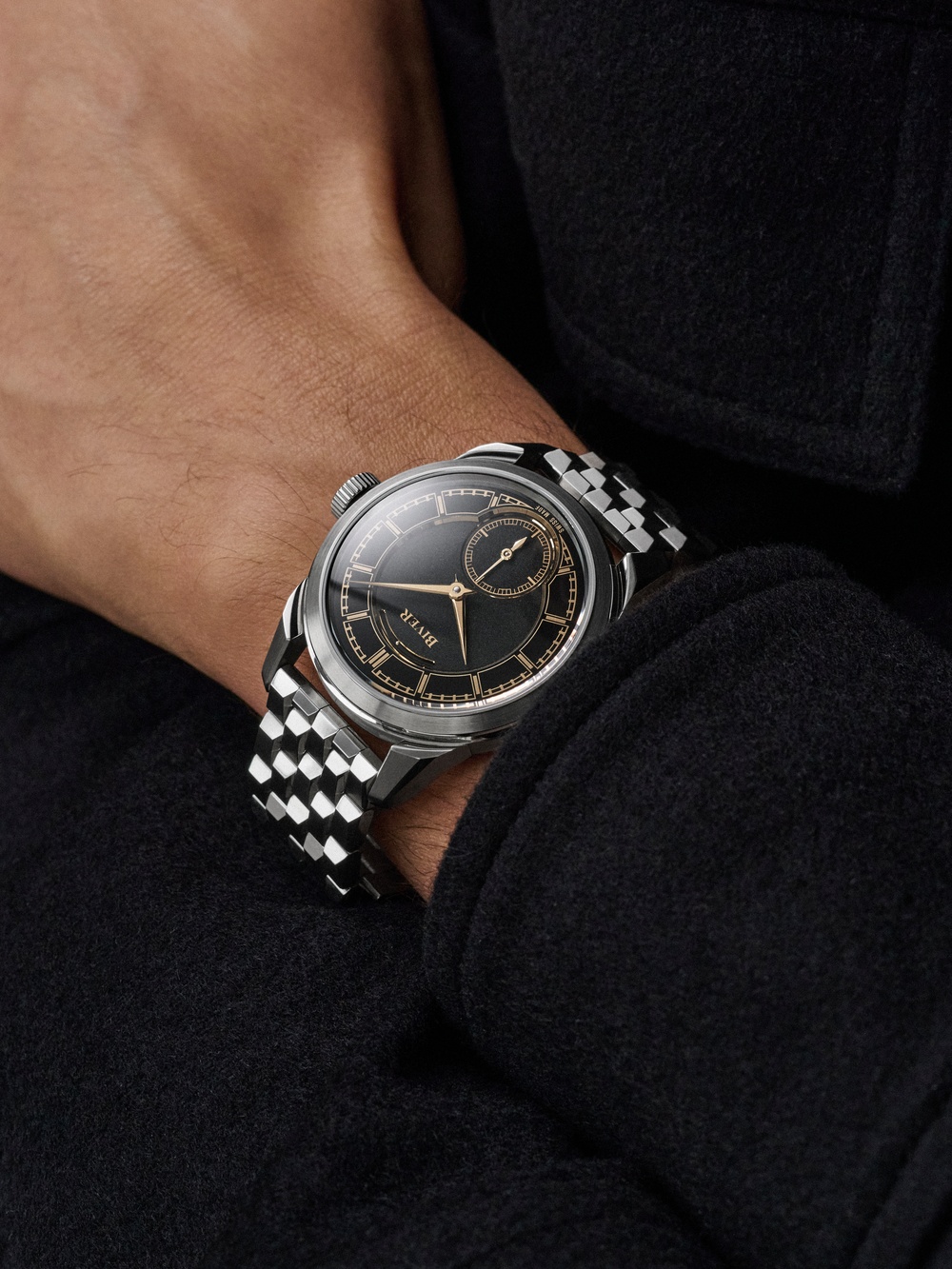
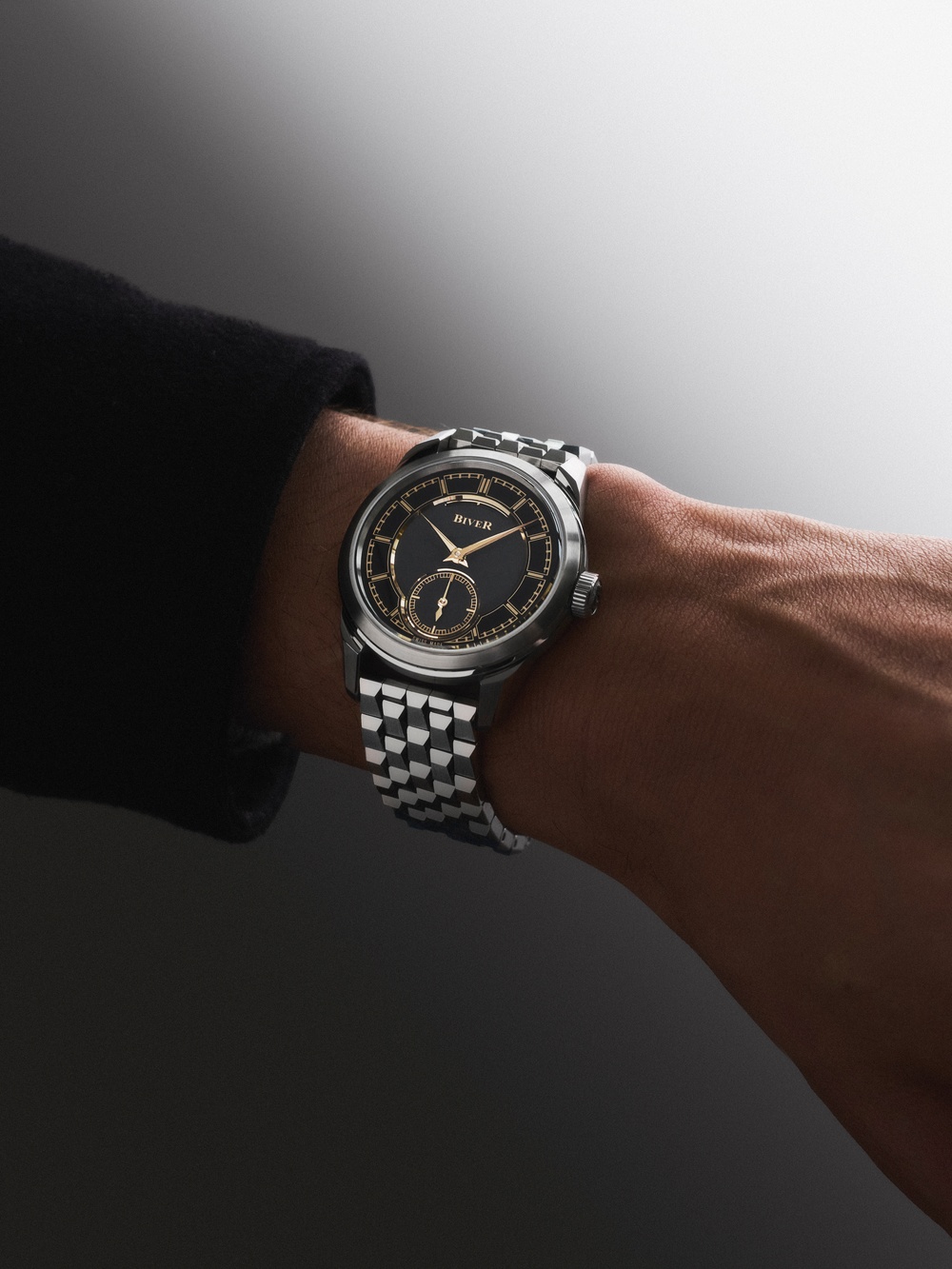
Inside the Biver AB is the new calibre JCB-004 manual winding. As a starting point, Biver decided to give it a twin barrel construction offering a power reserve of five days (equivalent to 120-hours), which is great for a manual movement because you’re not in a constant state of having to wind the watch. Plus, the dial-side power reserve indicator gives you a handy reminder when it is time to wind it again. Another useful technical detail is that it incorporates Biver’s zero-reset mechanism, meaning that whenever you pull out the crown, the seconds hand jumps to zero for convenient time setting.

The biggest challenge in producing their first manual movement was the finishing. With no automatic rotor in the way, the internal mechanics of the calibre are on display like never before leaving no room for error (not that they ever cut corners on the automatic to begin with). The mainplate and bridges are made from a gold alloy called PD210 that never tarnishes or needs plating, meaning that once the finishing has been applied to it, it will never change unless the watchmaker makes a mistake during assembly and each watch is assembled from start to finish by a single watchmaker.
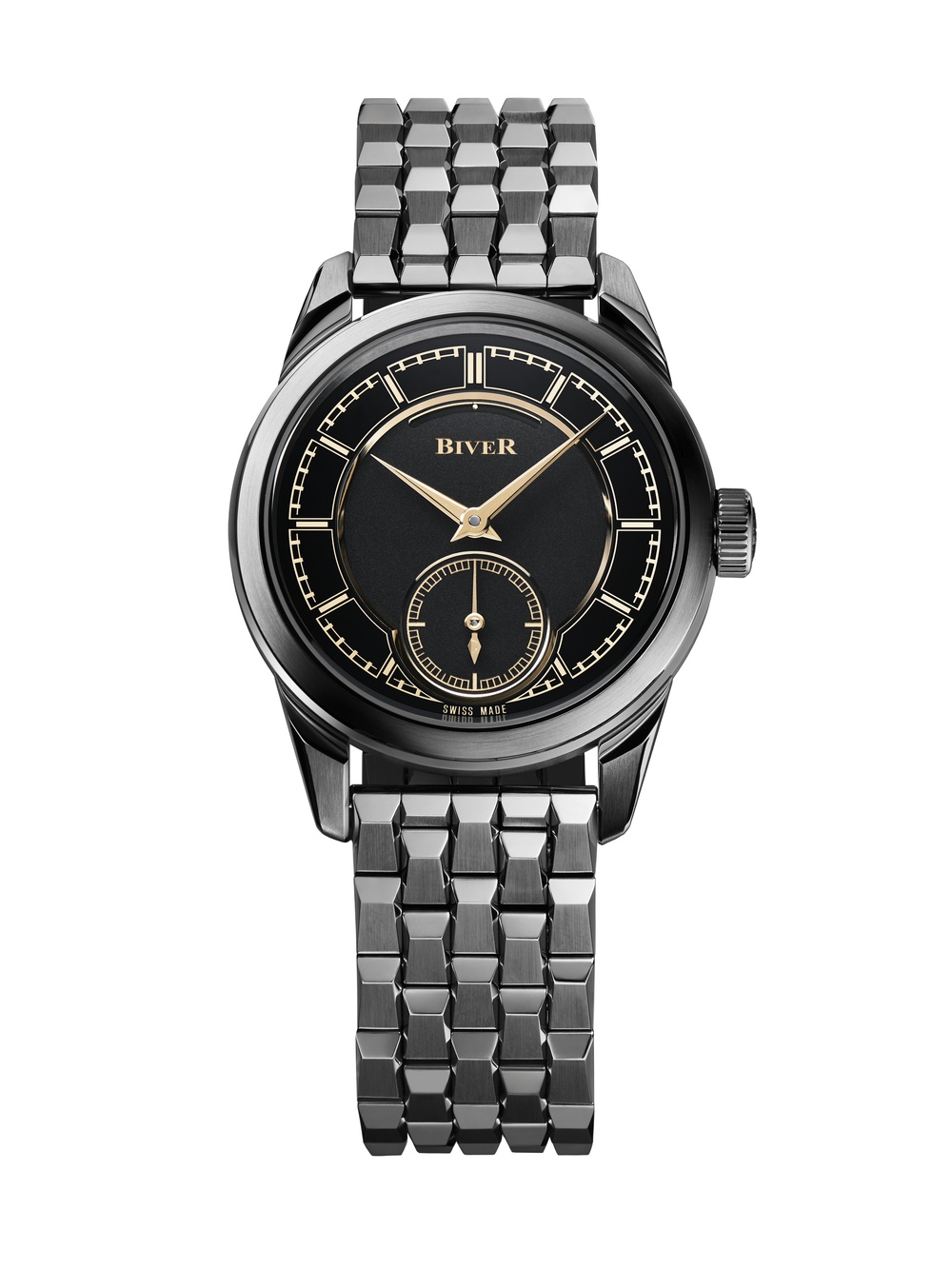
For pricing, the Biver AB is CHF 65,000 excl. tax (approx. £59,000). So, it’s still very exclusive and high end like the rest of Biver’s creations despite the new steel case. But as is always the situation with Biver, the price is less to do with the raw materials and more to do with the craftsmanship, hand-finishing and hand-assembly.
Price and Specs:
More details at Biver.