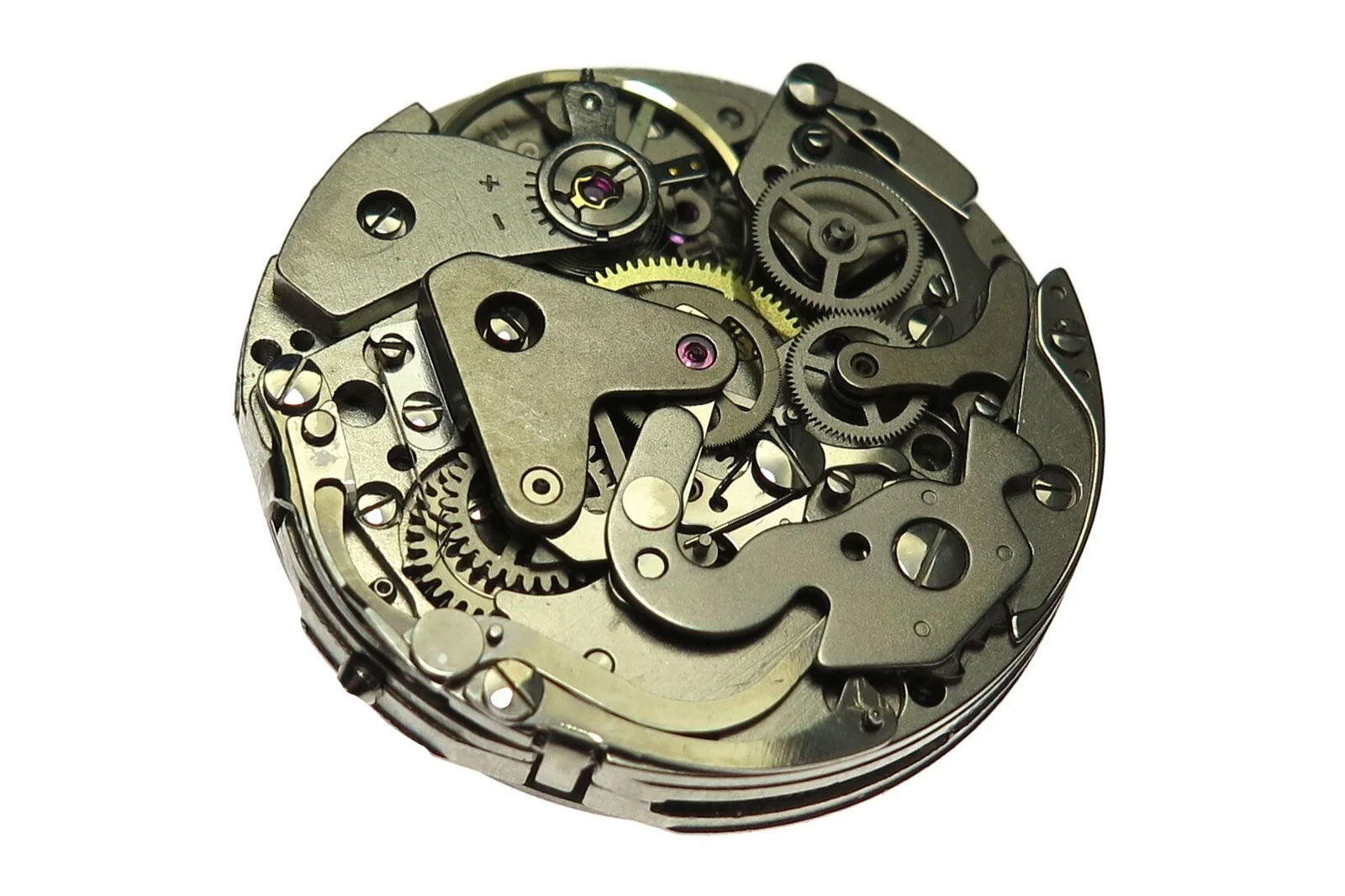
Right now, watchmaking is cleaner, faster, and more hyper-industrialised than ever before. Automated machines spit out parts with microscopic precision, while high-tech silicon components make modern movements virtually bulletproof. But in chasing this sterile perfection, we’ve scrubbed away something essential. We’re losing the warm, irregular pulse of mid-century watchmaking. The tangible proof that a human hand actually touched the machine, which brings us directly to the concept of New Old Stock (NOS) movements.
Unlike vintage reissues that rely on mass-produced modern movements, watches with NOS movements use actual historical calibres that sat forgotten in storage for decades. When a watchmaker unearths a dusty cache of these movements, they pull them apart piece by piece, stripping, cleaning, updating, and hand-finishing them to a beautiful standard before equipping them to the heart of a new timepiece. Hunting down and servicing these delicate movements is a massive headache for the watchmaker. They have to machine rare replacement parts from scratch and coax old, slow-beating balances into keeping modern time. It is a logistical nightmare for the bench, but pure magic for the collector. For the collector, every hurdle the watchmaker clears only adds to the romance, and it’s what gives these watches their soul. It’s why collectors will chase them to the ends of the earth.
The NOS Value Proposition: Why Collectors Are Hooked

One of the draws of watches with NOS movements is their rarity. When a brand unearths a forgotten crate of mid-century Valjoux, Rolex, or Enicar movements, they’re painstakingly restored, cased, and once they’re sold, that’s it – the supply is gone forever. No factory is waiting to stamp out a fresh batch. This irreplaceable exclusivity is what appeals to the collector in that even the highest-end modern luxury brands can’t match it.
Beyond this scarcity, there’s also a deeply physical joy in wearing these older engines. Modern high-beat movements buzz away at 28,800 or 36,000 vibrations per hour, making the seconds hand glide with sterile precision. But a classic NOS calibre might beat away at a leisurely 18,000 beats per hour, a slower pace that gives the watch a distinct, deliberate pulse that feels even more mechanical. Even operating a watch powered by a New Old Stock movement may feel entirely different. When you press the pusher on an old, manually machined cam-operated chronograph, the mechanical plunge of the pusher feels analogue and tactile. It takes the wearer back to a time when a master watchmaker’s fingertips judged microscopic tolerances.
Taking an unissued, historical movement and dropping it into a rugged modern case solves the biggest headache of vintage watch collecting because countless enthusiasts love mid-century pieces but are terrified to actually wear them. True vintage watches usually come with rotted gaskets, fragile acrylic crystals, and delicate dials that require constant pampering. But a NOS movement, paired with features like sapphire glass and a tightly sealed case, gives collectors the best of both worlds: a genuine piece of history on your wrist, encased in a modern watch design.
Below are five exceptional timepieces from well-known manufacturers that looked beyond the modern supply chain and chose a New Old Stock movement for the beating heart.
Panerai Radiomir PAM00021
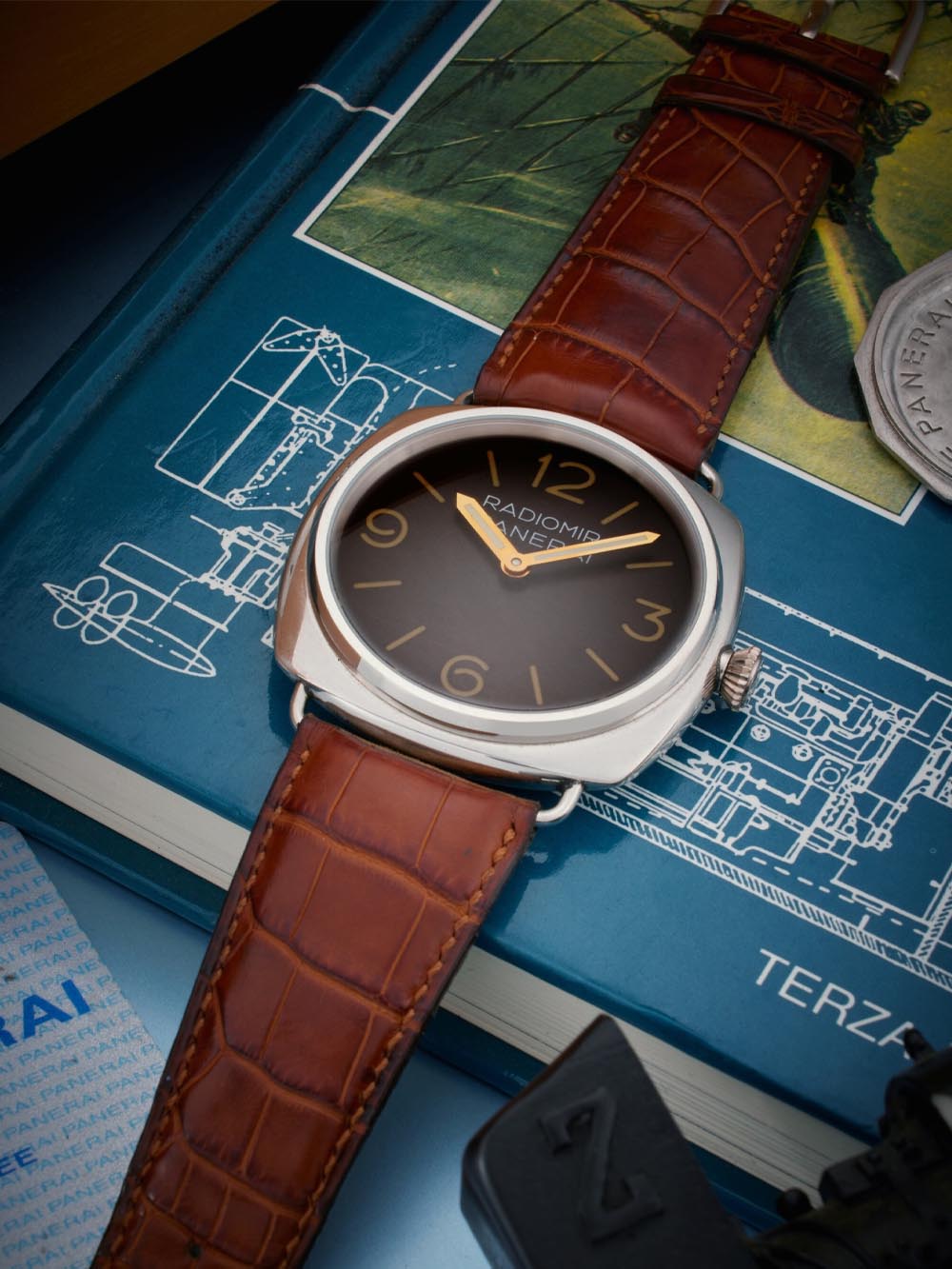
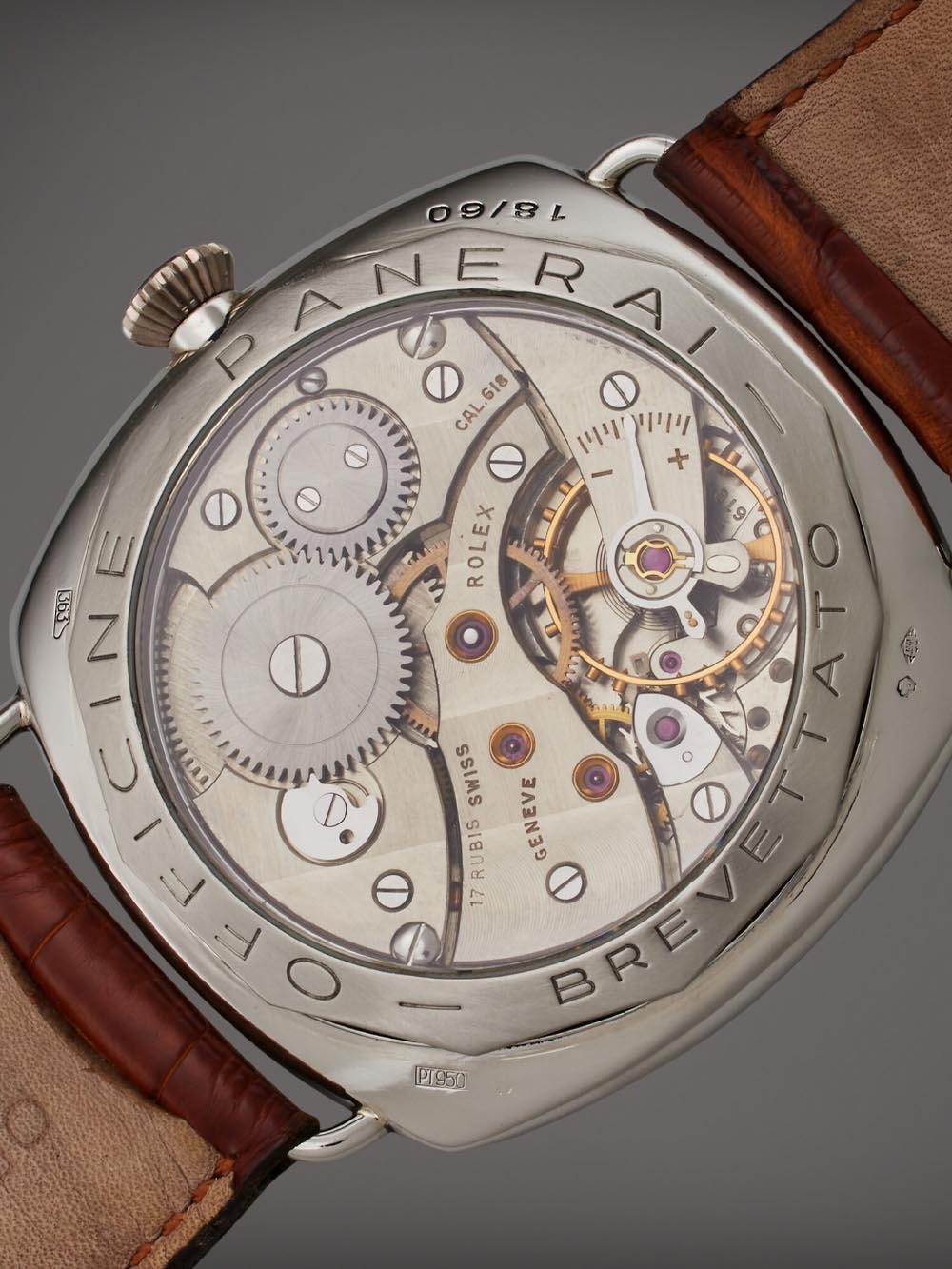
Picture how watchmaking looked back in 1997: the Vendôme group (known today as Richemont) had just taken the reins at Panerai and desperately needed a definitive statement piece to prove the brand’s legitimacy to hardcore watch purists. Their answer was the Radiomir PAM00021, a landmark release that remains one of the most critical milestones in the brand’s modern history. Limited to a strict run of exactly 60 pieces, the watch bridged Panerai’s mid-century military roots, echoing the era when the Florentine instrument maker relied on Rolex to supply its waterproof cases and heavy-duty mechanical engines. Instead of engineering a modern movement from scratch, Panerai tracked down a forgotten hoard of unissued Rolex Calibre 618 hand-wound movements. Measuring a massive 16 lignes, these workhorse tractor engines were the same mechanisms the Italian Royal Navy’s combat divers trusted during the high-stakes operations of the 1930s and 1940s. The movement operated at a steady 18,000 vibrations per hour, boasted 17 jewels, and featured a classic Breguet overcoil hairspring and distinct bridge architecture.
Panerai packed this historic movement inside a polished 47mm platinum case, complete with the brand’s signature wire lugs and a heavy onion crown. The face of the PAM00021 features the Italian manufacturer’s classic sandwich dial construction comprising a black upper plate cut out to reveal a luminous lower layer glowing from beneath. It’s a watch that feels substantial, not only because of the heft of the platinum case but also because of the history it carries.
Doxa SUB 200 T.Graph 130th Anniversary
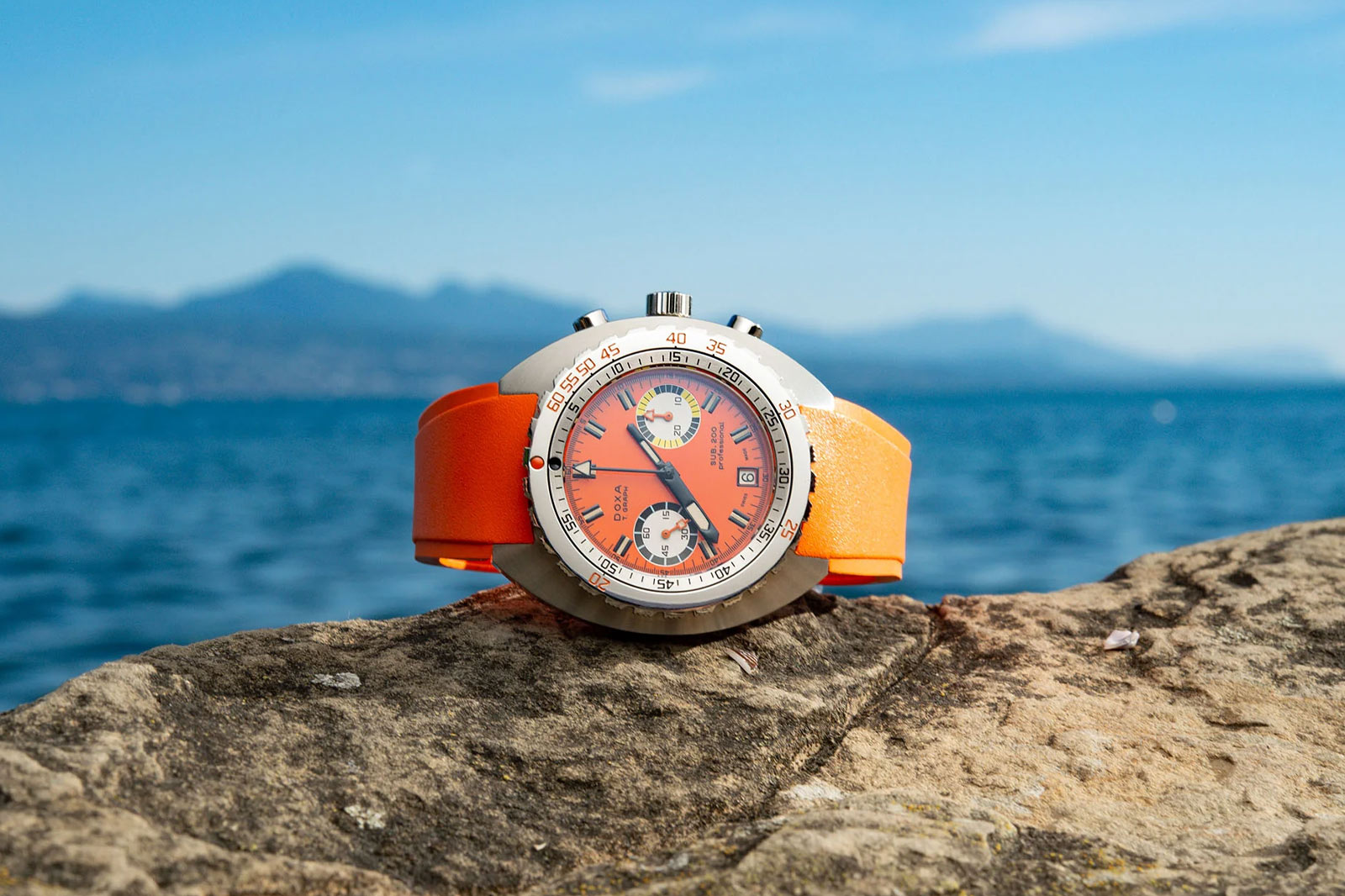
To mark its 130th anniversary in 2019, Doxa bypassed its usual three-hand dive watches and brought back one of the most eccentric designs from its archives: the SUB 200 T.Graph. First hitting the scene in 1969, the original T.Graph was a true pioneer for underwater stopwatches, pairing an incredibly easy-to-read twin-register layout with the brand’s famous, patented no-decompression bezel. When it came time for a modern comeback, Doxa felt that simply dropping a generic, modern automatic chronograph movement into the case wouldn’t carry the historical weight it deserved.
Instead, the brand dug deep into its vaults and pulled out a preserved stash of original, vintage Valjoux 7734 hand-wound movements. The Valjoux 7734 is a cam-operated workhorse from the golden age of sports chronographs, known for its tough shock resistance and deeply satisfying mechanical click when you push the buttons. Doxa completely tore down, scrubbed, and meticulously rebuilt these 50-year-old calibres, making sure they kept tight modern time before letting them settle into their new homes.
The watch you get from this process is an absolute head-turner, featuring a chunky, barrel-shaped cushion case in either no-nonsense, utilitarian stainless steel or decadent 18k rose gold. Both options measure a hefty 43mm across the wrist and practically glow in Doxa’s signature “Professional” bright orange dial shade, broken up by a black minutes counter at 3 o’clock and a running seconds subdial at 9 o’clock. Blending a genuine, living mechanical engine from 1969 with pristine, factory-fresh bodywork makes the 130th Anniversary T.Graph a bit of a masterpiece when it comes to historical preservation.
Chronoswiss Régulateur Calibre C.122
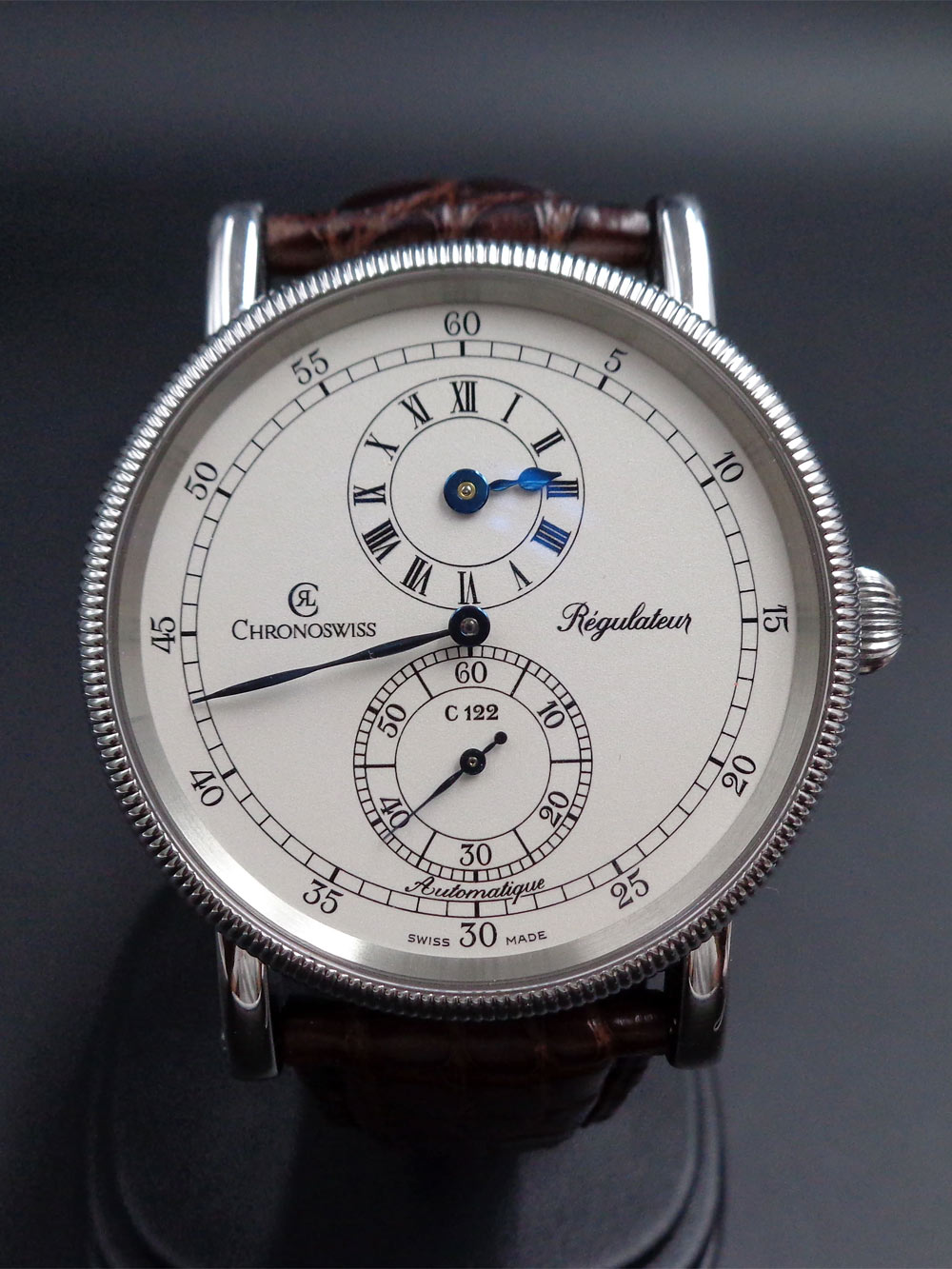
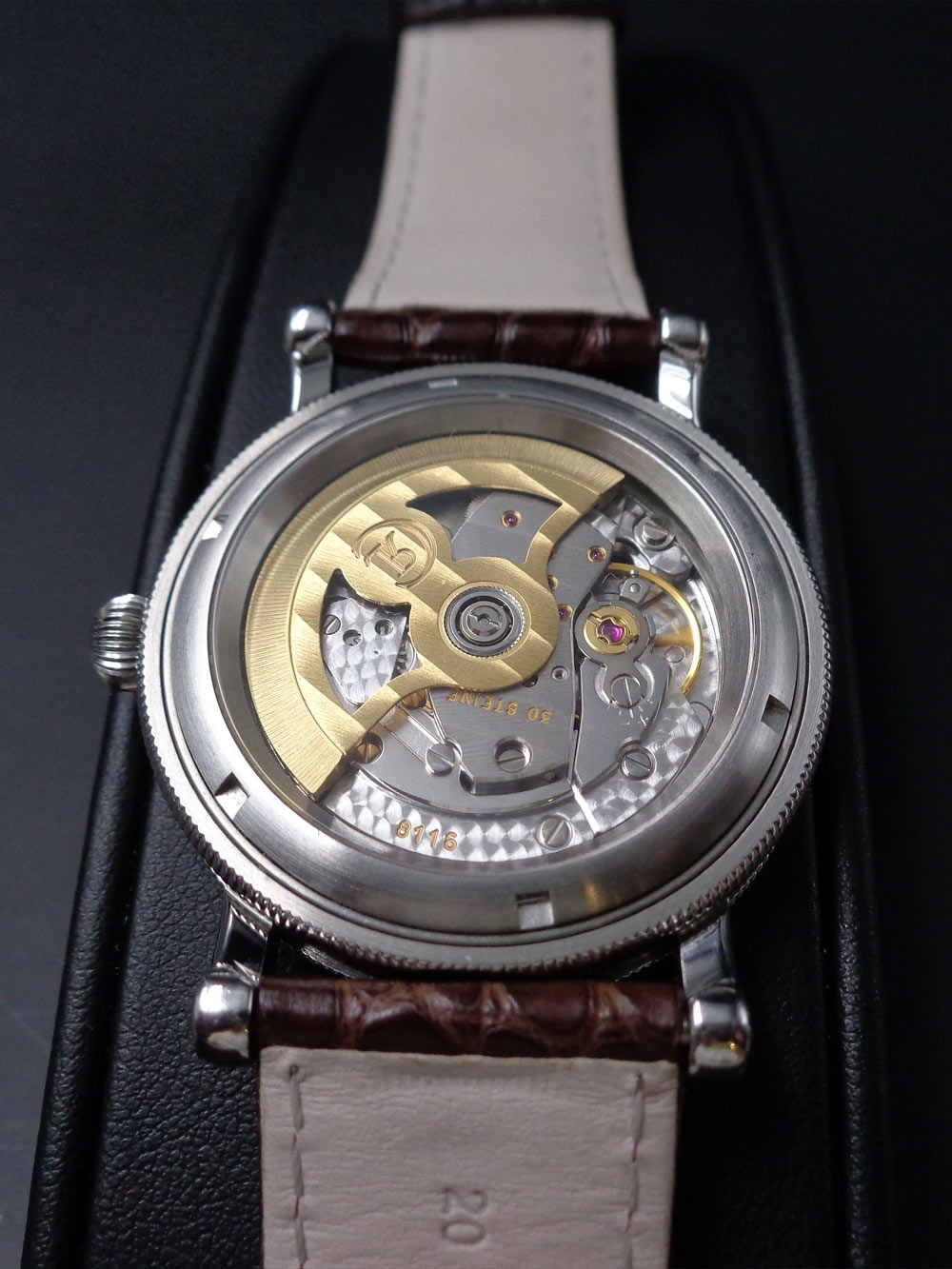
The very foundation of the modern Chronoswiss brand rests squarely on saving and celebrating New Old Stock movements. Picture the Swiss watch industry in the late 1980s. Still bruised and reeling from the devastating quartz crisis, manufacturer Enicar was forced to shut its doors in 1987, which was when Chronoswiss founder Gerd-Rüdiger Lang saw a chance to rescue a massive piece of traditional Swiss engineering before it hit the scrapyard. He bought up every single one of Enicar’s remaining mechanical engines, single-handedly securing his young brand’s mechanical future.
Lang took the Enicar 165 calibre and put it through extensive in-house modifications. His most radical move was altering the gear train to separate the hours, minutes, and seconds into an isolated, vertical line down the dial. Renamed the Calibre C.122, this 21,600-beat engine powered the very first serially produced Chronoswiss Régulateur wristwatches, locking in the visual style that defines the brand to this day.
These early Régulateur models perfectly capture Lang’s obsession with classical watchmaking. The 38mm cases feature the brand’s popular coin-edge bezels, oversized onion crowns, and straight lugs that lock in place with screwed bars. The dial layout puts the minutes in the spotlight at the centre (pushing the hours to a small sub-dial at 12 o’clock), forcing you to read time the way a master watchmaker does when looking at a clock in his workshop.
Alpina Heritage Carrée Mechanical 140 Years
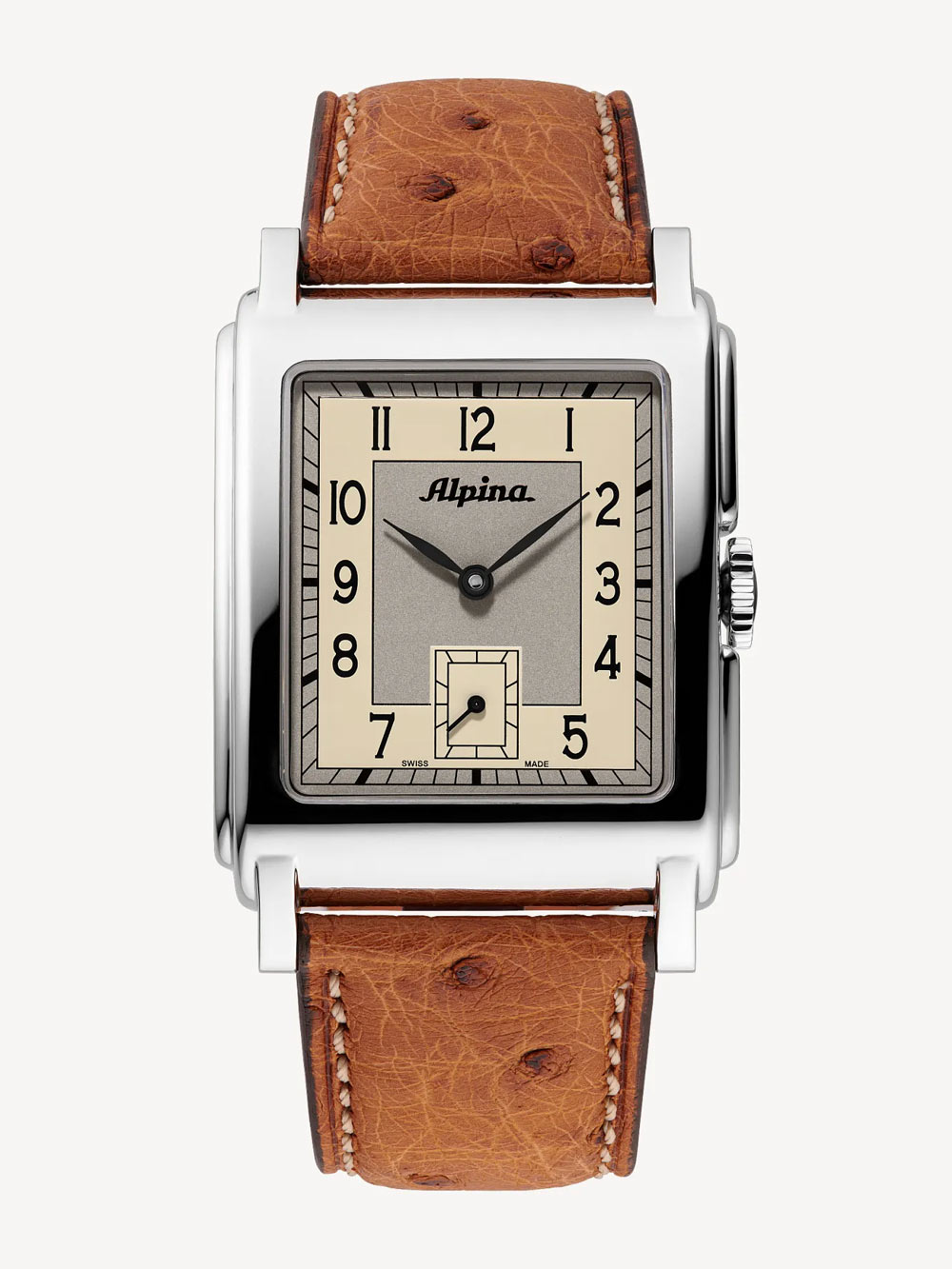
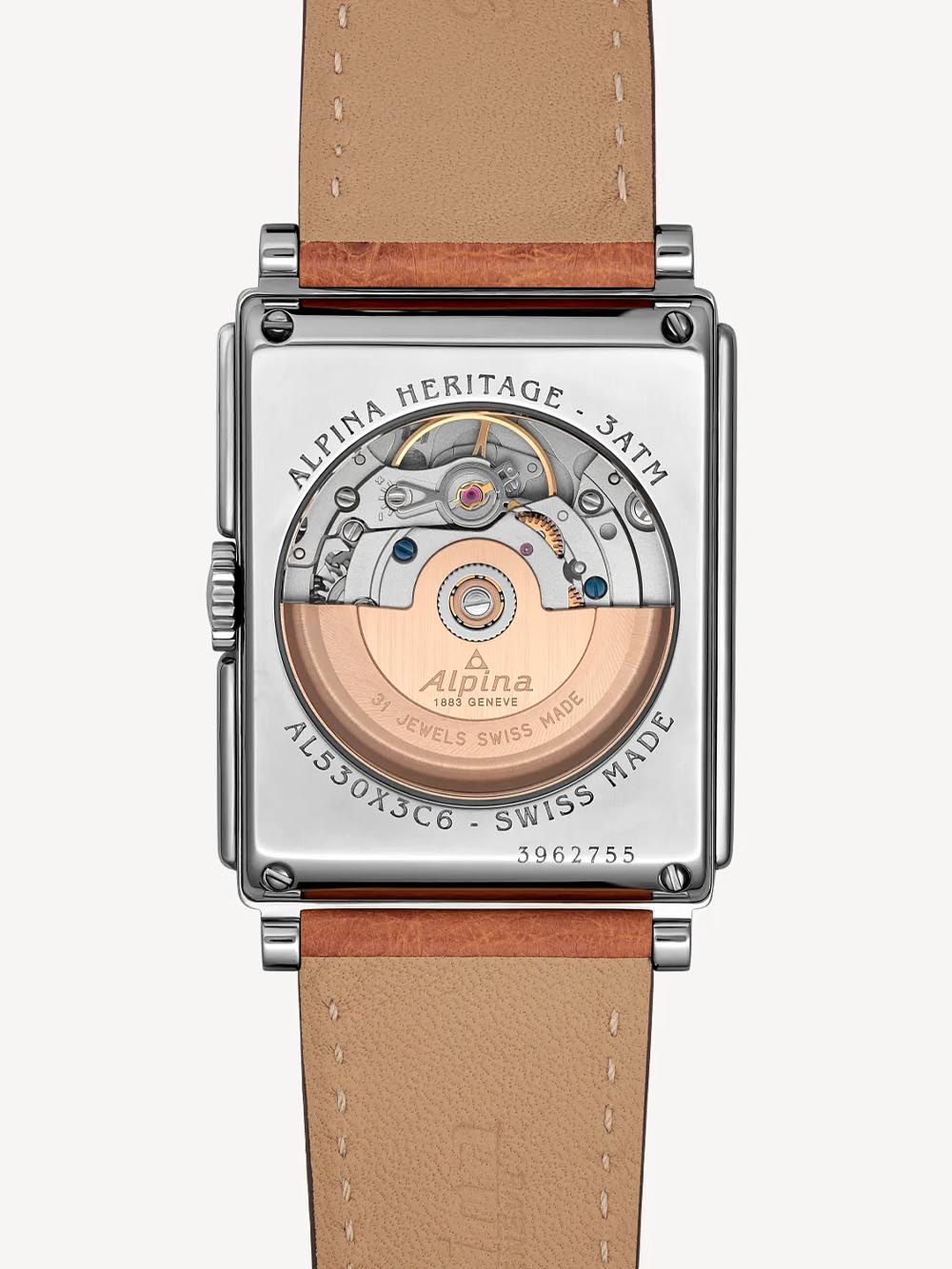
In 2023, Alpina marked its 140th anniversary by rolling out a strictly limited run of just 28 watches worldwide, split evenly between black and silver dials. The Heritage Carrée Mechanical watch not only looks like a dress watch from the 1930s but practically is one. That’s all down to the beating heart – the Alpina Calibre 490, a genuine hand-wound movement manufactured in-house by the brand all the way back in 1938. Known in its day for its tough, dust-protected design and patented layout, the Calibre 490 beats at 18,000 vibrations per hour. Tracking down enough of these 85-year-old movements in pristine condition, and then restoring them to modern working standards, required an immense amount of patience from the Geneva-based watchmakers, which is precisely what appeals to collectors today.
Cast in highly polished silver, the rectangular case features stepped flanks that instantly evoke the architectural designs of the late Art Deco era. With compact, vintage-correct dimensions of 29.5mm by 35.7mm, it sits elegantly on the wrist – its face stamped with period-accurate Arabic numerals and a highly legible sub-seconds dial at 6 o’clock.
Omega First Wrist-Chronograph Limited Edition
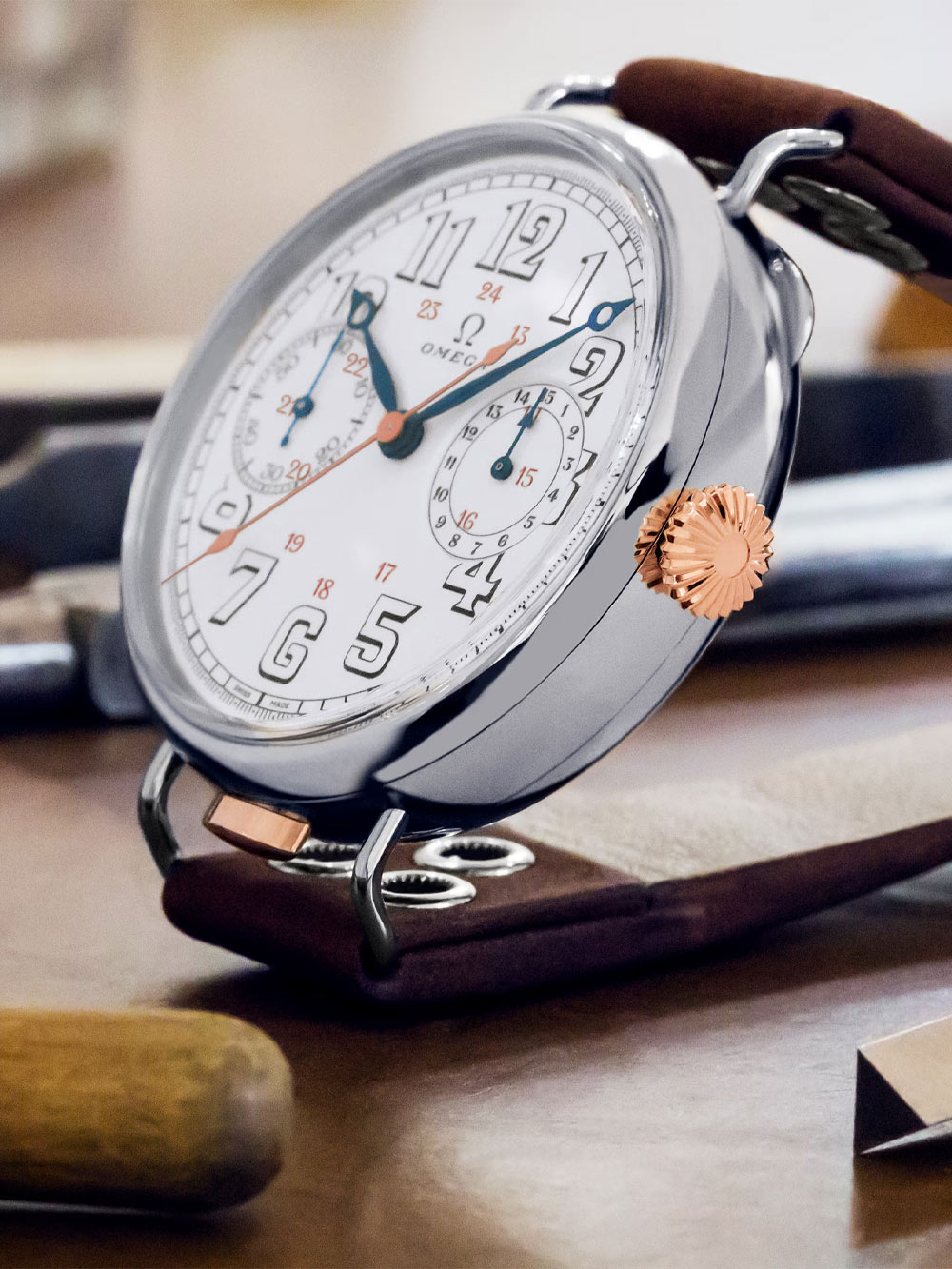
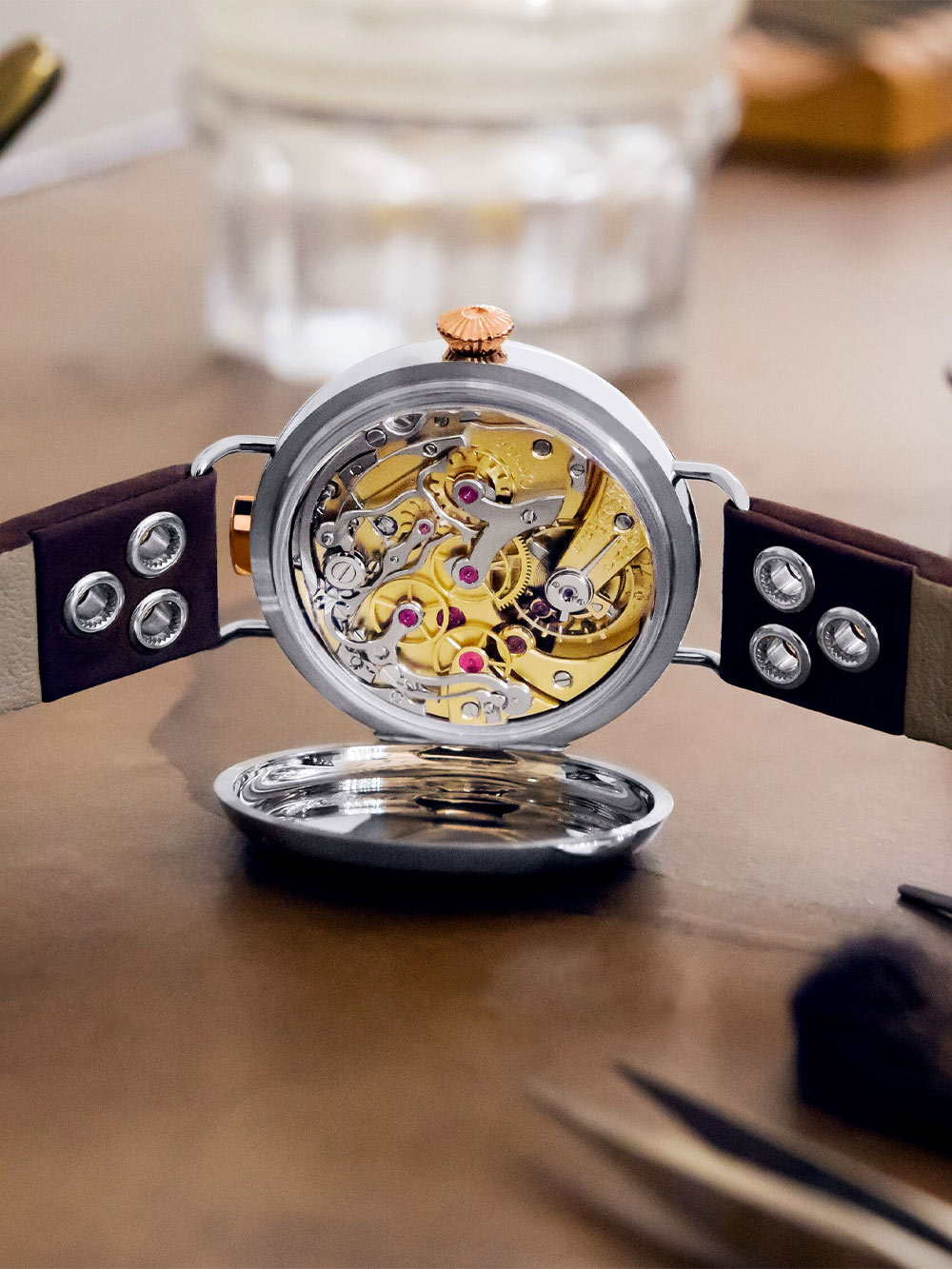
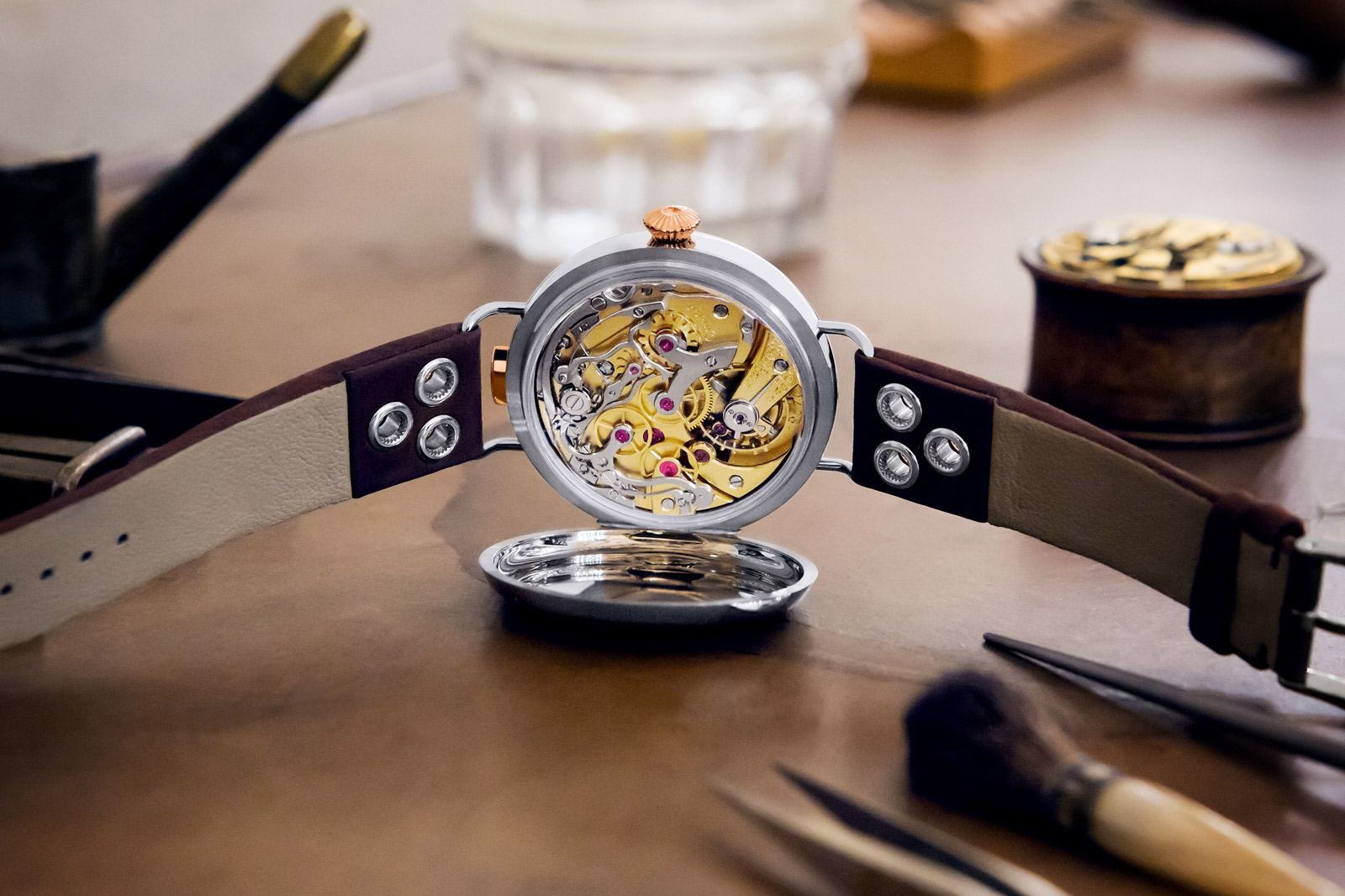
While independent watchmakers usually have to hunt down New Old Stock movements from old factory liquidations, a giant like Omega can walk down to its own basement archives. To honour its early ties to military aviation, the brand decided to build a run of just 18 pieces called the First Omega Wrist-Chronograph Limited Edition. The whole project started when the brand uncovered a small, pristine stash of original 18’’’ CHRO pocket watch movements from 1913 – the exact calibre used in Omega’s very first wrist chronographs. But instead of the standard setup where the button is inside the crown, this historic design features a single pusher sticking out at 6 o’clock to control the timer. Instead of cloning the old design with modern parts, watchmakers in Omega’s Atelier Tourbillon spent months restoring the actual century-old mechanisms, carefully upgrading the jewels and finishing and renaming the revived engine Calibre 3018.
Omega put these movements into large 47.5mm white gold cases designed to look like the converted trench watches soldiers wore during World War I, complete with welded wire lugs and a hinged caseback. The dial is made of real, oven-baked Grand Feu enamel with painted Arabic numerals. This deep dive into their own history is a bit of an obsession for Omega as they did something similar recently by bringing back the famous Calibre 321 movement for a few high-end Speedmasters. But for the 18 people who bought this specific wrist-chronograph, they got a brand-new watch powered by a genuine, 100-year-old piece of history.
In the end, New Old Stock watchmaking combines mechanical relics from the past with today’s tough build quality. Whether wrapped in steel or platinum, these restored engines offer something no modern assembly line can replicate. They are beating hearts with genuine history. As these old stashes of movements steadily dry up, the watches housing them will stand as rare monuments to an era when watches were built by hand, piece by piece.