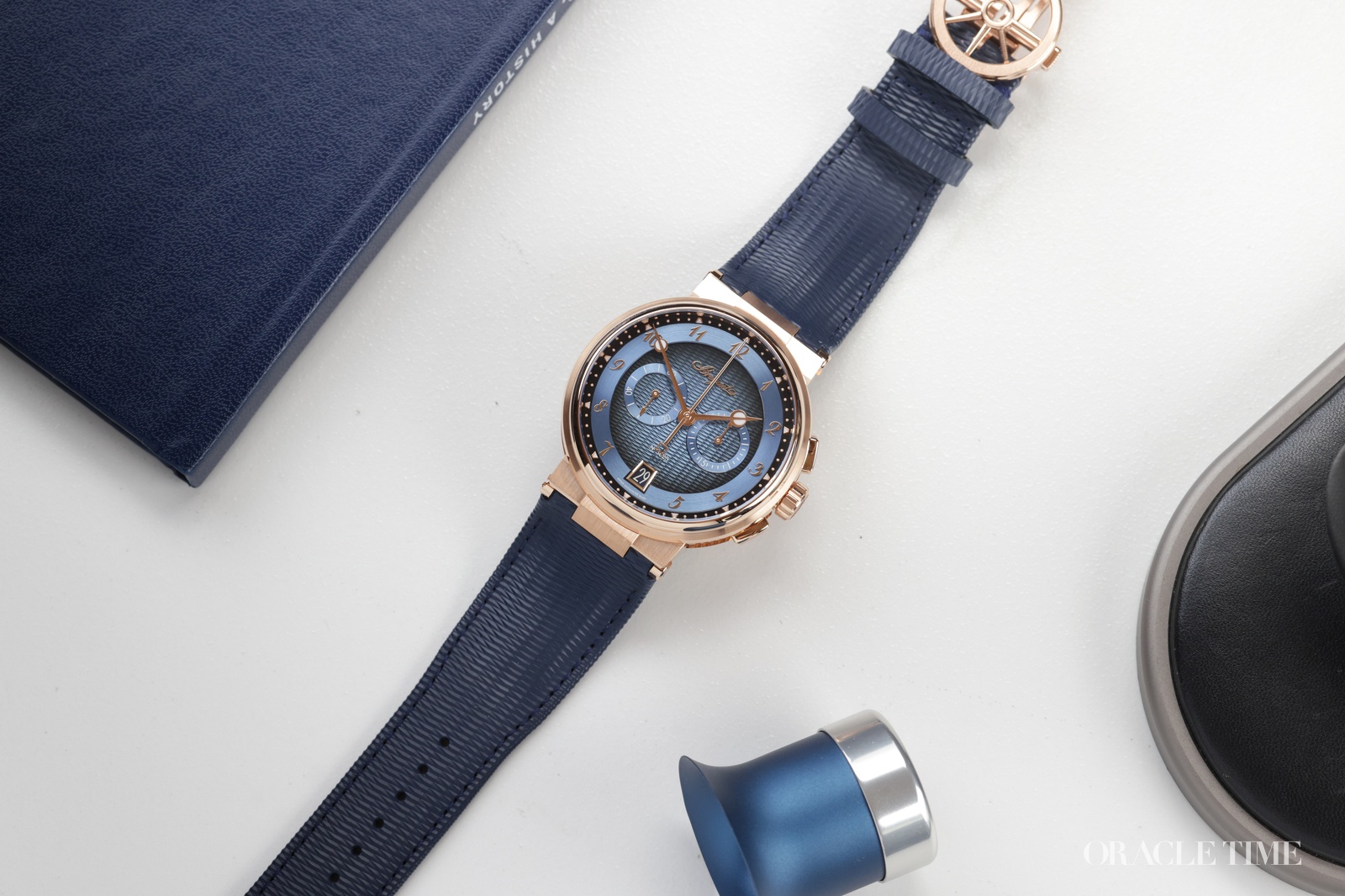
The Breguet Marine Chronographe 5527 is quite a diverse model within Breguet’s range with multiple case material and dial options. Now it’s being expanded further with the introduction of six new bicompax variants alongside the previous tricompax editions, bringing the total references to upwards of 20. We’ve been hands on with the Ref. 5527BR/Y9/5WV to discover the new model.
What’s important to understand is that this is an aesthetic overhaul of the Marine Chronographe 5527, not a structural change. What that means is that despite the display going from tricompax (three subdials) to bicompax (two subdials) along with a handful of other tweaks to the dial, the overall watch is more or less the same as the previous editions. For example, the case proportions are completely untouched. That means it measures 42.3mm in diameter with a 13.9mm thickness.
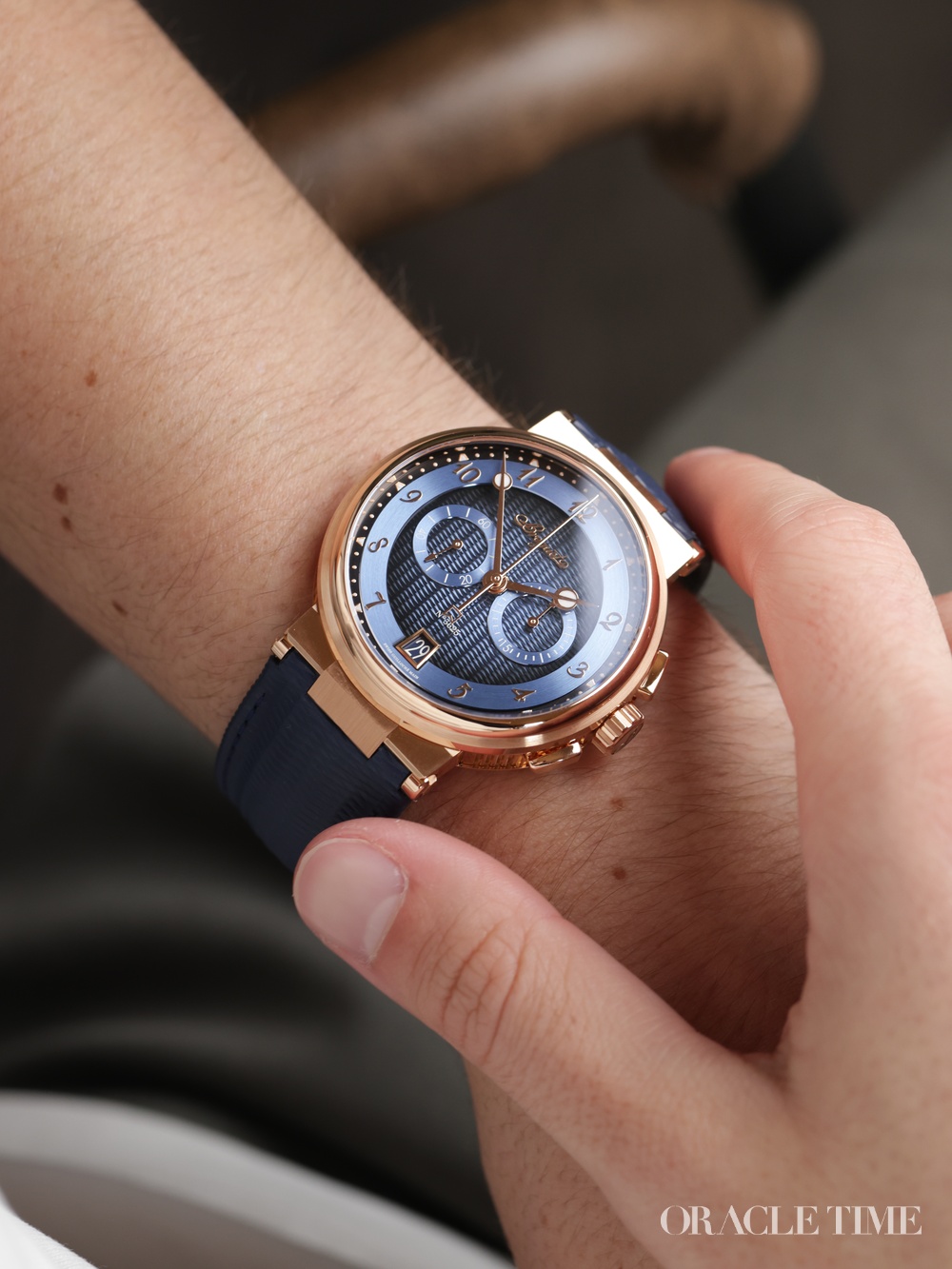
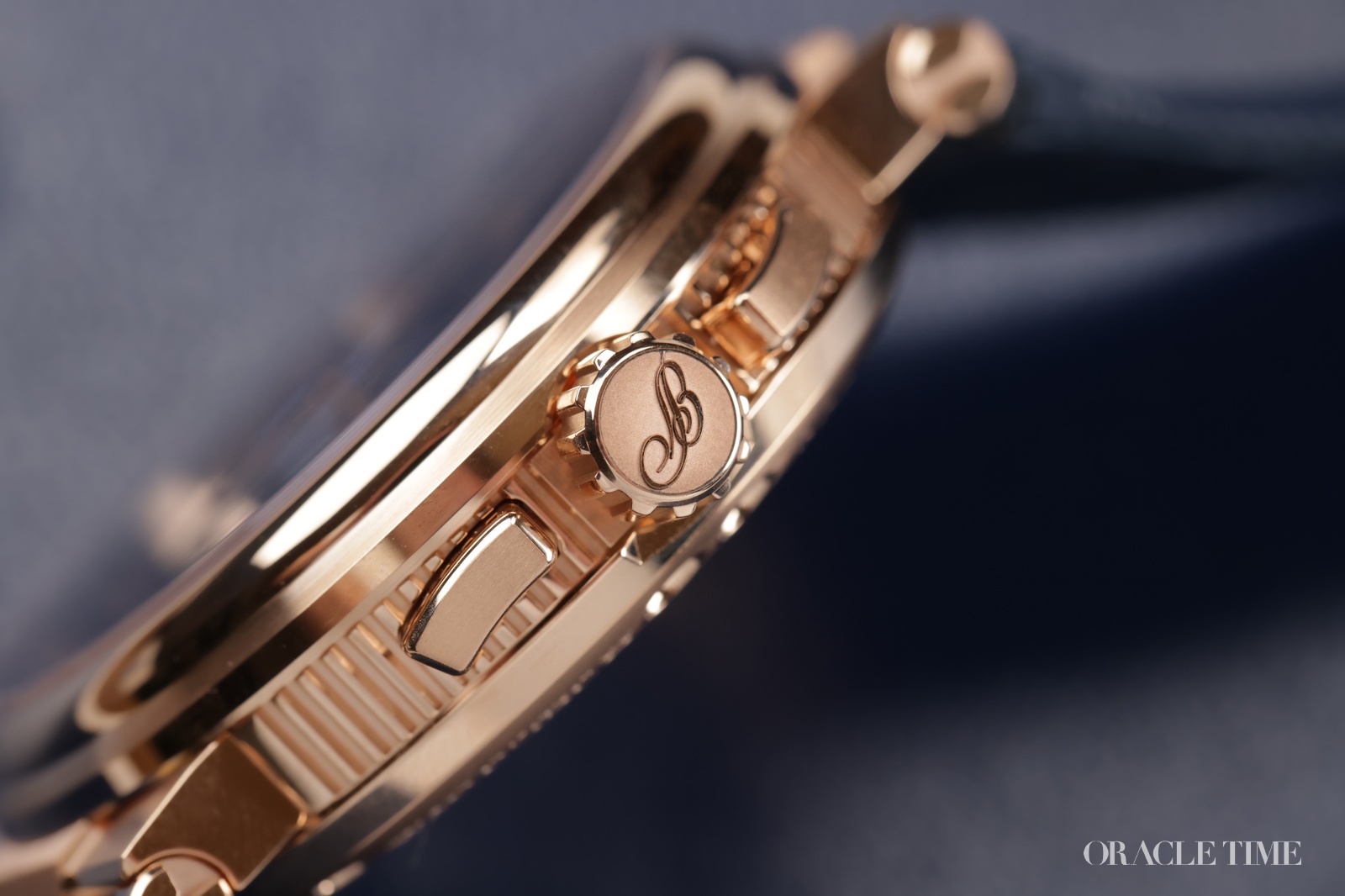
The case shape is also unchanged. Featuring a round design, prominent lugs that integrate cleanly with the strap, and polished, rectangular chronograph pushers that sit either side of the crown at 3 o’clock. On the wrist, the lug-to-lug length of 50.7mm means the strap curves away down the sides of your wrist quickly, helping the watch to sit flat against the skin. I’d describe it as a big watch, but the compact style of the lugs means the profile feels smaller than many tool watches of similar proportions. Though in 18k rose gold you can certainly feel its presence, as it is weighty – you can always opt for the titanium edition if a heavy watch is a concern.
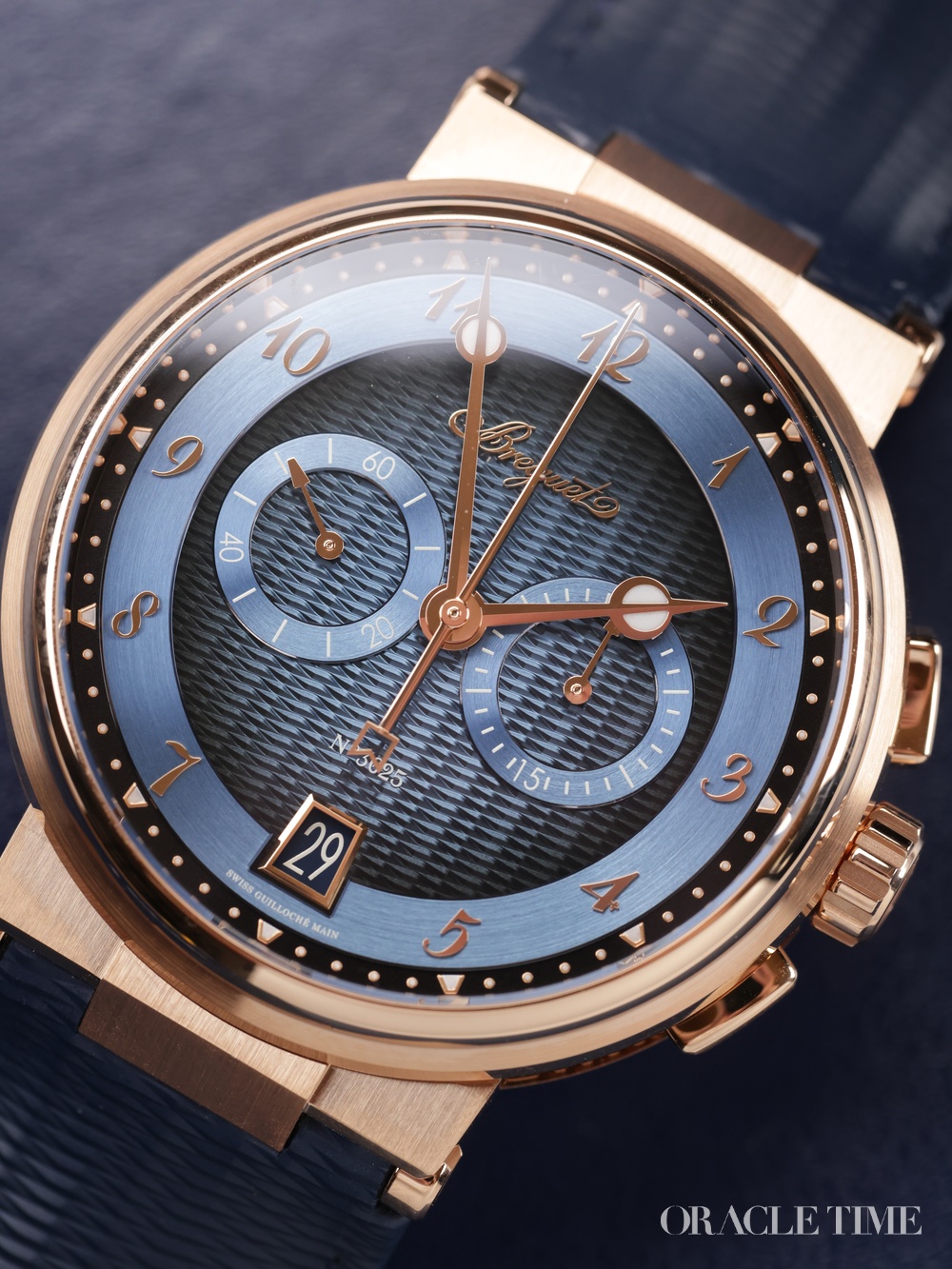
Moving to the dial, this is where the new edition comes alive. As noted, it now has a bicompax layout rather than tricompax, with the previous 12-hour subdial being removed to leave just the small seconds at 9 o’clock and 30-minute timer at 3 o’clock. In order to keep the dial balanced, the date window that was previously squeezed in between 4 and 5 o’clock now takes pride of place at 6. It makes for a substantially cleaner display that feels more organised and easier to read.
Alongside the placement changes, the style of the dial has been redesigned too. The chunky, oversize Roman numerals used on previous versions have been swapped out for sleek and stylish Breguet Arabic numerals. Also, where the numerals used to be oriented radially, they’re now all horizontal, which again helps with the readability. They’re mounted on a brushed ring that encircles the hand-made guilloché centre. The guilloché pattern is called ‘Quai de l’Horloge’ and is an interwoven diamond pattern.
For the rose gold version we have here, the dial is a rich blue colour to complement the case, numerals and hands. Speaking of the hands, the hours and minutes use a lume-filled variant of the traditional Breguet hands that feature a ring close to their tip. The central chronograph seconds hand features a counterweight shaped like the letter B in the maritime signal flag alphabet (one of the few references to aquatics left to legitimise the name Marine).
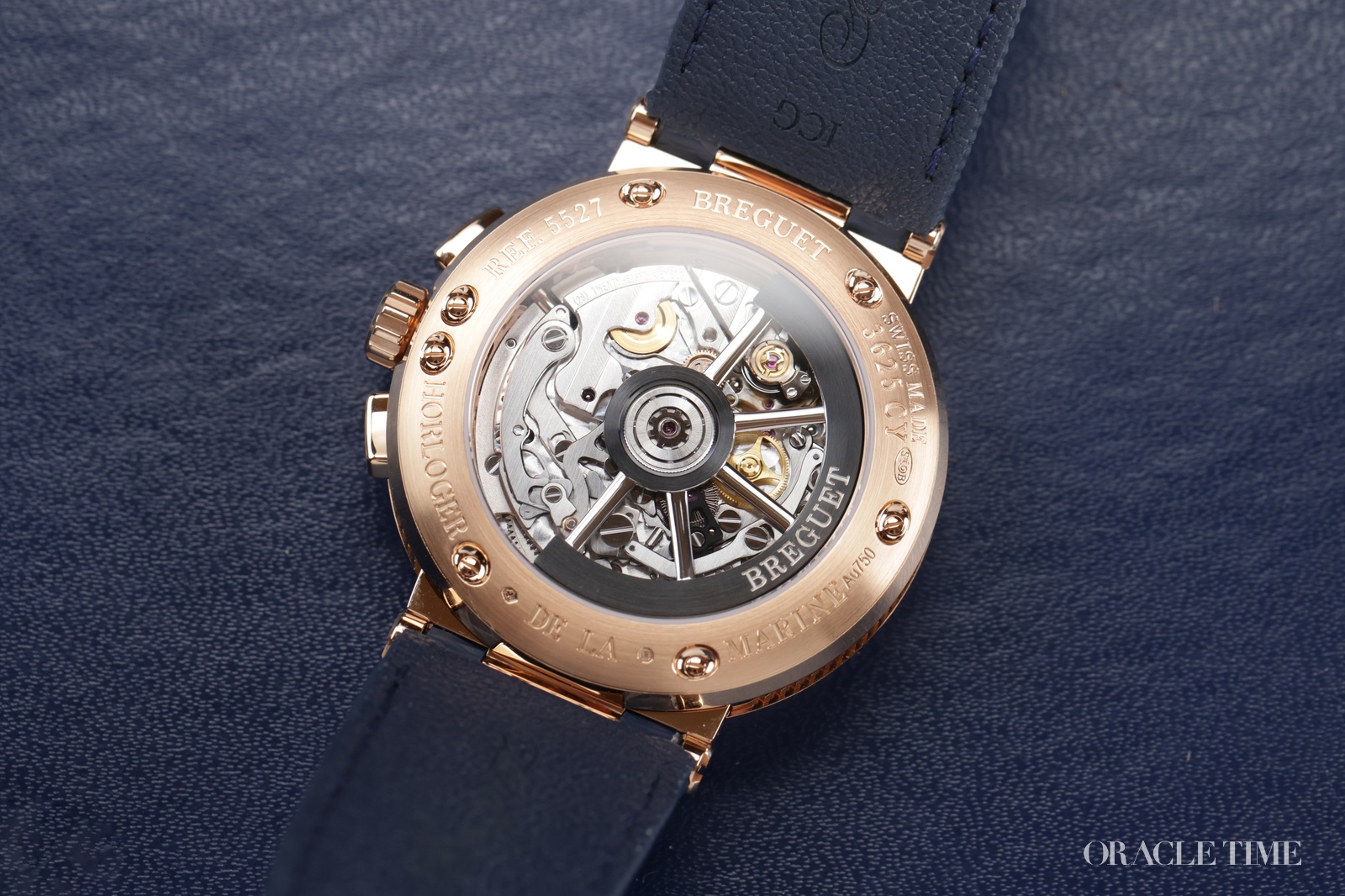
Powering the watch, and visible through the exhibition caseback when you undo the deployant clasp to take a look, is the calibre 582QA flyback chronograph. It’s actually the same movement used in the tricompax editions of the Marine Chronographe 5527 despite the changes to the display. It has a 48-hour power reserve and 4 Hz frequency. Being a flyback chronograph means the chronograph function can be stopped, reset and restarted with a single pusher press, making it much more efficient at timing sequential events such as multiple laps or multiple stages of navigation.
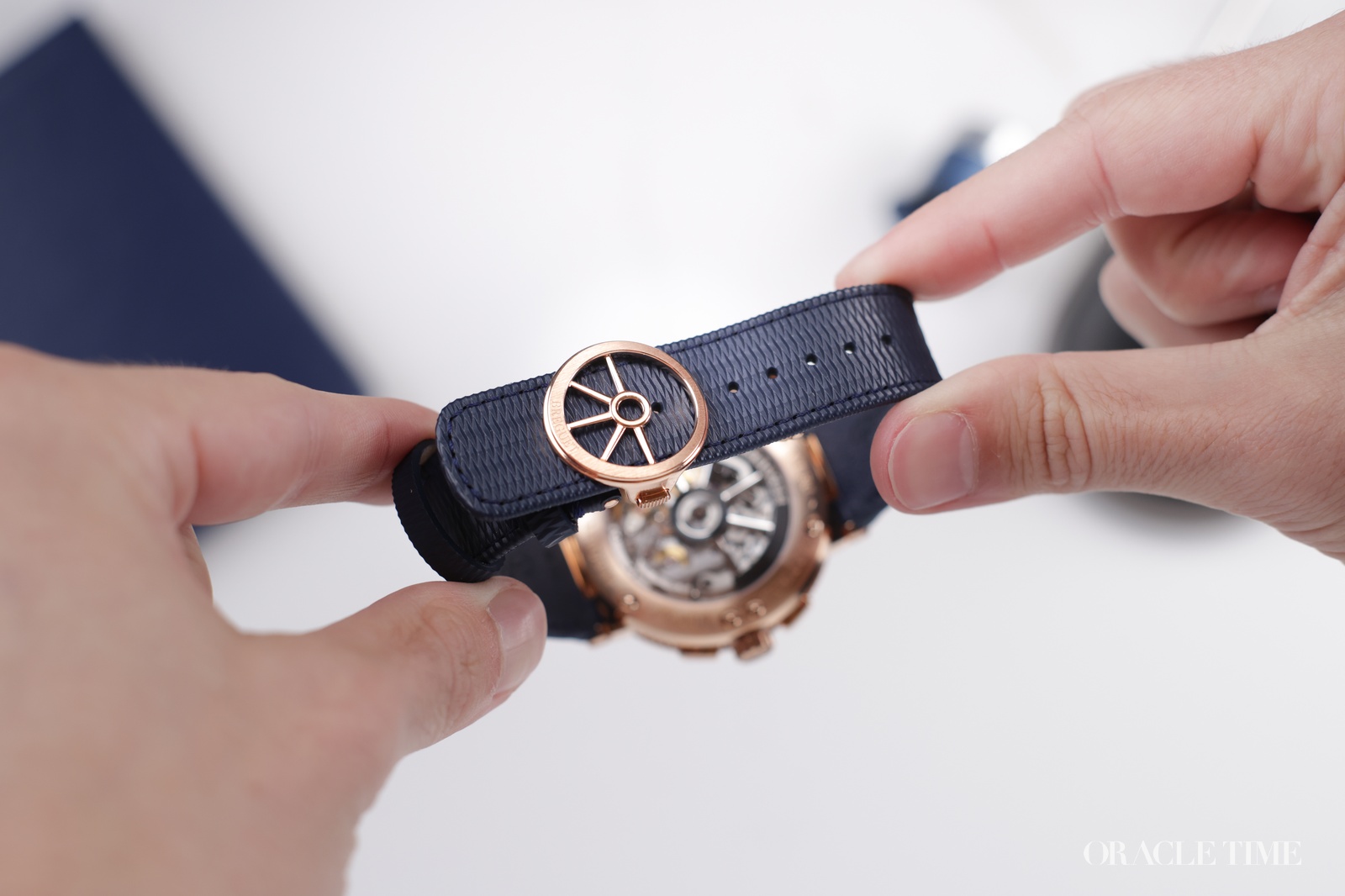
For pricing, the version I have here in rose gold on blue rubber strap is £45,700. On full rose gold bracelet, it would instead be £72,100. The most accessible variant of the new bicompax Marine Chronographe 5527 is the titanium edition on rubber strap at £25,400. This is my favourite version of the 5527 to date, it’s much easier to read and less cluttered than the tricompax variants. Plus, the new guilloché pattern is gorgeous in rich colour.
Price and Specs:
More details at Breguet.