E.C. Andersson Timepod
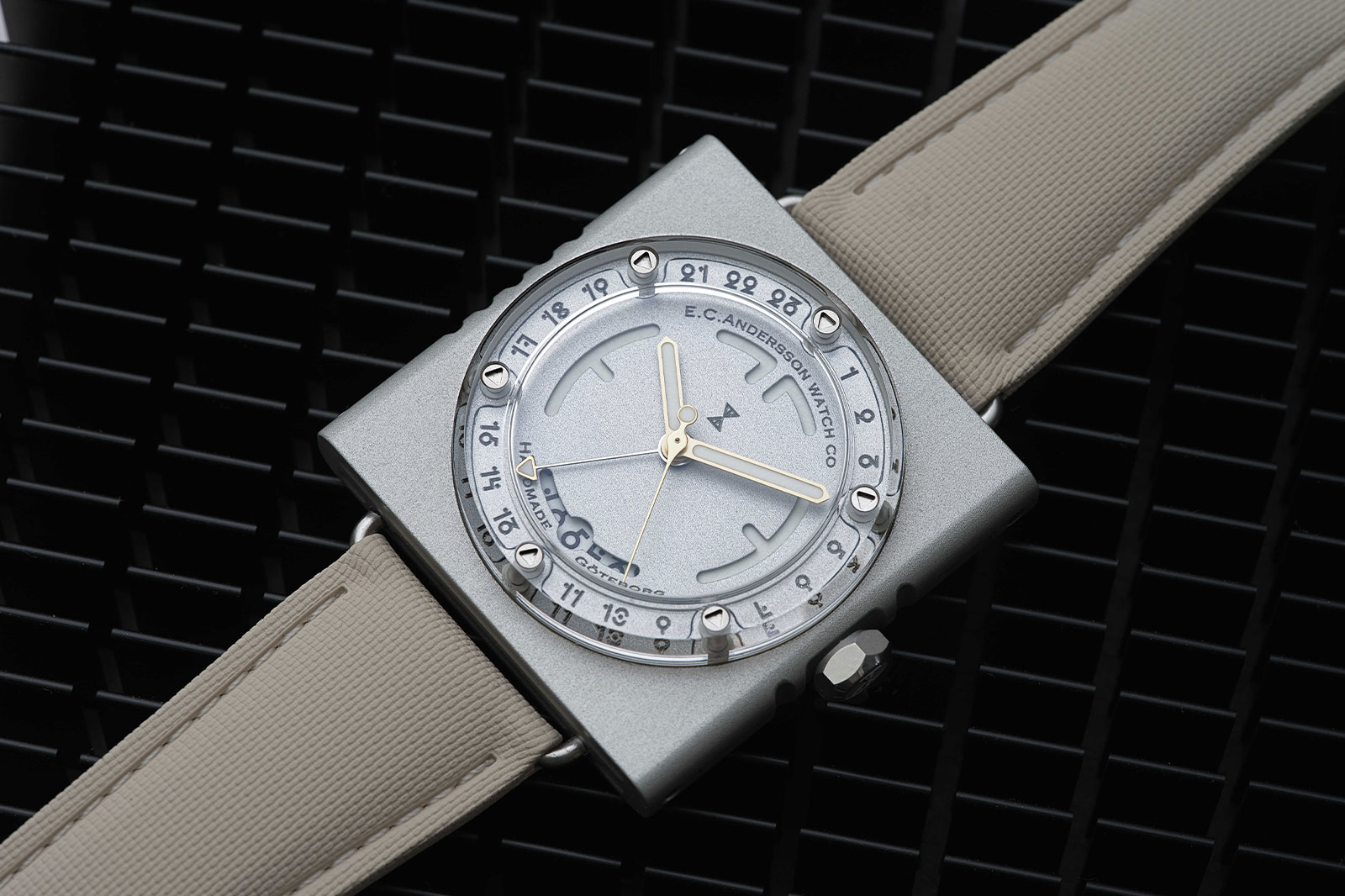
If there’s one watch I get asked about more than any other, it’s my E.C. Andersson Mytilus, the 4.1mm thin aluminium sleeper hit from Erik Andersson’s Gothenburg workshop. The Timepod is the follow-up, and it’s on another level. The 39mm square case is bead-blasted and hardened in-house, and it does away with a bezel altogether: a proprietary sapphire crystal encloses the dial and hands and is bolted directly to the case with six individual screws. Then there are the lugs. Press a button and they release and pull straight out of the case, no tools required, with the mechanism sealed against dirt but still openable if it ever needs servicing. Around the round dial sits a 24-hour scale, because this is a true GMT with an independently adjustable hour hand.
The dial itself is an engraved sandwich construction in either Burnt Umber or Bare Metal, coated in the brand’s own E.C. Brite lume, and the date wheel is fully luminous too, sitting neatly in the symmetry of the layout. Inside is a Miyota 9075 that E.C. Andersson regulate themselves to between –1/+6 seconds a day before shipping. At 11.2mm thick including crystal (the case proper is just 6.4mm), with 70m of water resistance and a sailcloth-pattern rubber strap, it’s built to wear as well as it looks. Utterly unique and properly utilitarian, each one is made by hand, one at a time, exclusively for the waitlist.
Price and Specs:
More details at E.C. Andersson.
Officine Tecniche Flammae GMT
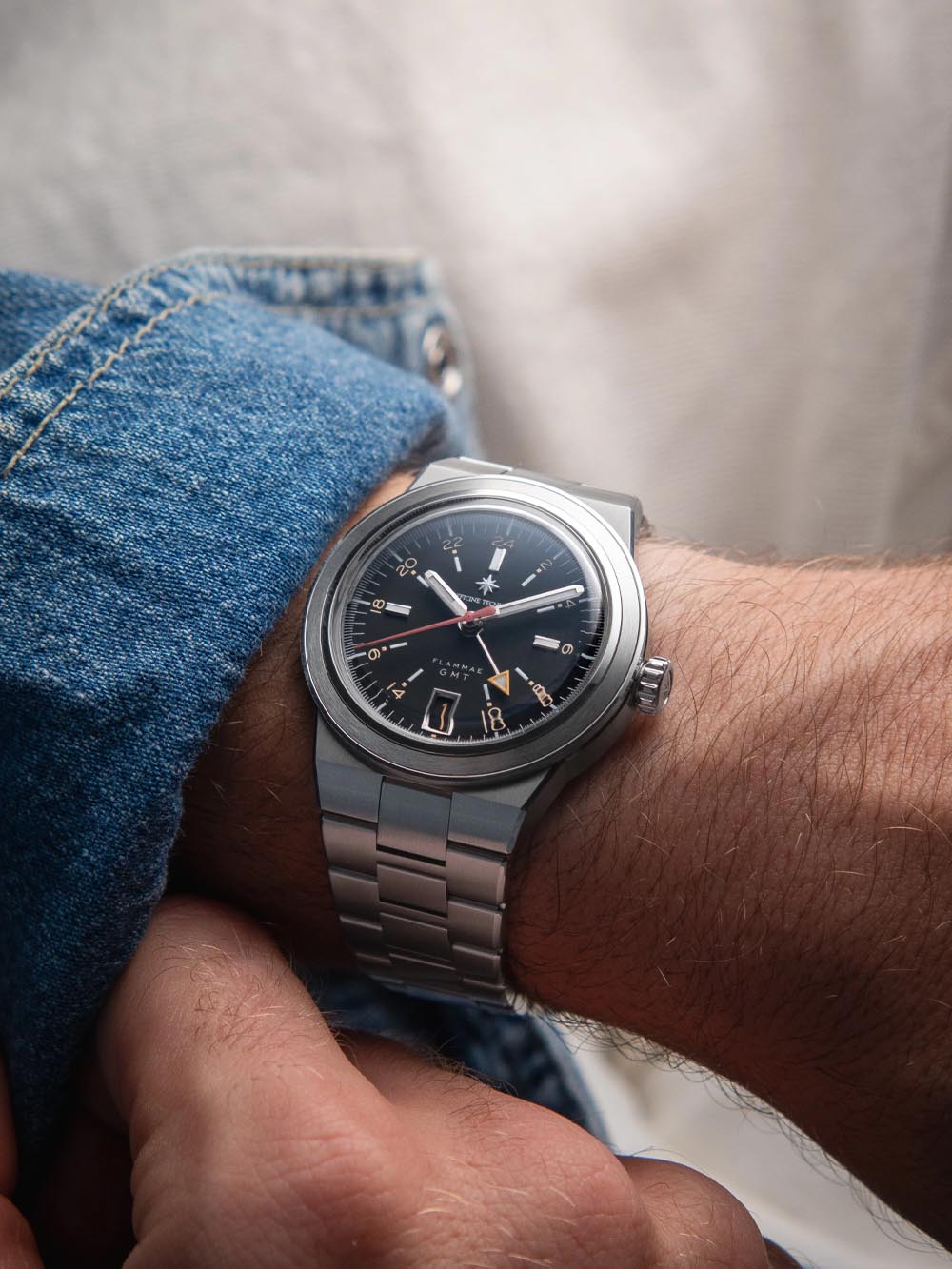
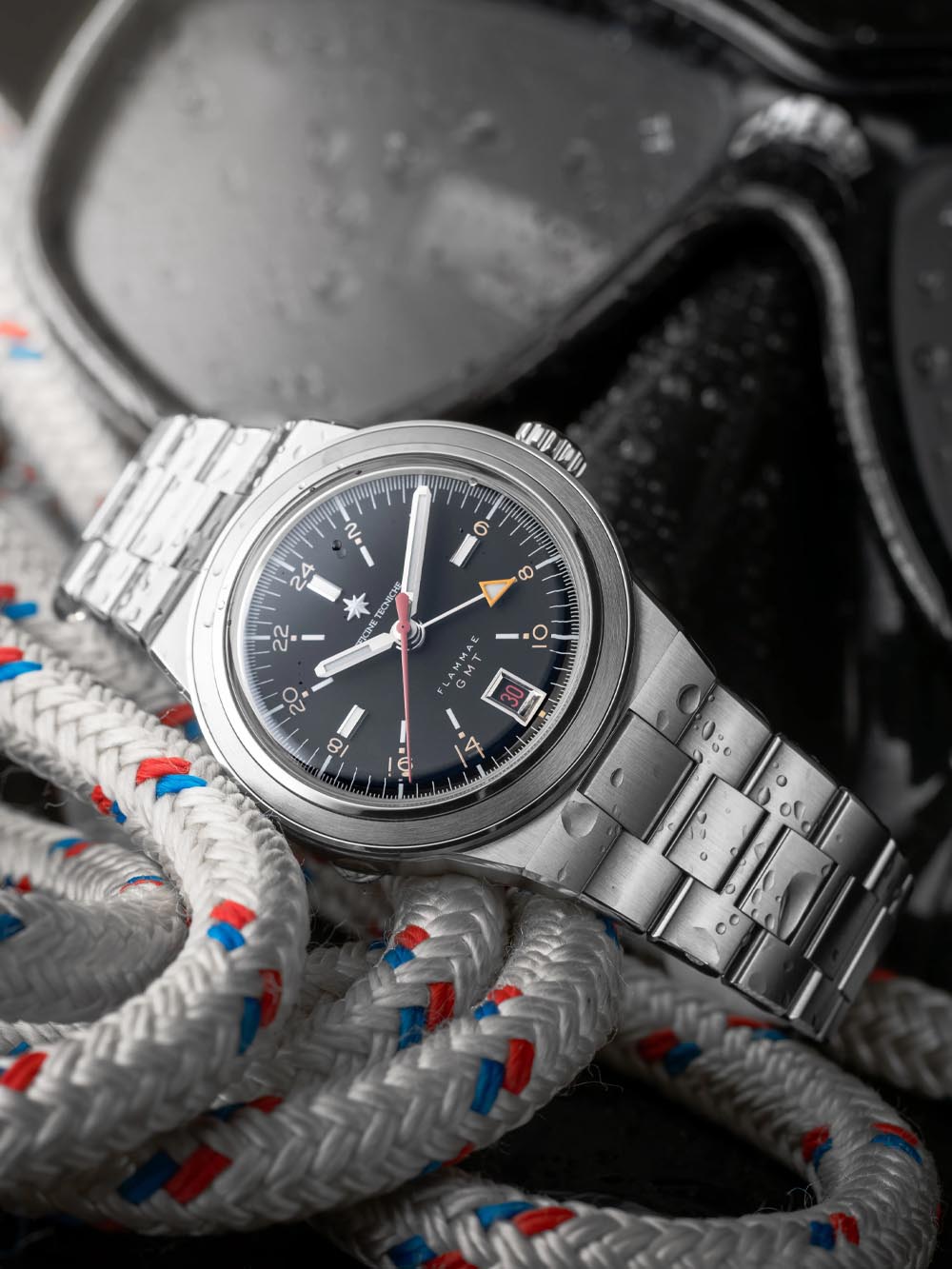
Officine Tecniche are based in Puglia’s Gargano region, and their pitch is function-first Italian design with Swiss and Japanese mechanics inside, with every component made to their own moulds rather than pulled from a catalogue. Until now that has meant technical divers like the Aquas. The Flammae GMT is their first traveller, and it keeps the tool-watch DNA: a 38mm 316L steel case with 200m of water resistance, a screw-down crown and a double-domed sapphire with two layers of anti-reflective coating.
The dial is matte black with a two-tone lume scheme, cool white Super-LumiNova BGW9 alongside warm GL Old Radium. It comes on an integrated steel bracelet with quick-release buttons and the brand’s own micro-regulation clasp, with a branded black FKM rubber strap as an option. Powering it is the Miyota 9075, a true GMT calibre with an independently jumping local hour hand and a 42-hour reserve. At €949 it would already be competitive. On pre-order at €749, with delivery this month, it’s one of the cheapest true GMTs of this quality you’ll find anywhere.
Price and Specs:
More details at Officine Tecniche.
O&HoraPictor Duet Rhapsody
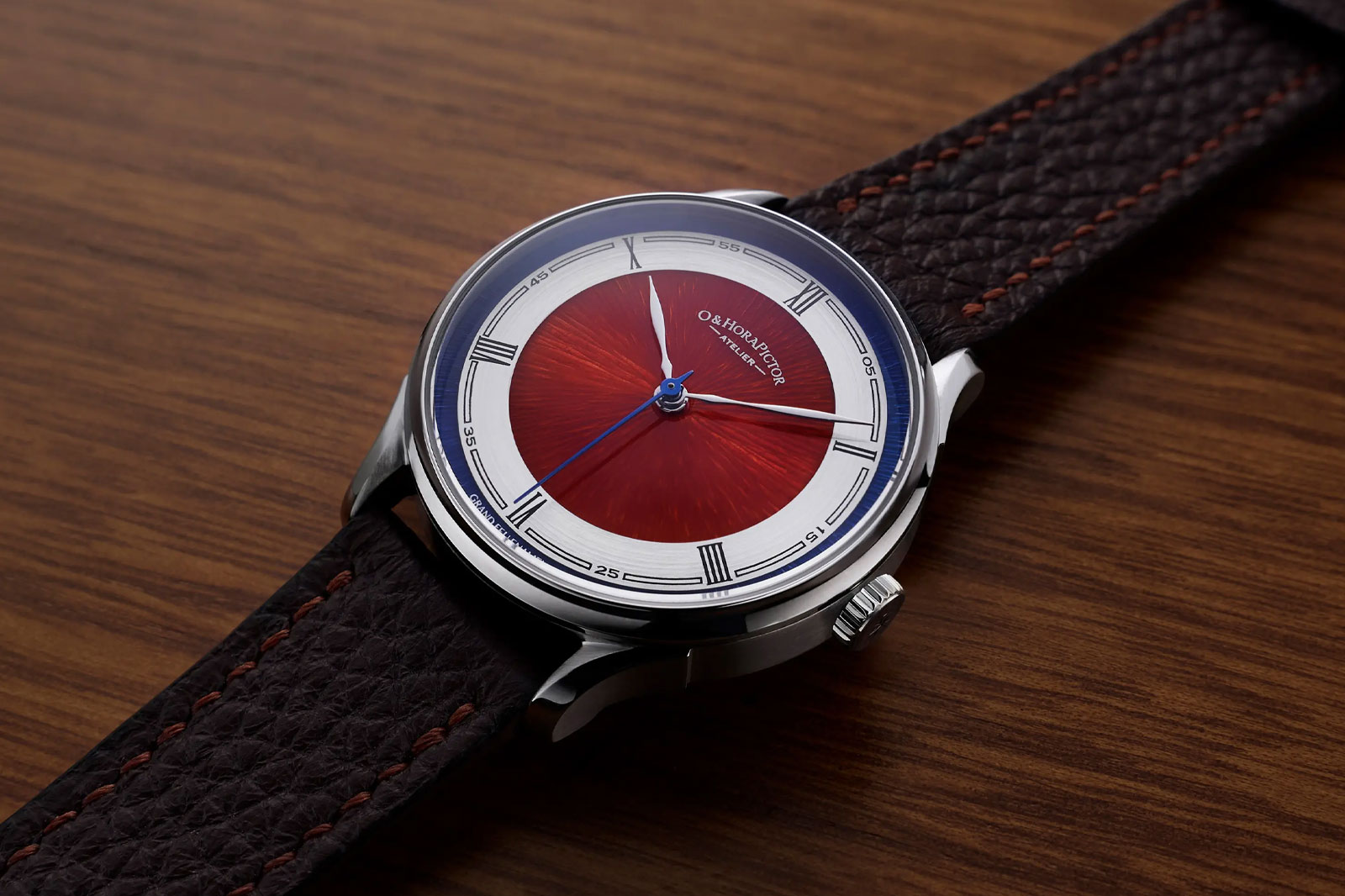
Grand feu enamel is usually where affordability goes to die, which makes the new Duet collection from O&HoraPictor such a welcome arrival. The brand grew out of an enamel atelier founded in 2017 and only launched under its own name in 2024, and the Duet is its most attainable range yet: five two-tone enamel dials, each pairing two contrasting hues inside a hand-brushed silver chapter ring with crisply printed Roman numerals. Bee, Olive and Lagoon are smooth enamel from $2,315 (approx. £1,715), but the two that stand out are Submarine Canyon and the Rhapsody, whose vivid red and blue are fired over a silver base hand-engraved with thousands of individual cuts. The result: a watch dial that dances in the light.
Each dial takes around eight firings, is polished to a mirror finish and is only then printed. The case comes in 36mm, 38mm or 40mm, all 10.2mm thick, with a polished concave bezel and twisted, multi-faceted lugs, and inside is the hand-wound Sellita SW200-2M Power+ with 65 hours of reserve. Handmade leather straps run from black crocodile to light brown pebbled. The engraved dials are limited to 20 pieces per colourway, which for genuine grand feu enamel from an independent is not many at all, so if any of the Duets speaks to you, move fast.
Price and Specs:
More details at O&HoraPictor.
Albishorn Marinagraph Classic Fumé
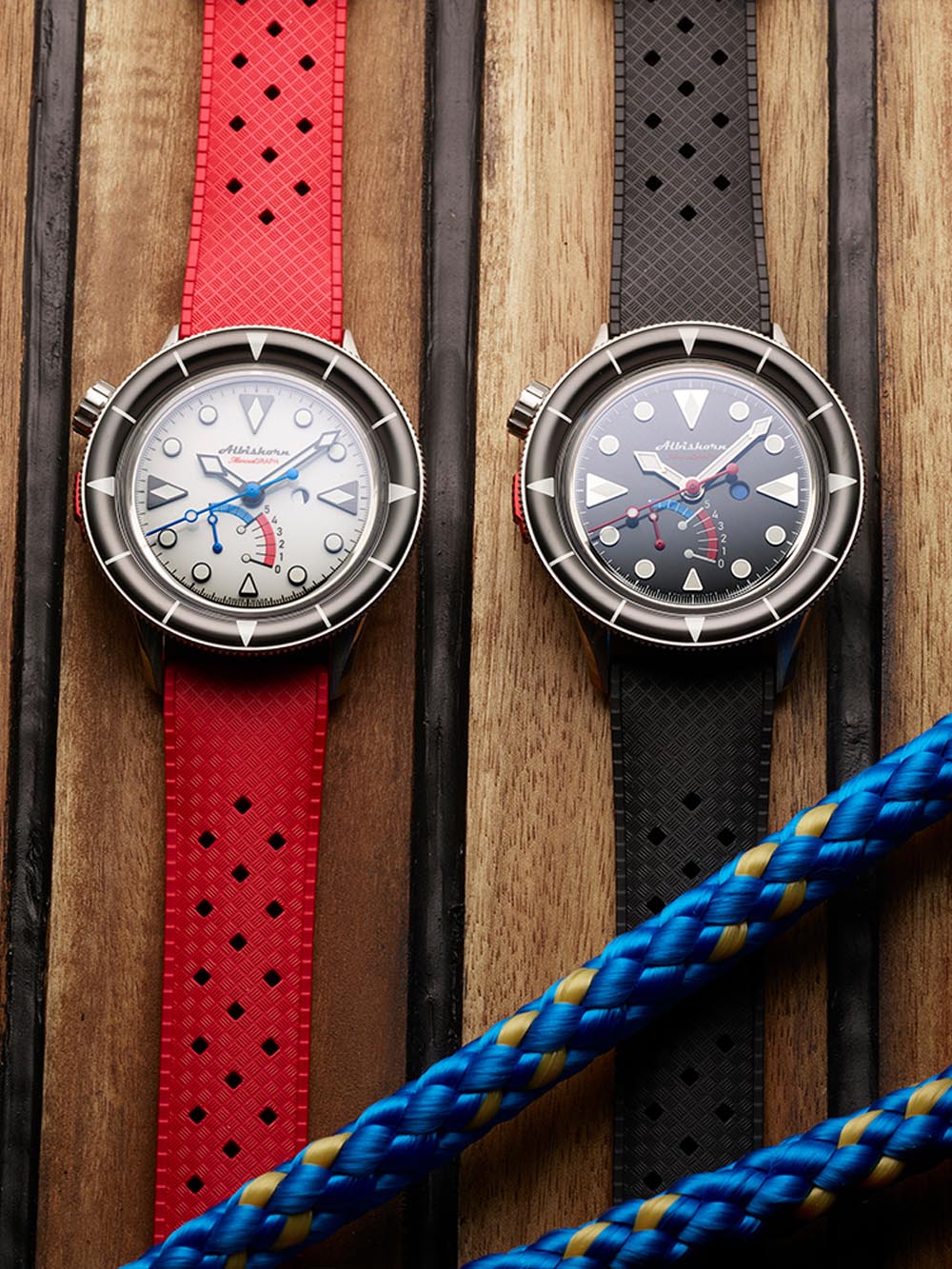
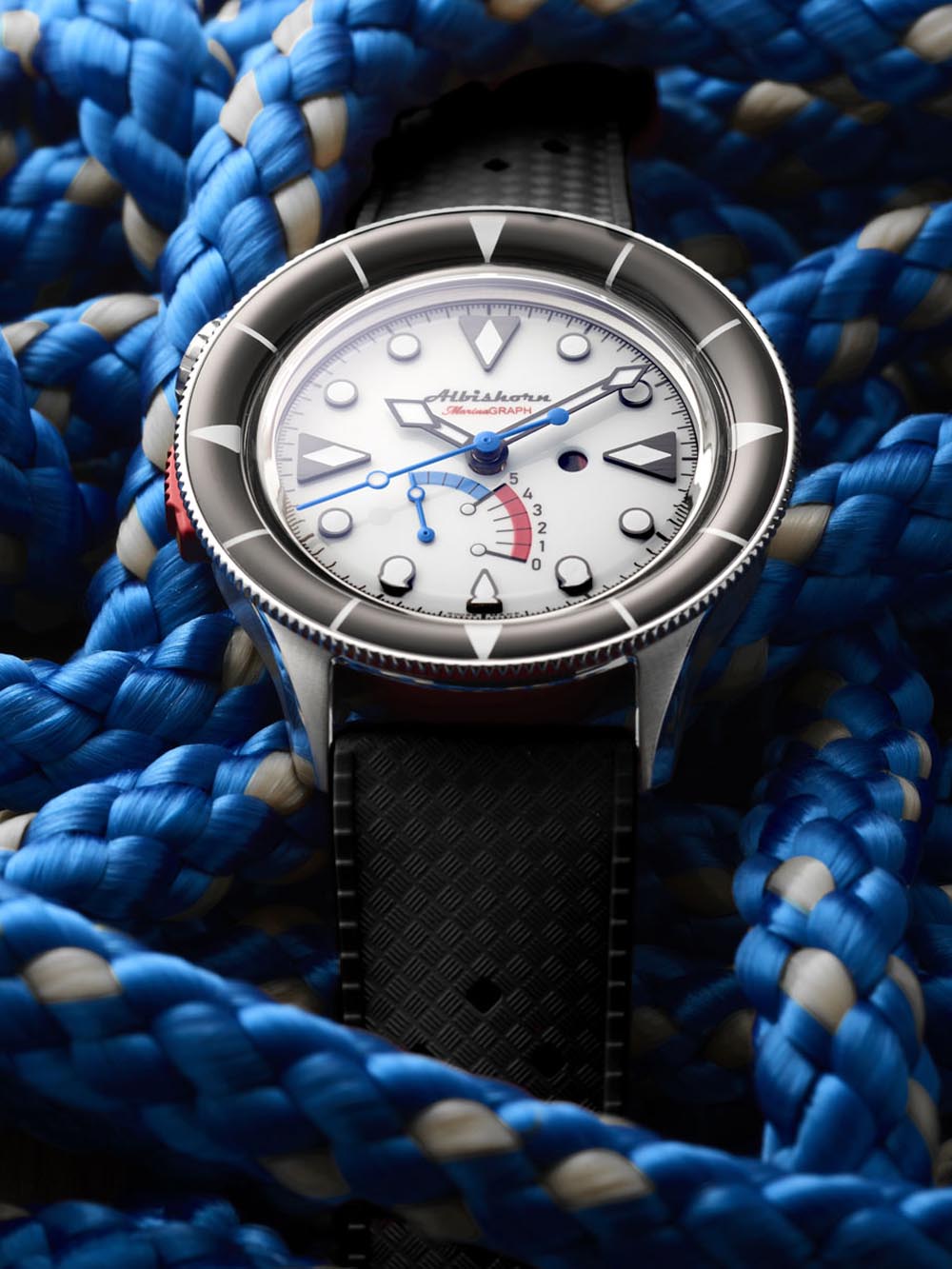
Albishorn deals in what founder Sébastien Chaulmontet calls imaginary vintage: watches that could have existed but never did, designed as if the brand had been around for the events they commemorate. The Marinagraph imagines a skin diver aboard Columbia at the 1958 America’s Cup, and the new Classic Fumé gives it a far more restrained feel. With a white lacquer dial shading darker towards the edge, it uses applied black indices filled with Super-LumiNova and red and blue accents on the chronograph hand. The original aluminium bezel insert has gone too, replaced by a black domed sapphire insert with twelve luminous markings on a bidirectional bezel.
The party piece is inside. The ALB01 A is Albishorn’s own automatic monopusher chronograph, heavily reworked from a Sellita base, with a patented retrograde regatta function: a 10-minute countdown arc at 7 o’clock, red for the final five, operated by a red anodised aluminium monopusher on the left of the case with the crown moved to 10 o’clock. When the countdown reaches zero the mechanism disengages and the hand stops dead, so there’s no ambiguity at the gun while the chronograph seconds keep running. The 39mm steel case is 13mm thick, 47.7mm lug-to-lug and rated to 100m, the movement runs at 4Hz with 64 hours of reserve, and the Classic Fumé is limited to 99 pieces with two rubber straps in the box.
Price and Specs:
More details at Albishorn.
Apiar Carbon1.0 OG
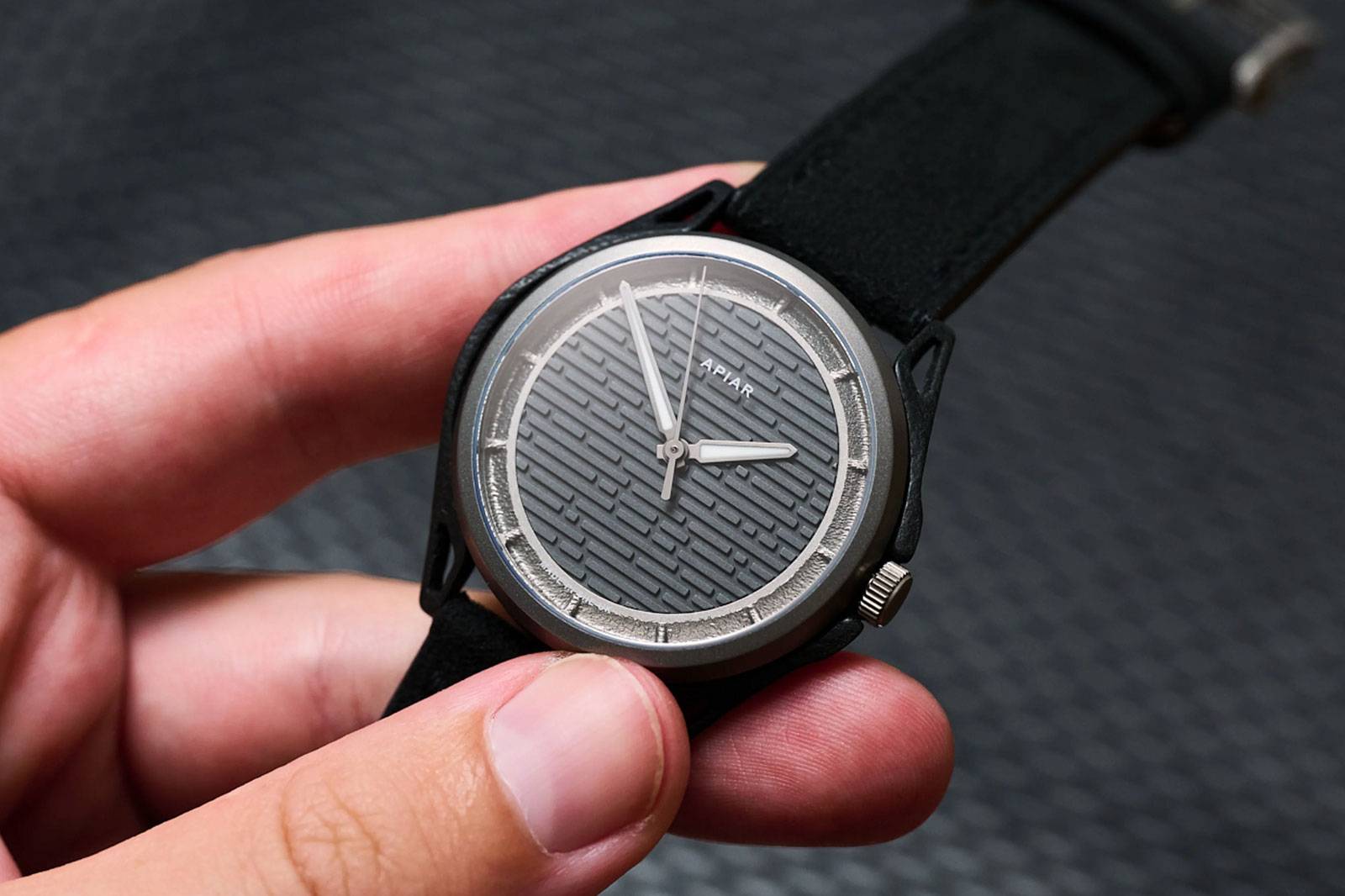
London’s Apiar made their name printing titanium watch cases from metal powder. The Carbon1.0 OG takes the same idea into a new material, and it is believed to be the first commercially available watch to use Composite-Based Additive Manufacturing. Long-fibre carbon sheets are infused with PEEK (an aerospace-grade thermoplastic tough enough to be used in jet engines and surgical implants), then compressed under heat, sandblasted and vibro-smoothed for 12 hours, producing a carbon case with visible directional layers rather than the mottled swirl of forged carbon. Because it is printed rather than moulded, the carbon forms an open structure around a Grade 23 titanium midcase (itself printed by laser powder bed fusion in Ebbw Vale), with skeletonised lugs and windows that reveal the metal beneath.
The dial follows the same logic: black anodised aluminium, CNC machined with a 0.6mm end mill into broken, overlapping lines that echo the carbon strands in the case. The result is a brick-like texture with a really cool futuristic effect and more than a touch of Kollokium’s pixelated brutalism about it, framed by hour markers formed directly in the titanium core that slope down towards the dial, with light blue Super-LumiNova on the sandblasted hands. Numerals are pad printed on the underside of the sapphire by Bedford Dials so they float above the surface. Inside is the La Joux-Perret G101 with 68 hours of reserve, water resistance is 50m, and the whole watch weighs 38g. It is 40.5mm across, 9.2mm thick, the bulk of it made and all of it assembled in Britain, and it launches this month.
Price and Specs:
More details at Apiar.