
It’s easy to look at Seiko and just see an accessible Japanese watchmaker with a dizzying number of models. But it’s no overstatement to say that the Seiko name has been on the dials of some genuinely important timepieces – even some that have ushered in seismic shifts across the entire watch industry.
Yet with so many current pieces in their line-up, from accessible beaters to re-issues aplenty to less accessible lines equipped with Grand Seiko movements, the really important watches can get lost. Here then is your guide to the most important Seiko watches of all time.
Seiko Laurel (1913): Japan’s First Wristwatch
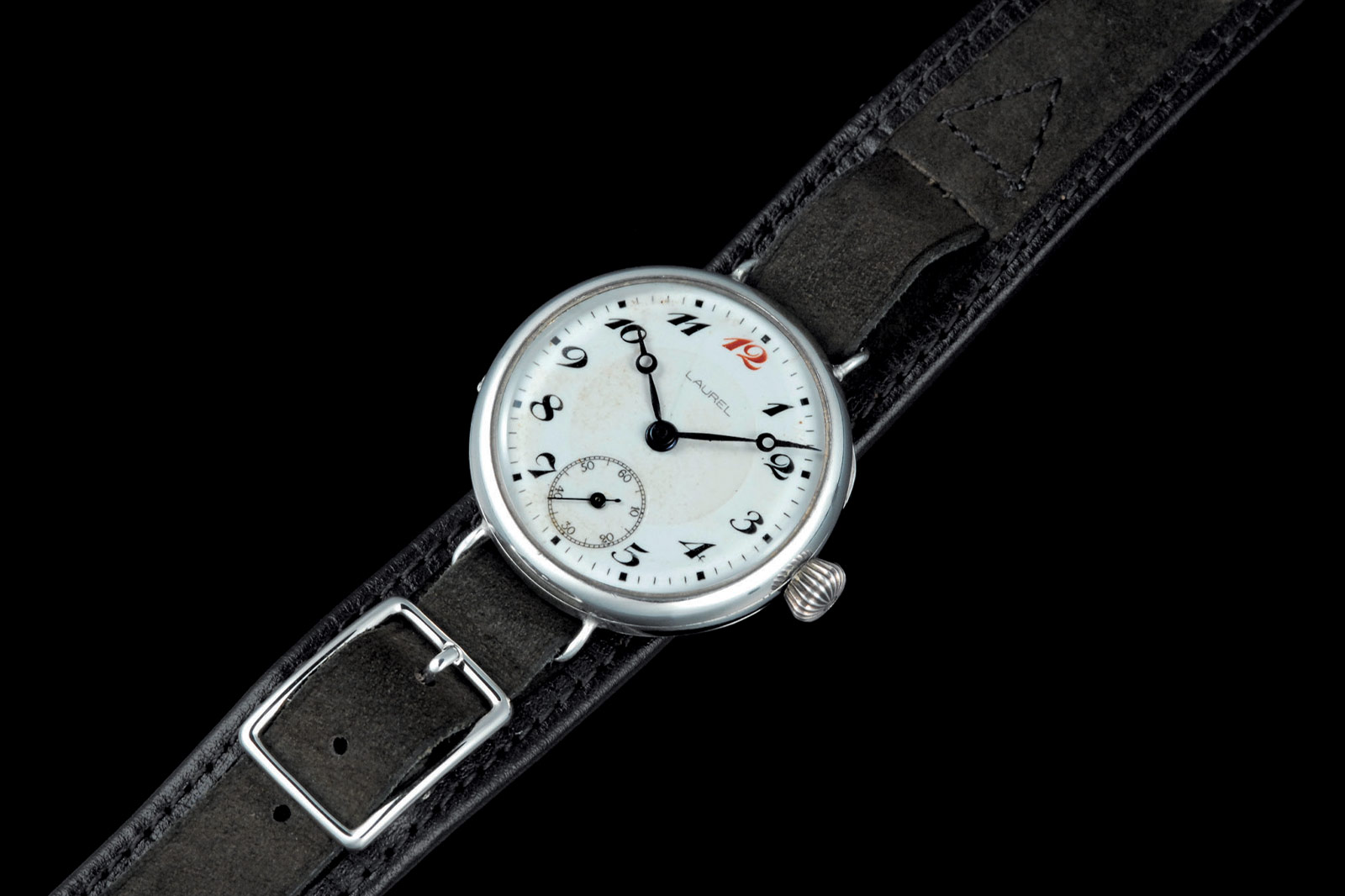
Back in the 1910s, wristwatches were a rarity in Japan. They were building home-grown pocket watches, but wristwatches were exclusively expensive imports from Europe. At this time, Kintaro Hattori, founder of Seiko, had already been producing clocks under the name Seikosha since 1882, but he saw the value in this newfangled, state-of-the-art timekeeping technology on the wrist.
This idea was made easier by the first domestic production of balance springs in 1910, allowing Hattori to develop Japan’s first wristwatch movement and the resulting 1913 Seiko Laurel. These were equipped with enamel dials – also produced in Japan – with an inset small seconds and Arabic numerals, occasionally with the number 12 in red.
The Laurel was more than a proof of concept. At first, production was sluggish at 30 to 50 watches a day, but as the process smoothed out and Seikosha became more adept at building the smaller movements, that ramped up, establishing the building of wristwatches in Japan.
Today you can find original Laurel models for anywhere between £1,000 and £2,000 – if you can find them. Early pieces are incredibly rare, not least thanks to the Great Kanto Earthquake of 1923 which burned down Seikosha’s factory and those low early production numbers. Still, if you can find one, it’s a seminal piece of watchmaking history. Otherwise, there are the more recent anniversary editions from 2023.
Seiko 62MAS (1965): The First Japanese Dive Watch
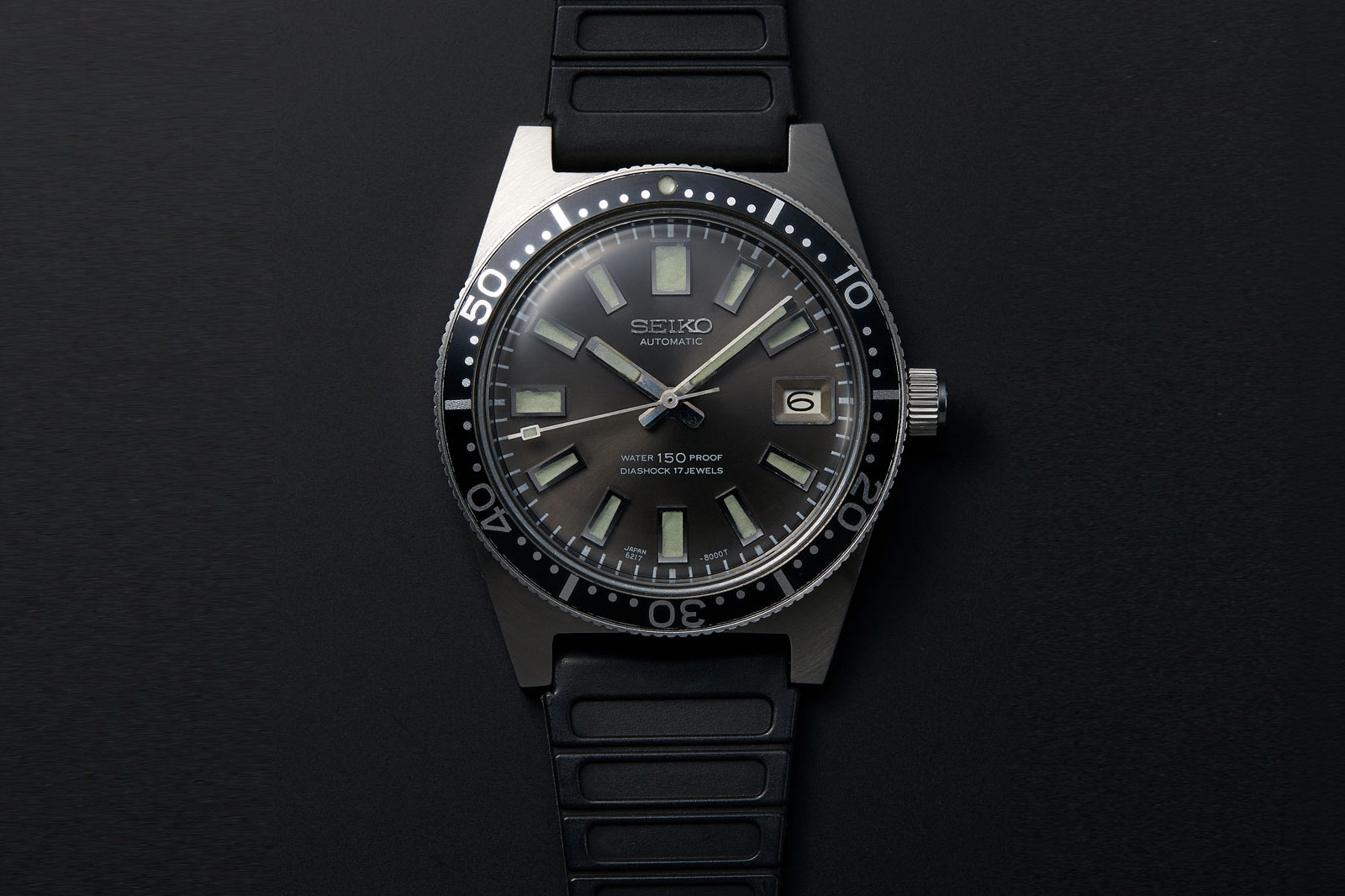
The 60s was the golden era of dive watches and Seiko didn’t want to get left behind – especially in Japan where shipbuilding was taking off like nowhere else. There was a need for a home-grown dive watch with professional specs and the 62MAS – named for a portmanteau of the calibre number, 6217A, autoMAtic and Selfdater – rose to the challenge in 1965.
This watch became the blueprint for Seiko dive watches moving forwards, with big, chunky baton indexes, a 3 o’clock date window and a slim diving bezel. It also had a then-impressive 150m water resistance. But its rugged credentials weren’t just suited to the ocean. In 1966, the Japanese Antarctic Research Expedition took it to Antarctica on their sub-zero missions.
These days, original versions can be found for around the £3,500 mark, though again, finding them is the hard part. However, Seiko has done plenty of modern re-issues in the same vein and, given the 62MAS shaped the company’s dive watches, plenty of similar pieces in their modern line-up – ones that are regularly among the best dive watches of the year.
Seiko Pogue (1973): First Automatic Chronograph in Space – Skylab 4


The race for the world’s first automatic chronograph was white hot in 1969 and while most of the discourse was around the Swiss – specifically, the El Primero vs Heuer-Breitling Calibre 11 – Seiko actually beat them both to actual production. The Seiko Calibre 6139 was quietly released into the Japanese market in May that year, months before either Swiss rival could get theirs into stores, securing its place in automatic chronograph history.
The watch that it was launched in was the 6139-6000 series, and the 6002 version of that series became the Seiko Space Watch when it caught the eye of one Colonel William Pogue. He did already have a mission watch in the Omega Speedmaster, but it hadn’t been fully flight-certified in time. So, he just decided to wear his golden-yellow dialled Seiko on the 84-day Skylab 4 mission in 1973.
Powered by the column wheel and vertical clutch chronograph of the aforementioned calibre 6139 and with a rotating inner bezel, this made the newly dubbed Seiko Pogue the first automatic chronograph in space.
Proper vintage models with the golden yellow dial and ‘Water 70m Resist’ on the dial will set you back up to £3,000, though as one of the most famous Seikos visually, be careful to avoid mods. There is also the Prospex Solar Chronograph 1969 Re-interpretation, but as it has a solar movement and altered looks, it’s more an homage than a re-issue. It’s well-priced though at £660.
Seiko Quartz Astron (1969): The World’s First Quartz Watch
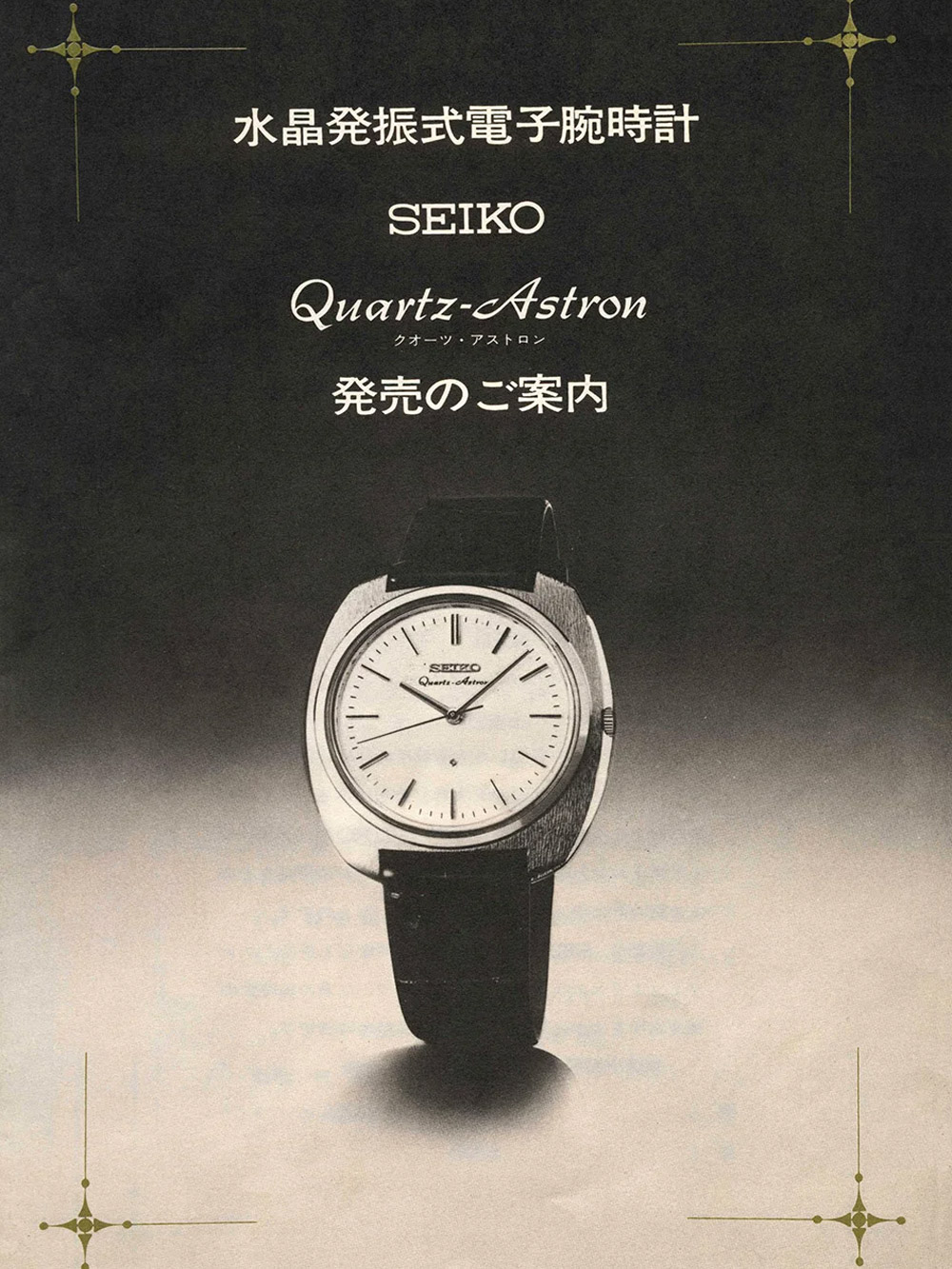
Of all Seiko’s contributions to the watch world, this is the most important – and devastating. It wasn’t just an automatic chronograph the Japanese watchmaker was working on in 1969 and, in December of that year, they revealed the Seiko Quartz Astron, the first wristwatch with a quartz oscillator ever built.
Developed over ten years, the new movement was 100 times more accurate than mechanical watches at + / – 5 seconds a month. Despite how cheap quartz would eventually get however, the initial Astron was not cheap; it was a feat of advanced engineering that cost 450,000 yen, about the price of a car at the time. It came in an engraved, solid gold curved case that measured 36mm wide and 11mm thin. It was a very different look to the modern, solar GPS Astron collection.
More significantly however, when Seiko launched the Astron they also opened the patents up and allowed the world to see how these new quartz movements were made. This meant that anyone could built them – and they did, ushering in the quartz crisis as traditional watchmakers struggled to compete with or adopt the revolutionary new type of movement. Many shuttered their doors and it wasn’t until the early 90s that mechanical watchmaking really got back on its feet post Swiss watch crisis.
Only 100 – 200 of the original Astron were ever built. That rarity combined with the gold value means that finding a pristine version is as expensive as it is hard-to-find. Seiko did launch a 50th anniversary piece in 2019, but even that was priced at €38,000 – around £32,000 – and was even more limited at 50 pieces. More accessible are the Solar GPS versions, which can be picked up for £2,600 new.
Seiko SKX007 (1996): The Watch That Defined Modern Seiko
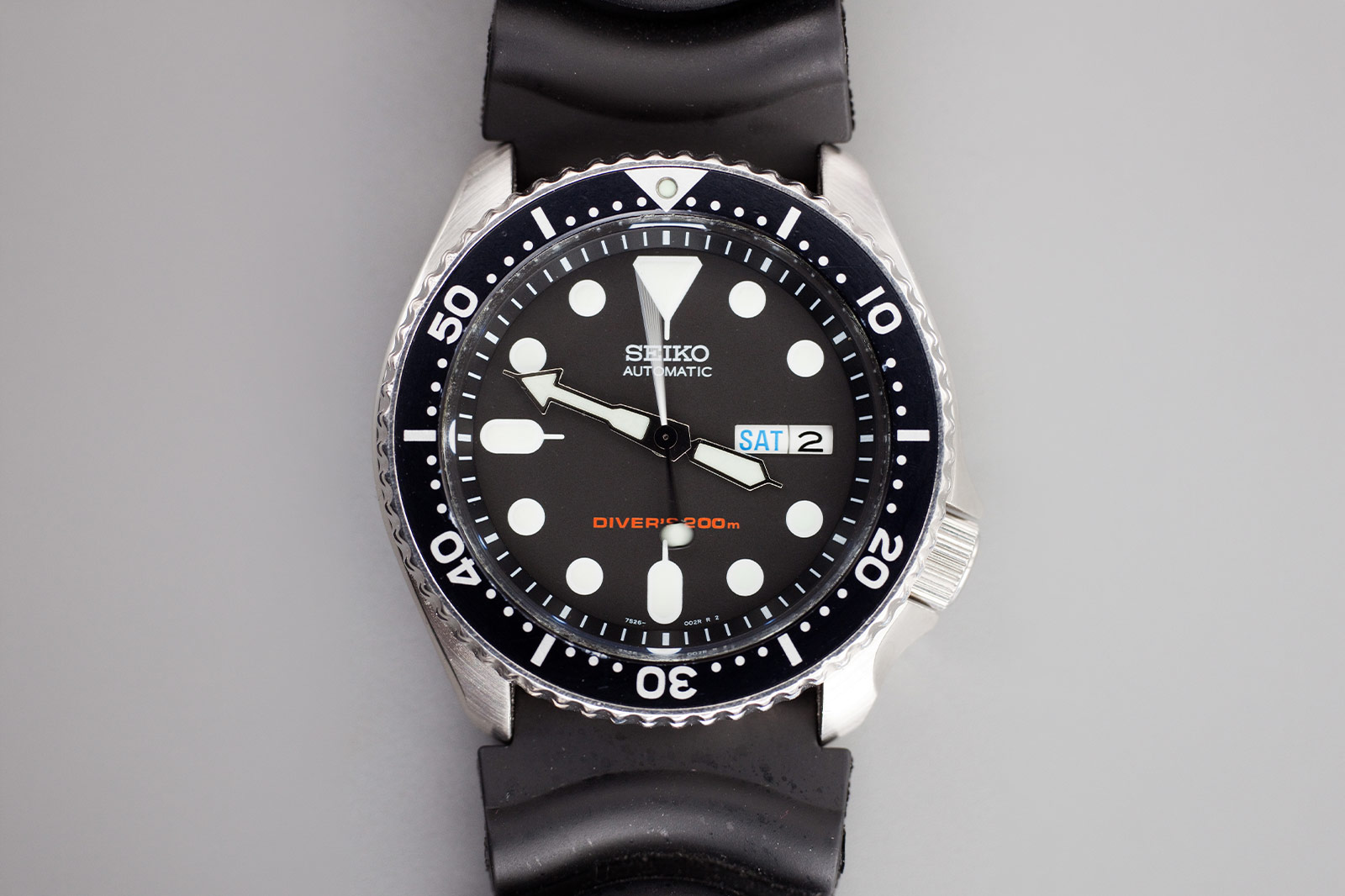
The 60s were a time of ground-breaking firsts for Seiko, but arguably the most important watch to the modern brand is the SKX007. Released in 1996 as a modern successor to the 62MAS, the SKX007 was billed as a specs-focused, value-driven dive watch. Priced at around £200 – about £420 in today’s money – it nailed the brief. For a 200m water resistant, ISO-compliant diver, that’s a tempting prospect however you look at it.
Design-wise, it was a classic, versatile diver with a unidirectional rotating bezel, a high-contrast, utilitarian vibe with a black dial and a solid automatic movement housed in 42.5mm of stainless steel. It became a global staple as a great first watch or the kind of diver you don’t mind genuinely risking in the ocean. Its mineral glass kept it from scratching, and the automatic movement inside was a proper workhorse. It stood up to some of the biggest players in Swiss watches for a fraction of the price.
As a platform however the SKX007 was also incredibly versatile and made it easy to change parts. Combine that with its innate accessibility and it’s no surprise the SKX007 almost single-handedly started the trend for Seiko modding, a trend still going strong amongst a certain, hands-on subset of watch obsessives.
The SKX007 was eventually retired in 2019 after a 23-year career as the de-facto kind of accessible watchmaking, replaced by the Seiko 5 Sports line. You can get original models for a few hundred pounds these days, but the current Seiko 5 line-up offers the same kind of specs and versatility from as little as £260.


iv just bought Astron it cost me £1’900 it was the £2’100 model iv now got 5 sekio watchs lv them I would lv a Grand sekio spring drive when I can get one at good price as im a good customer but my Astron is the black one GMT I think the Grand sekio is better made than Rolex and it’s more accurate nice one sekio