Otsuka Lotec, the Tokyo-based Japanese microbrand founded by car designer Jiro Katayama, has become one of the most coveted names in independent watchmaking – and also one of the hardest to buy.
When a microbrand is as in-demand and yet harder to get than the latest Royal Oak drop, they’re evidently doing something right – and that’s just the position the Japanese microbrand Otsuka Lotec have found themselves in. The Japanese microbrand is the quintessential insiders’ brand, the kind that swaps knowing nods from other collectors for out-loud exclamations of ‘what is that?!’
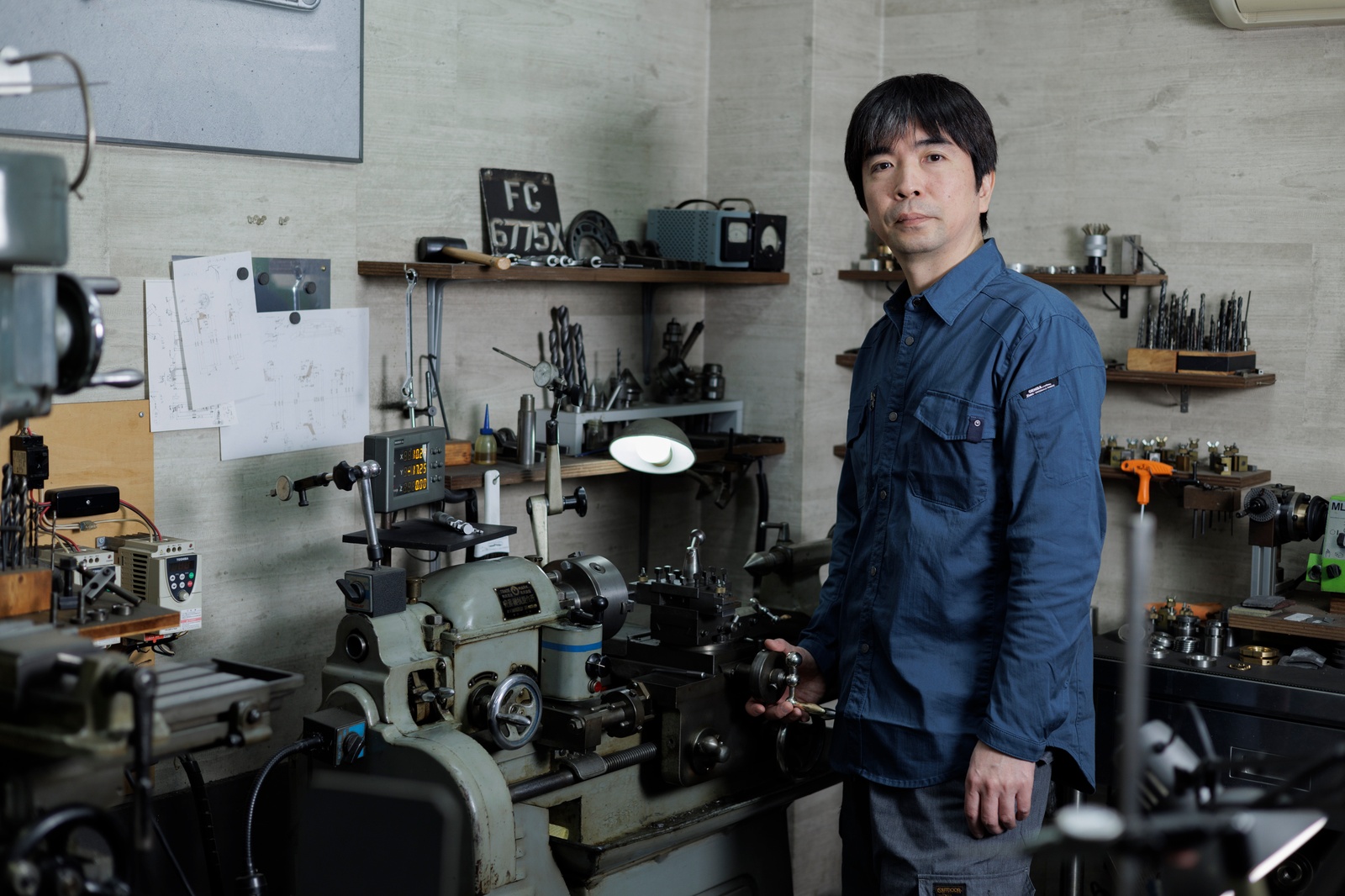
And yet the secret to Otsuka Lotec’s success isn’t their build quality or tempting price tag – though both of those are true – but the man behind them. That’s because when Jiro Katayama bought his first lathe in the early 2000s via an online auction, he didn’t have a plan. What he did have was a unique eye for industrial design.
Otsuka Lotec is a Japanese independent watch brand founded in 2012 by industrial designer Jiro Katayama in the Otsuka neighbourhood of Tokyo. Katayama produces fewer than 200 watches per year, each drawing from his automotive design background. Since 2022, the brand has operated under the umbrella of Precision Watch Tokyo, founded by Hajime Asaoka of Kurono Tokyo.
Who Is Jiro Katayama?
There are plenty of watch brands that come from an industrial design perspective. We interviewed Unimatic co-founder Giovanni Morro about just that subject. But where most start with the watch and work out, Katayama started in the industrial before distilling his ideas into a watch. And taking a glance at Otsuka Lotec’s collection, you’ve probably already guessed where the majority of that experience came from: cars.
Straight out of design school, Katayama began working in the automotive industry before striking out as a freelance designer, working on household devices, helmets and of course, cars. So, when he impulse bought that aforementioned lathe, it was to see whether he could build something in the automotive field. He quickly discovered that a small lathe wasn’t great for car parts and so he pivoted. What about a watch case?
The Otsuka Lotec Story: From Kitchen Lathe to Microbrand Sensation
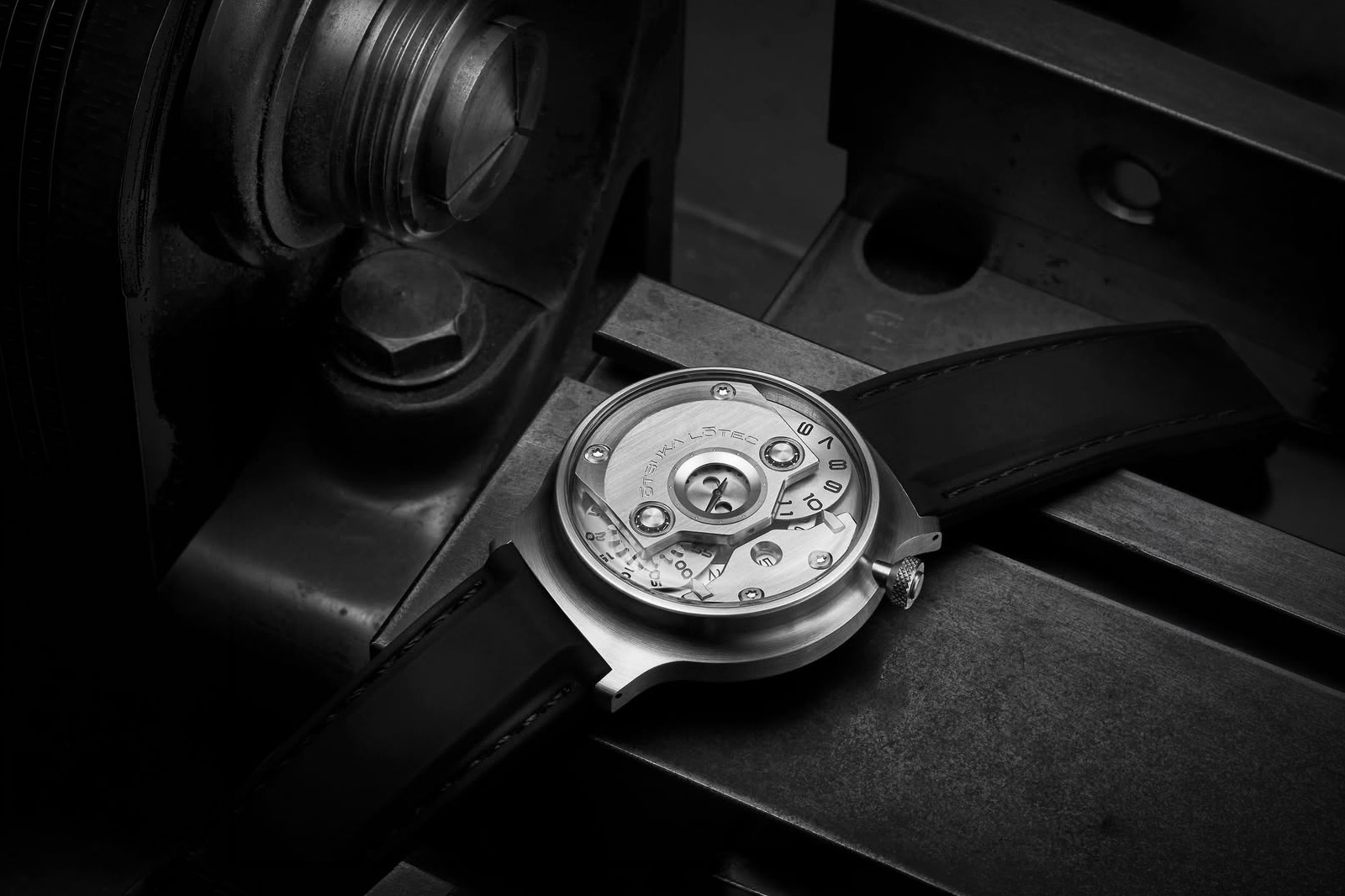
This realisation struck back in 2008 and it wasn’t until 2012 that Katayama was ready to sell his creations under the name Otsuka Lotec – Otsuka is the Tokyo neighbourhood in which the brand is based, Lotec is a stand-in for Low-Tech. The debut watch, the No. 5, summed up Katayama’s unique approach to watchmaking and what Otsuka Lotec could be.
The No. 5 used a quirky twist on the regulator display using two discs for hours and minutes and a central seconds hand, with a date window at three o’clock and a two o’clock crown. The watch is all bare, brushed metal, visible screws and the kind of industrial, machined look that suggests it was built by a single person in their kitchen. Which of course, it was.
Early Otsuka Lotec pieces are next to impossible to find these days. That’s partly because Katayama’s eye for cool, car-adjacent designs were instantly popular, partly because at this point, he was building just 15 watches a year. It was more a fun side project than it was a proper brand.
Hajime Asaoka and Precision Watch Tokyo: The Partnership That Changed Everything

That was until 2022 when one of the most important figures in Japanese watchmaking got involved: Hajime Asaoka. Asaoka isn’t just a celebrated independent watchmaker; he’s the founder of the intensely popular Kurono Tokyo, which distil his specific horological style into much more accessible, Art Deco-influenced dress watches under the umbrella of Precision Watch Tokyo. When one of his staff bought themselves an Otsuka Lotec, Asaoka immediately saw the potential – and quickly offered to support the microbrand with the resources of PWT.
This has allowed Otsuka Lotec to scale up like never before. Katayama still prototypes designs at his home workshop, but the production takes place at Bunkyo-ku, a 15-minute cycle away. It’s still next-to-impossible to get hold of one (the brand produces fewer than 200 watches a year), but with that shift, the brand’s designs have become more ambitious and more accomplished than ever before.
Otsuka Lotec No. 8: Design, Specs & What It’s Like to Wear
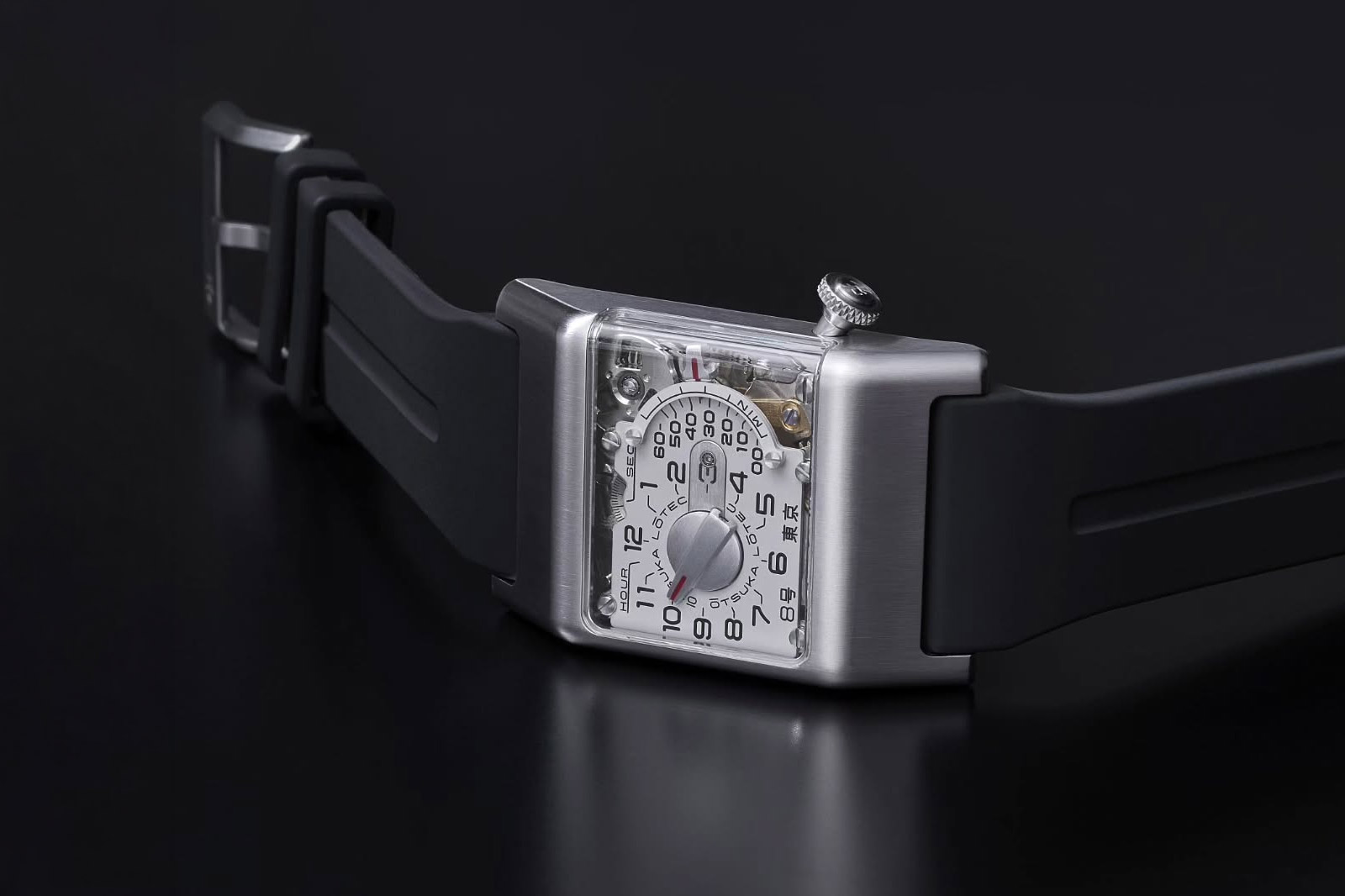
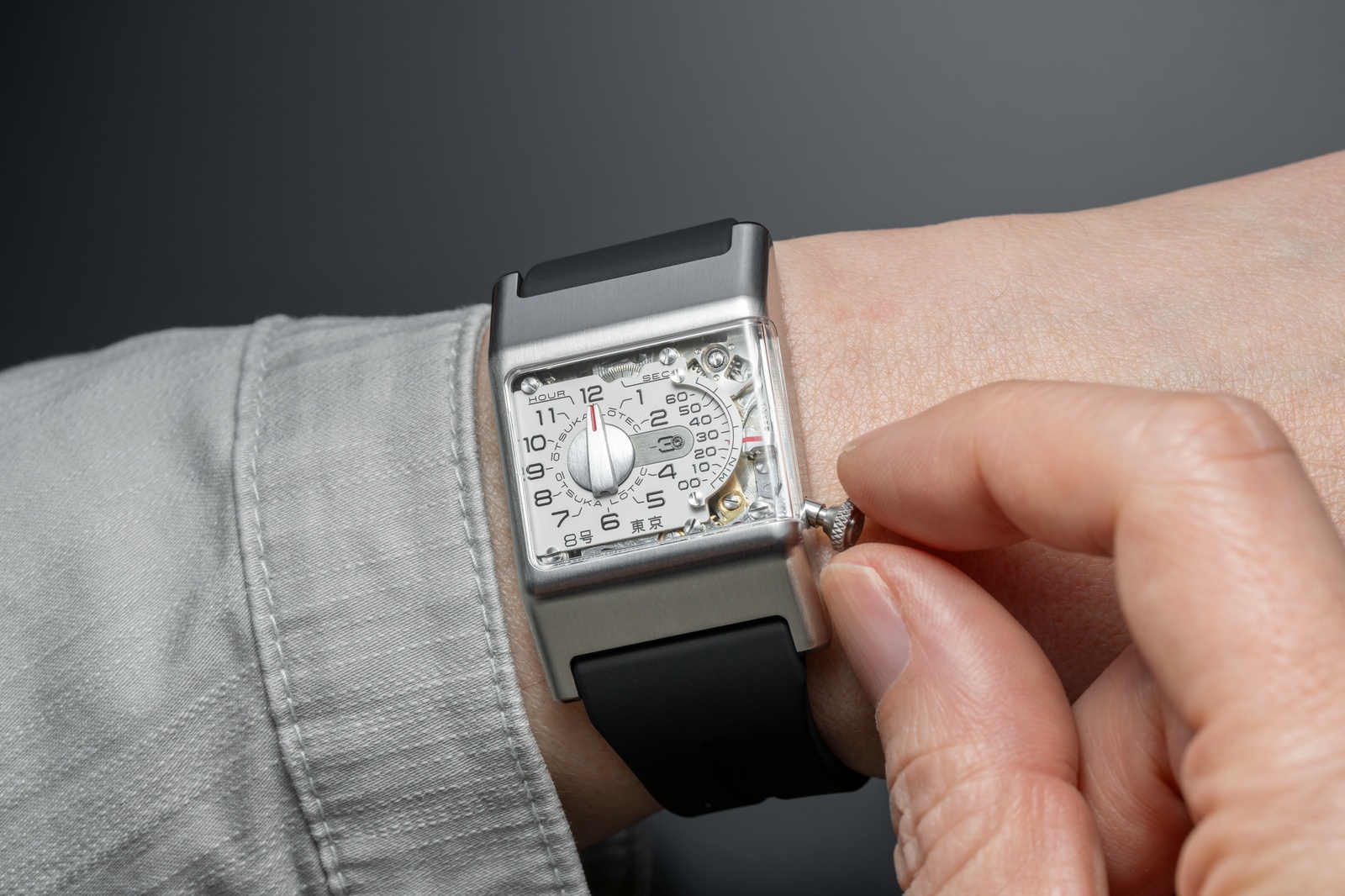
And yes, more accessible too – though the new No. 8 still is not a watch you can get easily. Because even 14 years on, Otsuka Lotec watches are like nothing else. The 31mm x 48mm case rises from the lugs to 10.8mm thick at the crystal, which itself is asymmetrical, curving around the right-hand edge of the watch. It’s a straight-grained, overtly machined watch that would be at home in a dashboard, which is where the dial takes a lot of its design cues. Retrograde minutes are read off a rev counter-style scale at three o’clock, while the hours use a hand that imitates an electrical switch. Seconds are almost hidden on a wheel at 12 o’clock. Those indexes are on a control panel of a dial made from aluminium, with the rest of the dial left open to the mechanism underneath.
That underneath is the Miyota 90S5 automatic movement with an in-house developed module controlling the functions. With the extra power needs of a retrograde indicator, the power reserve stays at a less-than-stellar 32-hours. But then, chronometric performance is not what you go to Otsuka Lotec for.
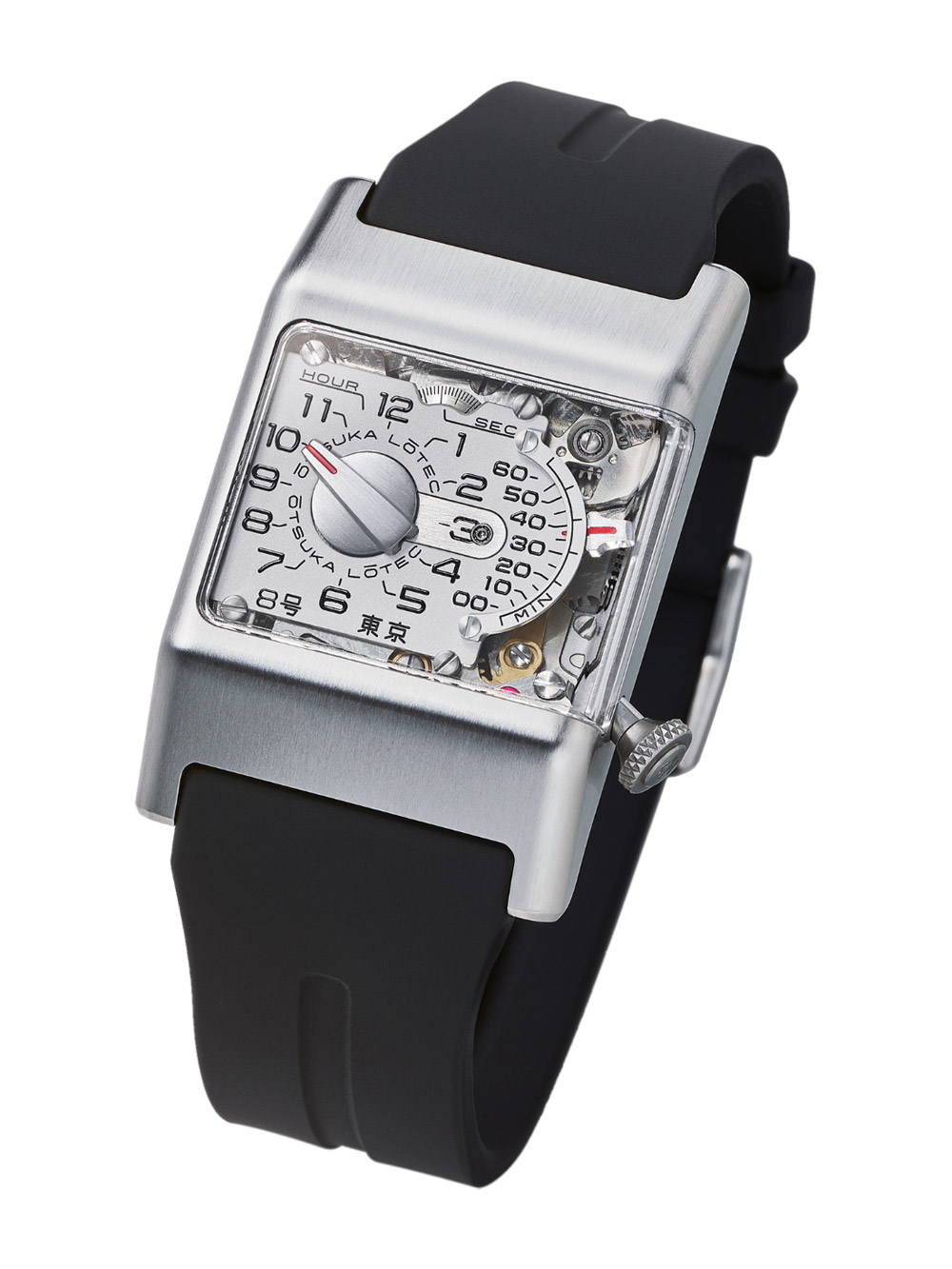
Priced at JPY 990,000 – approximately £4,700 – the Otsuka Lotec No. 8 represents the pinnacle of microbrand watchmaking: small in scale, big in design, and industrial in a way that sits in dramatic counterpoint to traditional watchmaking. Katayama-san has come a long way from an impulse-bought lathe in his kitchen – but the idiosyncratic, automotive-obsessed style of Otsuka Lotec has not. Just good luck getting one.
Price and Specs:
More details at Otsuka Lotec.