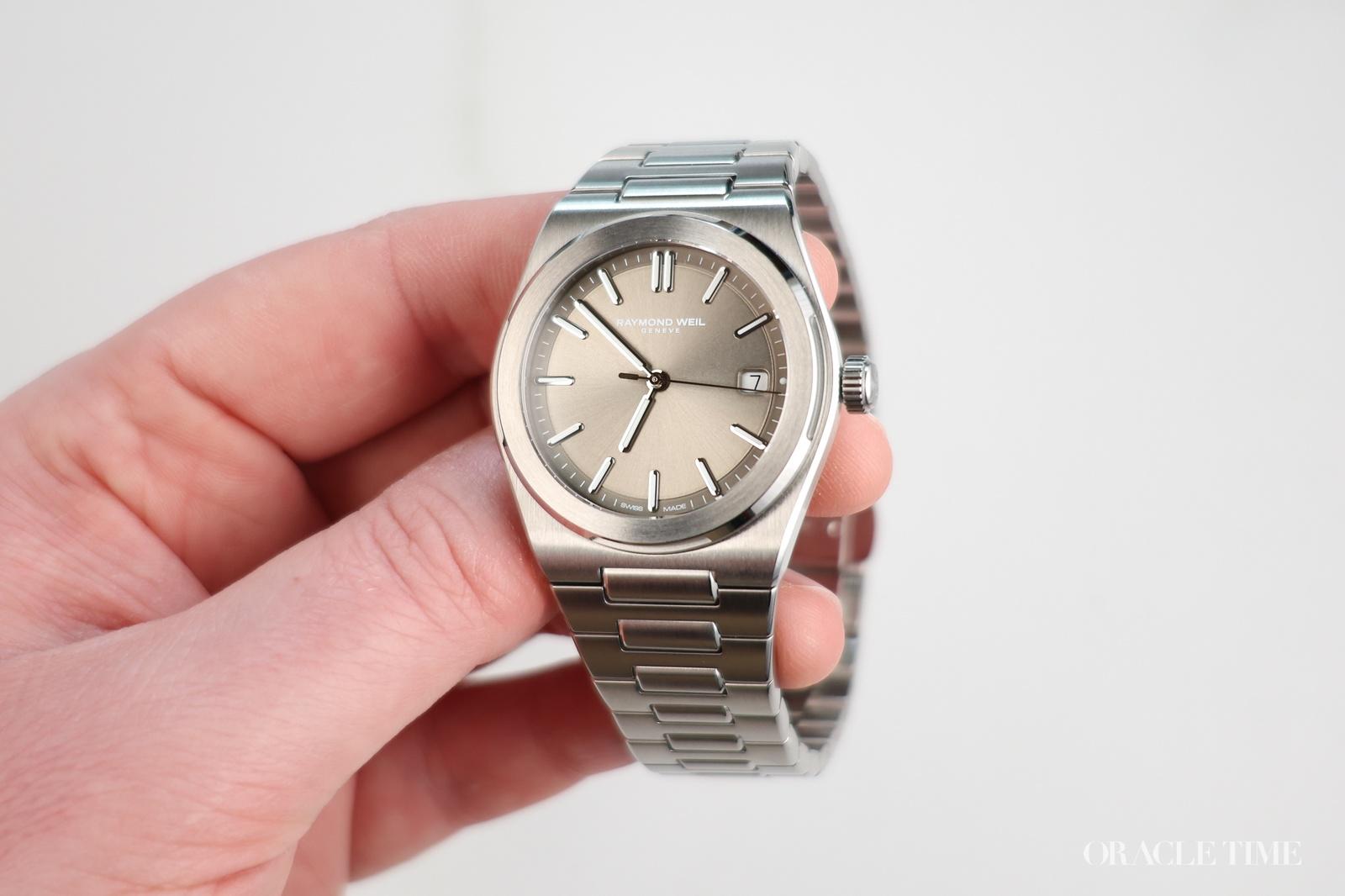
Over the last few years, Raymond Weil have hit upon a winning formula: vintage. The Millesime, Toccata, even the Freelancer Annual Calendar, they all play up that 1950s and ’60s flavour. However, the new Raymond Weil A.R.T Ref. 1000 goes a very different route: Raymond Weil’s first integrated bracelet sports watch.
If you look at it and immediately think of the great integrated sports watches of the 1970s, that’s essentially the point. Raymond Weil aren’t revolutionising the paradigm; they’re working within a very familiar canon. That means the integrated lugs immediately create that signature silhouette, framing the bezel and dial beautifully, then flowing straight into the bracelet without a step or a gap. It’s not a huge aesthetic departure from your Royal Oaks, Nautili, or especially the IWC Ingenieur.
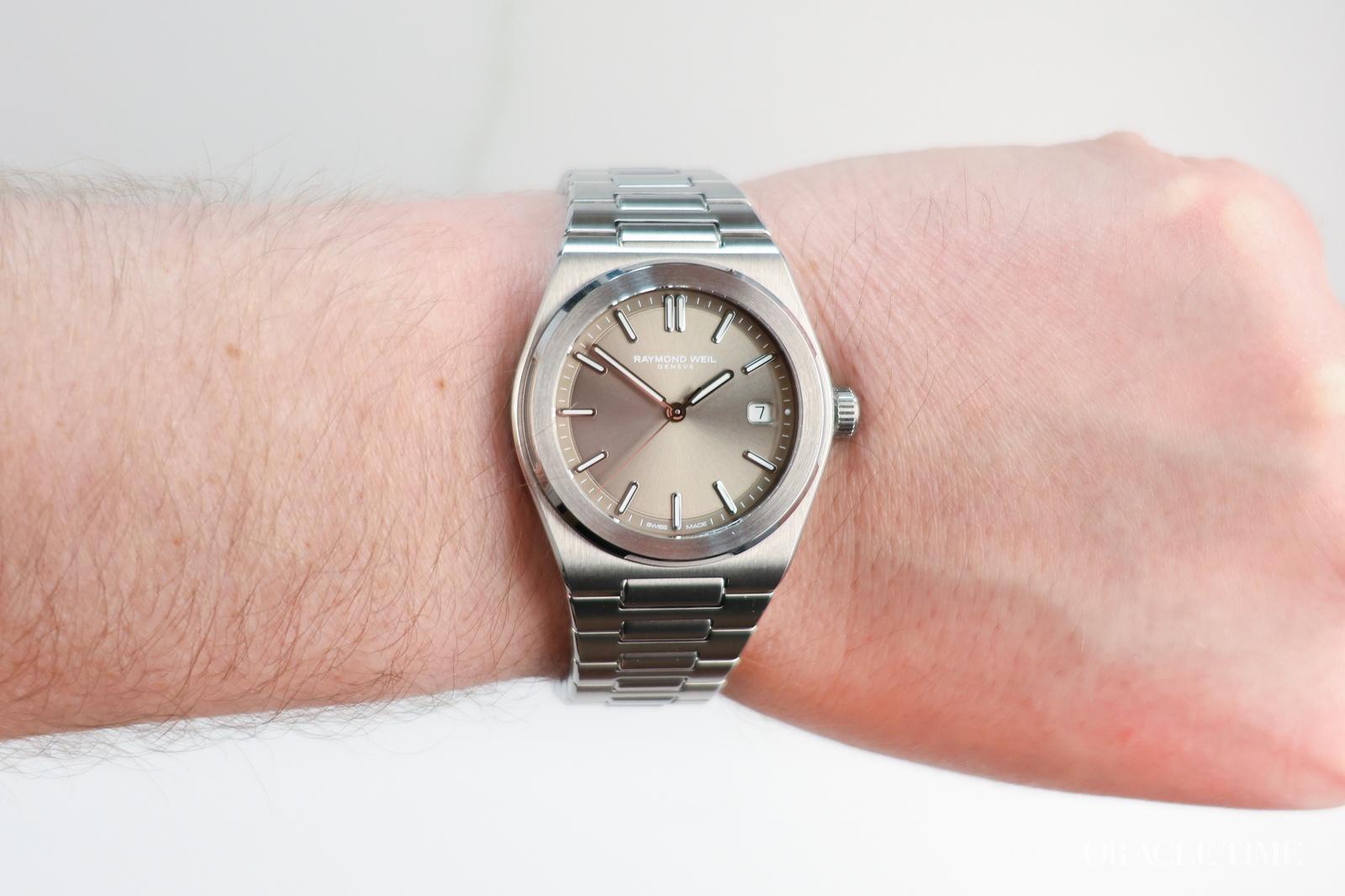
The difference is that those Gerald Genta-designed references will set you back anywhere from £15,000; the A.R.T. brings that same seamless case-to-bracelet flow for under £2,000.
At 38mm and just under 10mm thick, it wears closer to a dress piece than a rugged tool watch. If there’s one word that sums it up, it’s versatile. This is a watch that you can wear hiking or having a beer. It’s not quite gala dinner levels of formal and you wouldn’t dive with it, but at 100m water resistance and a solid stainless steel case, you can wear it anywhere else.
As with the best integrated bracelet sports watches, the case shape is emphasised by alternating brushed and polished surfaces. It’s nothing particularly new but it’s immaculately done and not the kind of thing you often see at this price point – at least to this degree of confidence. Get it under the light and the finishing really comes into its own.
The integrated H-link bracelet carries that same contrast of textures all the way down to the clasp and paired with the goldilocks sizing wears very comfortably on the wrist. The lugs and bracelet follow the curve of the wrist and it’s not big enough to be cumbersome.
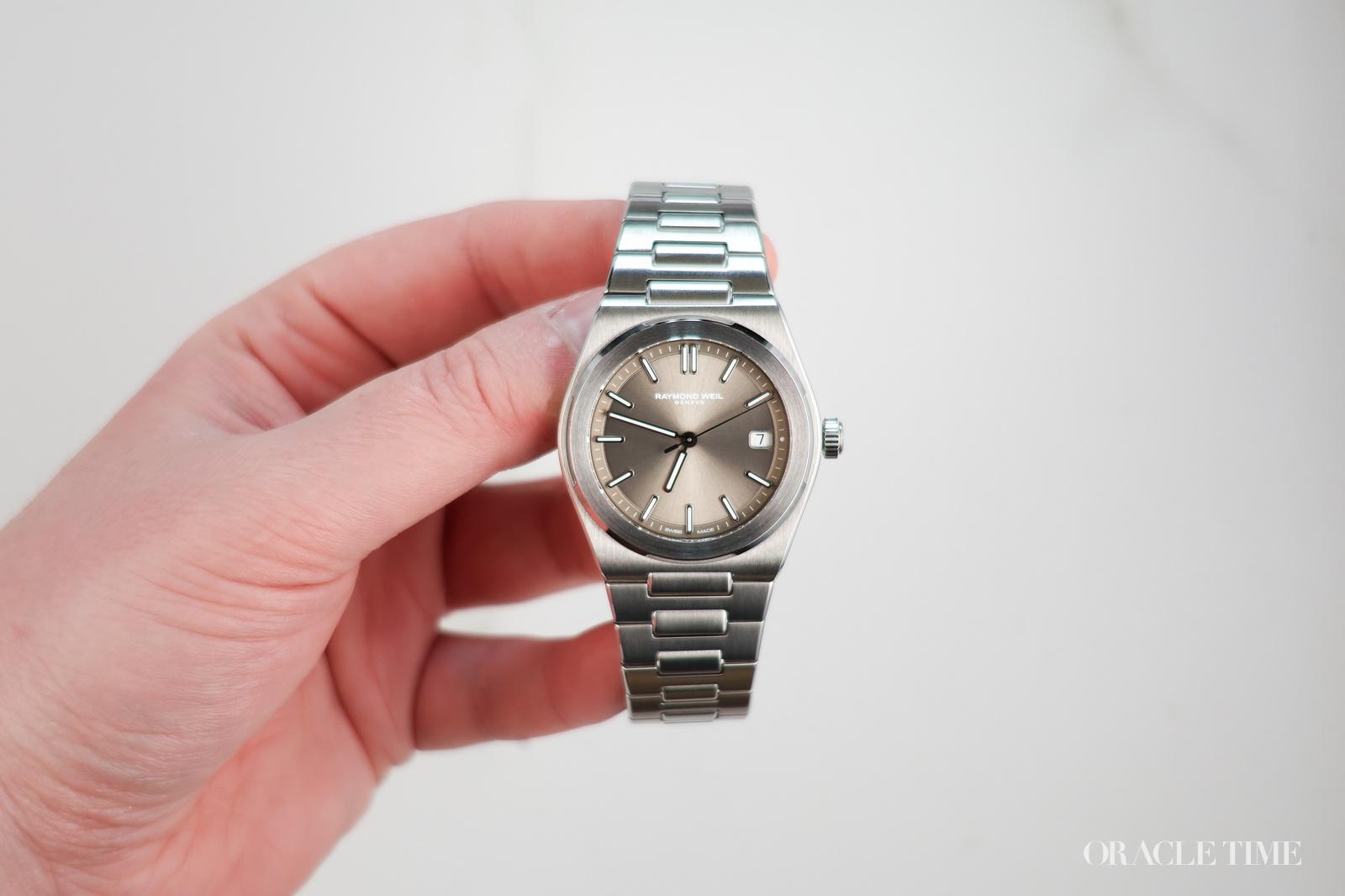
The dial runs a dual finish, a sunray-brushed centre paired with an azure minute track that adds a ring of texture. It must have been tempting to opt for something simpler and sportier, but this really leans into that cross-category versatility – and makes it a lot more interesting to look at. The sage grey is a genuinely interesting colour, muted enough for everyday wear but with more depth than a standard grey dial thanks to its gentle hint of green.
The indices and hands are filled with green SuperLumiNova so legibility is never an issue, and the chamfered date window at three o’clock adds just enough detail without cluttering things up. The dial also comes in metallic blue and graphite if you’re finding the sage a little too pale, each available on either a steel or bi-colour bracelet. I’d be curious to see both in person, the blue in particular could be very interesting, though the sage will take some beating.
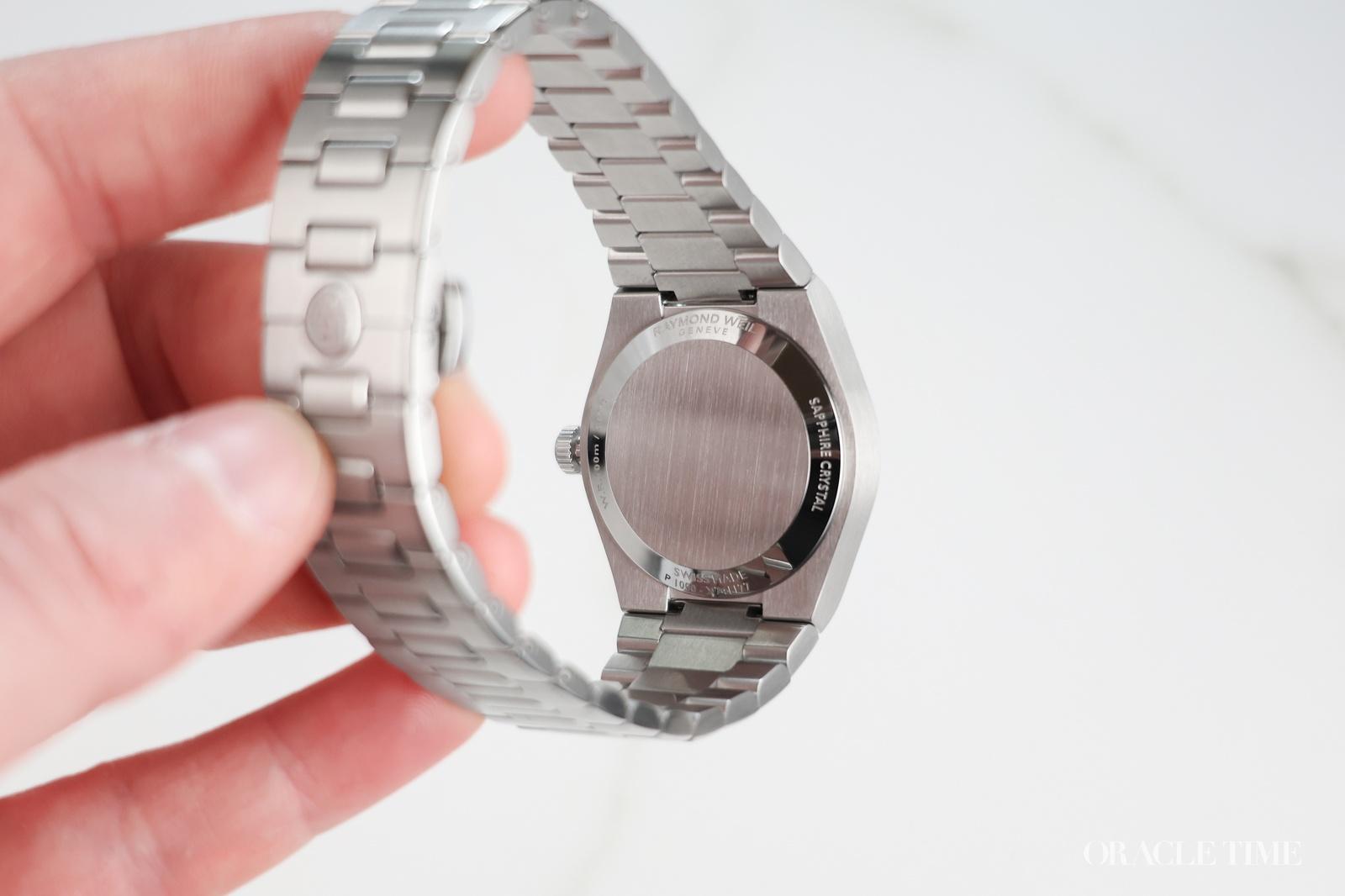
Inside the Raymond Weil A.R.T Ref. 1000 sits a self-winding mechanical automatic movement with a 41-hour power reserve. Hours, minutes, seconds and date, nothing more. At time of writing, we don’t have the exact specs, but I expect it’s the same RW4420 as in the Freelancer Date. That means a 41-hour power reserve and some rather nice finishing hidden behind the solid caseback.
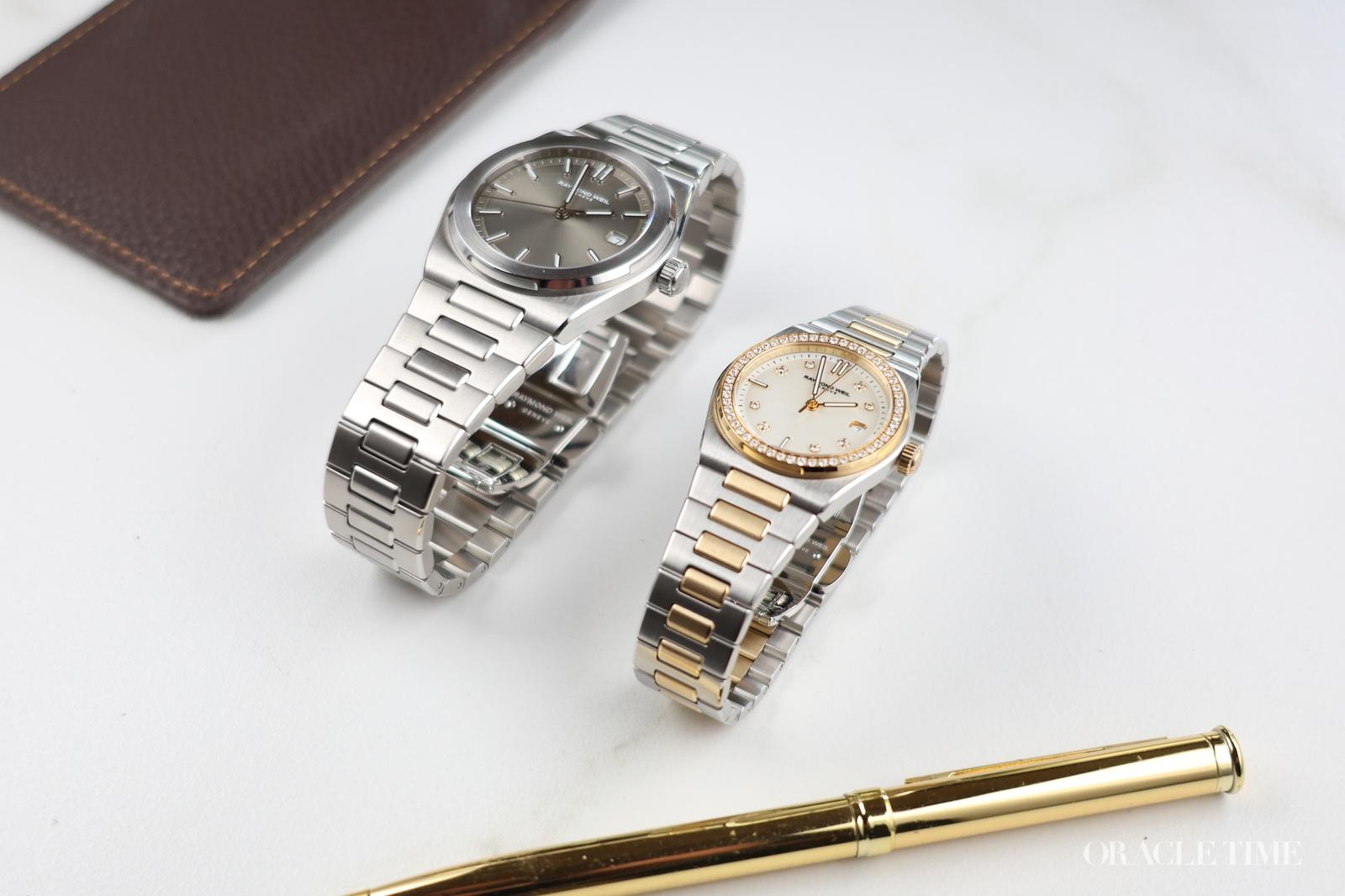
It’s worth noting that there’s also a quartz version of the A.R.T that measures 30mm across. You don’t need the mother-of-pearl or diamond-set bezels to realise this is a women’s collection. At £1,495 to start it’s nicer to have the option, but when £400 more gets you a bigger watch with an automatic movement, it’s not a tough choice.
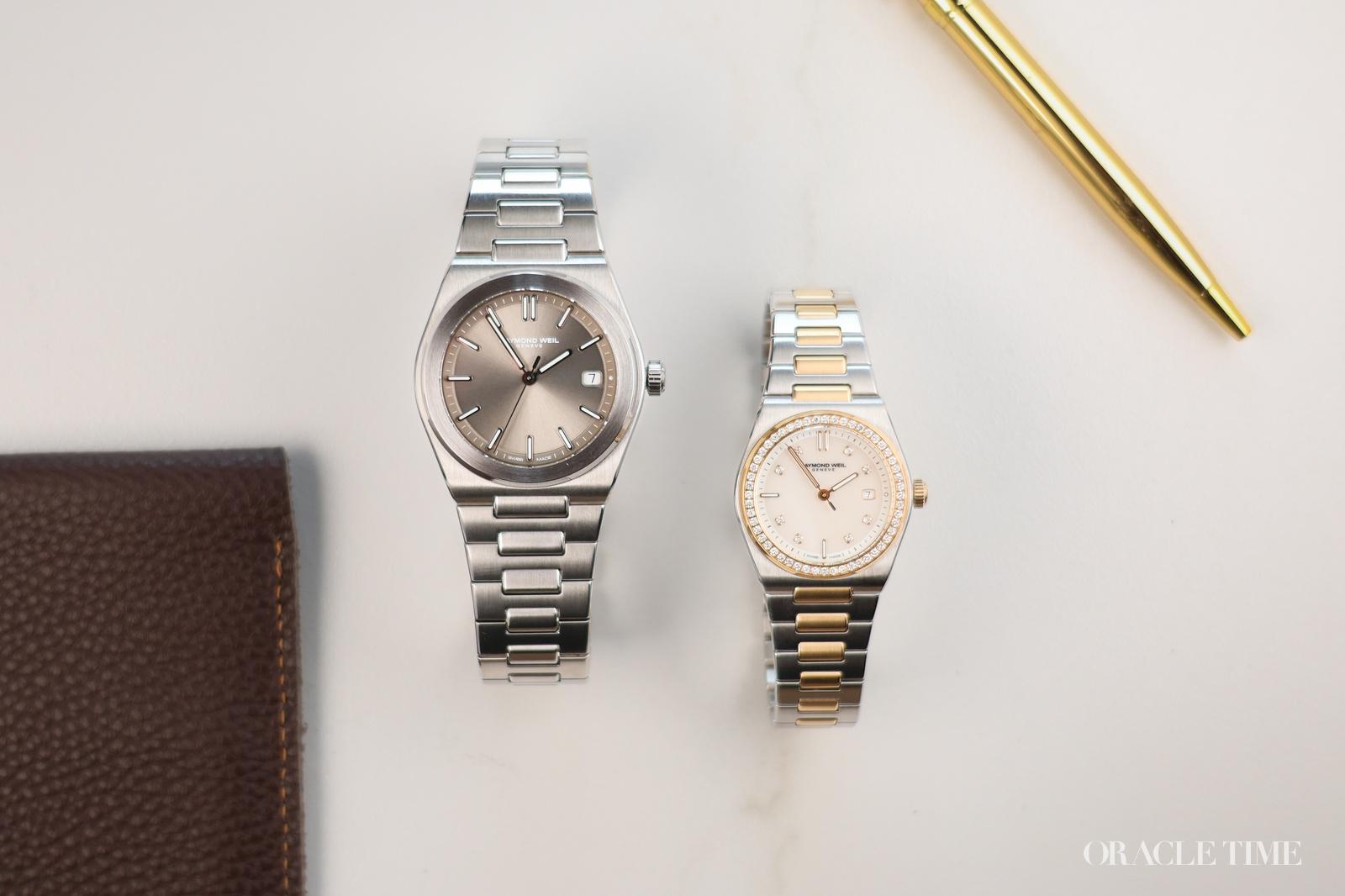
As you might be able to work out, that makes the automatic version £1,895. That’s exactly where it should be compared to Raymond Weil’s other watches. The Millesime sits just below at £1,750 for the central seconds and £100 less than the larger Freelancer date. It’s a really competitive price for what you’re getting.
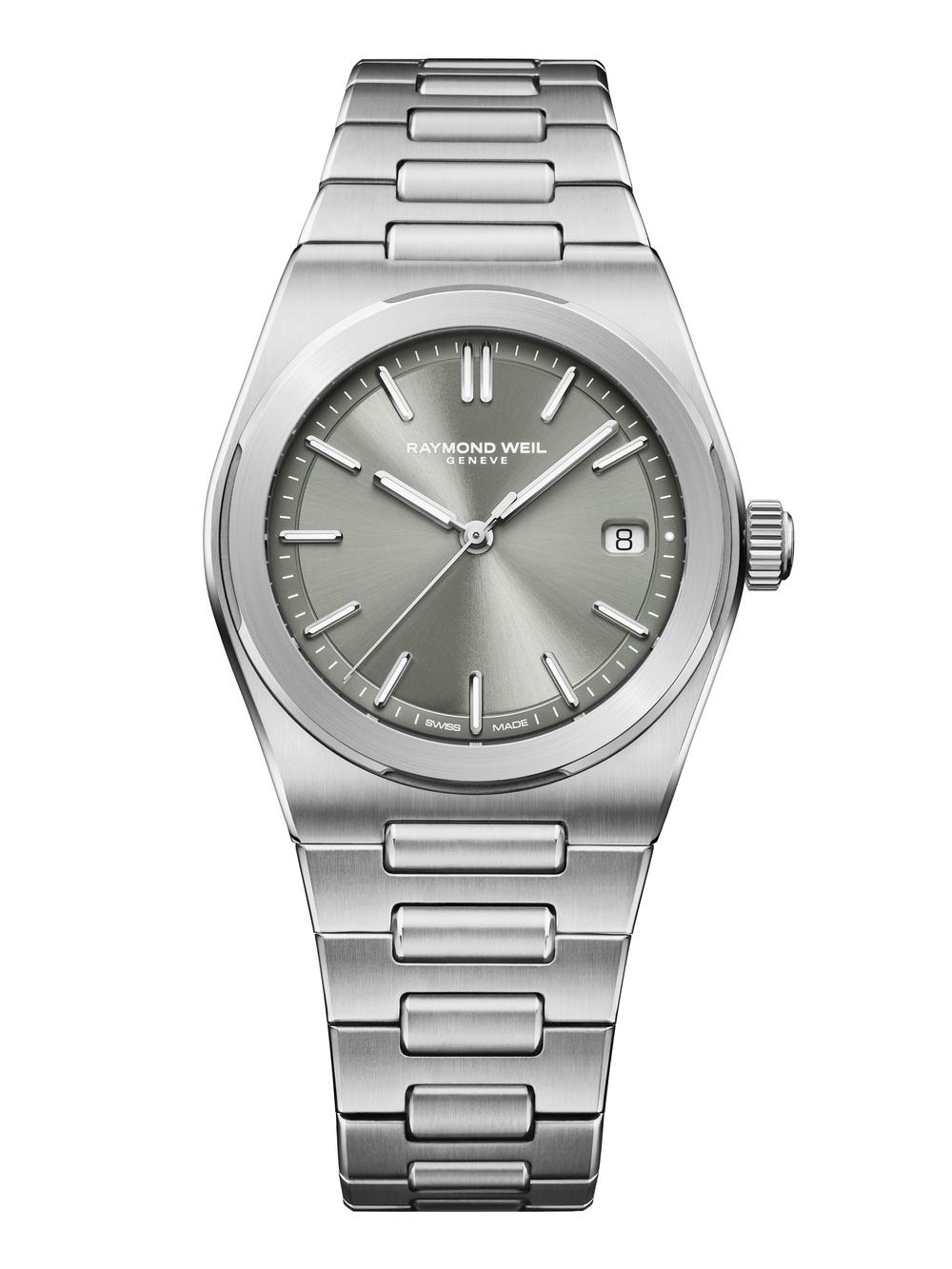
The Raymond Weil A.R.T Ref. 1000 is a genuinely compelling watch. The integrated bracelet, the finishing, the dial, it all just works. It’s not going to set the world on fire and hews close to the aesthetic conventions of the big Genta designs, but it does so very well. Between this and the Toccata drawing heavily from the Patek Philippe Golden Ellipse though, I just hope Raymond Weil don’t get stuck in a cycle of imitation.
Price and Specs:
More details at Raymond Weil.


Lovely simple design. The date window is cool but the white date wheel is a crime!