“Independence is what I want to do, it is what I dream.” Christophe Musy says with a smile, as he leans across a workbench scattered with titanium components just cooling from the CNC. There is no rehearsed performance in Christophe’s opening statement. It is simply a principle he has been operating under for long enough that articulating it has become automatic.
This visit to the Swiss countryside, in the Broye valley close to Fribourg, happened a few weeks before Watches & Wonders, when Mauron Musy also divulged what was to come. The game-changing MU09 NODE prototype in all its compact splendour isn’t in the room, but it’s close by. The prevailing mood is coloured by an unmistakable sense of momentum, the kind you feel in a small workshop when something important is about to leave it, similar to what I’ve seen in the small-brand sports car industry. The converted building hums with the particular quiet of skilled work, split between the first-floor showroom and the watchmakers’ atelier, and specialised machining downstairs.

Mauron Musy occupies an interesting position in Swiss independent watchmaking, founded in 2013 by Christophe Musy and workshop machining guru Eric Mauron. The brand itself started with an idea Christophe brought to Eric Mauron and has reached a point where genuine vertical integration meets a genuinely individual creative vision. Initially based on an innovative case design with an instantly recognisable shape and no gaskets, this DNA is remarkably strong in the two collections in my shots. These are versions of a collaborative effort with renowned Italian architect Arturo Tedeschi, the MU05 Architect, and the smaller MU06 Unix. Both show off the trademark 30+ part case, and the latter in 41mm looks distinctly polarising on paper. The wild contrast between industrial chic and star-infused dial feels confusing in press shots, but in real life, it comes across with big charm. It is a tech-forward take on what a dressed-up contrast with a tough, engineered case can bring to the wrist, and the look and feel is as beguiling as the nO-ring concept is innovative.
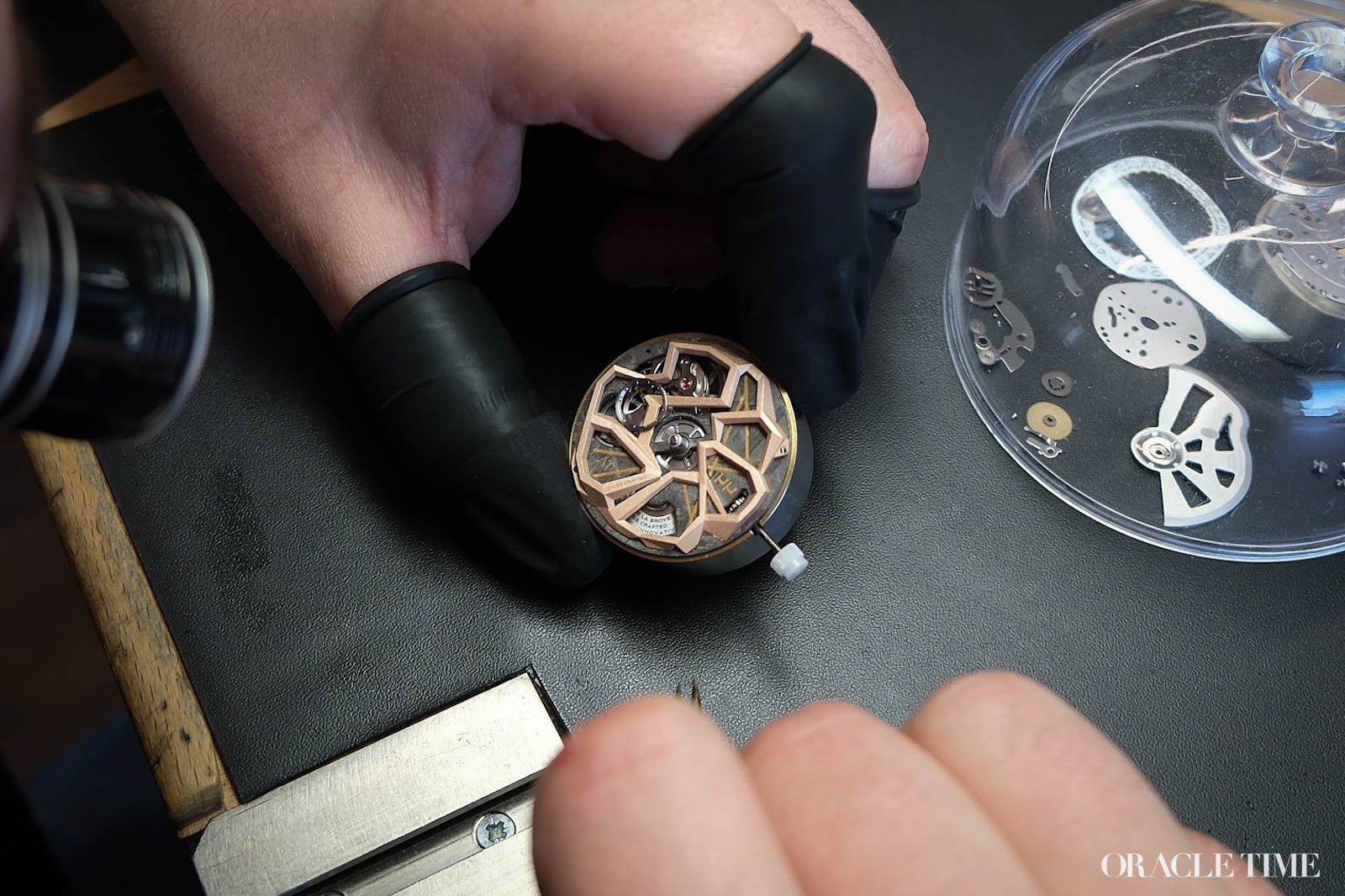
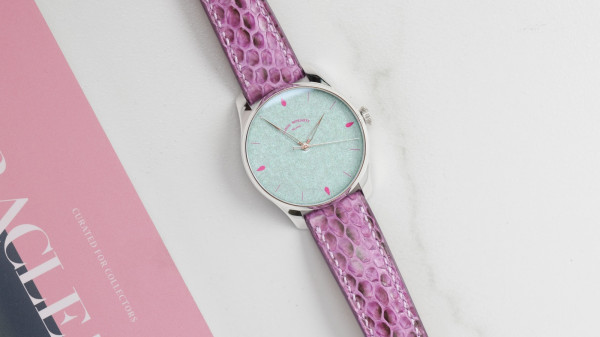
The two versions of the MU05 Architect were designed with the help of Milanese architect Arturo Tedeschi and feel instinctively right, embracing and delving into layers of brutalist style with an open-worked dial unlike any other. The shapes feel natural within the strong, clamped-together case, and the fiercely angular shape-play within the dial has the acute angle changes you might find in a Zaha Hadid building. It speaks of digital design rather than horological sketch books, refreshingly sans homage and all the better for it. It comes in a monochrome version, the MU05-106, or the fresh blend of solid rose gold and summer turquoise in the Golden Cosmos and Golden Oasis versions, the latter shown here. The Architect collection exhibits the uncompromising width of 44mm, but thanks to a short lug stretch and an inherently ergonomic case rear, it sits light and comfortable, making me reconsider my own taste for reduced diameters.

Mauron Musy produces most of its own components, sourcing external parts within a 60km radius, which aligns with the nomenclature Swiss Crafted rather than the oft-compromised term Swiss Made. The brand develops its own movements in-house and accepts private commissions for unique pieces from clients. As with many independents, they often deliver pieces to collectors who have already acquired the bucket list grail watches and are looking for somewhere further to go, and in more modern vein. “They already have AP, they have the big brands,” Musy says of his typical client, “and they want to become more experienced in the watch industry and buy independently.” It is a profile that maps onto a broader shift in collecting culture that has been building for at least a decade and shows no real sign of reversing. “For every collector, the first big-budget watch will be Rolex or Patek. And when you become a real collector, you go independent. Then more independent. Because it is the most interesting watches in the world.”
There is a category he is particularly fond of, though: the collector who insists he is not a collector. “I have 20 pieces, but I am not a collector, I just like the watches.”, Christophe often hears. He finds this distinction genuinely amusing. Mauron Musy, it turns out, has a lot of those clients.


The in-house MM03 calibre, which sits at the heart of the NODE, was the natural endpoint of a particular logic applied inward. Developing one’s own movement is often framed as a prestige marker in watchmaking. At Mauron Musy, the reasoning is more practical. “We really want to control the quality of our components, of our product,” Musy explains. Private commissions demand it, as farming out movement work to partners introduces complexity and timeframe obstacles. “If we make unique pieces, we cannot have a lot of partners because it is complicated to organise,” Musy says. The decision to go more vertical reads less like a calculated strategic move and more like the only honest answer to a problem the brand had set itself.
What that process produced, and what I only fully understood when I met them again a few weeks later in Geneva, is the NODE, which I was now allowed to see. At the Hamlet Hotel in Geneva’s Old Town, during Watches & Wonders, the NODE’s titanium bracelet curves slightly off the edge of the tray. In person it resolves differently than the press material suggests, and there is a reason it became one of my fair (well, off-site) favourites: The Grade 5 titanium is warmer than it photographs, the tapering integrated bracelet hugging the wrist in a way that makes 41mm feel considered rather than conspicuous.
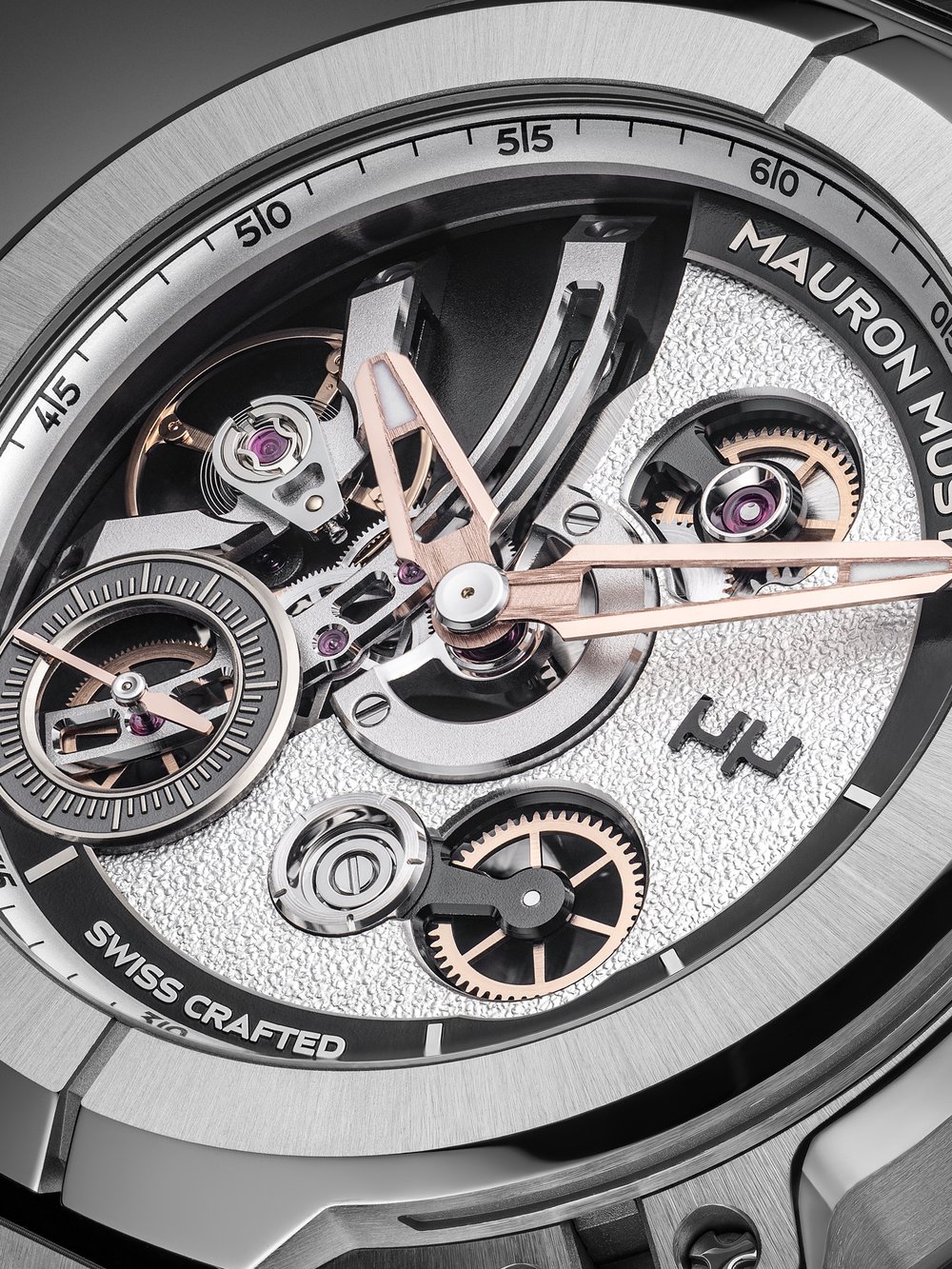
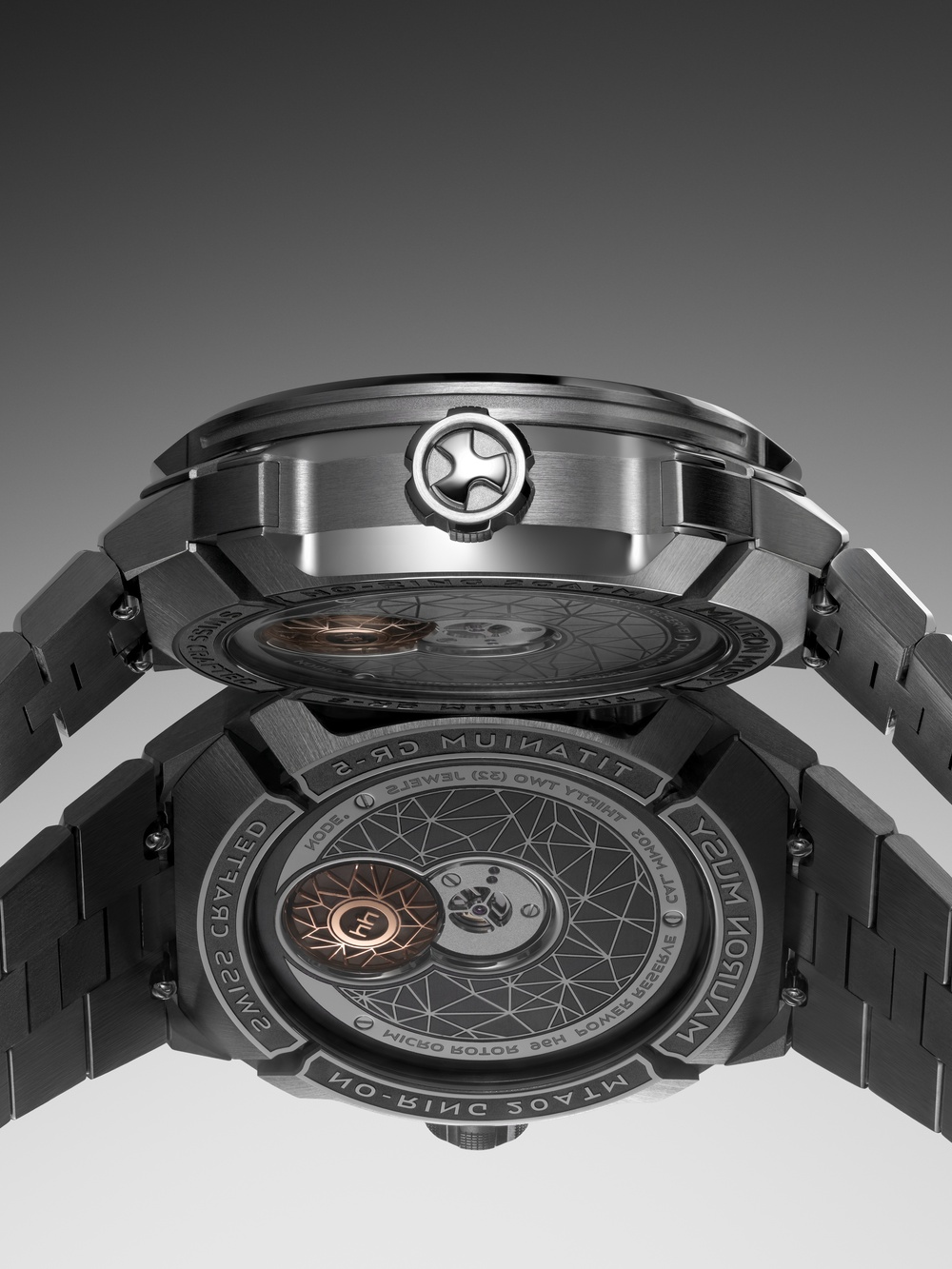
The tungsten micro-rotor, barely visible through the movement architecture, spins with a speed that still reads as slightly theatrical, in a very good way. Industrial chic might be a good term and to me personally it renews faith in brands pursuing the still-hot trend of integrated bracelets. For Mauron Musy and the MU09 NODE it is simply a redefined statement of the strong case architecture that defines the brand, with years of development leading to a bracelet that feels both new and a natural fit.
The creative process, Musy admits, begins in the least organised way possible. “The idea comes always in the night.” He says this matter-of-factly, without romanticising it. The nighttime ideas get stress-tested in daylight, discussed with the team, and rebuilt into better solutions with fewer compromises. “What we can dream, we need to find a solution to do.” It is a simple philosophy, but it describes a workshop that has learned not to treat ambition as a constraint. “No barriers,” he says, and emphasises that the barriers get engineered away.
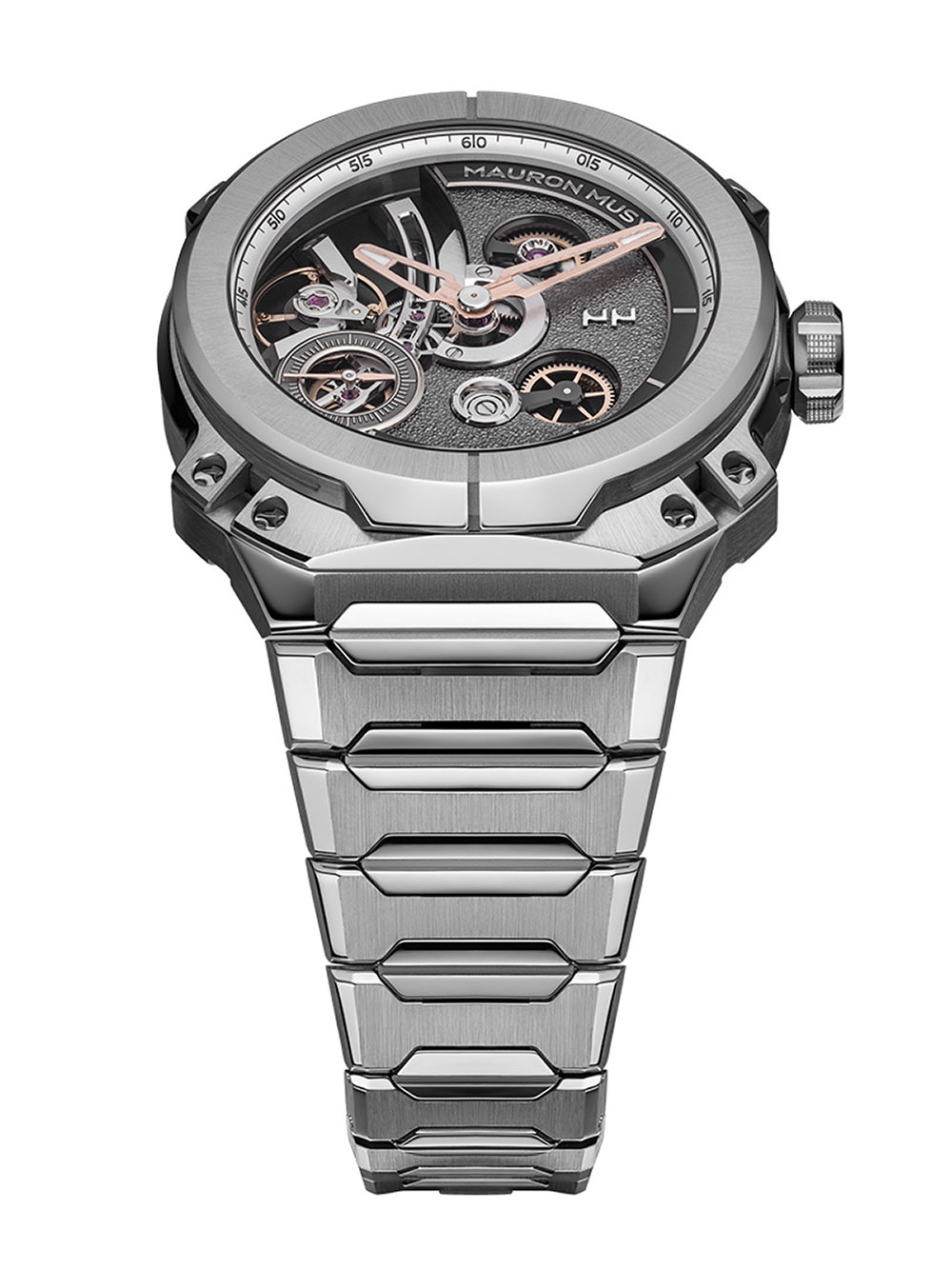
Musy had described the MU09 NODE as the beginning of a new era when we spoke at the Manufacture. At the time, the framing sounded like a product launch phrase, even if I was seriously impressed with the compact comfort of the 3D-printed prototype. In the hotel room, holding the watch, it felt more like an accurate engineering statement. “This calibre will be the motor of another complication,” he told me, hinting at something he described only as “another crazy complication.” The Calibre MM03 is not the destination. It is the infrastructure, to become a platform on which Mauron Musy will build whatever it can dream. For a brand this size, that is not a small ambition.
More details at Mauron Musy.