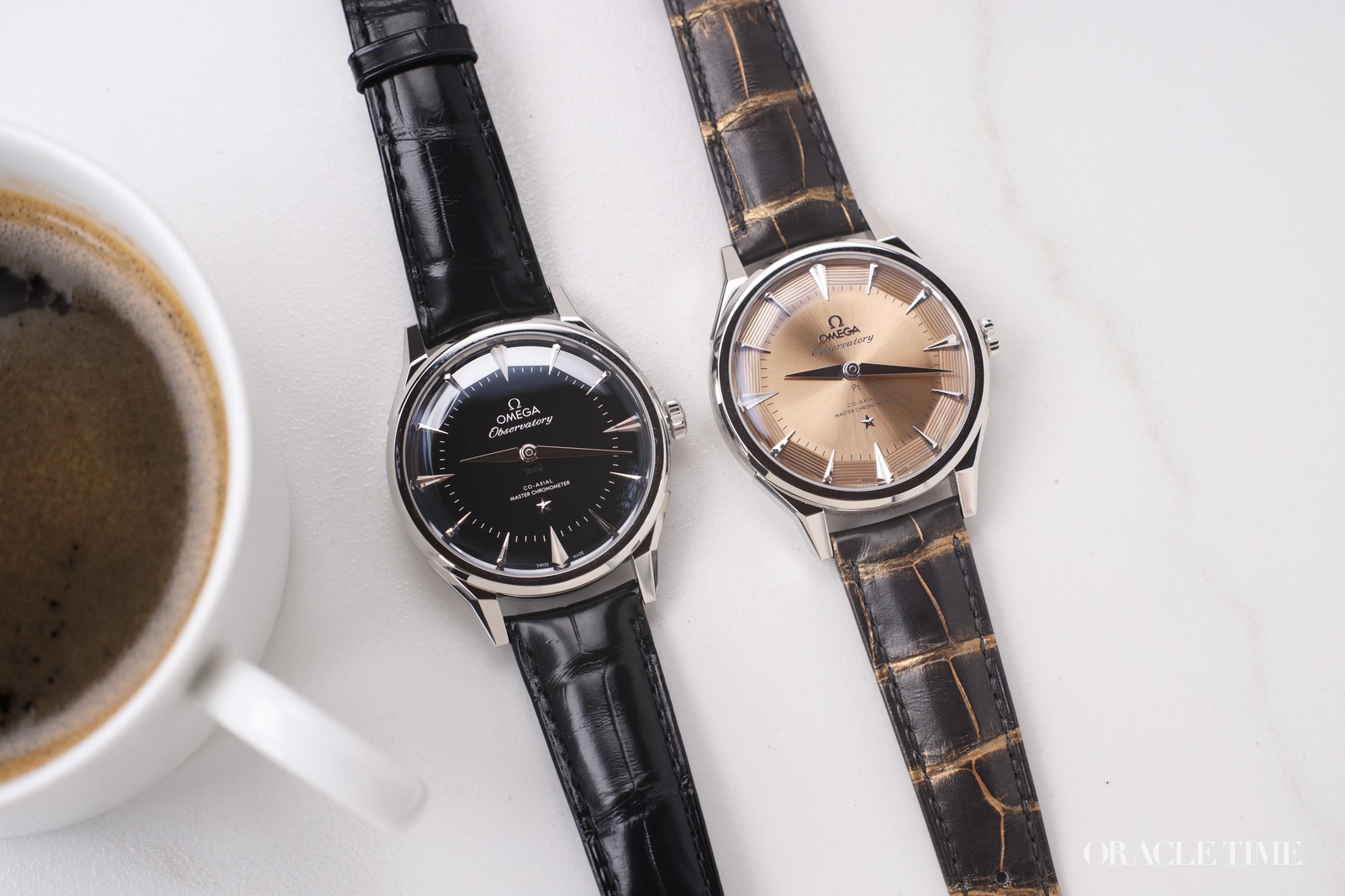
The 50s were, for me, the golden age of watch design. Disco Volante cases, pie-pan dials, there’s a good reason brands like Furlan Marri are still obsessed with the era. In fact, an Omega Constellation Pie-Pan is already on my personal vintage wishlist; they’re great value for money (like a lot of vintage Omega) and have the kind of 1950s quirkiness we rarely get these days outside of revival models. That is, except for the shiny new Constellation Observatory.
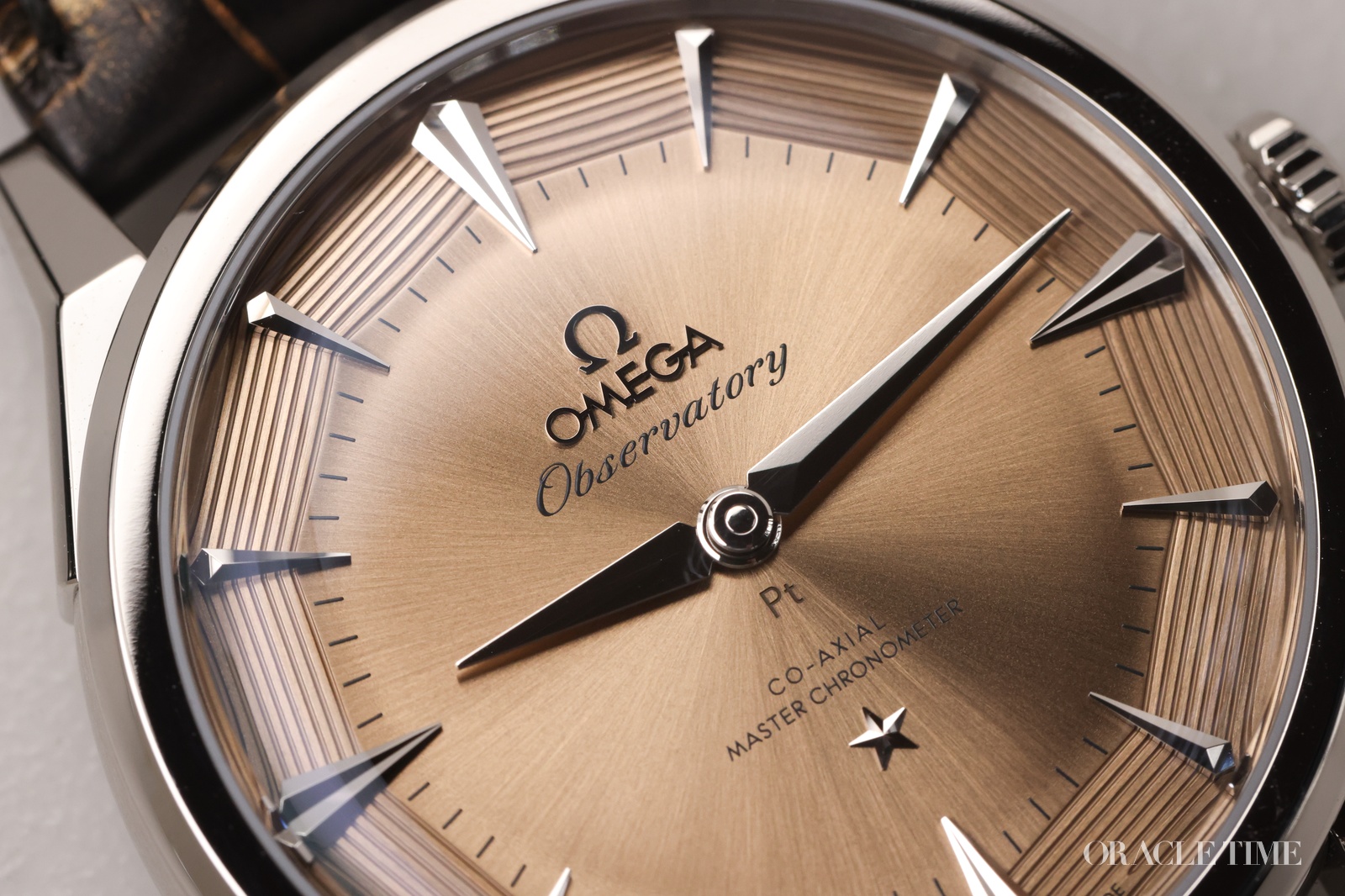
The Constellation Observatory reads like the greatest hits of vintage Constellation models. That means first and foremost the instantly recognisable pie-pan dial first launched in 1952, with its flat mid-dial and 12 distinctive facets. If there’s one design choice that’s become shorthand for vintage Omega, it’s this. That said, it’s worth noting that the pie-pan has been a part of Omega’s collection for a decade, ever since the 2015 launch of the Constellation Globemaster.
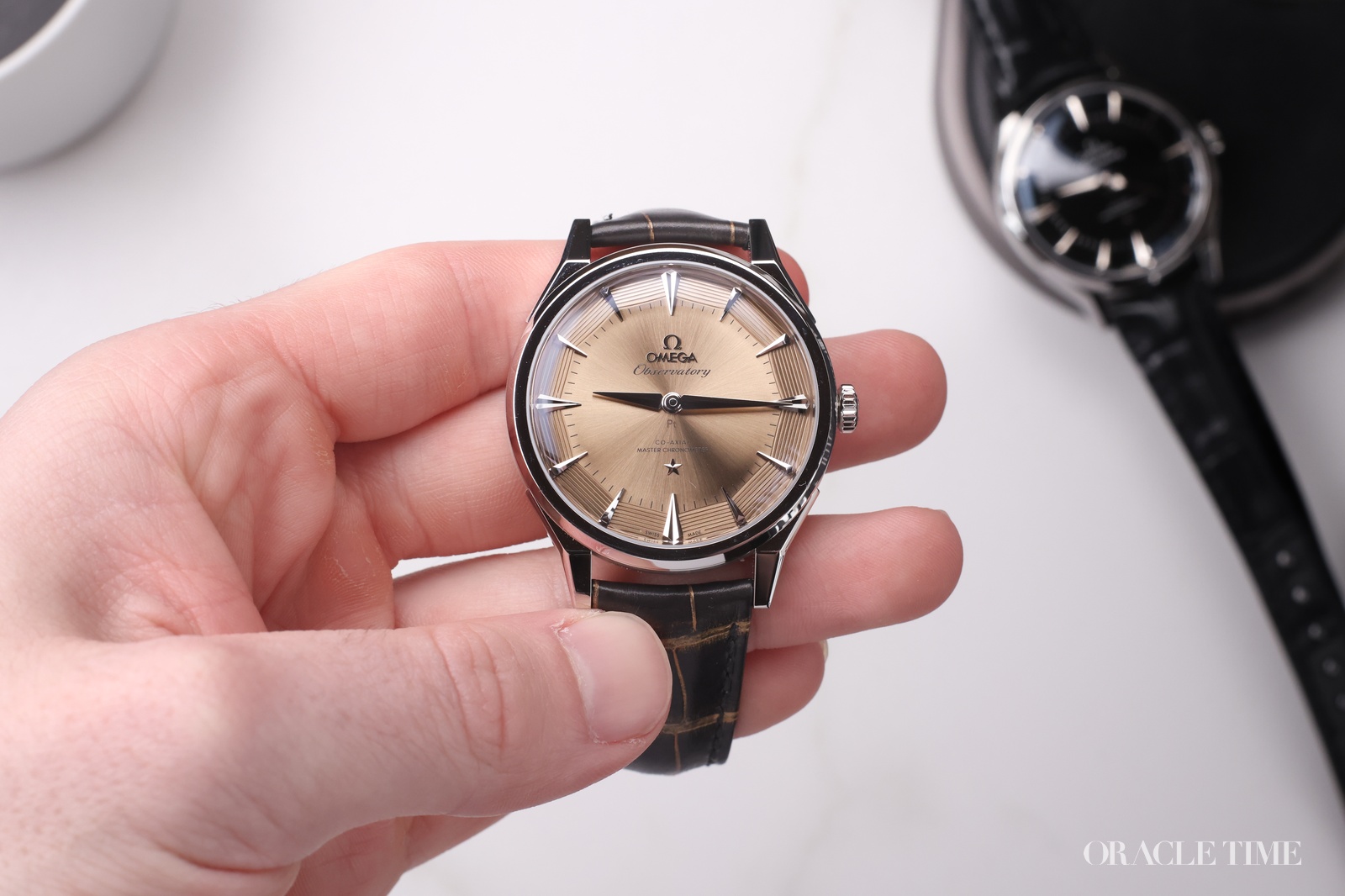
However, while that tragically overlooked collection modernises the key elements of vintage Constellations, the Observatory leans into them. Along with the signature pie-pan, it uses the guilloche facets originally introduced in 1953 and the funky dog-leg lugs from 1956. it even opts for a two-hand hours and minutes layout, ditching the seconds, drawn from an earlier 1948 model. In fact, the only thing here that doesn’t look and feel vintage is the sizing.
Original Constellation models measure 34mm – 35mm across, perfectly in keeping with the era but smaller than most modern watch lovers would go for. Honestly, after grabbing myself a vintage Tissot Rock Watch last year, I’m into the smaller sizes but I can see why larger is more appealing, and I have to admit that the 39.4mm diameter here really shows off that faceted dial to the full, however with a lug to lug of 47.20mm, it does wear a little larger than I’d expected, even with those short, faceted, dog-leg lugs and 12.2mm height.
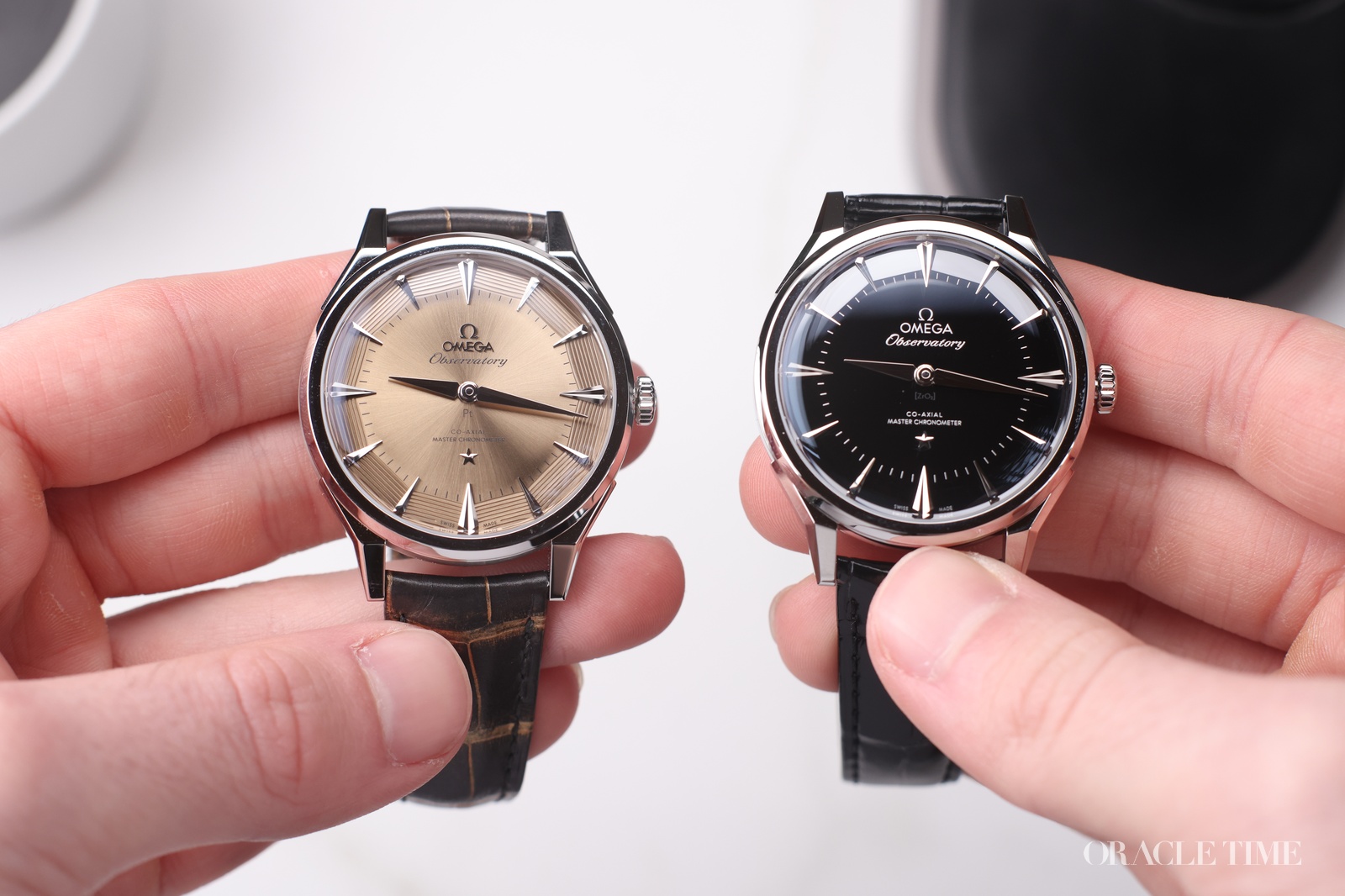
Fortunately, all these vintage touches aren’t locked into some revival limited edition. Instead, we’re getting a fully-fledged collection of 8 different watches: 4 in steel, two in Omega’s moonshine gold, including one with a full gold bracelet, a Sedna (rose) gold version and a stunning platinum gold. What we have here however are the two that I see most collectors going for.
On one hand there’s the straightforward classic black with silver indexes. It’s the most subtle version by a stretch as the dial is actually made from ceramic rather than metal, meaning there’s no guilloche on the pie-pan edges and the colour has a lovely depth to it. On a matching black leather strap, it’s somewhere between a dress watch and an everyday wearer and feels like the more modern outlier of the collection.

On the other hand, we have what is by far my favourite model in the collection. Apparently I have expensive tastes. The Combination of the platinum case and indexes with a golden, champagne dial is pure throwback beauty. It’s a little less everyday, though with its interesting two-colour alligator strap, it’s not quite formal enough to be considered a pure dress watch. I’d consider it a dressing up watch, heading to a cocktail bar rather than a gala dinner.
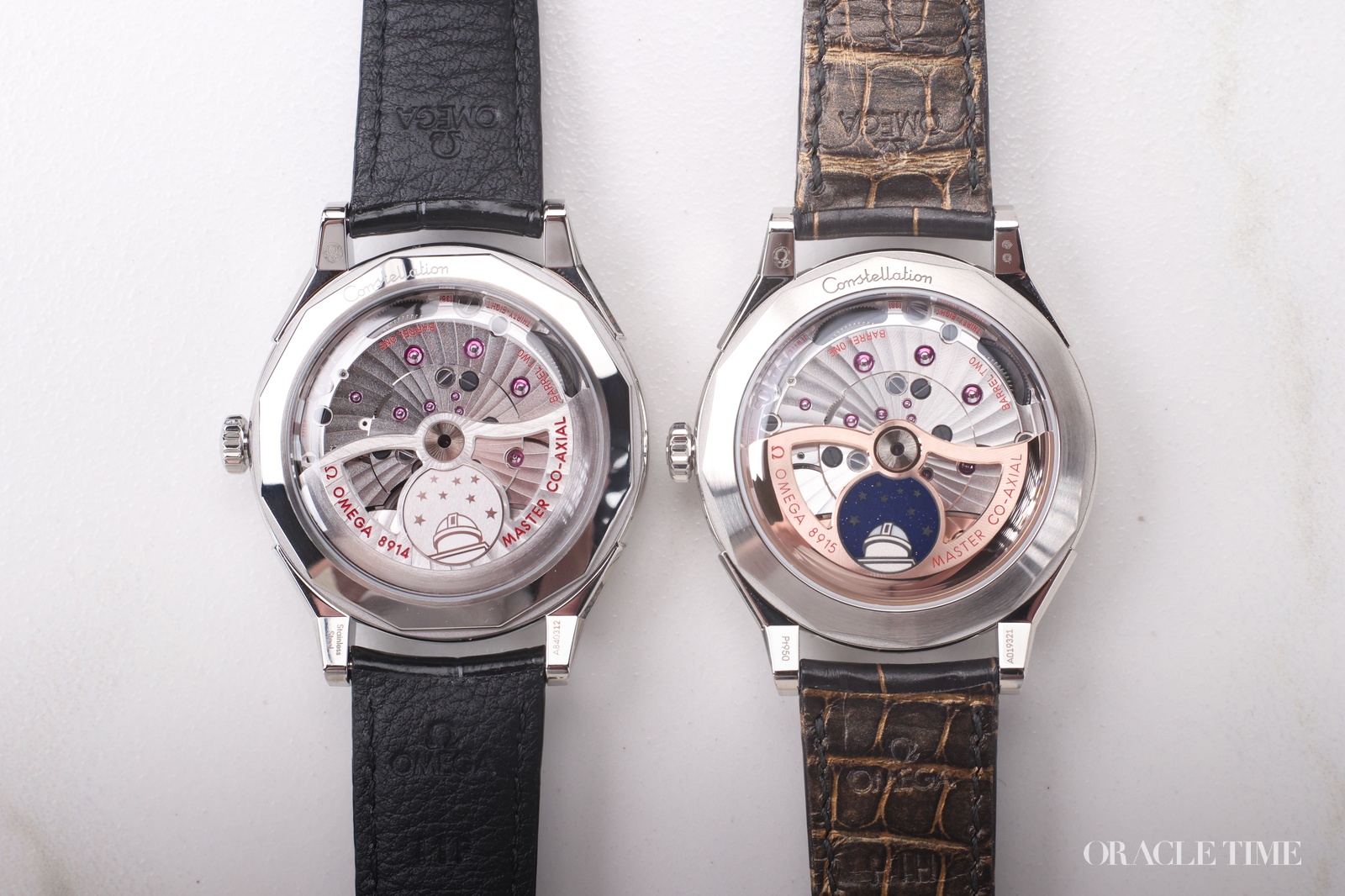
Whichever option you go for, you’ll be getting some serious watchmaking behind the scenes. The new collection actually contains two calibres – the 8914 or the 8915. Which you get depends on the model as the difference between the two calibres (technically three, which we’ll get on to) is simply finishing.
At the top end of the 8915 Grand Luxe, a name that I absolutely loathe but one that makes sense, given it’s in the platinum-gold edition and has a Sedna gold rotor. The ‘grand’ comes into it with a laser-ablated white gold observatory medallion set into the rotor with a dark blue enamel night sky set with gold stars. Honestly, I wouldn’t complain if it took up the entire caseback.
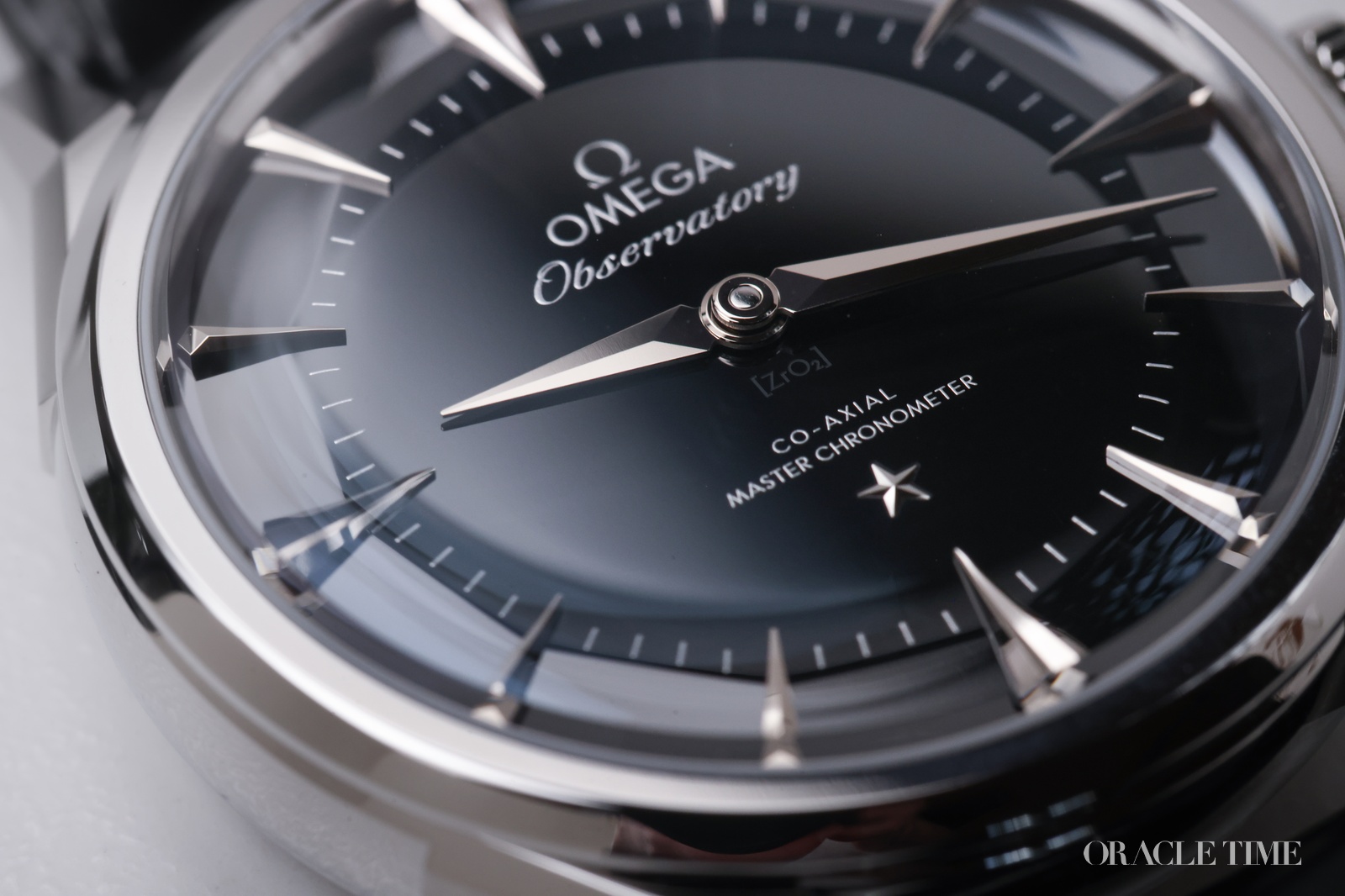
Then there’s the 8915 Luxe, which includes Omega’s first Moonshine Gold rotor and is available in the gold models. Finally, the steel models – including the black ceramic version here – house the 8914, which swaps gold for a rhodium-plated finish. The medallion design is the same, but without the enamel. Otherwise, they have the same 60-hour power reserve and 3.5 Hz frequency. They are also METAS-certified, which is actually tricky for a no-seconds watch.
Chronometric testing has historically been done by watching the seconds hand and seeing precisely how smoothly and accurately it moves over time. That makes sense, but it’s not something you can do without a seconds hand. That’s why Omega’s Laboratoire de Précision developed a whole new Dual Metric Technology, which does the same job but with sound. This means it can listen to the movement’s ticking to gauge accuracy rather than visually checking the second hand.
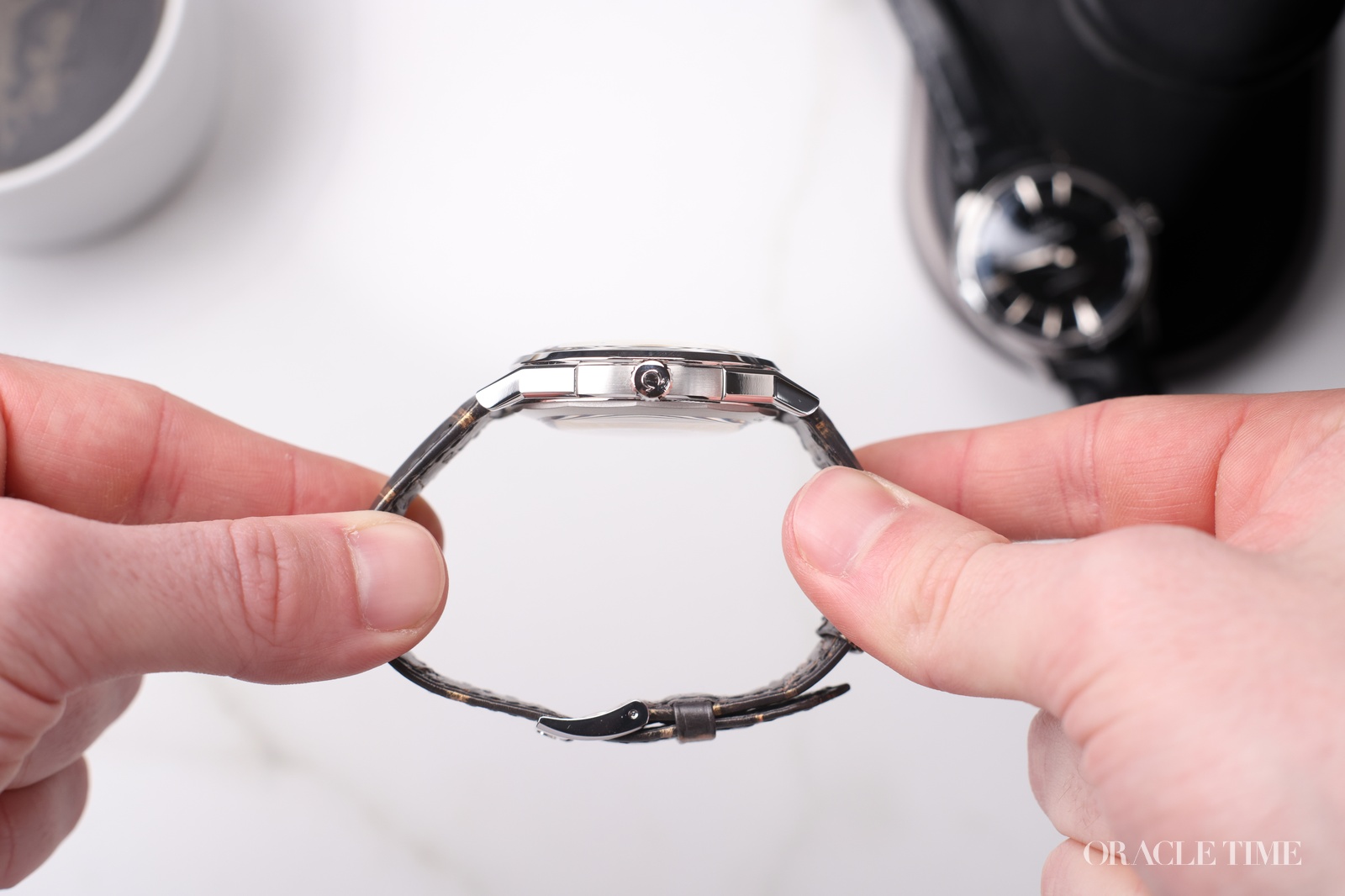
If I have one nit to pick about the new collection, it’s the indexes. They’re pointed in a modern interpretation of the 1952 model’s arrow-shaped versions. Where they were broad though, these are almost aggressively sharp. Personally, I’m not a fan of either version; I’d much prefer the simple, straight batons that emphasize the pie-pan dial’s facets.
Now, down to price. The Constellation Observatory will set you back £10,200 in steel or £48,400 in platinum. As the full platinum is an outlier, let’s focus on that steel price. Whichever way you look at it, that’s a significant whack – especially considering the steel Constellation Globemaster is priced at £7,100 and comes with the Cal. 8900 complete with its date function and second’s hand. You’re basicly paying to have less information and a cleaner aestehtic.
It’s also a great deal more than the £1,500–£2,000 entry price for vintage models. That’s a huge gap, particularly if it’s the vintage aesthetics alone you’re after. But if you look at the whole package – METAS certification, 15,000 gauss magnetic resistance, and the longer service intervals that come with the Co-Axial escapement – the premium starts to make more sense. There’s a good chance you claw a fair chunk of it back in servicing costs over the years.
So, will it be replacing its vintage ancestor on my wishlist? For now, no. But if Omega made a smaller version – 36mm still seems to be a size in vogue – I reckon I’d be in danger.
Price and Specs:
More details