Girard-Perregaux have been on a tear when it comes to releasing new in-house movements recently. First was the GP4800 in the Laureato 50, then the GP09620-2206 in the Laureato Three Gold Bridges and now the GP09530-2198 in the new Girard-Perregaux Minute Repeater Flying Bridges. A minute repeater tourbillon movement presented in a bold skeletonised design.
Jumping straight to the details of the GP09530-2198, it consists of 475 components, each painstakingly finished by hand – there are 1,340 hand-polished chamfers on the movement including 295 interior angles. It’s based on an adapted form of the three-bridges architecture, which normally sees a trio of arrow shaped bridges prominently support the components of the movement. Here only two of the bridges are visible from the dial side as the third has been moved to the rear of the movement to make way for the minute repeater mechanism at 12 o’clock.
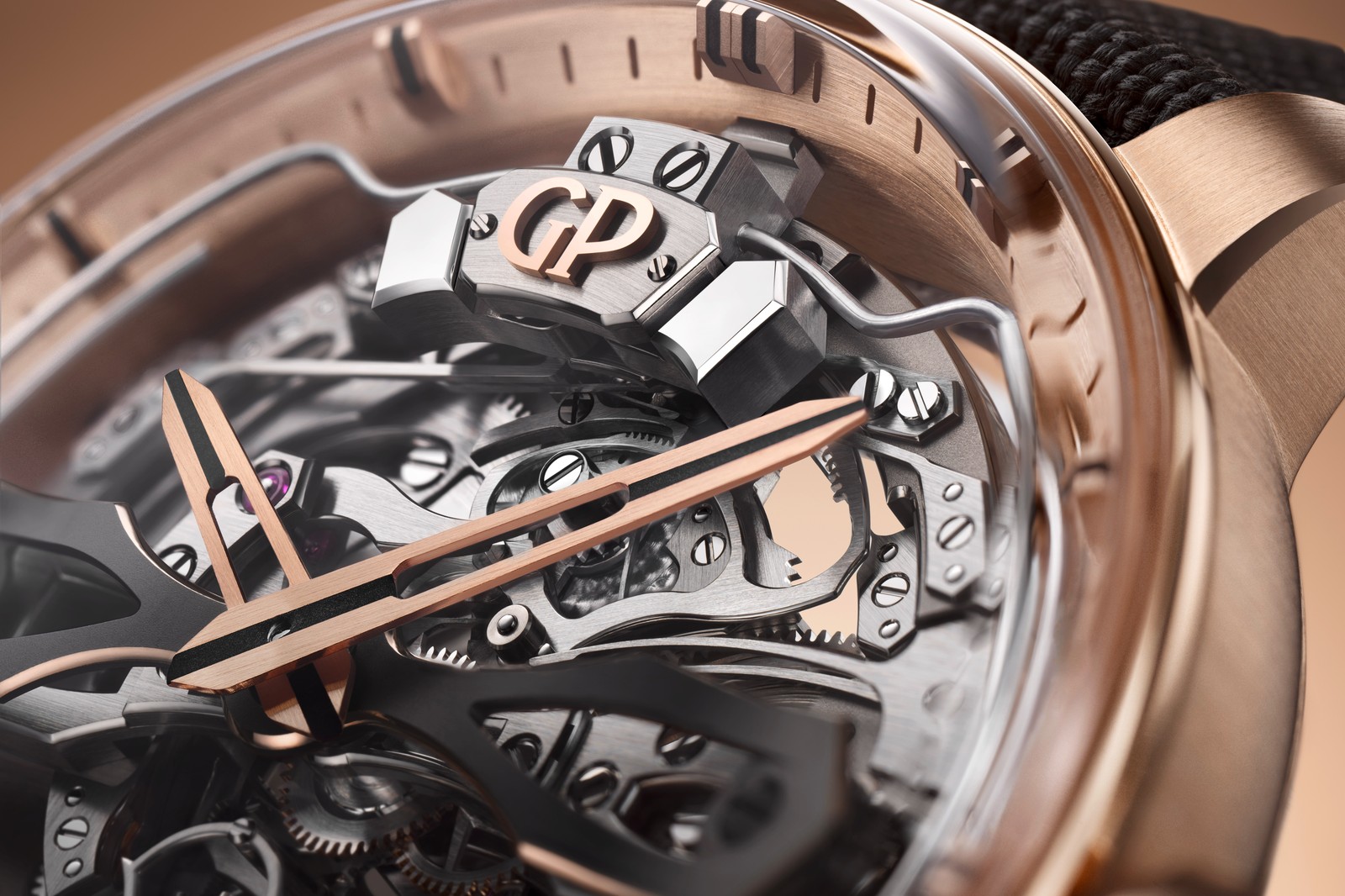
A minute repeater, if you’re unfamiliar, is one of the most prestigious haute horology complications, using a system of hammers and gongs to chime the hours and minutes. Careful consideration has been paid to ensuring that the audio quality of the chimes is as pure and loud as possible. The gongs (the tube-like mechanism around the edge of the display) are made from a single piece of metal for improved sonic clarity.
Opposite the minute repeater, at 6 o’clock, is the tourbillon. Originally developed by Abraham-Louis Breguet, it’s a mechanism that reduces the impact of gravity on a watch by rotating the balance inside a cage. They’re more effective on pocket watches rather than wristwatches but as the Girard-Perregaux Minute Repeater Flying Bridges is inspired conceptually by a heritage pocket watch, the inclusion makes more sense here than on other watches. It also adds a lot of drama to the watch with its constant motion, which is why it’s a popular complication with collectors even if it’s mechanically redundant a lot of the time.
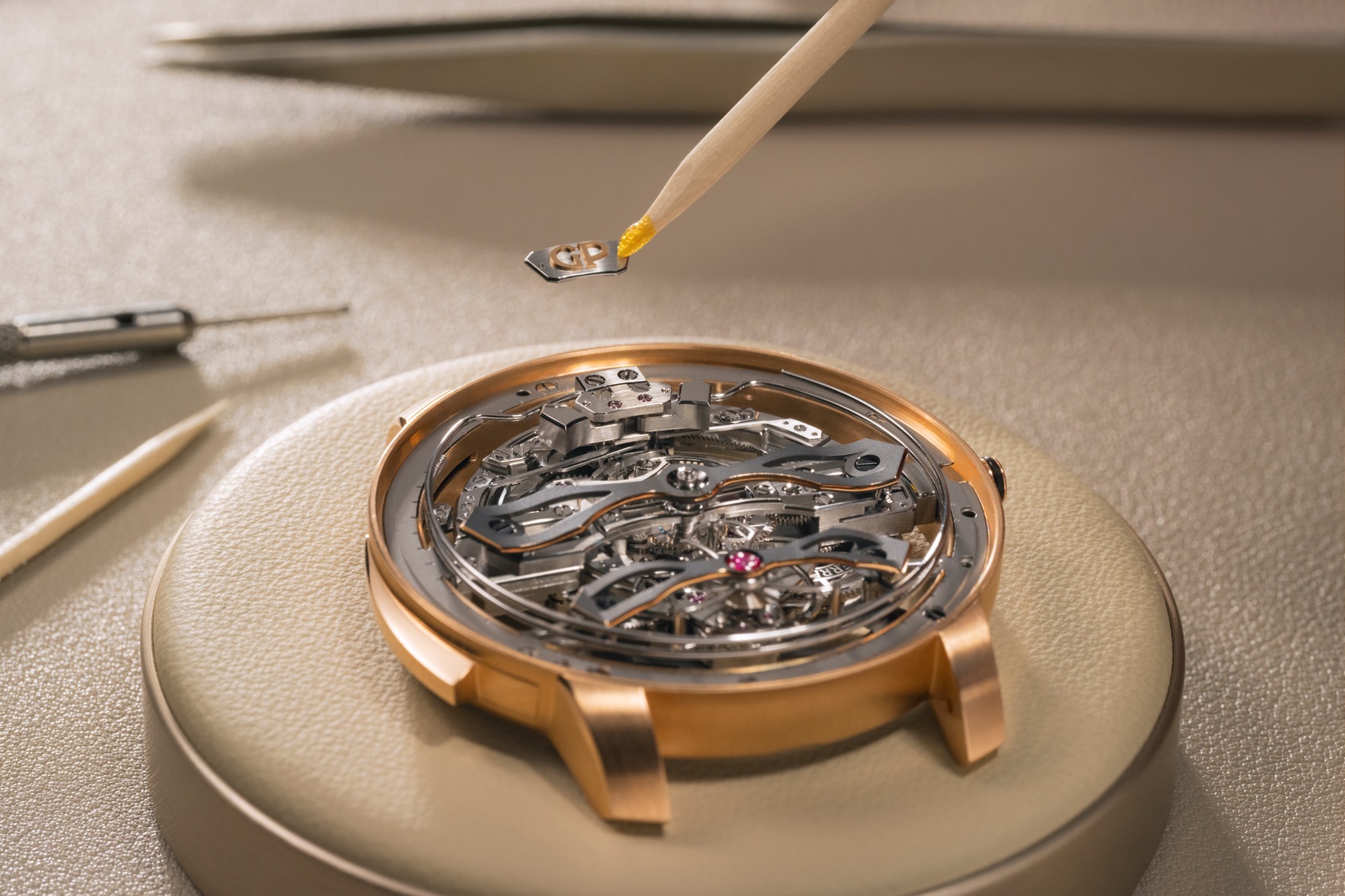
Looking through the watch’s exhibition caseback reveals that aforementioned third bridge across the bottom, supporting the tourbillon from below. Across the central horizontal axis is the power barrel and micro-rotor, which together help provide a 60-hour power reserve when fully wound. That’s actually a very good power reserve for a minute repeater tourbillon as those are particularly power intensive complications.
The GP09530-2198 is housed inside a 44mm diameter x 17.9mm thickness pink gold case with 30m water resistance. Those dimensions give it a dramatic wrist presence, especially in brushed gold. Though that ostentation is balanced at least somewhat by a black rubber strap with fabric pattern.
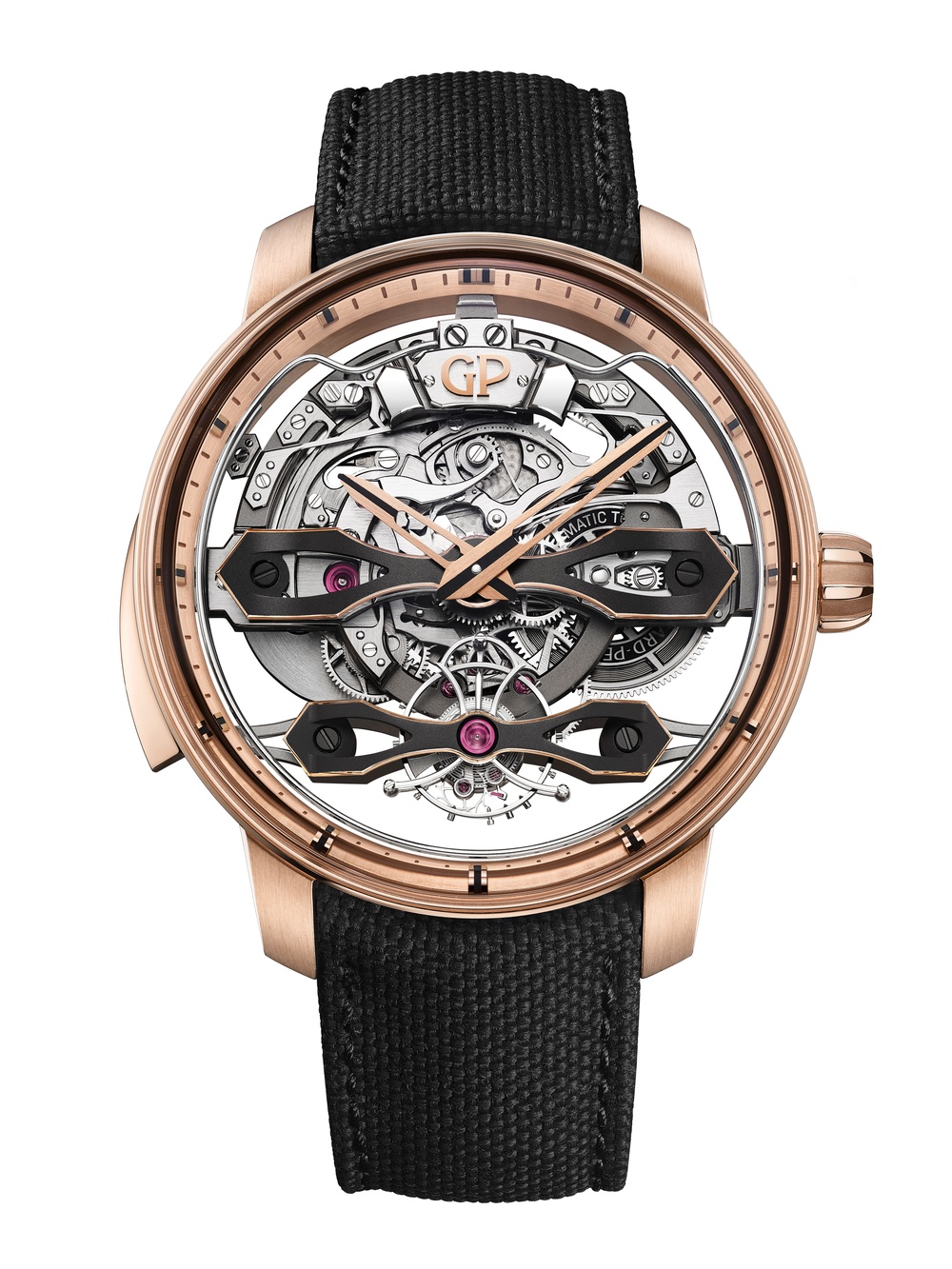
I’m not typically a huge fan of skeleton watches but the dynamic architecture of the Girard-Perregaux Minute Repeater Flying Bridges is impossible not to be captivated by. There are so many minute details to study and discover across its exposed mechanisms. Though that contributes to its price on request status.
Price and Specs:
More details at Girard-Perregaux.