A quick look at the reference numbers of Serica’s existing Dive Chronometer range and the new piece I’ve been hands-on with will reveal a key difference: the current range is called the Ref. 5303 while the latest addition is the Ref. 5330. Similar enough that it’s clear they’re still part of the same family of watches but with a notable change. That change comes in the form of the introduction of a date function to the Dive Chronometer for the first time.
Date windows are a topic that collectors, enthusiasts and journalists love to debate, especially when it comes to dive watches. At the simplest level, should they ever be featured on watches where legibility is a core principle? Beyond that, if you do have a date window, where should it be positioned?
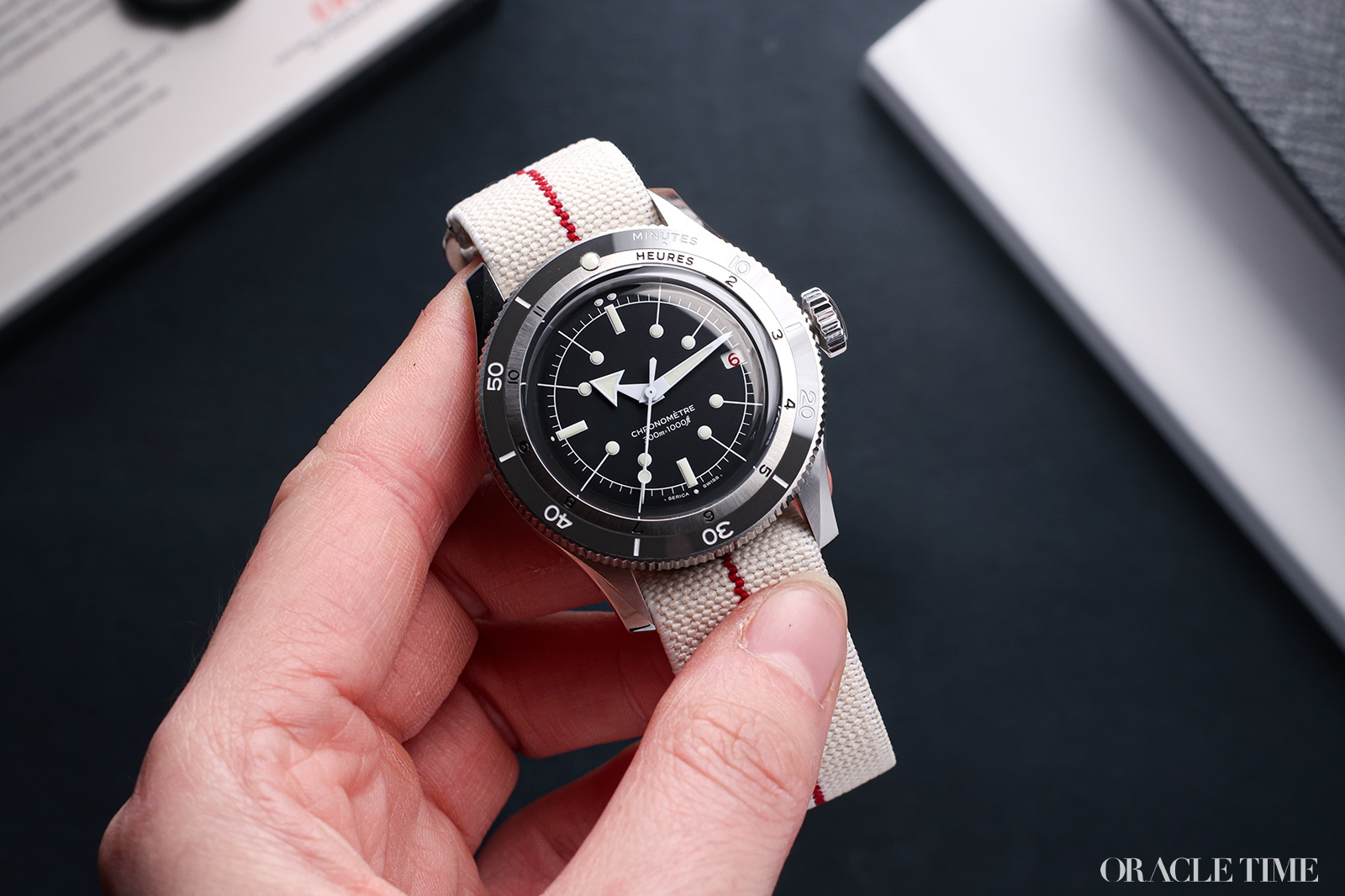
3 o’clock is the most common position and makes sense logically in the manner we read from left to right, meaning the eye naturally follows from time to date – that’s the option Serica have opted for here. A 6 o’clock position offers a more symmetrical display so works well when aesthetics is your main concern. Then there’s also the position between 4 and 5 o’clock that means the window doesn’t replace any hour markers, which is its own advantage, though this is also typically a significantly smaller window and the most awkward to read.
Ultimately, I think Serica have made the right choice in going for the 3 o’clock position here. Yes, the inclusion of a date window will always impact the legibility of a watch but I think on a psychological level 3 o’clock is the least disruptive position. It’s almost like hiding in plain sight because we’re so used to seeing a date window in that position. Plus they’ve avoided the trap of adding a cyclops lens, which would be even more controversial than having a date window in the first place.
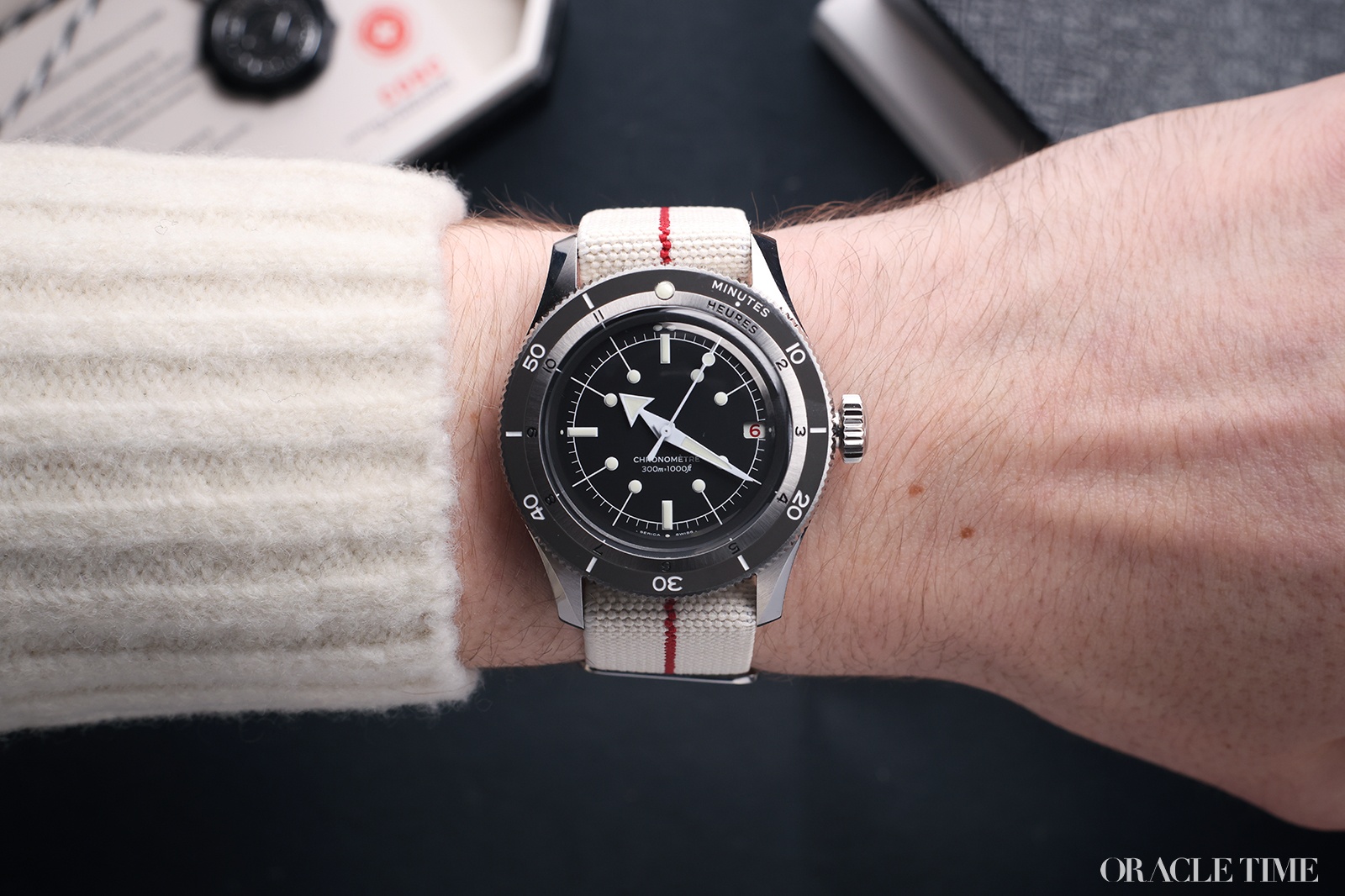
Why have a date window on a dive watch like the Ref. 5330 Dive Chronometer at all then? Well, as much as we all engage in the ideal that we’re going to take the 39mm steel watch with its 300m water resistance swimming and scuba diving all the time, the number of customers who will actually follow through on that idea is very small. The majority of us will keep our feet on dry land and even get paranoid enough to tuck the watch under a cuff at the first sign of rain. Quite simply, a date function is useful to have on a watch day-to-day on land. When you’re signing that contract in the office and need to double check what the date is or making plans with friends for next Tuesday and need to calculate what date that will be to see if it clashes with your dentist appointment.
There are a few other updates to the Ref. 5330 beyond the addition of the date. The bezel has been refreshed and simplified, so it now has a clean 60-minute scale in 5-minute intervals on its outer section – no longer with the integrated 15-minute countdown timer. It’s another logical design choice because countdown timers tend to be associated with mission timing in military settings and as we just discussed, this is a more civilian, casual timepiece. It’s also presented on a new anthracite-grey ceramic insert while the inner section remains a brushed steel 12-hour scale.
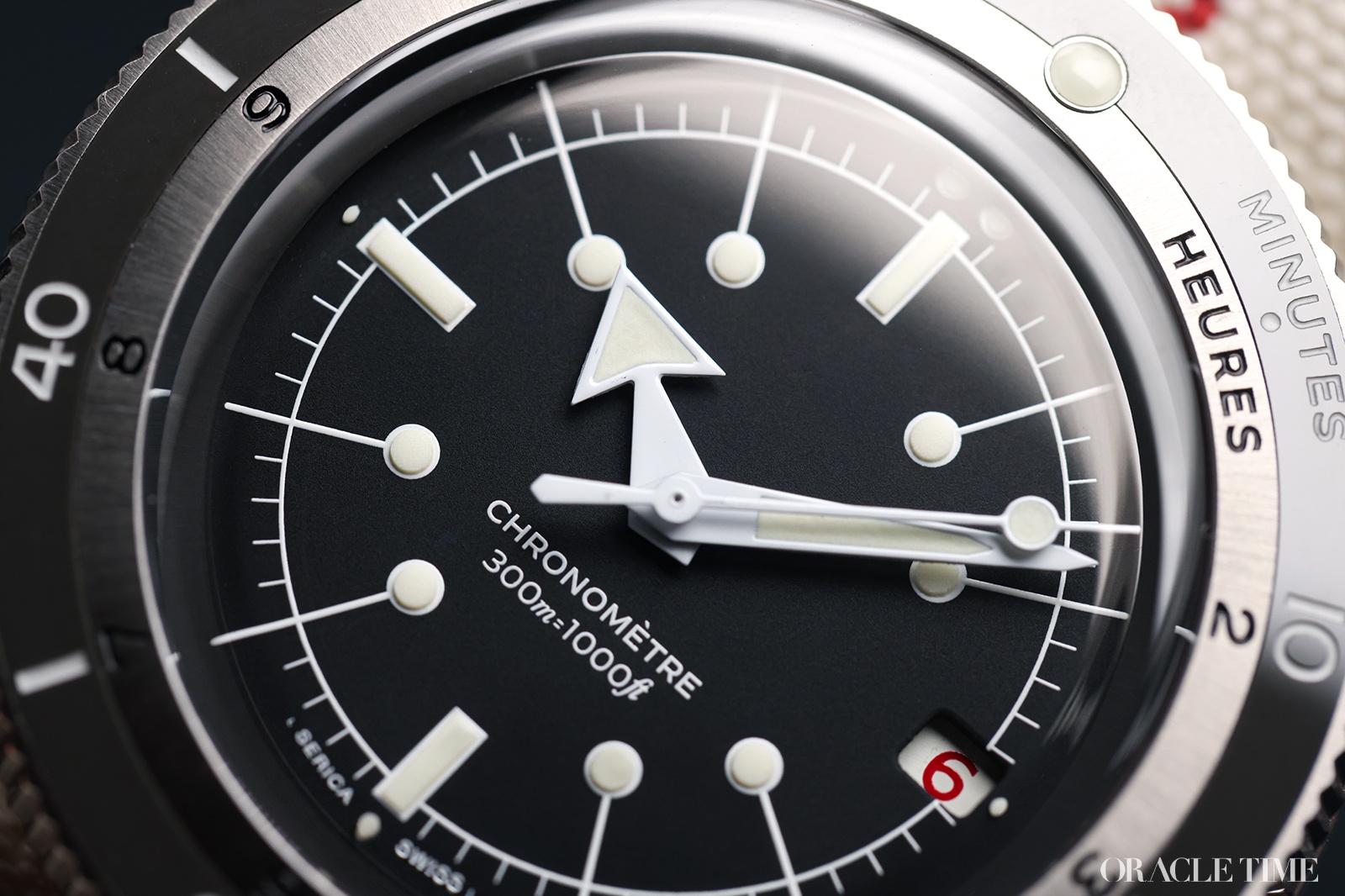

A more subtle change is that the Ref 5330’s hour markers and minute scale have been brought inwards closer to the centre of the dial, compared to the Ref. 5303. This is particularly noticeable at 12 o’clock where the twin dot markers are now above the bar index instead of in-line with it, as well as at 3, 6 and 9 o’clock where extra dot markers have been added at the edge of the dial to fill the space. It’s a small but necessary adaptation to ensure the display still looks balanced with the addition of the date window.
Pictured here is the Serica PLD white and red elastic strap but it also comes on a mesh bracelet. Undoing the hook clasp and slipping the watch off the wrist reveals a solid caseback that protects the movement inside, which is the Soprod M100 with 42-hour power reserve and COSC Chronometer certification. So, while the watch is mildly more geared towards land use in the structure of its dial, it still has the precision that makes it ideal for use as a tool watch, and it still has 300m water resistance to boot.

For price, the Serica Ref. 5330 Dive Chronometer is $1,990 (approx. £1,500). That’s solid value given its chronometer movement and professional tool watch specs. I also really like the fact that they haven’t just plonked a date window onto the dial and called it done, the numerous small changes are each carefully considered in order to make its integration as seamless as possible.
Price and Specs:
More details at Serica.