London is one of the world’s great capitals of timekeeping, where the measurement of hours shaped empire, industry and modern life itself. In short, there is a lot of horological history to be uncovered here. From the Prime Meridian at the Royal Observatory to the electric networks of The Clockworks, this rundown explores the museums and exhibitions that celebrate the city’s horological legacy.
The Royal Observatory, Greenwich
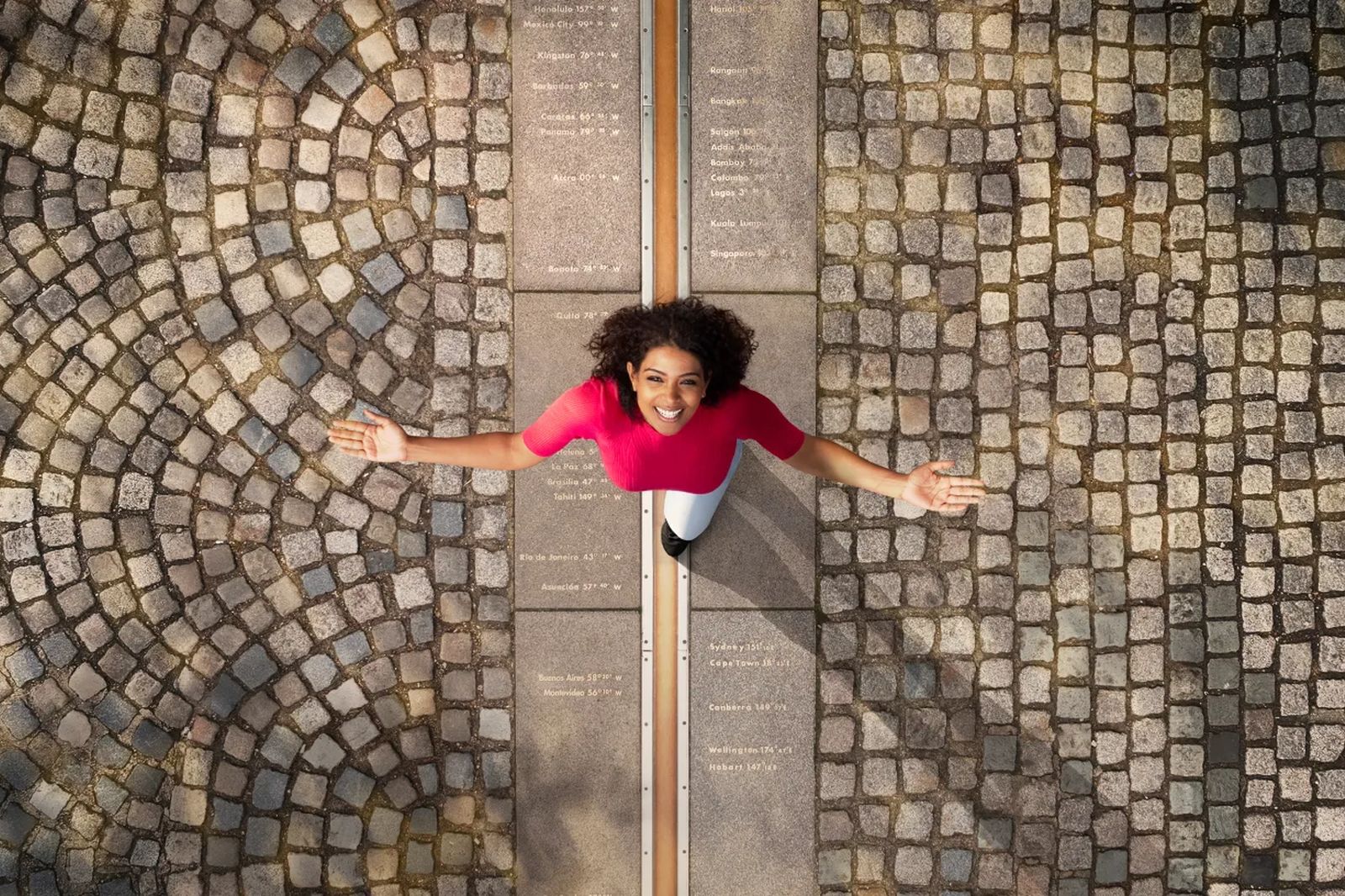
There are museums that display clocks and watches, and then there is the place that defined time as a concept. Standing on the Prime Meridian in Royal Observatory Greenwich, you are standing at the zero-point from which the modern world measures its hours.
Founded in 1675 by Charles II to solve the urgent problem of navigation, the Observatory became the crucible in which astronomical observation, precision engineering and practical timekeeping fused into a global system. For horology fans, it is the ultimate lesson in why accuracy matters: for survival at sea, the expansion of trade and the coordination of an industrialising planet.
From the meridian line in the Observatory’s courtyard, GMT was transmitted across Britain by telegraph and then across the globe. The modern system of world time, and by extension everything from international finance to GPS, begins here.
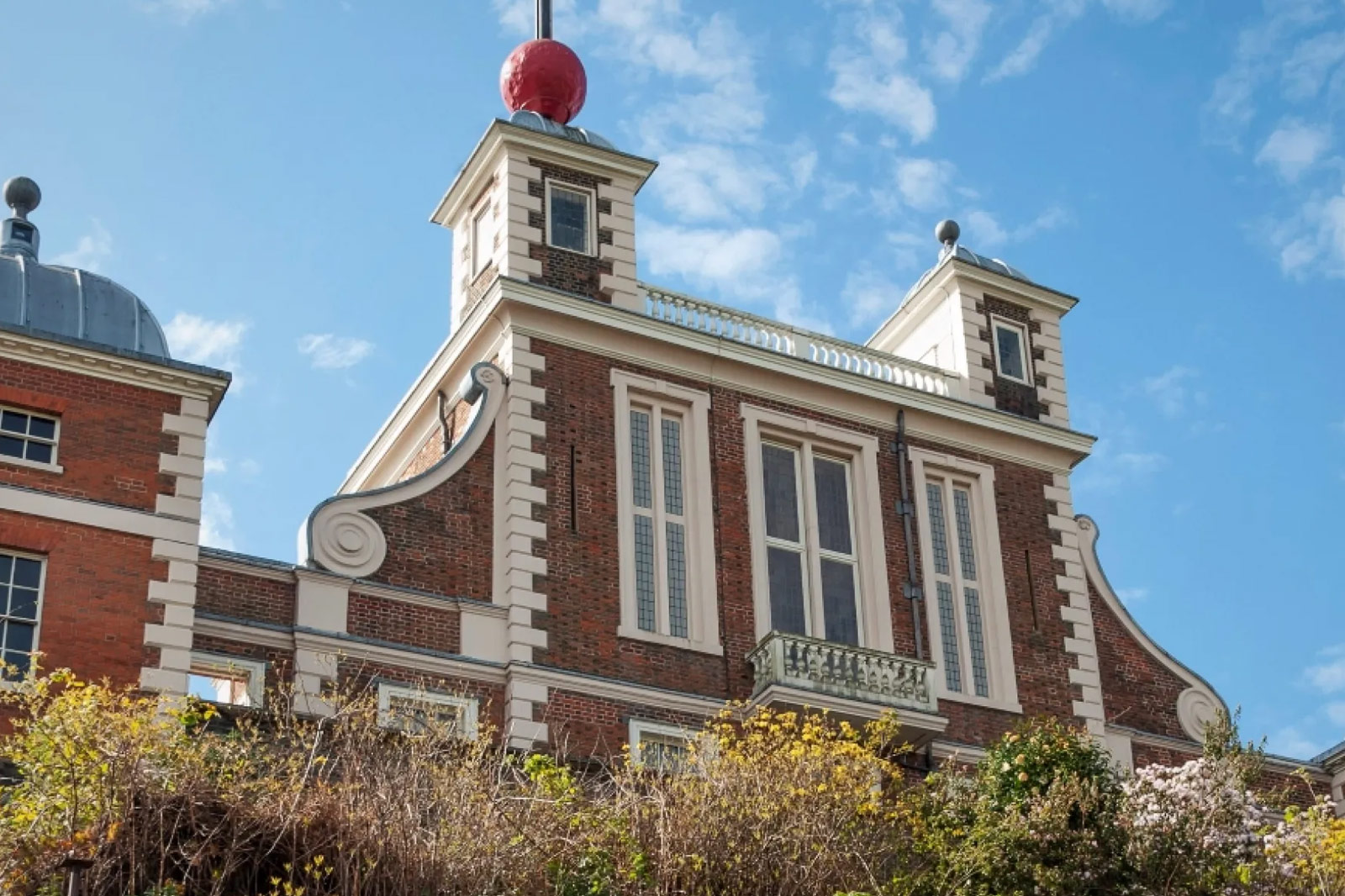
Perched atop Flamsteed House, the bright red Greenwich Time Ball is one of the earliest public time signals in the world. Installed in 1833, it drops precisely at 13:00 every day, allowing ships on the Thames to set their chronometers.

And no horological pilgrimage is complete without the work of John Harrison. His marine timekeepers – H1, H2, H3 and the revolutionary H4 – are displayed here.
Harrison’s breakthrough was deceptively simple in concept and almost impossibly difficult in execution: build a clock that keeps accurate time at sea. By comparing local noon to the time at Greenwich, sailors could calculate their longitude and know their position.
The Observatory’s story continues into the age of pocket watches with Ruth Belville, the so-called “Greenwich Time Lady.” Carrying a highly accurate chronometer set to GMT, she travelled across London by train, supplying businesses with the correct time well into the 20th century.
The Royal Observatory teaches the purpose behind the craft. Escapements and mainsprings are not isolated technical achievements; they are the tools that made modern life possible.
More details at Royal Museums Greenwich.
The Science Museum – The Clockmakers’ Museum
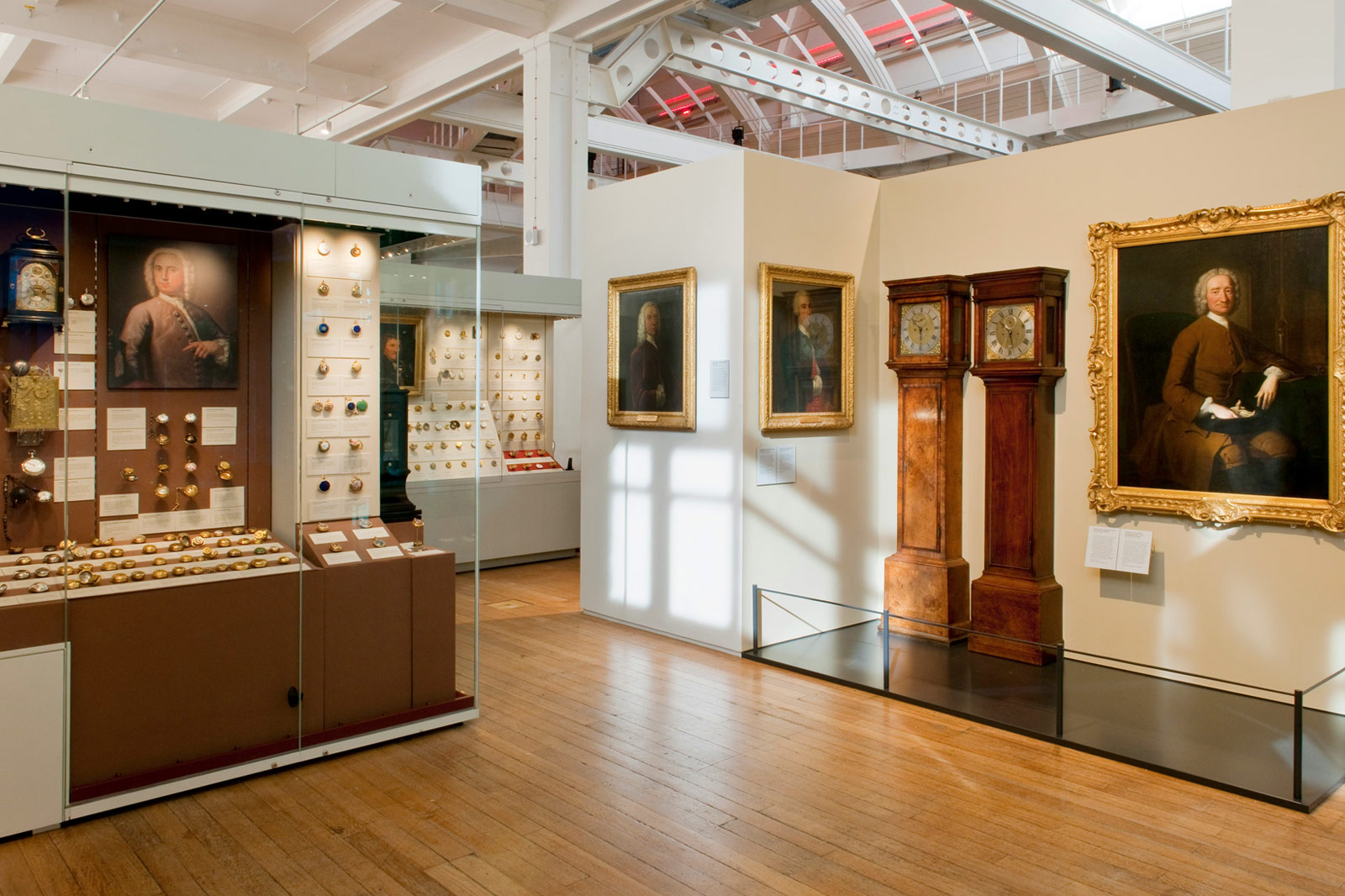
If the Royal Observatory explains why precision matters, the Clockmakers’ Museum, inside London’s Science Museum, shows who made it possible. Created by the Worshipful Company of Clockmakers in 1814, this is the oldest clock and watch collection in the world, and one of the most concentrated classrooms of horological craft anywhere.
Now housed in a dedicated gallery on the second floor, the Clockmakers’ Museum is less about spectacle and more about lineage. Here, the story of British watchmaking is told through the actual working lives of its makers: regulators built for observatories, marine chronometers for empire and trade, and the domestic clocks that synchronised everyday life.
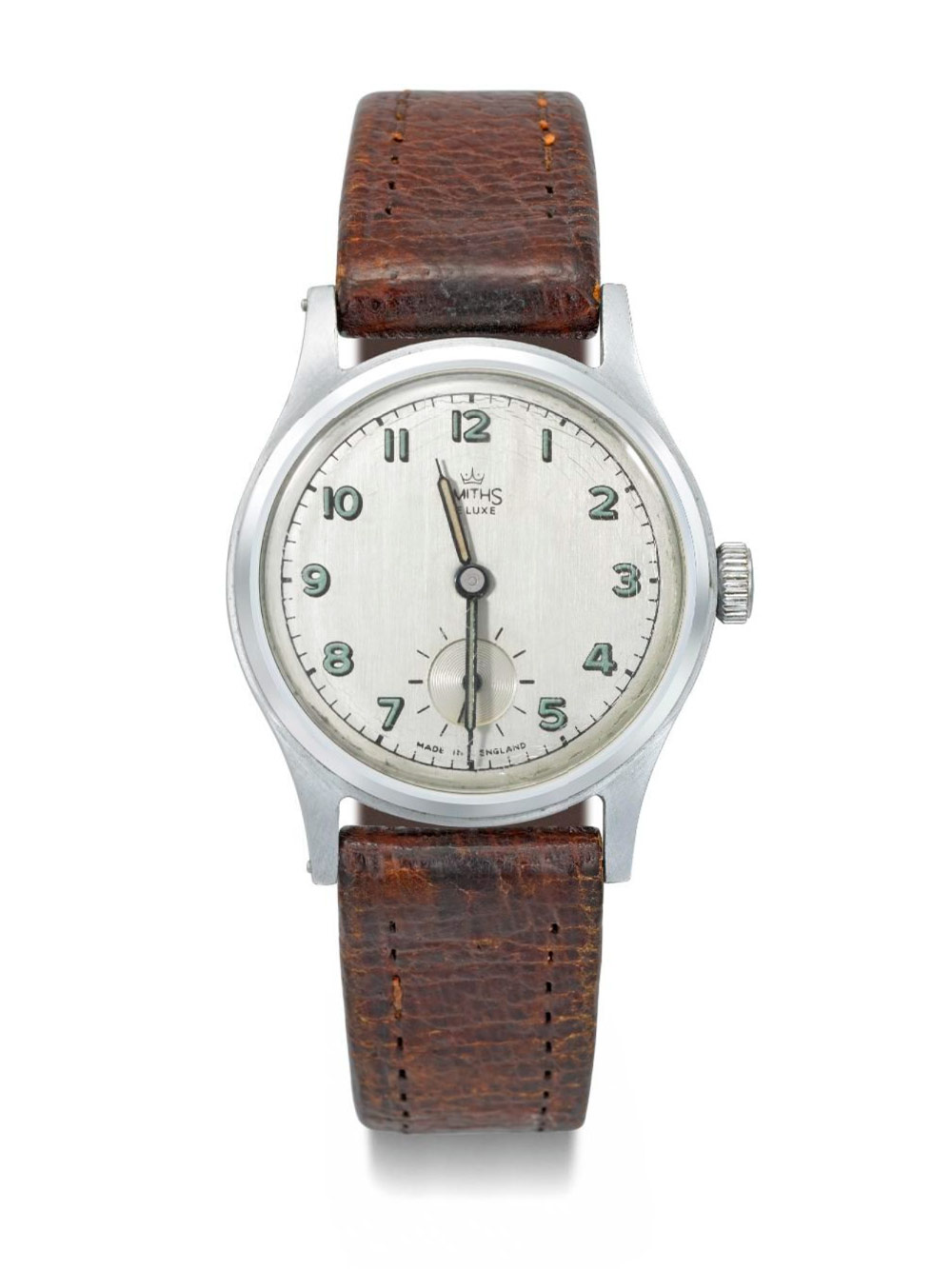
Among its most coveted objects is the Smiths De Luxe wristwatch worn by Edmund Hillary during the first successful ascent of Everest in 1953, modified with a special lubricant to withstand low temperatures. Presented to the Clockmakers’ Company after the expedition, the watch represents a turning point in 20th-century horology as the tools of adventure.
The gallery’s greatest strength is the way it connects individual makers to the institutional structure that supported them. Through the history of the Worshipful Company, its apprenticeship system, standards and patronage, you see how horology functioned as a profession, not just an art.
Names such as Tompion, Graham and Mudge appear as part of a living network of training, innovation and commercial competition. For anyone considering a career in watchmaking today, this historical ecosystem feels strikingly familiar.
From 9 March 2026 to 28 February 2027, the museum deepens that sense of continuity with a major free display: Charles Frodsham, Precise Time: Two Centuries in the Making.
Dedicated to one of Britain’s most enduring horological firms, the exhibition traces how Charles Frodsham & Co responded to society’s evolving demand for accuracy; from 19th-century marine chronometers and observatory regulators to the role the company plays in modern high horology.
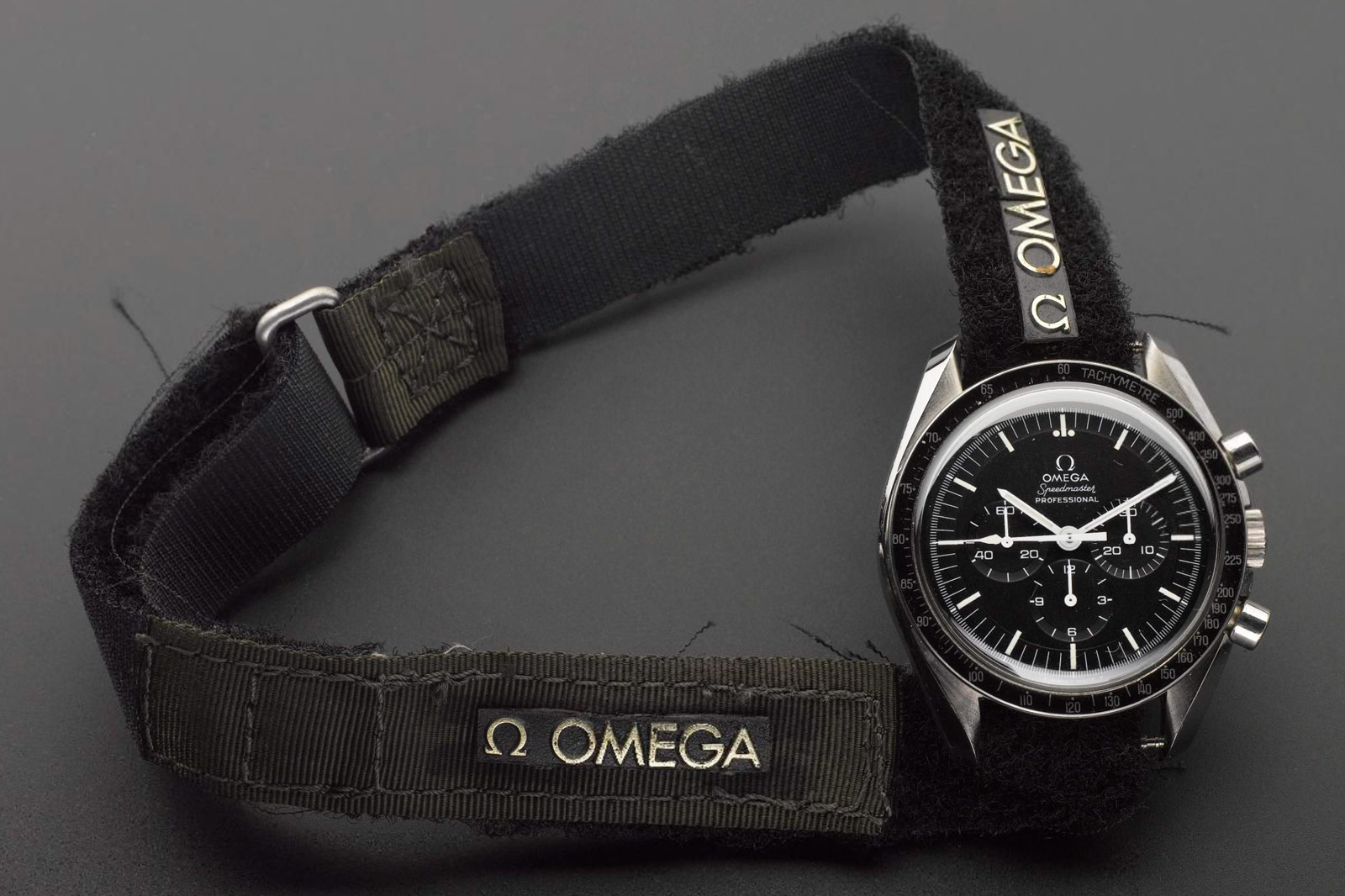
And if you visit, be sure to go downstairs to the space gallery to join an easter egg hunt for a mid-century Omega Speedmaster Professional tucked away amongst rockets and jets.
More details at The Science Museum.
British Museum – The Sir Harry and Lady Djanogly Gallery
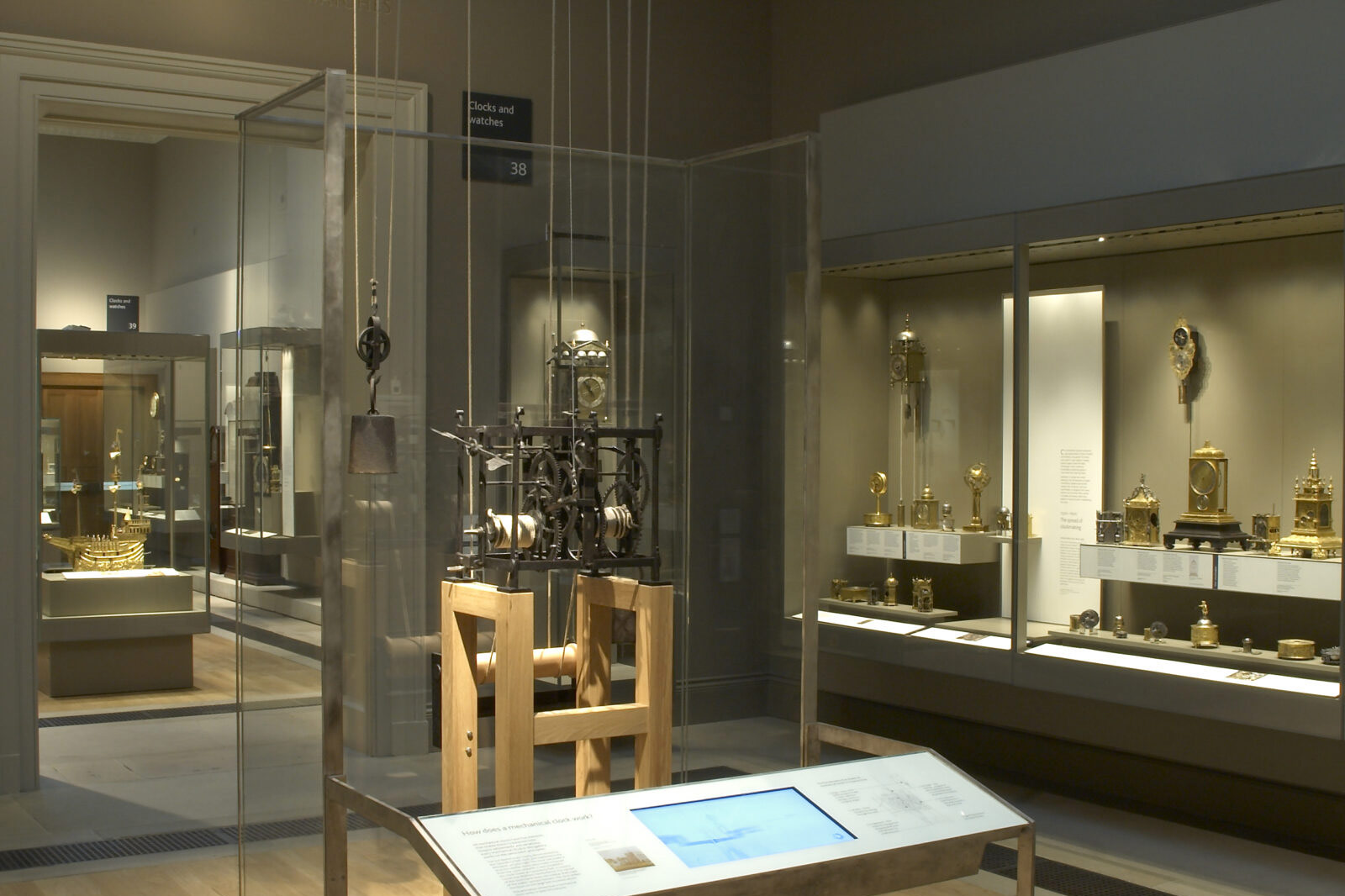
If London is the capital of timekeeping history, then the horological heart still beats inside the British Museum. Tucked into Rooms 38 and 39, the Sir Harry and Lady Djanogly Gallery is a complete, working timeline of humanity’s obsession with measuring time.
Opened in 2008, the gallery houses the nation’s horological collection: more than 900 clocks and 4,500 watches charting the story of time from medieval monastic mechanisms to the age of atomic precision.
What makes this space essential for students of horology is its narrative structure. You walk through the technological evolution of time itself. Early weight-driven church clocks give way to the portable revolution of chronometers, the scientific race for longitude, and the industrialisation of personal timekeeping.
Many pieces still tick and strike, turning the gallery into an acoustic as well as visual experience – a reminder that horology is fundamentally about motion, not static design.
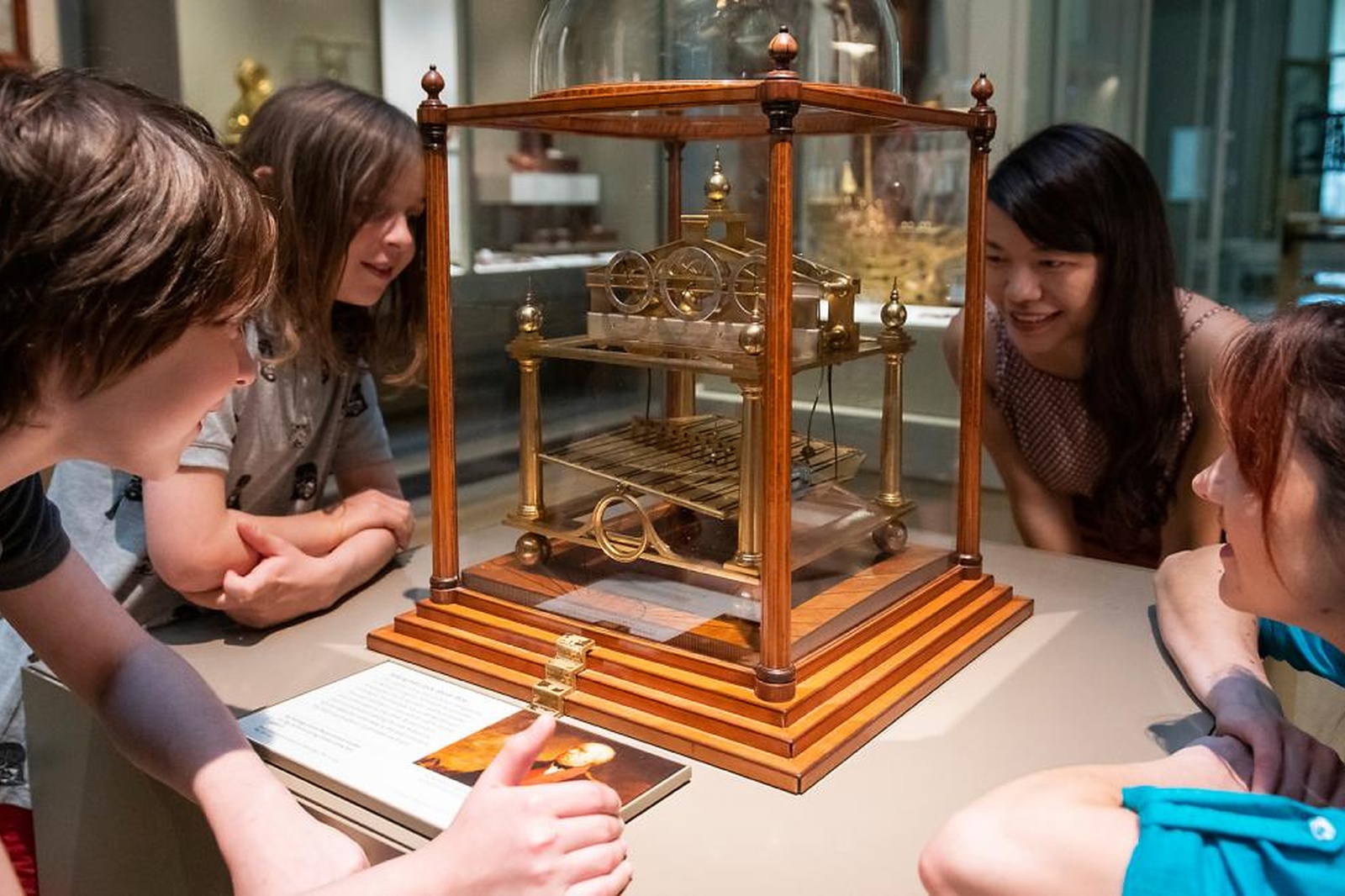
Look closely and the great names of European watchmaking appear: precision marine chronometers that enabled global navigation, elaborate automaton table clocks that blur the boundary between engineering and theatre, and pocket watches that document the shift from artisanal craft to mass production. The intellectual leap from decorative object to scientific instrument becomes unmistakable.
If you can’t make it down to the capital any time soon, the British Museum’s horology curator, Oliver Cooke, offers some amazing insights into the most striking objects in the collection on their YouTube channel.
For the enthusiast, the gallery’s greatest strength is clarity. The chronological layout allows you to understand why each innovation happened – the social need for accuracy, the economic push toward portability, the scientific demand for precision. It is, in effect, a mechanical syllabus.
More details at The British Museum.
The Clockworks

London’s horological story is so far told through barrels, balance wheels and marine chronometers. The Clockworks shifts the focus to a different revolution: the moment time left the individual dial and became national infrastructure; a synchronised electrical network.
Founded in 2011 by horologist and historian James Nye, The Clockworks is the permanent public home of his extraordinary private collection of electric timekeepers. Spanning 1840 to 1970, it charts the transformation from locally kept time to centrally distributed precision – the system that underpins everything from railway timetables to the digital infrastructure of the present.
This is not a conventional museum experience. Open by appointment during the week, with a free curator’s talk every Friday at 12:30, The Clockworks functions as something closer to a working horological laboratory.
The central theme of the collection is networked time: the idea that one master clock could control hundreds of subsidiary dials across a city, a factory or a transport system.
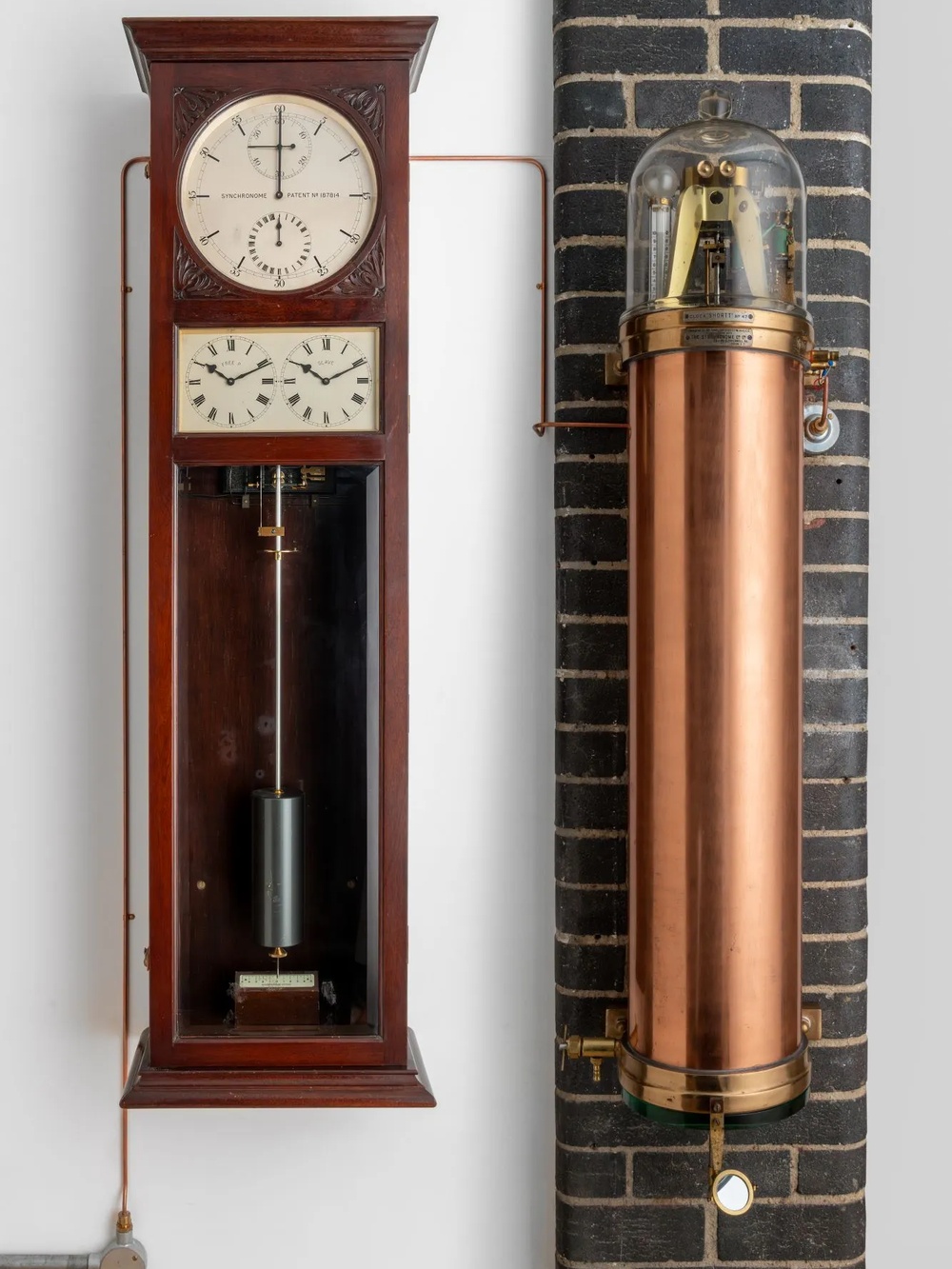
At its core is the free-pendulum regulator developed by William Hamilton Shortt and manufactured by Synchronome Company. Before the arrival of quartz, the Shortt clock was the most accurate timekeeper in Europe, effectively the continent’s time standard. Its separation of the timekeeping pendulum from the mechanism that drove the hands is a masterclass in the pursuit of precision through isolation and control.
Nearby, an 1840s electric clock by Alexander Bain marks the moment when electricity first entered horology, turning time into an impulse transmitted along a wire.
For students of the subject, this is the missing link between observatory regulators and atomic time: the age in which accuracy became distributable.
The presence of marine electric timekeepers of the type used on great passenger liners – including those associated with ships such as RMS Titanic and RMS Queen Mary – extends the story beyond the workshop and into the infrastructure of modern travel.
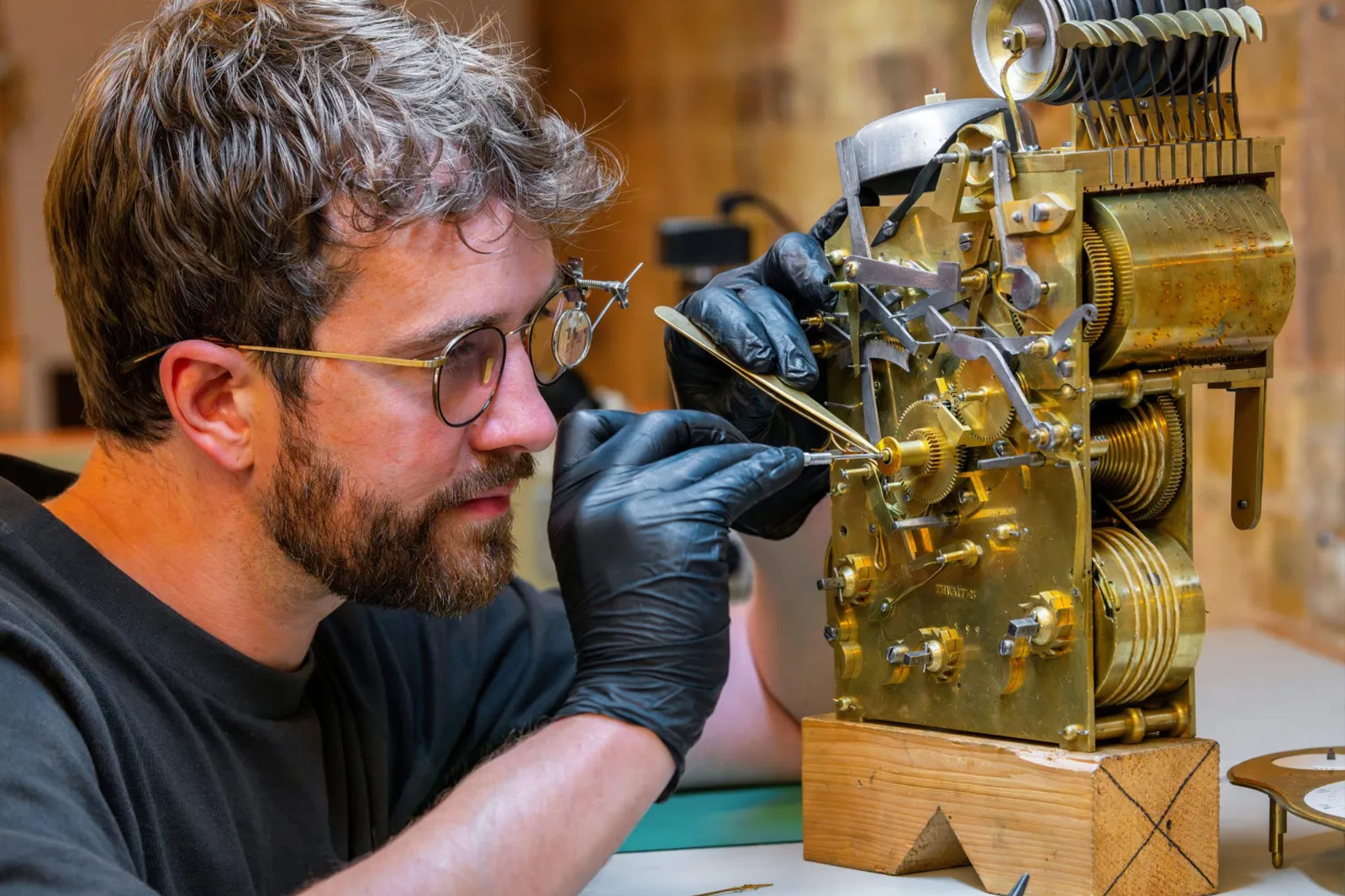
What makes The Clockworks essential for horological education is that it is also a place of practice. The onsite workshop supports a Conservator-in-Residence and an independent clockmaker – currently Alex Jeffrey – and serves as a training ground for emerging horologists.
With the appointment of curator Kirsten Tambling in April last year, the collection has taken on an even more explicit educational role, balancing access, scholarship and live conservation.
Visitors can currently see the restoration of a Normalzeit master clock, a controlling regulator that once “sent the time” to subsidiary street dials across German cities. Being conserved by Takumi Hamano, it is believed to be unique in the UK, and, crucially, it is displayed mid-process.
More details at The Clockworks.