Rounding out Audemars Piguet’s 2026 launches, alongside the updates to the Royal Oak and Offshore, are a quartet of new Code 11.59 models. Three of them are updates to existing models but one of them is brand new, introducing the first Code 11.59 Selfwinding Perpetual Calendar Openworked to the range.
Code 11.59 Selfwinding Perpetual Calendar Openworked

The Code 11.59 Selfwinding Perpetual Calendar Openworked is effectively the counterpart to the new Royal Oak Selfwinding Perpetual Calendar Openworked because it’s the second model to house the brand-new calibre 7139. However, in being so, it also has that all important accolade of being the first openworked perpetual calendar in the Code 11.59 range, adding new haute horological heights to Audemars Piguet’s ‘other watch’.
Its case measures 41mm x 10.6mm in the round shape of the collection, produced in white gold for that luxurious lustre. It also has skeletonised lugs and a recessed caseband, emphasising the architectural look of the openworked display. The display itself is actually a great example of the technical difference between an ‘openworked’ dial and a ‘skeleton’ dial – something many people incorrectly use interchangeably.
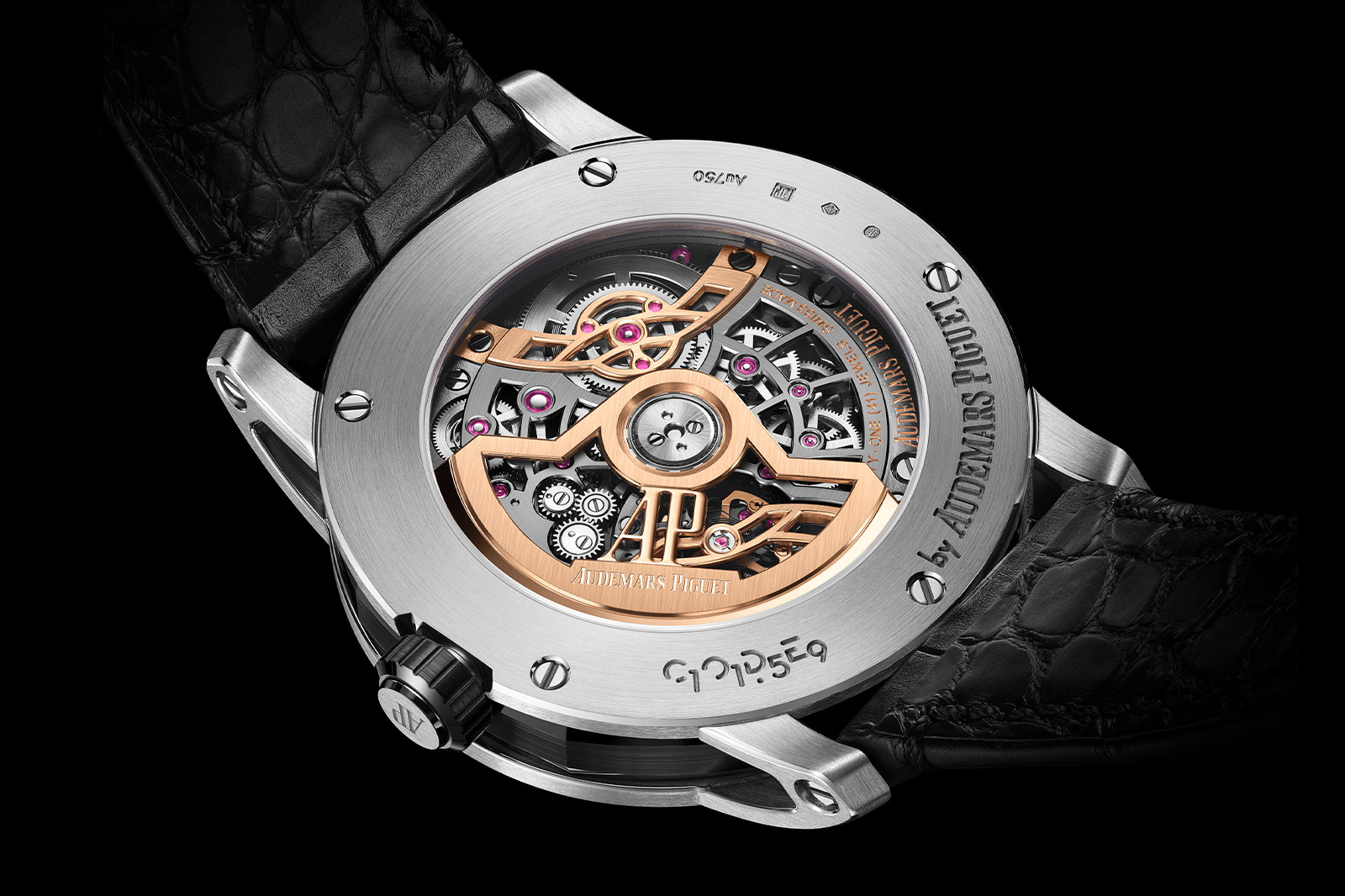
Openworked means that you’ve removed the dial plate or replaced it with a transparent one such as made from sapphire – leaving the movement on display but largely the same as it would be under a regular dial, probably with a bit more attention to finishing. A skeleton display actively removes material from the movement, changing its structure and appearance to leave it as bare bones as possible (pardon the pun). A recent example is the Daniel Roth Extra Plat Rose Gold Skeleton. While it’s not universally true, a general rule of thumb is that you can see your wrist through a skeleton and not through an openworked display.
The display itself consists of hours, minutes, day, date, weeks, month, moonphase, leap year, and 24-hour indicator. Powered by the calibre 7139 with 55-hour power reserve. What makes this calibre special is that it’s based on the 7138, which introduced a single adjustment crown system that lets the singular crown set every complication on the watch, making the process much simpler than the normal occult array of buttons and crown settings.
Price and Specs:
Code 11.59 Selfwinding Flying Tourbillon 41mm


Beyond the new openworked edition, the updates to the Code 11.59 are relatively simple colour and material updates. For the Code 11.59 Selfwinding Flying Tourbillon 41mm that means a black ceramic case middle and crown, sandwiched between a white gold bezel and caseback. It’s a bi-colour structure they’ve used a few times in the past and leaves me wondering if a full ceramic Code 11.59 is on the horizon.
For the dial, they’ve opted for the signature basket weave guilloché in ivory. It’s quite close to the previous sand model but that’s offset by the case differences. It also stands out from the semi-precious stone dial models of which there are plenty. Due to the tourbillon making it a haute horology piece, it’s unsurprisingly price on request.
Price and Specs:
Code 11.59 Selfwinding 38mm Pink Gold


Last up are a pair of the standard time and date editions of the Code 11.59 at 38mm in pink gold. Somewhat surprisingly, the update here is that the dials are black and white. Which is normally the opposite of what you see from an expanded collection. Black and white are typically among the first references to be released. Here, they are late additions behind blue, light blue, purple and sand.
The movement here is the calibre 5900 with 60-hour power reserve and 4 Hz frequency. Both watches are priced at £29,700, which is about as accessible as it gets for AP, especially given the price of gold at the moment.
Price and Specs:
More details at Audemars Piguet.